
BuddhistCatholicContemplativeEvangelicalGeneral ChristianHinduJewishLatter-day SaintMuslimNew VisionsProgressive Christian
Beliefs
- Buddhist
- Catholic
- Contemplative
- Evangelical
- General Christian
- Hindu
- Jewish
- Latter-day Saint
- More Voices
- Muslim
- New Visions
- Pagan
- Progressive Christian
Topics
- Religion News
- Food and Religion
- Sports and Religion
- Religious Art
- Religious Music and Entertainment
- Religious Events
- History and Religion
- Style and Religion
- Politics and Religion
- Women in Religion
- Recreation Outdoors and Religion
- Business Finance and Religion
- Careers Workplace and Religion
- Education and Religion
- Family Parenting and Religion
- Health Fitness and Religion
- Home and Religion
- Relationships and Religion
- Technology and Religion
- Travel and Religion
Columnists
- Buddhist Columnists
- Business Finance and Religion Columnists
- Careers Workplace and Religion Columnists
- Catholic Columnists
- Contemplative Columnists
- Education and Religion Columnists
- Evangelists Columnists
- Family Parenting and Religion Columnists
- General Christian Columnists
- Health Fitness and Religion Columnists
- Hindu Columnists
- History and Religion Columnists
- Home and Religion Columnists
- Jewish Columnists
- More Voices Columnists
- Latter Day Columnists
- Muslim Columnists
- New Visions Columnists
- Nonreligious Columnists
- Pagan Columnists
- Politics and Religion Columnists
- Progressive Columnists
- Recreation Outdoors and Religion Columnists
- Relationships and Religion Columnists
- Religion News Columnists
- Religious Art Columnists
- Religious Events Columnists
- Religious Music and Entertainment Columnists
- Sports and Religion Columnists
- Style and Religion Columnists
- Technology and Religion Columnists
- Travel and Religion Columnists
- Women in Religion Columnists
Resource Library
- 2026 Calendar
- Library of World Religions
- The 100 Most Holy Places on Earth
- Patheos Answers
- Podcasts
- Videos
- Faith Leaders Database
- Anglican Episcopalian
- Bahai
- Baptist
- Buddhism
- Christianity
- Confucianism
- Eastern Orthodoxy
- Hinduism
- Holiness and Pentecostal
- ISKCON
- Islam
- Judaism
- Lutheran
- Methodist
- The Church of Jesus Christ of Latter-day Saints
- New Age
- Paganism
- Presbytarian and Reformed
- Protestantism
- Religion Behind the Scenes
- Roman Catholic
- Scientology
- Shia Islam
- Sikhism
- Sufism
- Sunni Islam
- Taoism
- Zen
- See all religions
Research Tools
 Ad-Free & Subscriber Log-In Subscription Support
Ad-Free & Subscriber Log-In Subscription Support
Follow Patheos 

- Trending:
- Forgiveness
- |
- Marriage
- |
- Consciousness
- |
- Death Penalty
- |
- Election
- |
- Halloween

-
About
-
Catholic Apologetics
-
Church History
-
Great Apologists
-
Christian Worldview
-
Protestantism & Misc.
- Home
- Catholic
- History and Religion
- Sola Scriptura (vs. “Barely Protestant” Anglican Priest)
Sola Scriptura (vs. “Barely Protestant” Anglican Priest)
Last updated on: June 6, 2026 at 12:46 am by Dave Armstrong
Sola Scriptura (vs. “Barely Protestant” Anglican Priest) 2026-06-06T00:46:37-04:00 Dave Armstrong
Patheos Explore the world's faith through different perspectives on religion and spirituality! Patheos has the views of the prevalent religions and spiritualities of the world.
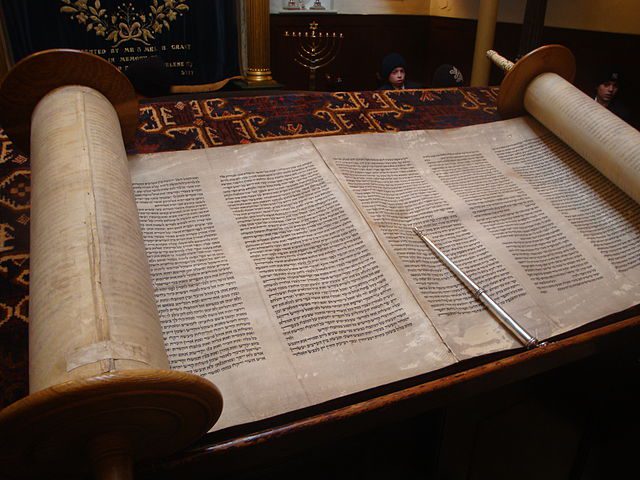
The Barely Protestant YouTube channel is run by an Anglican priest, Fr. James, who apparently wishes to refrain from publicly using his last name. The description of the site reads: “An Anglo-Catholic who is on YouTube to help explain the historic (non-Papal) Catholic Faith within the Anglican Tradition.”
*****
This is a reply to his video, “Response to Fr. Mitch Pacwa’s Critique of Sola Scriptura” (4-6-21). As always, I will be looking to see if he can produce biblical proof of sola Scriptura, as he logically must, for the doctrine to escape being self-defeating. His words will be in blue.
The Protestant reformers did not believe, by sola Scriptura, that it’s the Bible alone and you don’t have anything else. [3:28-34]
I totally agree. Fr. James’ task, however, is to present his notion of the authentic definition of sola Scriptura, and where it is found in the Bible (i.e., why he believes it: based on the Bible or extra-biblical reasons). Fr. Mitch Pacwa, whom Fr. James is analyzing and citing, does indeed offer an erroneous and not properly qualified and nuanced “radically Bible alone” definition. This is unfortunate. All sides need to accurately understand the beliefs of others, and to not misrepresent their doctrines.
Historically, what is sola Scriptura? I’m going to read from Article 6 of the Thirty-Nine Articles. The 39 Articles is part of our confessional standards as Anglicans. [he then cites it]
VI. OF THE SUFFICIENCY OF THE HOLY SCRIPTURES FOR SALVATION
Holy Scripture containeth all things necessary to salvation: so that whatsoever is not read therein, nor may be proved thereby, is not to be required of any man, that it should be believed as an article of the Faith, or be thought requisite or necessary to salvation. [5:19-6:01]
Note that this also proves my contention: that sola Scriptura must be proven by Scripture (according to this Anglican Confession), because it states “whatsoever is not read therein, nor may be proved thereby, is not to be required of any man, that it should be believed as an article of the Faith.” Therefore, if sola Scriptura can’t be thus proven, Fr. James’ Anglican tradition informs him, it ought not be believed, let alone required for all, and let alone raised to the level of the rule of faith and one of the two “pillars” of the Protestant Reformation (along with sola fide: faith alone).
Fr. James (at least so far, and I am answering as I listen) doesn’t include the aspect of “infallibility” in his definition, which is about as wrong as what Fr. Pacwa offered. It’s part of the equation of the definition and essence of sola Scriptura, as seen from many recent defenders of that doctrine:
Reformed Baptist apologist James White (already mentioned by Fr. James in his video) defines sola Scriptura as I have myself defined it for 31 years as a Catholic:
The doctrine of sola scriptura, simply stated, is that the Scriptures alone are sufficient to function as the regula fidei, the infallible rule of faith for the Church. (The Roman Catholic Controversy, Minneapolis: Bethany House Publishers, 1996, 59; the original was all italics)
Reformed Protestant Keith A. Mathison concurs:
Scripture . . . is the only inspired and inherently infallible norm, and therefore Scripture is the only final authoritative norm. (The Shape of Sola Scriptura, Moscow, Idaho: Canon Press, 2001, 260)
So does the late Protestant apologist Norman Geisler:
What Protestants mean by sola scriptura is that the Bible alone is the infallible written authority for faith and morals. (Roman Catholics and Evangelicals: Agreements and Differences, Grand Rapids, Michigan: Baker Books, 1995, 178; co-author, Ralph E. Mackenzie)
Lutheran pastor Jordan Cooper agrees as well:
Sola Scriptura . . . recognizes that there are many authorities, but Scripture is the sole infallible authority, so Scripture has preference over all other authorities we might have. (“An Explanation of Sola Scriptura“, 3-11-19)
As does Baptist pastor Gavin Ortlund:
Sola Scriptura has always been maintained as the view that the Bible is the only infallible rule for theology. (“Sola Scriptura DEFENDED”, 12-15-20).
The above is the standard definition of sola Scriptura. Fr. James has (at least so far) neglected to include the crucial variable of infallibility in it: which denies infallibility to anything else. No one is arguing that Scripture isn’t unique, the sole inspired revelation, the written Word of God or that it is materially sufficient. The relevant question in this debate is: “is Scripture the only infallible authority in Christian life and theology?” And secondly: where is such a doctrine taught in the Bible? If it’s not in the Bible, it is clearly false, because it’s a view that has to do fundamentally with the Bible. If it comes from outside the Bible, it would be self-contradictory and self-defeating.
Infallibility is a lesser characteristic than inspiration, which Scripture alone possesses. Catholics contend that there are carefully defined instances of the exercise of infallible authority other than Scripture: from the Church, sacred apostolic tradition, ecumenical councils, and popes. In other words, when sola Scriptura is defined in this way, as it usually is, it precludes the infallibility of these other entities. Therefore, if Scripture can be shown to teach the infallibility of anything other than Scripture, sola Scriptura is then shown to be a false doctrine.
If Fr. James objects that these guys aren’t Anglicans, I’m happy to have that discussion as well, having written a 310-page book replying to two of the most famous historic Anglican defenders of sola Scriptura: Pillars of Sola Scriptura: Replies to Whitaker, Goode, & Biblical “Proofs” for “Bible Alone” (2012). The definition of William Goode (1801-1868) is the same as I have said (expressed a bit differently, but amounting to the same thing):
The foundation upon which this truth rests is, as we have seen, briefly this; That as God is the only infallible Judge of controversies in religion, and as his voice can be recognised with certainty only in the Holy Scriptures, those Scriptures are consequently our only infallible Judge of controversies on earth. (The Divine Rule of Faith and Practice, 3 volumes, 1853, vol. 2, p. 126; see the citation online)
At the 17-minute mark, Fr. James keeps rightly objecting (over and over) to Fr. Pacwa’s false definition and straw man. That’s fine (I agree). For my purposes, I want to see why he believes in sola Scriptura, in its classic, proper “Reformation” definition, and it seems to me that the rationale (in the nature of the case) must be in Scripture itself. Will he ever do that in this video? I sure hope so.
I didn’t find any reference to a biblical defense of sola Scriptura in the entire video. If it occurred, perhaps Fr. James would be kind enough to direct me to it, so I can address his arguments. But I have two biblical arguments for an infallible Church, which are enough to refute sola Scriptura themselves.
In the Jerusalem Council, described in Acts 15, apostles (including Paul, Peter, and James) and elders got together to resolve a controversy over the place and function of circumcision, which foods were clean, and in a broader sense, how much Mosaic Law would apply to Christians. Here’s what it decided:
Acts 15:28-29 (RSV) For it has seemed good to the Holy Spirit and to us to lay upon you no greater burden than these necessary things: [29] that you abstain from what has been sacrificed to idols and from blood and from what is strangled and from unchastity. If you keep yourselves from these, you will do well. Farewell.
Here is the authority that this letter had, as seen in how Paul viewed it:
Acts 16:4 As they went on their way through the cities, they delivered to them for observance the decisions which had been reached by the apostles and elders who were at Jerusalem.
This is the universal and authoritative (and in this case, infallible) Church. A decision reached at Jerusalem was regarded as binding and in effect, “infallible” and was to be observed not just locally, but by Christians all through Asia Minor (Turkey), where Paul was preaching. This is essentially the equivalent of an ecumenical council.
1 Timothy 3:15 . . . the household of God, which is the church of the living God, the pillar and bulwark of the truth.
This may not seem compelling at first: just seven words at the end. But I believe that if we analyze it more deeply and think through it, that it provides a rock-solid argument for the infallibility of the Church. Here’s how I myself did that in my book, 100 Biblical Arguments Against Sola Scriptura (pp. 104-107, #82):
Pillars and foundations support things and prevent them from collapsing. To be a “bulwark” of the truth, means to be a “safety net” against truth turning into falsity. If the Church could err, it could not be what Scripture says it is. God’s truth would be the house built on a foundation of sand in Jesus’ parable. For this passage of Scripture to be true, the Church could not err — it must be infallible. A similar passage may cast further light on 1 Timothy 3:15:
Ephesians 2:19-21 . . . you are fellow citizens with the saints and members of the household of God, [20] built upon the foundation of the apostles and prophets, Christ Jesus himself being the cornerstone, [21] in whom the whole structure is joined together and grows into a holy temple in the Lord;
1 Timothy 3:15 defines “household of God” as “the church of the living God.” Therefore, we know that Ephesians 2:19-21 is also referring to the Church, even though that word is not present. Here the Church’s own “foundation” is “the apostles and prophets, Christ Jesus himself being the cornerstone.” The foundation of the Church itself is Jesus and apostles and prophets.
Prophets spoke “in the name of the Lord” (1 Chron 21:19; 2 Chron 33:18; Jer 26:9), and commonly introduced their utterances with “thus says the Lord” (Is 10:24; Jer 4:3; 26:4; Ezek 13:8; Amos 3:11-12; and many more). They spoke the “word of the Lord” (Is 1:10; 38:4; Jer 1:2; 13:3, 8; 14:1; Ezek 13:1-2; Hos 1:1; Joel 1:1; Jon 1:1; Mic 1:1, et cetera). These communications cannot contain any untruths insofar as they truly originate from God, with the prophet serving as a spokesman or intermediary of God (Jer 2:2; 26:8; Ezek 11:5; Zech 1:6; and many more). Likewise, apostles proclaimed truth unmixed with error (1 Cor 2:7-13; 1 Tim 2:7; 2 Tim 1:11-14; 2 Pet 1:12-21).
Does this foundation have any faults or cracks? Since Jesus is the cornerstone, he can hardly be a faulty foundation. Neither can the apostles or prophets err when teaching the inspired gospel message or proclaiming God’s word. In the way that apostles and prophets are infallible, so is the Church set up by our Lord Jesus Christ. We ourselves (all Christians) are incorporated into the Church (following the metaphor), on top of the foundation.
1 Peter 2:4-9 Come to him, to that living stone, rejected by men but in God’s sight chosen and precious; [5] and like living stones be yourselves built into a spiritual house, to be a holy priesthood, to offer spiritual sacrifices acceptable to God through Jesus Christ. [6] For it stands in scripture: “Behold, I am laying in Zion a stone, a cornerstone chosen and precious, and he who believes in him will not be put to shame.” [7] To you therefore who believe, he is precious, but for those who do not believe, “The very stone which the builders rejected has become the head of the corner,” [8] and “A stone that will make men stumble, a rock that will make them fall”; for they stumble because they disobey the word, as they were destined to do. [9] But you are a chosen race, a royal priesthood, a holy nation, God’s own people, that you may declare the wonderful deeds of him who called you out of darkness into his marvelous light. (cf. Isa 28:16)
Jesus is without fault or untruth, and he is the cornerstone of the Church. The Church is also more than once even identified with Jesus himself, by being called his “Body” (Acts 9:5 cf. with 22:4 and 26:11; 1 Cor 12:27; Eph 1:22-23; 4:12; 5:23, 30; Col 1:24). That the Church is so intimately connected with Jesus, who is infallible, is itself a strong argument that the Church is also infallible and without error.
Therefore, the Church is built on the foundation of Jesus (perfect in all knowledge), and the prophets and apostles (who spoke infallible truth, often recorded in inspired, infallible Scripture). Moreover, it is the very “Body of Christ.” It stands to reason that the Church herself is infallible, by the same token. In the Bible, nowhere is truth presented as anything less than pure truth, unmixed with error. That was certainly how Paul conceived his own “tradition” that he received and passed down.
Knowing what truth is, how can its own foundation or pillar be something less than total truth (since truth itself contains no falsehoods, untruths, lies, or errors)? It cannot. It is impossible. It is a straightforward matter of logic and plain observation. A stream cannot rise above its source. What is built upon a foundation cannot be greater than the foundation. If it were, the whole structure would collapse.
If an elephant stood on the shoulders of a man as its foundation, that foundation would collapse. The base of a skyscraper has to hold the weight above it. The foundations of a suspension bridge over a river have to be strong enough to support that bridge.
Therefore, we must conclude that if the Church is the foundation of truth, the Church must be infallible, since truth is infallible, and the foundation cannot be lesser than that which is built upon it. And since there is another infallible authority apart from Scripture, sola scriptura must be false.
***
Practical Matters: Perhaps some of my 4,000+ free online articles (the most comprehensive “one-stop” Catholic apologetics site) or fifty books have helped you (by God’s grace) to decide to become Catholic or to return to the Church, or better understand some doctrines and why we believe them.
Or you may believe my work is worthy to support for the purpose of apologetics and evangelism in general. If so, please seriously consider a much-needed financial contribution. I’m always in need of more funds: especially monthly support. “The laborer is worthy of his wages” (1 Tim 5:18, NKJV). 1 December 2021 was my 20th anniversary as a full-time Catholic apologist, and February 2022 marked the 25th anniversary of my blog.
PayPal donations are the easiest: just send to my email address: [email protected]. You’ll see the term “Catholic Used Book Service”, which is my old side-business. To learn about the different methods of contributing, including 100% tax deduction, etc., see my page: About Catholic Apologist Dave Armstrong / Donation Information. Thanks a million from the bottom of my heart!
***
Photo credit: Lawrie Cate (3-9-09) [Wikimedia Commons / Creative Commons Attribution 2.0 Generic license]

***
Summary: Anglo-Catholic Fr. James, of the “Barely Protestant” YouTube channel critiques a Catholic criticism of sola Scriptura but unfortunately provides no biblical proofs at all.
Previous Post
May 5, 2022
Reply to Collin Brooks on Sola Scriptura
Next Post
May 10, 2022 Review: "The Orthodoxy of Amoris Laetitia" (Pedro Gabriel)
Browse Our Archives
Select a Category & Last Things About Me Anti-Catholicism Atheism & Agnosticism Baptism and Sacramentalism Bible and Tradition Blessed Virgin Mary Books by Dave Armstrong C. S. Lewis Calvinism & General Protestantism Catholic Apologetics Catholic Apologists Catholic conversion Catholic converts Christmas Church (Ecclesiology) Church History Conversion and Converts Development of Doctrine Eastern Orthodoxy Ecumenism & Christian Unity Eucharist & Liturgy Fathers of the Church French Translations G. K. Chesterton Hell Hell & Satan Hell & Satan & Last Things Heresies & Comparative Religion Holistic Health Inquisition & Crusades & Scandals James White Jews & Judaism & Old Testament John Calvin John Henry Newman Liberal / Modernist Theology Life Issues Literary Resume Lutheranism Mariology Martin Luther Music Orthodoxy Papacy & Infallibility Personal Page Philosophy & Science Political & Ethical & Moral Issues Protestant Persecution & Intolerance Protestantism Purgatory Purgatory & Penance Romantic & Imaginative Theology Saints & Purgatory & Penance Salvation Salvation & Justification Satan & Last Things Sexuality and Gender Issues Spanish Translations Traditionalism vs. Radical Catholic Reactionaries Traducciones al español / tradução para português Trinitarianism & Christology Uncategorized Videos
Select a Month October 2026 September 2026 August 2026 July 2026 June 2026 May 2026 April 2026 March 2026 February 2026 January 2026 December 2025 November 2025 October 2025 September 2025 August 2025 July 2025 June 2025 May 2025 April 2025 March 2025 February 2025 January 2025 December 2024 November 2024 October 2024 September 2024 August 2024 July 2024 June 2024 May 2024 April 2024 March 2024 February 2024 January 2024 December 2023 November 2023 October 2023 September 2023 August 2023 July 2023 June 2023 May 2023 April 2023 March 2023 February 2023 January 2023 December 2022 November 2022 October 2022 September 2022 August 2022 July 2022 June 2022 May 2022 April 2022 March 2022 February 2022 January 2022 December 2021 November 2021 October 2021 September 2021 August 2021 July 2021 June 2021 May 2021 April 2021 March 2021 February 2021 January 2021 December 2020 November 2020 October 2020 September 2020 August 2020 July 2020 June 2020 May 2020 April 2020 March 2020 February 2020 January 2020 December 2019 November 2019 October 2019 September 2019 August 2019 July 2019 June 2019 May 2019 April 2019 March 2019 February 2019 January 2019 December 2018 November 2018 October 2018 September 2018 August 2018 July 2018 June 2018 May 2018 April 2018 March 2018 February 2018 January 2018 December 2017 November 2017 October 2017 September 2017 August 2017 July 2017 June 2017 May 2017 April 2017 March 2017 February 2017 January 2017 December 2016 November 2016 October 2016 September 2016 August 2016 July 2016 June 2016 May 2016 April 2016 March 2016 February 2016 January 2016 December 2015 November 2015 October 2015 September 2015 August 2015 July 2015 June 2015 May 2015 April 2015 March 2015 February 2015 January 2015 December 2014 November 2014 October 2014 September 2014 August 2014 July 2014 June 2014 April 2014 March 2014 February 2014 January 2014 December 2013 November 2013 October 2013 September 2013 August 2013 July 2013 June 2013 April 2013 March 2013 February 2013 January 2013 December 2012 November 2012 October 2012 September 2012 August 2012 July 2012 June 2012 May 2012 April 2012 March 2012 February 2012 January 2012 December 2011 November 2011 October 2011 September 2011 August 2011 July 2011 June 2011 April 2011 March 2011 February 2011 October 2010 September 2010 August 2010 July 2010 April 2010 March 2010 December 2009 October 2009 August 2009 July 2009 June 2009 May 2009 March 2009 February 2009 October 2008 September 2008 April 2008 March 2008 February 2008 January 2008 December 2007 November 2007 October 2007 May 2007 March 2007 February 2007 January 2007 November 2006 October 2006 September 2006 August 2006 July 2006 June 2006 May 2006 April 2006 March 2006 February 2006 October 2005 June 2005 April 2005 February 2005 July 2004 May 2004 April 2004
Follow Us!
TAKE THE
Religious Wisdom Quiz
What valley did David face Goliath in?
Select your answer to see how you score.
Valley of Elah Valley of Jezreel Valley of Achor Kidron Valley
Books by This Author Books by Dave Armstrong
Related posts from Biblical Evidence for Catholicism

A Few "Worst" & "Best" Arguments vs. Protestantism
Biblical Evidence for Catholicism

Deuterocanon & Javier Perdomo's Straw Men
Biblical Evidence for Catholicism

St. Athanasius & the Deuterocanon (vs. Javier Perdomo)
Biblical Evidence for Catholicism

Jerusalem Council vs. James White & Sola Scriptura
Biblical Evidence for Catholicism
TRENDING AT PATHEOS Catholic

Nearly every morning, I make the drive to Detroit with my high-school-age...

The Real AI Story Is Adoption Without Trust
Artificial intelligence has crossed a political threshold. It is no longer a...

A new article, written by Jeff Lindsay and Gale L. Pooley,...

Swimfan: Forgotten Aughts Pleasures
This is a recovery effort. In 2002, My Big Fat Greek Wedding...

Top Three Anti-Catholic Lies About Catholicism
This is my initial transcript for the video, "THE 3 WORST...

Pope Leo Celebrates Mass for Nurses & Docs...
I don't have any idea how he did it, but Pope Leo...
view all Catholic blogs
Ad-Free & Subscriber Log-In Subscription Support
- About Us
- 2026 Calendar
- Videos
- Podcasts
- Library of World Religions
- Faith In Media Tracker
- Advertise With Us
- Write for Us
- Privacy Policy
- Terms of Service
- Do Not Sell My Data
- Contact Us
- Radiant Digital
- Manage Newsletter Subscriptions
- Unsubscribe From Notifications
- Sitemap
Copyright 2008-2026, Patheos. All rights reserved.
Subscription Support Ad-Free & Subscriber Log-In
Follow Patheos