
BuddhistCatholicContemplativeEvangelicalGeneral ChristianHinduJewishLatter-day SaintMuslimNew VisionsProgressive Christian
Beliefs
- Buddhist
- Catholic
- Contemplative
- Evangelical
- General Christian
- Hindu
- Jewish
- Latter-day Saint
- More Voices
- Muslim
- New Visions
- Pagan
- Progressive Christian
Topics
- Religion News
- Food and Religion
- Sports and Religion
- Religious Art
- Religious Music and Entertainment
- Religious Events
- History and Religion
- Style and Religion
- Politics and Religion
- Women in Religion
- Recreation Outdoors and Religion
- Business Finance and Religion
- Careers Workplace and Religion
- Education and Religion
- Family Parenting and Religion
- Health Fitness and Religion
- Home and Religion
- Relationships and Religion
- Technology and Religion
- Travel and Religion
Columnists
- Buddhist Columnists
- Business Finance and Religion Columnists
- Careers Workplace and Religion Columnists
- Catholic Columnists
- Contemplative Columnists
- Education and Religion Columnists
- Evangelists Columnists
- Family Parenting and Religion Columnists
- General Christian Columnists
- Health Fitness and Religion Columnists
- Hindu Columnists
- History and Religion Columnists
- Home and Religion Columnists
- Jewish Columnists
- More Voices Columnists
- Latter Day Columnists
- Muslim Columnists
- New Visions Columnists
- Nonreligious Columnists
- Pagan Columnists
- Politics and Religion Columnists
- Progressive Columnists
- Recreation Outdoors and Religion Columnists
- Relationships and Religion Columnists
- Religion News Columnists
- Religious Art Columnists
- Religious Events Columnists
- Religious Music and Entertainment Columnists
- Sports and Religion Columnists
- Style and Religion Columnists
- Technology and Religion Columnists
- Travel and Religion Columnists
- Women in Religion Columnists
Resource Library
- 2026 Calendar
- Library of World Religions
- The 100 Most Holy Places on Earth
- Patheos Answers
- Podcasts
- Videos
- Faith Leaders Database
- Anglican Episcopalian
- Bahai
- Baptist
- Buddhism
- Christianity
- Confucianism
- Eastern Orthodoxy
- Hinduism
- Holiness and Pentecostal
- ISKCON
- Islam
- Judaism
- Lutheran
- Methodist
- The Church of Jesus Christ of Latter-day Saints
- New Age
- Paganism
- Presbytarian and Reformed
- Protestantism
- Religion Behind the Scenes
- Roman Catholic
- Scientology
- Shia Islam
- Sikhism
- Sufism
- Sunni Islam
- Taoism
- Zen
- See all religions
Research Tools
 Ad-Free & Subscriber Log-In Subscription Support
Ad-Free & Subscriber Log-In Subscription Support
Follow Patheos 

- Trending:
- Forgiveness
- |
- Marriage
- |
- Consciousness
- |
- Death Penalty
- |
- Election
- |
- Halloween

-
About
-
Catholic Apologetics
-
Church History
-
Great Apologists
-
Christian Worldview
-
Protestantism & Misc.
- Home
- Catholic
- History and Religion
- Review: “The Orthodoxy of Amoris Laetitia” (Pedro Gabriel)
Review: “The Orthodoxy of Amoris Laetitia” (Pedro Gabriel)
Last updated on: June 6, 2026 at 12:00 am by Dave Armstrong
Review: “The Orthodoxy of Amoris Laetitia” (Pedro Gabriel) 2026-06-06T00:00:25-04:00 Dave Armstrong
Patheos Explore the world's faith through different perspectives on religion and spirituality! Patheos has the views of the prevalent religions and spiritualities of the world.
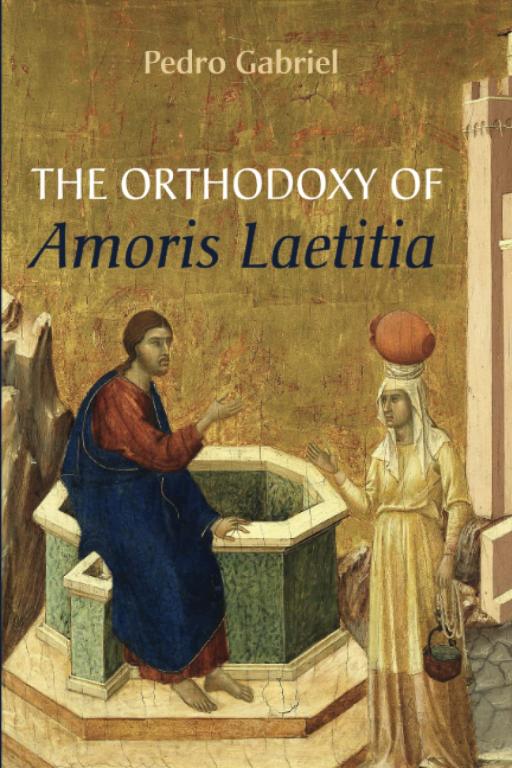
Dr. Pedro Gabriel, a Portugese oncologist, is also a fine Catholic apologist. He co-founded and is a regular contributor to the excellent website, Where Peter Is: which contains an extensive collection of articles in defense of the orthodoxy of Pope Francis. He is currently taking classes in moral theology at the Pontifical University of the Holy Cross, and earned a Diploma with Honors from the London School of Journalism. He also writes Catholic novels “with a Tolkienite flavor.”
*****
Dr. Gabriel’s book, The Orthodoxy of Amoris Laetitia, was published on 18 February 2022 (Eugene, Oregon: Resource Publications). The introduction on its back cover reads:
When Amoris Laetitia was published in 2016, it became the most controversial papal document since Humanae Vitae. Many said that Amoris Laetitia was “confusing” and “required clarification.” Others claimed that it was heterodox, while comparing it unfavorably with other church documents. But is this really the case?
In this book, Pedro Gabriel sets out to explore Amoris Laetitia’s controversial eighth chapter. What does the document actually teach as it pertains to the access of divorced and civilly remarried people to the Eucharist, and how can it constitute a legitimate development? As Pedro Gabriel tries to answer these questions, he will also cover the most common arguments being leveled against Amoris Laetitia, and show how this exhortation can be reconciled with Catholic orthodoxy.
Dr. Gabriel, in the Preface, wrote about the controversies surrounding the release of Pope Francis’ post-synodal apostolic exhortation Amoris Laetitia on 8 April 2016, and mentioned a shortcoming that has been a hallmark of “Pope Francis criticism” these past nine years:
I had learned a lesson during Benedict XVI’s pontificate: never rely blindly on media reporting. So I did what I had learned during the previous papacy: not to be swept away by the tsunami of scandal, but to consult the primary sources instead. . . .
Time after time, I would read the actual church documents from primary, authoritative sources and feel like the commentaries from certified apologists and popular pundits had missed the mark. It seemed like they were trying to read church doctrine according to a preconceived image of the church that did not always correspond to reality. (pp. xi, xiv-xv)
Indeed, this method is the only sensible (and charitable) way to go about things. But it is violated time and again. I can bear witness that this is the case, based on the course of my own apologetics endeavors: specifically those in defense of Pope Francis.
The moral and liturgical issues involved in the controversies surrounding this papal document are complex and multi-faceted. I can’t possibly delve into all that in the space of a book review. So I have decided — for the sake of relative brevity — to concentrate on portions of Dr. Gabriel’s book where he specifically notes continuity of Amoris and Pope Francis’ ideas and opinions, with those of the two previous popes: Pope Benedict XVI and Pope St. John Paul II. This treatment of consistent development of the Church’s doctrine was addressed in Section III (“A Harmonious Development”), comprising chapters 10-15, or roughly 100 pages out of 281 total.
One of the most important and central points of the entire book occurs in chapter 10, pages 142-143. Misunderstandings along these lines lie underneath much of the flawed and excessive criticism of Amoris Laetitia:
Amoris Laetitia relies on the teaching on mitigating circumstances. . . . mitigating circumstances do not contradict other parts of doctrine, namely the objectively evil nature of all intrinsically evil acts. In fact, in that very same chapter [7], I make a distinction between the doctrine of mitigating circumstances and situation ethics. Adopting the latter would be to adopt the illegitimate model of doctrinal discontinuity, since it contradicts the objectively evil nature of some sins. But the former is a legitimate development.
Therefore, if Amoris Laetitia grounds itself on the teaching on mitigating circumstances, while the previous church pronouncements . . . based themselves on the doctrine of the objectively evil nature of sin, there can be no doctrinal contradiction. In fact, mitigating circumstances presuppose the doctrine of the objectively evil nature of sin. Mitigating circumstances diminish subjective culpability, and there can be no culpability in an act that is not evil. The teachings build upon each other.
What we have observed is a shift of emphasis. Francis chose to emphasize subjective culpability, while his predecessors chose to emphasize the objectively evil nature of sin. Papal critics observe this shift of emphasis and wrongly conclude that a de-emphasizing of the objectively evil nature of sin means that this part of doctrine was abandoned in favor of a new, contradictory teaching. This is, however, erroneous.
In the next chapter (11), Dr. Gabriel tackles the alleged discontinuity or contradiction between Pope St. John Paul II’s post-synodal apostolic exhortation Familiaris Consortio, from 1981. It was exactly the same sort of papal document as Amoris Laetitia, although, as Dr. Gabriel noted, “papal critics will sometimes ascribe a low magisterial weight to Amoris Laetitia” (p. 152), while viewing Familiaris as considerably more authoritative. This has no canonical basis.
Dr. Gabriel (on p. 154) cites Familiaris Consortio, section 84, which asserts that divorced and remarried couples may not receive Holy Communion in a Catholic Church. But Pope John Paul the Great went on to specify a condition in which such persons could receive Holy Communion:
. . . a way of life that is no longer in contradiction to the indissolubility of marriage. This means, in practice, that when, for serious reasons, such as for example the children’s upbringing, a man and a woman cannot satisfy the obligation to separate, they “take on themselves the duty to live in complete continence, that is, by abstinence from the acts proper to married couples.” [my bolding and italics]
Note that such a couple is still living together, but abstaining from sexual relations. Thus, this is an example of a divorced and remarried person being able to receive the Eucharist. But they can only do so by refraining from sexual activity with the person to whom they are not truly married, in the eyes of the Church. This was proclaimed by Pope St. John Paul II over forty years ago. Yet we saw no firestorm of protest or accusations of doctrinal / moral heterodoxy; no “dubia” confronting him. Dr. Gabriel demonstrates a direct line of continuity in development between Familiaris (still in section 84) and Amoris:
Also, even if Familiaris Consortio did not go as far as Amoris Laetitia regarding sacramental discipline, it certainly laid out the foundations for Amoris Laetitia, by saying:
Pastors must know that, for the sake of truth, they are obliged to exercise careful discernment of situations. There is in fact a difference between those who have sincerely tried to save their first marriage and have been unjustly abandoned, and those who through their own grave fault have destroyed a canonically valid marriage. Finally, there are those who have entered into a second union for the sake of the children’s upbringing, and who are sometimes subjectively certain in conscience that their previous and irreparably destroyed marriage had never been valid. (pp. 162-163; italics added by Dr. Gabriel to Pope St. John Paul’s words)
Dr. Gabriel then observed:
Anyway, we should bear in mind that Familiaris Consortio does not claim to have the last word on the matter. Familiaris Consortio urges a greater dialogue between pastors and laity, pastors and families, and theologians and experts in family matters. “In this way the teaching of the Magisterium becomes better understood and the way is opened to its progressive development.” [section 73]
It seems to me to be undeniable that this dialogue is precisely what Pope Francis sought to undertake with the two synods of the bishops on the family. (p. 163; italics added by Dr. Gabriel to Pope St. John Paul’s words)
In chapter 12, Dr. Gabriel ably shows how Amoris Laetitia does not contradict (rather, consistently develops) the outlook of Pope St. John Paul II’s 1993 papal encyclical Veritatis Splendor.
In chapter 13, Amoris is shown to be in harmony with Pope Benedict XVI’s a post-synodal apostolic exhortation, Sacramentum Caritatis (2007). As with Familiaris, that document (cited by Dr. Gabriel on pages 183-184) also affirmed the validity of Catholics in an irregular marital situation being able to receive Holy Communion, if they abstain from sexual relations:
Finally, where the nullity of the marriage bond is not declared and objective circumstances make it impossible to cease cohabitation, the Church encourages these members of the faithful to commit themselves to living their relationship in fidelity to the demands of God’s law, as friends, as brother and sister; in this way they will be able to return to the table of the Eucharist, taking care to observe the Church’s established and approved practice in this regard. [section 29; italics added by Dr. Gabriel]
On page 200, Dr. Gabriel notes that the Catechism of the Catholic Church (#1650) also teaches the same doctrine and practice.
If we go back to chapter 4, where Pope Francis’ own views are discussed, we see that they are developments of the thoughts of Pope St. John Paul II and Pope Benedict XVI. Dr. Gabriel observed, in answering his own question about whether “every” divorced and remarried person could receive Holy Communion:
I think the answer to this question is found in footnote 351 itself. The footnote starts with “in certain cases, this can include the help of the sacraments.” By definition, this wording excludes some cases. . . .
On the other hand, the main topic of Amoris Laetitia’s eighth chapter (where the footnote is located) is discernment. If Amoris Laetitia simply opened up the possibility to any civilly remarried person who sought it, why spend so much time talking about discernment at all? . . .
Nevertheless, is there actual textual evidence supporting the claim that the exhortation does not simply open access to the Eucharist to every single divorced and remarried person? Let us read #300:
These attitudes are essential for avoiding the grave danger of misunderstandings, such as the notion that any priest can quickly grant “exceptions,” or that some people can obtain sacramental privileges in exchange for favours.
Amoris Laetitia does not give carte blanche for a priest to grant exceptions or sacramental privileges at will. According to the pope himself, that would be a “grave misunderstanding.” (pp. 49-50)
Dr. Gabriel elaborates upon Pope Francis’ teaching; getting to “the heart of the matter” in terms of the current “controversy”:
Since it was in #303 that Pope Francis mentions not fulfilling the objective ideal, let us contextualize by reading the beginning of that paragraph:
Recognizing the influence of such concrete factors, we can add that individual conscience needs to be better incorporated into the Church’s praxis in certain situations which do not objectively embody our understanding of marriage.
Previously, we saw that conscience determines what the most generous response is, even if it is not yet the fully objective ideal. This same conscience needs to be “better incorporated into the Church’s praxis.” How? By “recognizing the influence of such concrete factors.”
What “concrete factors” are these? This directs us to the previous couple of paragraphs, which in fact deal solely with those “concrete
factors”:The Church possesses a solid body of reflection concerning mitigating factors and situations. Hence it can no longer simply be said that all those in any “irregular” situation are living in a state of mortal sin and are deprived of sanctifying grace. [AL, 301]
The church teaches that these mitigating factors may reduce culpability in such a way that a sin with grave matter is not a mortal sin. This is doctrinally sound . . . It is also doctrinally sound to state that a person can receive communion if he or she is not in mortal sin . . . Pope Francis would only incur heresy if he stated the opposite, allowing people in mortal sin to receive communion.
Pope Francis brings up the church’s “solid body of reflection concerning mitigating factors” explicitly to prevent the notion that “the demands of the Gospel are in any way being compromised.” [AL, 301] (pp. 52-53)
So what is the bottom line in Pope Francis’ development of sacramental and pastoral practice?:
[T]he permissibility of communion to some who have divorced and civilly remarried, per footnote 351, has everything to do with mitigating factors diminishing subjective culpability, so that the person can “live in God’s grace” (i.e., not be in mortal sin).
In fact, this interpretation is even confirmed elsewhere in the text:
What is possible is simply a renewed encouragement to undertake a responsible personal and pastoral discernment of particular cases, one which would recognize that, since “the degree of responsibility is not equal in all cases,” the consequences or effects of a rule need not necessarily always be the same. [AL, 300] (p. 54)
I think the examples I have shown illustrate the remarkable cogency and articulate nature of this wonderful and immensely helpful book. The above material only scratches the surface (though I hope it adequately covers the “heart” of it). Dr. Gabriel seems to comprehensively approach the vexed topic from all angles: always bringing to it a faithful attention to orthodoxy and Church precedent, including very subtle and nuanced aspects of moral and pastoral theology, and a proper understanding of Newmanian doctrinal development (itself a very poorly understood element among far too many).
This is sorely needed in our time, in which suspicions and polarization run rampant, and in which (sadly) Catholic apologetics itself is sometimes prone to outside corrupting influences, including cultural and political factors (whether from the “right” or “left”) that are “extraneous” to the Catholic Mind and contradictory to it. Dr. Gabriel, in his Conclusion, notes how such critical apologists are habitually “scrutinizing every single
act of the Holy Father and portraying it in the worst possible light, in order to validate a narrative that slowly took form and shape. They did this sometimes with open hostility and sometimes in more subtle ways, . . .” (p. 260).
As a full-time Catholic apologist myself, and defender of this pope and all the recent popes, I have noticed the same tendencies again and again. It’s obviously not charitable to interpret the Holy Father’s words and actions “in the worst possible light.” This is the grave sin of bearing false witness; all the more so when directed towards a pope, and it is directly contrary to a love that “believes all things, hopes all things” (1 Cor 13:7, RSV), and the Christian duty to “in humility count others better than yourselves” (Phil 2:3).
Near the end, Dr. Gabriel makes a very important statement of purpose:
Finally, I hope that this book might have helped genuinely confused Catholics to have a little more clarity on this issue. I hope, at least, that their suspicions against the Holy Father might have been attenuated somewhat, so that they may give him another chance and start reading him with a new perspective. (p. 262)
May it be devoutly hoped and prayed for! I urge every Catholic who is troubled by Pope Francis and/or particularly, Amoris Laetitia, to buy this superb book and sincerely, prayerfully ponder its content. If you don’t fully understand it, read it twice. I think it is that good and that important. You owe it to yourself, to the Holy Father, and the principle of fair play.
***
Photo credit: image of the book cover of The Orthodoxy of Amoris Laetitia, on its Amazon book page.
***
Summary: Dr. Pedro Gabriel’s book, The Orthodoxy of Amoris Laetitia defends the controversial papal document against numerous fashionable and unfounded criticisms.
The Orthodoxy of Amoris Laetitia
Previous Post
May 5, 2022
Sola Scriptura (vs. "Barely Protestant" Anglican Priest)
Next Post

May 12, 2022 Reply to Gavin Ortlund on Purgatory
Browse Our Archives
Select a Category & Last Things About Me Anti-Catholicism Atheism & Agnosticism Baptism and Sacramentalism Bible and Tradition Blessed Virgin Mary Books by Dave Armstrong C. S. Lewis Calvinism & General Protestantism Catholic Apologetics Catholic Apologists Catholic conversion Catholic converts Christmas Church (Ecclesiology) Church History Conversion and Converts Development of Doctrine Eastern Orthodoxy Ecumenism & Christian Unity Eucharist & Liturgy Fathers of the Church French Translations G. K. Chesterton Hell Hell & Satan Hell & Satan & Last Things Heresies & Comparative Religion Holistic Health Inquisition & Crusades & Scandals James White Jews & Judaism & Old Testament John Calvin John Henry Newman Liberal / Modernist Theology Life Issues Literary Resume Lutheranism Mariology Martin Luther Music Orthodoxy Papacy & Infallibility Personal Page Philosophy & Science Political & Ethical & Moral Issues Protestant Persecution & Intolerance Protestantism Purgatory Purgatory & Penance Romantic & Imaginative Theology Saints & Purgatory & Penance Salvation Salvation & Justification Satan & Last Things Sexuality and Gender Issues Spanish Translations Traditionalism vs. Radical Catholic Reactionaries Traducciones al español / tradução para português Trinitarianism & Christology Uncategorized Videos
Select a Month October 2026 September 2026 August 2026 July 2026 June 2026 May 2026 April 2026 March 2026 February 2026 January 2026 December 2025 November 2025 October 2025 September 2025 August 2025 July 2025 June 2025 May 2025 April 2025 March 2025 February 2025 January 2025 December 2024 November 2024 October 2024 September 2024 August 2024 July 2024 June 2024 May 2024 April 2024 March 2024 February 2024 January 2024 December 2023 November 2023 October 2023 September 2023 August 2023 July 2023 June 2023 May 2023 April 2023 March 2023 February 2023 January 2023 December 2022 November 2022 October 2022 September 2022 August 2022 July 2022 June 2022 May 2022 April 2022 March 2022 February 2022 January 2022 December 2021 November 2021 October 2021 September 2021 August 2021 July 2021 June 2021 May 2021 April 2021 March 2021 February 2021 January 2021 December 2020 November 2020 October 2020 September 2020 August 2020 July 2020 June 2020 May 2020 April 2020 March 2020 February 2020 January 2020 December 2019 November 2019 October 2019 September 2019 August 2019 July 2019 June 2019 May 2019 April 2019 March 2019 February 2019 January 2019 December 2018 November 2018 October 2018 September 2018 August 2018 July 2018 June 2018 May 2018 April 2018 March 2018 February 2018 January 2018 December 2017 November 2017 October 2017 September 2017 August 2017 July 2017 June 2017 May 2017 April 2017 March 2017 February 2017 January 2017 December 2016 November 2016 October 2016 September 2016 August 2016 July 2016 June 2016 May 2016 April 2016 March 2016 February 2016 January 2016 December 2015 November 2015 October 2015 September 2015 August 2015 July 2015 June 2015 May 2015 April 2015 March 2015 February 2015 January 2015 December 2014 November 2014 October 2014 September 2014 August 2014 July 2014 June 2014 April 2014 March 2014 February 2014 January 2014 December 2013 November 2013 October 2013 September 2013 August 2013 July 2013 June 2013 April 2013 March 2013 February 2013 January 2013 December 2012 November 2012 October 2012 September 2012 August 2012 July 2012 June 2012 May 2012 April 2012 March 2012 February 2012 January 2012 December 2011 November 2011 October 2011 September 2011 August 2011 July 2011 June 2011 April 2011 March 2011 February 2011 October 2010 September 2010 August 2010 July 2010 April 2010 March 2010 December 2009 October 2009 August 2009 July 2009 June 2009 May 2009 March 2009 February 2009 October 2008 September 2008 April 2008 March 2008 February 2008 January 2008 December 2007 November 2007 October 2007 May 2007 March 2007 February 2007 January 2007 November 2006 October 2006 September 2006 August 2006 July 2006 June 2006 May 2006 April 2006 March 2006 February 2006 October 2005 June 2005 April 2005 February 2005 July 2004 May 2004 April 2004
Follow Us!
TAKE THE
Religious Wisdom Quiz
Which Old Testament book is entirely written as a dialogue between God and a prophet?
Select your answer to see how you score.
Zechariah Malachi Amos Habakkuk
Books by This Author Books by Dave Armstrong
Related posts from Biblical Evidence for Catholicism

Was Peter "Any Old" Apostle? 10 Anti-Papal Arguments
Biblical Evidence for Catholicism

11 Protestant Objections to Papal Authority Debunked
Biblical Evidence for Catholicism

The Mass & Development of Doctrine (vs. Wes...
Biblical Evidence for Catholicism

Matthew 16 & the Papacy (vs. Patrick O'Brien)
Biblical Evidence for Catholicism
TRENDING AT PATHEOS Catholic

In "Irreplaceable," our book on vocation and technology, Trevor Sutton and I...

I was strolling through the top floor of the brand new Parthenon...

What Does Gêvâh Mean For Kimberley Guifoyle &...
This week, a lot of the news is focused on Kimberly Guilfoyle....

INNER CIRCLE: Profound Mystery (Of Christ In All...
Ephesians 5:31-32 “For this reason, a man will leave his father and...

Do Not Rejoice When Your Enemy Falls: The...
Turning an execution into a public spectacle is a disturbing expression of...

'The Chosen' S6 Trailer: The Passion Gets Very...
Not many watching 'The Chosen' worry about spoilers, but just because they...
view all Catholic blogs
Ad-Free & Subscriber Log-In Subscription Support
- About Us
- 2026 Calendar
- Videos
- Podcasts
- Library of World Religions
- Faith In Media Tracker
- Advertise With Us
- Write for Us
- Privacy Policy
- Terms of Service
- Do Not Sell My Data
- Contact Us
- Radiant Digital
- Manage Newsletter Subscriptions
- Unsubscribe From Notifications
- Sitemap
Copyright 2008-2026, Patheos. All rights reserved.
Subscription Support Ad-Free & Subscriber Log-In
Follow Patheos