
BuddhistCatholicContemplativeEvangelicalGeneral ChristianHinduJewishLatter-day SaintMuslimNew VisionsProgressive Christian
Beliefs
- Buddhist
- Catholic
- Contemplative
- Evangelical
- General Christian
- Hindu
- Jewish
- Latter-day Saint
- More Voices
- Muslim
- New Visions
- Pagan
- Progressive Christian
Topics
- Religion News
- Food and Religion
- Sports and Religion
- Religious Art
- Religious Music and Entertainment
- Religious Events
- History and Religion
- Style and Religion
- Politics and Religion
- Women in Religion
- Recreation Outdoors and Religion
- Business Finance and Religion
- Careers Workplace and Religion
- Education and Religion
- Family Parenting and Religion
- Health Fitness and Religion
- Home and Religion
- Relationships and Religion
- Technology and Religion
- Travel and Religion
Columnists
- Buddhist Columnists
- Business Finance and Religion Columnists
- Careers Workplace and Religion Columnists
- Catholic Columnists
- Contemplative Columnists
- Education and Religion Columnists
- Evangelists Columnists
- Family Parenting and Religion Columnists
- General Christian Columnists
- Health Fitness and Religion Columnists
- Hindu Columnists
- History and Religion Columnists
- Home and Religion Columnists
- Jewish Columnists
- More Voices Columnists
- Latter Day Columnists
- Muslim Columnists
- New Visions Columnists
- Nonreligious Columnists
- Pagan Columnists
- Politics and Religion Columnists
- Progressive Columnists
- Recreation Outdoors and Religion Columnists
- Relationships and Religion Columnists
- Religion News Columnists
- Religious Art Columnists
- Religious Events Columnists
- Religious Music and Entertainment Columnists
- Sports and Religion Columnists
- Style and Religion Columnists
- Technology and Religion Columnists
- Travel and Religion Columnists
- Women in Religion Columnists
Resource Library
- 2026 Calendar
- Library of World Religions
- The 100 Most Holy Places on Earth
- Patheos Answers
- Podcasts
- Videos
- Faith Leaders Database
- Anglican Episcopalian
- Bahai
- Baptist
- Buddhism
- Christianity
- Confucianism
- Eastern Orthodoxy
- Hinduism
- Holiness and Pentecostal
- ISKCON
- Islam
- Judaism
- Lutheran
- Methodist
- The Church of Jesus Christ of Latter-day Saints
- New Age
- Paganism
- Presbytarian and Reformed
- Protestantism
- Religion Behind the Scenes
- Roman Catholic
- Scientology
- Shia Islam
- Sikhism
- Sufism
- Sunni Islam
- Taoism
- Zen
- See all religions
Research Tools
 Ad-Free & Subscriber Log-In Subscription Support
Ad-Free & Subscriber Log-In Subscription Support
Follow Patheos 

- Trending:
- Forgiveness
- |
- Marriage
- |
- Consciousness
- |
- Death Penalty
- |
- Election
- |
- Halloween

-
About
-
Catholic Apologetics
-
Church History
-
Great Apologists
-
Christian Worldview
-
Protestantism & Misc.
- Home
- Catholic
- History and Religion
- Is First Clement Non-Papal? (vs. Jason Engwer)
Is First Clement Non-Papal? (vs. Jason Engwer)
Last updated on: June 6, 2026 at 12:46 am by Dave Armstrong
Is First Clement Non-Papal? (vs. Jason Engwer) 2026-06-06T00:46:16-04:00 Dave Armstrong
Patheos Explore the world's faith through different perspectives on religion and spirituality! Patheos has the views of the prevalent religions and spiritualities of the world.
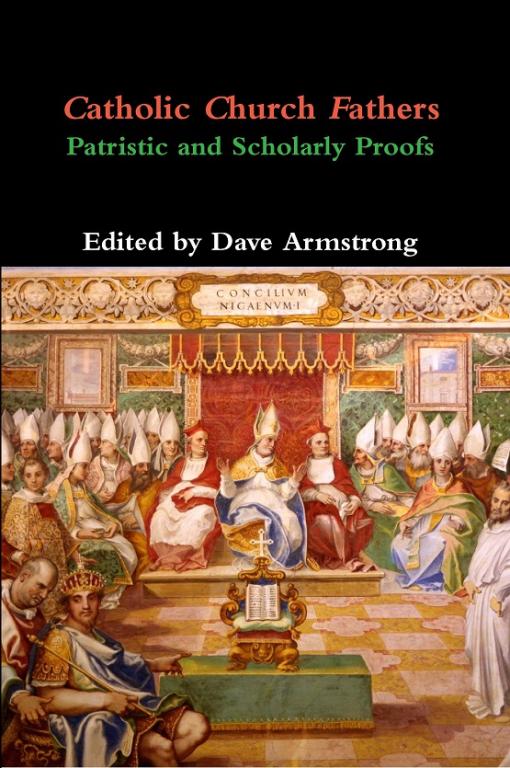
[link for book and purchase information]
I dealt with this topic at length with Reformed Protestant apologist Matt Hedges (Pope St. Clement of Rome & Papal Authority, 7-28-21). As of this date he has not yet answered it. Today I discovered some instances of Protestant anti-Catholic apologist Jason Engwer making the same argument. So I’ll revisit the topic and address his dubious claims. Jason’s words will be in blue. Those he cites for his argument will be in green and brown.
I was banned long ago from the Tribalblogue site where Jason writes, and he has long since decided to ignore any counter-replies I make (what else is new with anti-Catholics?). In the past, it was very different. He made several replies, and we even had a debate at the large anti-Catholic site CARM: that he decided to depart long before it was finished. Just for the sake of background information . . . I have posted many refutations of Jason in his section on my Anti-Catholicism web page.
*****
First Clement . . . [is] one of the earliest extra-Biblical Christian documents we have, and it represents early Christianity in the city of Rome. It has a lot of relevance to the claims of Roman Catholicism. I’ve written about some of the inconsistencies between First Clement and Catholicism in the past. (“First Clement And Pope Francis”, 3-14-13).
In this same article he cites two men to back up his position:
Some scholars anachronistically saw in the epistle [First Clement] an assertion of Roman primacy, but nowadays a hermeneutic of collegiality is more widely accepted. (Thomas Halton, Encyclopedia Of Early Christianity, Everett Ferguson, ed. [New York: Garland Publishing, Inc., 1999], 253)
This [the literary genre of First Clement] is a form of address that is identified in rhetorical handbooks and found in other texts that are contemporary with 1 Clement. It is used by those who wish to persuade others to reach for themselves a successful resolution to difficulties that they face, not to force them to submit to those who offer them this counsel….He [Clement] hopes to persuade because he cannot compel or command, and he knows that he cannot take it for granted that those whom he addresses will welcome and act on the counsel that he gives. He avoids the use of the imperative, and speaks instead in the second person plural….The second corollary is confirmation that this letter [First Clement] offers no evidence for the primacy of Rome at the time of its composition. The church at Rome writes to the church at Corinth of its own free will, but the form in which it does so makes clear that it could not take for granted that its counsel would be either welcome or in any way binding at Corinth. Nowhere does the Roman church demand obedience to its own authority, but only to that of God, as revealed in the Greek Bible and in certain Christian texts and traditions. (Andrew Gregory, in Paul Foster, ed., The Writings Of The Apostolic Fathers [New York, New York: T&T Clark, 2007], 26-28)
Let’s take a closer look at these claims. 1 Clement expressly contradicts them, and I contend that they are special pleading.
St. Clement writes (I use the standard [Protestant] Schaff translation):
If, however, any shall disobey the words spoken by Him through us, let them know that they will involve themselves in transgression and serious danger; . . . (59, my bolding and italics)
Joy and gladness will you afford us, if you become obedient to the words written by us and through the Holy Spirit root out the lawless wrath of your jealousy according to the intercession which we have made for peace and unity in this letter. (63, my bolding and italics)
Clement definitely asserts his authority over the Corinthian church far away. Again, the question is: “why?” What sense does that make in a Protestant-type ecclesiology where every region is autonomous and there is supposedly no hierarchical authority in the Christian Church? Why must they obey the bishop from another region? Not only does Clement assert strong authority; he also claims that Jesus and the Holy Spirit are speaking “through” him.
That is extraordinary, and very similar to what we see in the Jerusalem Council in Acts 15:28 (“For it has seemed good to the Holy Spirit and to us to lay upon you no greater burden than these necessary things”: RSV) and in Scripture itself. It’s not strictly inspiration but it is sure something akin to infallibility (divine protection from error and the pope as a unique mouthpiece of, or representative of God).
Catholics maintain that the Jerusalem Council is an exercise of conciliar authority in conjunction with the pope (Peter), and that 1 Clement is analogous to a papal encyclical (a pope authoritatively acting on his own).
Andrew Gregory claims that Pope Clement wishes only “to persuade . . . not to force them to submit” and that “he cannot compel or command.” “He avoids the use of the imperative” and “could not take for granted that [his] counsel would be either welcome or in any way binding at Corinth.” Supposedly, “Nowhere does the Roman church demand obedience to its own authority.”
This is simply (to put it mildly) not true to the excerpts above, which assert authority in the very strongest terms, even claiming that if the advice is disobeyed, the Corinthians would “involve themselves in transgression and serious danger.” Pope Clement claims that God is speaking “through” him (“words spoken by Him through us”). This is not mere friendly, brotherly persuasion, folks!
It’s the language of binding authority (in effect straight from God via His pope), accompanied by a penalty if it’s not heeded. Gregory can repeat his claims as many times as he wants, but it doesn’t overcome the plain facts of the text of 1 Clement, that expressly contradicts his contentions.
Moreover, Max Lackmann, a Lutheran, makes the observation:
Clement, as the spokesman of the whole People of God . . . admonishes the Church of Corinth in serious, authoritative and brotherly tones to correct the internal abuses of their ecclesiastical community. He censures, exhorts, cautions, entreats . . . The use of the expression send back in the statement: Send back speedily unto us our messengers (1 Clement 65,1), is not merely a special kind of biblical phrase but also a form of Roman imperial command. The Roman judge in a province of the empire sent back a messenger or a packet of documents to the imperial capital or to the court of the emperor (Acts 25:21). Clement of Rome doubtless also knew this administrative terminology of the imperial government and used it effectively. (In Hans Asmussen, et al, The Unfinished Reformation, translated by Robert J. Olsen, Notre Dame, Indiana: Fides Publishers Association, 1961, 84-85)
The essential questions remain: why does Corinth have to obey Rome? Who determined that set-up? Why does Clement casually assume that they should and must obey him, and that it would be “transgression and serious danger” if they don’t?
Jason adds in his article, “Was The Papacy Established By Christ? (Part 2)” (6-24-06):
Clement of Rome, the earliest church father and a Roman bishop, sent a letter to the Corinthian church to counsel them about a dispute involving the leadership of their church. Such letters were common in early Christianity (Ignatius’ letter to Polycarp, Polycarp’s letter to the Philippian church, etc.), and no jurisdictional superiority, much less papal authority, is implied by the sending of such a letter. To the contrary, the letter is written in the name of the church of Rome, not the bishop of Rome, and the letter makes many appeals to various authorities (scripture, Jesus, the apostles, the Holy Spirit, etc.), but never to any papal authority. . . .
It’s important to recognize that the early sources had many opportunities to mention a papacy if they believed in such a concept. When men like Clement of Rome and Tertullian comment on issues of authority and the status of the Roman church without mentioning a papacy, the absence of the concept is significant.
The argument from the use of “church of Rome” rather than something like, “I, Pope Clement, . . .” is a trifle and an irrelevancy. The authority of the two was understood to be the same, and interchangeable, and it was that way from the beginning. Hence, Clement begins, “The church of God which sojourns at Rome, to the church of God sojourning at Corinth, . . .”
Likewise, for example, Pope Pius XI in his 1930 encyclical Casti Cannubii (On Christian Marriage), began with the words: “To the Venerable Brethren, Patriarchs, Primates, Archbishops, Bishops and other Local Ordinaries enjoying Peace and Communion with the Apostolic See.” And he states: “We, looking with paternal eye on the universal world from this Apostolic See as from a watch-tower, . . .”
The “Apostolic See” is, of course, Rome. Similarly, Pope St. Paul VI, in his famous 1968 encyclical, Humanae Vitae, begins as follows: “To the Venerable Patriarchs, Archbishops, Bishops and other local Ordinaries in Peace and Communion with the Apostolic See, . . .”
Pope Clement didn’t have to appeal to papal authority per se (i.e., he didn’t have to use the words “pope” or “pontiff” or “leader of the Church” in reference to himself, etc., just as Jesus didn’t constantly say, I am God, I am God . . .”). He exercised it in what he expressed; how he acted, namely, claiming to speak for God, through the Holy Spirit, and expressing the notion of “transgression and serious danger” should the authority be disobeyed. Therein lies the profound authority, just as in the case of the Jerusalem council.
This argument from Jason, as a result, carries no force at all. He needs to address what I bring up. He hasn’t yet done so. He talks about the document, dancing all around it, but refuses to directly address the language that precisely proves it is “papal” in nature.
Thomas Halton, whom Jason cites above (in brown) argued his position exactly as Jason has: making a pro-Protestant statement about 1 Clement without addressing the key parts of it that prove it isn’t Protestant, and is, rather, papal and ecclesiologically Catholic. If one observes his cited statement in context, one sees that he ignored the portions I highlight.
They need to be addressed. As long as they are not, we may conclude that Protestants (of Jason’s anti-Catholic sort, and even ecumenical ones who hold that Catholics are fellow Christians) are in effect conceding that we are correct, in refusing to deal with these ultra-relevant sections. We contend that Clement was indeed a pope, and was clearly acting like one in this letter.
***
Practical Matters: Perhaps some of my 4,000+ free online articles (the most comprehensive “one-stop” Catholic apologetics site) or fifty books have helped you (by God’s grace) to decide to become Catholic or to return to the Church, or better understand some doctrines and why we believe them.
Or you may believe my work is worthy to support for the purpose of apologetics and evangelism in general. If so, please seriously consider a much-needed financial contribution. I’m always in need of more funds: especially monthly support. “The laborer is worthy of his wages” (1 Tim 5:18, NKJV). 1 December 2021 was my 20th anniversary as a full-time Catholic apologist, and February 2022 marked the 25th anniversary of my blog.
PayPal donations are the easiest: just send to my email address: [email protected]. You’ll see the term “Catholic Used Book Service”, which is my old side-business. To learn about the different methods of contributing, including 100% tax deduction, etc., see my page: About Catholic Apologist Dave Armstrong / Donation Information. Thanks a million from the bottom of my heart!
***
Summary: Protestant anti-Catholic polemicist Jason Engwer flatly refuses to grapple with the most relevant literary facts regarding the question of “Is First Clement Non-Papal?”
Previous Post
April 19, 2022
James Swan, St. Augustine & "This Rock"
Next Post
April 21, 2022 Can Christ & Peter Both be "Rocks"?
Browse Our Archives
Select a Category & Last Things About Me Anti-Catholicism Atheism & Agnosticism Baptism and Sacramentalism Bible and Tradition Blessed Virgin Mary Books by Dave Armstrong C. S. Lewis Calvinism & General Protestantism Catholic Apologetics Catholic Apologists Catholic conversion Catholic converts Christmas Church (Ecclesiology) Church History Conversion and Converts Development of Doctrine Eastern Orthodoxy Ecumenism & Christian Unity Eucharist & Liturgy Fathers of the Church French Translations G. K. Chesterton Hell Hell & Satan Hell & Satan & Last Things Heresies & Comparative Religion Holistic Health Inquisition & Crusades & Scandals James White Jews & Judaism & Old Testament John Calvin John Henry Newman Liberal / Modernist Theology Life Issues Literary Resume Lutheranism Mariology Martin Luther Music Orthodoxy Papacy & Infallibility Personal Page Philosophy & Science Political & Ethical & Moral Issues Protestant Persecution & Intolerance Protestantism Purgatory Purgatory & Penance Romantic & Imaginative Theology Saints & Purgatory & Penance Salvation Salvation & Justification Satan & Last Things Sexuality and Gender Issues Spanish Translations Traditionalism vs. Radical Catholic Reactionaries Traducciones al español / tradução para português Trinitarianism & Christology Uncategorized Videos
Select a Month October 2026 September 2026 August 2026 July 2026 June 2026 May 2026 April 2026 March 2026 February 2026 January 2026 December 2025 November 2025 October 2025 September 2025 August 2025 July 2025 June 2025 May 2025 April 2025 March 2025 February 2025 January 2025 December 2024 November 2024 October 2024 September 2024 August 2024 July 2024 June 2024 May 2024 April 2024 March 2024 February 2024 January 2024 December 2023 November 2023 October 2023 September 2023 August 2023 July 2023 June 2023 May 2023 April 2023 March 2023 February 2023 January 2023 December 2022 November 2022 October 2022 September 2022 August 2022 July 2022 June 2022 May 2022 April 2022 March 2022 February 2022 January 2022 December 2021 November 2021 October 2021 September 2021 August 2021 July 2021 June 2021 May 2021 April 2021 March 2021 February 2021 January 2021 December 2020 November 2020 October 2020 September 2020 August 2020 July 2020 June 2020 May 2020 April 2020 March 2020 February 2020 January 2020 December 2019 November 2019 October 2019 September 2019 August 2019 July 2019 June 2019 May 2019 April 2019 March 2019 February 2019 January 2019 December 2018 November 2018 October 2018 September 2018 August 2018 July 2018 June 2018 May 2018 April 2018 March 2018 February 2018 January 2018 December 2017 November 2017 October 2017 September 2017 August 2017 July 2017 June 2017 May 2017 April 2017 March 2017 February 2017 January 2017 December 2016 November 2016 October 2016 September 2016 August 2016 July 2016 June 2016 May 2016 April 2016 March 2016 February 2016 January 2016 December 2015 November 2015 October 2015 September 2015 August 2015 July 2015 June 2015 May 2015 April 2015 March 2015 February 2015 January 2015 December 2014 November 2014 October 2014 September 2014 August 2014 July 2014 June 2014 April 2014 March 2014 February 2014 January 2014 December 2013 November 2013 October 2013 September 2013 August 2013 July 2013 June 2013 April 2013 March 2013 February 2013 January 2013 December 2012 November 2012 October 2012 September 2012 August 2012 July 2012 June 2012 May 2012 April 2012 March 2012 February 2012 January 2012 December 2011 November 2011 October 2011 September 2011 August 2011 July 2011 June 2011 April 2011 March 2011 February 2011 October 2010 September 2010 August 2010 July 2010 April 2010 March 2010 December 2009 October 2009 August 2009 July 2009 June 2009 May 2009 March 2009 February 2009 October 2008 September 2008 April 2008 March 2008 February 2008 January 2008 December 2007 November 2007 October 2007 May 2007 March 2007 February 2007 January 2007 November 2006 October 2006 September 2006 August 2006 July 2006 June 2006 May 2006 April 2006 March 2006 February 2006 October 2005 June 2005 April 2005 February 2005 July 2004 May 2004 April 2004
Follow Us!
TAKE THE
Religious Wisdom Quiz
What does "Satan" mean in Hebrew?
Select your answer to see how you score.
Murderer Adversary Deceiver Destroyer
Books by This Author Books by Dave Armstrong
Related posts from Biblical Evidence for Catholicism

Three More Anti-Catholic Lies About Catholicism (#6-4)
Biblical Evidence for Catholicism

Top Ten Anti-Catholic Lies (#10-7)
Biblical Evidence for Catholicism

Was Peter "Any Old" Apostle? 10 Anti-Papal Arguments
Biblical Evidence for Catholicism

Jesus Founded the [Catholic] Church. If Not Him,...
Biblical Evidence for Catholicism
TRENDING AT PATHEOS Catholic

In "Irreplaceable," our book on vocation and technology, Trevor Sutton and I...

I was strolling through the top floor of the brand new Parthenon...

What Does Gêvâh Mean For Kimberley Guifoyle &...
This week, a lot of the news is focused on Kimberly Guilfoyle....

INNER CIRCLE: Profound Mystery (Of Christ In All...
Ephesians 5:31-32 “For this reason, a man will leave his father and...

Do Not Rejoice When Your Enemy Falls: The...
Turning an execution into a public spectacle is a disturbing expression of...

'The Chosen' S6 Trailer: The Passion Gets Very...
Not many watching 'The Chosen' worry about spoilers, but just because they...
view all Catholic blogs
Ad-Free & Subscriber Log-In Subscription Support
- About Us
- 2026 Calendar
- Videos
- Podcasts
- Library of World Religions
- Faith In Media Tracker
- Advertise With Us
- Write for Us
- Privacy Policy
- Terms of Service
- Do Not Sell My Data
- Contact Us
- Radiant Digital
- Manage Newsletter Subscriptions
- Unsubscribe From Notifications
- Sitemap
Copyright 2008-2026, Patheos. All rights reserved.
Subscription Support Ad-Free & Subscriber Log-In
Follow Patheos