
BuddhistCatholicContemplativeEvangelicalGeneral ChristianHinduJewishLatter-day SaintMuslimNew VisionsProgressive Christian
Beliefs
- Buddhist
- Catholic
- Contemplative
- Evangelical
- General Christian
- Hindu
- Jewish
- Latter-day Saint
- More Voices
- Muslim
- New Visions
- Pagan
- Progressive Christian
Topics
- Religion News
- Food and Religion
- Sports and Religion
- Religious Art
- Religious Music and Entertainment
- Religious Events
- History and Religion
- Style and Religion
- Politics and Religion
- Women in Religion
- Recreation Outdoors and Religion
- Business Finance and Religion
- Careers Workplace and Religion
- Education and Religion
- Family Parenting and Religion
- Health Fitness and Religion
- Home and Religion
- Relationships and Religion
- Technology and Religion
- Travel and Religion
Columnists
- Buddhist Columnists
- Business Finance and Religion Columnists
- Careers Workplace and Religion Columnists
- Catholic Columnists
- Contemplative Columnists
- Education and Religion Columnists
- Evangelists Columnists
- Family Parenting and Religion Columnists
- General Christian Columnists
- Health Fitness and Religion Columnists
- Hindu Columnists
- History and Religion Columnists
- Home and Religion Columnists
- Jewish Columnists
- More Voices Columnists
- Latter Day Columnists
- Muslim Columnists
- New Visions Columnists
- Nonreligious Columnists
- Pagan Columnists
- Politics and Religion Columnists
- Progressive Columnists
- Recreation Outdoors and Religion Columnists
- Relationships and Religion Columnists
- Religion News Columnists
- Religious Art Columnists
- Religious Events Columnists
- Religious Music and Entertainment Columnists
- Sports and Religion Columnists
- Style and Religion Columnists
- Technology and Religion Columnists
- Travel and Religion Columnists
- Women in Religion Columnists
Resource Library
- 2026 Calendar
- Library of World Religions
- The 100 Most Holy Places on Earth
- Patheos Answers
- Podcasts
- Videos
- Faith Leaders Database
- Anglican Episcopalian
- Bahai
- Baptist
- Buddhism
- Christianity
- Confucianism
- Eastern Orthodoxy
- Hinduism
- Holiness and Pentecostal
- ISKCON
- Islam
- Judaism
- Lutheran
- Methodist
- The Church of Jesus Christ of Latter-day Saints
- New Age
- Paganism
- Presbytarian and Reformed
- Protestantism
- Religion Behind the Scenes
- Roman Catholic
- Scientology
- Shia Islam
- Sikhism
- Sufism
- Sunni Islam
- Taoism
- Zen
- See all religions
Research Tools
 Ad-Free & Subscriber Log-In Subscription Support
Ad-Free & Subscriber Log-In Subscription Support
Follow Patheos 

- Trending:
- Forgiveness
- |
- Marriage
- |
- Consciousness
- |
- Death Penalty
- |
- Election
- |
- Halloween

-
About
-
Catholic Apologetics
-
Church History
-
Great Apologists
-
Christian Worldview
-
Protestantism & Misc.
- Home
- Catholic
- History and Religion
- Are the Gospels & Acts “Propaganda”?
Are the Gospels & Acts “Propaganda”?
Last updated on: June 6, 2026 at 12:00 am by Dave Armstrong
Are the Gospels & Acts “Propaganda”? 2026-06-06T00:00:04-04:00 Dave Armstrong
Patheos Explore the world's faith through different perspectives on religion and spirituality! Patheos has the views of the prevalent religions and spiritualities of the world.
Unpacking a Statement from Historian A. N. Sherwin-White
For Acts the confirmation of historicity is overwhelming. Yet Acts is, in simple terms and judged externally, no less of a propaganda narrative than the Gospels, liable to similar distortions. But any attempt to reject its basic historicity even in matters of detail must now appear absurd. Roman historians have long taken it for granted. (A. N. Sherwin-White, Roman Society and Roman Law in the New Testament, Oxford University Press, 1963, 173)
“Propaganda” is defined at Dictionary.com as: “information, ideas, or rumors deliberately spread widely to help or harm a person, group, movement, institution, nation, etc.” As long as “rumors” or “harm” aren’t involved (note the use of “or” above), there is nothing ethically wrong with this.
Thus, the Gospels and Luke are, of course, spreading the “propaganda” (“Information” or “ideas”) of the Gospel of Christianity: Jesus is Lord and God, and rose from the dead so that human beings can be saved. They are theological, and have that evangelistic message. No Christian or anyone else is going to deny that.
But it doesn’t follow that they are historically inaccurate, which is how and why historian A. N. Sherwin-White (not a believer) could and did make both points about them. He was a true, objective scholar. He could acknowledge if a source was historically accurate, regardless of whether it contained supernatural elements or not, or whether he himself was a Christian or not. He bowed to the actual objective evidence. May his tribe greatly multiply!
By “distortions” he was likely (I imagine) referring to the supernatural elements, which, presumably, he would be inclined to disbelieve. But he didn’t regard that as antithetical to general historical inaccuracy, which is precisely one of my arguments. I have cited him with regard to the latter, and his use of the word “propaganda” doesn’t overthrow that.
The etymology of the word shows that the derogative sense is of relatively recent origin. The Latin root word simply meant “propagate”. Hence, Merriam Webster online noted:
The History of Propaganda
Propaganda is today most often used in reference to political statements, but the word comes to our language through its use in a religious context. The Congregatio de propaganda fide (“Congregation for propagating the faith”) was an organization established in 1622 by Pope Gregory XV as a means of furthering Catholic missionary activity. The word propaganda is from the ablative singular feminine of propogandus, which is the gerundive of the Latin propogare, meaning “to propagate.” The first use of the word propaganda (without the rest of the Latin title) in English was in reference to this Catholic organization. It was not until the beginning of the 19th century that it began to be used as a term denoting ideas or information that are of questionable accuracy as a means of advancing a cause.”
Sherwin-White seems to be using it more so in the original, pre-19th century meaning of the word, since his reference to the extraordinary accuracy of Luke in the same context does not suggest lies or deliberate rumors, etc. We see this in another section of his book where he alludes to the “propaganda purposes” of the Gospel writers, yet at the same time cites Roman precedent for their likely accuracy regarding a certain aspect of the trial of Jesus:
The story of the reluctance, or at least the surprise, of Pilate, however much it may have been worked up for the propaganda purposes of the authors, is not without Julio-Claudian analogies. The Roman criminal courts were more familiar with the absentee accuser than with the defendant who would not defend himself. A series of ordinances beginning with a well-known decree of the Senate inspired by the emperor Claudius sought to protect defendants against defaulting accusers who left their victims, as Claudius complained, pendentes in albo, swinging idle on the court lists. But a better comparison comes from the procedure in the early martyr trials, first testified, but not first employed, seventy years later. Those who did not defend themselves were given three opportunities of changing their minds before sentence was finally given against them. This was an early technique already established as the regular thing before Pliny’s investigations in c. A.D. 110 . . . (p. 25; accessed via the Amazon book page‘s “Look Inside” feature, by searching for the word “propaganda”)
This aspect (corroborated by knowledge of 1st century Roman legal practices) of the defendant being given three chances at self-defense, having been initially silent, is clearly reflected in the Gospel accounts (highlighted in blue), where it seems that Pilate repeatedly allows Jesus to have His say and possibly avoid crucifixion:
Matthew 27:11-24 (RSV) Now Jesus stood before the governor; and the governor asked him, “Are you the King of the Jews?” Jesus said, “You have said so.” [12] But when he was accused by the chief priests and elders, he made no answer. [13] Then Pilate said to him, “Do you not hear how many things they testify against you?” [14] But he gave him no answer, not even to a single charge; so that the governor wondered greatly. [15] Now at the feast the governor was accustomed to release for the crowd any one prisoner whom they wanted. [16] And they had then a notorious prisoner, called Barab’bas. [17] So when they had gathered, Pilate said to them, “Whom do you want me to release for you, Barab’bas or Jesus who is called Christ?” [18] For he knew that it was out of envy that they had delivered him up. [19] Besides, while he was sitting on the judgment seat, his wife sent word to him, “Have nothing to do with that righteous man, for I have suffered much over him today in a dream.” [20] Now the chief priests and the elders persuaded the people to ask for Barab’bas and destroy Jesus. [21] The governor again said to them, “Which of the two do you want me to release for you?” And they said, “Barab’bas.” [22] Pilate said to them, “Then what shall I do with Jesus who is called Christ?” They all said, “Let him be crucified.” [23] And he said, “Why, what evil has he done?” But they shouted all the more, “Let him be crucified.” [24] So when Pilate saw that he was gaining nothing, but rather that a riot was beginning, he took water and washed his hands before the crowd, saying, “I am innocent of this man’s blood; see to it yourselves.”
Mark 15:1-15 And as soon as it was morning the chief priests, with the elders and scribes, and the whole council held a consultation; and they bound Jesus and led him away and delivered him to Pilate. [2] And Pilate asked him, “Are you the King of the Jews?” And he answered him, “You have said so.” [3] And the chief priests accused him of many things. [4] And Pilate again asked him, “Have you no answer to make? See how many charges they bring against you.” [5] But Jesus made no further answer, so that Pilate wondered. [6] Now at the feast he used to release for them one prisoner for whom they asked. [7] And among the rebels in prison, who had committed murder in the insurrection, there was a man called Barab’bas. [8] And the crowd came up and began to ask Pilate to do as he was wont to do for them. [9] And he answered them, “Do you want me to release for you the King of the Jews?” [10] For he perceived that it was out of envy that the chief priests had delivered him up. [11] But the chief priests stirred up the crowd to have him release for them Barab’bas instead. [12] And Pilate again said to them, “Then what shall I do with the man whom you call the King of the Jews?” [13] And they cried out again, “Crucify him.” [14] And Pilate said to them, “Why, what evil has he done?” But they shouted all the more, “Crucify him.” [15] So Pilate, wishing to satisfy the crowd, released for them Barab’bas; and having scourged Jesus, he delivered him to be crucified.
The Gospel of Luke again shows Pilate giving Jesus every opportunity to defend himself, and being inclined to release him (Lk 23:4, 14-16, 22). The Gospel of John does the same, with a detailed discussion with Pilate and Jesus, not included in the other Gospels (see Jn 18:38-39; 19:4, 6, 10, 12, 15).
Elsewhere in his book, Sherwin-White casually refers to “the accuracy of Acts about Ephesus” (p. 90). He notes that the three synoptic Gospels are “technically correct” regarding fine legal points of Jesus’ trial:
On certain technical points, such as the reference to the tribunal and the formulation of the sentence, Mark and Matthew are superior. But Luke is remarkable in that his additional materials — the full formulation of the charges before Pilate, the reference to Herod, and the proposed acquittal with admonition — are all technically correct. (p. 32)
He believes that the account of the trial of Jesus in the Gospel of John is also historically probable:
[I]t is apparent that there is no historical improbability in the Johannine variations of this sort from the synoptic version. The framework of the trial is not notably inferior to that of Luke. It begins with a formal delation — ‘What accusation bring ye against this man?’ [Jn 18:29] — and ends with a formal condemnation pro tribunali. [Jn 19:13] . . . the principal novelty — the implication that Pilate adopted, or was willing to adopt, the sentence of the Sanhedrin — is entirely within the scope of the procurator’s imperium. (p. 47)
The telling phrase — ‘If you let this man go, you are not Caesar’s friend’ — recalls the frequent manipulation of the treason law for political ends in Roman public life, and uses a notable political term — Caesarus amicus — to enforce its point. [Jn 19:12] (p. 47)
Sherwin-White on the same page calls this a “convincing technicality by John” and in a footnote at the bottom, notes: “The term ‘friend of Caesar’ is used in a very similar way to that of the Gospel in passages of the contemporary Philo. Cf. In. Flaccum, 2. 40.” He also compares the Gospel writers favorably with the ancient Greek historian Herodotus:
Herodotus particularly comes to mind. In his history, written in mid-fifth century B.C., we have a fund of comparable material in the tales of the period of the Persian Wars and the preceding generation. These are retold by Herodotus from forty to seventy years later, after they had been remodelled by at least one generation of oral transmission. The parallel with the authors of the Gospels is by no means so far-fetched as it might seem. Both regard their material with enthusiasm rather than detached criticism. (p. 189)
All of this suggests one thing: if the Gospels have some “propagandistic” elements (in the permissible, non-lying original meaning of the word), it doesn’t follow that they (especially Luke) are not historically accurate to an extraordinary degree. This appears to be Sherwin-White’s scholarly opinion, as a reputable historian and expert in Roman law.
Nothing above from his own words suggests that I have misquoted him at all, since all I was supporting in using his words was the proposition that Luke is historically accurate, as much as any ancient historian, while not denying for a moment that the Gospels also definitely propagate the Gospel message of salvation; that is, the original meaning of the word propaganda, which now has an entirely negative slant to it. The two things are not mutually exclusive. Sherwin-White didn’t think so, from a secular historian’s point of view; nor do I, from a Christian apologetics and evangelistic point of view.
***
Practical Matters: Perhaps some of my 4,000+ free online articles (the most comprehensive “one-stop” Catholic apologetics site) or fifty books have helped you (by God’s grace) to decide to become Catholic or to return to the Church, or better understand some doctrines and why we believe them.
Or you may believe my work is worthy to support for the purpose of apologetics and evangelism in general. If so, please seriously consider a much-needed financial contribution. I’m always in need of more funds: especially monthly support. “The laborer is worthy of his wages” (1 Tim 5:18, NKJV). 1 December 2021 was my 20th anniversary as a full-time Catholic apologist, and February 2022 marked the 25th anniversary of my blog.
PayPal donations are the easiest: just send to my email address: [email protected]. You’ll see the term “Catholic Used Book Service”, which is my old side-business. To learn about the different methods of contributing, including 100% tax deduction, etc., see my page: About Catholic Apologist Dave Armstrong / Donation Information. Thanks a million from the bottom of my heart!
***
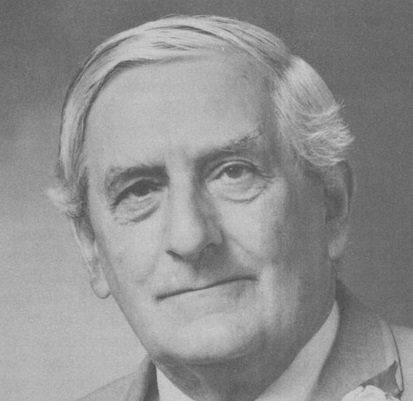
Photo credit: A. N. Sherwin-White, from between 1974-1977; courtesy of Cambridge.org / Cambridge University Press.
***
Summary: Secular historian A. N. Sherwin-White (1911-1994) would answer “yes” to the question: “Are the Gospels & Acts “Propaganda”?” while at the same time affirming their exceptional historical accuracy (especially that of Luke).
Are the Gospels & Acts "Propaganda"?
historical accuracy of the Bible
Previous Post

February 15, 2022
Dialogue: Atheist Skepticism Re the Gospels
Next Post

February 17, 2022 Pearce’s Potshots #62: Gadarenes & Gerasenes #3
Browse Our Archives
Select a Category & Last Things About Me Anti-Catholicism Atheism & Agnosticism Baptism and Sacramentalism Bible and Tradition Blessed Virgin Mary Books by Dave Armstrong C. S. Lewis Calvinism & General Protestantism Catholic Apologetics Catholic Apologists Catholic conversion Catholic converts Christmas Church (Ecclesiology) Church History Conversion and Converts Development of Doctrine Eastern Orthodoxy Ecumenism & Christian Unity Eucharist & Liturgy Fathers of the Church French Translations G. K. Chesterton Hell Hell & Satan Hell & Satan & Last Things Heresies & Comparative Religion Holistic Health Inquisition & Crusades & Scandals James White Jews & Judaism & Old Testament John Calvin John Henry Newman Liberal / Modernist Theology Life Issues Literary Resume Lutheranism Mariology Martin Luther Music Orthodoxy Papacy & Infallibility Personal Page Philosophy & Science Political & Ethical & Moral Issues Protestant Persecution & Intolerance Protestantism Purgatory Purgatory & Penance Romantic & Imaginative Theology Saints & Purgatory & Penance Salvation Salvation & Justification Satan & Last Things Sexuality and Gender Issues Spanish Translations Traditionalism vs. Radical Catholic Reactionaries Traducciones al español / tradução para português Trinitarianism & Christology Uncategorized Videos
Select a Month October 2026 September 2026 August 2026 July 2026 June 2026 May 2026 April 2026 March 2026 February 2026 January 2026 December 2025 November 2025 October 2025 September 2025 August 2025 July 2025 June 2025 May 2025 April 2025 March 2025 February 2025 January 2025 December 2024 November 2024 October 2024 September 2024 August 2024 July 2024 June 2024 May 2024 April 2024 March 2024 February 2024 January 2024 December 2023 November 2023 October 2023 September 2023 August 2023 July 2023 June 2023 May 2023 April 2023 March 2023 February 2023 January 2023 December 2022 November 2022 October 2022 September 2022 August 2022 July 2022 June 2022 May 2022 April 2022 March 2022 February 2022 January 2022 December 2021 November 2021 October 2021 September 2021 August 2021 July 2021 June 2021 May 2021 April 2021 March 2021 February 2021 January 2021 December 2020 November 2020 October 2020 September 2020 August 2020 July 2020 June 2020 May 2020 April 2020 March 2020 February 2020 January 2020 December 2019 November 2019 October 2019 September 2019 August 2019 July 2019 June 2019 May 2019 April 2019 March 2019 February 2019 January 2019 December 2018 November 2018 October 2018 September 2018 August 2018 July 2018 June 2018 May 2018 April 2018 March 2018 February 2018 January 2018 December 2017 November 2017 October 2017 September 2017 August 2017 July 2017 June 2017 May 2017 April 2017 March 2017 February 2017 January 2017 December 2016 November 2016 October 2016 September 2016 August 2016 July 2016 June 2016 May 2016 April 2016 March 2016 February 2016 January 2016 December 2015 November 2015 October 2015 September 2015 August 2015 July 2015 June 2015 May 2015 April 2015 March 2015 February 2015 January 2015 December 2014 November 2014 October 2014 September 2014 August 2014 July 2014 June 2014 April 2014 March 2014 February 2014 January 2014 December 2013 November 2013 October 2013 September 2013 August 2013 July 2013 June 2013 April 2013 March 2013 February 2013 January 2013 December 2012 November 2012 October 2012 September 2012 August 2012 July 2012 June 2012 May 2012 April 2012 March 2012 February 2012 January 2012 December 2011 November 2011 October 2011 September 2011 August 2011 July 2011 June 2011 April 2011 March 2011 February 2011 October 2010 September 2010 August 2010 July 2010 April 2010 March 2010 December 2009 October 2009 August 2009 July 2009 June 2009 May 2009 March 2009 February 2009 October 2008 September 2008 April 2008 March 2008 February 2008 January 2008 December 2007 November 2007 October 2007 May 2007 March 2007 February 2007 January 2007 November 2006 October 2006 September 2006 August 2006 July 2006 June 2006 May 2006 April 2006 March 2006 February 2006 October 2005 June 2005 April 2005 February 2005 July 2004 May 2004 April 2004
Follow Us!
TAKE THE
Religious Wisdom Quiz
Which book of the Bible contains the most direct prophecies about the Messiah?
Select your answer to see how you score.
Micah Isaiah Zechariah Psalms
Books by This Author Books by Dave Armstrong
Related posts from Biblical Evidence for Catholicism

A Few "Worst" & "Best" Arguments vs. Protestantism
Biblical Evidence for Catholicism

Jerusalem Council vs. James White & Sola Scriptura
Biblical Evidence for Catholicism

Biblical Perspicuity: Absurd Anti-Catholic "Defense"
Biblical Evidence for Catholicism

50 Biblical Disproofs of "Evident Clearness" of the...
Biblical Evidence for Catholicism
TRENDING AT PATHEOS Catholic

The Sermon on the Mount, Part I: Matthew...
The Sermon on the Mount, Part I (Matthew 4:12-5:12) St. Matthew moves...

What's up from Crossway: Reviewing some of their latest A few weeks...

Janie Learns the Way of the Cross: A...
Teaching children about Jesus' Passion can be challenging. Many parents and educators...

Looking For Good Catholic Writing - October 2026
He alone extends the heavens, and he walks upon the waves of...

In "Irreplaceable," our book on vocation and technology, Trevor Sutton and I...

I was strolling through the top floor of the brand new Parthenon...
view all Catholic blogs
Ad-Free & Subscriber Log-In Subscription Support
- About Us
- 2026 Calendar
- Videos
- Podcasts
- Library of World Religions
- Faith In Media Tracker
- Advertise With Us
- Write for Us
- Privacy Policy
- Terms of Service
- Do Not Sell My Data
- Contact Us
- Radiant Digital
- Manage Newsletter Subscriptions
- Unsubscribe From Notifications
- Sitemap
Copyright 2008-2026, Patheos. All rights reserved.
Subscription Support Ad-Free & Subscriber Log-In
Follow Patheos