
BuddhistCatholicContemplativeEvangelicalGeneral ChristianHinduJewishLatter-day SaintMuslimNew VisionsProgressive Christian
Beliefs
- Buddhist
- Catholic
- Contemplative
- Evangelical
- General Christian
- Hindu
- Jewish
- Latter-day Saint
- More Voices
- Muslim
- New Visions
- Pagan
- Progressive Christian
Topics
- Religion News
- Food and Religion
- Sports and Religion
- Religious Art
- Religious Music and Entertainment
- Religious Events
- History and Religion
- Style and Religion
- Politics and Religion
- Women in Religion
- Recreation Outdoors and Religion
- Business Finance and Religion
- Careers Workplace and Religion
- Education and Religion
- Family Parenting and Religion
- Health Fitness and Religion
- Home and Religion
- Relationships and Religion
- Technology and Religion
- Travel and Religion
Columnists
- Buddhist Columnists
- Business Finance and Religion Columnists
- Careers Workplace and Religion Columnists
- Catholic Columnists
- Contemplative Columnists
- Education and Religion Columnists
- Evangelists Columnists
- Family Parenting and Religion Columnists
- General Christian Columnists
- Health Fitness and Religion Columnists
- Hindu Columnists
- History and Religion Columnists
- Home and Religion Columnists
- Jewish Columnists
- More Voices Columnists
- Latter Day Columnists
- Muslim Columnists
- New Visions Columnists
- Nonreligious Columnists
- Pagan Columnists
- Politics and Religion Columnists
- Progressive Columnists
- Recreation Outdoors and Religion Columnists
- Relationships and Religion Columnists
- Religion News Columnists
- Religious Art Columnists
- Religious Events Columnists
- Religious Music and Entertainment Columnists
- Sports and Religion Columnists
- Style and Religion Columnists
- Technology and Religion Columnists
- Travel and Religion Columnists
- Women in Religion Columnists
Resource Library
- 2026 Calendar
- Library of World Religions
- The 100 Most Holy Places on Earth
- Patheos Answers
- Podcasts
- Videos
- Faith Leaders Database
- Anglican Episcopalian
- Bahai
- Baptist
- Buddhism
- Christianity
- Confucianism
- Eastern Orthodoxy
- Hinduism
- Holiness and Pentecostal
- ISKCON
- Islam
- Judaism
- Lutheran
- Methodist
- The Church of Jesus Christ of Latter-day Saints
- New Age
- Paganism
- Presbytarian and Reformed
- Protestantism
- Religion Behind the Scenes
- Roman Catholic
- Scientology
- Shia Islam
- Sikhism
- Sufism
- Sunni Islam
- Taoism
- Zen
- See all religions
Research Tools
 Ad-Free & Subscriber Log-In Subscription Support
Ad-Free & Subscriber Log-In Subscription Support
Follow Patheos 

- Trending:
- Forgiveness
- |
- Marriage
- |
- Consciousness
- |
- Death Penalty
- |
- Election
- |
- Halloween

-
About
-
Catholic Apologetics
-
Church History
-
Great Apologists
-
Christian Worldview
-
Protestantism & Misc.
- Home
- Catholic
- History and Religion
- Mozart’s Musical Genius & His Catholicism
Mozart’s Musical Genius & His Catholicism
Last updated on: June 6, 2026 at 12:00 am by Dave Armstrong
Mozart’s Musical Genius & His Catholicism 2026-06-06T00:00:04-04:00 Dave Armstrong
Patheos Explore the world's faith through different perspectives on religion and spirituality! Patheos has the views of the prevalent religions and spiritualities of the world.
[originally posted on my blog on 27 January 2006: which was Mozart’s 250th birthday, to the day]
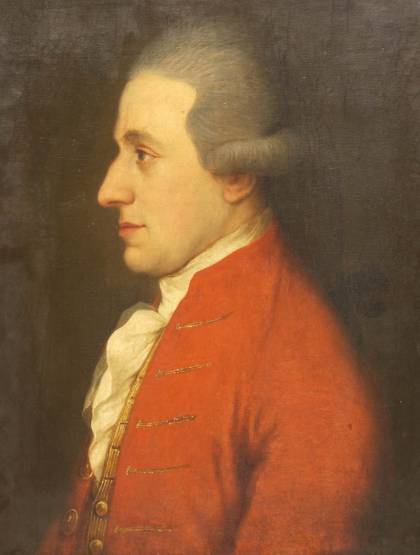
Wolfgang Amadeus Mozart (1756-1791) is (needless to say, but I will anyway) of inestimable importance to the world of music and western culture. Those of us who have a musical background all grew up with his music. My sister Judy [who sadly passed away in 2020 and who would have turned 70 on this day that I am re-posting this article] played his famous Rondo alla Turca endlessly on the piano back in the mid-60s (I listened to it today to celebrate the birthday), while I often played (and immensely enjoyed) one of the famous sonatas in the piano books (I don’t recall the opus; any pianist will know which one I mean, I’m sure).
I reached the height of my piano career in 1970 at age 12, with Chopin’s Minute Waltz (I botched the correct fingering terribly, but managed to barrel through the piece with some semblance of respectability). But alas, my classical piano days ended in 1971, when my sister moved and took the piano with her. After that I concentrated, over the next five years, on trombone in junior high and high school orchestra and band.
Once I got to high school, I discovered what is probably my favorite Mozart piece, Horn Concerto No. 1 in D, K. 412 (from 1782), which is playing on my turntable (yes, turntable!) as I write (Barry Tuckwell with the Academy of St. Martin-in-the-Fields, conducted by Neville Marriner, Angel EMI S-36840, 1972). I once went to a Tuckwell recital in Orchestra Hall in Detroit. [Tuckwell died in 2020] An acquaintance of mine played the solo horn part with my high school orchestra, shortly before I joined it myself. He was very good (as were many at my public school, Cass Technical High in Detroit, which is renowned nationwide for its music program, and offers vocational and avocational music majors — the latter was my choice), and, last I checked, was teaching French horn at some respectable musical establishment somewhere.
Another person who played cello in our orchestra (Paul Wingert), played in the Detroit Symphony Orchestra [recently retired, in 2020, after 41 years]. Many of my musical friends in high school are professional musicians now, while I became a Catholic and a writer. Back in 1976, I would have thought I had more chance to become an astronaut or ballet dancer than that! I didn’t have the slightest idea what I would do with my life. I was scarcely a Christian at all, let alone a Catholic (which would come 14 years after that time).
But those days playing music in ensemble are some of the very fondest memories of my life. It was fabulous, and should be experienced by any young person who loves music. I took lessons on trombone from the first chair in the DSO, and later actually played Tchaikovsky’s 1812 Overture with them. Our brass section was invited to play during the finale. We came rising up out of the pit in front of the stage, blasting away, to the tremendous acclaim of the young crowd (I think it was one of those days where school kids visited the symphony). What a thrill!
My first job (if you can call it that) was as an usher at the Detroit Symphony concerts. I think we got $5.00, plus, of course, the free concert. Shortly afterwards, Antal Dorati became the musical director, and began with a series of Beethoven concerts (that being 1977: the 150th anniversary of Beethoven’s death). I was able to get in for free, as a former usher (which was good, as I had little money), and heard most of the symphonies and got to meet the maestro, too. I had read biographies of Beethoven as a child, and was always fascinated by him. I also thoroughly enjoyed whatever Mahler symphonies were played (he’s my third favorite composer after Wagner and Beethoven).
But enough of all that (little-known facts about the early life of a Catholic apologist . . .): today is Mozart‘s birthday. I thought it would be interesting to note a few myths about Mozart, from Wikipedia, in honor of the occasion:
Mozart’s final illness and death are difficult topics of scholarship, obscured by romantic legends and replete with conflicting theories. Scholars disagree about the course of decline in Mozart’s health—particularly at what point Mozart became aware of his impending death and whether this awareness influenced his final works. The romantic view holds that Mozart declined gradually and that his outlook and compositions paralleled this decline. In opposition to this, some contemporary scholarship points out correspondence from Mozart’s final year indicating that he was in good cheer, as well as evidence that Mozart’s death was sudden and a shock to his family and friends. The actual cause of Mozart’s death is also a matter of conjecture. His death record listed “hitziges Frieselfieber” (“severe military fever”), a description that does not suffice to identify the cause as it would be diagnosed in modern medicine. Dozens of theories have been proposed, including trichinosis, mercury poisoning, and rheumatic fever. The contemporary practice of bleeding medical patients is also cited as a contributing cause.
. . . According to popular legend, Mozart was penniless and forgotten when he died, and was buried in a pauper’s grave. In fact, though he was no longer as fashionable in Vienna as before, he continued to have a well-paid job at court and receive substantial commissions from more distant parts of Europe, Prague in particular. Many of his begging letters survive but they are evidence not so much of poverty as of his habit of spending more than he earned. He was not buried in a “mass grave” but in a regular communal grave according to the 1784 laws.
Mozart is unusual among composers for being the subject of an abundance of legend, much due to the problem that none of his early biographers knew him personally. They often resorted to fiction in order to produce a work. Many myths began soon after Mozart died, but few have any basis in fact. An example is the story that Mozart composed his Requiem with the belief it was for himself. Sorting out fabrications from real events is a vexing and continuous task for Mozart scholars mainly because of the prevalence of legend in scholarship. Dramatists and screenwriters, free from responsibilities of scholarship, have found excellent material among these legends.
An especially popular case is the supposed rivalry between Mozart and Antonio Salieri, and, in some versions, the tale that it was poison received from the latter that caused Mozart’s death; this is the subject of Aleksandr Pushkin’s play Mozart and Salieri, Nicolai Rimsky-Korsakov’s opera Mozart and Salieri, and Peter Shaffer’s play Amadeus. The last of these has been made into a feature-length film of the same name, which won eight Oscars. Shaffer’s play attracted criticism for portraying Mozart as vulgar and loutish, a characterization felt by many to be unfairly exaggerated.
According to an essay by A. Peter Brown, “the Mozart mania of the 1980s was initiated by Peter Shaffer’s play Amadeus. It and the subsequent film directed by Milos Forman did more for Mozart’s case than anything else in the two hundred years since the composer’s death.” The same could be said of the popular myths currently surrounding Mozart, many of which are firmly rooted in the film.
However, Shaffer and Forman have never claimed that Amadeus was based in fact, as pointed out by Shaffer himself: “From the start we agreed on one thing: we were not making an objective Life of Wolfgang Mozart. This cannot be stressed too strongly. Obviously Amadeus on stage was never intended to be a documentary biography of the composer, and the film is even less of one.”
Shaffer and Forman are equally quick to defend elements of the film which they believe are accurate but are disputed by Mozart historians. Shaffer has detailed in many interviews, including one featured as an extra on the DVD release of the film, how the dramatic narrative was inspired by the biblical story of Cain and Abel—one brother loved by God, and the other scorned. Transcribed as creative rivalry between Mozart and Salieri, the notion of divine blessing and murderous jealousy provides the basic premise for Amadeus, although there is no historical evidence of any rivalry between the two composers. Conversely, it is well documented that Salieri frequently lent Mozart musical scores from the court library, and Mozart selected Salieri to teach his son, Franz Xaver. One of the more detailed essays on the “dramatic licenses” present in Amadeus is written by Gregory Allen Robbins, titled “Mozart & Salieri, Cain & Abel: A Cinematic Transformation of Genesis 4”.
. . . It has been speculated that Mozart suffered from Tourette syndrome. . . .
***
What about the Catholic faith of Mozart? Music writer David Wright, in some concert notes, stated: “Certainly the letters of those two composers [Bach and Mozart] are full of references to their (respectively) Lutheran and Roman Catholic faith.” One music website opined:
Later generations, in their fervor for the only “true church music,” have found Mozart to be wanting in the requisite seriousness and lacking, with respect to his membership in a Masonic lodge, a genuine attachment to the Roman Catholic faith. Surely this is unjust: Mozart used the Masonic lodge primarily to cultivate his social contacts (and to secure many a loan from his fellow Masons), and the accusations of superficiality and lack of commitment are completely unfounded.
Liane Ellison Norman wrote a review [no longer available online] of the book, Mozart and the Enlightenment: Truth, Virtue and Beauty in Mozart’s Operas (W.W. Norton & Company, 1992), by Nicholas Till, in the non-Catholic Christian periodical Sojourners (May 1994):
Till . . . concludes that Mozart was “one of the most penetrating intellects of his age, and…undoubtedly one of the great religious artists of Western culture.” . . .
Shaffer and Foreman made Mozart into a sort of giggling rock star whose glorious music was both peerless and timeless. Till describes an altogether different figure. . . .
Because the German Enlightenment largely repudiated religious music in its attempt to rid society of superstition and the power of the church, Mozart had relatively few opportunities to express his faith in religious music. Mozart thought of his talent as a gift from God and his work as a duty to God. His operas, Till thinks, work out his understanding of a Christian God in the context of real life.
Beginning with The Marriage of Figaro, Till suggests, Mozart worked on operas in pairs, trying to resolve problems posed by the Enlightenment in terms of his own sense of the continuity and values of his religious faith. Figaro, a play by the French dramatist Beaumarchais, was considered offensive by the emperor: In it a pair of servants are both morally superior to and smarter than their aristocratic employers. . . .
Mozart explored what the legal equality necessary for making contracts like marriage entailed. While affirming marriage, Mozart drew on his understanding of the Catholic doctrine of forgiveness. His “Christian Enlightenment recognizes that society can only operate effectively if human beings are also able both to apologize and to forgive….that only those who are willing to pardon others can hope for ultimate pardon for themselves.” Forgiveness implies a different kind of contract, fidelity and sympathy of a more spiritual kind, than that any legal system recognizes.
All of Mozart’s operas, according to Till, “deal with the theme of ultimate forgiveness…charting a passage from transgression of some sort to forgiveness….In [Figaro] theological grace becomes truly immanent.” The plot moves on the popular theme of a woman’s constancy, which “has the power to redeem the unsettled, improvident male worlds of business and politics with its promise of transcendent certainty and ultimate forgiveness.” . . .
In Don Giovanni, literal damnation is a sign that Mozart was not prepared to abandon the ultimate sanction of Christian belief for the secularist’s confidence that nature can be regulated by gardens or contracts.
Don Giovanni is an unreflective sensualist, whose freedom is used to satisfy his appetites. He rapes, murders, violates the bonds of marriage, seducing women casually and indiscriminately and boasting of their numbers. Contracts have no meaning for the Don, because he breaks his promises just as casually. He ignores class distinction, regarding all women as the same, and thus destroys the distinctions among individuals. . . .
The question for Mozart, says Till, was “how can Don Giovanni be stopped?”
Dimitrios Markatos, who runs a website about Brahms [no longer online], offers some marvelous particular evidence of Mozart’s deep faith, along with that of other composers, especially Beethoven:
Two of the greatest composers in all of history, Beethoven and Mozart, consoled to God as a child does with his earthly father to whom he confides all his joys as well as sorrows. They stood toward God in the relationship of a child full of trust in his father. God was to Beethoven the Supreme Being whom he had jubilantly hymned in the choral portion of the Ninth Symphony in the words of Schiller, “Brothers, beyond yon starry canopy there must dwell a living Father.” He was through and through a religious man, as Mozart was. . . . they knew God and sought after Him. Beethoven, in his diary wrote: “He who is above, – O, He is, and without Him there is nothing.” As concerns Religion, he said: “Religion and thorough-bass are settled things concerning which there should be no disputing.” The ways of God were ever-present with him at all times, which inspired him to quote in his diary, “In praise of Thy goodness I must confess that Thou didst try with all Thy means to draw me to Thee. Sometimes it pleased Thee to let me feel the heavy hand of Thy displeasure and to humiliate my proud heart by manifold castigations. Sickness and misfortune didst Thou send upon me to turn my thoughts to my errantries. – One thing, only, O Father, do I ask: cease not to labor for my betterment. In whatsoever manner it be, let me turn to Thee and become fruitful in good works.” In is of no coincidence that this proclamation by Beethoven is also stated and verified in the Bible “Search me, O God, and know my heart: try me, and know my thoughts: And see if there be any wicked way in me, and lead me in the way everlasting” (Ps. 139:23-24). This is the profound effect God and His divine word had on Beethoven. It’s no wonder or some random luck that he’s a supreme genius, either.
The eternally pious Mozart, had a cheery temperament which made it virtually impossible that his religious life should be as profound as that of Beethoven, but nonetheless he was still intensely devout. Mozart being a very religious person, disliked anyone who wasn’t. In regard to them, he wrote to his father, saying: “…in a word I do not trust them. Friends who have no religion are not stable.” Mozart personally knew God, and was greatly inspired by Him in his life and in his music (which attests that fact immeasurably), which in turn made him to say to his earthly father: “…I live with God ever before me. I recognize His omnipotence, I fear His anger; I acknowledge His love, too, His compassion and mercy towards all His creatures; He will never desert those who serve Him. If matters go according to His will they go according to mine; consequently nothing can go wrong, – I must be satisfied and happy.” Furthermore, he wrote, at another time, to his father, saying: “Moreover take assurance that I certainly am religious, and if I should ever have the misfortune (which God will forefend) to go astray, I shall acquit you, best of fathers, from all blame. I alone would be the scoundrel; to you I owe all my spiritual and temporal welfare and salvation.”
Beethoven, Mozart and the other great masters, didn’t need to physically see God to realize His reality. The ever-inspired Beethoven observed: “God is immaterial, and for this reason transcends every conception. Since He is invisible He can have no form. But from what we observe in His work we may conclude that He is eternal, omnipotent, omniscient and omnipresent.” To further proclaim Beethoven’s humility before God, at one point, a copyist of his, Rampel, obsequiously addressed Beethoven as “gracious Sir,” to this Beethoven replied “Go to the devil with your ‘gracious Sir!’ There is only one who can be called gracious, and that is God.” This is who God is and what He does, and the impact He has on all true geniuses who are inspired by Him. Again, Johannes Brahms knew this of God, and said that God’s “Spirit cannot be defined, but we can appropriate it,”23 just as they attained, and look at what they have bestowed us with. The great Brahms, further added: “You see, the powers from which all truly great composers like Mozart, Schubert, Bach and Beethoven drew their inspiration is the same power that enabled Jesus to work His miracles. We call it God, Omnipotence, Divinity, the Creator, etc.”
In like manner, Brahms was asked: “Dr. Brahms, how do you contact Omnipotence? Most people find Him aloof.” “That is a great question,” Brahms replied. “It cannot be done merely by will power working through the conscious mind, which is an evolutionary product of the physical realm and perishes with the body. It can only be accomplished by the soul-powers within – the real ego that survives bodily death. Those powers are quiescent to the conscious mind unless illumined by [God’s] Spirit. Now Jesus taught us that God is Spirit, and He also said, ‘I and my Father are one’ (Jn. 10:30). To realize that we are one with the Creator, incidentally as Beethoven did, where he said, ‘I know God is nearer to me than others in my craft. I consort to Him without fear,’ is a awe-inspiring experience. Very few human beings ever came into that realization and that is why there are so few great composers or creative geniuses in any line of human endeavor. I always contemplate all this before commencing to compose. This is the first step.” And after realizing all this, then, as he so well put it, said: “Straightaway the ideas flow in upon me, directly from God…” Then Brahms was asked to further clarify what he meant, “Just what is your process in appropriating it [God’s Spirit]? You must have some definite attitude towards that Power but what I wish to know is how you contact it?” And the ever-inspired Brahms replied: “Well, first of all, I know that that Power exists. You cannot appropriate unless you believe that it is a real living Power, and the source of our being” (Heb. 11:6).25 That is the profound understanding and insight, which so few are unable to comprehend nor grasp. The affect that God has in our entire completeness and of our progressive culmination towards perfection under His inspiration. The inspiration of God’s Holy Spirit acting influence upon the ones who acknowledge Him, and therefore in turn produce divinely inspired treasures. Thus, God gives the Holy Spirit to those who obey Him (Acts 5:32). As Beethoven did, in knowing so declared that his ideas came from God. He knew quite well the source of his genius, as do all the composers that I have and will mention. Again, there is no coincidence – none! (“The Great Presence and Inspiring Effect of God in Man’s Life”)
Markatos also notes the strong religious faith of Haydn, Bach, Handel, Richard Strauss, Edward Grieg, and Giacomo Puccini. He concludes near the end:
The music of these profound masters speak louder than anything else, in defense of Theism. Think of all the timeless masterpieces we would have been deprived of, if they were atheists. And don’t think they didn’t come across any. Mozart (as we said earlier) who was like his father, a man of sincere piety, absolutely abhorred atheism. Mozart, who when he heard of Voltaire’s (an atheist) death, wrote to his father, saying: “Now I give you a piece of news which perhaps you know already; that godless fellow and arch-rascal, Voltaire, is dead – died like a dog, like a beast. That is his reward.”
Just one correction: Voltaire was not an atheist, as commonly supposed. I’m pretty sure (without double-checking at the moment) that he was a theist, but vehemently opposed to the Catholic Church and institutional Christianity. The same was true of Hume, Paine, and Rousseau: also often thought by many to be atheists. I once shocked a philosophy professor with the proof about Hume (quite easy to discover with just a little checking). That just shows the needless ignorance about these matters, which reigns in academia.
On a humorous note; I just heard on the radio, which is broadcasting from Mozart’s birthplace, Salzburg, Austria, and ringing the bells in celebration (they started right after I finished writing this), the following delightful little story:
A young child who was learning music wrote to Mozart asking if he could teach him how to write a symphony. Mozart wrote back, “a symphony is a very complicated piece of work. Perhaps you should try something a little simpler at first.” The persistent child wrote back, “but Herr Mozart, you wrote a symphony when you were eight years’ old!” Mozart replied again, “but I didn’t have to ask anyone how to do it.”
Indeed. I heard a lovely, very beautiful and moving piece of Mozart music on the radio yesterday. I was wondering what it was, and afterwards they said that he wrote it when he was 15 years old. What an amazing genius this devout Catholic man was. Happy birthday once again to the glorious Mozart: great witness of God’s gifts and beauty. May he rest in peace, and above all, let us give thanks and praise to a God who will bless us with artistic giants like Mozart, Beethoven, Bach, Michelangelo, Leonardo da Vinci, Dante, Raphael, and Shakespeare (all Catholic, save for Bach).
***
Practical Matters: Perhaps some of my 3,900+ free online articles (the most comprehensive “one-stop” Catholic apologetics site) or fifty books have helped you (by God’s grace) to decide to become Catholic or to return to the Church, or better understand some doctrines and why we believe them.
Or you may believe my work is worthy to support for the purpose of apologetics and evangelism in general. If so, please seriously consider a much-needed financial contribution. I’m always in need of more funds: especially monthly support. “The laborer is worthy of his wages” (1 Tim 5:18, NKJV). 1 December 2021 was my 20th anniversary as a full-time Catholic apologist, and February 2022 marked the 25th anniversary of my blog.
PayPal donations are the easiest: just send to my email address: [email protected]. You’ll see the term “Catholic Used Book Service”, which is my old side-business. To learn about the different methods of contributing, including 100% tax deduction, etc., see my page: About Catholic Apologist Dave Armstrong / Donation Information. Thanks a million from the bottom of my heart!
***
Photo credit: “Hagenauer portrait” of Mozart: discovered in 2004 and determined by rigorous analysis to be authentic. [web page: “A new portrait of W.A.Mozart from the mid-1780s”]
***
Summary: Reflections on the deep and pious Catholic faith of Wolfgang Amadeus Mozart: widely considered one of the greatest composers of all time, if not the greatest.
Previous Post

January 21, 2022
Masturbation & Blindness?: Fascinating Investigation
Next Post
January 24, 2022 Explicit Biblical Instruction on Saving Souls
Browse Our Archives
Select a Category & Last Things About Me Anti-Catholicism Atheism & Agnosticism Baptism and Sacramentalism Bible and Tradition Blessed Virgin Mary Books by Dave Armstrong C. S. Lewis Calvinism & General Protestantism Catholic Apologetics Catholic Apologists Catholic conversion Catholic converts Christmas Church (Ecclesiology) Church History Conversion and Converts Development of Doctrine Eastern Orthodoxy Ecumenism & Christian Unity Eucharist & Liturgy Fathers of the Church French Translations G. K. Chesterton Hell Hell & Satan Hell & Satan & Last Things Heresies & Comparative Religion Holistic Health Inquisition & Crusades & Scandals James White Jews & Judaism & Old Testament John Calvin John Henry Newman Liberal / Modernist Theology Life Issues Literary Resume Lutheranism Mariology Martin Luther Music Orthodoxy Papacy & Infallibility Personal Page Philosophy & Science Political & Ethical & Moral Issues Protestant Persecution & Intolerance Protestantism Purgatory Purgatory & Penance Romantic & Imaginative Theology Saints & Purgatory & Penance Salvation Salvation & Justification Satan & Last Things Sexuality and Gender Issues Spanish Translations Traditionalism vs. Radical Catholic Reactionaries Traducciones al español / tradução para português Trinitarianism & Christology Uncategorized Videos
Select a Month October 2026 September 2026 August 2026 July 2026 June 2026 May 2026 April 2026 March 2026 February 2026 January 2026 December 2025 November 2025 October 2025 September 2025 August 2025 July 2025 June 2025 May 2025 April 2025 March 2025 February 2025 January 2025 December 2024 November 2024 October 2024 September 2024 August 2024 July 2024 June 2024 May 2024 April 2024 March 2024 February 2024 January 2024 December 2023 November 2023 October 2023 September 2023 August 2023 July 2023 June 2023 May 2023 April 2023 March 2023 February 2023 January 2023 December 2022 November 2022 October 2022 September 2022 August 2022 July 2022 June 2022 May 2022 April 2022 March 2022 February 2022 January 2022 December 2021 November 2021 October 2021 September 2021 August 2021 July 2021 June 2021 May 2021 April 2021 March 2021 February 2021 January 2021 December 2020 November 2020 October 2020 September 2020 August 2020 July 2020 June 2020 May 2020 April 2020 March 2020 February 2020 January 2020 December 2019 November 2019 October 2019 September 2019 August 2019 July 2019 June 2019 May 2019 April 2019 March 2019 February 2019 January 2019 December 2018 November 2018 October 2018 September 2018 August 2018 July 2018 June 2018 May 2018 April 2018 March 2018 February 2018 January 2018 December 2017 November 2017 October 2017 September 2017 August 2017 July 2017 June 2017 May 2017 April 2017 March 2017 February 2017 January 2017 December 2016 November 2016 October 2016 September 2016 August 2016 July 2016 June 2016 May 2016 April 2016 March 2016 February 2016 January 2016 December 2015 November 2015 October 2015 September 2015 August 2015 July 2015 June 2015 May 2015 April 2015 March 2015 February 2015 January 2015 December 2014 November 2014 October 2014 September 2014 August 2014 July 2014 June 2014 April 2014 March 2014 February 2014 January 2014 December 2013 November 2013 October 2013 September 2013 August 2013 July 2013 June 2013 April 2013 March 2013 February 2013 January 2013 December 2012 November 2012 October 2012 September 2012 August 2012 July 2012 June 2012 May 2012 April 2012 March 2012 February 2012 January 2012 December 2011 November 2011 October 2011 September 2011 August 2011 July 2011 June 2011 April 2011 March 2011 February 2011 October 2010 September 2010 August 2010 July 2010 April 2010 March 2010 December 2009 October 2009 August 2009 July 2009 June 2009 May 2009 March 2009 February 2009 October 2008 September 2008 April 2008 March 2008 February 2008 January 2008 December 2007 November 2007 October 2007 May 2007 March 2007 February 2007 January 2007 November 2006 October 2006 September 2006 August 2006 July 2006 June 2006 May 2006 April 2006 March 2006 February 2006 October 2005 June 2005 April 2005 February 2005 July 2004 May 2004 April 2004
Follow Us!
TAKE THE
Religious Wisdom Quiz
Who carried Jesus' cross after He could no longer?
Select your answer to see how you score.
Pilate John Peter Simon of Cyrene
Books by This Author Books by Dave Armstrong
Related posts from Biblical Evidence for Catholicism

100 Motown Stars: Info. & Links / My...
Biblical Evidence for Catholicism

My 19 Imprimaturs vs. James Swan's Slanders
Biblical Evidence for Catholicism

My “Number Articles”: Alphabetized by Topic
Biblical Evidence for Catholicism
Big Plans for Catholic Bible Highlights in 2026!
Biblical Evidence for Catholicism
TRENDING AT PATHEOS Catholic

Emotion in Early Christianity by Andrew Crislip
Andrew Crislip’s Emotion in Early Christianity examines an often overlooked dimension of...

16 Spiritual Touchstones for a More Grounded Life
After decades of spiritual study, here are 16 principles I try...

Catholic Evangelization: Sharing Your Faith Every Day
Welcome back to the Graceful Awakening mini-series called, “From Faith to Mission.” ...

The Pillar of the Boatmen: the Ancient Monument...
The Pillar of the Boatmen is a Romano-Gaulish sculpture that dates from...

In one sense walking into Westminster Abbey is like walking down the...

'Super Scam Me' Exposes AI Jon Bon Jovi...
Leslie Pickett believed she was in a relationship with Jon Bon Jovi....
view all Catholic blogs
Ad-Free & Subscriber Log-In Subscription Support
- About Us
- 2026 Calendar
- Videos
- Podcasts
- Library of World Religions
- Faith In Media Tracker
- Advertise With Us
- Write for Us
- Privacy Policy
- Terms of Service
- Do Not Sell My Data
- Contact Us
- Radiant Digital
- Manage Newsletter Subscriptions
- Unsubscribe From Notifications
- Sitemap
Copyright 2008-2026, Patheos. All rights reserved.
Subscription Support Ad-Free & Subscriber Log-In
Follow Patheos