
BuddhistCatholicContemplativeEvangelicalGeneral ChristianHinduJewishLatter-day SaintMuslimNew VisionsProgressive Christian
Beliefs
- Buddhist
- Catholic
- Contemplative
- Evangelical
- General Christian
- Hindu
- Jewish
- Latter-day Saint
- More Voices
- Muslim
- New Visions
- Pagan
- Progressive Christian
Topics
- Religion News
- Food and Religion
- Sports and Religion
- Religious Art
- Religious Music and Entertainment
- Religious Events
- History and Religion
- Style and Religion
- Politics and Religion
- Women in Religion
- Recreation Outdoors and Religion
- Business Finance and Religion
- Careers Workplace and Religion
- Education and Religion
- Family Parenting and Religion
- Health Fitness and Religion
- Home and Religion
- Relationships and Religion
- Technology and Religion
- Travel and Religion
Columnists
- Buddhist Columnists
- Business Finance and Religion Columnists
- Careers Workplace and Religion Columnists
- Catholic Columnists
- Contemplative Columnists
- Education and Religion Columnists
- Evangelists Columnists
- Family Parenting and Religion Columnists
- General Christian Columnists
- Health Fitness and Religion Columnists
- Hindu Columnists
- History and Religion Columnists
- Home and Religion Columnists
- Jewish Columnists
- More Voices Columnists
- Latter Day Columnists
- Muslim Columnists
- New Visions Columnists
- Nonreligious Columnists
- Pagan Columnists
- Politics and Religion Columnists
- Progressive Columnists
- Recreation Outdoors and Religion Columnists
- Relationships and Religion Columnists
- Religion News Columnists
- Religious Art Columnists
- Religious Events Columnists
- Religious Music and Entertainment Columnists
- Sports and Religion Columnists
- Style and Religion Columnists
- Technology and Religion Columnists
- Travel and Religion Columnists
- Women in Religion Columnists
Resource Library
- 2026 Calendar
- Library of World Religions
- The 100 Most Holy Places on Earth
- Patheos Answers
- Podcasts
- Videos
- Faith Leaders Database
- Anglican Episcopalian
- Bahai
- Baptist
- Buddhism
- Christianity
- Confucianism
- Eastern Orthodoxy
- Hinduism
- Holiness and Pentecostal
- ISKCON
- Islam
- Judaism
- Lutheran
- Methodist
- The Church of Jesus Christ of Latter-day Saints
- New Age
- Paganism
- Presbytarian and Reformed
- Protestantism
- Religion Behind the Scenes
- Roman Catholic
- Scientology
- Shia Islam
- Sikhism
- Sufism
- Sunni Islam
- Taoism
- Zen
- See all religions
Research Tools
 Ad-Free & Subscriber Log-In Subscription Support
Ad-Free & Subscriber Log-In Subscription Support
Follow Patheos 

- Trending:
- Forgiveness
- |
- Marriage
- |
- Consciousness
- |
- Death Penalty
- |
- Election
- |
- Halloween

-
About
-
Catholic Apologetics
-
Church History
-
Great Apologists
-
Christian Worldview
-
Protestantism & Misc.
- Home
- Catholic
- History and Religion
- Dialogue: Gospel Writers’ Knowledge of “Hidden” Events
Dialogue: Gospel Writers’ Knowledge of “Hidden” Events
Last updated on: January 29, 2022 at 12:38 pm by Dave Armstrong
Dialogue: Gospel Writers’ Knowledge of “Hidden” Events 2022-01-29T12:38:26-04:00 Dave Armstrong
Patheos Explore the world's faith through different perspectives on religion and spirituality! Patheos has the views of the prevalent religions and spiritualities of the world.
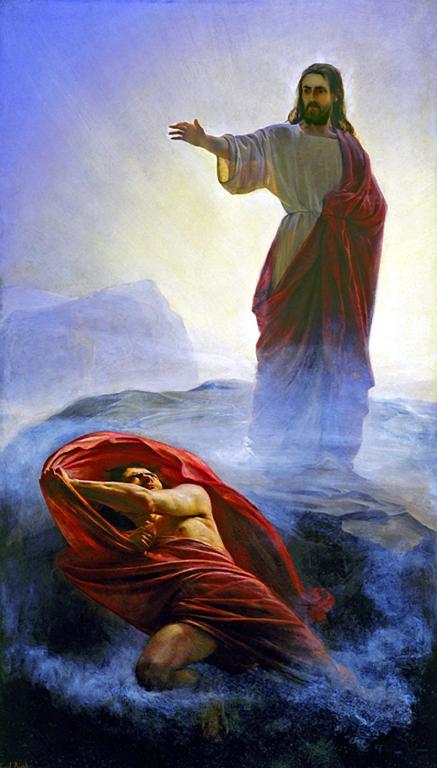
This came from an exchange with an atheist in the combox of Jonathan MS Pearce’s article, “Why Matthew’s guards at Jesus’ tomb are so important” (1-27-22). The atheist’s words will be in blue.
*****
I’ve always had problems with so many bible passages that purport to document what happened either in secret or at least unobserved. Jesus praying, for example. It seems unlikely he issued a press release containing the words he used to commune with God.
*
- Jesus tells a disciple the content of what He prayed.
- Said disciple includes it in his Gospel.
*
Or Jesus talking with the Devil: I assume this wasn’t done on a stage, with tickets sold to spectators. So who was there to listen and take shorthand?
*
- Jesus tells a disciple the content of what He talked about with the devil.
- Said disciple includes it in his Gospel.
*
A variation of this would or could be:
*
- Jesus tells a disciple the content of what He prayed / talked about with the devil.
- Said disciple spreads this information as part of oral tradition and/or possibly the mysterious source “Q”.
- The information later becomes incorporated into one or more of the four Gospels.
Not really rocket science there. Jesus was with these disciples for three years day and night. They talked for multiple thousands of hours.
*
It’s also supernaturally inspired revelation: not your usual type of literature; so it’s always possible that the writer could receive a direct revelation from God regarding a specific thing.
*
But most Christians believe that almost all Scripture was not originated in that way. They simply wrote, and God guided and protected them from writing error.
*
Yes, it’s a belief in faith (as all people in effect have, including atheists, who accept — and must accept to think and communicate — many unproven axioms).
*
Seems about as likely as the press release. Do the gospels agree that Jesus appointed a secretary?
*
Yeah, real unlikely and implausible [heavy sarcasm]. He was with them day and night for three years. Lots of talking, teaching, communicating. It’s common sense. There is no mystery here.
*
In fact, we even have a passage where Jesus revealed that He was praying for one of His disciples, and exactly what He was praying for:
*
Luke 22:32 (RSV) “but I have prayed for you [Peter] that your faith may not fail; and when you have turned again, strengthen your brethren.”
*
Again, He prayed for them out loud, in John chapter 17 (with all the disciples present at the Last Supper: Jn 13:1-2, 22):
*
John 17:7-9 Now they know that everything that thou hast given me is from thee; [8] for I have given them the words which thou gavest me, and they have received them and know in truth that I came from thee; and they have believed that thou didst send me. [9] I am praying for them; I am not praying for the world but for those whom thou hast given me, for they are thine;
Etc.
*
This [Lk 22:32] reads as if the author of Luke witnessed the conversation between Jesus and Peter, in which Jesus relates what he has done (“I have prayed for you…”), whereas the Jesus/Devil conversations are reported as if the writer witnessed the conversation directly. I don’t see how this inconsistency (along with others) can be taken literally, as they make the whole narrative seem more like a series of supposedly salutary fables.
*
Luke wasn’t one of the twelve disciples, so he would have had to hear this report from Peter himself (which was entirely possible) or from one of the other ten disciples (minus fallen disciple Judas). Or he got wind of a dependable oral tradition that came from Jesus and/or one or more of the eleven. We know this was precisely his methodology:
*
Luke 1:1-4 Inasmuch as many have undertaken to compile a narrative of the things which have been accomplished among us, [2] just as they were delivered to us by those who from the beginning were eyewitnesses and ministers of the word, [3] it seemed good to me also, having followed all things closely for some time past, to write an orderly account for you, most excellent The-oph’ilus, [4] that you may know the truth concerning the things of which you have been informed.
*
Again, nothing is in the least implausible in any of this . . . Yet you tried to make it a skeptical talking-point against the Bible.
*
The Jesus vs. the devil dialogue is written from the perspective of the narrator of the book. Since no one was there, it had to initially come either from a report by Jesus or from direct revelation by God. I always accept a natural / common sense explanation before I believe it was a supernatural event.
*
Why anyone would think it was impossible or [a lesser claim] implausible for Jesus to have simply told one or more of His followers what happened during the exchanges with the devil is beyond me.
*
It would surely have added much-needed verisimilitude to the account if the author had written something to the effect of, “Jesus related to me/us that he had a conversation with Satan, as follows….” Given the apparent purpose of the account in the first place, it’s extremely puzzling that the writer didn’t do this. Leaving readers plenty of room to doubt the narrative’s veracity seems highly counter-productive.
*
There’s no need to; no “puzzle” at all. Most folks who aren’t already hostile and predisposed to be cynical to the text, could figure out exactly what I explained. It’s not difficult.
*
We know that Jesus massively taught His disciples (“privately to his own disciples he explained everything”: Mk 4:34), and lived with them 24/7 for three years.
*
This line of thinking is as fundamentally silly as when some atheist asked, “how could Christians know that Mary gave birth as a virgin?” Well (Duh!), she told them! Boy, there’s another tortuous question that is so difficult to resolve . . . [heavy sarcasm]
*
Similarly, St. Paul gives a public account of his conversion story (Acts 22:6-16), which was included in Scripture in a narrative form (Acts 9:1-19).
*
I agree that it would sound plausible to those who already accept the narrative as true. They’d probably be perfectly happy with the virgin-birth miracle claim too.
*
We regard the New Testament as a trustworthy document because it has been proven zillions of times by archaeology to be historically accurate in details. So we can trust it in places that don’t have express historical evidences in its favor.
It’s the same manner in which we trust the demonstrably credible, reliable witness in a court trial. There’s lots of other ancient literature that has supernatural or very odd elements that isn’t dismissed just because of that. Thus, this “standard” isn’t applied by atheists across the board.
We need to have a fair approach to ancient authors. We give them the benefit of the doubt that they are sincere and of good will, unless we have compelling evidence otherwise. Atheists offer no compelling reason or evidence for regarding the Gospel writers as deliberate deceivers or liars. For example, we might consider the Greek historian Herodotus. Wikipedia states about him:
Herodotus (c. 484 – c. 425 BC) was an ancient Greek writer, geographer, and historian . . . known for having written the Histories – a detailed account of the Greco-Persian Wars. Herodotus was the first writer to do systematic investigation of historical events. He is referred to as “The Father of History”, a title conferred on him by the ancient Roman orator Cicero.
The Histories primarily covers the lives of prominent kings and famous battles such as Marathon, Thermopylae, Artemisium, Salamis, Plataea, and Mycale. His work deviates from the main topics to provide cultural, ethnographical, geographical, and historiographical background that forms an essential part of the narrative and provides readers with a wellspring of additional information.
Herodotus has been criticized for his inclusion of “legends and fanciful accounts” in his work. Fellow historian Thucydides accused him of making up stories for entertainment. However, Herodotus explained that he reported what he “saw and [what was] told to him.” A sizable portion of the Histories has since been confirmed by modern historians and archaeologists.
Accordingly, we have an article in The Guardian: “Nile shipwreck discovery proves Herodotus right” (3-17-19).
Now, is his entire body of work discounted, and is he regarded as a wanton liar because he has some supernatural elements? No. What has been confirmed by archaeology and subsequent historiography is accepted, while atheists who don’t believe in the supernatural simply discount those sections.
***
Practical Matters: Perhaps some of my 3,900+ free online articles (the most comprehensive “one-stop” Catholic apologetics site) or fifty books have helped you (by God’s grace) to decide to become Catholic or to return to the Church, or better understand some doctrines and why we believe them.
Or you may believe my work is worthy to support for the purpose of apologetics and evangelism in general. If so, please seriously consider a much-needed financial contribution. I’m always in need of more funds: especially monthly support. “The laborer is worthy of his wages” (1 Tim 5:18, NKJV). 1 December 2021 was my 20th anniversary as a full-time Catholic apologist, and February 2022 marked the 25th anniversary of my blog.
PayPal donations are the easiest: just send to my email address: [email protected]. You’ll see the term “Catholic Used Book Service”, which is my old side-business. To learn about the different methods of contributing, including 100% tax deduction, etc., see my page: About Catholic Apologist Dave Armstrong / Donation Information. Thanks a million from the bottom of my heart!
***
Photo credit: Jesus Tempted, by Carl Bloch (1834-1890) [public domain / Wikimedia Commons]

***
Summary: An atheist brought up a point of puzzlement & curiosity to him: how is it that the Gospel writers can know of events, where no one else was present to witness them?
*
trustworthiness of the New Testament
Previous Post
January 28, 2022
Pearce’s Potshots #57: Matthew & the Tomb Guards
Next Post
January 29, 2022 Pearce's Potshots #58: Paul & Jesus' "Empty" Tomb
Browse Our Archives
Select a Category & Last Things About Me Anti-Catholicism Atheism & Agnosticism Baptism and Sacramentalism Bible and Tradition Blessed Virgin Mary Books by Dave Armstrong C. S. Lewis Calvinism & General Protestantism Catholic Apologetics Catholic Apologists Catholic conversion Catholic converts Christmas Church (Ecclesiology) Church History Conversion and Converts Development of Doctrine Eastern Orthodoxy Ecumenism & Christian Unity Eucharist & Liturgy Fathers of the Church French Translations G. K. Chesterton Hell Hell & Satan Hell & Satan & Last Things Heresies & Comparative Religion Holistic Health Inquisition & Crusades & Scandals James White Jews & Judaism & Old Testament John Calvin John Henry Newman Liberal / Modernist Theology Life Issues Literary Resume Lutheranism Mariology Martin Luther Music Orthodoxy Papacy & Infallibility Personal Page Philosophy & Science Political & Ethical & Moral Issues Protestant Persecution & Intolerance Protestantism Purgatory Purgatory & Penance Romantic & Imaginative Theology Saints & Purgatory & Penance Salvation Salvation & Justification Satan & Last Things Sexuality and Gender Issues Spanish Translations Traditionalism vs. Radical Catholic Reactionaries Traducciones al español / tradução para português Trinitarianism & Christology Uncategorized Videos
Select a Month October 2026 September 2026 August 2026 July 2026 June 2026 May 2026 April 2026 March 2026 February 2026 January 2026 December 2025 November 2025 October 2025 September 2025 August 2025 July 2025 June 2025 May 2025 April 2025 March 2025 February 2025 January 2025 December 2024 November 2024 October 2024 September 2024 August 2024 July 2024 June 2024 May 2024 April 2024 March 2024 February 2024 January 2024 December 2023 November 2023 October 2023 September 2023 August 2023 July 2023 June 2023 May 2023 April 2023 March 2023 February 2023 January 2023 December 2022 November 2022 October 2022 September 2022 August 2022 July 2022 June 2022 May 2022 April 2022 March 2022 February 2022 January 2022 December 2021 November 2021 October 2021 September 2021 August 2021 July 2021 June 2021 May 2021 April 2021 March 2021 February 2021 January 2021 December 2020 November 2020 October 2020 September 2020 August 2020 July 2020 June 2020 May 2020 April 2020 March 2020 February 2020 January 2020 December 2019 November 2019 October 2019 September 2019 August 2019 July 2019 June 2019 May 2019 April 2019 March 2019 February 2019 January 2019 December 2018 November 2018 October 2018 September 2018 August 2018 July 2018 June 2018 May 2018 April 2018 March 2018 February 2018 January 2018 December 2017 November 2017 October 2017 September 2017 August 2017 July 2017 June 2017 May 2017 April 2017 March 2017 February 2017 January 2017 December 2016 November 2016 October 2016 September 2016 August 2016 July 2016 June 2016 May 2016 April 2016 March 2016 February 2016 January 2016 December 2015 November 2015 October 2015 September 2015 August 2015 July 2015 June 2015 May 2015 April 2015 March 2015 February 2015 January 2015 December 2014 November 2014 October 2014 September 2014 August 2014 July 2014 June 2014 April 2014 March 2014 February 2014 January 2014 December 2013 November 2013 October 2013 September 2013 August 2013 July 2013 June 2013 April 2013 March 2013 February 2013 January 2013 December 2012 November 2012 October 2012 September 2012 August 2012 July 2012 June 2012 May 2012 April 2012 March 2012 February 2012 January 2012 December 2011 November 2011 October 2011 September 2011 August 2011 July 2011 June 2011 April 2011 March 2011 February 2011 October 2010 September 2010 August 2010 July 2010 April 2010 March 2010 December 2009 October 2009 August 2009 July 2009 June 2009 May 2009 March 2009 February 2009 October 2008 September 2008 April 2008 March 2008 February 2008 January 2008 December 2007 November 2007 October 2007 May 2007 March 2007 February 2007 January 2007 November 2006 October 2006 September 2006 August 2006 July 2006 June 2006 May 2006 April 2006 March 2006 February 2006 October 2005 June 2005 April 2005 February 2005 July 2004 May 2004 April 2004
Follow Us!
TAKE THE
Religious Wisdom Quiz
Place me like a seal over your heart, for love is as strong as death and burns like what?
Select your answer to see how you score.
The sun A blazing flame A torch Lightning
Books by This Author Books by Dave Armstrong
Related posts from Biblical Evidence for Catholicism

A Few "Worst" & "Best" Arguments vs. Protestantism
Biblical Evidence for Catholicism

Jerusalem Council vs. James White & Sola Scriptura
Biblical Evidence for Catholicism

Biblical Perspicuity: Absurd Anti-Catholic "Defense"
Biblical Evidence for Catholicism

50 Biblical Disproofs of "Evident Clearness" of the...
Biblical Evidence for Catholicism
TRENDING AT PATHEOS Catholic

A new article, written by Jeff Lindsay and Gale L. Pooley,...

Swimfan: Forgotten Aughts Pleasures
This is a recovery effort. In 2002, My Big Fat Greek Wedding...

Top Three Anti-Catholic Lies About Catholicism
This is my initial transcript for the video, "THE 3 WORST...

Pope Leo Celebrates Mass for Nurses & Docs...
I don't have any idea how he did it, but Pope Leo...

The Sermon on the Mount, Part I: Matthew...
The Sermon on the Mount, Part I (Matthew 4:12-5:12) St. Matthew moves...

What's up from Crossway: Reviewing some of their latest A few weeks...
view all Catholic blogs
Ad-Free & Subscriber Log-In Subscription Support
- About Us
- 2026 Calendar
- Videos
- Podcasts
- Library of World Religions
- Faith In Media Tracker
- Advertise With Us
- Write for Us
- Privacy Policy
- Terms of Service
- Do Not Sell My Data
- Contact Us
- Radiant Digital
- Manage Newsletter Subscriptions
- Unsubscribe From Notifications
- Sitemap
Copyright 2008-2026, Patheos. All rights reserved.
Subscription Support Ad-Free & Subscriber Log-In
Follow Patheos