
BuddhistCatholicContemplativeEvangelicalGeneral ChristianHinduJewishLatter-day SaintMuslimNew VisionsProgressive Christian
Beliefs
- Buddhist
- Catholic
- Contemplative
- Evangelical
- General Christian
- Hindu
- Jewish
- Latter-day Saint
- More Voices
- Muslim
- New Visions
- Pagan
- Progressive Christian
Topics
- Religion News
- Food and Religion
- Sports and Religion
- Religious Art
- Religious Music and Entertainment
- Religious Events
- History and Religion
- Style and Religion
- Politics and Religion
- Women in Religion
- Recreation Outdoors and Religion
- Business Finance and Religion
- Careers Workplace and Religion
- Education and Religion
- Family Parenting and Religion
- Health Fitness and Religion
- Home and Religion
- Relationships and Religion
- Technology and Religion
- Travel and Religion
Columnists
- Buddhist Columnists
- Business Finance and Religion Columnists
- Careers Workplace and Religion Columnists
- Catholic Columnists
- Contemplative Columnists
- Education and Religion Columnists
- Evangelists Columnists
- Family Parenting and Religion Columnists
- General Christian Columnists
- Health Fitness and Religion Columnists
- Hindu Columnists
- History and Religion Columnists
- Home and Religion Columnists
- Jewish Columnists
- More Voices Columnists
- Latter Day Columnists
- Muslim Columnists
- New Visions Columnists
- Nonreligious Columnists
- Pagan Columnists
- Politics and Religion Columnists
- Progressive Columnists
- Recreation Outdoors and Religion Columnists
- Relationships and Religion Columnists
- Religion News Columnists
- Religious Art Columnists
- Religious Events Columnists
- Religious Music and Entertainment Columnists
- Sports and Religion Columnists
- Style and Religion Columnists
- Technology and Religion Columnists
- Travel and Religion Columnists
- Women in Religion Columnists
Resource Library
- 2026 Calendar
- Library of World Religions
- The 100 Most Holy Places on Earth
- Patheos Answers
- Podcasts
- Videos
- Faith Leaders Database
- Anglican Episcopalian
- Bahai
- Baptist
- Buddhism
- Christianity
- Confucianism
- Eastern Orthodoxy
- Hinduism
- Holiness and Pentecostal
- ISKCON
- Islam
- Judaism
- Lutheran
- Methodist
- The Church of Jesus Christ of Latter-day Saints
- New Age
- Paganism
- Presbytarian and Reformed
- Protestantism
- Religion Behind the Scenes
- Roman Catholic
- Scientology
- Shia Islam
- Sikhism
- Sufism
- Sunni Islam
- Taoism
- Zen
- See all religions
Research Tools
 Ad-Free & Subscriber Log-In Subscription Support
Ad-Free & Subscriber Log-In Subscription Support
Follow Patheos 

- Trending:
- Forgiveness
- |
- Marriage
- |
- Consciousness
- |
- Death Penalty
- |
- Election
- |
- Halloween

-
About
-
Catholic Apologetics
-
Church History
-
Great Apologists
-
Christian Worldview
-
Protestantism & Misc.
- Home
- Catholic
- History and Religion
- Seidensticker Folly #76: Resurrection Eyewitnesses
Seidensticker Folly #76: Resurrection Eyewitnesses
Last updated on: June 5, 2026 at 11:59 pm by Dave Armstrong
Seidensticker Folly #76: Resurrection Eyewitnesses 2026-06-05T23:59:43-04:00 Dave Armstrong
Patheos Explore the world's faith through different perspectives on religion and spirituality! Patheos has the views of the prevalent religions and spiritualities of the world.
Atheist and anti-theist Bob Seidensticker runs the influential Cross Examined blog. He asked me there, on 8-11-18: “I’ve got 1000+ posts here attacking your worldview. You just going to let that stand? Or could you present a helpful new perspective that I’ve ignored on one or two of those posts?” He added in June 2017 in a combox: “If I’ve misunderstood the Christian position or Christian arguments, point that out. Show me where I’ve mischaracterized them.”
For over three years, we have had (shall we say) rather difficult relations, with mutual bannings, but when Bob moved to his new location online at the OnlySky super-site, he (surprisingly to me) decided to allow me to comment. As a conciliatory gesture in return, I removed his ban on my blog. He even stated on 1-21-22 in the same combox thread, replying to me: “There are a few new posts here. (Or, if you haven’t been to my blog for a while, lots of new posts here.) Have at ’em. Let me know what you think.”
Delighted to oblige his wishes . . . Bob’s words will be in blue. To find these posts, follow this link: “Seidensticker Folly #” or see all of them linked under his own section on my Atheism page.
*****
I am responding to Bob’s post entitled, The Bible defeats its own Resurrection story (12-2-21; update of a post from 8-16-17).
Many Christian apologists insist that the resurrection was documented by eyewitnesses.
Yes they do, because that is the biblical claim.
Their motivation makes sense—the resurrection is the punch line of the Jesus story, and the authors can’t simply be passing along a popular yarn. Only eyewitness authors could be credible.
Indeed. I would just add that the person documenting need not be an eyewitness. Having talked to a credible eyewitness is sufficient to pass along what that eyewitness saw: just as we see regarding eyewitness testimony in court cases, which is judged to be credible (based on the person’s character) or not. It’s sufficient to convict persons of having committed a crime, based on the criterion of “beyond a reasonable doubt”.
We must start by agreeing on what it means to witness a man’s resurrection from the dead. You must (1) see him alive, then (2) see him dead, then (3) see him alive again. This is obvious, I realize, but you’ll soon see where this is missing in the gospels.
This reasoning is not “obvious.” One need not either see a person alive (not having yet died) or see the same person lying dead, in order to witness the same person in a resurrected state. One need only know that a given person X 1) existed, and 2) died; yet said person X is now somehow alive again (resurrected). One could also have known person X, but happened not to see X dead (before burial), or vice versa. So, for example, I know that there was a person named Abraham Lincoln, who lived on the earth, became the President of the United States, and was killed in 1865.
Now, if I witness him walking around my back yard with his distinctive face and beard, top hat, and 6’4″ height, and I go shake his hand, and talk about how he wrote the Gettysburg Address, and eat lunch with him, I am a witness to his resurrection. It is irrelevant whether I saw him alive (before he died) or saw him lying in state. I only have to know that he existed and died, from credible and reasonable information of various types. Thus, Bible-Basher Bob starts his argument with a demonstrably false premise.
We’ll start with the crucifixion story in Matthew. For this to be an eyewitness account, one of the disciples must author Matthew. This requires that the author personally experience the three elements of any resurrection above.
Again, it does not require that, as just argued. It requires the author having consulted credible eyewitnesses to the crucifixion. The author didn’t claim to be a witness to the crucifixion. He does claim that Mary Magdalene and Mary wife of Clopas saw the risen Jesus (Mt 28:1-10) and that the eleven disciples, minus Judas, later did as well (Mt 28:16-20). What’s actually required is that Matthew (if not there himself) reports credible eyewitness testimony.
That could have come from a number of sources: Mary the mother of Jesus, Mary Magdalene, Mary, wife of Clopas, the disciple John, and possibly many other followers of Jesus (by then numbering in the multiple thousands) who were present. As for the traditional Christian view that the disciple Matthew wrote the Gospel that bears his name, see:
“Who Wrote the Gospel of Matthew?” (Brian Chilton, 6-11-17)
“Did Matthew Really Write the Gospel Attributed to Him?” (Erik Manning, 3-25-19)
“Who Wrote the Gospel of Matthew?” (John Sanidopoulos, 11-16-09)
“Was Matthew Written Before A.D. 70?” (Jimmy Akin, 11-29-18)
“Who Wrote the Gospel according to Matthew?” (Aaron Mead, 8-10-18)
“Authoritative Testimony in Matthew’s Gospel” (James M. Arlandson, 4-21-08)
Regarding the authorship and reliability of all four Gospels, see:
“Historical Reliability of the Gospels” (James M. Arlandson, 2-2-09)
“Who Wrote the Gospels, and How Do We Know for Sure?” (Mark Strauss, 9-20-17)
“Apologetics: Who Wrote the Gospels?” (Timothy Paul Jones, 7-17-20)
Jesus and the Eyewitnesses: The Gospels as Eyewitness Testimony (book by Richard Bauckham, Eerdmans, 2006)
Next we read, “Then all the disciples deserted him and fled” (Matthew 26:56b). The next day Jesus was crucified, and “Many women were there, watching from a distance” (Matt. 27:55) including Mary Magdalene and Mary the mother of James and Joseph. There were men present—Roman guards and passersby who insulted Jesus—but no disciples.
We don’t know for sure that there were “no disciples at all.” Matthew doesn’t mention it one way or another. But if the word “disciples” is viewed in its larger sense (Jn 6:66: “many of his disciples drew back and no longer went about with him” / Lk 10:1, 17: “seventy” / Mt 27:57: “Joseph [of Arimathea], who also was a disciple of Jesus”), then it’s possible that some of those disciples were there; and the book of John records that John himself was present.
Since Matthew doesn’t deny any of those possibilities, it’s not a contradiction. Moreover, Luke 8:1-3 implies that Jesus had several women disciples, too, including Mary Magdalene, Joanna, Susanna, “and many others”.
With no male disciples to observe the crucifixion,
This hasn’t been definitively established, per the above argumentation.
this eyewitness claim fails in point 2 above: you must see him dead if you want to later claim a resurrection.
This is erroneous and a false premise, as also explained above.
Matthew doesn’t even claim any disciples at the empty tomb.
Nor does he deny it.
Note also that it’s modern Christians who claim that Matthew was an eyewitness; that gospel never makes that claim.
Protestant apologist Greg Koukl accurately observed:
Matthew makes no direct claim in his narrative to being an eyewitness. However, he establishes himself as an eyewitness based on the internal evidence of his account. Though he doesn’t name himself, the author reports in the first person about events that he sees and participates in.
John does make direct claims of being an eyewitness (Jn 21:24; 1 Jn 1:1-3).
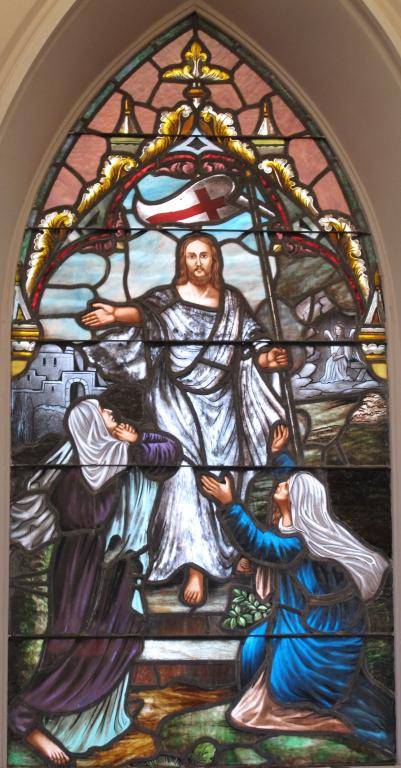
But what about the women? They were there. The two Marys saw the crucifixion, they saw Jesus die, they saw the burial in the stone tomb, they saw the empty tomb, and they saw the risen Jesus. They were part of the inner circle, and surely their word was good enough.
Yes, surely it was. They often showed themselves more faithful, loyal, and courageous than the male disciples.
The first problem is that the author of Matthew is still not an eyewitness. At best, he simply reported a story he’d been told.
So what? In most criminal court cases, there is only one or two eyewitnesses. Conviction depends on whether their testimony is credible, and whether their character suggests a truthful report, and no known motivations to lie about what they claim to have seen.
[A]pologists insist that women were seen as unreliable witnesses. This means that they can’t argue that while the author of Matthew wasn’t technically an eyewitness, that’s unimportant because he trusted the women’s report. They’ve left Matthew with no authority from which to document the most important (and least believable) part of the gospel.
How the ancient world may have regarded women’s testimony is irrelevant to whether their reports were true or not (this would be an instance of the genetic fallacy). I agree with the apologists cited, that the Gospels (in a highly patriarchal culture and time) would almost certainly not have recorded that women first saw the risen Jesus (and saw the crucifixion) if they were deliberately lying / making up a story out of whole cloth. Therefore, this element is a strong indication of the truthfulness of the Gospel accounts. It can’t be breezily dismissed.
Another reason to discount Matthew as an eyewitness is that that book liberally copies from Mark, the first gospel. More than half of Matthew comes from Mark. Why would an eyewitness account copy from someone else rather than give his own version . . . unless it wasn’t an eyewitness account?
Well, it’s not nearly so simple as this. Seidensticker is wading into the extraordinarily complex “synoptic problem”, which has to do with the precise relationship of the Gospels of Matthew, Mark, and Luke. But first I should note that a rather free borrowing from other written works was a very common feature of ancient literature. Hence, the entry: “Plagiarism, Greek” from the Oxford Classical Dictionary explains:
The more sophisticated ancient critics distinguished ‘imitation’ of earlier writers (Gk. mimēsis, Lat. *imitatio) from ‘theft’ (Gk. klopē, Lat. furtum). ‘Theft’ involves derivative copying and is condemned: this, and only this, is plagiarism. ‘Imitation’ is an acceptable, even normal, re-use (in part, relatable to the modern structuralist’s notion of ‘intertextuality’; see literary theory and classical studies), such that the ‘borrowed’ material is recreated as the borrower’s ‘own property’ (‘privati iuris’, Hor.Ars. 131) and (perhaps because the original is well known and informs the new context) the relationship between new and old is acknowledged rather than concealed. When L. *Annaeus Seneca (1) suggests that *Ovid imitates *Virgil ‘not as pilferer but as open appropriator’ (‘non subripiendi causa sed palam mutuandi’, Suas. 3. 7), the distinction is clear; so too when ‘Longinus’ (Subl. 13) praises a whole tradition of writers, from *Archilochus to *Plato (1), for their re-use of *Homer. [italics added]
While it is true that 56% of Matthew’s content is shared with Mark, it is also true that 20% of the Gospel of Matthew is unique to itself, and another 24% is shared with Luke but not with Mark (see the helpful chart near the top on this web page). So although it shares a lot with Mark, it is a unique presentation in its own right. This is true of Luke to a greater extent, as it has 35% unique material and 23% shared with Matthew, which is almost three-fifths of the book (42% shared with Mark.
The predominant theory of origins of the Gospels have Matthew and Luke derived from jointly from Mark and “Q”: a possibly oral and undocumented source. But this is not certain, and there are other theories, which have recently (especially since the 1990s) attained a growing consensus among Bible scholars. One of these is the Griesbach Hypothesis, explained by Wikipedia:
According to Griesbach, the historical order of the gospels was, first, Matthew; second, Luke, making use of Matthew and other non-Matthaean tradition; and third, Mark, making use of both Matthew and Luke. In proposing this hypothesis, Griesbach maintained Matthaean priority, as had Augustine before him, along with every other scholar in the church prior to the late eighteenth century. Griesbach’s main support for his thesis lies in passages where Matthew and Luke agree over and against Mark (e.g. Matthew 26:68; Luke 22:64; Mark 14:65), the so-called Minor Agreements.
The Orchard Hypothesis is a more recent variation of the Greisbach Hypothesis. But in any event, no one can claim to know for sure who borrowed from whom, who did so first, who wrote first, etc. It’s all (fascinating but non-definitive) speculation. Seidensticker, with his pathetic record of pathetic disinformation and deliberate ignorance and refusal to be corrected (as seen in my 75 previous critiques of his abysmal polemics) is almost the last person on earth who is qualified to make the sweeping claims that he — undaunted and blissfully free of fact and logic alike –, constantly makes, posing as some sort of (relentlessly cynical and skeptical) biblical expert. It’s a joke.
Mark also shares the problems of Matthew. The author wasn’t an eyewitness to the death or resurrection, . . .
That’s correct. But according to a position held by many throughout the centuries (which if correct, would overcome this objection), he drew from Peter, who was an eyewitness. This view came originally from Papias, who lived from c. 60 – c. 130. That is actual objective historical evidence, as opposed to largely abstract, subjective theories made up in the minds of men 18-20 centuries after Christ. See:
“Mark’s Gospel Through the Eyes of St. Peter” (Thomas L. McDonald, 4-25-19)
“Eyewitness Testimony in Mark’s Gospel” (James M. Arlandson, 5-13-08)
“Is Peter Really Behind Mark’s Gospel?” (Dr. Fred Baltz, 7-23-21)
“Did Mark base his Gospel on Matthew and Luke?” (Jimmy Akin, 4-25-15)
“Is Mark a Transcript of Peter’s Lectures on Matthew and Luke?” (Jimmy Akin, 9-16-16)
[T]he book itself makes clear that neither Peter nor any disciple was an eyewitness to the death, so no disciple could claim to be an eyewitness to the resurrection.
This is the same old canard again, presented as if mere repetition makes a falsehood magically become true. Mark doesn’t say, “John was not present at the crucifixion.” Therefore, The Gospel of John’s report that he was (Jn 19:26), is not contradicted. And there is also the issue of a larger category of disciples, already noted above.
Luke doesn’t have the disciples run away at the arrest of Jesus.
He neither affirms nor denies it, so it’s not contradictory compared to other Gospels.
At the crucifixion, “All those who knew him, including the women who had followed him from Galilee, stood at a distance, watching,” so the men were presumably there.
“All” in the Bible often means merely “many” and not literally “absolutely every one, without exception”, as I have written about elsewhere. It’s like how we refer to a big party or family reunion by saying, “everyone was there!” It’s understood that this is not an absolute statement with no exceptions. So this is not a contradiction to Matthew’s and Mark’s descriptions of disciples having fled in terror (Mt 26:31-35, 56; Mk 14:50), and not being present (with the exception of John) at the crucifixion.
With Luke and John, Christians have a better argument for disciples witnessing Jesus alive, then dead, then alive again,
Which is not required . . .
but they can only do so after admitting a worse problem, that the gospel stories are contradictory.
Nonsense. No contradiction between the Gospels has been established beyond all doubt in this slanted, twisted presentation. As usual, anti-theist atheists invent (with utter disdain of logic) various pseudo- and mythical so-called “contradictions” that in fact are not ones at all.
According to John, when Jesus is on the cross, he sees his mother and “the disciple whom he loved.” [i.e., John] Presumably concerned about who would care for Mary after his death, he said to her, “Woman, here is your son,” and to the disciple, “Here is your mother” (John 19:26–7). But Mary already had another son! Why would Jesus do this when James the Just was his brother?
James is specifically said to be the son of (by deductive cross-referencing) Mary, wife of Clopas (Mt 27:56; Mk 15:40; 16:1). For more on this, and the persons named James in the NT see my papers, Were Simon & Jude Jesus’ Literal Siblings, or Cousins? and James the Lord’s “Brother” (i.e., Cousin) + Who Wrote the Book of James? Jesus had no siblings.
The resurrection is a ridiculous claim that needs a mountain of evidence to support it.
There were plenty of eyewitnesses to it and the evidence is strong. My present purpose is not to present all that (others have done so far better than I ever could). I am strictly showing, I think, that none of Bible-Basher Bob’s “arguments” have the slightest force (defeating alleged “defeaters” of the Gospels). Nothing here refutes the notion of Jesus rising from the dead, and many people seeing Him risen. None of his individual arguments succeed or prove that they are beyond serious dispute.
***
ADDENDUM: Clarifications of My Positions
“OverlappingMagisteria” offered some criticisms in my combox, which afforded me an excellent opportunity to clarify in more depth my own expressed opinions on these matters.
I’ll agree that if someone writes down an account from another person who was an eyewitness, then this is close enough. But it seems that you are just assuming that the author of Matthew is reporting an eyewitness account. Nowhere does it say that he talked to the women, or to any apostles that were present. It just tells the story. Perhaps he interviewed eyewitnesses, but perhaps he did not.
And if you’re going to ding Bob for using the Two-source hypothesis (that Matt is based off of Mark and Q) because it is not certain, then I gotta ding you for saying that St. Matthew is the author of the Gospel of Matthew. The two-source hypothesis at least has the majority view among scholars, while Matthean authorship is very much the minority view. Same with Luke using Pete as a source. This is a very much contested view.
We are not 100% sure of who wrote the four gospels. I believe we can conclude with virtually 100% certainty that Luke wrote Luke and that John wrote John. Even these cannot ever be “proven.” As for Matthew and Mark, these two gospels have been attributed to the apostle Matthew and the disciple Mark (John Mark of Acts and of Paul’s letters) since the very earliest time in the history of the church. The church fathers unanimously attributed these books to Matthew and to Mark from the earliest time. Does this prove that these two wrote the books? The answer is that it does not. However, it is far more likely that early church fathers such as Justin Martyr and Irenaeus would know who wrote these books than scholars writing today. These faithful disciples, both of whom knew disciples of Jesus who actually met the Apostle John, would be in an excellent position to tell us who wrote these books. Is this proof? I would say that we can be virtually certain that Luke wrote Luke and John wrote John, and fairly confident (but not certain) that Matthew wrote Matthew and Mark wrote Mark. (John Oakes)
You need to be accurate, first of all, as to what I have argued and what I have not asserted. Nowhere did I say that it was my opinion that Matthew wrote the Gospel of Matthew. In fact, in two places I referred to the “author” of Matthew, thus implying that it is not a settled issue. I provided articles that took this view, but I introduced them with: “As for the traditional Christian view that the disciple Matthew wrote the Gospel that bears his name, see: . . .”. Note that I didn’t say it was necessarily my view.
My opinion would be precisely what Oakes expressed above: we can be “fairly confident (but not certain)” that he was the author (a view that presupposes a high view of the testimony of early Church fathers: which I would be expected to have as a Catholic who holds sacred tradition and apostolic succession in high regard). But this is not claimed certainty, and I am not asserting with no doubt whatever that he was the author. I still hold it provisionally (though it is my view that it is more likely than not).
It’s also perfectly possible that some unknown scribe wrote Matthew utilizing either firsthand accounts from Matthew himself or oral traditions purported to be largely from him (+ possibly Peter, etc.). That would be no different from what Luke expressly states that he did, and from the view held by many that Mark (or whomever wrote that Gospel) drew largely from Peter. The bottom line is that these documents are inspired revelation, which we believe in faith (and which cannot be proven under a microscope).
You also greatly misunderstand my argumentation regarding the synoptic problem. I never “ding[ed]” Bob for taking the two-source view. I never took any position at all on that whole issue. What I was specifically objecting to was his usual ignorant, dogmatic, cynical view:
Another reason to discount Matthew as an eyewitness is that that book liberally copies from Mark, the first gospel. More than half of Matthew comes from Mark. Why would an eyewitness account copy from someone else rather than give his own version . . . unless it wasn’t an eyewitness account?
This is just stupid, and doesn’t follow at all. Not taking any particular view myself on the synoptic problem, I merely presented different options and opinions (including the ancient common practice of liberally borrowing from earlier literature), stating that it was “not nearly so simple” and “extraordinarily complex”; that the standard two-source theory was “not certain, and [that] there are other theories.” I stated very clearly: “no one can claim to know for sure who borrowed from whom, who did so first, who wrote first, etc. It’s all (fascinating but non-definitive) speculation.” The upshot of all that is that Bob’s take is ignorant and clueless, not that one theory is true and the others manifestly false. It’s Bob’s brain-dead skeptical dogmatism and faux-certainty (which I have observed over and over in my 75 unanswered critiques of his “work”) that I went after.
***
*
Practical Matters: Perhaps some of my 3,900+ free online articles (the most comprehensive “one-stop” Catholic apologetics site) or fifty books have helped you (by God’s grace) to decide to become Catholic or to return to the Church, or better understand some doctrines and why we believe them.
*
Or you may believe my work is worthy to support for the purpose of apologetics and evangelism in general. If so, please seriously consider a much-needed financial contribution. I’m always in need of more funds: especially monthly support. “The laborer is worthy of his wages” (1 Tim 5:18, NKJV). 1 December 2021 was my 20th anniversary as a full-time Catholic apologist, and February 2022 marked the 25th anniversary of my blog.
*
PayPal donations are the easiest: just send to my email address: [email protected]. You’ll see the term “Catholic Used Book Service”, which is my old side-business. To learn about the different methods of contributing, including 100% tax deduction, etc., see my page: About Catholic Apologist Dave Armstrong / Donation Information. Thanks a million from the bottom of my heart!
*
***
Photo credit: Cadetgray (3-7-11). The Resurrected Jesus and the Two Marys window in St. Matthew’s Lutheran Church, Charleston, South Carolina. Attributed to the Quaker City Glass Company of Philadelphia, 1912. [Wikimedia Commons / Creative Commons Attribution-Share Alike 3.0 Unported license]

***
Summary: Anti-theist polemicist Bob Seidensticker vainly tries to prove that the Gospel writers were not Resurrection eyewitnesses, but rather, a bunch of mythmaking liars.
***
alleged biblical contradictions
Previous Post

December 6, 2021
Reply to Attacks from Anti-Apologist Shawn McElhinney
Next Post
December 8, 2021 Christmas & Dec. 25th: NOT Derived from Saturnalia
Browse Our Archives
Select a Category & Last Things About Me Anti-Catholicism Atheism & Agnosticism Baptism and Sacramentalism Bible and Tradition Blessed Virgin Mary Books by Dave Armstrong C. S. Lewis Calvinism & General Protestantism Catholic Apologetics Catholic Apologists Catholic conversion Catholic converts Christmas Church (Ecclesiology) Church History Conversion and Converts Development of Doctrine Eastern Orthodoxy Ecumenism & Christian Unity Eucharist & Liturgy Fathers of the Church French Translations G. K. Chesterton Hell Hell & Satan Hell & Satan & Last Things Heresies & Comparative Religion Holistic Health Inquisition & Crusades & Scandals James White Jews & Judaism & Old Testament John Calvin John Henry Newman Liberal / Modernist Theology Life Issues Literary Resume Lutheranism Mariology Martin Luther Music Orthodoxy Papacy & Infallibility Personal Page Philosophy & Science Political & Ethical & Moral Issues Protestant Persecution & Intolerance Protestantism Purgatory Purgatory & Penance Romantic & Imaginative Theology Saints & Purgatory & Penance Salvation Salvation & Justification Satan & Last Things Sexuality and Gender Issues Spanish Translations Traditionalism vs. Radical Catholic Reactionaries Traducciones al español / tradução para português Trinitarianism & Christology Uncategorized Videos
Select a Month October 2026 September 2026 August 2026 July 2026 June 2026 May 2026 April 2026 March 2026 February 2026 January 2026 December 2025 November 2025 October 2025 September 2025 August 2025 July 2025 June 2025 May 2025 April 2025 March 2025 February 2025 January 2025 December 2024 November 2024 October 2024 September 2024 August 2024 July 2024 June 2024 May 2024 April 2024 March 2024 February 2024 January 2024 December 2023 November 2023 October 2023 September 2023 August 2023 July 2023 June 2023 May 2023 April 2023 March 2023 February 2023 January 2023 December 2022 November 2022 October 2022 September 2022 August 2022 July 2022 June 2022 May 2022 April 2022 March 2022 February 2022 January 2022 December 2021 November 2021 October 2021 September 2021 August 2021 July 2021 June 2021 May 2021 April 2021 March 2021 February 2021 January 2021 December 2020 November 2020 October 2020 September 2020 August 2020 July 2020 June 2020 May 2020 April 2020 March 2020 February 2020 January 2020 December 2019 November 2019 October 2019 September 2019 August 2019 July 2019 June 2019 May 2019 April 2019 March 2019 February 2019 January 2019 December 2018 November 2018 October 2018 September 2018 August 2018 July 2018 June 2018 May 2018 April 2018 March 2018 February 2018 January 2018 December 2017 November 2017 October 2017 September 2017 August 2017 July 2017 June 2017 May 2017 April 2017 March 2017 February 2017 January 2017 December 2016 November 2016 October 2016 September 2016 August 2016 July 2016 June 2016 May 2016 April 2016 March 2016 February 2016 January 2016 December 2015 November 2015 October 2015 September 2015 August 2015 July 2015 June 2015 May 2015 April 2015 March 2015 February 2015 January 2015 December 2014 November 2014 October 2014 September 2014 August 2014 July 2014 June 2014 April 2014 March 2014 February 2014 January 2014 December 2013 November 2013 October 2013 September 2013 August 2013 July 2013 June 2013 April 2013 March 2013 February 2013 January 2013 December 2012 November 2012 October 2012 September 2012 August 2012 July 2012 June 2012 May 2012 April 2012 March 2012 February 2012 January 2012 December 2011 November 2011 October 2011 September 2011 August 2011 July 2011 June 2011 April 2011 March 2011 February 2011 October 2010 September 2010 August 2010 July 2010 April 2010 March 2010 December 2009 October 2009 August 2009 July 2009 June 2009 May 2009 March 2009 February 2009 October 2008 September 2008 April 2008 March 2008 February 2008 January 2008 December 2007 November 2007 October 2007 May 2007 March 2007 February 2007 January 2007 November 2006 October 2006 September 2006 August 2006 July 2006 June 2006 May 2006 April 2006 March 2006 February 2006 October 2005 June 2005 April 2005 February 2005 July 2004 May 2004 April 2004
Follow Us!
TAKE THE
Religious Wisdom Quiz
This Gospel alone records seven 'I am' statements from Jesus. Which of these is NOT one of them: the bread of life, the good shepherd, the way and the truth and the life, or the Alpha and Omega?
Select your answer to see how you score.
The Alpha and Omega The bread of life The way and the truth and the life The good shepherd
Books by This Author Books by Dave Armstrong
Related posts from Biblical Evidence for Catholicism

God, Modern Physics, & Dark Energy: An Analogy
Biblical Evidence for Catholicism
Jesus Proved He Was God in Six Ways...
Biblical Evidence for Catholicism

General Debate on Christianity with an Atheist
Biblical Evidence for Catholicism

Can Atheists Be Saved? Surprising Biblical Data
Biblical Evidence for Catholicism
TRENDING AT PATHEOS Catholic

Janie Learns the Way of the Cross: A...
Teaching children about Jesus' Passion can be challenging. Many parents and educators...

Looking For Good Catholic Writing - October 2026
He alone extends the heavens, and he walks upon the waves of...

In "Irreplaceable," our book on vocation and technology, Trevor Sutton and I...

I was strolling through the top floor of the brand new Parthenon...

What Does Gêvâh Mean For Kimberley Guifoyle &...
This week, a lot of the news is focused on Kimberly Guilfoyle....

INNER CIRCLE: Profound Mystery (Of Christ In All...
Ephesians 5:31-32 “For this reason, a man will leave his father and...
view all Catholic blogs
Ad-Free & Subscriber Log-In Subscription Support
- About Us
- 2026 Calendar
- Videos
- Podcasts
- Library of World Religions
- Faith In Media Tracker
- Advertise With Us
- Write for Us
- Privacy Policy
- Terms of Service
- Do Not Sell My Data
- Contact Us
- Radiant Digital
- Manage Newsletter Subscriptions
- Unsubscribe From Notifications
- Sitemap
Copyright 2008-2026, Patheos. All rights reserved.
Subscription Support Ad-Free & Subscriber Log-In
Follow Patheos