
BuddhistCatholicContemplativeEvangelicalGeneral ChristianHinduJewishLatter-day SaintMuslimNew VisionsProgressive Christian
Beliefs
- Buddhist
- Catholic
- Contemplative
- Evangelical
- General Christian
- Hindu
- Jewish
- Latter-day Saint
- More Voices
- Muslim
- New Visions
- Pagan
- Progressive Christian
Topics
- Religion News
- Food and Religion
- Sports and Religion
- Religious Art
- Religious Music and Entertainment
- Religious Events
- History and Religion
- Style and Religion
- Politics and Religion
- Women in Religion
- Recreation Outdoors and Religion
- Business Finance and Religion
- Careers Workplace and Religion
- Education and Religion
- Family Parenting and Religion
- Health Fitness and Religion
- Home and Religion
- Relationships and Religion
- Technology and Religion
- Travel and Religion
Columnists
- Buddhist Columnists
- Business Finance and Religion Columnists
- Careers Workplace and Religion Columnists
- Catholic Columnists
- Contemplative Columnists
- Education and Religion Columnists
- Evangelists Columnists
- Family Parenting and Religion Columnists
- General Christian Columnists
- Health Fitness and Religion Columnists
- Hindu Columnists
- History and Religion Columnists
- Home and Religion Columnists
- Jewish Columnists
- More Voices Columnists
- Latter Day Columnists
- Muslim Columnists
- New Visions Columnists
- Nonreligious Columnists
- Pagan Columnists
- Politics and Religion Columnists
- Progressive Columnists
- Recreation Outdoors and Religion Columnists
- Relationships and Religion Columnists
- Religion News Columnists
- Religious Art Columnists
- Religious Events Columnists
- Religious Music and Entertainment Columnists
- Sports and Religion Columnists
- Style and Religion Columnists
- Technology and Religion Columnists
- Travel and Religion Columnists
- Women in Religion Columnists
Resource Library
- 2026 Calendar
- Library of World Religions
- The 100 Most Holy Places on Earth
- Patheos Answers
- Podcasts
- Videos
- Faith Leaders Database
- Anglican Episcopalian
- Bahai
- Baptist
- Buddhism
- Christianity
- Confucianism
- Eastern Orthodoxy
- Hinduism
- Holiness and Pentecostal
- ISKCON
- Islam
- Judaism
- Lutheran
- Methodist
- The Church of Jesus Christ of Latter-day Saints
- New Age
- Paganism
- Presbytarian and Reformed
- Protestantism
- Religion Behind the Scenes
- Roman Catholic
- Scientology
- Shia Islam
- Sikhism
- Sufism
- Sunni Islam
- Taoism
- Zen
- See all religions
Research Tools
 Ad-Free & Subscriber Log-In Subscription Support
Ad-Free & Subscriber Log-In Subscription Support
Follow Patheos 

- Trending:
- Forgiveness
- |
- Marriage
- |
- Consciousness
- |
- Death Penalty
- |
- Election
- |
- Halloween

-
About
-
Catholic Apologetics
-
Church History
-
Great Apologists
-
Christian Worldview
-
Protestantism & Misc.
- Home
- Catholic
- History and Religion
- Pearce’s Potshots #52: No Tomb for Jesus?
Pearce’s Potshots #52: No Tomb for Jesus?
Last updated on: November 10, 2021 at 8:19 pm by Dave Armstrong
Pearce’s Potshots #52: No Tomb for Jesus? 2021-11-10T20:19:04-04:00 Dave Armstrong
Patheos Explore the world's faith through different perspectives on religion and spirituality! Patheos has the views of the prevalent religions and spiritualities of the world.
Skeptical Fairy Tales and Fables vs. the Physical Corroborating Evidence of Archaeology in Jerusalem
Atheist anti-theist Jonathan M. S. Pearce is the main writer on the blog, A Tippling Philosopher. His “About” page states: “Pearce is a philosopher, author, blogger, public speaker and teacher from Hampshire in the UK. He specialises in philosophy of religion, but likes to turn his hand to science, psychology, politics and anything involved in investigating reality.”
This is a partial reply to a guest post on Jonathan’s blog by David Austin, entitled, The “Empty Tomb” & The “Minimal Facts” argument (11-10-21). Austin’s words will be in green.
*****
It seems that depriving the victim of an honourable burial was part of the humiliation of the miscreant, since the main reason for executing a seditionist by crucifixion was to send a strong deterrent message for anyone considering challenging the ruling Roman authorities. Usually, the victim’s body was left on the cross to be attacked by animals or birds, before being buried in a mass grave, criminal graveyard, or a criminal mausoleum. No mourning rites were allowed.
As usual, the atheist just throws things out with no supporting evidence. I guess Austin (like Pearce) thinks his words are GOSPEL TRVTH. No one would ever dream of questioning them! After all, they attempt to knock down Christianity, so it’s all good! Anything goes!
Now here is some actual evidence from the period, regarding these matters. Craig A. Evans, Distinguished Professor of Christian Origins and dean of the School of Christian Thought at Houston Baptist University, wrote the article, “The Resurrection of Jesus in the Light of Jewish Burial Practices” (5-4-16). He prefers to stick to known facts:
In recent years a number of skeptics, including scholars who ought to know better, have charged that the story of the burial of Jesus itself is unhistorical, that Roman law did not in fact permit the burial of the crucified, and that the story of the burial is therefore simply part of early Christian apologetic, designed to confirm the story of the resurrection. A few of these scholars have suggested that in all probability the body of Jesus was not buried but left hanging on the cross or at best was cast into a ditch where it was mauled by animals. Skepticism regarding the burial of Jesus is ill-founded, in the light of Roman law and Jewish law, custom, and practice. The present essay will review both of these elements.
Roman law regarding the burial of the executed is far more nuanced —and lenient — than many suppose. In the Digesta, compiled by Roman emperor Justinian in the sixth century (AD 530–533) but comprising a great deal of law from the first and second centuries, we find important and relevant material in chapter 24 of book 48. All three of the paragraphs that make up chapter 24, the final chapter, entitled De cadaveribus punitorum (“On the bodies of the punished”), are helpful. I shall treat paragraphs §1 and §3, both of which directly bear on the question of the burial of the executed.
§1 Ulpian, Duties of Proconsul, book 9: The bodies of those who are condemned to death should not be refused their relatives; and the Divine Augustus, in the Tenth Book of his Life, said that this rule had been observed. At present, the bodies of those who have been punished are only buried when this has been requested and permission granted; and sometimes it is not permitted, especially where persons have been convicted of high treason. Even the bodies of those who have been sentenced to be burned can be claimed, in order that their bones and ashes, after having been collected, may be buried.
§3 Paulus, Views, book 1: The bodies of persons who have been punished should be given to whoever requests them for the purpose of burial.
More than forty percent of Justinian’s Digesta has been drawn from the writings of the jurist Ulpian (c. AD 170–223). One of his frequently cited works is his officio proconsulis (Duties of Proconsul). In the first paragraph of chapter 24 the Digesta quotes an opinion from the ninth book of officio proconsulis: “The bodies of those who are condemned to death should not be refused their relatives.” Ulpian supports his opinion by appealing to the precedent of the great emperor Augustus (ruled 31 BC – AD 14), which was expressed in his autobiography written near the end of his life. Ulpian goes on to say that “the bodies of those who have been punished are only buried when this has been requested and permission granted.” . . .
The Gospel narratives are fully consistent with Roman practice and legal opinion. . . .
[Jewish historian] Josephus (AD 37 – c. 100) himself makes such a request of Titus, son of Vespasian, and it is granted (Life 420–21).
So the bodies of the crucified were not always properly buried, but they were “given to whoever requests them for the purpose of burial” (in other words, precisely what we have in Jesus’ case). Austin provides fairy tales and mythology; I reply with historical facts, documented from the Roman laws of the time. And in all likelihood, he will ignore this critique, because the anti-theist crusade is not one of seeking truth, but of mocking and deriding Christianity and the Bible at every turn.
*
It is very unlikely that Jesus’s body would have been entombed, although it is possible his body was removed shortly after death by a pious Jew, as Jews were allowed certain “freedoms” to follow certain Jewish practices, even under Roman rule. An entombment was very unlikely as the tomb would have been thought of as being “defiled” if it held the body of a criminal.
*
Dr. Evans continues:
It is clear from the early laws and opinions cited in the Digesta that in most cases the bodies of the executed, including those crucified, were permitted burial, if requests were made. We see this in the case of Jesus, whose body for burial was requested by Joseph of Arimathea, a member of the Jewish council (Mark 15:42–47 parr.). This is completely consistent with Jewish law and custom, which placed the burden of burial on the Jewish council (or Sanhedrin) when it condemned and executed someone. . . .
There is also archaeological evidence that corroborates the literary evidence. One thinks of the crucified remains of one Yehohanan, crucified under the authority of Pontius Pilate. Though crucified, he was nevertheless properly buried (with an iron spike still embedded in his right heel). The skeletal remains of at least three other executed persons have been recovered from tombs and ossuaries, as well as dozens of nails and spikes, many of which had been used in crucifixion.
Austin claimed that Jesus wouldn’t be buried in a tomb, having been condemned as a criminal: that this would “defile” a tomb. He provides no actual support whatever for this claim. But Dr. Evans has already refuted it. Secondly, the families of those crucified would not have considered them criminals, since they had usually been unjustly persecuted by the Romans (by the hundreds of thousands in that terrible era). Therefore, their dead bodies would not defile a tomb; and again, this is precisely the same as in the case of Jesus.
*
But even if we provisionally accept Austin’s claim that a dead “criminal” (real or alleged) would defile a tomb, the fact remains that we now have hard archaeological evidence of a crucified person in a tomb in Jerusalem during the reign of Pontius Pilate, as Dr. Evans noted above (precisely the opposite of Austin’s bald, unsubstantiated claim).
*
Bible History Daily, connected to the Biblical Archaeology Society, produced an article on 22 July 2011, entitled, “A Tomb in Jerusalem Reveals the History of Crucifixion and Roman Crucifixion Methods”. I cite its main points:
In the history of crucifixion, the death of Jesus of Nazareth stands out as the best-known example by far. Crucifixion in antiquity was actually a fairly common punishment, but there were no known physical remains from a crucifixion. Then, in 1968, archaeologist Vassilios Tzaferis excavated a Jerusalem tomb that contained the bones of a crucified man named Yehohanan. . . .
The bones were found in an ossuary, or bone box, inscribed several times with Yehohanan’s name (“Yehohanan son of Hagakol”). This ossuary, along with several others, had been placed in a tomb complex consisting of two chambers and 12 burial niches. During the Roman period (first century B.C.–first century A.D.) Jews who could afford this type of burial would lay out the dead bodies of loved ones on stone benches in rock-cut tombs. A year later, after the flesh had desiccated, the bones were collected into an ossuary and left in the tomb with those of other family members.
Vassilios Tzaferis received a Ph.D. from Hebrew University in Jerusalem. He has directed many excavations, including those at Ashkelon, Tiberius, Beth Shean, Capernaum and at various locations in Jerusalem. His report “Crucifixion—The Archaeological Evidence” originally appeared in Biblical Archaeology Review, Jan/Feb 1985, 44-53. He describes his excavations of 1968, involving a crucified man:
In that year I excavated the only victim of crucifixion ever discovered. He was a Jew, of a good family, who may have been convicted of a political crime. He lived in Jerusalem shortly after the turn of the era and sometime before the Roman destruction of Jerusalem in 70 A.D. . . .
And one man in this family had been crucified. He was between 24 and 28 years old, according to our osteologists.
Strange though it may seem, when I excavated the bones of this crucified man, I did not know how he had died. Only when the contents of Ossuary No. 4 from Chamber B of Tomb No. 1 were sent for osteological analysis was it discovered that it contained one three- or four-year-old child and a crucified man—a nail held his heel bones together. The nail was about 7 inches (17–18 cm) long. . . .
The most dramatic evidence that this young man was crucified was the nail which penetrated his heel bones. But for this nail, we might never have discovered that the young man had died in this way. The nail was preserved only because it hit a hard knot when it was pounded into the olive wood upright of the cross. The olive wood knot was so hard that, as the blows on the nail became heavier, the end of the nail bent and curled. We found a bit of the olive wood (between 1 and 2 cm) on the tip of the nail. This wood had probably been forced out of the knot where the curled nail hooked into it.
When it came time for the dead victim to be removed from the cross, the executioners could not pull out this nail, bent as it was within the cross. The only way to remove the body was to take an ax or hatchet and amputate the feet. Thereafter, the feet, the nail and a plaque of wood that had been fastened between the head of the nail and the feet remained attached to one another as we found them in Ossuary No. 4. . . .
As the evidence from our crucified man demonstrates, the nails were driven into the victim’s arms, just above the wrists, because this part of the arm is sufficiently strong to hold the weight of a slack body. [the evidence from the Shroud of Turin also indicates the same location for the nails: the wrist area rather than hands] . . .
There’s something else we know about this victim. We know his name. Scratched on the side of the ossuary containing his bones were the words “Yehohanan, the son of Hagakol.”
Note that this evidence has been around since 1968 (or at the latest since this report in 1985), so Austin is at least 36 years behind the times. Somehow, that oft-claimed exclusive atheist concern for reason and evidence failed to lead him to the relevant archaeological findings.
For extensive additional related material, see: “Ossuaries and the Burials of Jesus and James” (Jodi Magness, Journal of Biblical Literature, Vol. 124, No. 1 [Spring, 2005], pp. 121-154.
***
Practical Matters: if any of my 3,850+ free online articles and 50 books have helped you (by God’s grace) to decide to become Catholic or to return to the Church, or better understand some doctrines and why we believe them, and/or if you believe my work is worthy to support for the purpose of apologetics and evangelism in general, please seriously consider a much-needed financial contribution. 1 December 2021 will be my 20th anniversary as a full-time Catholic apologist, and February 2022, the 25th anniversary of my blog.
*
PayPal donations are the easiest: just send to my email address: [email protected]. “Catholic Used Book Service” (which might be mentioned in conjunction with my address on PayPal) is my old side-business. To learn about the different methods of contributing, including 100% tax deduction, etc., see my page: About Catholic Apologist Dave Armstrong / Donation Information. Thanks a million from the bottom of my heart!
*
***
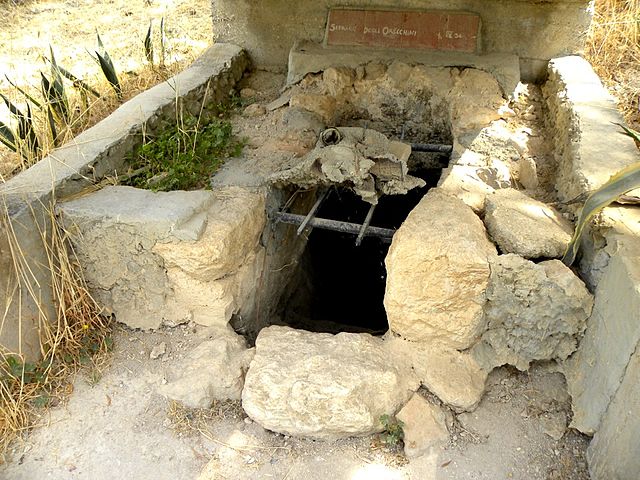
Photo credit: Ian Scott (12-31-11). Entrance to an intact niche (or kokkhim) tomb on the grounds of the Dominus Flevit church on the lower slope of the Mount of Olives in Jerusalem. Such tombs were distinctive of Hellenistic and early-Roman Periods in the Holy Land. [Wikimedia Commons / Creative Commons Attribution-Share Alike 2.0 Generic license]

***
Summary: Guest writer, atheist David Austin argues that there was no tomb for Jesus, because the Romans “usually” left crucified criminals to rot rather than be buried. Wrong!
Previous Post

November 10, 2021
Erasmus' Criticism of Popes = Today's Pope-Bashing?
Next Post

November 11, 2021 Could Jesus Have Possibly Inherited Original Sin?
Browse Our Archives
Select a Category & Last Things About Me Anti-Catholicism Atheism & Agnosticism Baptism and Sacramentalism Bible and Tradition Blessed Virgin Mary Books by Dave Armstrong C. S. Lewis Calvinism & General Protestantism Catholic Apologetics Catholic Apologists Catholic conversion Catholic converts Christmas Church (Ecclesiology) Church History Conversion and Converts Development of Doctrine Eastern Orthodoxy Ecumenism & Christian Unity Eucharist & Liturgy Fathers of the Church French Translations G. K. Chesterton Hell Hell & Satan Hell & Satan & Last Things Heresies & Comparative Religion Holistic Health Inquisition & Crusades & Scandals James White Jews & Judaism & Old Testament John Calvin John Henry Newman Liberal / Modernist Theology Life Issues Literary Resume Lutheranism Mariology Martin Luther Music Orthodoxy Papacy & Infallibility Personal Page Philosophy & Science Political & Ethical & Moral Issues Protestant Persecution & Intolerance Protestantism Purgatory Purgatory & Penance Romantic & Imaginative Theology Saints & Purgatory & Penance Salvation Salvation & Justification Satan & Last Things Sexuality and Gender Issues Spanish Translations Traditionalism vs. Radical Catholic Reactionaries Traducciones al español / tradução para português Trinitarianism & Christology Uncategorized Videos
Select a Month October 2026 September 2026 August 2026 July 2026 June 2026 May 2026 April 2026 March 2026 February 2026 January 2026 December 2025 November 2025 October 2025 September 2025 August 2025 July 2025 June 2025 May 2025 April 2025 March 2025 February 2025 January 2025 December 2024 November 2024 October 2024 September 2024 August 2024 July 2024 June 2024 May 2024 April 2024 March 2024 February 2024 January 2024 December 2023 November 2023 October 2023 September 2023 August 2023 July 2023 June 2023 May 2023 April 2023 March 2023 February 2023 January 2023 December 2022 November 2022 October 2022 September 2022 August 2022 July 2022 June 2022 May 2022 April 2022 March 2022 February 2022 January 2022 December 2021 November 2021 October 2021 September 2021 August 2021 July 2021 June 2021 May 2021 April 2021 March 2021 February 2021 January 2021 December 2020 November 2020 October 2020 September 2020 August 2020 July 2020 June 2020 May 2020 April 2020 March 2020 February 2020 January 2020 December 2019 November 2019 October 2019 September 2019 August 2019 July 2019 June 2019 May 2019 April 2019 March 2019 February 2019 January 2019 December 2018 November 2018 October 2018 September 2018 August 2018 July 2018 June 2018 May 2018 April 2018 March 2018 February 2018 January 2018 December 2017 November 2017 October 2017 September 2017 August 2017 July 2017 June 2017 May 2017 April 2017 March 2017 February 2017 January 2017 December 2016 November 2016 October 2016 September 2016 August 2016 July 2016 June 2016 May 2016 April 2016 March 2016 February 2016 January 2016 December 2015 November 2015 October 2015 September 2015 August 2015 July 2015 June 2015 May 2015 April 2015 March 2015 February 2015 January 2015 December 2014 November 2014 October 2014 September 2014 August 2014 July 2014 June 2014 April 2014 March 2014 February 2014 January 2014 December 2013 November 2013 October 2013 September 2013 August 2013 July 2013 June 2013 April 2013 March 2013 February 2013 January 2013 December 2012 November 2012 October 2012 September 2012 August 2012 July 2012 June 2012 May 2012 April 2012 March 2012 February 2012 January 2012 December 2011 November 2011 October 2011 September 2011 August 2011 July 2011 June 2011 April 2011 March 2011 February 2011 October 2010 September 2010 August 2010 July 2010 April 2010 March 2010 December 2009 October 2009 August 2009 July 2009 June 2009 May 2009 March 2009 February 2009 October 2008 September 2008 April 2008 March 2008 February 2008 January 2008 December 2007 November 2007 October 2007 May 2007 March 2007 February 2007 January 2007 November 2006 October 2006 September 2006 August 2006 July 2006 June 2006 May 2006 April 2006 March 2006 February 2006 October 2005 June 2005 April 2005 February 2005 July 2004 May 2004 April 2004
Follow Us!
TAKE THE
Religious Wisdom Quiz
Who prayed for rain after a long drought and sent his servant to look seven times?
Select your answer to see how you score.
Elijah Isaiah Samuel Hosea
Books by This Author Books by Dave Armstrong
Related posts from Biblical Evidence for Catholicism

God, Modern Physics, & Dark Energy: An Analogy
Biblical Evidence for Catholicism

Jesus Proved He Was God in Six Ways...
Biblical Evidence for Catholicism

My “Number Articles”: Alphabetized by Topic
Biblical Evidence for Catholicism

General Debate on Christianity with an Atheist
Biblical Evidence for Catholicism
TRENDING AT PATHEOS Catholic

I was strolling through the top floor of the brand new Parthenon...

What Does Gêvâh Mean For Kimberley Guifoyle &...
This week, a lot of the news is focused on Kimberly Guilfoyle....

INNER CIRCLE: Profound Mystery (Of Christ In All...
Ephesians 5:31-32 “For this reason, a man will leave his father and...

Do Not Rejoice When Your Enemy Falls: The...
Turning an execution into a public spectacle is a disturbing expression of...

'The Chosen' S6 Trailer: The Passion Gets Very...
Not many watching 'The Chosen' worry about spoilers, but just because they...

The purpose-driven labor priest
A labor activist reads Rick Warren and it gets me wondering about...
view all Catholic blogs
Ad-Free & Subscriber Log-In Subscription Support
- About Us
- 2026 Calendar
- Videos
- Podcasts
- Library of World Religions
- Faith In Media Tracker
- Advertise With Us
- Write for Us
- Privacy Policy
- Terms of Service
- Do Not Sell My Data
- Contact Us
- Radiant Digital
- Manage Newsletter Subscriptions
- Unsubscribe From Notifications
- Sitemap
Copyright 2008-2026, Patheos. All rights reserved.
Subscription Support Ad-Free & Subscriber Log-In
Follow Patheos