
BuddhistCatholicContemplativeEvangelicalGeneral ChristianHinduJewishLatter-day SaintMuslimNew VisionsProgressive Christian
Beliefs
- Buddhist
- Catholic
- Contemplative
- Evangelical
- General Christian
- Hindu
- Jewish
- Latter-day Saint
- More Voices
- Muslim
- New Visions
- Pagan
- Progressive Christian
Topics
- Religion News
- Food and Religion
- Sports and Religion
- Religious Art
- Religious Music and Entertainment
- Religious Events
- History and Religion
- Style and Religion
- Politics and Religion
- Women in Religion
- Recreation Outdoors and Religion
- Business Finance and Religion
- Careers Workplace and Religion
- Education and Religion
- Family Parenting and Religion
- Health Fitness and Religion
- Home and Religion
- Relationships and Religion
- Technology and Religion
- Travel and Religion
Columnists
- Buddhist Columnists
- Business Finance and Religion Columnists
- Careers Workplace and Religion Columnists
- Catholic Columnists
- Contemplative Columnists
- Education and Religion Columnists
- Evangelists Columnists
- Family Parenting and Religion Columnists
- General Christian Columnists
- Health Fitness and Religion Columnists
- Hindu Columnists
- History and Religion Columnists
- Home and Religion Columnists
- Jewish Columnists
- More Voices Columnists
- Latter Day Columnists
- Muslim Columnists
- New Visions Columnists
- Nonreligious Columnists
- Pagan Columnists
- Politics and Religion Columnists
- Progressive Columnists
- Recreation Outdoors and Religion Columnists
- Relationships and Religion Columnists
- Religion News Columnists
- Religious Art Columnists
- Religious Events Columnists
- Religious Music and Entertainment Columnists
- Sports and Religion Columnists
- Style and Religion Columnists
- Technology and Religion Columnists
- Travel and Religion Columnists
- Women in Religion Columnists
Resource Library
- 2026 Calendar
- Library of World Religions
- The 100 Most Holy Places on Earth
- Patheos Answers
- Podcasts
- Videos
- Faith Leaders Database
- Anglican Episcopalian
- Bahai
- Baptist
- Buddhism
- Christianity
- Confucianism
- Eastern Orthodoxy
- Hinduism
- Holiness and Pentecostal
- ISKCON
- Islam
- Judaism
- Lutheran
- Methodist
- The Church of Jesus Christ of Latter-day Saints
- New Age
- Paganism
- Presbytarian and Reformed
- Protestantism
- Religion Behind the Scenes
- Roman Catholic
- Scientology
- Shia Islam
- Sikhism
- Sufism
- Sunni Islam
- Taoism
- Zen
- See all religions
Research Tools
 Ad-Free & Subscriber Log-In Subscription Support
Ad-Free & Subscriber Log-In Subscription Support
Follow Patheos 

- Trending:
- Forgiveness
- |
- Marriage
- |
- Consciousness
- |
- Death Penalty
- |
- Election
- |
- Halloween

-
About
-
Catholic Apologetics
-
Church History
-
Great Apologists
-
Christian Worldview
-
Protestantism & Misc.
- Home
- Catholic
- History and Religion
- Erasmus’ Criticism of Popes = Today’s Pope-Bashing?
Erasmus’ Criticism of Popes = Today’s Pope-Bashing?
Last updated on: June 5, 2026 at 11:59 pm by Dave Armstrong
Erasmus’ Criticism of Popes = Today’s Pope-Bashing? 2026-06-05T23:59:43-04:00 Dave Armstrong
Patheos Explore the world's faith through different perspectives on religion and spirituality! Patheos has the views of the prevalent religions and spiritualities of the world.
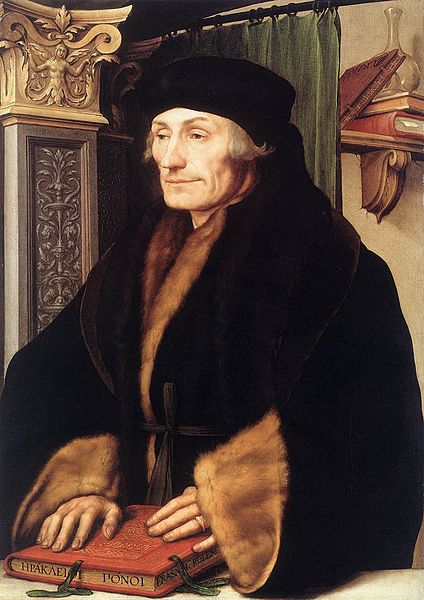
The influential and important, self-described “traditionalist” website One Peter Five has taken lately to describing its endorsement of rather aggressive and pointed papal criticism as “in the spirit of Erasmus“: the great 16th century satirist, classicist, linguist, and reformer. Thus, an “Editor’s Note” at the beginning of the article, “The Francis Pontificate is the Catechism of Hypocrisy” (J. Basil Dannebohm, 8-25-21) states:
Editor’s note: OnePeterFive is publishing the following commentary, written in the spirit of Erasmus, whose sardonic critique of the Renaissance papacy was critical for provoking long-delayed and long-denied reform in the Church. Some Catholic authors condemn him for his acerbic attacks, while others recognize that by provoking his contemporaries to righteous indignation at the ecclesiastical corruption, a necessary response from churchmen was finally obtained. Telling the truth for the sake of the faith is an act of charity, yet there are times when the truth can, per accidens, be a cause of others committing sins of impiety against superiors, but this is not the fault of the truth, but rather of reacting to it or acting upon it in the wrong way. Rather, when we realize the depth of our difficulties, we should be prompted to cry out to the Lord for deliverance and salvation. We forgive our enemies and pray for our persecutors without ceasing to recognize that they are enemies and persecutors for as long as they resist the truth. [the original was in all italics]
The first link is to In Praise of Folly: Erasmus’ famous satirical work, originally written in 1511 and revised frequently up till 1532. This is the understanding that the writers of One Peter Five have of themselves; how they conceptualize and justify their own very serious papal criticisms. On 19 April 2018, Dr. Peter Kwasniewski, one of the main writers at 1P5, invoked the great man in the midst of his typically derisive attacks on the Pauline (“ordinary form”) Mass:
In his Erasmus Lecture “Evangelizing the Nones,” Bishop Barron eruditely identifies various cultural contributors to modern irreligiosity—but never mentions the elephant in the room: the dumbed-down, totally inadequate liturgy that we are supposed to pretend is at the center of our lives, but that wouldn’t be enough to sustain a false religion, let alone the true one. I suspect that Desiderius Erasmus, had he been able to hear this lecture named after him, would at least have raised a skeptical eyebrow, if not launched full-tilt into a withering satire.
Alas, the folks at 1P5 have even produced a “fictional” letter from Erasmus: speculating upon what he would supposedly say about Pope Francis’ encyclical Amoris Laetitia.
With this in mind, I’d like to take a look at In Praise of Folly: particularly the sections concerning popes and the papacy. I will be utilizing a 1922 edition (available online), published by Peter Eckler Publishing Co. in New York. I can’t find in the book the name of the translator. I shall cite the portions having to do with popes. After that, I’ll take a brief look at the notorious pope that Erasmus almost certainly had primarily in mind. Readers can then determine for themselves if the 1P5 “summoning” of Erasmus as analogous to their criticisms of Pope Francis is plausible or not. I’m simply providing the background information.
The words “pope” or “popes” appear only twelve times in this book of over 300 pages. Quite obviously, then, the pope was not the only person or thing in Erasmus’ mind, in criticizing the characteristic excesses and sins of the time (many of which helped foment the Protestant Revolution, but by no means the only or even primary causes).
It should also be noted that In Praise of Folly is not Erasmus’ final word on the papacy in general. Erasmus was faithful to the Church, just as earlier papal critics like St. Francis of Assisi and St. Catherine of Siena had been. In his later works, he clearly saw what the so-called “Protestant Reformation” was leading to and was a scathing critic of it, far more so than he had been (with the best of intentions) with regard to the Catholic Church and her popes. He also wrote the following about popes:
I approve of those who stand by the Pope, but I could wish them to be wiser than they are. . . . Many great persons have entreated me to support Luther. I have answered always that I will support him when he is on the Catholic side. . . . I advise everyone who consults me to submit to the Pope. I was the first to oppose the publication of Luther’s books. I recommended Luther himself to publish nothing revolutionary. (To Louis Marlianus, 25 March 1520, in James Anthony Froude, translator and editor, Life and Letters of Erasmus, London: Longmans, Green & Co., 1894, 261-163)
No one has been more distressed at this Luther business than I have been. Would that I could have stopped it at the outset. . . . But it has been ill-managed from the first. It rose from the avarice of a party of monks, and has grown step by step to the present fury. The Pope’s dignity must, of course, be supported, but I wish he knew how that dignity suffers from officious fools who imagine they are defending him. (To Francis Chisigat, 11 September 1520, in James Anthony Froude, translator and editor, Life and Letters of Erasmus, London: Longmans, Green & Co., 1894, 269-270)
And when he himself [Martin Luther] wrote to me two years ago, I lovingly admonished him what I wished him to avoid; and I would he had followed my advice. This letter, I am informed, has been shown to your Holiness, I suppose in order to prejudice me, whereas it ought rather to conciliate your Holiness’s favor towards me. (To Pope Leo X, 13 September 1520, in Philip Schaff, The History of the Christian Church, Vol. VII: History of Modern Christianity, New York: Charles Scribner’s Sons, 1910, Chapter IV, section 72)
I saw that it would do no good at all for you to direct your violence not only against popes and bishops . . . but also against anyone who so much as mutters anything against you. (Hyperaspistes [1526]; Peter Macardle and Clarence H. Miller, translators, Charles Trinkhaus, editor, Collected Works of Erasmus, Vol. 76: Controversies: De Libero Arbitrio / Hyperaspistes I, Univ. of Toronto Press, 1999, p. 115; I have a hardcover copy in my own library; this comment and the next four were written directly to Martin Luther, who used to love him but had turned against him by this time. See my seven-part series documenting Erasmus’ devastating refutation of Luther in 1526)
[Y]ou have so courageously scorned both popes and emperors and battalions of theologians . . . (p. 116)
I have always professed to be quite apart from your league; I am at peace with the Catholic church, to whose judgment I have submitted my writings, to detect any human error in them, for I know that they are very far from any malice or impiety. . . . It is not my place to wield the rod of judgment over the lives of popes and bishops. (p. 141)
[W]hy do you yourself not rant and rave against the emperor with savagery like that with which you assail the pope and bishops? For the emperor is a greater obstacle to your gospel than the pope. (p. 175)
I thought less badly of the man [Jan Hus] before I sampled the book he wrote against the Roman pontiff. What does such laborious abuse have in common with the Spirit of Christ? And in our discussion it does not matter what sort of pope condemned Hus; he is unknown to me, and popes have their own judge before whom they stand or fall. They are my judges; I am not theirs. (p. 230)
But now we go back fifteen years earlier to 1511 in order to ascertain the substance of Erasmus’ withering and satirical criticisms of recent popes:
And now for some reflections upon popes, cardinals, and bishops, who in pomp and splendor have almost equaled if not outdone secular princes. Now, if any one considers that their upper crochet of white linen is to signify their unspotted purity and innocence; that their forked mitres, with both divisions tied together by the same knot, are to denote the joint knowledge of the Old and New Testament; that their always wearing gloves, represents their keeping their hands clean and undefiled from lucre and covetousness; that the pastoral staff implies the care of a flock committed to their charge; that the cross carried before them expresses their victory over all carnal affections; he (I say) that considers this, and much more of the like nature, must needs conclude that they are entrusted with a very weighty and difficult office. But, alas, they think it sufficient if they can but feed them selves; and as to their flock, either commend them to the care of Christ himself, or commit them to the guidance of some inferior vicars and curates; not so much as remembering what their name of bishop imports, to wit, labor, pains, and diligence, but by base simoniacal contracts, they are in a profane sense, Episcopi, i.e., overseers of their own gain and income. . . .
Now as to the popes of Rome, who pretend themselves Christ’s vicars, if they would but imitate his exemplary life, in the being employed in an unintermitted course of preaching; in the being attended with poverty, nakedness, hunger, and a contempt of this world; if they did but consider the import of the word Pope, which signifies a father; or if they did but practice their surname of most holy, what order or degrees of men would be in a worse condition?
There would be then no such vigorous making of parties and buying of votes in the Conclave, upon a vacancy of that See: and those who by bribery, or other indirect courses, should get themselves elected, would never secure their sitting firm in the chair by pistol, poison, force, and violence.
How much of their pleasure would be abated if they were but endowed with one dram of wisdom? Wisdom, did I say? Nay, with one grain of that salt which our Savior bade them not to lose the savor of.
All their riches, all their honors, their jurisdictions, their Peter’s patrimony, their offices, their dispensations, their licenses, their indulgences, their long train of attendants (see in how short a compass I have abbreviated all their marketing of religion); in a word, all their perquisites would be forfeited and lost; and in their room would succeed watchings, fastings, tears, prayers, sermons, hard studies, repenting sighs, and a thousand such like severe penalties: nay, what’s yet more deplorable, it would then follow, that all their clerks, amanuenses, notaries, advocates, proctors, secretaries, the offices of grooms, ostlers, serving-men, pimps, (and somewhat else, which for modesty’s sake I shall not mention); in short, all these troops of attendants, which depend on his holiness, would all lose their several employments. This indeed would be hard, but what yet remains would be more dreadful: the very Head of the Church, the spiritual prince, would then be brought from all his splendor to the poor equipage of a scrip and staff.
But all this is upon the supposition only that they understood the circumstances they are placed in; whereas now, by a wholesome neglect of thinking, they live as well as heart can wish.
Whatever of toil and drudgery belongs to their office, that they assign over to St. Peter or St. Paul, who have time enough to mind it; but if there be any thing of pleasure and grandeur, that they assume to themselves, . . .
They think to satisfy that Master they pretend to serve, our Lord and Savior, with their great state and magnificence, with the ceremonies of installments, with the titles of reverence and holiness, and with exercising their episcopal function only in blessing and cursing.
The working of miracles is old and outdated; to teach the people is too laborious; to interpret scripture is to invade the prerogative of the schoolmen; to pray is too idle; to shed tears is cowardly and unmanly; to fast is too mean and sordid; to be easy and familiar is beneath the grandeur of him, who, without being sued to and intreated, will scarce give princes the honor of kissing his toe; finally, to die for religion is too self-denying; and to be crucified as their Lord of Life, is base and ignominious.
Their only weapons ought to be those of the Spirit; and of these indeed they are mighty liberal, as of their interdicts, their suspensions, their denunciations, their aggravations, their greater and lesser excommunications, and their roaring bulls, that fright whomsoever they are thundered against; and these most holy fathers never issue them out more frequently than against those, who, at the instigation of the devil, and not having the fear of God before their eyes, do feloniously and maliciously attempt to lessen and impair St. Peter’s patrimony: and though that apostle tells our Savior in the gospel, in the name of all the other disciples, we have left all and followed you, yet they challenge as his inheritance, fields, towns, treasures, and large dominions; for the defending whereof, inflamed with a holy zeal, they fight with fire and sword, to the great loss and effusion of Christian blood, thinking they are apostolical maintainers of Christ’s spouse, the church, when they have murdered all such as they call her enemies; though indeed the church has no enemies more bloody and tyrannical than such impious popes, who give dispensations for the not preaching of Christ; evacuate the main effect and design of our redemption by their pecuniary bribes and sales; adulterate the gospel by their forced interpretations, and undermining traditions; and lastly, by their lusts and wickedness grieve the Holy Spirit, and make their Savior’s wounds to bleed anew. . . .
[Y]ou shall have some popes so old that they can scarce creep, and yet they will put on a young, brisk resolution, will resolve to stick at no pains, to spare no cost, nor to waive any inconvenience, so they may involve laws, religion, peace, and all other concerns, whether sacred or civil, in unappeasable tumults and distractions. And yet some of their learned fawning courtiers will interpret this notorious madness for zeal, and piety, and fortitude, having found out the way how a man may draw his sword, and sheathe it in his brother’s bowels, and yet not offend against the commandment whereby we are taught to love our neighbors as ourselves.
I believe this is most of what is in the book about popes, without doing some painstaking searching of many other terms. Now who is it that he was writing about? Russell Chamberlain”s book, The Bad Popes, lists eight scoundrels. The one man that Erasmus unquestionably had in mind was Pope Alexander VI (r. 1492-1503), who had died just eight years before Erasmus’ book. In his article, “Good and Bad Popes,” J. Dominguez wrote about him:
Rodrigo Borgia (A.K.A. Alexander VI) used his daughter Lucrezia getting her married with important men for political reasons … some even call him (pardon the expression) a “pimp!!!” . . . The most infamous pope in history was probably Pope Alexander VI (1492-1503) who had seven illegitimate children as a cardinal, which he openly acknowledged.
The article, “The 11 most scandalous popes in history” (Caroline Praderio, Insider, 1-13-17), noted:
Alexander VI became pope in 1492 — but before then he was just Rodrigo Borgia, a member of the notorious Italian crime family the Borgias. And in true crime-family fashion, he used money to buy his way into the papacy.
He also had several mistresses and fathered at least nine illegitimate children — possibly as a result of hosting orgies.
During his pre-papacy stint as a church cardinal, Alexander VI received a letter from Pope Pius II condemning him for hosting “several ladies of Sienna” late at night. “We have heard that the most licentious dances were indulged in,” Pius II wrote. “Shame forbids mention of all that took place […] All Sienna is talking about this orgy.”
Another source says he hosted an orgy in 1501 called the “Joust of Whores.”
See more about one reputed orgy connected with him and/or one of his sons (historians differ on what actually happened): The Banquet of Chestnuts.
Is this comparable to the character of Pope Francis? I don’t think so at all, which is why I have defended him against what I felt were unjust and unwarranted (if not also outrageous) charges 213 times and compiled 311 further defenses of him from others. Many others today think quite differently, For example, Catholic Thomist philosophy professor Ed Feser is not exactly a fawning admirer of the Holy Father:
Usually, errant popes exhibit serious failings of only one or two sorts. But Pope Francis seems intent on achieving a kind of synthesis of all possible papal errors. . . . might Francis next ape Pope Stephen VI by exhuming a dead one and putting the corpse on trial? Probably not. But absolutely nothing would surprise me anymore in this lunatic period in history that we’re living through. (“Pope Victor Redux?”, 7-18-21)
Now I leave it to you, esteemed reader, to decide whether Pope Francis is in the category of an Alexander VI, and thus worthy of receiving criticism analogous to that of Erasmus: likely directed towards that moral monster.
***
Practical Matters: if any of my 3,850+ free online articles and 50 books have helped you (by God’s grace) to decide to become Catholic or to return to the Church, or better understand some doctrines and why we believe them, and/or if you believe my work is worthy to support for the purpose of apologetics and evangelism in general, please seriously consider a much-needed financial contribution. 1 December 2021 will be my 20th anniversary as a full-time Catholic apologist, and February 2022, the 25th anniversary of my blog.
*
PayPal donations are the easiest: just send to my email address: [email protected]. “Catholic Used Book Service” (which might be mentioned in conjunction with my address on PayPal) is my old side-business. To learn about the different methods of contributing, including 100% tax deduction, etc., see my page: About Catholic Apologist Dave Armstrong / Donation Information. Thanks a million from the bottom of my heart!
*
***
Photo credit: Desiderius Erasmus (1466/1469-1536); portrait (1523) by Hans Holbein the Younger (1497/1498-1543) [public domain / Wikimedia Commons]

***
Summary: Erasmus’ criticism of popes is seen as a model for the criticism lobbed today at Pope Francis: particularly at the website, One Peter Five. But is it really analogous?
Radical Catholic Reactionaries
Previous Post

November 9, 2021
Debate: a Universe Self-Created from Nothing?
Next Post
November 10, 2021 Pearce’s Potshots #52: No Tomb for Jesus?
Browse Our Archives
Select a Category & Last Things About Me Anti-Catholicism Atheism & Agnosticism Baptism and Sacramentalism Bible and Tradition Blessed Virgin Mary Books by Dave Armstrong C. S. Lewis Calvinism & General Protestantism Catholic Apologetics Catholic Apologists Catholic conversion Catholic converts Christmas Church (Ecclesiology) Church History Conversion and Converts Development of Doctrine Eastern Orthodoxy Ecumenism & Christian Unity Eucharist & Liturgy Fathers of the Church French Translations G. K. Chesterton Hell Hell & Satan Hell & Satan & Last Things Heresies & Comparative Religion Holistic Health Inquisition & Crusades & Scandals James White Jews & Judaism & Old Testament John Calvin John Henry Newman Liberal / Modernist Theology Life Issues Literary Resume Lutheranism Mariology Martin Luther Music Orthodoxy Papacy & Infallibility Personal Page Philosophy & Science Political & Ethical & Moral Issues Protestant Persecution & Intolerance Protestantism Purgatory Purgatory & Penance Romantic & Imaginative Theology Saints & Purgatory & Penance Salvation Salvation & Justification Satan & Last Things Sexuality and Gender Issues Spanish Translations Traditionalism vs. Radical Catholic Reactionaries Traducciones al español / tradução para português Trinitarianism & Christology Uncategorized Videos
Select a Month October 2026 September 2026 August 2026 July 2026 June 2026 May 2026 April 2026 March 2026 February 2026 January 2026 December 2025 November 2025 October 2025 September 2025 August 2025 July 2025 June 2025 May 2025 April 2025 March 2025 February 2025 January 2025 December 2024 November 2024 October 2024 September 2024 August 2024 July 2024 June 2024 May 2024 April 2024 March 2024 February 2024 January 2024 December 2023 November 2023 October 2023 September 2023 August 2023 July 2023 June 2023 May 2023 April 2023 March 2023 February 2023 January 2023 December 2022 November 2022 October 2022 September 2022 August 2022 July 2022 June 2022 May 2022 April 2022 March 2022 February 2022 January 2022 December 2021 November 2021 October 2021 September 2021 August 2021 July 2021 June 2021 May 2021 April 2021 March 2021 February 2021 January 2021 December 2020 November 2020 October 2020 September 2020 August 2020 July 2020 June 2020 May 2020 April 2020 March 2020 February 2020 January 2020 December 2019 November 2019 October 2019 September 2019 August 2019 July 2019 June 2019 May 2019 April 2019 March 2019 February 2019 January 2019 December 2018 November 2018 October 2018 September 2018 August 2018 July 2018 June 2018 May 2018 April 2018 March 2018 February 2018 January 2018 December 2017 November 2017 October 2017 September 2017 August 2017 July 2017 June 2017 May 2017 April 2017 March 2017 February 2017 January 2017 December 2016 November 2016 October 2016 September 2016 August 2016 July 2016 June 2016 May 2016 April 2016 March 2016 February 2016 January 2016 December 2015 November 2015 October 2015 September 2015 August 2015 July 2015 June 2015 May 2015 April 2015 March 2015 February 2015 January 2015 December 2014 November 2014 October 2014 September 2014 August 2014 July 2014 June 2014 April 2014 March 2014 February 2014 January 2014 December 2013 November 2013 October 2013 September 2013 August 2013 July 2013 June 2013 April 2013 March 2013 February 2013 January 2013 December 2012 November 2012 October 2012 September 2012 August 2012 July 2012 June 2012 May 2012 April 2012 March 2012 February 2012 January 2012 December 2011 November 2011 October 2011 September 2011 August 2011 July 2011 June 2011 April 2011 March 2011 February 2011 October 2010 September 2010 August 2010 July 2010 April 2010 March 2010 December 2009 October 2009 August 2009 July 2009 June 2009 May 2009 March 2009 February 2009 October 2008 September 2008 April 2008 March 2008 February 2008 January 2008 December 2007 November 2007 October 2007 May 2007 March 2007 February 2007 January 2007 November 2006 October 2006 September 2006 August 2006 July 2006 June 2006 May 2006 April 2006 March 2006 February 2006 October 2005 June 2005 April 2005 February 2005 July 2004 May 2004 April 2004
Follow Us!
TAKE THE
Religious Wisdom Quiz
What does "Pentateuch" mean?
Select your answer to see how you score.
Five Scrolls God's Law Sacred Teachings Holy Writings
Books by This Author Books by Dave Armstrong
Related posts from Biblical Evidence for Catholicism

Was Peter "Any Old" Apostle? 10 Anti-Papal Arguments
Biblical Evidence for Catholicism

11 Protestant Objections to Papal Authority Debunked
Biblical Evidence for Catholicism

Matthew 16 & the Papacy (vs. Patrick O'Brien)
Biblical Evidence for Catholicism
Inspired Prophets: An Analogy to Infallible Popes
Biblical Evidence for Catholicism
TRENDING AT PATHEOS Catholic

In "Irreplaceable," our book on vocation and technology, Trevor Sutton and I...

I was strolling through the top floor of the brand new Parthenon...

What Does Gêvâh Mean For Kimberley Guifoyle &...
This week, a lot of the news is focused on Kimberly Guilfoyle....

INNER CIRCLE: Profound Mystery (Of Christ In All...
Ephesians 5:31-32 “For this reason, a man will leave his father and...

Do Not Rejoice When Your Enemy Falls: The...
Turning an execution into a public spectacle is a disturbing expression of...

'The Chosen' S6 Trailer: The Passion Gets Very...
Not many watching 'The Chosen' worry about spoilers, but just because they...
view all Catholic blogs
Ad-Free & Subscriber Log-In Subscription Support
- About Us
- 2026 Calendar
- Videos
- Podcasts
- Library of World Religions
- Faith In Media Tracker
- Advertise With Us
- Write for Us
- Privacy Policy
- Terms of Service
- Do Not Sell My Data
- Contact Us
- Radiant Digital
- Manage Newsletter Subscriptions
- Unsubscribe From Notifications
- Sitemap
Copyright 2008-2026, Patheos. All rights reserved.
Subscription Support Ad-Free & Subscriber Log-In
Follow Patheos