
BuddhistCatholicContemplativeEvangelicalGeneral ChristianHinduJewishLatter-day SaintMuslimNew VisionsProgressive Christian
Beliefs
- Buddhist
- Catholic
- Contemplative
- Evangelical
- General Christian
- Hindu
- Jewish
- Latter-day Saint
- More Voices
- Muslim
- New Visions
- Pagan
- Progressive Christian
Topics
- Religion News
- Food and Religion
- Sports and Religion
- Religious Art
- Religious Music and Entertainment
- Religious Events
- History and Religion
- Style and Religion
- Politics and Religion
- Women in Religion
- Recreation Outdoors and Religion
- Business Finance and Religion
- Careers Workplace and Religion
- Education and Religion
- Family Parenting and Religion
- Health Fitness and Religion
- Home and Religion
- Relationships and Religion
- Technology and Religion
- Travel and Religion
Columnists
- Buddhist Columnists
- Business Finance and Religion Columnists
- Careers Workplace and Religion Columnists
- Catholic Columnists
- Contemplative Columnists
- Education and Religion Columnists
- Evangelists Columnists
- Family Parenting and Religion Columnists
- General Christian Columnists
- Health Fitness and Religion Columnists
- Hindu Columnists
- History and Religion Columnists
- Home and Religion Columnists
- Jewish Columnists
- More Voices Columnists
- Latter Day Columnists
- Muslim Columnists
- New Visions Columnists
- Nonreligious Columnists
- Pagan Columnists
- Politics and Religion Columnists
- Progressive Columnists
- Recreation Outdoors and Religion Columnists
- Relationships and Religion Columnists
- Religion News Columnists
- Religious Art Columnists
- Religious Events Columnists
- Religious Music and Entertainment Columnists
- Sports and Religion Columnists
- Style and Religion Columnists
- Technology and Religion Columnists
- Travel and Religion Columnists
- Women in Religion Columnists
Resource Library
- 2026 Calendar
- Library of World Religions
- The 100 Most Holy Places on Earth
- Patheos Answers
- Podcasts
- Videos
- Faith Leaders Database
- Anglican Episcopalian
- Bahai
- Baptist
- Buddhism
- Christianity
- Confucianism
- Eastern Orthodoxy
- Hinduism
- Holiness and Pentecostal
- ISKCON
- Islam
- Judaism
- Lutheran
- Methodist
- The Church of Jesus Christ of Latter-day Saints
- New Age
- Paganism
- Presbytarian and Reformed
- Protestantism
- Religion Behind the Scenes
- Roman Catholic
- Scientology
- Shia Islam
- Sikhism
- Sufism
- Sunni Islam
- Taoism
- Zen
- See all religions
Research Tools
 Ad-Free & Subscriber Log-In Subscription Support
Ad-Free & Subscriber Log-In Subscription Support
Follow Patheos 

- Trending:
- Forgiveness
- |
- Marriage
- |
- Consciousness
- |
- Death Penalty
- |
- Election
- |
- Halloween

-
About
-
Catholic Apologetics
-
Church History
-
Great Apologists
-
Christian Worldview
-
Protestantism & Misc.
- Home
- Catholic
- History and Religion
- The Queen Mother & the Bible (vs. James White)
The Queen Mother & the Bible (vs. James White)
Last updated on: October 8, 2021 at 6:54 pm by Dave Armstrong
The Queen Mother & the Bible (vs. James White) 2021-10-08T18:54:11-04:00 Dave Armstrong
Patheos Explore the world's faith through different perspectives on religion and spirituality! Patheos has the views of the prevalent religions and spiritualities of the world.
This is a reply to an article by Bishop “Dr.” [???] James White: More on a Roman Catholic Argument (7-17-05). Bishop White is, in my opinion, the most influential, well-known, and able Protestant anti-Catholic apologist / sophist / polemicist of our time: and certainly the most published and “heard”: through his podcasts and oral debates. His words will be in blue.
*****
Next, our Catholic correspondent referred to the “Queen Mother” in the Davidic kingdom. Of course, there was no “Queen Mother” in David’s kingdom. Instead, early on in Solomon’s reign, his mother came to him to make a request of him. The story is found here:
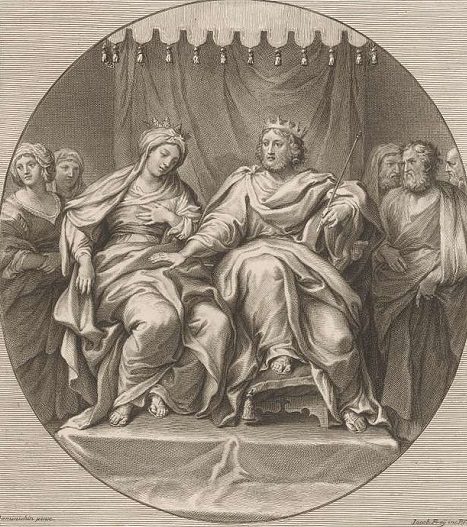
1 Kings 2:19-20 So Bathsheba went to King Solomon to speak to him for Adonijah. And the king arose to meet her, bowed before her, and sat on his throne; then he had a throne set for the king’s mother, and she sat on his right. Then she said, “I am making one small request of you; do not refuse me.” And the king said to her, “Ask, my mother, for I will not refuse you.”
Now, notice immediately that Solomon had to have a throne set for his mother: one was not already there, showing that this is not some established Davidic position. What is more, if you read the rest of the story, not only did Solomon refuse Bathsheba’s request, but he had the man who made the request through her executed! Hardly an auspicious start to this alleged defining characteristic of the Davidic king.
Next, our correspondent makes reference to the “giberah,” the queen mother. A quick study of this term likewise does not lead one to thinking that the Church of Jesus Christ needs a giberah. For example, this term appears in 1 Kings 15:13: “He also removed Maacah his mother from [being] queen mother, because she had made a horrid image as an Asherah; and Asa cut down her horrid image and burned [it] at the brook Kidron.” Seems the giberah was a force for evil here. Shall we attempt to parallel this to something in the church? Surely not.
Indeed, there is no reason, whatsoever, to think the “queen mother” is definitional of a Davidic king at all; there is likewise no reason to think that the New Testament writers viewed any relationship at all between the ancient queen mothers and the church of Jesus Christ.
So Bishop White denies that the queen mother “is definitional of a Davidic king at all.” Okay. Really? The International Standard Bible Encyclopedia (1915): a standard and respected Protestant source, takes no such negative position towards it. It’s article on “Queen Mother” is quite extensive. I cite it in full:
(gebhirah, literally, “mistress,” then a female ruler, and sometimes simply the wife of a king (“queen,” 1 Kings 11:19); in Daniel 5:10 the term malketha’ “queen,” really means the mother of the king):
It stands to reason that among a people whose rulers are polygamists the mother of the new king or chief at once becomes a person of great consequence. The records of the Books of Kings prove it. The gebhirah, or queen mother, occupied a position of high social and political importance; she took rank almost with the king. When Bath-sheba, the mother of Solomon, desired “to speak unto him for Adonijah,” her son “rose up to meet her, and bowed himself unto her, and sat down on his throne, and caused a throne to be set for the king’s mother; and she sat on his right hand” (1 Kings 2:19). And again, in 2 Kings 24:15, it is expressly stated that Nebuchadnezzar carried away the king’s mother into captivity; Jeremiah calls her gebhirah (29:2). The king was Jehoiachin (Jeconiah, Jeremiah 29:2), and his mother’s name was Nehushta (2 Kings 24:8). This was the royal pair whose impending doom the prophet was told to forecast (Jeremiah 13:18). Here again the queen mother is mentioned with the king, thus emphasizing her exalted position. Now we understand why Asa removed Maacah his (grand?)mother from being queen (queen mother), as we are told in 1 Kings 15:13 (compare 2 Chronicles 15:16). She had used her powerful influence to further the cause of idolatry. In this connection Athaliah’s coup d’etat may be briefly mentioned. After the violent death of her son Ahaziah (2 Kings 9:27), she usurped the royal power and reigned for some time in her own name (2 Kings 11:3; compare 2 Chronicles 22:12). This was, of course, a revolutionary undertaking, being a radical departure from the usual traditions.
And finally, the political importance of the gebhirah is illustrated by the fact that in the Books of Kings, with two exceptions, the names of the Jewish kings are recorded together with those of their respective mothers; they are as follows:
Naamah, the Ammonitess, the mother of Rehoboam (1 Kings 14:21; compare 14:31, and 2 Chronicles 12:13); Maacah, the daughter of Abishalom (1 Kings 15:2) or Absalom (2 Chronicles 11:20) the mother of Abijah; Maacah, the daughter of Abishalom, the mother (grandmother?) of Asa (1 Kings 15:10; compare 2 Chronicles 15:16); Azubah, the daughter of Shilhi, the mother of Jehoshaphat (1 Kings 22:42; compare 2 Chronicles 20:31); Athaliah, the grand-daughter of Omri, the mother of Ahaziah (2 Kings 8:26; compare 2 Chronicles 22:2); Zibiah of Beersheba, the mother of Jehoash (2 Kings 12:1; compare 2 Chronicles 24:1); Jehoaddin (Jehoaddan, 2 Chronicles 25:1) of Jerusalem, the mother of Amaziah (2 Kings 14:2); Jecoliah (Jechiliah, 2 Chronicles 26:3) of Jerusalem, the mother of Azariah (2 Kings 15:2) or Uzziah (2 Kings 15:13,30, etc.; compare 2 Chronicles 26:3); Jerusha (Jerushah, 2 Chronicles 27:1), the daughter of Zadok, the mother of Jotham (2 Kings 15:33); Abi (Abijah, 2 Chronicles 29:1), the daughter of Zechariah, the mother of Hezekiah (2 Kings 18:2); Hephzibah, the mother of Manasseh (2 Kings 21:1); Meshullemeth, the daughter of Haruz of Jotbah, the mother of Amon (2 Kings 21:19); Jedidah, the daughter of Adaiah of Bozkath, the mother of Josiah (2 Kings 22:1); Hamutal, the daughter of Jeremiah of Libnah, the mother of Jehoahaz (2 Kings 23:31); Zebidah, the daughter of Pedaiah of Rumah, the mother of Jehoiakim (2 Kings 23:36); Nehushta, the daughter of Elnathan of Jerusalem, the mother of Jehoiachin (2 Kings 24:8); Hamutal (Hamital), the daughter of Jeremiah of Libnah, the mother Of Zedekiah (2 Kings 24:18). The exceptions are Jehoram and Ahaz.
“Dr.” White also denies any New Testament connection to the queen mother. Dr. Edward Sri is professor of theology and Scripture at the Augustine Institute’s Master’s in Catechetics and Evangelization program in Denver, Colorado. He is the author of numerous books, including Queen Mother: A Biblical Theology of Mary’s Queenship. I’ll cite him from two similar articles. He shows how the queen mother motif also has relevance to the New Testament:
[T]he queen mother is listed among the members of the royal court whom king Jehoiachin surrendered to the king of Babylon in 2 Kings 24:12.
Her royal office is also described by the prophet Jeremiah, who tells how the queen mother possessed a throne and a crown, symbolic of her position of authority in the kingdom: “Say to the king and the queen mother: ‘Take a lowly seat, for your beautiful crown has come down from your head. . . . Lift up your eyes and see those who come from the north. Where is the flock that was given you, your beautiful flock?’” (Jer. 13:18, 20). It is significant that God directed this oracle about the upcoming fall of Judah to both the king and his mother. Addressing both king and queen mother, Jeremiah portrays her as sharing in her son’s rule over the kingdom. . . .
[M]any New Testament passages refer to the right-hand imagery of Psalm 110 to show Christ’s divinity and his reign with the Father over the whole universe (e.g., Hebrews 1:13). Thus, the queen mother sitting at the king’s right hand symbolizes her sharing in the king’s royal authority and illustrates how she holds the most important position in the kingdom, second only to the king. . . .
Elizabeth greets Mary with the title “the mother of my Lord” (Luke 1:43). This title is charged with great queenly significance. In the royal court language of the ancient NearEast, the title “Mother of my Lord” was used to address the queen mother of the reigning king (who himself was addressed as “my Lord”; cf., 2 Sam. 24:21). Thus with this title Elizabeth is recognizing the great dignity of Mary’s role as the royal mother of the king, Jesus. (“Is Mary’s Queenship Biblical?”, Catholic Answers, 8-19-19)
In Matthew 1–2, Mary is portrayed in the queen-mother tradition. Matthew examines Mary’s position alongside her royal Son when the magi pay Him homage (Matt 2:11). As mentioned above, this scene involves a number of Davidic kingdom themes: Jesus is called the “king of the Jews” (2:2). The star guiding the magi recalls the star in Balaam’s oracle about the royal scepter rising out of Israel (Num 24:17). The narrative centers on the city of Bethlehem, where David was born (1 Sam 17:12) and out of which the future Davidic King would come (Mic 5:2). And the magi bringing gifts and paying the child Jesus homage recall the royal Psalm 72:10–11 (cf. Is 60:6).
Within this Davidic kingdom context, Matthew singles out Mary as being with the child when the three magi come to honor the newborn King. Notice how Joseph is conspicuously not even mentioned: “. . . going into the house, they [the three Magi] saw the child with Mary his mother, and they fell down and worshipped him” (Matt 2:11). Why does Matthew focus on Jesus and Mary, leaving Joseph out of the picture at this point? All throughout the narrative in Matthew 1–2, Joseph is much more prominent than Mary. Matthew traces Jesus’ genealogy through Joseph. The angel appears to Joseph three times. It is Joseph who leads the Holy Family to Bethlehem, to Egypt, and back to Nazareth. However, in this particular scene of the magi coming to honor the newborn King, Mary takes center stage, and surprisingly, Joseph is not mentioned at all in the entire pericope. As Aragon notes, “Her mention in this moment, along with the omission of Joseph, underlines that Mary is a person especially important for the narrator, and that is why he puts her in this very high position.” (“Understanding Mary as Queen Mother”, St. Paul Center for Biblical Theology, 10-11-19)
***
Photo credit: Solomon and Bathsheba (1718-1719, Rijksmuseum) [public domain / Picryl]
***
Summary: Bishop “Dr.” [???] James White denies that the queen mother is a feature of the Davidic line of kings, & that it has any relevance to the NT. Wrong on both counts!
Previous Post

October 7, 2021
I Rarely Ever Admit I'm Wrong? Huh?!
Next Post

October 11, 2021 Did Pope Francis Rebuke Pelosi Re Abortion?
Browse Our Archives
Select a Category & Last Things About Me Anti-Catholicism Atheism & Agnosticism Baptism and Sacramentalism Bible and Tradition Blessed Virgin Mary Books by Dave Armstrong C. S. Lewis Calvinism & General Protestantism Catholic Apologetics Catholic Apologists Catholic conversion Catholic converts Christmas Church (Ecclesiology) Church History Conversion and Converts Development of Doctrine Eastern Orthodoxy Ecumenism & Christian Unity Eucharist & Liturgy Fathers of the Church French Translations G. K. Chesterton Hell Hell & Satan Hell & Satan & Last Things Heresies & Comparative Religion Holistic Health Inquisition & Crusades & Scandals James White Jews & Judaism & Old Testament John Calvin John Henry Newman Liberal / Modernist Theology Life Issues Literary Resume Lutheranism Mariology Martin Luther Music Orthodoxy Papacy & Infallibility Personal Page Philosophy & Science Political & Ethical & Moral Issues Protestant Persecution & Intolerance Protestantism Purgatory Purgatory & Penance Romantic & Imaginative Theology Saints & Purgatory & Penance Salvation Salvation & Justification Satan & Last Things Sexuality and Gender Issues Spanish Translations Traditionalism vs. Radical Catholic Reactionaries Traducciones al español / tradução para português Trinitarianism & Christology Uncategorized Videos
Select a Month October 2026 September 2026 August 2026 July 2026 June 2026 May 2026 April 2026 March 2026 February 2026 January 2026 December 2025 November 2025 October 2025 September 2025 August 2025 July 2025 June 2025 May 2025 April 2025 March 2025 February 2025 January 2025 December 2024 November 2024 October 2024 September 2024 August 2024 July 2024 June 2024 May 2024 April 2024 March 2024 February 2024 January 2024 December 2023 November 2023 October 2023 September 2023 August 2023 July 2023 June 2023 May 2023 April 2023 March 2023 February 2023 January 2023 December 2022 November 2022 October 2022 September 2022 August 2022 July 2022 June 2022 May 2022 April 2022 March 2022 February 2022 January 2022 December 2021 November 2021 October 2021 September 2021 August 2021 July 2021 June 2021 May 2021 April 2021 March 2021 February 2021 January 2021 December 2020 November 2020 October 2020 September 2020 August 2020 July 2020 June 2020 May 2020 April 2020 March 2020 February 2020 January 2020 December 2019 November 2019 October 2019 September 2019 August 2019 July 2019 June 2019 May 2019 April 2019 March 2019 February 2019 January 2019 December 2018 November 2018 October 2018 September 2018 August 2018 July 2018 June 2018 May 2018 April 2018 March 2018 February 2018 January 2018 December 2017 November 2017 October 2017 September 2017 August 2017 July 2017 June 2017 May 2017 April 2017 March 2017 February 2017 January 2017 December 2016 November 2016 October 2016 September 2016 August 2016 July 2016 June 2016 May 2016 April 2016 March 2016 February 2016 January 2016 December 2015 November 2015 October 2015 September 2015 August 2015 July 2015 June 2015 May 2015 April 2015 March 2015 February 2015 January 2015 December 2014 November 2014 October 2014 September 2014 August 2014 July 2014 June 2014 April 2014 March 2014 February 2014 January 2014 December 2013 November 2013 October 2013 September 2013 August 2013 July 2013 June 2013 April 2013 March 2013 February 2013 January 2013 December 2012 November 2012 October 2012 September 2012 August 2012 July 2012 June 2012 May 2012 April 2012 March 2012 February 2012 January 2012 December 2011 November 2011 October 2011 September 2011 August 2011 July 2011 June 2011 April 2011 March 2011 February 2011 October 2010 September 2010 August 2010 July 2010 April 2010 March 2010 December 2009 October 2009 August 2009 July 2009 June 2009 May 2009 March 2009 February 2009 October 2008 September 2008 April 2008 March 2008 February 2008 January 2008 December 2007 November 2007 October 2007 May 2007 March 2007 February 2007 January 2007 November 2006 October 2006 September 2006 August 2006 July 2006 June 2006 May 2006 April 2006 March 2006 February 2006 October 2005 June 2005 April 2005 February 2005 July 2004 May 2004 April 2004
Follow Us!
TAKE THE
Religious Wisdom Quiz
Who asked Jesus, "What is truth?"
Select your answer to see how you score.
Caiaphas Pilate Nicodemus Herod
Books by This Author Books by Dave Armstrong
Related posts from Biblical Evidence for Catholicism

Holy Ground: Why Mary Had NO Other Children...
Biblical Evidence for Catholicism
Protestant Confessions & "Ever-Virgin" Mary
Biblical Evidence for Catholicism

Mary Wife of Clopas (Jn 19:25): Mary's Sister-in-Law?
Biblical Evidence for Catholicism

Jesus Had Four Brothers? The Bible Sez No!
Biblical Evidence for Catholicism
TRENDING AT PATHEOS Catholic

I was strolling through the top floor of the brand new Parthenon...

What Does Gêvâh Mean For Kimberley Guifoyle &...
This week, a lot of the news is focused on Kimberly Guilfoyle....

INNER CIRCLE: Profound Mystery (Of Christ In All...
Ephesians 5:31-32 “For this reason, a man will leave his father and...

Do Not Rejoice When Your Enemy Falls: The...
Turning an execution into a public spectacle is a disturbing expression of...

'The Chosen' S6 Trailer: The Passion Gets Very...
Not many watching 'The Chosen' worry about spoilers, but just because they...

The purpose-driven labor priest
A labor activist reads Rick Warren and it gets me wondering about...
view all Catholic blogs
Ad-Free & Subscriber Log-In Subscription Support
- About Us
- 2026 Calendar
- Videos
- Podcasts
- Library of World Religions
- Faith In Media Tracker
- Advertise With Us
- Write for Us
- Privacy Policy
- Terms of Service
- Do Not Sell My Data
- Contact Us
- Radiant Digital
- Manage Newsletter Subscriptions
- Unsubscribe From Notifications
- Sitemap
Copyright 2008-2026, Patheos. All rights reserved.
Subscription Support Ad-Free & Subscriber Log-In
Follow Patheos