
BuddhistCatholicContemplativeEvangelicalGeneral ChristianHinduJewishLatter-day SaintMuslimNew VisionsProgressive Christian
Beliefs
- Buddhist
- Catholic
- Contemplative
- Evangelical
- General Christian
- Hindu
- Jewish
- Latter-day Saint
- More Voices
- Muslim
- New Visions
- Pagan
- Progressive Christian
Topics
- Religion News
- Food and Religion
- Sports and Religion
- Religious Art
- Religious Music and Entertainment
- Religious Events
- History and Religion
- Style and Religion
- Politics and Religion
- Women in Religion
- Recreation Outdoors and Religion
- Business Finance and Religion
- Careers Workplace and Religion
- Education and Religion
- Family Parenting and Religion
- Health Fitness and Religion
- Home and Religion
- Relationships and Religion
- Technology and Religion
- Travel and Religion
Columnists
- Buddhist Columnists
- Business Finance and Religion Columnists
- Careers Workplace and Religion Columnists
- Catholic Columnists
- Contemplative Columnists
- Education and Religion Columnists
- Evangelists Columnists
- Family Parenting and Religion Columnists
- General Christian Columnists
- Health Fitness and Religion Columnists
- Hindu Columnists
- History and Religion Columnists
- Home and Religion Columnists
- Jewish Columnists
- More Voices Columnists
- Latter Day Columnists
- Muslim Columnists
- New Visions Columnists
- Nonreligious Columnists
- Pagan Columnists
- Politics and Religion Columnists
- Progressive Columnists
- Recreation Outdoors and Religion Columnists
- Relationships and Religion Columnists
- Religion News Columnists
- Religious Art Columnists
- Religious Events Columnists
- Religious Music and Entertainment Columnists
- Sports and Religion Columnists
- Style and Religion Columnists
- Technology and Religion Columnists
- Travel and Religion Columnists
- Women in Religion Columnists
Resource Library
- 2026 Calendar
- Library of World Religions
- The 100 Most Holy Places on Earth
- Patheos Answers
- Podcasts
- Videos
- Faith Leaders Database
- Anglican Episcopalian
- Bahai
- Baptist
- Buddhism
- Christianity
- Confucianism
- Eastern Orthodoxy
- Hinduism
- Holiness and Pentecostal
- ISKCON
- Islam
- Judaism
- Lutheran
- Methodist
- The Church of Jesus Christ of Latter-day Saints
- New Age
- Paganism
- Presbytarian and Reformed
- Protestantism
- Religion Behind the Scenes
- Roman Catholic
- Scientology
- Shia Islam
- Sikhism
- Sufism
- Sunni Islam
- Taoism
- Zen
- See all religions
Research Tools
 Ad-Free & Subscriber Log-In Subscription Support
Ad-Free & Subscriber Log-In Subscription Support
Follow Patheos 

- Trending:
- Forgiveness
- |
- Marriage
- |
- Consciousness
- |
- Death Penalty
- |
- Election
- |
- Halloween

-
About
-
Catholic Apologetics
-
Church History
-
Great Apologists
-
Christian Worldview
-
Protestantism & Misc.
- Home
- Catholic
- History and Religion
- Radical Catholic Reactionaries: What They Are NOT
Radical Catholic Reactionaries: What They Are NOT
Last updated on: June 5, 2026 at 11:59 pm by Dave Armstrong
Radical Catholic Reactionaries: What They Are NOT 2026-06-05T23:59:23-04:00 Dave Armstrong
Patheos Explore the world's faith through different perspectives on religion and spirituality! Patheos has the views of the prevalent religions and spiritualities of the world.
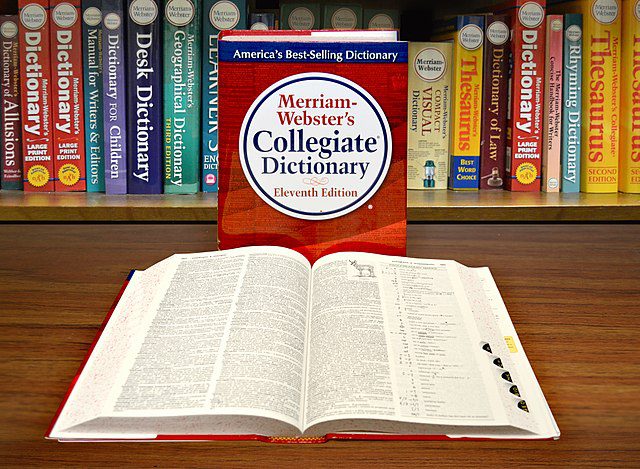
I coined the term radical Catholic reactionary on 3 August 2013. If anyone else claims they did, or that someone besides myself did, they’re lying or misinformed. I was the one; and I did so for very specific reasons (and I thought, practical, sociological, and charitable ones), as I will explain further below.
First, I’d like to go down a list of what the radical Catholic reactionary — as I have carefully defined it (and this hasn’t changed at all in eight years) — is not: based on innumerable times hearing incorrect definitions wrongly assumed to be my own. One tires of this, so I think the time has come for this explanatory post. Maybe this method will make my point more effectively.
The following are not characteristics of the radical Catholic reactionary, according to my own conception, as the originator of the term.
The Ten “Negative” Points
It’s not a person who denies that Pope Francis (or any future pope) is a valid pope.
It’s not a person who denies that the Pauline (“New” / “ordinary form”) Mass is a valid Mass.
It’s not a person who denies that the Second Vatican Council (or, Vatican II) is a valid ecumenical council.
It’s not any person whatsoever who criticizes the pope.
It’s not a person who thinks that not all ecumenical efforts (outreach to other Christians or non-Christians) are helpful or undertaken with the right premises and/or methodology.
It’s not a person who points out that papal pronouncements have differing levels of authority.
It’s not necessarily a person in the SSPX (though some in that group would actually fit the characteristics I have noted).
It has nothing to do with a person’s personality or how obnoxious or arrogant, etc. they might be.
It’s not a person who simply prefers the liturgical outlook and practices of the traditional Latin Mass (TLM).
It’s not a person who likes “old-fashioned” Catholic things like the old cathedrals, head veils, ad orientem, all male altar servers, receiving the Holy Eucharist kneeling, on the tongue, from the priest, etc.
Expansion on the Ten “Negative” Points
1a. That would be, of course, a sedevacantist: the belief that there is no currently sitting pope.
2a. I’ve met virtually no one who thought that, save for sedevacantists and Protestants. Some in the SSPX might as well.
3a. Again, I’ve met virtually no one who thought that, save for the Eastern Orthodox and Protestants.
4a. I have never ever denied (see papers on this topic: one / two / three / four / five / six) that there is a time and a place for such criticism (rarely), on the right topic, with extreme reverence, from the right person, and preferably as private as possible, not public.
5a. There are indeed right and wrong ways to do legitimate Catholic ecumenism. More on this below.
6a. I do this myself (see an article from 1999).
7a. The SSPX, like any group, has members with differing views, to some extent. See: “The Status of the Society of St. Pius X” [Catholic Answers] (+ Part 2)
8a. Like a good sociologist of religion, I go strictly by beliefs in these definitions, not behavior. You can have, then, a very nice reactionary and a totally obnoxious “conservative” Catholic (I could quickly name off ten of those, but in charity . . .).
9a. That would be myself. My family attended such a parish for 25 years.
10a. I prefer, or have largely preferred in my Catholic life, and/or have defended in my apologetics, all of these things, save for all male altar servers (I have made arguments against that being necessarily the only way to go about things).
The Central Identifying Characteristic of the Radical Catholic Reactionary
From a dialogue I engaged in, on my definitions:
Reactionaryism is all about going up to a “line” but not crossing over it; trying to have it both ways. So, e.g., “Vatican II is valid but we should simply ignore it, or it has harmed the Church,” “The New Mass is valid but it is objectively terrible [and inferior] liturgy and we ought not attend it (having a choice),” etc. etc. ad nauseam. . . .
Reactionaries (as I have categorized them, from long observation and experience) accept Vatican II as valid and not objectively heretical, but rather hampered by ambiguities deliberately injected into the texts by subversive dissident radicals. . . .
Reactionaries accept all the popes as valid. But they want to complain about and rebuke and second-guess popes all the time (“more Catholic than the pope”). It’s primarily an attitudinal problem and not having an understanding of traditional reverence towards the pope (thinking like Protestants: particularly Anglicans). [blue coloring added presently]
And from another related paper:
I define “radical Catholic reactionaries” as a rigorist, divisive group completely separate from mainstream “traditionalism” that continually, vociferously, and vitriolically (as a marked characteristic or defining trait) bashes and trashes popes, Vatican II, the New Mass, and ecumenism (the “big four”): going as far as they can go without technically crossing over the canonical line of schism. In effect, they become their own popes: exercising private judgment in an unsavory fashion, much as (quite ironically) Catholic liberals do, and as Luther and Calvin did when they rebelled against the Church. They can’t live and let live. They must assume a condescending “superior-subordinate” orientation. [blue coloring added presently]
Explanation of My Orthodox Catholic Outlook and Critique, Over Against the Ten “Negative” Points
1b. The game here that the reactionaries play is to not deny that Pope Francis is pope, but at the same time heaping every imaginable insult upon him. I don’t know if Catholic philosopher Ed Feser is a full-blooded reactionary or not (exhibiting the four hallmarks). But in terms of bashing the pope, he exemplifies to the max the mindset I just described, and is an example of how reactionaries habitually and contemptuously treat Pope Francis:
Catholic teaching has always acknowledged that popes can make grave mistakes of various kinds when they are not exercising the fullness of their authority in ex cathedra decrees. Usually, errant popes exhibit serious failings of only one or two sorts. But Pope Francis seems intent on achieving a kind of synthesis of all possible papal errors. Like Honorius I and John XXII, he has made doctrinally problematic statements (and more of them than either of those popes ever did). Like Vigilius, his election and governance have involved machinations on the part of a heterodox party. The Pachamama episode brings to mind Marcellinus and John XII. Then there are the bad episcopal appointments, the accommodation to China’s communist government, and the clergy sexual abuse scandal, which echo the mismanagement, political folly, corruption and decadence of previous eras in papal history. And now we have this repeat of Victor’s high-handedness. Having in this way insulted a living predecessor, might Francis next ape Pope Stephen VI by exhuming a dead one and putting the corpse on trial?
Probably not. But absolutely nothing would surprise me anymore in this lunatic period in history that we’re living through. (“Pope Victor Redux?”, 7-18-21)
Note that Feser vociferously denies having classified Pope Francis as a heretic (including in heated “dialogue” with myself). But he sure does everything he can to get the Holy Father right up there with all the worst popes, doesn’t he? He goes absolutely as far as he can possibly, logically / theologically / canonically go without outright classifying the pope as a heretic. And that is precisely the central identifying characteristic of the reactionary; absolutely quintessential, textbook. So even if he is not a reactionary in all respects (I suspect not), yet he acts towards the pope exactly as reactionaries do, and in a more extreme degree than many.
2b. The same legalistic, “let’s see how far we can go!” spirit is evident in how the reactionary views the Pauline / “New” Mass. Many of them absolutely detest and despise it; yet always without denying its validity. In many ways, The Great Facade: Vatican II and the Regime of Novelty in the Roman Catholic Church, by Christopher A. Ferrara and Thomas E. Woods, Jr. (self-published by The Remnant Press in 2002) has been the “Bible” of the reactionary movement. It set the template for the outrageous conspiratorial, pope-bashing and/or reactionary books we have now, from Phil Lawler and Taylor Marshall. Whether any given reactionary is aware of it or not, the way he or she thinks was all laid out in this book 19 years ago, and the thinking has spread like wildfire in the “ecclesiological far-right” sectors of the Church. He exhibits the textbook mentality when he addresses the validity of the New Mass:
The new rite is also markedly inferior in its presentation of Catholic doctrine . . . if even a moderately educated Catholic can see this, how can the Pope fail to see it? (p. 96)
To claim that the new Mass represents a striking departure from tradition, which it obviously does, is not necessarily to say that it is invalid per se. We certainly do not think so, and neither do the overwhelming majority of traditionalists. . . . Having said this, however, surely we have a right to insist on more than the bare minimum of mere validity. No one hosting an elegant dinner party announces with pride that nothing at the table is fatally poisonous. (p. 98)
I submit that “a moderately educated Catholic” also knows enough to be aware that a valid Mass allows believers to be in the presence of Jesus Christ our Lord: Body, Blood, Soul, and Divinity, and to receive Him sacramentally: the most profound regularly occurring miracle in the world. But that “bare minimum” is not enough to spare this “Church-approved” Mass from the derision and mockery of the reactionary!
3b. We see exactly the same mentality and mindset with regard to the Second Vatican Council. Today, no one I know of illustrates this better than card-carrying reactionary Peter Kwasniewski, and his scandalous article, “The Second Vatican Council Is Now Far Spent” (12-11-19), complete with a gratuitous swipe at me (the good doctor used to dialogue with me, back when he was trashing Summorum Pontificum and I was defending it; but he has decided to cease doing so):
It’s important, in any case, not to look too closely into the history of the Council and the shaping of its documents; the manifold lines of influence connecting nouvelle théologie and ressourcement with Modernism; the way Paul VI and his episcopal and curial appointments adopted a line that conflicted with Catholic beliefs and instincts on point after point; and above all, the final stages of the liturgical reform (ca. 1963–1974), which, in its artisanal blend of faux ancient, quasi-Eastern, and de novo sources, “active participation,” options galore, vernacular, and new music, resembles nothing Roman or Catholic from all the centuries of the Church’s history and enjoys validity in a vacuum. Those who broach such issues are not engaged in a serious way, but are written off as “radical Catholic reactionaries” whom everyone should be strong-armed — or Armstronged? — to avoid like the plague. I suppose that’s one way to deal with uncomfortable truths, but it’s not recommended for those seeking the real causes of today’s crisis. . . .
Fr. Longenecker still believes in the “hermeneutic of continuity” between the premodern Church and the Church of Vatican II. This hermeneutic died when Pope Benedict resigned. . . .
As a historical event, Vatican II is receding farther and farther into the past — and into irrelevance. . . . If it disappeared into thin air, what of lasting value would we actually lose? . . .
To Fr. Longenecker’s question, then — “What shall we do about Vatican II?” — I suggest we leave it alone, leave it behind, leave it in peace, . . .
Not content to more or less completely trash an ecumenical council (while of course never dreaming of denying its validity), in his last paragraph he goes after the previous ecumenical council: Vatican I (from 1870):
If I might change the conversation, I would say a more pressing question is: “What shall we do about Vatican I?” This past Sunday, December 8, marked the 150th anniversary of the opening of a council that would forever change the way Catholics perceived and interacted with the papacy — the impetus for a runaway hyperpapalism capable of leveling centuries of tradition. In many ways, we are more threatened today by the spirit of Vatican I, which it will take a mighty exorcism to drive away.
Thus we see another troubling aspect of the reactionary: Kwasniewski is not just disenchanted with Vatican II. Like Luther, and like heterodox and dissident liberal Catholics, he goes after Vatican I as well. This proves that his antipathy is to the very ecclesiological system of Catholicism altogether. Martin Luther (at the famous Diet of Worms in 1521: “Here I stand” and all that) used that pretext to appeal to sola Scriptura and private judgment as his new rule of faith, over against councils and popes “who can and do err.” Kwasniewski goes half way and clings to unCatholic private judgment and “we know more than popes and ecumenical councils.”
Yes, he’s still Catholic, but why does he even bother to be one anymore, I wonder?
4b. The “no one can ever criticize the pope without Armstrong calling him a ‘basher’ and a “reactionary'” canard has been dealt with many times in my papers:
On Rebuking Popes & Catholic Obedience to Popes [12-27-17]
On Rebuking Popes & Obedience to Popes, Part II [12-28-17]
Pope-Criticism: Vigorous Exchanges w Karl Keating [3-27-18]
Are Pope-Critics Evil? Reply to Karl Keating [4-13-18]
Kwasniewski vs. Cdl. Newman Re Pope- & Council-Bashing [12-3-20]
Pope Francis: Popes Can be Respectfully Criticized [7-21-21]
My Supposed”Papolatry”: Outrageous Reactionary Lies [8-26-21]
I wrote on 8-6-13:
The non-trad often also gets accused of taking every papal word as GOSPEL TRVTH. If the pope tells us to wear green pants, that’s infallible. If he says you have to blow your nose on odd-numbered dates with a full moon only, that’s infallible and de fide dogma. It’s a ridiculous false charge coming from a ridiculous point of view. Illustrate the absurd by being absurd . . .
5b. The reactionary claims that all or almost all Catholic efforts at ecumenism and inter-religious dialogue logically reduce to indifferentism: the view that all religious views are relative and none better than the other. This is a lie. Ferrara again provides a textbook example of how reactionaries approach ecumenism:
Much of the ecumenical movement in our age . . . betrays very strong Modernist influences. In the Modernist schema, religious dogma is not absolute and irreformable, but rather a vague, imprecise reflection of a common religious “feeling” within a human race that is in a constant state of evolution and flux . . .
[I]f none of what we have just described qualifies as “indifferentist ecumenism,” what on earth does? (Ibid., 211-212)
I have addressed this nonsense many times:
Ecumenical Gatherings at Assisi: A Defense: Ecumenism in St. Thomas Aquinas (Fr. Alfredo M. Morselli) [8-1-99]
Dialogue: Vatican II & Other Religions (Nostra Aetate) [8-1-99]
Biblical Evidence for Ecumenism (“A Biblical Approach to Other Religions”) [National Catholic Register, 8-9-17]
Is VCII’s Nostra Aetate “Religiously Pluralistic” & Indifferentist? [6-7-19]
Dignitatis Humanae & Religious Liberty [7-18-19]
6b-10b. These issues were all I sufficiently dealt within the “a” section above.
Why Did I Coin the Term “Radical Catholic Reactionary??
[from my 2013 paper on this topic; numbers and some bracketed interjections and other minor editorial changes added]
- “Radical” used here: going to the roots, refers to going to the very roots of Catholic ecclesiology: the papacy, and digging it up [and I would add, the Mass, and ecumenical councils]. That’s not a dis-use of “radical”. It’s exactly what it means. “Radical” shows that it is extreme.
- “Catholic” in [my title] removes the tedious, boorish (never true) complaint that I am supposedly reading the recipients of the term out of the Catholic faith.
- “Reactionary” is a very accurate and apt title, to distinguish their extremity [and extremity on the far right, rather than far left]. They think we don’t react enough to problems. We say they overreact and incorrectly react. “Reactionary” is very descriptive of the mentality under consideration: it’s always going back (before Vatican II, back to St. Pius X, etc.), a sort of antiquarianism or making an idol of tradition (often falsely defined).
- Reactionaries [related to #2] are not canonically schismatics. They are Catholics in the legal sense. It’s a far larger category (the ones I describe, complaining about and trashing everything in the Church) than sedevacantists or SSPX.
- As an apologist I have to have some sort of way to distinguish between mainstream “traditionalists” who simply prefer the Tridentine Mass, and reactionaries [this relates to 8a above]. If I make no differentiation, I catch hell for supposedly lumping every sort of “traditionalist” together, as if I consider all of them extreme fringe wackos (which I do not at all). If I use the term “traditionalist” only, then I can’t even make the critiques I make of excesses and errors, because people will think I’m bigoted and attacking the whole movement across its entire spectrum. [this was the widespread objection to the old term radtrad] “Trad or traditionalist” not being in [my title] at all removes the objection that mainstream “traditionalists” are being tarred with the same brush. “Traditionalists” have made it abundantly clear that they resent the term radtrad. They think it is either being applied to them (false, in my case) or that it implicates them as in some way connected or associated with the reactionaries that we all know and love. I am trying to take that into consideration, in charity, and for the sake of greater unity and less misunderstanding.
- My job as an apologist is to critique and refute error and to try to prevent people from being 1) harmed by it, and 2) falling into it themselves. It’s easy for the non-apologist to say, “well, don’t use this term because it’s mean and causes problems.” I’m happy to discuss whether my chosen term is inadequate or uncharitable, and whether it should be discarded, but I need an alternative, because we still have the practical issue of identification for a distinct group. Again, some say that I shouldn’t use any term at all, but it’s not possible to do that as an apologist who is identifying an error and critiquing it. Its absolutely necessary to have some identifying term, as one can’t write a long sentence every time someone in the group is referenced.
- The beliefs that reactionaries espouse and how they view orthodox Catholics are infinitely more uncharitable and offensive and outrageous than whatever name we have in the past or will in the future call them. But I guarantee as sure as I’m sitting here that I’ll catch hell no matter what term is used. I could call them anything whatsoever and it won’t matter, because they reserve the right to use their offensive terms of orthodox Catholics, while we are supposed to have no “right” at all to identify them.
- For a reactionary to say that he is simply a “traditionalist” insults the vast majority of legitimate “traditionalists” in much the same way as a Mormon or Jehovah’s Witness or Unitarian calling themselves “Christians” is an insult to ones who truly are Christians (who accept the Trinity, divinity of Jesus, etc.). And these groups always reject our classification of them as “heresies” or “heretical sects” or “cults.” It’s the very co-opting of the term to describe the narrow, objectionable group, that is completely unacceptable.
Related Reading
Radical Catholic Reactionaries: Essential Characteristics [2002]
“Radtrad”: Origins, History, & Debates on Definition [3-18-13; rev. 8-1-13 and 8-8-13]
On the Use of “Traditionalist” Preceding the Name of “Catholic” [7-3-13]
Definitions: Radical Catholic Reactionaries, Mainstream “Traditionalists,” and Supposed “Neo-Catholics” [revised 8-6-13]
Rationales for My Self-Coined Term, “Radical Catholic Reactionaries” [8-6-13]
My Coined Term, “Radical Catholic Reactionary”: Clarifications [10-5-17]
Keating & Double Standards on “Traditionalist” Labeling [6-3-18]
Clarifying My Coined Term, “Radical Catholic Reactionary” [4-3-20]
Title: “Radical Catholic Reactionaries”: Exchange w Karl Keating [3-4 December 2020]
***
Photo credit: Noah1826 (5-26-17) [Wikimedia Commons / Creative Commons Attribution-Share Alike 4.0 International license]

***
Summary: I go to great lengths to defend my title, “radical Catholic reactionaries”: that I coined in 2013. By explaining what it is NOT, I clear up many common misperceptions.
Traditionalism vs. Radical Catholic Reactionaries
Radical Catholic Reactionaries
Previous Post
September 27, 2021
Audrey Assad's Journey: Apology & Retraction
Next Post

September 29, 2021 Pope Francis the "Heterodox Liberal" (?????)
Browse Our Archives
Select a Category & Last Things About Me Anti-Catholicism Atheism & Agnosticism Baptism and Sacramentalism Bible and Tradition Blessed Virgin Mary Books by Dave Armstrong C. S. Lewis Calvinism & General Protestantism Catholic Apologetics Catholic Apologists Catholic conversion Catholic converts Christmas Church (Ecclesiology) Church History Conversion and Converts Development of Doctrine Eastern Orthodoxy Ecumenism & Christian Unity Eucharist & Liturgy Fathers of the Church French Translations G. K. Chesterton Hell Hell & Satan Hell & Satan & Last Things Heresies & Comparative Religion Holistic Health Inquisition & Crusades & Scandals James White Jews & Judaism & Old Testament John Calvin John Henry Newman Liberal / Modernist Theology Life Issues Literary Resume Lutheranism Mariology Martin Luther Music Orthodoxy Papacy & Infallibility Personal Page Philosophy & Science Political & Ethical & Moral Issues Protestant Persecution & Intolerance Protestantism Purgatory Purgatory & Penance Romantic & Imaginative Theology Saints & Purgatory & Penance Salvation Salvation & Justification Satan & Last Things Sexuality and Gender Issues Spanish Translations Traditionalism vs. Radical Catholic Reactionaries Traducciones al español / tradução para português Trinitarianism & Christology Uncategorized Videos
Select a Month October 2026 September 2026 August 2026 July 2026 June 2026 May 2026 April 2026 March 2026 February 2026 January 2026 December 2025 November 2025 October 2025 September 2025 August 2025 July 2025 June 2025 May 2025 April 2025 March 2025 February 2025 January 2025 December 2024 November 2024 October 2024 September 2024 August 2024 July 2024 June 2024 May 2024 April 2024 March 2024 February 2024 January 2024 December 2023 November 2023 October 2023 September 2023 August 2023 July 2023 June 2023 May 2023 April 2023 March 2023 February 2023 January 2023 December 2022 November 2022 October 2022 September 2022 August 2022 July 2022 June 2022 May 2022 April 2022 March 2022 February 2022 January 2022 December 2021 November 2021 October 2021 September 2021 August 2021 July 2021 June 2021 May 2021 April 2021 March 2021 February 2021 January 2021 December 2020 November 2020 October 2020 September 2020 August 2020 July 2020 June 2020 May 2020 April 2020 March 2020 February 2020 January 2020 December 2019 November 2019 October 2019 September 2019 August 2019 July 2019 June 2019 May 2019 April 2019 March 2019 February 2019 January 2019 December 2018 November 2018 October 2018 September 2018 August 2018 July 2018 June 2018 May 2018 April 2018 March 2018 February 2018 January 2018 December 2017 November 2017 October 2017 September 2017 August 2017 July 2017 June 2017 May 2017 April 2017 March 2017 February 2017 January 2017 December 2016 November 2016 October 2016 September 2016 August 2016 July 2016 June 2016 May 2016 April 2016 March 2016 February 2016 January 2016 December 2015 November 2015 October 2015 September 2015 August 2015 July 2015 June 2015 May 2015 April 2015 March 2015 February 2015 January 2015 December 2014 November 2014 October 2014 September 2014 August 2014 July 2014 June 2014 April 2014 March 2014 February 2014 January 2014 December 2013 November 2013 October 2013 September 2013 August 2013 July 2013 June 2013 April 2013 March 2013 February 2013 January 2013 December 2012 November 2012 October 2012 September 2012 August 2012 July 2012 June 2012 May 2012 April 2012 March 2012 February 2012 January 2012 December 2011 November 2011 October 2011 September 2011 August 2011 July 2011 June 2011 April 2011 March 2011 February 2011 October 2010 September 2010 August 2010 July 2010 April 2010 March 2010 December 2009 October 2009 August 2009 July 2009 June 2009 May 2009 March 2009 February 2009 October 2008 September 2008 April 2008 March 2008 February 2008 January 2008 December 2007 November 2007 October 2007 May 2007 March 2007 February 2007 January 2007 November 2006 October 2006 September 2006 August 2006 July 2006 June 2006 May 2006 April 2006 March 2006 February 2006 October 2005 June 2005 April 2005 February 2005 July 2004 May 2004 April 2004
Follow Us!
TAKE THE
Religious Wisdom Quiz
What does Revelation say will wipe away every tear from their eyes?
Select your answer to see how you score.
The river of life God himself An angel The tree of life
Books by This Author Books by Dave Armstrong
Related posts from Biblical Evidence for Catholicism
Foreword: "Ignorance of Things Divine" (Andrew Mioni)
Biblical Evidence for Catholicism
Robert Fastiggi: Pope Francis "Often Misunderstood"
Biblical Evidence for Catholicism
Must the Gospel be Preached at Every Time...
Biblical Evidence for Catholicism

I Never Regarded Bp. Strickland or Cdl. Burke...
Biblical Evidence for Catholicism
TRENDING AT PATHEOS Catholic

Letters on Living the Faith by C.S. Lewis
Most of us met C.S. Lewis as a public intellectual. Mere Christianity....

When Halloween Unmasks Married Hearts
Written by Dr. David K. Ewen from Eternal Truth Bible College Behind...

Aristotle. He’s been called the father of logic, the father of the...

Methodist Central Hall and Westminster Abbey
Situated on the same square is Methodist Central Hall and Westminster Abbey. ...

57th Dove Awards Honor Dolly Parton, Crown New...
On gospel music’s biggest night, the 57th annual GMA Dove Awards honored...

The First Eucharistic Controversy: Christ’s Real Presence
For Catholics, the Eucharist is the source and summit of the Christian...
view all Catholic blogs
Ad-Free & Subscriber Log-In Subscription Support
- About Us
- 2026 Calendar
- Videos
- Podcasts
- Library of World Religions
- Faith In Media Tracker
- Advertise With Us
- Write for Us
- Privacy Policy
- Terms of Service
- Do Not Sell My Data
- Contact Us
- Radiant Digital
- Manage Newsletter Subscriptions
- Unsubscribe From Notifications
- Sitemap
Copyright 2008-2026, Patheos. All rights reserved.
Subscription Support Ad-Free & Subscriber Log-In
Follow Patheos