
BuddhistCatholicContemplativeEvangelicalGeneral ChristianHinduJewishLatter-day SaintMuslimNew VisionsProgressive Christian
Beliefs
- Buddhist
- Catholic
- Contemplative
- Evangelical
- General Christian
- Hindu
- Jewish
- Latter-day Saint
- More Voices
- Muslim
- New Visions
- Pagan
- Progressive Christian
Topics
- Religion News
- Food and Religion
- Sports and Religion
- Religious Art
- Religious Music and Entertainment
- Religious Events
- History and Religion
- Style and Religion
- Politics and Religion
- Women in Religion
- Recreation Outdoors and Religion
- Business Finance and Religion
- Careers Workplace and Religion
- Education and Religion
- Family Parenting and Religion
- Health Fitness and Religion
- Home and Religion
- Relationships and Religion
- Technology and Religion
- Travel and Religion
Columnists
- Buddhist Columnists
- Business Finance and Religion Columnists
- Careers Workplace and Religion Columnists
- Catholic Columnists
- Contemplative Columnists
- Education and Religion Columnists
- Evangelists Columnists
- Family Parenting and Religion Columnists
- General Christian Columnists
- Health Fitness and Religion Columnists
- Hindu Columnists
- History and Religion Columnists
- Home and Religion Columnists
- Jewish Columnists
- More Voices Columnists
- Latter Day Columnists
- Muslim Columnists
- New Visions Columnists
- Nonreligious Columnists
- Pagan Columnists
- Politics and Religion Columnists
- Progressive Columnists
- Recreation Outdoors and Religion Columnists
- Relationships and Religion Columnists
- Religion News Columnists
- Religious Art Columnists
- Religious Events Columnists
- Religious Music and Entertainment Columnists
- Sports and Religion Columnists
- Style and Religion Columnists
- Technology and Religion Columnists
- Travel and Religion Columnists
- Women in Religion Columnists
Resource Library
- 2026 Calendar
- Library of World Religions
- The 100 Most Holy Places on Earth
- Patheos Answers
- Podcasts
- Videos
- Faith Leaders Database
- Anglican Episcopalian
- Bahai
- Baptist
- Buddhism
- Christianity
- Confucianism
- Eastern Orthodoxy
- Hinduism
- Holiness and Pentecostal
- ISKCON
- Islam
- Judaism
- Lutheran
- Methodist
- The Church of Jesus Christ of Latter-day Saints
- New Age
- Paganism
- Presbytarian and Reformed
- Protestantism
- Religion Behind the Scenes
- Roman Catholic
- Scientology
- Shia Islam
- Sikhism
- Sufism
- Sunni Islam
- Taoism
- Zen
- See all religions
Research Tools
 Ad-Free & Subscriber Log-In Subscription Support
Ad-Free & Subscriber Log-In Subscription Support
Follow Patheos 

- Trending:
- Forgiveness
- |
- Marriage
- |
- Consciousness
- |
- Death Penalty
- |
- Election
- |
- Halloween

-
About
-
Catholic Apologetics
-
Church History
-
Great Apologists
-
Christian Worldview
-
Protestantism & Misc.
- Home
- Catholic
- History and Religion
- Binding Authority of Tradition: Seven Biblical Arguments
Binding Authority of Tradition: Seven Biblical Arguments
Last updated on: June 6, 2026 at 12:45 am by Dave Armstrong
Binding Authority of Tradition: Seven Biblical Arguments 2026-06-06T00:45:44-04:00 Dave Armstrong
Patheos Explore the world's faith through different perspectives on religion and spirituality! Patheos has the views of the prevalent religions and spiritualities of the world.
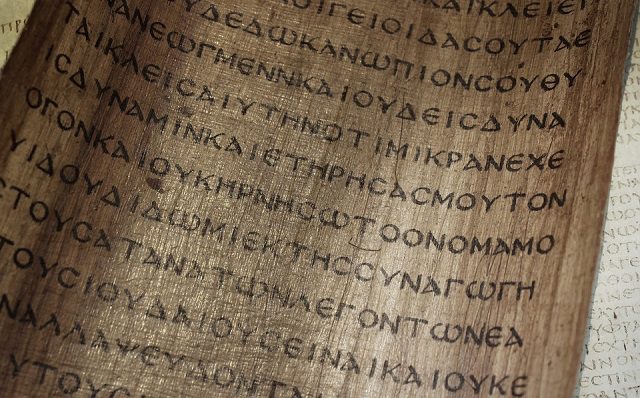
I have decided to take another look at my book idea that became the kernel and “original draft” for my later volume, 100 Biblical Arguments Against Sola Scriptura: published by Catholic Answers in 2012. The initial title in 2009 was 501 Biblical Arguments Against Sola Scriptura: Is the Bible the Only Infallible Authority? I undertook that project after an anti-Catholic Protestant remarkably and ridiculously claimed there were “no” arguments whatever against sola Scriptura in the Bible. So I produced 501.
Now, mind you, many of them were very short (a sentence or two). The book was in the format and style of Blaise Pascal’s Pensées (“Thoughts”): a classic apologetics work published in 1670. Wikipedia describes it as:
. . . fragments that Pascal had been preparing for an apology for Christianity, which was never completed. . . . Although the Pensées appears to consist of ideas and jottings, some of which are incomplete, it is believed that Pascal had, prior to his death in 1662, already planned out the order of the book and had begun the task of cutting and pasting his draft notes into a coherent form.
Malcolm Muggeridge has stated that this was the unique appeal of the book: that it was jumbled and incomplete: notes for a later intended book that was never organized or edited in any final form by the author. And that is how the arguments from 501 Biblical Arguments Against Sola Scriptura can be seen: numbered “notes” that were later systematically compressed into a more compact book, with a conventional editor (Todd Aglialoro at Catholic Answers, who also edited three of my four bestselling books: A Biblical Defense of Catholicism, The Catholic Verses, and The One-Minute Apologist.
The following material comes from the first section, entitled, “The Binding Authority of Tradition” (all Bible passages: RSV).
*****
[No. 58] I would strongly contend that Paul (and all the apostles) casually assumed that the message they were delivering (orally, in most instances) was infallible. There is certainly no indication that they regarded it as fallible. When Paul spoke of receiving such traditions, he showed no indication whatever that it was fallible or that he questioned it because it came from oral transmission rather than written. Thus he appears to easily assume and take for granted that which many Protestants have the hardest time grasping and accepting, even when it is staring him right in the eye on the pages of the very Scripture that he grants the highest inspired authority (as Catholics do).
***
[No. 63] No one would be foolish enough to claim that every sermon and plea and prophetic warning of Jeremiah or any of the other prophets was recorded in writing and preserved in the Bible. In one long night alone, if Jeremiah had kept talking, that would add up to more words than we have in the entire book named for him. If this had been the “word of the Lord,” it would not have been recorded, just as, for example, Jesus’ words explaining the messianic prophecies concerning Himself, to the two disciples on the road to Emmaus, were not recorded, but they were true, and inspired, since they came from Jesus Himself (see Luke 24:26-27). The hearers of both Jeremiah and Jesus were bound to obey their words. Thus, the words carried a binding authority before they were written down and regardless of whether they were ever later written down.
***
[No. 66] An inspired biblical book might cite any number of non-inspired books as true, insofar as the portion cited is concerned. That’s exactly what happened in Jude 14-15, where 1 Enoch 1:9 is directly quoted (as the footnote for this verse in my Oxford Annotated RSV Bible states), and is described by the apostle as that which Enoch “prophesied.” Whether that counts as “inspired” or not, on that basis, I don’t know, and I’ll leave that technical question for the appropriate scholars to decide. But it is perfectly reasonable to conclude that what is cited is true, and an instance of true prophecy not different in kind from a prophecy of Jeremiah or Isaiah: whose prophecies are recorded in inspired Old Testament Scripture. And that’s just the point, isn’t it? If Jeremiah’s prophecy is regarded as inspired because it is in the Bible (OT), then Enoch’s must likewise be, because it is in the Bible (NT). Therefore an “extrabiblical tradition” was “acknowledged by the New Testament writers,” and my contention is unassailable.
***
[No. 68] Ananias, the high priest, was a Sadducee, and, according to The International Standard Bible Encyclopedia, a scoundrel: “lawless and violent . . . haughty, unscrupulous, filling his sacred office for purely selfish and political ends” (vol. 1, p. 129). But Paul thought he had authority. Paul showed him respect, even when the latter had him struck on the mouth, and was not dealing with matters strictly of the Old Testament and the Law, but with the question of whether Paul was teaching wrongly and should be stopped (Acts 23:1-5). So here is a case of the high priest, who sacrifices at the Temple, being granted authority by the Apostle Paul. And he was not of exemplary character, which disposes of the argument that Jesus strictly limited Pharisaical authority, because some of them were bad men, and because He sternly rebuked them for hypocrisy. Moreover, the Sadducees were on a lower theological plane than the Pharisees, and adopted “liberal” or dissenting views on many doctrines which Pharisees and Christians alike accepted. But Paul still thinks they have authority!
***
[No. 69] The terminology “Word of God” or “Word of the Lord” proves beyond any doubt that what is being referred to is a true tradition. It encompasses both written and verbal, oral delivery. The Bible states, for example: “Samaria had received the word of God” (Acts 8:14). This wasn’t some Bible society or the Gideons or a Billy Graham rally. There were no copies of Scripture involved at all. Samaria had responded to the preaching of Philip (Acts 8:5-6). Indeed, it couldn’t have been a matter of Scripture, because this was the gospel of Christ, which was only implicitly and darkly contained in the Old Testament, and the New Testament was not yet compiled or (mostly) even written; nor was Philip one of the inspired writers when it was written and compiled. St. Paul believes the same thing, and assumes that the “word of God” is an oral proclamation: “You received the word of God, which you heard from us” (1 Thessalonians 2:13). Now, unless one assumes that Paul only spoke to the Thessalonians the things which were later recorded in his two epistles to them (which is beyond silly, Paul could speak / read his entire two letters to them in maybe 15 minutes), then this involved more than Scripture.
***
[No. 71] Paul, in 1 Corinthians 14, repeatedly teaches about prophecy (prophesying). Obviously, if there was any significant amount of prophecy given, only an extremely small portion of it made it into the New Testament, if at all, because the New Testament is a pretty small book: about as long as an average-sized novel. So there were many oral messages by apostles and prophets and evangelists that would have been inspired, but ultimately non-biblical, just as was the case with our Lord Jesus. The New Testament refers several times to non-recorded speeches or acts of Jesus (Mk 4:33; 6:34; Lk 24:15-16,25-27; Jn 20:30; 21:25; Acts 1:2-3). It’s the most elementary common sense. Prophecy was rather common in New Testament or apostolic times (Acts 2:18). The Ephesians did it (Acts 19:6), as did the daughters of Philip (Acts 21:9), and the Corinthians (aforementioned passages and 1 Cor 11:4-5). There were even prophets (in terms of a calling or office), in addition to folks who prophesied on occasion. Prophets were listed in lists of ministries (1 Cor 12:28-29; Eph 4:11), and worked with teachers, as in Antioch (Acts 13:1). They both proclaimed and predicted (see, e.g., Agabus: Acts 11:28; 21:10-11). Prophets exhorted believers (Acts 15:32) and provided edification (1 Cor 14:3). Prophecy is described as revelation (1 Cor 14:30) and as connected with the Holy Spirit (plausible implication of 1 Thess 5:19-20). Prophets were subject to the norm of New Testament or apostolic tradition (1 Cor 14:29,37-38), just as the Old Testament prophets had to be in conformity with the Law of Moses.
***
[No. 80] Many Protestants think that “if Paul said it, even if it is oral (though this is not a tradition, of course), then it is binding, and will (almost always) be recorded in Scripture later, anyway, so we know exactly what Paul was telling them.” None of this is at all certain. Besides, this epistle was actually from Silvanus and Timothy also (see 2 Thess. 1:1). He (as primary author) often uses the plural “we” or “us” (see, e.g., 1:3-4,11, 2:1,13). Thus, in the passage under consideration, Paul is not only considering his own instruction authoritative, but also that of Silvanus and Timothy (“traditions which you were taught, whether by word of mouth or by letter from us“). This undercuts much of the “Paul as the pastor of the Thessalonians” contextual argument. This plurality is reiterated again by Paul:
2 Thessalonians 3:6-7 Now we command you, brethren, in the name of our Lord Jesus Christ, that you keep away from every brother who is living in idleness and not in accord with the tradition that you received from us. For you yourselves know how you ought to imitate us; we were not idle when we were with you,
So we see that this tradition was larger than simply Paul’s own teaching, to be recorded in the Bible, and there alone, without one whit of it being transmitted in any other fashion. Thus Jude (3) can speak of “the faith which was once for all delivered to the saints.” What faith? By whom? This was not just Paul and it was not the New Testament. It was already known and was proclaimed by the apostles, in its fullness (Matthew 28:20 – see particularly the word “all”). This is not sola Scriptura, pure and simple. Catholics agree that Scripture contained this deposit, but not all of it explicitly or not absolutely every jot and tittle of apostolic tradition. If the Protestant says we are not bound to anything not found explicitly in Scripture, we ask them where in Scripture do we find such a notion, and why should we think ourselves in a better place than the earliest Christians, before the New Testament was compiled? Paul and the other apostles show no indication whatever that pre-New Testament Christians were somehow in a less-prepared or equipped position vis-a-vis Christianity than us “Bible Christians” today are. Sola Scriptura is unbiblical and unhistorical mythology.
***
Photo credit: Robert_C (9-20-16) [Pixabay / Pixabay License]
***
Summary: I have highlighted seven biblical arguments for the binding authority of tradition from my original manuscript, 501 Biblical Arguments Against Sola Scriptura.
***
binding authority of tradition
Previous Post

September 29, 2021
Pope Francis the "Heterodox Liberal" (?????)
Next Post

September 30, 2021 Pearce’s Potshots #47: Mockery of a Local Flood
Browse Our Archives
Select a Category & Last Things About Me Anti-Catholicism Atheism & Agnosticism Baptism and Sacramentalism Bible and Tradition Blessed Virgin Mary Books by Dave Armstrong C. S. Lewis Calvinism & General Protestantism Catholic Apologetics Catholic Apologists Catholic conversion Catholic converts Christmas Church (Ecclesiology) Church History Conversion and Converts Development of Doctrine Eastern Orthodoxy Ecumenism & Christian Unity Eucharist & Liturgy Fathers of the Church French Translations G. K. Chesterton Hell Hell & Satan Hell & Satan & Last Things Heresies & Comparative Religion Holistic Health Inquisition & Crusades & Scandals James White Jews & Judaism & Old Testament John Calvin John Henry Newman Liberal / Modernist Theology Life Issues Literary Resume Lutheranism Mariology Martin Luther Music Orthodoxy Papacy & Infallibility Personal Page Philosophy & Science Political & Ethical & Moral Issues Protestant Persecution & Intolerance Protestantism Purgatory Purgatory & Penance Romantic & Imaginative Theology Saints & Purgatory & Penance Salvation Salvation & Justification Satan & Last Things Sexuality and Gender Issues Spanish Translations Traditionalism vs. Radical Catholic Reactionaries Traducciones al español / tradução para português Trinitarianism & Christology Uncategorized Videos
Select a Month October 2026 September 2026 August 2026 July 2026 June 2026 May 2026 April 2026 March 2026 February 2026 January 2026 December 2025 November 2025 October 2025 September 2025 August 2025 July 2025 June 2025 May 2025 April 2025 March 2025 February 2025 January 2025 December 2024 November 2024 October 2024 September 2024 August 2024 July 2024 June 2024 May 2024 April 2024 March 2024 February 2024 January 2024 December 2023 November 2023 October 2023 September 2023 August 2023 July 2023 June 2023 May 2023 April 2023 March 2023 February 2023 January 2023 December 2022 November 2022 October 2022 September 2022 August 2022 July 2022 June 2022 May 2022 April 2022 March 2022 February 2022 January 2022 December 2021 November 2021 October 2021 September 2021 August 2021 July 2021 June 2021 May 2021 April 2021 March 2021 February 2021 January 2021 December 2020 November 2020 October 2020 September 2020 August 2020 July 2020 June 2020 May 2020 April 2020 March 2020 February 2020 January 2020 December 2019 November 2019 October 2019 September 2019 August 2019 July 2019 June 2019 May 2019 April 2019 March 2019 February 2019 January 2019 December 2018 November 2018 October 2018 September 2018 August 2018 July 2018 June 2018 May 2018 April 2018 March 2018 February 2018 January 2018 December 2017 November 2017 October 2017 September 2017 August 2017 July 2017 June 2017 May 2017 April 2017 March 2017 February 2017 January 2017 December 2016 November 2016 October 2016 September 2016 August 2016 July 2016 June 2016 May 2016 April 2016 March 2016 February 2016 January 2016 December 2015 November 2015 October 2015 September 2015 August 2015 July 2015 June 2015 May 2015 April 2015 March 2015 February 2015 January 2015 December 2014 November 2014 October 2014 September 2014 August 2014 July 2014 June 2014 April 2014 March 2014 February 2014 January 2014 December 2013 November 2013 October 2013 September 2013 August 2013 July 2013 June 2013 April 2013 March 2013 February 2013 January 2013 December 2012 November 2012 October 2012 September 2012 August 2012 July 2012 June 2012 May 2012 April 2012 March 2012 February 2012 January 2012 December 2011 November 2011 October 2011 September 2011 August 2011 July 2011 June 2011 April 2011 March 2011 February 2011 October 2010 September 2010 August 2010 July 2010 April 2010 March 2010 December 2009 October 2009 August 2009 July 2009 June 2009 May 2009 March 2009 February 2009 October 2008 September 2008 April 2008 March 2008 February 2008 January 2008 December 2007 November 2007 October 2007 May 2007 March 2007 February 2007 January 2007 November 2006 October 2006 September 2006 August 2006 July 2006 June 2006 May 2006 April 2006 March 2006 February 2006 October 2005 June 2005 April 2005 February 2005 July 2004 May 2004 April 2004
Follow Us!
TAKE THE
Religious Wisdom Quiz
What book of the Bible comes after Genesis?
Select your answer to see how you score.
Deuteronomy Exodus Leviticus Numbers
Books by This Author Books by Dave Armstrong
Related posts from Biblical Evidence for Catholicism

A Few "Worst" & "Best" Arguments vs. Protestantism
Biblical Evidence for Catholicism

Jerusalem Council vs. James White & Sola Scriptura
Biblical Evidence for Catholicism

Biblical Perspicuity: Absurd Anti-Catholic "Defense"
Biblical Evidence for Catholicism

50 Biblical Disproofs of "Evident Clearness" of the...
Biblical Evidence for Catholicism
TRENDING AT PATHEOS Catholic

In "Irreplaceable," our book on vocation and technology, Trevor Sutton and I...

I was strolling through the top floor of the brand new Parthenon...

What Does Gêvâh Mean For Kimberley Guifoyle &...
This week, a lot of the news is focused on Kimberly Guilfoyle....

INNER CIRCLE: Profound Mystery (Of Christ In All...
Ephesians 5:31-32 “For this reason, a man will leave his father and...

Do Not Rejoice When Your Enemy Falls: The...
Turning an execution into a public spectacle is a disturbing expression of...

'The Chosen' S6 Trailer: The Passion Gets Very...
Not many watching 'The Chosen' worry about spoilers, but just because they...
view all Catholic blogs
Ad-Free & Subscriber Log-In Subscription Support
- About Us
- 2026 Calendar
- Videos
- Podcasts
- Library of World Religions
- Faith In Media Tracker
- Advertise With Us
- Write for Us
- Privacy Policy
- Terms of Service
- Do Not Sell My Data
- Contact Us
- Radiant Digital
- Manage Newsletter Subscriptions
- Unsubscribe From Notifications
- Sitemap
Copyright 2008-2026, Patheos. All rights reserved.
Subscription Support Ad-Free & Subscriber Log-In
Follow Patheos