
BuddhistCatholicContemplativeEvangelicalGeneral ChristianHinduJewishLatter-day SaintMuslimNew VisionsProgressive Christian
Beliefs
- Buddhist
- Catholic
- Contemplative
- Evangelical
- General Christian
- Hindu
- Jewish
- Latter-day Saint
- More Voices
- Muslim
- New Visions
- Pagan
- Progressive Christian
Topics
- Religion News
- Food and Religion
- Sports and Religion
- Religious Art
- Religious Music and Entertainment
- Religious Events
- History and Religion
- Style and Religion
- Politics and Religion
- Women in Religion
- Recreation Outdoors and Religion
- Business Finance and Religion
- Careers Workplace and Religion
- Education and Religion
- Family Parenting and Religion
- Health Fitness and Religion
- Home and Religion
- Relationships and Religion
- Technology and Religion
- Travel and Religion
Columnists
- Buddhist Columnists
- Business Finance and Religion Columnists
- Careers Workplace and Religion Columnists
- Catholic Columnists
- Contemplative Columnists
- Education and Religion Columnists
- Evangelists Columnists
- Family Parenting and Religion Columnists
- General Christian Columnists
- Health Fitness and Religion Columnists
- Hindu Columnists
- History and Religion Columnists
- Home and Religion Columnists
- Jewish Columnists
- More Voices Columnists
- Latter Day Columnists
- Muslim Columnists
- New Visions Columnists
- Nonreligious Columnists
- Pagan Columnists
- Politics and Religion Columnists
- Progressive Columnists
- Recreation Outdoors and Religion Columnists
- Relationships and Religion Columnists
- Religion News Columnists
- Religious Art Columnists
- Religious Events Columnists
- Religious Music and Entertainment Columnists
- Sports and Religion Columnists
- Style and Religion Columnists
- Technology and Religion Columnists
- Travel and Religion Columnists
- Women in Religion Columnists
Resource Library
- 2026 Calendar
- Library of World Religions
- The 100 Most Holy Places on Earth
- Patheos Answers
- Podcasts
- Videos
- Faith Leaders Database
- Anglican Episcopalian
- Bahai
- Baptist
- Buddhism
- Christianity
- Confucianism
- Eastern Orthodoxy
- Hinduism
- Holiness and Pentecostal
- ISKCON
- Islam
- Judaism
- Lutheran
- Methodist
- The Church of Jesus Christ of Latter-day Saints
- New Age
- Paganism
- Presbytarian and Reformed
- Protestantism
- Religion Behind the Scenes
- Roman Catholic
- Scientology
- Shia Islam
- Sikhism
- Sufism
- Sunni Islam
- Taoism
- Zen
- See all religions
Research Tools
 Ad-Free & Subscriber Log-In Subscription Support
Ad-Free & Subscriber Log-In Subscription Support
Follow Patheos 

- Trending:
- Forgiveness
- |
- Marriage
- |
- Consciousness
- |
- Death Penalty
- |
- Election
- |
- Halloween

-
About
-
Catholic Apologetics
-
Church History
-
Great Apologists
-
Christian Worldview
-
Protestantism & Misc.
- Home
- Catholic
- History and Religion
- In Search of the Real Mt. Sinai
In Search of the Real Mt. Sinai
Last updated on: June 5, 2026 at 11:59 pm by Dave Armstrong
In Search of the Real Mt. Sinai 2026-06-05T23:59:03-04:00 Dave Armstrong
Patheos Explore the world's faith through different perspectives on religion and spirituality! Patheos has the views of the prevalent religions and spiritualities of the world.
Fascinating Topographical and Biblical Factors Closely Examined

This is a fascinating question to ponder. Most Christians likely think that the location and identity of this mountain is certain: that there is a Mt. Sinai in the Sinai Peninsula and that’s that! In fact, everyone admits that it’s not absolutely certain. 7,497 feet high Jebel Musa (or Jabal Musa or Gebel Musa: “Mount Moses”) is the leading candidate. The Catholic Encyclopedia (“Sinai”) states:
[T]he precise location is uncertain. It is Jabal Musa, according to a tradition traceable back to the fourth century, when St. Silvia of Aquitaine was there. . . . However, the difficulty of applying Exodus 19:12 [“. . . Take heed that you do not go up into the mountain or touch the border of it; whoever touches the mountain shall be put to death;”: RSV], to Jabal Musa and the inscriptions found near Jabal Serbal have led some to favour Serbal. This was the opinion of St. Jerome . . .
Sinai was the refuge of many Christian anchorites during the third-century persecutions of the Church. There are traces of a fourth-century monastery near Mount Serbal. In 527 the Emperor Justinian built the famous convent of Mt. Sinai on the north foot of Jabal Mûsa, which has been known since the ninth century as St. Catherine’s.
Archaeologist and evangelical Protestant James K. Hoffmeier, Ancient Israel in Sinai: The Evidence for the Authenticity of the Wilderness Tradition (New York, Oxford: Oxford University Press, 2005), devotes a long chapter (pp. 111-148) to the question. He holds that “no one today can be certain of its location” (p. 114) and that it “has never been identified with certainty” (p. 115).
Likewise, Egyptologist and also an evangelical Protestant, Kenneth A. Kitchen, On the Reliability of the Old Testament, Grand Rapids and Cambridge: William B. Eerdmans Publishing Company, 2003) — probably the greatest living biblical “maximalist” archaeologist — concurs: “In short, certainty is not attainable” (p. 270). Thus, it’s not a matter of liberal, hostile skepticism, but rather, a true uncertainty. But everyone can make their arguments for the plausibility of a particular mountain (as I will myself, below).
Some scholars have argued for an Arabian [ancient Midian] or ancient Edom [present-day Jordan] location, or one in the north or central regions of the Sinai Peninsula, but the vast majority opt for one of several mountains in the south of the peninsula.
Hoffmeier and Kitchen provide several involved geographical and biblical arguments (not easily summarized) for why this is preferable, and Kitchen concluded: “there are no compelling grounds to move ‘Mount Sinai’ into Midian proper or anywhere else in northwest Arabia” (p. 274), while Hoffmeier observed: “never does the Bible explicitly situate Mt. Sinai in Edom, nor is Sinai ever used in parallelism with Midian to suggest the two are synonymous” (p. 129), and: “never does the Bible place Mt. Sinai / Horeb in Midian” (p. 148).
One of the more interesting non-biblical reasons for a southern Sinai location is the “ecological” argument. Hoffmeier observed:
[T]he mountainous region of the south is ecologically favorable for a larger group of people to have lived for eleven months . . . Greater quantities of water . . . are available in the south . . . the water runs off [the granite mountains] into wadis, collects in pools, and can be dammed up. (p. 142)
Other recent research concerning Bedouin orchards in the area: some of which are in the same place as Byzantine farms, showed great ability to produce food:
[A] wadi orchard covering only 600 square feet with fifty-one trees produced 1,623 pounds (738 kilograms) of fruit per season. The fruits included grapes, almonds, apples, pears, apricots, pomegranates, figs, plums, quinces, and peaches.. . .
[S]outh Sinai’s geography and climate best lent itself to the Israelite sojourn at Mt. Sinai described in Exodus 20-Numbers 10. (Hoffmeier, ibid., 142-143)
Moreover, Hoffmeier explains that “Horeb” appears 17 times in the Old Testament (see the instances in RSV). Only three of these (Ex 3:1; 33:6; Dt 1:6) refer to it as a mountain; the other 14, as a region. He adds that “The term Sinai is applied to a wilderness (midbar), and mount (har) Sinai occurs sixteen times . . .” (p. 114; see the 35 OT RSV instances). From this he deduces that “the sacred mountain is located within Horeb” (p. 115). Holman Bible Dictionary (“Mount Sinai”) agrees: “it seems best to think of Horeb as the general term for the area and Sinai as the specific peak where God manifested Himself to Moses.”
If we narrow down the options in this region, it basically comes down to Jebel Musa and two other possible choices: Gebel Safsafeh (aka Ras es-Safsafeh or Willow Peak) and Gebel Serbal. Holman Bible Dictionary (same article) states:
Jebel Musa (7500 ft.) is one of three granite peaks near the southern tip of the peninsula. The highest peak, Jebel Katarin (Mount Catherine, 8,652 ft.), lies immediately on the southwest, and Ras es-Safsafeh (6,540 ft.) on the north, northeast of Jebel Musa. Many explorers think Ras es-Safsafeh is the biblical Sinai because it has a plain, er Rahah , on its northwest base, which is two miles long and about two thirds of a mile wide. This plain was certainly large enough to accommodate the camp of the Israelites.
Jebel Musa and Ras es-Safsafeh sit at opposite ends of a three-mile long ridge: the former on the southern end and the latter to the north. Gebel Serbal is about 2o miles west of the other two mountains in the same range. The Wikipedia page states:
At 2,070 metres (6,791 ft) high, it is the fifth highest mountain in Egypt. . . . There were many granite dwellings on Mount Serbal which were inhabited by anchorites in early Christian times, and there are traces of a fourth-century monastery close to its base. It is likely that the many inscriptions (some in Greek) found on rocks at the foot of Mount Serbal and the path up to its peak date from these times.
Hoffmeier writes about it:
[I]t . . . fits within the general parameters provided by the wilderness itineraries and the eleven-day journey of Deuteronomy 1:2. Furthermore, it is suitable on ecological grounds.. Thus I maintain that there is no reason for excluding it from consideration. Furthermore, it is quite isolated from the surrounding mountain range and has areas for the Israelite encampment. (p. 147)
Hoffmeier thus narrows down the viable choices to three (one being Gebel / Jebel Musa):
Gebel Safsafeh and Gebel Serbal (despite some problems) are viable candidates. Proposed mountains in ancient Midian (Arabia) . . . do not fit the distances or the geographic and toponymic data. (p. 148)
Kitchen also allows three plausible choices, but in the end opts for the superiority of Gebel Musa: considered in conjunction with Gebel Safsafa (aka Safsafeh):
[B]oth Gebel Serbal and the Gebel Musa complex (i.e., Gebel Musa proper and its side-ridge Gebel Safsafa, plus Gebel Katrin/Gebel ed-Deir) would each have serious claims to being the Mount Sinai/Horeb of the exodus narrative, and both have been vigorously championed from Byzantine times to the present. . . .
Both stand up grandly in their places . . . Gebel Serbal is close by the oasis of Feiran, but has no adjacent plain for assembly like that of er-Raha at the very foot of Gebel Musa. . . . Most of the reasons advanced between Serbal and Musa are captious and inconclusive, and so need not be discussed further. In practical terms, the immediate conjunction of clear space plus impressive mountain at Gebel Musa suits the biblical narrative much better than does Gebel Serbal; the latter’s peaks are almost four miles from the wadi bed of Feiran, the only clear “parking space” there for a group of Hebrews, be it 200, 2,000, 20,000, or even more. Having poor old Moses tramping four miles back and forth up side wadis and up a peak of Gebel Serbal is rather extreme . . . (Kitchen, ibid., 269-270)
Wikipedia (“Mount Sinai [Bible]”) notes:
The traditional Mount Sinai, located in the Sinai Peninsula, is actually the name of a collection of peaks, sometimes referred to as the Holy Mountain peaks, which consist of Jabal Musa, Mount Catherine and Ras Sufsafeh. Etheria (circa 4th century CE) wrote, “The whole mountain group looks as if it were a single peak, but, as you enter the group, [you see that] there are more than one.”
The New Bible Dictionary (first edition, 1962, “Mount Sinai”: 1193-94) rules out Gebel Serbal on the basis of the lack of space at its base, and distinguishes between the other two (giving both their “due”):
The location of this mountain is uncertain . . . Tradition and most of the modern scholars accept Gebel Musa as Mt. Sinai. There is, none the less, a strong preference among certain scholars for Ras es-safsafeh as the mountain of the covenant because of the considerable plain at its foot. . . . However, tradition in favor of Gebel Musa is so ancient (c. 1,500 years) and the granite formations so imposing that it is probably Mt. Sinai.
The website Adventist Discovery Centre raises a very interesting biblical consideration:
Some scholars have rejected Jebel Musa as being the real Mount Sinai on the grounds that there is no suitable place at the foot of the mount where a large number of people could camp within sight of the summit. The Bible record seems to require this when it says: ‘On the third day the LORD will come down upon Mount Sinai in the sight of all the people’ (Exodus 19:11, NKJV).
These scholars prefer a granite ridge called Ras es Safsafeh, at the foot of which is a plain which could accommodate a large number of people.
See the similar verse: “Now the appearance of the glory of the LORD was like a devouring fire on the top of the mountain in the sight of the people of Israel” (Exodus 24:17, RSV)
This is now three Bible passages, where the topographical nature of Ras es-Safsafeh appears to fit the text of the Bible better than Jebel Musa:
The top of it can’t be seen from the plain, as the Bible requires (Ex 19:11; 24:17).
It has an indistinct border at its base, making it difficult to determine where it begins, so as to not be killed for touching it: as a matter of ritual impurity (Ex 19:12).
The er-Rahah plain is adjacent to Ras es Safsafeh, not Gebel Musa. The Bible states that “Israel camped there in front of the mountain” (Ex 19:2, NRSV; cf. NIV, NASB, Moffatt, REB, Confraternity, NAB, Goodspeed: “in front of”; Amplified: “at the base of”; Knox: “in full view of”; NEB: “opposite the mountain”).
Hence, Ellicott’s Commentary for English Readers comments on Exodus 19:12:
Moses was required to “set bounds to the people,” i.e., to make a substantial fence between the camp and the base of Sinai, which should prevent both animals and men from coming in contact with the mountain. Modern travellers generally observe how abruptly the rocky precipice of Ras Sufsafeh rises from the plain in front of it, so that in many places it is quite possible to stand on the plain and yet touch the mountain.
The first of the three factors above led Hoffmeier to seemingly express preference for Ras es Safsafeh as Mt. Sinai:
The summit of Gebel Musa is actually not visible from the valley below, where St. Catherine’s Monastery is located, nor can it be seen from er-Rahah plain, thought by many to be the campsite of the Israelites. . . . [E]r-Rahah plain begins at the northwestern side of Ras Safsafah . . .
It is not surprising, then, that many early explorers reacted with skepticism, even disappointment, when first encountering Gebel Musa. [Edward] Robinson admits: “My first and predominant feeling while upon this summit, was that of disappointment. . . .” [Arthur Penrhyn] Stanley also demurred at the tradition of equating Mt. Sinai with Gebel Musa, and declared, . . . [that it] “fails to meet the most pressing requirements of the narrative . . . the mountain never descends upon the plain . . . I am sure that if the monks of Justinian had fixed the traditional scene on the Ras Sasafeh, no one would for an instant have doubted that this only could be the spot.”
The Reverend D. A. Randall, who traveled the Holy Lands in 1862, was likewise impressed with er-Rahah plain and Ras Safsafeh, stating, “The bold and frowning front of Horeb was directly before us, rising up from the plain in an almost perpendicular wall from two to three thousand feet into the air. The site was grand and majestic beyond description.” . . . [see his entire book online]
Associated with the Palestine Exploration Fund, E. H. Palmer spent nearly two months in 1868-1869 exploring this area. He rightly saw that Gebel Musa was rather isolated behind this large range, and could not even be seen from er-Rahah plain. . . . In the spring of 1882, Dr. Henry Fields traveled to southern Sinai. . . . He climbed Ras-Safsafeh and was immediately converted. He said: “when I reached the summit and looked down into the plain of Er-Rahah, I saw the conditions were met, and no longer doubted that I was standing on the holy mount.” (Hoffmeier, ibid., p. 145)
Wikipedia (“Mount Sinai [Bible]”) adds:
[Edward] Hull . . . stated he had no further doubts after studying the great amphitheater leading to the base of the granite cliff of Ras Sufsafeh, that here indeed was the location of the camp and the mount from which the laws of God was delivered to the encampment of Israelites below.
Hoffmeier then recounts his own concurring experiences:
Clearly there is no suitably sized wadi or plain adjacent to Gebel Musa to fit this description [of Ex 19:2]. This factor troubled me the three times I have stood atop Gebel Musa and studied the surroundings. I do, however, resonate with the reaction of these nineteenth-century explorers when viewing Ras-Safsafeh from er-Rahah plain. It is a spectacular sight, and the association between the plain and the mountain makes Gebel Safsafeh a plausible candidate for the biblical Mt. Sinai. (p. 146).
I agree (not that my opinion counts for anything)! These three arguments considered together clinch it for me. The Bible has proven that it is accurate time and again, and it suggests one choice for the peak of Mt. Sinai (i.e., one peak as opposed to a range of several mountains), as far as I am concerned.
***
Photo credit: Saint Catherine’s Monastery, Sinai Peninsula, Egypt, with Willow Peak (Ras-Safsafeh) behind [Wikimedia Commons / Creative Commons Attribution 3.0 Unported license]

***
Summary: The mountain known as Gebel / Jebel Musa is commonly regarded as the biblical Mt. Sinai, but I chronicle what I think is compelling evidence in favor of Willow Peak (Ras-Safsafeh).
Jews & Judaism & Old Testament
historical accuracy of the Bible
Previous Post

August 16, 2021
Debate: Conscience vs. COVID Vaccines / Natural & Herd Immunity
Next Post

August 17, 2021 Pearce’s Potshots #44: Jairus' Daughter "Contradiction"?
Browse Our Archives
Select a Category & Last Things About Me Anti-Catholicism Atheism & Agnosticism Baptism and Sacramentalism Bible and Tradition Blessed Virgin Mary Books by Dave Armstrong C. S. Lewis Calvinism & General Protestantism Catholic Apologetics Catholic Apologists Catholic conversion Catholic converts Christmas Church (Ecclesiology) Church History Conversion and Converts Development of Doctrine Eastern Orthodoxy Ecumenism & Christian Unity Eucharist & Liturgy Fathers of the Church French Translations G. K. Chesterton Hell Hell & Satan Hell & Satan & Last Things Heresies & Comparative Religion Holistic Health Inquisition & Crusades & Scandals James White Jews & Judaism & Old Testament John Calvin John Henry Newman Liberal / Modernist Theology Life Issues Literary Resume Lutheranism Mariology Martin Luther Music Orthodoxy Papacy & Infallibility Personal Page Philosophy & Science Political & Ethical & Moral Issues Protestant Persecution & Intolerance Protestantism Purgatory Purgatory & Penance Romantic & Imaginative Theology Saints & Purgatory & Penance Salvation Salvation & Justification Satan & Last Things Sexuality and Gender Issues Spanish Translations Traditionalism vs. Radical Catholic Reactionaries Traducciones al español / tradução para português Trinitarianism & Christology Uncategorized Videos
Select a Month October 2026 September 2026 August 2026 July 2026 June 2026 May 2026 April 2026 March 2026 February 2026 January 2026 December 2025 November 2025 October 2025 September 2025 August 2025 July 2025 June 2025 May 2025 April 2025 March 2025 February 2025 January 2025 December 2024 November 2024 October 2024 September 2024 August 2024 July 2024 June 2024 May 2024 April 2024 March 2024 February 2024 January 2024 December 2023 November 2023 October 2023 September 2023 August 2023 July 2023 June 2023 May 2023 April 2023 March 2023 February 2023 January 2023 December 2022 November 2022 October 2022 September 2022 August 2022 July 2022 June 2022 May 2022 April 2022 March 2022 February 2022 January 2022 December 2021 November 2021 October 2021 September 2021 August 2021 July 2021 June 2021 May 2021 April 2021 March 2021 February 2021 January 2021 December 2020 November 2020 October 2020 September 2020 August 2020 July 2020 June 2020 May 2020 April 2020 March 2020 February 2020 January 2020 December 2019 November 2019 October 2019 September 2019 August 2019 July 2019 June 2019 May 2019 April 2019 March 2019 February 2019 January 2019 December 2018 November 2018 October 2018 September 2018 August 2018 July 2018 June 2018 May 2018 April 2018 March 2018 February 2018 January 2018 December 2017 November 2017 October 2017 September 2017 August 2017 July 2017 June 2017 May 2017 April 2017 March 2017 February 2017 January 2017 December 2016 November 2016 October 2016 September 2016 August 2016 July 2016 June 2016 May 2016 April 2016 March 2016 February 2016 January 2016 December 2015 November 2015 October 2015 September 2015 August 2015 July 2015 June 2015 May 2015 April 2015 March 2015 February 2015 January 2015 December 2014 November 2014 October 2014 September 2014 August 2014 July 2014 June 2014 April 2014 March 2014 February 2014 January 2014 December 2013 November 2013 October 2013 September 2013 August 2013 July 2013 June 2013 April 2013 March 2013 February 2013 January 2013 December 2012 November 2012 October 2012 September 2012 August 2012 July 2012 June 2012 May 2012 April 2012 March 2012 February 2012 January 2012 December 2011 November 2011 October 2011 September 2011 August 2011 July 2011 June 2011 April 2011 March 2011 February 2011 October 2010 September 2010 August 2010 July 2010 April 2010 March 2010 December 2009 October 2009 August 2009 July 2009 June 2009 May 2009 March 2009 February 2009 October 2008 September 2008 April 2008 March 2008 February 2008 January 2008 December 2007 November 2007 October 2007 May 2007 March 2007 February 2007 January 2007 November 2006 October 2006 September 2006 August 2006 July 2006 June 2006 May 2006 April 2006 March 2006 February 2006 October 2005 June 2005 April 2005 February 2005 July 2004 May 2004 April 2004
Follow Us!
TAKE THE
Religious Wisdom Quiz
Where was Paul's hometown?
Select your answer to see how you score.
Damascus Tarsus Antioch Jerusalem
Books by This Author Books by Dave Armstrong
Related posts from Biblical Evidence for Catholicism

God's Presence, the Ark, the Eucharist, & Death
Biblical Evidence for Catholicism
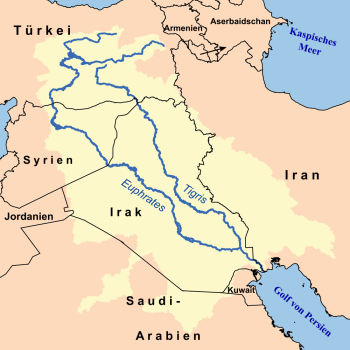
Garden of Eden’s Location Verified by Science
Biblical Evidence for Catholicism
Unregenerate Good Works in the Old Testament
Biblical Evidence for Catholicism
Perfectly Keeping the Law: Top Ten Bible Proofs
Biblical Evidence for Catholicism
TRENDING AT PATHEOS Catholic

The Sermon on the Mount, Part I: Matthew...
The Sermon on the Mount, Part I (Matthew 4:12-5:12) St. Matthew moves...

What's up from Crossway: Reviewing some of their latest A few weeks...

Janie Learns the Way of the Cross: A...
Teaching children about Jesus' Passion can be challenging. Many parents and educators...

Looking For Good Catholic Writing - October 2026
He alone extends the heavens, and he walks upon the waves of...

In "Irreplaceable," our book on vocation and technology, Trevor Sutton and I...

I was strolling through the top floor of the brand new Parthenon...
view all Catholic blogs
Ad-Free & Subscriber Log-In Subscription Support
- About Us
- 2026 Calendar
- Videos
- Podcasts
- Library of World Religions
- Faith In Media Tracker
- Advertise With Us
- Write for Us
- Privacy Policy
- Terms of Service
- Do Not Sell My Data
- Contact Us
- Radiant Digital
- Manage Newsletter Subscriptions
- Unsubscribe From Notifications
- Sitemap
Copyright 2008-2026, Patheos. All rights reserved.
Subscription Support Ad-Free & Subscriber Log-In
Follow Patheos