
BuddhistCatholicContemplativeEvangelicalGeneral ChristianHinduJewishLatter-day SaintMuslimNew VisionsProgressive Christian
Beliefs
- Buddhist
- Catholic
- Contemplative
- Evangelical
- General Christian
- Hindu
- Jewish
- Latter-day Saint
- More Voices
- Muslim
- New Visions
- Pagan
- Progressive Christian
Topics
- Religion News
- Food and Religion
- Sports and Religion
- Religious Art
- Religious Music and Entertainment
- Religious Events
- History and Religion
- Style and Religion
- Politics and Religion
- Women in Religion
- Recreation Outdoors and Religion
- Business Finance and Religion
- Careers Workplace and Religion
- Education and Religion
- Family Parenting and Religion
- Health Fitness and Religion
- Home and Religion
- Relationships and Religion
- Technology and Religion
- Travel and Religion
Columnists
- Buddhist Columnists
- Business Finance and Religion Columnists
- Careers Workplace and Religion Columnists
- Catholic Columnists
- Contemplative Columnists
- Education and Religion Columnists
- Evangelists Columnists
- Family Parenting and Religion Columnists
- General Christian Columnists
- Health Fitness and Religion Columnists
- Hindu Columnists
- History and Religion Columnists
- Home and Religion Columnists
- Jewish Columnists
- More Voices Columnists
- Latter Day Columnists
- Muslim Columnists
- New Visions Columnists
- Nonreligious Columnists
- Pagan Columnists
- Politics and Religion Columnists
- Progressive Columnists
- Recreation Outdoors and Religion Columnists
- Relationships and Religion Columnists
- Religion News Columnists
- Religious Art Columnists
- Religious Events Columnists
- Religious Music and Entertainment Columnists
- Sports and Religion Columnists
- Style and Religion Columnists
- Technology and Religion Columnists
- Travel and Religion Columnists
- Women in Religion Columnists
Resource Library
- 2026 Calendar
- Library of World Religions
- The 100 Most Holy Places on Earth
- Patheos Answers
- Podcasts
- Videos
- Faith Leaders Database
- Anglican Episcopalian
- Bahai
- Baptist
- Buddhism
- Christianity
- Confucianism
- Eastern Orthodoxy
- Hinduism
- Holiness and Pentecostal
- ISKCON
- Islam
- Judaism
- Lutheran
- Methodist
- The Church of Jesus Christ of Latter-day Saints
- New Age
- Paganism
- Presbytarian and Reformed
- Protestantism
- Religion Behind the Scenes
- Roman Catholic
- Scientology
- Shia Islam
- Sikhism
- Sufism
- Sunni Islam
- Taoism
- Zen
- See all religions
Research Tools
 Ad-Free & Subscriber Log-In Subscription Support
Ad-Free & Subscriber Log-In Subscription Support
Follow Patheos 

- Trending:
- Forgiveness
- |
- Marriage
- |
- Consciousness
- |
- Death Penalty
- |
- Election
- |
- Halloween

-
About
-
Catholic Apologetics
-
Church History
-
Great Apologists
-
Christian Worldview
-
Protestantism & Misc.
- Home
- Catholic
- History and Religion
- Baptismal Regeneration: Refutation of James White
Baptismal Regeneration: Refutation of James White
Last updated on: August 27, 2021 at 4:00 pm by Dave Armstrong
Baptismal Regeneration: Refutation of James White 2021-08-27T16:00:30-04:00 Dave Armstrong
Patheos Explore the world's faith through different perspectives on religion and spirituality! Patheos has the views of the prevalent religions and spiritualities of the world.
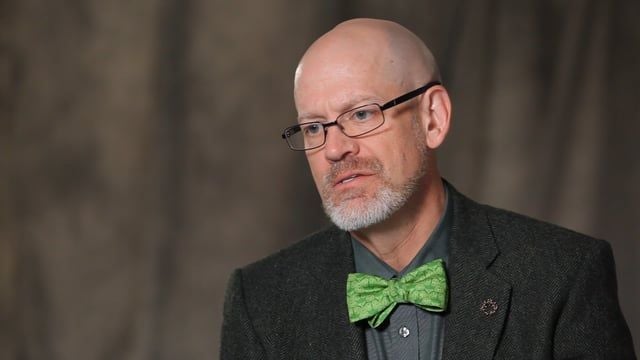
This is a reply to an article by Bishop “Dr.” [???] James White: “A Brief Rebuttal of Baptismal Regeneration” (8 May 1998). White is, in my opinion, the most influential, well-known, and able (and certainly most published and “heard”: through his podcasts and oral debates) Protestant anti-Catholic apologist / sophist / polemicist of our time. His words will be in blue.
*****
“For you know that it was not with perishable things such as silver or gold that you were redeemed…but with the precious blood of Christ, a lamb without blemish or defect.” So wrote the Apostle Peter to the early Christians (1 Peter 1:18-19). He, as all the other Apostles, believed that we are redeemed, cleansed, forgiven, in the blood of Jesus Christ. Yet, there are many today who would replace the blood of Christ with the water of a baptistery.
This is absurd and asinine right out of the starting-gate, when we consider that the vast majority of Christians today and throughout history (Catholics, Orthodox, Anglicans, Lutheran, Methodists, Churches of Christ, Disciples of Christ) believe and believed in baptismal regeneration. None of the above groups thought that baptism, as a sacrament, “replace[d] the blood of Christ”. It was a physical means of transmitting God’s free, unearned, unmerited grace to human beings (the standard definition of sacrament for Catholics, Orthodox, and Protestants alike).
Even among the Christians who reject baptismal regeneration, most of them practice infant baptism, which is also anathema to White’s Baptist theology. This includes his own hero, John Calvin. Here is what Calvin thought of adult, “believer’s” baptism (from a Reformed site):
Calvin declares that “infants cannot be deprived of it[baptism] without open violation of the will of God” (Inst. 4, 16, 8). He reasons this primarily through paralleling circumcision and baptism, asserting that Scripture testifies to the fact that baptism is for the Christians what circumcision was previously for the Jews (Inst. 4, 16, 11). . . .
Calvin attacks the claim that many years passed after Christ’s resurrection during which infant baptism was unknown. Calvin calls this claim “shamefully untruthful”, noting that “there is no writer, however ancient, who does not regard its origin in the apostolic age as a certainty” (Inst. 4, 16, 8). In his footnotes, Calvin cites Irenaeus, Origen, and Cyprian among some of the early advocates for infant baptism (Inst. 4, 16, 8). . . .
Calvin plainly affirms that the promise is the same for both covenants (Inst. 4, 16, 4). Both covenant promises receive God’s fatherly favour of forgiveness of sins and eternal life. Calvin argues that circumcision was the token by which the Jews were “assured of adoption as the people and household of God” (Inst. 4, 16, 4). Similarly, the people of the Church are consecrated to God through baptism, “to be reckoned as his people” (Inst. 4, 16, 4). . . .
Some Anabaptists in Calvin’s day argued that circumcision could not be equated with infant baptism because circumcision was a literal sign and its promises were purely carnal (Inst. 4, 16, 10). Calvin counters by claiming that if we regard circumcision as a literal sign, “we must estimate baptism to be the same” (Inst. 4, 16, 11). Calvin bases this assertion on Colossians, chapter two, where Paul makes neither more spiritual than the other. Paul says that we were circumcised in Christ not by a circumcision made with hands, when we laid aside the body of sin which dwelt in our flesh. This he calls the “circumcision of Christ” (Col.2:11). Paul afterwards adds that in baptism we were “buried with Christ” (Col.2:12). Calvin sees this to mean nothing except that “the fulfillment and truth of baptism are also the truth and fulfillment of circumcision” (Inst. 4, 16, 11). Calvin believes that the apostle Paul is demonstrating that baptism is for the Christians what circumcision previously was for the Jews. . . .
[A]dvocates of believer’s baptism avow that baptism must be preceded by faith and repentance (Inst. 4, 16, 23). These people argue that since this is not possible in the infancy stage, “we must guard against admitting infants into the fellowship of baptism” (Inst. 4, 16, 20). Calvin refutes “these darts” by directing our attention to the testimonies of Scripture that show that circumcision was also a sign of repentance (Jer.4:4; 9:25; Deut. 10:16; 30:6). If God communicated circumcision to infants as a sacrament of repentance and faith, as Calvin argues, it does not seem absurd if they are now made participants in baptism. Although infants, at the very moment they were circumcised, did not comprehend what the sign meant, “they were truly circumcised to the mortification of their corrupt and defiled nature” (Inst. 4, 16, 20). Likewise, infants are baptized into “future repentance and faith” and “the seed of both lies hidden within them by the secret working of the Spirit” (Inst. 4, 16, 20). To refuse infants baptism then, according to Calvin, is to “rage openly at God’s institution” (Inst. 4, 16, 20).
But Bishop White is utterly opposed to sacramentalism itself: a notion held by virtually all Christians all through history. He and I engaged in a vigorous postal exchange in 1995. I have his letters in my possession, and the “debate” has been posted on my website for many years, with the good bishop’s permission (for some strange reason: — since he thinks that he prevails in all debates with Catholics — he has never posted it nor linked to it, these past 25 years since I have been online). In it, he stated:
If you feel a communion that replaces the grace of God with sacraments, mediators, and merit, can be properly called “Christian,” then please go ahead and use the phrase. But please understand that if a person shares the perspective of the epistle to the churches of Galatia they will have to hold to a different understanding, and hence may not be as quick to use the term “Christian” of such a person.
Thus, he thinks baptism and “the grace of God” are antithetical to each other. Above, he said baptism was contrary to “the blood of Christ.” Not only that, he holds that people who believe in baptism as a sacrament (and above all, those — like Luther — who think it is a sacrament that regenerates) ought not be called “Christian” either. I scrutinized the logical implications of this view in a 2003 article of mine, and concluded that White’s view inexorably leads him to the absurd position that St. Augustine, Martin Luther, C.S. Lewis, Dietrich Bonhoeffer, John Wesley, and Philip Melanchthon (along with many many others of similar beliefs) were not Christians at all.
Needless to say, Bishop White (since he has been fleeing in terror from all of my rebuttals of his arguments these past 26 years) has never shown how this is not the case. And it’s important that we understand his radical, extreme, novel, anti-biblical and anti-traditional position on baptism and all sacraments, before we examine his particular arguments.
They teach that we are regenerated, made alive, cleansed, by water baptism.
Yes, “they” do: that is, the vast majority of all Christians throughout history, starting with the writers of the New Testament, who made the teaching of baptismal regeneration very clear indeed.
Some insist that it must be baptism by immersion; others say that sprinkling accomplishes the same thing.
And others, like Bishop White, remarkably thinks that such an important command for all Christians does precisely nothing.
In either case, the work of Jesus Christ on the cross cannot be said to be finished and efficacious until man does something–in this case, adds his work of baptism to the work of God in Christ.
God and the regenerate, observant, obedient Christian disciples — contra White’s “either/or” nonsense — always cooperate together, with God’s grace being the ultimate cause of any and all good things that human beings do, as the Bible explicitly asserts:
Mark 16:20 (RSV) And they went forth and preached everywhere, while the Lord worked with them and confirmed the message by the signs that attended it. Amen.
Acts 2:40-41 And he testified with many other words and exhorted them, saying, “Save yourselves from this crooked generation.”
[41] So those who received his word were baptized, and there were added that day about three thousand souls.1 Corinthians 3:8-9 He who plants and he who waters are equal, and each shall receive his wages according to his labor. For we are God’s fellow workers; you are God’s field, God’s building.
1 Corinthians 15:10 But by the grace of God I am what I am, and his grace toward me was not in vain. On the contrary, I worked harder than any of them, though it was not I, but the grace of God which is with me. (cf. 15:58; Gal 5:6, 6:7-9)
2 Corinthians 6:1 Working together with him, then, we entreat you not to accept the grace of God in vain.
Ephesians 2:10 For we are his workmanship, created in Christ Jesus for good works, which God prepared beforehand, that we should walk in them.
Philippians 2:12-13 Therefore, my beloved, as you have always obeyed, so now, not only as in my presence but much more in my absence, work out your own salvation with fear and trembling; [13] for God is at work in you, both to will and to work for his good pleasure.
1 Timothy 4:16 Take heed to yourself and to your teaching: hold to that, for by so doing you will save both yourself and your hearers.
One might describe the difference in approach as follows:
Reformed / Calvinist (White’s) outlook: God does all, therefore it is senseless and heretical to speak of man doing anything as regards to grace and salvation, and to do so is at least a semi-Pelagian position, detracting from God’s sole work in salvation.
Catholicism / Bible / “Both/and” outlook: God does all and enables all, pertaining to grace and salvation, yet man can also cooperate with God and in a non-Pelagian sense “participate” in the process.
Make your choice: massive and clear biblical teaching (that we cooperate with God and do good works and actions, solely by cause of His prior enabling grace), or James White’s stunted, irrational denial of it, because he is a prisoner of his own false, unbiblical traditions of men.
Baptism is said to be the means of salvation, the method by which Christ’s work at Calvary is taken from the merely theoretical to the actual.
Technically, regeneration, rather than ultimate salvation, because true Christians can fall away from the faith.
Underlying the idea that man, by an action such as baptism, can bring about his own regeneration, is the rejection of the Biblical teaching of sin, and most especially, the truth that sin enslaves man, debilitates man, brings spiritual death to man.
No one who believes in baptismal regeneration thinks that a person “can bring about his own regeneration.” That would be the heresy of Pelagianism: firmly rejected by the Catholic Church. God does all through the sacrament. The analogy I always use is a prisoner accepting a pardon from the Governor. Does the prisoner “do” anything to receive it? No; nothing except accepting the pardon (just as a baby “accepts” baptismal water, not even knowing what is going on), which is hardly doing anything.
Yet according to Bishop White’s convoluted “logic” the prisoner would be bringing about his own freedom, rather than the Governor doing so. It’s ridiculous. But this is what false presuppositions do to a mind. If a person repents and desires to change their life and follow Jesus, they have “done” something (by deciding they will do so). But of course it was caused and brought about by God’s grace. So God did it. But the person cooperated; he did something (see all the Bible passages above for that).
Man in sin must be freed from slavery to sin. He cannot free Himself, but must be freed by the Lord Jesus Christ Himself. This is an offensive truth to the unregenerate man, as the response from these would-be self-made disciples indicates (8:41, 48). Men do not like to hear that they are, in fact, totally dependent upon God’s grace for salvation–they do not want to know that they are incapable of saving themselves, or even of coming unto Christ for salvation, outside of God’s gracious drawing (John 6:44). But as the Lord Himself said, we are slaves to sin. Slaves must be freed.
No Christian who has any theological understanding at all, rejects this, So White is merely flailing away at a straw man. It’s entertaining and comical (like Don Quixote), but it doesn’t advance intelligent discussion on the matter one whit. He’s simply p[reaching to the “Christian choir.” It’s like saying, “I believe that water is essential for life!” We reply with, “Duh!!!” Likewise, grace (often received through physical sacraments) is responsible for all spiritual life and goodness whatsoever. He wastes two more paragraphs reiterating the same redundancies and non sequiturs.
Those who hold to baptismal regeneration would have us to believe that one passes from being a “natural man” to a “spiritual man” through baptism; yet, from whence does this desire to be baptized come? . . . Paul said that the one who is still fleshly cannot please God. If such a person is the enemy of God, enslaved to sin, how is it that he is able to do such a spiritual and pleasing thing as to desire to be baptized? Obviously, this is impossible.
The desire comes from God the Holy Spirit and Gods grace, of course: exactly where White thinks it comes for those in his Christian tradition who at some point dedicate their lives to God (which is a “thing” and an “action” as well): they agree — by His grace — to follow God, just as Paul says in Philippians 2:13: “God is at work in you, both to will and to work.” One wonders whether White is even familiar with a Bible passage like that and the many others above?
In fact, the “normative” way a Baptist publicly declares that he or she has dedicated themselves to Jesus as a disciple and serious practicing Christian is by the (purely symbolic act) of getting baptized. I could just as well ask Bishop White: “from whence does this desire to be [symbolically] baptized come?” And the answer is the same. It always goes back to God. It’s obvious, therefore, that if God can lead a Baptist to publicly proclaim allegiance to Jesus Christ via the act of symbolic baptism, then by the same token He can lead a previously pagan adult Christian to a baptism that he or she and the Church believe actually accomplishes regeneration.
The process of making such a serious resolution is exactly the same in both cases. And actually, Catholics believe that the Baptist also receives regeneration, since it is true baptism that they receive (if a trinitarian formula and proper intent are present). God isn’t going to deprive a sincere Christian of all of that grace simply because he or she is misinformed.
Never is it said that we are justified by baptism.
It is indeed said, here:
1 Corinthians 6:11 And such were some of you. But you were washed, you were sanctified, you were justified in the name of the Lord Jesus Christ and in the Spirit of our God.
For Bishop White, justification essentially is salvation, since in (false) Calvinist teaching, one can never fall away. Hence, if they are justified (and/or regenerated), they are, and will be (eschatologically) saved. And the Bible directly links baptism to salvation:
Mark 16:16 He who believes and is baptized will be saved; but he who does not believe will be condemned.
John 3:5 Jesus answered, “I tell you the truth, unless a man is born of water and of the Spirit, he cannot enter the kingdom of God. (cf. 3:3: “unless a man is born again …”)
Romans 6:3-4 Or don’t you know that all of us who were baptized into Christ Jesus were baptized into his death? We were therefore buried with him through baptism into death in order that, just as Christ was raised from the dead through the glory of the Father, we too may live a new life.
Titus 3:5 he saved us, not because of deeds done by us in righteousness, but in virtue of his own mercy, by the washing of regeneration and renewal in the Holy Spirit,
1 Peter 3:21 Baptism, . . . now saves you, . . .
White is like the poor soul who can look all over the sky on a clear day at high noon in summer and not be able to find the sun. How does one manage to ignore and dismiss so much clear biblical teaching?
In light of the fact that any review of the central passages of the New Testament that directly deal with how a man is made right with God will lead us to recognize our own inability and the great ability of our God to save, what is to be said concerning those passages, drawn from one context or another, that seem to indicate that we are saved or forgiven by baptism?
See the above. I didn’t even include Acts 2:38 and 22:16, where it is stated that our since are forgiven and washed away (since White mentioned forgiveness there).
First, we must point out that it is common for some to confuse the importance of baptism with the idea of the necessity of baptism.
This is plain dumb. Since all the passages I set forth above speak of salvation and regeneration (and also justification) coming through baptism. Obviously, then, failing baptism, logically speaking, one’s salvation is dubious. One can’t enter the kingdom of God without it (Jn 3:5). That’s certainly a lack of salvation and a necessity of baptism. What part of “We were therefore buried with him through baptism into death in order that, just as Christ was raised from the dead through the glory of the Father, we too may live a new life” does Bishop White not grasp or accept?
But just as the holy Law of God was misused by the Pharisees in Jerusalem, and the Judaizers in Galatia, so baptism has been misused by modern proponents of the works-oriented system of baptismal regeneration.
It has nothing to do with works-salvation or Pelagianism or worthless works by unregenerate man, as Paul makes abundantly clear (almost seeming to answer White’s foolish objection):
Titus 3:5 he saved us, not because of deeds done by us in righteousness, but in virtue of his own mercy, by the washing of regeneration and renewal in the Holy Spirit,
This passage singlehandedly proves that the act of baptism is not a work in the cynical White / Calvinist sense of “worthless works by unregenerate man.” It’s White’s reasoning that is manifestly unbiblical, not that of the overwhelming majority of Christians for two thousand years who have accepted the biblical teaching of baptismal regeneration.
In fact, the Baptist conception of a Baptism that does nothing whatever is far more of a work of man than Catholic / Lutheran / Orthodox baptism, where God actually does something supernatural and literally life-transforming. God is the key mover, not fallen, flawed, frail man. The Baptist empty “rite” is all human, 100% human. God does nothing whatever. So which “procedure” is more accurately classified as purely a work of man? Let’s get real . . .
Bishop White then attempts to grapple with the biblical passages about baptismal regeneration, starting wit Acts 2:38 (I’ll add a few more verses for context):
Acts 2:38-41 And Peter said to them, “Repent, and be baptized every one of you in the name of Jesus Christ for the forgiveness of your sins; and you shall receive the gift of the Holy Spirit. [39] For the promise is to you and to your children and to all that are far off, every one whom the Lord our God calls to him.” [40] And he testified with many other words and exhorted them, saying, “Save yourselves from this crooked generation.” [41] So those who received his word were baptized, and there were added that day about three thousand souls.
A tremendously large number of interpretations have been set forth on this passage over the years. We believe the simplest and most consistent manner of approach is to ask a question that is frequently not asked at all: we here have a short snippet of what was obviously a longer sermon by Peter.
In other words, an argument from silence, which is a classic logical fallacy (how strikingly desperate White is here for any “reply” at all, no matter how weak!). But there is enough in the verse itself.
Does Peter elsewhere tell us, in plain language, how our sins are remitted, how we are cleansed from our burden of guilt? Certainly! We began our article with the quotation of 1 Peter 1:18-19, where Peter directly teaches that we are cleansed by the blood of the spotless Lamb of God, Jesus Christ.
First of all, he’s already told us, “in plain language” in Acts 2:38-41 that baptism brings 1) “forgiveness of . . . sins”, 2) the indwelling of the Holy Spirit (which no Calvinist or anyone other Christian could ever think an unregenerate person possessed), 3) salvation (“save yourselves” [by being baptized]), and 4) being added to the rank of saved “souls” (cf. Gal 3:27). What more does anyone need? But White looks at all that and his eyes glaze over and he sees nothing. Perhaps he himself might possibly be unregenerate if he is so dense as to not see and perceive these things? He’s like the “carnal man” that Paul talks about, who can’t comprehend spiritual matters. Thus, White ignores all that and seeks to go elsewhere in Peter’s writings, to try to (in effect) make him contradict himself. Quite a methodology . . .
So Peter says we are cleansed by the blood of Christ? Of course we are. No one denies it. But we’re also cleansed by baptism. It’s not “either/or.” Romans 6:3-4, after all, incorporates the blood of Jesus into baptism by referring to His “death” (which certainly included His blood!). So also does the larger passage of 1 Peter 3:14-22; 4:1, for that matter). No problem. It’s much ado about nothing. Peter then goes on to assert, two chapters later, that “baptism . . . saves” us. If a dispute is whether “baptism saves” us or not, and an inspired Bible passage states “baptism saves”, and Mark 16:16 also asserts “He who believes and is baptized will be saved”: are those not answers to the very question being asked? How could they be any more plain and obvious than they are? But White, acting every bit the part of the clueless carnal man, babbles:
Do we then have sufficient basis to identify the waters of baptism with the blood of Christ? Surely not. Sins are remitted through our participation in the death of Jesus Christ . . .
Exactly: just as Romans 6:3-4 and 1 Peter 3:14-22; 4:1 expressly state. Now perhaps he is starting to get it?
–it is by the “one time offering” of Jesus Christ that we are made whole (Hebrews 10:10-14). What of baptism then? It is the symbol, the outward representation before men of what the Spirit of God has done in our hearts (Titus 3:5-7).
Except that this is not what the Bible teaches (as seen above). It’s a false tradition of men. Titus 3:5-7 does not teach at all that it is pure symbolism (this is sheer, rather pathetic eisegesis). To the contrary, it affirms that “he saved us, . . . by the washing of regeneration [i.e., baptism] and renewal in the Holy Spirit”: just as St. Peter in the very first Christian sermon after Pentecost also taught that we receive forgiveness of sins, salvation, and the Holy Spirit via baptism (Acts 2:38). Crystal clear as always. It’s White’s theology (not the Bible’s, nor the Catholic Church’s) that is muddled, confused, and viciously self-contradictory.
Unless we have first had our sins remitted in the blood of Christ, the symbol of baptism is meaningless.
That’s simply not what the Bible teaches. Rather, baptism intrinsically involves the blood and redeeming death of Christ (Rom 6:3-4). Baptism is the participation in that, not subsequent to it. Paul reiterates two chapters later, the same thought he expressed with regard to baptism:
Romans 6:4-5 We were buried therefore with him by baptism into death, so that as Christ was raised from the dead by the glory of the Father, we too might walk in newness of life. [5] For if we have been united with him in a death like his, we shall certainly be united with him in a resurrection like his.
Romans 8:17 . . . heirs of God and fellow heirs with Christ, provided we suffer with him in order that we may also be glorified with him.
But doesn’t this passage say that baptism is for the remission of sins? Yes, but what does “for” mean?
White, like Bill Clinton, who retreated to “what the meaning of is is” in trying to extricate himself from perjury, White desperately retreats to a single word, for. He cites Baptist scholar A. T. Robertson in his favor, who is a good scholar and one I often use myself. But Robertson has a Baptist bias, just as I have a Catholic bias. We all have a bias. It’s best to be honest about it and be aware of it and how it may influence and affect our reasoning and our arguments. That’s all I’m saying. But biased or not, sure enough (I would say, precisely because of his bias) Robertson makes a big logical and exegetical error, in stating about Acts 2:38:
I understand Peter to be urging baptism on each of them who had already turned (repented) and for it to be done in the name of Jesus Christ on the basis of the forgiveness of sins which they had already received.
This makes no sense at all. He — and White following him — goes into the deep meaning of words, but misses the forest (the relevant Bible passages considered as a whole) for the trees. Robertson’s supposed causal order is:
Individual repents (which was, of course, caused by God’s grace).
Forgiveness of sins is granted by God as a result.
Then we get baptized in the name of Jesus in gratefulness for this forgiveness received prior to the baptism.
But when we closely examine the actual passage in question, we see that it does not, by any stretch of the imagination, teach this sequence. Rather, it plainly, clearly, perspicuously affirms the following sequence:
Repent. (Acts 2:38)
Get baptized, which is in effect “saving ourselves”: i.e., doing an act led by grace and God, whose effect will be our salvation (2:38, 40).
Then we receive forgiveness, the Holy Spirit, and salvation (2:38, 40).
Baptism also brings about the result of our being “added” to the rank of souls who are regenerated and in the Church (2:41).
It’s baptism, for Peter, that immediately brings all this about. They come into he Church as saved or regenerated members after baptism, not before. Robertson and White have it exactly backwards. And it is truly shocking to see such a great scholar literally “make” a Bible passage say almost the opposite of what it says. Plainly, Peter is teaching, “you shall receive the gift of the Holy Spirit.” It’s still in the future as he is saying this. It obviously comes through baptism.
Then he says “save yourselves.” He’s not assuming they are already saved, and now willing to do their symbolic public act. No! It’s in getting baptized that they “save themselves.” And they become members of the body of Christ, the Church, which is also obviously (by plain English, grammar, and logic) a result of baptism, rather than vice versa.
White then attempts to eisegete 1 Peter 3:21. Let’s see what he’s got. He’s been shooting all blanks so far.
[W]e point out that foremost in Peter’s mind, again, is the death of Christ as the sacrifice for sin. Men are brought to God, not by what they do, but what God has done in Christ Jesus (v. 18). Upon the heels of this he mentions God’s act of judgment in the days of Noah. At that time eight souls were saved through water. Peter then says that this water “symbolizes” baptism (as the NIV translates the Greek term antitupon, literally, “antitype”). Baptism now saves us, Peter says–just as the water “saved” Noah and his family. But, of course, we know that Peter was not asserting that there was some salvific aspect to the flood waters themselves–God shut up the ark, and God saved Noah and his family. But the water is a symbol, Peter says, a symbol seen now in baptism. But is Peter dropping the symbolization so as to make baptism the means of salvation? Certainly not.
White misses the most basic point, and this is not rocket science. The Bible often uses natural things as symbols of supernatural ones (e.g., Jonah being in the belly of the whale three days and then emerging alive as a symbol of Jesus being dead for three days and then rising; many parables use similar parallelism). “Saved” in reference to Noah’s Ark meant physical, wholly natural “salvation” from drowning. But then Peter uses that as an illustration of the supernatural sacrament of baptism:
1 Peter 3:21 Baptism, which corresponds to this, now saves you, not as a removal of dirt from the body but as an appeal to God for a clear conscience, through the resurrection of Jesus Christ,
Baptism “corresponds” to Noah’s Ark as an analogy (the Ark being a natural prototype of a supernatural thing). It doesn’t follow that Peter’s saying that this baptism “saves” us is also merely symbolic. Peter doesn’t say that! White “reads it in” (eisegesis). In order to drive home the point, Peter throws in the fact that this baptism was not merely “a removal of dirt from the body” (not merely a physical, natural thing), but related to suffering with (3:14, 16-17; 4:1) and being resurrected with Christ (3:21), just as St. Paul also taught (even more explicitly) in Romans 6:3-4.
White’s still not sure what St. Peter means here? Then he ought to compare the relatively less clear Scripture with the more clear one: in this case, by the same person (Acts 2:38 ff.): according to standard biblical exegesis and hermeneutics. We’ve seen how Peter clearly tied salvation and regeneration to baptism there. He also means the same here, since inspired Scripture doesn’t contradict itself.
White cites linguist and Bible translator Kenneth Wuest this time. He states, like a good evangelical:
The person is saved the moment he places his faith in the Lord Jesus. Water baptism is the visible testimony to his faith and the salvation he was given in answer to that faith.
But he merely exhibits his preconceived beliefs. Once again, the biblical text doesn’t correspond, since it says “Baptism . . . saves you” as opposed to “your faith brings about salvation and then you go get baptized.” The text doesn’t teach that baptism is a symbolic testimony to a prior faith. It says that the baptism “saves.” Again, how much clearer in meaning could it possibly be? The special pleading to vainly try to escape the clear implications of these texts is extraordinary.
White now turns in his article to Acts 22:16.
The remission of sins is effected by calling upon the name of the Lord in this passage–it is represented, as elsewhere, by baptism. One thing is for certain: given what we have seen previously of Paul’s own theology of justification, he certainly did not interpret Ananias to be teaching any form of baptismal regeneration!
This is at first glance, clever, but at second glance, stupid. White merely sees what he wants to see. Since “calling on the Lord” is mentioned, he seizes on that phrase as “evangelical-sounding” and non-sacramental and enlists it for his purposes. In so doing he completely ignores the plain tie-in between baptism and remission of sins:
Acts 22:16 And now why do you wait? Rise and be baptized, and wash away your sins, calling on his name.
“Calling on his name: is not inconsistent with baptism. They are wholly compatible. But White cannot accept baptismal regeneration (because he’d have to change religious affiliation if he did), so he chooses to see what he wishes to see and ignores the rest. The fact is, that throughout the New Testament, baptism is seen as imperative and the means by which the early Church would know who was part of their fold or not. This was true for Paul in the passage above. As soon as he was “persuaded” of Christianity, the first thing he did was get baptized, which in turn washed away his sins.
Acts 8:12-13 But when they believed Philip as he preached good news about the kingdom of God and the name of Jesus Christ, they were baptized, both men and women. [13] Even Simon himself believed, and after being baptized he continued with Philip. . . .
Acts 8:34-38 And the eunuch said to Philip, “About whom, pray, does the prophet say this, about himself or about some one else?” [35] Then Philip opened his mouth, and beginning with this scripture he told him the good news of Jesus. [36] And as they went along the road they came to some water, and the eunuch said, “See, here is water! What is to prevent my being baptized?” [38] And he commanded the chariot to stop, and they both went down into the water, Philip and the eunuch, and he baptized him.
Acts 9:17-18 So Anani’as departed and entered the house. And laying his hands on him he said, “Brother Saul, the Lord Jesus who appeared to you on the road by which you came, has sent me that you may regain your sight and be filled with the Holy Spirit.” [18] And immediately something like scales fell from his eyes and he regained his sight. Then he rose and was baptized,
Here, once again, baptism is tied in with the indwelling of the Holy Spirit (cf. also 1 Cor 12:13).
Acts 16:14-15 One who heard us was a woman named Lydia, from the city of Thyati’ra, a seller of purple goods, who was a worshiper of God. The Lord opened her heart to give heed to what was said by Paul. [15] And when she was baptized, with her household, [infant baptism] . . .
Acts 16:32-33 And they spoke the word of the Lord to him and to all that were in his house. [33] And he took them the same hour of the night, and washed their wounds, and he was baptized at once, with all his family. [infant baptism]
Acts 18:8 Crispus, the ruler of the synagogue, believed in the Lord, together with all his household; and many of the Corinthians hearing Paul believed and were baptized.
1 Corinthians 1:16 (I did baptize also the household of Steph’anas. [infant baptism] . . .
In conclusion, we must again insist that the Scriptures must be taken as a whole–when we find in the direct, clear statements of Scripture truths that are contradictory to assumptions based upon passing comments, we must take the clear statements over the assumptions.
Amen! Would that Bishop White would follow his own advice.
In the issue of salvation, we must take the clear statements of Scripture regarding the work of the Spirit of God in regenerating lost sinners seriously. . . .
Exactly, just as we take seriously everything else taught about baptism, and not selectively apply some things out of context and completely ignore other relevant considerations, based on our prior preconceived notions.
When we properly present baptism as it is presented in Scripture, we glorify God’s grace and magnify His work of salvation in Jesus Christ. [my italics and bolding]
Yes we do. I couldn’t agree more.
***
Photo credit: [Pinterest / Vimeo]
***
Summary: I painstakingly interact with and rebut anti-Catholic polemicist James White’s critique of (biblical) baptismal regeneration, showing how at every turn he distorts clear scriptural teachings.
Previous Post

August 26, 2021
Tower of Babel, Baked Bricks, Bitumen, & Archaeology
Next Post
August 27, 2021 A "Biblical" Immaculate Conception? (vs. James White)
Browse Our Archives
Select a Category & Last Things About Me Anti-Catholicism Atheism & Agnosticism Baptism and Sacramentalism Bible and Tradition Blessed Virgin Mary Books by Dave Armstrong C. S. Lewis Calvinism & General Protestantism Catholic Apologetics Catholic Apologists Catholic conversion Catholic converts Christmas Church (Ecclesiology) Church History Conversion and Converts Development of Doctrine Eastern Orthodoxy Ecumenism & Christian Unity Eucharist & Liturgy Fathers of the Church French Translations G. K. Chesterton Hell Hell & Satan Hell & Satan & Last Things Heresies & Comparative Religion Holistic Health Inquisition & Crusades & Scandals James White Jews & Judaism & Old Testament John Calvin John Henry Newman Liberal / Modernist Theology Life Issues Literary Resume Lutheranism Mariology Martin Luther Music Orthodoxy Papacy & Infallibility Personal Page Philosophy & Science Political & Ethical & Moral Issues Protestant Persecution & Intolerance Protestantism Purgatory Purgatory & Penance Romantic & Imaginative Theology Saints & Purgatory & Penance Salvation Salvation & Justification Satan & Last Things Sexuality and Gender Issues Spanish Translations Traditionalism vs. Radical Catholic Reactionaries Traducciones al español / tradução para português Trinitarianism & Christology Uncategorized Videos
Select a Month October 2026 September 2026 August 2026 July 2026 June 2026 May 2026 April 2026 March 2026 February 2026 January 2026 December 2025 November 2025 October 2025 September 2025 August 2025 July 2025 June 2025 May 2025 April 2025 March 2025 February 2025 January 2025 December 2024 November 2024 October 2024 September 2024 August 2024 July 2024 June 2024 May 2024 April 2024 March 2024 February 2024 January 2024 December 2023 November 2023 October 2023 September 2023 August 2023 July 2023 June 2023 May 2023 April 2023 March 2023 February 2023 January 2023 December 2022 November 2022 October 2022 September 2022 August 2022 July 2022 June 2022 May 2022 April 2022 March 2022 February 2022 January 2022 December 2021 November 2021 October 2021 September 2021 August 2021 July 2021 June 2021 May 2021 April 2021 March 2021 February 2021 January 2021 December 2020 November 2020 October 2020 September 2020 August 2020 July 2020 June 2020 May 2020 April 2020 March 2020 February 2020 January 2020 December 2019 November 2019 October 2019 September 2019 August 2019 July 2019 June 2019 May 2019 April 2019 March 2019 February 2019 January 2019 December 2018 November 2018 October 2018 September 2018 August 2018 July 2018 June 2018 May 2018 April 2018 March 2018 February 2018 January 2018 December 2017 November 2017 October 2017 September 2017 August 2017 July 2017 June 2017 May 2017 April 2017 March 2017 February 2017 January 2017 December 2016 November 2016 October 2016 September 2016 August 2016 July 2016 June 2016 May 2016 April 2016 March 2016 February 2016 January 2016 December 2015 November 2015 October 2015 September 2015 August 2015 July 2015 June 2015 May 2015 April 2015 March 2015 February 2015 January 2015 December 2014 November 2014 October 2014 September 2014 August 2014 July 2014 June 2014 April 2014 March 2014 February 2014 January 2014 December 2013 November 2013 October 2013 September 2013 August 2013 July 2013 June 2013 April 2013 March 2013 February 2013 January 2013 December 2012 November 2012 October 2012 September 2012 August 2012 July 2012 June 2012 May 2012 April 2012 March 2012 February 2012 January 2012 December 2011 November 2011 October 2011 September 2011 August 2011 July 2011 June 2011 April 2011 March 2011 February 2011 October 2010 September 2010 August 2010 July 2010 April 2010 March 2010 December 2009 October 2009 August 2009 July 2009 June 2009 May 2009 March 2009 February 2009 October 2008 September 2008 April 2008 March 2008 February 2008 January 2008 December 2007 November 2007 October 2007 May 2007 March 2007 February 2007 January 2007 November 2006 October 2006 September 2006 August 2006 July 2006 June 2006 May 2006 April 2006 March 2006 February 2006 October 2005 June 2005 April 2005 February 2005 July 2004 May 2004 April 2004
Follow Us!
TAKE THE
Religious Wisdom Quiz
What does "Bartholomew" mean in Aramaic?
Select your answer to see how you score.
Servant of God The Lord is my Shepherd Fisher of Men Son of Talmai
Books by This Author Books by Dave Armstrong
Related posts from Biblical Evidence for Catholicism

Dialogue on Eternal Security / Absolute Assurance
Biblical Evidence for Catholicism

"Faith Alone" Dialogue with a Calvinist
Biblical Evidence for Catholicism

Exegesis of 75 NT Faith [Alone?] & Works...
Biblical Evidence for Catholicism
Does Romans 2 Prove "Faith Alone"? (Mini-Debate)
Biblical Evidence for Catholicism
TRENDING AT PATHEOS Catholic

Pope Leo Celebrates Mass for Nurses & Docs...
I don't have any idea how he did it, but Pope Leo...

The Sermon on the Mount, Part I: Matthew...
The Sermon on the Mount, Part I (Matthew 4:12-5:12) St. Matthew moves...

What's up from Crossway: Reviewing some of their latest A few weeks...

Janie Learns the Way of the Cross: A...
Teaching children about Jesus' Passion can be challenging. Many parents and educators...

Looking For Good Catholic Writing - October 2026
He alone extends the heavens, and he walks upon the waves of...

In "Irreplaceable," our book on vocation and technology, Trevor Sutton and I...
view all Catholic blogs
Ad-Free & Subscriber Log-In Subscription Support
- About Us
- 2026 Calendar
- Videos
- Podcasts
- Library of World Religions
- Faith In Media Tracker
- Advertise With Us
- Write for Us
- Privacy Policy
- Terms of Service
- Do Not Sell My Data
- Contact Us
- Radiant Digital
- Manage Newsletter Subscriptions
- Unsubscribe From Notifications
- Sitemap
Copyright 2008-2026, Patheos. All rights reserved.
Subscription Support Ad-Free & Subscriber Log-In
Follow Patheos