
BuddhistCatholicContemplativeEvangelicalGeneral ChristianHinduJewishLatter-day SaintMuslimNew VisionsProgressive Christian
Beliefs
- Buddhist
- Catholic
- Contemplative
- Evangelical
- General Christian
- Hindu
- Jewish
- Latter-day Saint
- More Voices
- Muslim
- New Visions
- Pagan
- Progressive Christian
Topics
- Religion News
- Food and Religion
- Sports and Religion
- Religious Art
- Religious Music and Entertainment
- Religious Events
- History and Religion
- Style and Religion
- Politics and Religion
- Women in Religion
- Recreation Outdoors and Religion
- Business Finance and Religion
- Careers Workplace and Religion
- Education and Religion
- Family Parenting and Religion
- Health Fitness and Religion
- Home and Religion
- Relationships and Religion
- Technology and Religion
- Travel and Religion
Columnists
- Buddhist Columnists
- Business Finance and Religion Columnists
- Careers Workplace and Religion Columnists
- Catholic Columnists
- Contemplative Columnists
- Education and Religion Columnists
- Evangelists Columnists
- Family Parenting and Religion Columnists
- General Christian Columnists
- Health Fitness and Religion Columnists
- Hindu Columnists
- History and Religion Columnists
- Home and Religion Columnists
- Jewish Columnists
- More Voices Columnists
- Latter Day Columnists
- Muslim Columnists
- New Visions Columnists
- Nonreligious Columnists
- Pagan Columnists
- Politics and Religion Columnists
- Progressive Columnists
- Recreation Outdoors and Religion Columnists
- Relationships and Religion Columnists
- Religion News Columnists
- Religious Art Columnists
- Religious Events Columnists
- Religious Music and Entertainment Columnists
- Sports and Religion Columnists
- Style and Religion Columnists
- Technology and Religion Columnists
- Travel and Religion Columnists
- Women in Religion Columnists
Resource Library
- 2026 Calendar
- Library of World Religions
- The 100 Most Holy Places on Earth
- Patheos Answers
- Podcasts
- Videos
- Faith Leaders Database
- Anglican Episcopalian
- Bahai
- Baptist
- Buddhism
- Christianity
- Confucianism
- Eastern Orthodoxy
- Hinduism
- Holiness and Pentecostal
- ISKCON
- Islam
- Judaism
- Lutheran
- Methodist
- The Church of Jesus Christ of Latter-day Saints
- New Age
- Paganism
- Presbytarian and Reformed
- Protestantism
- Religion Behind the Scenes
- Roman Catholic
- Scientology
- Shia Islam
- Sikhism
- Sufism
- Sunni Islam
- Taoism
- Zen
- See all religions
Research Tools
 Ad-Free & Subscriber Log-In Subscription Support
Ad-Free & Subscriber Log-In Subscription Support
Follow Patheos 

- Trending:
- Forgiveness
- |
- Marriage
- |
- Consciousness
- |
- Death Penalty
- |
- Election
- |
- Halloween

-
About
-
Catholic Apologetics
-
Church History
-
Great Apologists
-
Christian Worldview
-
Protestantism & Misc.
- Home
- Catholic
- History and Religion
- Seidensticker Folly #73: Philosophy & “Who Created God?”
Seidensticker Folly #73: Philosophy & “Who Created God?”
Last updated on: July 12, 2021 at 11:17 am by Dave Armstrong
Seidensticker Folly #73: Philosophy & “Who Created God?” 2021-07-12T11:17:18-04:00 Dave Armstrong
Patheos Explore the world's faith through different perspectives on religion and spirituality! Patheos has the views of the prevalent religions and spiritualities of the world.
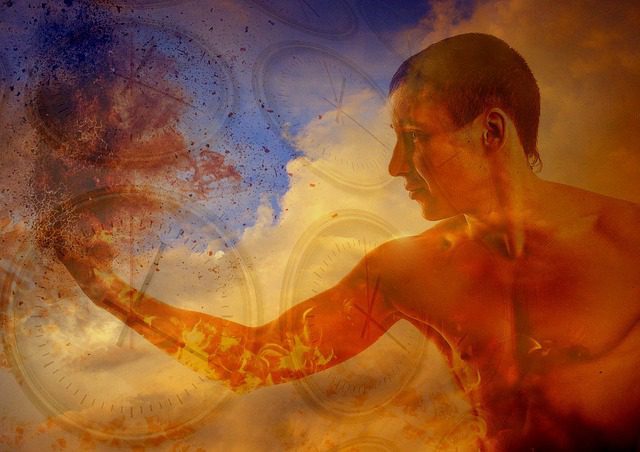
Atheist and anti-theist Bob Seidensticker runs the influential Cross Examined blog. He asked me there, on 8-11-18: “I’ve got 1000+ posts here attacking your worldview. You just going to let that stand? Or could you present a helpful new perspective that I’ve ignored on one or two of those posts?” He added in June 2017 in a combox: “If I’ve misunderstood the Christian position or Christian arguments, point that out. Show me where I’ve mischaracterized them.” Delighted to oblige his wishes . . .
Bob (for the record) virtually begged and pleaded with me to dialogue with him in May 2018, via email. But by 10-3-18, following massive, childish name-calling attacks against me, encouraged by Bob on his blog, he banned me from commenting there. I also banned him for violation of my rules for discussion, but (unlike him) provided detailed reasons for why it was justified.
Bob’s cowardly hypocrisy knows no bounds. On 6-30-19, he was chiding someone for something very much like his own behavior: “Spoken like a true weasel trying to run away from a previous argument. You know, you could just say, ‘Let me retract my previous statement of X’ or something like that.” Yeah, Bob could! He still hasn’t yet uttered one peep in reply to — now — 72 of my critiques of his atrocious reasoning.
Bible-Basher Bob reiterated and rationalized his intellectual cowardice yet again on 12-21-20: “I love people who can make cogent arguments against mine or point out data I hadn’t considered before. What I dislike (and ban) are $#&*%@s who . . . refuse to learn/adapt . . . ignore compelling arguments against their position, and so on.”
Bible-Basher Bob’s words will be in blue. To find these posts, follow this link: “Seidensticker Folly #” or see all of them linked under his own section on my Atheism page.
*****
I am responding to Bob’s post entitled, “But Who Created God?” an Atheist Fallacy? (7-6-21; recycled from a paper dated 12-10-16). I made a similar response in my article, Seidensticker Folly #38: Eternal Universe vs. an Eternal God (4-16-20). Here I will be applying a different angle: the establishment of the notion of an eternal non-material entity (in some cases very much like God) strictly from non-Christian, and even non-theistic classic philosophy. If we can establish that, then we have a ready non-biblical answer to supply to atheists who are gleefully seeking to embarrass Christians with the (rather silly) “gotcha!” question of “Who created God?! Huh? Tell me!”
And the short answer is: “no one or nothing. And we don’t have to explain (on the spot, under the usual atheist polemical “pressure”) how God can exist eternally if indeed there are respectable philosophical analyses many hundreds of years old that establish the notion of an eternal immaterial entity that always existed. We say that the theistic, biblical God is such an entity and that He has a non-biblical philosophical justification, or at the very least a philosophical rationale that analogically goes a long way towards establishing the existence of such a God.”
In other words, “it ain’t just fairy tales or religion / theology, from the Bible.” It’s secular philosophy. And I would add, this view is significantly more rational, plausible, and sensible than the atheist view of “the universe began from no discernible cause out of nothing, for no known reason.” Now there is a view that is neither scientific, philosophical, plausible, or rational. Christians can easily turn the tables with regard to this sort of discussion. The atheist has far more to explain than we do. And (believe me) they usually take a pass when challenged in this way.
Bob wrote:
Sure, we can define God as “the uncreated creator of the universe” (or indeed anything) but if that definition is supposed to be an argument for this God, then you’re as disconnected from reality as the physicist.
Don’t pretend that you can sit back with your arms crossed as if you’ve justified your position in any way. Your religion may say that God was uncreated, but that is no answer in the real world. If “Who created God?” exposes an unsupported part of your argument, then come back after you have justified the claim that God was uncreated. Make it a conclusion, not a presupposition.
And before you say that the Bible confirms that God is eternal (for example, “The hope of eternal life, which God . . . promised before the beginning of time” from Titus 1:2), remember that “the Bible says so” is theology, not evidence.
Expert on Plato and Neoplatonism Bernard Suzanne described Plato’s religious views:
“God” with a capital G . . . doesn’t exist in Plato, . . . Plato speaks of “the gods (hoi theoi), or “the god (ho theos)”, in some cases of “god”, but then in the same way we would talk of “man”, using the word as a generic name. He also speaks of “the divine (to theion)”.
Thus, if by “God” you mean the god of Christianity, Yahweh, the Holy Trinity and the like, there is none of it in Plato or Aristotle. However, if you are looking for “traces” in Plato and Aristotle of a concept that somehow anticipates this god, or if you want to know what is their stand as regards what we are used to call “religion”, this is another matter. . . .
I think Plato knew perfectly well that on such matters, it is impossible to give complete answers with human words. Thus, he tried to approach the question from different angles and give partial complementary (and not contradictory) answers, both negative (what gods are not, what we should not believe) and positive (what we may safely believe about gods and the divine, and questions of “origins” and “ends”).
In that respect, the answers he gives in the Timæus have to be “qualified” by the purpose of this dialogue: it purports to show man how he should look at the kosmos, that is “theorize” it (from theorein, which means in Greek “contemplate”), to find in it traces of an organizing “intelligence” . . . Plato himself repeats time and again that he does not state definite truths but tells only “likely myths”.
In it, you will find not “God”, but a “demiourgos“, that is a “worker” (etymologically, demiourgos means “one who works for the demos, that is for the people”), which is immortal by nature but works from a model and has to deal with anagkè, necessity. Though he does not seem to be the maker of “place (chôra)” and matter, he is the maker of time, “a moving image of eternity”, and of “lower” gods, that are only immortal by his will. These gods represent the immortal living creatures that are needed to have all sorts of creatures in the kosmos. They are the makers of man as the “host” of a divine soul (the logos) handed them by the demiourgos. But you will also read that the kosmos is often referred to as a “god”, endowed with a soul.
Plato (bet. 423-428-c. 347 BC), the ancient Greek philosopher, was not a theist (at least not in the way philosophers habitually use the term); he’s more like a pantheist or panentheist (in many respects like the view of Einstein and David Hume). R. Hackworth, in his paper, “Plato’s Theism” (The Classical Quarterly, Vol. 30, No. 1 (Jan., 1936), Cambridge University Press) shows why Plato (even if a theist) believes things that Christian theists do not believe:
The problem is complicated at the outset by Plato’s very wide application of Theos [Greek for “God”] . . . many things are called ‘Gods’ or ‘divine’: the Demiurge is a Theos, so is the created Universe (Tim. 34B, 92C), so are the stars and planets (Tim. 40D) and the gods of popular theology (Tim. 40E), and the (possible) plurality of good souls in Laws X; the adjective Theios is commonly applied to the Forms . . .
S. Marc Cohen, Professor Emeritus of Philosophy at the University of Washington, wrote in a course syllabus about Plato’s theory of forms:
-
Characteristics of Forms
-
A general metaphysical and epistemological theory. Central to all of Plato’s thought, but nowhere systematically argued for. Not stated in any one dialogue; we must cull from several (but principally Phaedo and Republic).
-
A theory of postulated abstract objects, deriving from the Socratic “What is X?” question, which presupposes that there is a single correct answer to the “What is X?” question.
- The correct answer is not a matter of convention, of what we all (or most of us) think.
- What makes such an answer correct: it is an accurate description of an independent entity, a Form.
- Forms are thus mind-independent entities: their existence and nature is independent of our beliefs and judgments about them.
-
The Phaedo contains an extended description of the characteristics and functions of the forms:
- Unchangeable (78c10-d9)
- Eternal (79d2)
- Intelligible, not perceptible (79a1-5)
- Divine (80a3, b1)
- Incorporeal (passim)
- Causes of being (“The one over the many”) (100c)
- Are unqualifiedly what their instances are only with qualification (75b)
-
Other dialogues fill out the picture: non-temporal (Tim. 37e-38a); non-spatial (Phaedr. 247c); they do not become, they simply are (Tim. 27d3-28a3).
-
Phaedo 80b provides a good summary, listing all the attributes of Forms that souls also have: “divine, deathless, intelligible, uniform, indissoluble, always the same as itself.”
-
Thus, we have the notion of an eternal and unchangeable ideas, forms, immaterial entities (call them what we will) from one of the greatest philosophers of all time, who lived three-and-a-half centuries before Christ. This represents a philosophical basis for many Christian notions about God, but particularly His eternity, which is the topic under immediate consideration.
As a second example of a great philosopher who argues for eternal immaterial entities without reference to either theism per se or Christianity, I submit the founder of Neoplatonism: Plotinus (c. 205-270 AD). He never, by the way, made mention of Christianity in any of his writings. His views (i.e., having to do with our subject) are summed up by atheist and former Catholic Professor of Philosophy John Messerly:
The One – Plotinus taught that there is a supreme, godlike, totally transcendent One containing no division, multiplicity or distinction. The One is beyond all categories of being and non-being. The One isn’t a thing or a person; it isn’t the sum of all things; and it isn’t sentient or self-aware. But the One is the first principle; it is good; and nothing could exist without it. The One is the source of the world, but it doesn’t create the world by willful action. Instead, reality emanates from the One, as an outpouring or overflowing of its nature in an ongoing temporal process. In other words, the One reflects itself onto lower planes, but these reflections represent limits on the One’s perfection.
Nous – The first emanation from the One is Nous (Divine Mind, Logos, Thought, Reason, Intelligence.) This intelligence contemplates both the One, as well as its own thoughts, and Plotinus identifies Nous with the Platonic Forms (eide).
Soul – The second emanation brings soul, the creative power of which is divided into the upper aspect, World Soul, which remains in contact with Nous, and the lower aspect, identified with nature, which allows for individual human souls.
Matter – The third emanation results in matter, the lowest level of being, and is thus the least perfected level of the cosmos.
Mystical Experience – To experience the One is to be in an ecstatic union with it, a union Porphyry says that Plotinus achieved multiple times in his life. This union with the One is probably related to enlightenment and other concepts of mystical union common to many Eastern and Western traditions.
This Metaphysics – The concept of the One is similar to the concept of Brahman in Hinduism. It also has much in common with pantheism, the view that god and reality are identical. The idea that all reality is divine shows up throughout the history of philosophy and religion—most notably in the pantheism of Spinoza. The idea that nous contemplates Platonic ideas finds echoes in St. Augustine. And, no doubt, other parallels could be drawn between Plotinian metaphysics and other thinkers.
Here is another description of Plotinus’ idea of “the One”, from Stanford Encyclopedia of Philosophy (“Plotinus”): written by Lloyd P. Gerson, Professor of Philosophy at the University of Toronto:
The One is the absolutely simple first principle of all. It is both ‘self-caused’ and the cause of being for everything else in the universe. There are, according to Plotinus, various ways of showing the necessity of positing such a principle. These are all rooted in the Pre-Socratic philosophical/scientific tradition. A central axiom of that tradition was the connecting of explanation with reductionism or the derivation of the complex from the simple. That is, ultimate explanations of phenomena and of contingent entities can only rest in what itself requires no explanation. If what is actually sought is the explanation for something that is in one way or another complex, what grounds the explanation will be simple relative to the observed complexity. Thus, what grounds an explanation must be different from the sorts of things explained by it. According to this line of reasoning, explanantia that are themselves complex, perhaps in some way different from the sort of complexity of the explananda, will be in need of other types of explanation. In addition, a plethora of explanatory principles will themselves be in need of explanation. Taken to its logical conclusion, the explanatory path must finally lead to that which is unique and absolutely uncomplex.
The One is such a principle. Plotinus found it in Plato’s Republic where it is named ‘the Idea of the Good’ and in his Parmenides where it is the subject of a series of deductions (137c ff.). The One or the Good, owing to its simplicity, is indescribable directly. We can only grasp it indirectly by deducing what it is not (see V 3. 14; VI 8; VI 9. 3). Even the names ‘One’ and ‘Good’ are fautes de mieux. Therefore, it is wrong to see the One as a principle of oneness or goodness, in the sense in which these are intelligible attributes. The name ‘One’ is least inappropriate because it best suggests absolute simplicity.
If the One is absolutely simple, how can it be the cause of the being of anything much less the cause of everything? The One is such a cause in the sense that it is virtually everything else (see III 8. 1; V 1. 7, 9; V 3. 15, 33; VI 9. 5, 36). This means that it stands to everything else as, for example, white light stands to the colors of the rainbow, or the way in which a properly functioning calculator may be said to contain all the answers to the questions that can be legitimately put to it. Similarly, an omniscient simple deity may be said to know virtually all that is knowable. In general, if A is virtually B, then A is both simpler in its existence than B and able to produce B.
Now, it’s not my present purpose to present (or even summarize) all the arguments that Plato and Plotinus made for their views under consideration. Readers may follow the “lead” of this article and pursue those as they wish. I’m simply trying to establish that serious, solid (non-Christian / non-theist) philosophical arguments exist — and certainly from many more renowned philosophers than just these two — for both the notion of eternity itself and eternal uncreated immaterial entities (analogous in many ways to the theistic and biblical God).
Some other famous philosophers who may be considered Platonists are Gottlob Frege (1848-1925), Kurt Gödel (1906-1978), Edmund Husserl (1859-1938), and Simone Weil (1909-1943).
Under the category of “Neoplatonist” we might classify the following eminent philosophers: Blaise Pascal (1623-1662), Gottfried Wilhelm Leibniz (1646-1716), Immanuel Kant (1724-1804), Søren Kierkegaard (1813-1855), Henri Bergson (1859-1941), W. V. O. Quine (1908-2000), Saul Kripke (1940- ), Alvin Plantinga (1932- ), Peter van Inwagen (1942- ), Nicholas Wolterstorff (1932- ), Joseph Cardinal Ratzinger (Pope Benedict XVI) (1927- ), Boethius (c. 477-524), St. Augustine (354-430), St. Anselm (c. 1034-1109), Origen (c. 184-c. 253), and St. Bonaventure (1221-1274).
***
Photo credit: adonesFAO (8-4-17) [Pixabay / Pixabay License]
***
Summary: I construct an argument designed to answer the atheists’ polemical “gotcha!” question, “Who created God?” from secular, non-theist philosophy; in particular: Plato and Plotinus.
Previous Post

July 10, 2021
Pearce's Potshots #40: Manure-Comments on His Blog
Next Post
July 12, 2021 969-Year-Old Methuselah (?) & Genesis Numbers
Browse Our Archives
Select a Category & Last Things About Me Anti-Catholicism Atheism & Agnosticism Baptism and Sacramentalism Bible and Tradition Blessed Virgin Mary Books by Dave Armstrong C. S. Lewis Calvinism & General Protestantism Catholic Apologetics Catholic Apologists Catholic conversion Catholic converts Christmas Church (Ecclesiology) Church History Conversion and Converts Development of Doctrine Eastern Orthodoxy Ecumenism & Christian Unity Eucharist & Liturgy Fathers of the Church French Translations G. K. Chesterton Hell Hell & Satan Hell & Satan & Last Things Heresies & Comparative Religion Holistic Health Inquisition & Crusades & Scandals James White Jews & Judaism & Old Testament John Calvin John Henry Newman Liberal / Modernist Theology Life Issues Literary Resume Lutheranism Mariology Martin Luther Music Orthodoxy Papacy & Infallibility Personal Page Philosophy & Science Political & Ethical & Moral Issues Protestant Persecution & Intolerance Protestantism Purgatory Purgatory & Penance Romantic & Imaginative Theology Saints & Purgatory & Penance Salvation Salvation & Justification Satan & Last Things Sexuality and Gender Issues Spanish Translations Traditionalism vs. Radical Catholic Reactionaries Traducciones al español / tradução para português Trinitarianism & Christology Uncategorized Videos
Select a Month October 2026 September 2026 August 2026 July 2026 June 2026 May 2026 April 2026 March 2026 February 2026 January 2026 December 2025 November 2025 October 2025 September 2025 August 2025 July 2025 June 2025 May 2025 April 2025 March 2025 February 2025 January 2025 December 2024 November 2024 October 2024 September 2024 August 2024 July 2024 June 2024 May 2024 April 2024 March 2024 February 2024 January 2024 December 2023 November 2023 October 2023 September 2023 August 2023 July 2023 June 2023 May 2023 April 2023 March 2023 February 2023 January 2023 December 2022 November 2022 October 2022 September 2022 August 2022 July 2022 June 2022 May 2022 April 2022 March 2022 February 2022 January 2022 December 2021 November 2021 October 2021 September 2021 August 2021 July 2021 June 2021 May 2021 April 2021 March 2021 February 2021 January 2021 December 2020 November 2020 October 2020 September 2020 August 2020 July 2020 June 2020 May 2020 April 2020 March 2020 February 2020 January 2020 December 2019 November 2019 October 2019 September 2019 August 2019 July 2019 June 2019 May 2019 April 2019 March 2019 February 2019 January 2019 December 2018 November 2018 October 2018 September 2018 August 2018 July 2018 June 2018 May 2018 April 2018 March 2018 February 2018 January 2018 December 2017 November 2017 October 2017 September 2017 August 2017 July 2017 June 2017 May 2017 April 2017 March 2017 February 2017 January 2017 December 2016 November 2016 October 2016 September 2016 August 2016 July 2016 June 2016 May 2016 April 2016 March 2016 February 2016 January 2016 December 2015 November 2015 October 2015 September 2015 August 2015 July 2015 June 2015 May 2015 April 2015 March 2015 February 2015 January 2015 December 2014 November 2014 October 2014 September 2014 August 2014 July 2014 June 2014 April 2014 March 2014 February 2014 January 2014 December 2013 November 2013 October 2013 September 2013 August 2013 July 2013 June 2013 April 2013 March 2013 February 2013 January 2013 December 2012 November 2012 October 2012 September 2012 August 2012 July 2012 June 2012 May 2012 April 2012 March 2012 February 2012 January 2012 December 2011 November 2011 October 2011 September 2011 August 2011 July 2011 June 2011 April 2011 March 2011 February 2011 October 2010 September 2010 August 2010 July 2010 April 2010 March 2010 December 2009 October 2009 August 2009 July 2009 June 2009 May 2009 March 2009 February 2009 October 2008 September 2008 April 2008 March 2008 February 2008 January 2008 December 2007 November 2007 October 2007 May 2007 March 2007 February 2007 January 2007 November 2006 October 2006 September 2006 August 2006 July 2006 June 2006 May 2006 April 2006 March 2006 February 2006 October 2005 June 2005 April 2005 February 2005 July 2004 May 2004 April 2004
Follow Us!
TAKE THE
Religious Wisdom Quiz
Which book of the Bible contains the most direct prophecies about the Messiah?
Select your answer to see how you score.
Micah Isaiah Zechariah Psalms
Books by This Author Books by Dave Armstrong
Related posts from Biblical Evidence for Catholicism

God, Modern Physics, & Dark Energy: An Analogy
Biblical Evidence for Catholicism
Jesus Proved He Was God in Six Ways...
Biblical Evidence for Catholicism

General Debate on Christianity with an Atheist
Biblical Evidence for Catholicism

Parting of the Red Sea & Lake Erie...
Biblical Evidence for Catholicism
TRENDING AT PATHEOS Catholic

The Sermon on the Mount, Part I: Matthew...
The Sermon on the Mount, Part I (Matthew 4:12-5:12) St. Matthew moves...

What's up from Crossway: Reviewing some of their latest A few weeks...

Janie Learns the Way of the Cross: A...
Teaching children about Jesus' Passion can be challenging. Many parents and educators...

Looking For Good Catholic Writing - October 2026
He alone extends the heavens, and he walks upon the waves of...

In "Irreplaceable," our book on vocation and technology, Trevor Sutton and I...

I was strolling through the top floor of the brand new Parthenon...
view all Catholic blogs
Ad-Free & Subscriber Log-In Subscription Support
- About Us
- 2026 Calendar
- Videos
- Podcasts
- Library of World Religions
- Faith In Media Tracker
- Advertise With Us
- Write for Us
- Privacy Policy
- Terms of Service
- Do Not Sell My Data
- Contact Us
- Radiant Digital
- Manage Newsletter Subscriptions
- Unsubscribe From Notifications
- Sitemap
Copyright 2008-2026, Patheos. All rights reserved.
Subscription Support Ad-Free & Subscriber Log-In
Follow Patheos