
BuddhistCatholicContemplativeEvangelicalGeneral ChristianHinduJewishLatter-day SaintMuslimNew VisionsProgressive Christian
Beliefs
- Buddhist
- Catholic
- Contemplative
- Evangelical
- General Christian
- Hindu
- Jewish
- Latter-day Saint
- More Voices
- Muslim
- New Visions
- Pagan
- Progressive Christian
Topics
- Religion News
- Food and Religion
- Sports and Religion
- Religious Art
- Religious Music and Entertainment
- Religious Events
- History and Religion
- Style and Religion
- Politics and Religion
- Women in Religion
- Recreation Outdoors and Religion
- Business Finance and Religion
- Careers Workplace and Religion
- Education and Religion
- Family Parenting and Religion
- Health Fitness and Religion
- Home and Religion
- Relationships and Religion
- Technology and Religion
- Travel and Religion
Columnists
- Buddhist Columnists
- Business Finance and Religion Columnists
- Careers Workplace and Religion Columnists
- Catholic Columnists
- Contemplative Columnists
- Education and Religion Columnists
- Evangelists Columnists
- Family Parenting and Religion Columnists
- General Christian Columnists
- Health Fitness and Religion Columnists
- Hindu Columnists
- History and Religion Columnists
- Home and Religion Columnists
- Jewish Columnists
- More Voices Columnists
- Latter Day Columnists
- Muslim Columnists
- New Visions Columnists
- Nonreligious Columnists
- Pagan Columnists
- Politics and Religion Columnists
- Progressive Columnists
- Recreation Outdoors and Religion Columnists
- Relationships and Religion Columnists
- Religion News Columnists
- Religious Art Columnists
- Religious Events Columnists
- Religious Music and Entertainment Columnists
- Sports and Religion Columnists
- Style and Religion Columnists
- Technology and Religion Columnists
- Travel and Religion Columnists
- Women in Religion Columnists
Resource Library
- 2026 Calendar
- Library of World Religions
- The 100 Most Holy Places on Earth
- Patheos Answers
- Podcasts
- Videos
- Faith Leaders Database
- Anglican Episcopalian
- Bahai
- Baptist
- Buddhism
- Christianity
- Confucianism
- Eastern Orthodoxy
- Hinduism
- Holiness and Pentecostal
- ISKCON
- Islam
- Judaism
- Lutheran
- Methodist
- The Church of Jesus Christ of Latter-day Saints
- New Age
- Paganism
- Presbytarian and Reformed
- Protestantism
- Religion Behind the Scenes
- Roman Catholic
- Scientology
- Shia Islam
- Sikhism
- Sufism
- Sunni Islam
- Taoism
- Zen
- See all religions
Research Tools
 Ad-Free & Subscriber Log-In Subscription Support
Ad-Free & Subscriber Log-In Subscription Support
Follow Patheos 

- Trending:
- Forgiveness
- |
- Marriage
- |
- Consciousness
- |
- Death Penalty
- |
- Election
- |
- Halloween

-
About
-
Catholic Apologetics
-
Church History
-
Great Apologists
-
Christian Worldview
-
Protestantism & Misc.
- Home
- Catholic
- History and Religion
- Pearce’s Potshots #42: 12th c. BC Moabite & Ammonite Kings
Pearce’s Potshots #42: 12th c. BC Moabite & Ammonite Kings
Last updated on: June 5, 2026 at 11:59 pm by Dave Armstrong
Pearce’s Potshots #42: 12th c. BC Moabite & Ammonite Kings 2026-06-05T23:59:03-04:00 Dave Armstrong
Patheos Explore the world's faith through different perspectives on religion and spirituality! Patheos has the views of the prevalent religions and spiritualities of the world.
The Broad Definition of “King” in the Ancient Near East, + Biblical Use of “Chiefs of Edom”
Atheist anti-theist Jonathan M. S. Pearce is the main writer on the blog, A Tippling Philosopher. His “About” page states: “Pearce is a philosopher, author, blogger, public speaker and teacher from Hampshire in the UK. He specialises in philosophy of religion, but likes to turn his hand to science, psychology, politics and anything involved in investigating reality.” His words will be in blue.
*****
I am responding to a portion of Pearce’s article, Exodus Sidebar: Replying to Armstrong about Camels (5-24-21). Pearce cites Donald B. Redford, whom he describes as an “eminent Canadian Egyptologist and archaeologist” as an ally of his relentless, irrational biblical skepticism:
The author knows of kings in Moab (Jud. 2:12-30 [typo: should be 3:12-30]; 11:25) and Ammon (Jud. 11:13, 28), although these monarchies did not take shape until well into the first millennium B.C. [Egypt, Canaan, and Israel In Ancient Times, Princeton University Press, 1992, p. 277]
Here are the supposedly anachronistic biblical passages in question:
Judges 3:12 (RSV) . . . and the LORD strengthened Eglon the king of Moab against Israel . . .
Judges 3:14 . . . Eglon the king of Moab . . . [same in 3:15, 17]
Judges 11:13 . . . the king of the Ammonites . . . [same in 11:14, 28]
Judges 11:25 . . . Balak the son of Zippor, king of Moab . . . [cf. 11:17; Num 22:4, 10]
The web page, “Ancient Moabites of Jordan” states:
Origin: The Moabites were likely pastoral nomads settling in the trans-Jordanian highlands. They may have been among the raiders referred to as Habiru in the Amarna letters. Whether they were among the nations referred to in the Ancient Egyptian language as Shutu or Shasu is a matter of some debate among scholars. The existence of Moab prior to the rise of the Israelite polity can be seen from the colossal statues erected at Luxor by Pharaoh Ramesses II [r. 1279-1213 BC]. On the base of the second statue in front of the northern pylon of Rameses’ temple [the word] Mu’ab is listed among a series of nations conquered by the pharaoh.
The time-period of Ramesses II is right before the time of the book of Judges [c. 1200- c. 1037 BC]. Thus, we have archaeological evidence of some nation called Moab or Mu-ab in existence, when the book of Judges refers to it. The Luxor statue referencing Moab was written about in Journal of Near Eastern Studies (Vol. 52, No. 4. Oct., 1993).
Precursors of forerunners of the Moabites may have been the Shasu. Wikipedia describes them:
The Shasu . . . were Semitic-speaking cattle nomads in the Southern Levant from the late Bronze Age to the Early Iron Age or the Third Intermediate Period of Egypt. They were organized in clans under a tribal chieftain, and were described as brigands active from the Jezreel Valley to Ashkelon and the Sinai. . . . [source given for this claim: Chieftains of the Highland Clans: A History of Israel in the 12th and 11th Centuries BC, Robert D. Miller II, Wipf and Stock; Reprint edition, 2012, p. 95]
The earliest known reference to the Shasu occurs in a 15th-century BCE list of peoples in the Transjordan region. The name appears in a list of Egypt’s enemies inscribed on column bases at the temple of Soleb built by Amenhotep III. Copied later in the 13th century BCE either by Seti I or by Ramesses II at Amarah-West, the list mentions six groups of Shasu: the Shasu of S’rr, the Shasu of Rbn, the Shasu of Sm’t, the Shasu of Wrbr, the Shasu of Yhw, and the Shasu of Pysps.
Two Egyptian texts, one dated to the period of Amenhotep III (14th century BCE), the other to the age of Ramesses II (13th century BCE), refer to t3 š3św yhw, i.e. “Yahu in the land of the Šosū-nomads”, in which *yhw[3]/*Yahu is a toponym.
Øystein Sakala LaBianca (Ph.D. Brandeis University 1987) is Professor of Anthropology in the Department of Behavioral Sciences and Associate Director of the Institute of Archaeology at Andrews University. Randall W. Younker is Professor of Archaeology and History of Antiquity at the same university. Together, they wrote the book chapter, “The Kingdoms of Ammon, Moab, and Edom: The Archaeology of Society in Late Bronze/Iron Age Transjordan (Ca. 1400-500 BCE)” which is part of the book, The Archaeology of Society in the Holy Land (edited by Thomas E. Levy, London: Leicester University Press, 1995). Here are their opinions as to possible “kings” in the 11th and 12th c. BC in Moab and Ammon (present-day Jordan):
[T]he Ammonites, Moabites and Edomites were not true nation-states, but rather, are better described as ‘tribal kingdoms’. . . .
Nelson Glueck . . . define[d] the territories of their respective kingdoms from a string of border forts which he believed had already been built to protect their boundaries by the end of the thirteenth century BCE. Glueck’s conclusions were generally accepted by the scholars of his day . . .
When the authors discuss the Edomites (from the same general region), we see that their political situation was similar to the Moabites and Edomites and that the biblical accounts accurately reflect it:
Interestingly, the greater emphasis on network generating range-tied tribalism in the environmentally more severe territory of Edom may receive support from the ‘Edomite king list’ in Gen. 36. Scholars have long noted that none of the kings in this list was the son of his predecessor, and that each king is attributed to a different city. Moreover, these kings are introduced as ‘the kings who reigned in Edom, not kings of Edom’ . . . Regardless of when one would date this text . . . , it accurately reflects the proliferation of tribes and tribal chieftains which is typical of an ecologically hazardous region such as Edom.
Here are the relevant biblical passages:
Genesis 36:15-19, 21 These are the chiefs of the sons of Esau. The sons of El’iphaz the first-born of Esau: the chiefs Teman, Omar, Zepho, Kenaz, [16] Korah, Gatam, and Am’alek; these are the chiefs of El’iphaz in the land of Edom; they are the sons of Adah. [17] These are the sons of Reu’el, Esau’s son: the chiefs Nahath, Zerah, Shammah, and Mizzah; these are the chiefs of Reu’el in the land of Edom; they are the sons of Bas’emath, Esau’s wife. [18] These are the sons of Oholiba’mah, Esau’s wife: the chiefs Je’ush, Jalam, and Korah; these are the chiefs born of Oholiba’mah the daughter of Anah, Esau’s wife. [19] These are the sons of Esau (that is, Edom), and these are their chiefs. . . . [21] Dishon, Ezer, and Dishan; these are the chiefs of the Horites, the sons of Se’ir in the land of Edom.
Genesis 36:29-31, 40, 43 These are the chiefs of the Horites: the chiefs Lotan, Shobal, Zib’eon, Anah, [30] Dishon, Ezer, and Dishan; these are the chiefs of the Horites, according to their clans in the land of Se’ir. [31] These are the kings who reigned in the land of Edom, before any king reigned over the Israelites. . . . [40] These are the names of the chiefs of Esau, . . . [43] Mag’diel, and Iram; these are the chiefs of Edom (that is, Esau, the father of Edom), according to their dwelling places in the land of their possession. [“reigned” also appears ten times in Genesis 36: obviously referring to either a chief or king: 36:31 [2]; 32-39]
Exodus 15:15 Now are the chiefs of Edom dismayed; the leaders of Moab, trembling seizes them; . . .
1 Chronicles 1:43, 51-54 These are the kings who reigned in the land of Edom before any king reigned over the Israelites: . . . [51] And Hadad died. The chiefs of Edom were: chiefs Timna, Al’iah, Jetheth, [52] Oholiba’mah, Elah, Pinon, [53] Kenaz, Teman, Mibzar, [54] Mag’di-el, and Iram; these are the chiefs of Edom.
Everything here strikingly fits what we know from archaeology. The texts refer to “chiefs” (i.e., chieftains) of tribes “in” Edom (“chiefs of El’iphaz”; “chiefs of Reu’el”; “chiefs of the Horites”; “chiefs of Edom . . . according to their dwelling places in the land of their possession”). This fits with the understanding of Edom at this time being a collection of “tribal kingdoms.” In the two times they are referred to as “kings” (Gen 36:31; 1 Chr 1:43) the text says “kings who reigned in the land of Edom”: which is clearly synonymous in context to “chiefs” rather than a king of all of Edom. I think this gives us a clue as to the meaning of “king of Moab” and “king of the Ammonites” a little later in the book of Judges. Exodus 15:15 in an earlier period refers to “leaders of Moab” rather than kings, which is perhaps referring to chieftains also. But our authors have more to say about these matters:
Although it is true that an ancient Near Eastern ‘king’ (milk, malik, malk, sharru) could include the head of an empire, state or tribe . . . there is evidence that the individuals who appropriated the title generally laid claim to power and influence that surpassed that of mere local bedouin shiekhs or village headmen. To see more precisely what the nature of this difference in power was, we shall take a closer look at the ninth century BCE polity of Mesha of Moab.
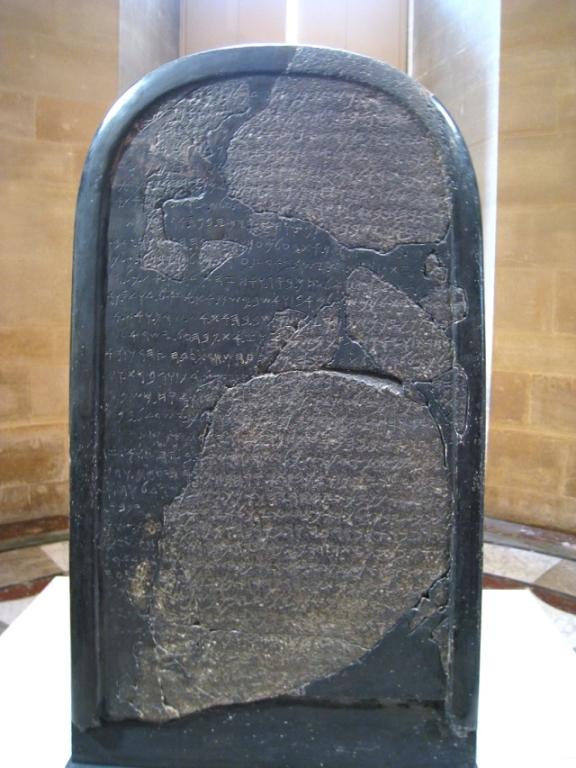
According to the Mesha inscription . . . Mesha identified himself as Dayboni, that is, a Dibonite. His people were called Dibonites and his place of residence was the city of Dibon . . . . However, he clearly claimed authority beyond the boundaries of his home city and people, for he was not merely the ruler of Dibon or the Dibonites; rather, he was the ‘king of Moab’. During times of external threat he could call upon ‘men from Moab’, that is, individuals from beyond his kin circle of ‘obedient’ or ‘loyal’ Dibonites. His ability to call up the ‘men from Moab’ clearly elevated him beyond the level of a local Dibonite sheikh or chief. Even Mesha’s enemies, the Israelites, who knew Mesha primarily as a ‘cattle magnate’ (noged, 2 Kgs 3:4), also recognized him as ‘king of Moab’ [“Now Mesha king of Moab was a sheep breeder . . .”: RSV]. . . . Mesha does not appear to have had jurisdiction over all land that was traditionally considered to be the land of Moab.
We see, then (assuming the correctness of the above anthropological / archaeological analysis), that the biblical use of “king of Moab” and “king of the Ammonites” is perfectly in keeping with what we know of those places at that time. It is not a biblical anachronism.
***
Related Reading
Edomites: Archaeology Confirms the Bible (As Always) [6-10-21]
Bible & Archaeology / Bible & Science (A Collection)
***
Photo credit: Mesha Stele: stele of Mesha, king of Moab, recording his victories against the Kingdom of Israel. Basalt, ca. 800 BCE. From Dhiban, now in Jordan [Wikimedia Commons / Creative Commons Attribution-Share Alike 3.0 Unported, 2.5 Generic, 2.0 Generic and 1.0 Generic license]

***
Summary: Atheist anti-theist Jonathan MS Pearce thinks that the book of Judges referring to Moabite & Ammonite kings is historical anachronism. I enlist archaeology to disprove this.
***
Tags: alleged Bible contradictions, alleged biblical anachronisms, Ammonite kings, Ammonites, ancient Hebrews, ancient Israelites, ancient Jews, anti-theism, archaeology & the Bible, archaeology & the Old Testament, atheists & the Bible, Bible “contradictions”, Bible “difficulties”, Bible & History, biblical accuracy, biblical anachronisms, biblical archaeology, Bronze Age, Hebrews, Holy Bible, infallibility, Iron Age, Late Bronze Age, Moabite & Ammonite Kings, Moabite kings, Moabites, Old Testament & history
Jews & Judaism & Old Testament
archaeology & the Old Testament
Previous Post

July 19, 2021
Skojec Loathes Traditionis; Illustrates Why it is Necessary
Next Post
July 20, 2021 Was Abraham from This City Ur That One?
Browse Our Archives
Select a Category & Last Things About Me Anti-Catholicism Atheism & Agnosticism Baptism and Sacramentalism Bible and Tradition Blessed Virgin Mary Books by Dave Armstrong C. S. Lewis Calvinism & General Protestantism Catholic Apologetics Catholic Apologists Catholic conversion Catholic converts Christmas Church (Ecclesiology) Church History Conversion and Converts Development of Doctrine Eastern Orthodoxy Ecumenism & Christian Unity Eucharist & Liturgy Fathers of the Church French Translations G. K. Chesterton Hell Hell & Satan Hell & Satan & Last Things Heresies & Comparative Religion Holistic Health Inquisition & Crusades & Scandals James White Jews & Judaism & Old Testament John Calvin John Henry Newman Liberal / Modernist Theology Life Issues Literary Resume Lutheranism Mariology Martin Luther Music Orthodoxy Papacy & Infallibility Personal Page Philosophy & Science Political & Ethical & Moral Issues Protestant Persecution & Intolerance Protestantism Purgatory Purgatory & Penance Romantic & Imaginative Theology Saints & Purgatory & Penance Salvation Salvation & Justification Satan & Last Things Sexuality and Gender Issues Spanish Translations Traditionalism vs. Radical Catholic Reactionaries Traducciones al español / tradução para português Trinitarianism & Christology Uncategorized Videos
Select a Month October 2026 September 2026 August 2026 July 2026 June 2026 May 2026 April 2026 March 2026 February 2026 January 2026 December 2025 November 2025 October 2025 September 2025 August 2025 July 2025 June 2025 May 2025 April 2025 March 2025 February 2025 January 2025 December 2024 November 2024 October 2024 September 2024 August 2024 July 2024 June 2024 May 2024 April 2024 March 2024 February 2024 January 2024 December 2023 November 2023 October 2023 September 2023 August 2023 July 2023 June 2023 May 2023 April 2023 March 2023 February 2023 January 2023 December 2022 November 2022 October 2022 September 2022 August 2022 July 2022 June 2022 May 2022 April 2022 March 2022 February 2022 January 2022 December 2021 November 2021 October 2021 September 2021 August 2021 July 2021 June 2021 May 2021 April 2021 March 2021 February 2021 January 2021 December 2020 November 2020 October 2020 September 2020 August 2020 July 2020 June 2020 May 2020 April 2020 March 2020 February 2020 January 2020 December 2019 November 2019 October 2019 September 2019 August 2019 July 2019 June 2019 May 2019 April 2019 March 2019 February 2019 January 2019 December 2018 November 2018 October 2018 September 2018 August 2018 July 2018 June 2018 May 2018 April 2018 March 2018 February 2018 January 2018 December 2017 November 2017 October 2017 September 2017 August 2017 July 2017 June 2017 May 2017 April 2017 March 2017 February 2017 January 2017 December 2016 November 2016 October 2016 September 2016 August 2016 July 2016 June 2016 May 2016 April 2016 March 2016 February 2016 January 2016 December 2015 November 2015 October 2015 September 2015 August 2015 July 2015 June 2015 May 2015 April 2015 March 2015 February 2015 January 2015 December 2014 November 2014 October 2014 September 2014 August 2014 July 2014 June 2014 April 2014 March 2014 February 2014 January 2014 December 2013 November 2013 October 2013 September 2013 August 2013 July 2013 June 2013 April 2013 March 2013 February 2013 January 2013 December 2012 November 2012 October 2012 September 2012 August 2012 July 2012 June 2012 May 2012 April 2012 March 2012 February 2012 January 2012 December 2011 November 2011 October 2011 September 2011 August 2011 July 2011 June 2011 April 2011 March 2011 February 2011 October 2010 September 2010 August 2010 July 2010 April 2010 March 2010 December 2009 October 2009 August 2009 July 2009 June 2009 May 2009 March 2009 February 2009 October 2008 September 2008 April 2008 March 2008 February 2008 January 2008 December 2007 November 2007 October 2007 May 2007 March 2007 February 2007 January 2007 November 2006 October 2006 September 2006 August 2006 July 2006 June 2006 May 2006 April 2006 March 2006 February 2006 October 2005 June 2005 April 2005 February 2005 July 2004 May 2004 April 2004
Follow Us!
TAKE THE
Religious Wisdom Quiz
Who fell out of a window and was restored to life by Paul?
Select your answer to see how you score.
Silas Barnabas Eutychus Timothy
Books by This Author Books by Dave Armstrong
Related posts from Biblical Evidence for Catholicism

God, Modern Physics, & Dark Energy: An Analogy
Biblical Evidence for Catholicism

God's Presence, the Ark, the Eucharist, & Death
Biblical Evidence for Catholicism
Garden of Eden’s Location Verified by Science
Biblical Evidence for Catholicism

Unregenerate Good Works in the Old Testament
Biblical Evidence for Catholicism
TRENDING AT PATHEOS Catholic

In "Irreplaceable," our book on vocation and technology, Trevor Sutton and I...

I was strolling through the top floor of the brand new Parthenon...

What Does Gêvâh Mean For Kimberley Guifoyle &...
This week, a lot of the news is focused on Kimberly Guilfoyle....

INNER CIRCLE: Profound Mystery (Of Christ In All...
Ephesians 5:31-32 “For this reason, a man will leave his father and...

Do Not Rejoice When Your Enemy Falls: The...
Turning an execution into a public spectacle is a disturbing expression of...

'The Chosen' S6 Trailer: The Passion Gets Very...
Not many watching 'The Chosen' worry about spoilers, but just because they...
view all Catholic blogs
Ad-Free & Subscriber Log-In Subscription Support
- About Us
- 2026 Calendar
- Videos
- Podcasts
- Library of World Religions
- Faith In Media Tracker
- Advertise With Us
- Write for Us
- Privacy Policy
- Terms of Service
- Do Not Sell My Data
- Contact Us
- Radiant Digital
- Manage Newsletter Subscriptions
- Unsubscribe From Notifications
- Sitemap
Copyright 2008-2026, Patheos. All rights reserved.
Subscription Support Ad-Free & Subscriber Log-In
Follow Patheos