
BuddhistCatholicContemplativeEvangelicalGeneral ChristianHinduJewishLatter-day SaintMuslimNew VisionsProgressive Christian
Beliefs
- Buddhist
- Catholic
- Contemplative
- Evangelical
- General Christian
- Hindu
- Jewish
- Latter-day Saint
- More Voices
- Muslim
- New Visions
- Pagan
- Progressive Christian
Topics
- Religion News
- Food and Religion
- Sports and Religion
- Religious Art
- Religious Music and Entertainment
- Religious Events
- History and Religion
- Style and Religion
- Politics and Religion
- Women in Religion
- Recreation Outdoors and Religion
- Business Finance and Religion
- Careers Workplace and Religion
- Education and Religion
- Family Parenting and Religion
- Health Fitness and Religion
- Home and Religion
- Relationships and Religion
- Technology and Religion
- Travel and Religion
Columnists
- Buddhist Columnists
- Business Finance and Religion Columnists
- Careers Workplace and Religion Columnists
- Catholic Columnists
- Contemplative Columnists
- Education and Religion Columnists
- Evangelists Columnists
- Family Parenting and Religion Columnists
- General Christian Columnists
- Health Fitness and Religion Columnists
- Hindu Columnists
- History and Religion Columnists
- Home and Religion Columnists
- Jewish Columnists
- More Voices Columnists
- Latter Day Columnists
- Muslim Columnists
- New Visions Columnists
- Nonreligious Columnists
- Pagan Columnists
- Politics and Religion Columnists
- Progressive Columnists
- Recreation Outdoors and Religion Columnists
- Relationships and Religion Columnists
- Religion News Columnists
- Religious Art Columnists
- Religious Events Columnists
- Religious Music and Entertainment Columnists
- Sports and Religion Columnists
- Style and Religion Columnists
- Technology and Religion Columnists
- Travel and Religion Columnists
- Women in Religion Columnists
Resource Library
- 2026 Calendar
- Library of World Religions
- The 100 Most Holy Places on Earth
- Patheos Answers
- Podcasts
- Videos
- Faith Leaders Database
- Anglican Episcopalian
- Bahai
- Baptist
- Buddhism
- Christianity
- Confucianism
- Eastern Orthodoxy
- Hinduism
- Holiness and Pentecostal
- ISKCON
- Islam
- Judaism
- Lutheran
- Methodist
- The Church of Jesus Christ of Latter-day Saints
- New Age
- Paganism
- Presbytarian and Reformed
- Protestantism
- Religion Behind the Scenes
- Roman Catholic
- Scientology
- Shia Islam
- Sikhism
- Sufism
- Sunni Islam
- Taoism
- Zen
- See all religions
Research Tools
 Ad-Free & Subscriber Log-In Subscription Support
Ad-Free & Subscriber Log-In Subscription Support
Follow Patheos 

- Trending:
- Forgiveness
- |
- Marriage
- |
- Consciousness
- |
- Death Penalty
- |
- Election
- |
- Halloween

-
About
-
Catholic Apologetics
-
Church History
-
Great Apologists
-
Christian Worldview
-
Protestantism & Misc.
- Home
- Catholic
- History and Religion
- Westminster vs. Bible #1: Assurance of Salvation
Westminster vs. Bible #1: Assurance of Salvation
Last updated on: May 19, 2021 at 2:10 pm by Dave Armstrong
Westminster vs. Bible #1: Assurance of Salvation 2021-05-19T14:10:21-04:00 Dave Armstrong
Patheos Explore the world's faith through different perspectives on religion and spirituality! Patheos has the views of the prevalent religions and spiritualities of the world.
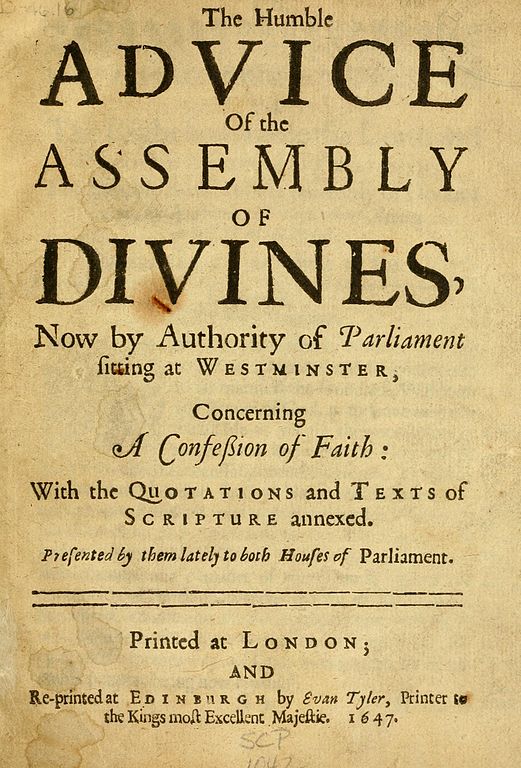
This is a series of replies to the historically and theologically influential Calvinist Westminster Confession (1647; see background and info. on the authors). I will be particularly concentrating on the many Bible passages that it lists in supposed “proof” of its distinctively Calvinist or Protestant claims that are (from the Catholic — and we would say, biblical — perspective) false. Its words will be in blue. I use RSV in my Bible quotations.
*****
The anonymous Calvinist to whom I replied regarding “perseverance of the saints” (the “P” in the famous Calvinist acronym “TULIP”) cited Chapter XVIII: Of the Assurance of Grace and Salvation: sections I and II (out of four total). I then offered a Catholic counter-exegesis and interpretation of the many Bible passages set forth. This formed the framework for my present project, and I shall begin by continuing my analysis of that section.
III. This infallible assurance doth not so belong to the essence of faith, but that a true believer may wait long, and conflict with many difficulties before he be partaker of it:(k) yet, being enabled by the Spirit to know the things which are freely given him of God, he may without extraordinary revelation, in the right use of ordinary means, attain thereunto.(l) And therefore it is the duty of everyone to give all diligence to make his calling and election sure;(m) that thereby his heart may be enlarged in peace and joy in the Holy Ghost, in love and thankfulness to God, and in strength and cheerfulness in the duties of obedience, the proper fruits of this assurance:(n) so far is it from inclining men to looseness.(o)
(k) I John 5:13; Isa. 50:10; Mark 9:24; Ps. 88 throughout; Ps. 77 to ver. 12.
(l) I Cor. 2:12; I John 4:13; Heb. 6:11, 12; Eph. 3:17, 18, 19.
(m) II Pet. 1:10.
(n) Rom. 5:1, 2, 5; Rom. 14:17; Rom. 15:13; Eph. 1:3, 4; Ps. 4:6, 7; Ps. 119:32.
(o) I John 2:1, 2; Rom. 6:1, 2; Tit. 2:11, 12, 14; II Cor. 7:1; Rom. 8:1, 12; I John 3:2, 3; Ps. 130:4; I John 1:6, 7.
Isn’t it interesting, first of all, that, having forsaken the apostolic, Catholic, biblical teaching of an infallible teaching Church and an infallible tradition (but not an infallible Scripture), Calvinists now fall back on essentially binding (what I would classify as “de facto infallible”) Confessions and a supposed “infallible assurance” of salvation? Ironies abound there; but I digress.
It’s good at least that such “assurance” is thought to to not belong “to the essence of faith”. I take this (semi-cynic that I am) as a subtle acknowledgment that the issue is not so clear-cut after all. And so Mark 9:24 is cited (“I believe; help my unbelief!”) and the almost despairing, existential doubts of Psalm 88 the first half of Psalm 77, as indicative of the “difficulties” of the journey to assurance. I do appreciate the nuance. Despite these barriers the believer nevertheless can and (in Calvinism) inevitably does “attain” this “infallible assurance.” Then we are given passages which supposedly indicate such attainment:
1 Corinthians 2:12 Now we have received not the spirit of the world, but the Spirit which is from God, that we might understand the gifts bestowed on us by God.
Understanding God’s gifts is one thing, but it doesn’t follow that we “infallibly” know the future (re our final salvation). The same Paul states in the same epistle:
1 Corinthians 9:27 but I pommel my body and subdue it, lest after preaching to others I myself should be disqualified.
1 Corinthians 10:12 Therefore let any one who thinks that he stands take heed lest he fall.
1 Corinthians 13:9, 12 For our knowledge is imperfect and our prophecy is imperfect; . . . [12] For now we see in a mirror dimly, but then face to face. Now I know in part; then I shall understand fully, even as I have been fully understood.
He certainly doesn’t appear to know the future: including details of his own eternal fate. But Calvinists are not renowned for their uncertainty about anything.
1 John 4:13 By this we know that we abide in him an
d he in us, because he has given us of his own Spirit.
Absolutely, and praise God for it. But this says nothing about unending duration of the indwelling in us, or of eschatological salvation. Hebrews specifically warned of those who were indwelt by the Holy Spirit, but nonetheless fell away:
Hebrews 6:4-8 For it is impossible to restore again to repentance those who have once been enlightened, who have tasted the heavenly gift, and have become partakers of the Holy Spirit, [5] and have tasted the goodness of the word of God, and the powers of the age to come, [6] if they then commit apostasy, since they crucify the Son of God on their own account and hold him up to contempt. [7] For land which has drunk the rain that often falls upon it, and brings forth vegetation useful to those for whose sake it is cultivated, receives a blessing from God. [8] But if it bears thorns and thistles, it is worthless and near to being cursed; its end is to be burned.
Ironically, the Confession then cites a passage from five verses later:
Hebrews 6:11-12 And we desire each one of you to show the same earnestness in realizing the full assurance of hope until the end, [12] so that you may not be sluggish, but imitators of those who through faith and patience inherit the promises.
Things must be read in context. This was obviously a continuation of what came before (and the original Bible did not have verses, either), though there is the qualification of 6:9: “in your case, beloved, we feel sure of better things that belong to salvation.” But 6:12 uses the terminology of “may not” rather than “will not” or “will never be”: which would be the language of absolute assurance and impossibility of a counter-eventuality. The author issues stern warnings against apostasy later in the book, too:
Hebrews 10:26-29, 36, 39 For if we sin deliberately after receiving the knowledge of the truth, there no longer remains a sacrifice for sins, [27] but a fearful prospect of judgment, and a fury of fire which will consume the adversaries. [28] A man who has violated the law of Moses dies without mercy at the testimony of two or three witnesses. [29] How much worse punishment do you think will be deserved by the man who has spurned the Son of God, and profaned the blood of the covenant by which he was sanctified, and outraged the Spirit of grace? . . . [36] For you have need of endurance, so that you may do the will of God and receive what is promised. . . . [39] But we are not of those who shrink back and are destroyed, but of those who have faith and keep their souls.
What is impossible [loss of salvation, according to Calvinists] is not warned about as a possibility. That would be logically nonsensical.
Ephesians 3:17-19 and that Christ may dwell in your hearts through faith; that you, being rooted and grounded in love, [18] may have power to comprehend with all the saints what is the breadth and length and height and depth, [19] and to know the love of Christ which surpasses knowledge, that you may be filled with all the fulness of God.
The not-absolute term “may” occurs three times: once in each verse. It’s conditional language, as in the Old testament:
Deuteronomy 19:13 Your eye shall not pity him, but you shall purge the guilt of innocent blood from Israel, so that it may be well with you. (cf. 19:10; 21:8-9)
Of course, the Israelites didn’t always do as they were commanded, and so
in those instances they were judged rather than blessed:
2 Kings 24:4 and also for the innocent blood that he [Manasseh] had shed; for he filled Jerusalem with innocent blood, and the LORD would not pardon. (cf. 21:16; Ps 106:38)
Paul discusses (or so it sure seems) the possibility of falling away in Ephesians 4 and 5, as I discussed at some length in my previous paper on perseverance. I also discussed there, 2 Peter 1:10 and Romans 5:2, 5. We have no disagreement on the importance of “peace and joy in the Holy Spirit” (Rom 14:17; cf. 15:13), nor with “every spiritual blessing in the heavenly places” (Eph 1:3), nor with being “holy and blameless before him” (Eph 1:4), nor with “joy in my heart” (Ps 4:7), nor with following the “commandments” due to more “understanding” from the Lord (Ps 119:32). No need to argue about what we agree upon. And Catholics and Calvinists fully agree about the wrongness of antinomianism (the topic of the last section of XVIII. 3).
IV. True believers may have the assurance of their salvation divers ways shaken, diminished, and intermitted; as, by negligence in preserving of it, by falling into some special sin, which woundeth the conscience and grieveth the Spirit; by some sudden or vehement temptation, by God’s withdrawing the light of His countenance, and suffering even such as fear Him to walk in darkness and to have no light:(p) yet are they never so utterly destitute of that seed of God, and life of faith, that love of Christ and the brethren, that sincerity of heart, and conscience of duty, out of which, by the operation of the Spirit, this assurance may, in due time, be revived;(q) and by the which, in the mean time, they are supported from utter despair.(r)
(p) Cant. 5:2, 3, 6; Ps. 51:8, 12, 14; Eph. 4:30, 31; Ps. 77:1 to 10; Matt. 26:69, 70, 71, 72; Ps. 31:22; Ps. 88 throughout; Isa. 50:10.
(q) I John 3:9; Luke 22:32; Job 13:15; Ps. 73:15; Ps. 51:8, 12; Isa. 50:10.
(r) Mic. 7:7, 8, 9; Jer. 32:40; Isa. 54:7, 8, 9, 10; Ps. 22:1; Ps. 88 throughout.
We also have no disagreement about Christians too often being guilty of spiritual “negligence” or “falling into some special sin” or succumbing to “vehement temptation”. But the next section contends that such setbacks never succeed in taking away grace and/or salvation. This is where the Divines ignore the best biblical arguments referring to falling from grace. Let’s see what they propose.
I dealt with 1 John 3:9 last time. It must be understood in the context of the book, which alternates between non-literal hyperbole (which is what 1 Jn 3:9 is) and literal statements. Once that is understood, it offers no warrant at all for a scenario whereby no one can fall from grace, once attained.
Luke 22:32 “but I have prayed for you [Peter] that your faith may not fail; and when you have turned again, strengthen your brethren.”
Why is Jesus praying for something that can’t possibly happen, anyway? Calvinism says that Peter’s faith cannot ultimately fail; that he can’t possibly fall away. Jesus wouldn’t, for example, pray that Peter would spend eternity in both heaven and hell, because that is impossible by the laws of logic and according to the revelation of theology. Therefore, this verse and saying of Jesus shouldn’t exist and shouldn’t be enshrined in the inspired Bible, according to the logic of Calvinism. Nor does it follow that no one’s faith can ever fail, because the faith of Peter: chosen by Jesus to lead His disciples and His new Church, did not fail to the extent of losing his salvation.
Job 13:15 Behold, he will slay me; I have no hope; yet I will defend my ways to his face.
Job could do that and be saved in the end because God had already stated about him, that “there is none like him on the earth, a blameless and upright man, who fears God and turns away from evil” (1:8). Job could spiritually survive the horrors that he experienced. But not all can, with far less suffering. The Bible also talks about kings like Saul, Solomon, and others who fell away from grace. By ignoring those examples, the Divines are telling half-truths; only half the story.
Psalm 73 likewise describes a Job-like experience. This person, too, survived it, but the text doesn’t deny that others won’t persevere. Thus, so far, we are presented with examples of three holy men: Peter, Job, and Asaph, a Psalm-writer. That doesn’t represent the entire human race, and ignores the “counter-cases.”
King David (citation of Ps 51:8, 12) perseveres because God had made an eternal covenant with him, and because he was the “man after [God’s] own heart” (1 Sam 13:14). Now that’s a fourth extraordinary man, made out to represent the eternal salvation of all who follow God for any length of time, in denial that they could possibly fall away. This is what David said about his son Solomon:
1 Chronicles 28:20 . . . the LORD God, even my God, is with you. He will not fail you or forsake you, until all the work for the service of the house of the LORD is finished.
1 Chronicles 29:1 . . . Solomon my son, whom alone God has chosen . . .
God greatly blessed Solomon:
1 Kings 4:29 And God gave Solomon wisdom and understanding beyond measure, and largeness of mind like the sand on the seashore,
Solomon loved God, but wasn’t fully obedient:
1 Kings 3:3 Solomon loved the LORD, walking in the statutes of David his father; only, he sacrificed and burnt incense at the high places.
He later fell into even greater sin:
1 Kings 11:1-9 Now King Solomon loved many foreign women: the daughter of Pharaoh, and Moabite, Ammonite, E’domite, Sido’nian, and Hittite women, [2] from the nations concerning which the LORD had said to the people of Israel, “You shall not enter into marriage with them, neither shall they with you, for surely they will turn away your heart after their gods”; Solomon clung to these in love. [3] He had seven hundred wives, princesses, and three hundred concubines; and his wives turned away his heart. [4] For when Solomon was old his wives turned away his heart after other gods; and his heart was not wholly true to the LORD his God, as was the heart of David his father. [5] For Solomon went after Ash’toreth the goddess of the Sido’nians, and after Milcom the abomination of the Ammonites. [6] So Solomon did what was evil in the sight of the LORD, and did not wholly follow the LORD, as David his father had done. [7] Then Solomon built a high place for Chemosh the abomination of Moab, and for Molech the abomination of the Ammonites, on the mountain east of Jerusalem. [8] And so he did for all his foreign wives, who burned incense and sacrificed to their gods. [9] And the LORD was angry with Solomon, because his heart had turned away from the LORD, the God of Israel, who had appeared to him twice,
Baptist preacher Alexander Maclaren wrote about Solomon:
Did he himself take part in idolatrous worship, or simply, with the foolish fondness of an old sensualist, let these foreign women have their shrines? The darker supposition seems correct. The expression that he ‘went after other gods’ is commonly used to mean actual idolatry; and his wives could scarcely have been said to have ‘turned away his heart,’ if all that he did was to wink at, or even to facilitate, their worship. But, on the other hand, he does not seem to have abandoned Jehovah’s worship. The charge against him is that ‘his heart was not perfect,’ or wholly devoted to the Lord, or, as verse 6 puts it, that he ‘went not fully’ after the Lord. His was a case of halting between two opinions, or rather, of trying to hold both at once. He wanted to be a worshipper of Jehovah and of these idols also.
Was his apostasy final? Yes, so far as we can gather from the narrative. Not only is there no statement of his repentance, but the silence with which he receives the divine announcement of retribution is suspicious; and the prophecy of Ahijah to Jeroboam, which obviously comes later in time than the threatenings of the text, treats the idolatry as still existing (verse 33). Further, we learn from 2 Kings xxiii.13 that the shrines which he built stood till Josiah’s time. If Solomon had ever abandoned his idolatry, he would not have left them standing. So we seem to have in him a case of a fall which knew no recovery, an eclipse which did not pass.
Judaism appears to take a dim or mixed view as to Solomon’s salvation:
His Final Fate.
The disagreement among the Rabbis with regard to the personality of Solomon extends also to his future life (“‘olam ha-ba”). According to Rab, the members of the Great Synagogue purposed including Solomon among those denied a share in the future life, when the image of David appeared, imploring them not to do so. The vision, however, was not heeded; nor was a fire from heaven, which licked the seats on which they sat, regarded until a bat ḳol forbade them to do as they had purposed (Sanh. 104b; Yer. Sanh. x. 2; Cant. R. i. 1). On the other hand, Solomon is considered to resemble his father in that all his sins were forgiven by God (Cant. R. l.c.). Moreover, David is said to have left a son worthy of him (B. B. 116a). When R. Eliezer was asked for his opinion of Solomon’s future life, he gave his pupils an evasive answer, showing that he had formed no opinion concerning it (Tosef., Yeb. iii. 4; Yoma 66b; comp. Tos. ad loc.). (Jewish Encyclopedia: “Solomon”)
Micah 7:7-9 refers to the prophet’s own deliverance. Of course! He was a prophet! This tells us nothing as to the impossibility of all who ever wholeheartedly followed Christ at any time to ever fall away.
Jeremiah 32:40 and Isaiah 54:7-10: whatever it means for all Israel to be saved or redeemed in the millennial kingdom or whatever one thinks is being referred to, doesn’t tell us anything about whether anyone can ever fall away from grace and salvation.
Conclusion: these passages, collectively, do not prove that no one can ever lose salvation and fall out of grace (i.e., absolute assurance of salvation), and the Divines ignored a host of passages that clearly contradict their false doctrine. I’ve observed over and over again that distinctively Protestant apologetics is largely about avoiding like the plague Bible passages that plainly teach Catholic doctrines, and only utilizing ones that at first glance, appear to support a Protestant position, when it disagrees with received apostolic / patristic / Catholic tradition and orthodoxy (but upon close examination do not).
***
Related Reading
Luther and the Origin & Nature of “Instant” Salvation [1991]
*
Catholic Teaching: Predestination of the Elect (Ludwig Ott) [1996]
*
Assurance of Instant Salvation? / Apostasy / Falling Away (Bible passages) [c. 2000]
*
“Certainty” of Eternal Life? (1 Jn 5:13 & Jn 5:24) [5-8-02]
*
St. Paul on Falling Away from Grace and Salvation [2004]
*
Calvin: Only God Knows Who is Elect [1-5-06]
*
Dialogue on Luther’s “Getting to a Gracious God” (vs. Lutheran historian “CPA”) [6-4-06]
*
Bible on the Moral Assurance of Salvation (Persevering in Faith, with Hope) [10-21-08]
Dialogue with a Calvinist Regarding Falling Away from Grace or Salvation [7-28-09]
Romans 9: Plausible Non-Calvinist Interpretation [4-22-10]
St. Paul: Two-Faced Re Unbelief? (Romans 1 “vs.” Epistles) [7-5-10]
Absolute Assurance of Salvation?: Debunking “Prooftexts” [Oct. 2010]
Salvation, Eternal Security, & Grace: Dialogue w Bethany Kerr [4-13-15]
“Once Saved, Always Saved”: Is it Biblical? Antinomian? [8-18-15]
“Reply to Calvin” #1: The Elect [3-3-17]
“Reply to Calvin” #3: Synergism, Grace Alone, & the Elect [4-3-17]
Vs. James White #4: Eternal Security of Believers? [9-19-19]
Vs. James White #7: My Refutations of Calvinism & His Non-Replies [11-12-19]
Reply to Protestant Challenges Re Eternal Security (vs. Jason Engwer) [7-26-20]
Defense of Bible Passages vs. Eternal Security & Faith Alone (vs. Jason Engwer) [8-12-20]
The Bible is Clear: ‘Eternal Security’ is a Manmade Doctrine [National Catholic Register, 8-17-20]
Eternal Security vs. the Bible [National Catholic Register, 8-23-20]
***
Photo credit: title page of the first published edition of the Westminster Confession of Faith (1647) [public domain / Wikimedia Commons]

***
Summary: The Westminster Divines don’t prove absolute assurance of salvation from Scripture, & ignore a host of passages that refute that. Protestants can’t be too careful what to ignore in the Bible!
***
Calvinism & General Protestantism
Previous Post
May 17, 2021
Perseverance of the Saints: Reply to a Calvinist
Next Post
May 19, 2021 Reply to Two Confessions: On the Church & Private Judgment
Browse Our Archives
Select a Category & Last Things About Me Anti-Catholicism Atheism & Agnosticism Baptism and Sacramentalism Bible and Tradition Blessed Virgin Mary Books by Dave Armstrong C. S. Lewis Calvinism & General Protestantism Catholic Apologetics Catholic Apologists Catholic conversion Catholic converts Christmas Church (Ecclesiology) Church History Conversion and Converts Development of Doctrine Eastern Orthodoxy Ecumenism & Christian Unity Eucharist & Liturgy Fathers of the Church French Translations G. K. Chesterton Hell Hell & Satan Hell & Satan & Last Things Heresies & Comparative Religion Holistic Health Inquisition & Crusades & Scandals James White Jews & Judaism & Old Testament John Calvin John Henry Newman Liberal / Modernist Theology Life Issues Literary Resume Lutheranism Mariology Martin Luther Music Orthodoxy Papacy & Infallibility Personal Page Philosophy & Science Political & Ethical & Moral Issues Protestant Persecution & Intolerance Protestantism Purgatory Purgatory & Penance Romantic & Imaginative Theology Saints & Purgatory & Penance Salvation Salvation & Justification Satan & Last Things Sexuality and Gender Issues Spanish Translations Traditionalism vs. Radical Catholic Reactionaries Traducciones al español / tradução para português Trinitarianism & Christology Uncategorized Videos
Select a Month October 2026 September 2026 August 2026 July 2026 June 2026 May 2026 April 2026 March 2026 February 2026 January 2026 December 2025 November 2025 October 2025 September 2025 August 2025 July 2025 June 2025 May 2025 April 2025 March 2025 February 2025 January 2025 December 2024 November 2024 October 2024 September 2024 August 2024 July 2024 June 2024 May 2024 April 2024 March 2024 February 2024 January 2024 December 2023 November 2023 October 2023 September 2023 August 2023 July 2023 June 2023 May 2023 April 2023 March 2023 February 2023 January 2023 December 2022 November 2022 October 2022 September 2022 August 2022 July 2022 June 2022 May 2022 April 2022 March 2022 February 2022 January 2022 December 2021 November 2021 October 2021 September 2021 August 2021 July 2021 June 2021 May 2021 April 2021 March 2021 February 2021 January 2021 December 2020 November 2020 October 2020 September 2020 August 2020 July 2020 June 2020 May 2020 April 2020 March 2020 February 2020 January 2020 December 2019 November 2019 October 2019 September 2019 August 2019 July 2019 June 2019 May 2019 April 2019 March 2019 February 2019 January 2019 December 2018 November 2018 October 2018 September 2018 August 2018 July 2018 June 2018 May 2018 April 2018 March 2018 February 2018 January 2018 December 2017 November 2017 October 2017 September 2017 August 2017 July 2017 June 2017 May 2017 April 2017 March 2017 February 2017 January 2017 December 2016 November 2016 October 2016 September 2016 August 2016 July 2016 June 2016 May 2016 April 2016 March 2016 February 2016 January 2016 December 2015 November 2015 October 2015 September 2015 August 2015 July 2015 June 2015 May 2015 April 2015 March 2015 February 2015 January 2015 December 2014 November 2014 October 2014 September 2014 August 2014 July 2014 June 2014 April 2014 March 2014 February 2014 January 2014 December 2013 November 2013 October 2013 September 2013 August 2013 July 2013 June 2013 April 2013 March 2013 February 2013 January 2013 December 2012 November 2012 October 2012 September 2012 August 2012 July 2012 June 2012 May 2012 April 2012 March 2012 February 2012 January 2012 December 2011 November 2011 October 2011 September 2011 August 2011 July 2011 June 2011 April 2011 March 2011 February 2011 October 2010 September 2010 August 2010 July 2010 April 2010 March 2010 December 2009 October 2009 August 2009 July 2009 June 2009 May 2009 March 2009 February 2009 October 2008 September 2008 April 2008 March 2008 February 2008 January 2008 December 2007 November 2007 October 2007 May 2007 March 2007 February 2007 January 2007 November 2006 October 2006 September 2006 August 2006 July 2006 June 2006 May 2006 April 2006 March 2006 February 2006 October 2005 June 2005 April 2005 February 2005 July 2004 May 2004 April 2004
Follow Us!
TAKE THE
Religious Wisdom Quiz
What famous cathedral is in Paris, known for its flying buttresses and rose windows?
Select your answer to see how you score.
Notre Dame St. Paul's St. Peter's Canterbury
Books by This Author Books by Dave Armstrong
Related posts from Biblical Evidence for Catholicism

On Protestant Explanations of Catholic Conversion
Biblical Evidence for Catholicism

Bible & Catholicism on Mortal Sin (vs. John...
Biblical Evidence for Catholicism

Dialogue on Eternal Security / Absolute Assurance
Biblical Evidence for Catholicism

Protestant Confessions & "Ever-Virgin" Mary
Biblical Evidence for Catholicism
TRENDING AT PATHEOS Catholic

In "Irreplaceable," our book on vocation and technology, Trevor Sutton and I...

I was strolling through the top floor of the brand new Parthenon...

What Does Gêvâh Mean For Kimberley Guifoyle &...
This week, a lot of the news is focused on Kimberly Guilfoyle....

INNER CIRCLE: Profound Mystery (Of Christ In All...
Ephesians 5:31-32 “For this reason, a man will leave his father and...

Do Not Rejoice When Your Enemy Falls: The...
Turning an execution into a public spectacle is a disturbing expression of...

'The Chosen' S6 Trailer: The Passion Gets Very...
Not many watching 'The Chosen' worry about spoilers, but just because they...
view all Catholic blogs
Ad-Free & Subscriber Log-In Subscription Support
- About Us
- 2026 Calendar
- Videos
- Podcasts
- Library of World Religions
- Faith In Media Tracker
- Advertise With Us
- Write for Us
- Privacy Policy
- Terms of Service
- Do Not Sell My Data
- Contact Us
- Radiant Digital
- Manage Newsletter Subscriptions
- Unsubscribe From Notifications
- Sitemap
Copyright 2008-2026, Patheos. All rights reserved.
Subscription Support Ad-Free & Subscriber Log-In
Follow Patheos