
BuddhistCatholicContemplativeEvangelicalGeneral ChristianHinduJewishLatter-day SaintMuslimNew VisionsProgressive Christian
Beliefs
- Buddhist
- Catholic
- Contemplative
- Evangelical
- General Christian
- Hindu
- Jewish
- Latter-day Saint
- More Voices
- Muslim
- New Visions
- Pagan
- Progressive Christian
Topics
- Religion News
- Food and Religion
- Sports and Religion
- Religious Art
- Religious Music and Entertainment
- Religious Events
- History and Religion
- Style and Religion
- Politics and Religion
- Women in Religion
- Recreation Outdoors and Religion
- Business Finance and Religion
- Careers Workplace and Religion
- Education and Religion
- Family Parenting and Religion
- Health Fitness and Religion
- Home and Religion
- Relationships and Religion
- Technology and Religion
- Travel and Religion
Columnists
- Buddhist Columnists
- Business Finance and Religion Columnists
- Careers Workplace and Religion Columnists
- Catholic Columnists
- Contemplative Columnists
- Education and Religion Columnists
- Evangelists Columnists
- Family Parenting and Religion Columnists
- General Christian Columnists
- Health Fitness and Religion Columnists
- Hindu Columnists
- History and Religion Columnists
- Home and Religion Columnists
- Jewish Columnists
- More Voices Columnists
- Latter Day Columnists
- Muslim Columnists
- New Visions Columnists
- Nonreligious Columnists
- Pagan Columnists
- Politics and Religion Columnists
- Progressive Columnists
- Recreation Outdoors and Religion Columnists
- Relationships and Religion Columnists
- Religion News Columnists
- Religious Art Columnists
- Religious Events Columnists
- Religious Music and Entertainment Columnists
- Sports and Religion Columnists
- Style and Religion Columnists
- Technology and Religion Columnists
- Travel and Religion Columnists
- Women in Religion Columnists
Resource Library
- 2026 Calendar
- Library of World Religions
- The 100 Most Holy Places on Earth
- Patheos Answers
- Podcasts
- Videos
- Faith Leaders Database
- Anglican Episcopalian
- Bahai
- Baptist
- Buddhism
- Christianity
- Confucianism
- Eastern Orthodoxy
- Hinduism
- Holiness and Pentecostal
- ISKCON
- Islam
- Judaism
- Lutheran
- Methodist
- The Church of Jesus Christ of Latter-day Saints
- New Age
- Paganism
- Presbytarian and Reformed
- Protestantism
- Religion Behind the Scenes
- Roman Catholic
- Scientology
- Shia Islam
- Sikhism
- Sufism
- Sunni Islam
- Taoism
- Zen
- See all religions
Research Tools
 Ad-Free & Subscriber Log-In Subscription Support
Ad-Free & Subscriber Log-In Subscription Support
Follow Patheos 

- Trending:
- Forgiveness
- |
- Marriage
- |
- Consciousness
- |
- Death Penalty
- |
- Election
- |
- Halloween

-
About
-
Catholic Apologetics
-
Church History
-
Great Apologists
-
Christian Worldview
-
Protestantism & Misc.
- Home
- Catholic
- History and Religion
- Steve Skojec: “Traditionalism” = “Sewer”, “Toxic”, “Tribalism”
Steve Skojec: “Traditionalism” = “Sewer”, “Toxic”, “Tribalism”
Last updated on: June 6, 2026 at 12:44 am by Dave Armstrong
Steve Skojec: “Traditionalism” = “Sewer”, “Toxic”, “Tribalism” 2026-06-06T00:44:40-04:00 Dave Armstrong
Patheos Explore the world's faith through different perspectives on religion and spirituality! Patheos has the views of the prevalent religions and spiritualities of the world.
. . . And Sinners in Her Fold Are Still Never a Reason to Forsake the One True Church, Established by Our Lord Jesus, & Guided & Protected by the Holy Spirit
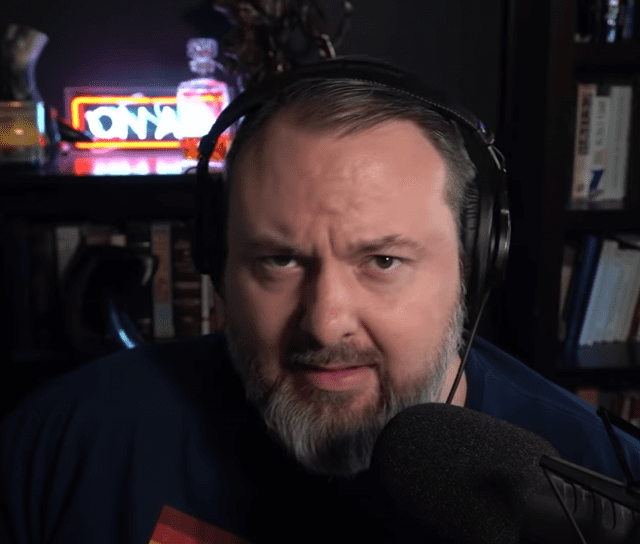
Steve Skojec, who runs the influential site, One Peter Five, which I classify as radical Catholic reactionary (see my definition of this vastly misunderstood title, coined by myself), has recently penned two scathing, transparent, and self-reflective, “confessional”-type open letters, the first of which also has the characteristics of a jeremiad. Here they are:
Against Crippled Religion (5-25-21)
An Epidemic of Brokenness (5-27-21)
The first might be broadly characterized as an “impassioned [and justified] cry of a wounded, abused-in-the-Church soul.” I recognized it as such and immediately called for prayer for him last night on my Facebook page (so far, it has 163 likes and 62 comments in 17 hours; lots of people praying). I stated:
He just wrote an extremely candid and transparent self-searching letter about all that he has been struggling with in the Church and in the far-right sub-group of it. He’s close to leaving the Church.
I think we should pray specifically for the right person to help him get over his freely admitted anger and cynicism, to obtain peace of soul and the peace and joy of the Lord.
In his present state of mind, he could end up going anywhere: even into atheism. I’ve seen people in these crises many times, as an apologist. It’s a scary place, and the devil is right there to exploit it, every time. Only prayer and a powerful, primal, profound love — tangibly expressed — will achieve a breakthrough at this point.
That’s one thing. It was a pastoral approach that was what is called for in this situation. On Twitter, he has stated that he is “broken”. We must have compassion and understanding, and pray and love and offer solace and hopefully, hope itself. The “final straw” that caused Steve to write the first paper was his own priest (who is of the legitimate traditionalist FSSP) outrageously denying one of his sons first Holy Communion, and another still-to-be-born son, baptism (!). He has stated that several canon lawyers side with him on this: as well they should. I wrote to him myself, in a rare tweet (and equally rare discussion between us), two hours ago:
Without hearing your priest’s account, it looks like you are completely in the right about this issue of receiving sacraments, and have been treated outrageously, especially in light of pro-aborts regularly (and blasphemously) receiving Holy Communion.
His second open letter was more of a “meeting of kindred spirit wounded souls.” He reported that he had received much support from other Catholics who are broken or close to being so: and they place the blame (rightly or wrongly, or rightly to an extent) on the Catholic Church and her priests and pastors (and sometimes even the pope, which is part and parcel of the reactionary position). Apart from several major false premises mixed in with that (which I won’t go into at this time), there are a lot of good and wise things in these observations.
*
My present purpose, however, is not to analyze these two letters en toto (which would be inappropriate and improper, anyway) but rather, to look at what Steve says specifically about what he calls “traditionalism.” He has flat-out rejected it. I have drawn a stark contrast between legitimate traditionalists (characterized primarily by a love for the extraordinary form / Tridentine Mass) and reactionaryism, which is a more essentially extreme position that has the four hallmarks of being 1) anti-pope, 2) anti-Vatican II, 3) anti-ordinary form Mass, and 4) anti-ecumenical [which is basically a subset of #2].
Steve, like virtually all reactionaries (usually misunderstanding what I actually mean by it), vehemently rejects my title, and calls himself (or has called himself, if he wants to now discontinue) a “traditionalist”. But then that makes what he is saying all the more dramatic and noteworthy, because he would then be criticizing the larger category of Catholic traditionalists + reactionaries, which is a criticism that goes beyond even what I have been saying, as an active observer and critic of the movement(s) (and despised by many in both movements as such) for over 25 years now. I’ve written two books on the topic and have devoted a very large web page to it.
Here is what Steve wrote in his first open letter about what he calls “traditionalism”. I have omitted portions I strongly disagree with on principle, based on Catholic dogma, such as attacks on Pope Francis as a heretic or on the doctrines or ecclesiastical status of the Catholic Church as a whole, which is the error of defectibility:
I’m angry because I’ve spent my life trapped within various ideological subsets of Catholicism that subvert autonomy, critical thinking, and reason itself. . . .
[I]t’s incredibly frustrating to watch as people turn to this increasingly uncritical tribalism to feel safe, or conspiracy theories to “explain” things, or even in some cases an explicit desire for the end of the world . . .
When I found traditional Catholicism in 2004, I thought I’d finally discovered a safe haven. . . .
I’ve spent the past 17 years of my life as an apologist for traditionalist Catholicism — the most recent seven of which have been devoted to founding and running 1P5, which was, for a couple of years at least, the most-read traditionalist Catholic website in the world.
I thought I had, at long last, found my place. . . .
[T]raditionalism isn’t [Catholicism] . . . Instead, it is an ideological mask more identifiably in the shape of true Catholicism. It is, in some respects, a long-running Live Action Roleplay — a LARP — in which participants act out what they think Catholicism looked like in “the good old days” while perpetually running down any kind of Catholicism (or Catholic who practices it) that isn’t traditionalism. But it is essentially an affectation; an attempt to reconstruct and live within a historical context that no longer exists. Traditional Catholicism does exist, in the sense that all history exists. The Traditional Catholic liturgy exists not just historically, but even now. But traditionalism, as a “movement,” as an ideological oxbow lake, is a novelty. It’s not a historical reality, . . .
Let me try to explain it another way: no matter how many old movies you have in your DVD collection or how often you watch them, you can’t go back to the time and cultural context that forged them. Any attempt in the present to make something like Casablanca or The Manchurian Candidate or [insert your favorite here] will essentially fall short. It will be a reproduction that apes the signature characteristics — dress, décor, modes of speech, vehicles, and so on — of another time. Similarly, a Civil War re-enactor’s club may help keep the memory of that history alive, but it doesn’t make that history present. At the end of the day, the actors put away their muzzle loaders, change back into their normal clothes and drive home to their modern dwellings with electricity, indoor plumbing, and internet. . . .
[T]raditionalism, though it retains real treasures from the past that enliven the faithful today, becomes predominately ideological. A version of Catholicism that remains in constant tension with and sometimes open rebellion against the only institution that can give it life: the very Catholic Church that discarded it.
It’s paradigmatic crippled religion. And that is a problem.
It’s easy enough to see if you look at it objectively. Traditionalism, in my experience, is often attracts an unrelentingly toxic and negative sort of person — particularly online, but this filters down into the real world, too. Everything that is seen as non-traditional is perceived as hostile, even malicious. Since it has no authority structure of its own, no governance, no recourse to anything but old documents interpreted however the reader wishes to read them, it gives rise to an autonomous collection of mini-popes, all of them reveling in their “duty” to speak truth to power, analyzing anyone who ostensibly professes the same creed to death, searching for every “gotcha” moment with which they can be browbeaten for being insufficiently pure. . . . The same mantra is repeated countless times a day in trad comboxes and social media, “Ha! And you call yourself a trad!?”
Anyone still involved in the post-conciliar Church, whether or not it’s any fault of their own, is reduced by this kind of person to an epithet like “neo-Cath” or “modernist.” The purity spiral comes for us all, and there’s nobody trads would rather eat alive than other trads who have fallen short in some way. I’ve never endured more calumny, more vitriol, more outright enmity in my life from any group of people as I have from certain members of my own in-group. And all of it is in response to imagined deviations from this or that dogmatic opinion held by whichever mini-pope was standing in judgment that day. . . .
COVID hit, and the world went insane.
Viganò quickly turned into the Catholic Q Anon. Squandering his prophetic role for a more reliable job as a pundit, he started offering comment on all things political, even as he failed to produce the additional documentation about Church corruption he seemed to hint at possessing. A poor scientific grasp of epidemiology was no impediment to his pontifications about how this fake pandemic was a tool of the New World Order to usher in the Antichrist. . . .
Viganò spoke with conviction against nefarious and undefined global powers, and that was enough to earn him a slot at the top of every traditionalist speaking list. Although I published a number of his earlier pieces, I remember coming to a distinct point where I couldn’t, in good conscience, do that any longer. Some of what he was saying was simply wrong. He turned out to be a big, bright, canary in the COVID mine. Like the rest of the secular political landscape, COVID conspiracy theorism has become inextricably intertwined with mainstream, online traditionalist Catholicism, and its dogmatic axioms are no longer up for discussion — under pain of excommunication.
17 years after thinking that traditionalist Catholicism was the bold answer to what ails the Church, it became startlingly clear to me that it was, perhaps, quite the contrary. . . . traditionalists spun their wheels as they set about the Sisyphean task of trying to convince the Church to go back in time. . . . they got cocky. They got way too political. And now as a group, I think they’ve lost their way.
They also can’t stop eating each other alive.
While I am typing this, my cautionary posts about the completely uncritical adulation being thrown like laurels at the feet of a particular imprudent and overly political priest are being barraged with negative comments by precisely this sort of person. I’ve had something like 700 comments in the last 24 hours alone. My appeals to historical precedent of celebrity priests who appear orthodox but turn out to be bad actors as a reason to proceed with caution are being scoffed at as though I’ve announced that the moon is made of cheese.
Here are similar thoughts of his in his second open letter:
Admitting your limitations and confusion is a lot less appealing than selling your outrage expertise and rallying the troops behind the shameful issue du jour. The truth is, the Church isn’t a grassroots organization. We laity are all powerless, and we don’t like to think about that, so getting “righteously” angry about lots of things and posting strongly-worded comments about it online, or sending emails to chanceries, or shooting off scathing tweets, all makes it feel like we’re doing something.
But we’re not. Not really. We’re mostly just self-soothing. And weirdly, we’re self-soothing by taking shelter within constant anger. We can read yet another Remnant screed, or listen to Michael Voris fantasize about vanquishing “Nazi Pedophile Cults,” or watch the umpteen-millionth hour of Taylor Marshall’s Fun-Time Masonic Scandal Hour, but none of it is making any of us a better Catholic. I don’t give a damn about “uniting the clans” — for that you need a strong leader who can quell their divisions by the might of his sword and lead them to victory. Not a single Catholic media figure is holding Excalibur, however, and the lot of them need to start taking themselves a hell of a lot less seriously.
We need to be asking much deeper questions. . . .
“. . . Is my belief in the superiority of one liturgy over another becoming a fetish? Do I treat others with disdain because they do not live up to my standards of what being a ‘real Catholic’ entails? Have I made an idol of the Church, or my attachment to her laws?”
He has also made some comments along the same lines on his Twitter page:
. . . the cult-like mentalities of many Catholics, the sewer that is the traditionalist “movement,”. . . (5-28-21)
TraditionalISM features some of the most toxic people I’ve ever met. (5-27-21)
Moreover, I have noted for at least six months now, motifs in his tweets of an increasingly critical attitude towards “traditionalists / “reactionaries”:
There is a virulent strain of anti-Semitism in Traditional Catholicism, and I detest it. It strangely seems to be worse among younger trads, usually young men who seem hell bent on finding someone to blame for societal ills & their own ability to overcome them. (tweet on 12-30-20)
Traditionalism as an ideological movement is pretty toxic in general. (3-24-21)
Ironically, by trying to make the Church more authentically Catholic, R&R folks have turned it into something that is quite different than what being Catholic ever was. (3-24-21)
I’ve been thinking a lot lately about how “recognize and resist” is arguably the only logical response to the situation in the Church, but how it’s also turned us into something decidedly not in congruity with any historical form of the lay/clergy relationship. (3-24-21)
Much of traditionalism is, as a friend said to me recently, “an ideology, not a religion.” We can, and should, do better. (3-23-21)
The only path forward for the revival of tradition is going to have to exclude whatever “traditionalism” is by necessity. It’s an ideological albatross. (3-23-21)
But as long as people keep sniping at me from the right, I’m going to keep punching back. We are our own worst enemies, . . . (3-23-21)
I’m sick of tribalism uber alles, . . . (3-23-21)
The kind of trads who have no interior life because they’ve substituted religion with ideology are a problem that will, if left unchecked, kill off the promising future of the organic return to traditional forms of worship & sacraments that are happening. (3-23-21)
My friend Pedro Gabriel has even found a similar thought from Steve, written in 2008:
There was a time when I was an “angry trad,” when I lashed out at others as I clawed for a spiritual inheritance I felt was stolen from me. While this is probably a natural reaction, I now know it gained me nothing. There is no value in promoting the beauty of something when one’s conduct in so doing is itself repulsive (…) However justified it may be, traditional angst has always been counterproductive. If we desire to help build a better Church, one that honors its traditions and pays them the reverence they are due, we must conduct ourselves in a constructive fashion (…) I want to argue that position on its merits, and not be dismissed because I’m perceived as a member of a rancorous and unpleasant sub-group of Catholics. Those of us seeking to restore what we believe has been lost have some reputation-building to do if we want to avoid being painted with the broad brush strokes some of our peers have earned for us.
I found similar sentiments from Steve in an article for Crisis (10-4-10):
[Y]oung advocates of traditional liturgy like me found ourselves heading to worship God every Sunday in the company of individuals who, as often as not, seemed dour and judgmental. They spoke in effusive terms when they described their Mass, but appeared pained when they actually attended it. No smiles ever seemed to touch their lips, and they would glare at women (like my wife) who would at times forget their chapel veils, or wear makeup, or fail to provide some means of instant corporal punishment at the first sign of a squirming toddler. In short, they had become terrified of novelty, and accustomed to betrayal, they had seemingly lost the capacity for joy.
That joylessness became the traditionalist brand, and they spread it everywhere they went. From the condemning, anonymous masses who pass judgment on all things Catholic on forums like Angelqueen to the rantings of The Remnant; from propositions that the solar system is Geocentric to the pamphleteering Fatima Crusaders to the seemingly endless discussions on whether it’s ever appropriate for women to wear pants, the attitude of many of the “trads” we encounter is often petty, conspiratorial, uncharitable, or out of touch with reality. Sometimes, it’s all of the above.
Years ago, when I first became enamored of the traditional Catholic liturgy, a friend of mine who enjoyed going to the Extraordinary Form (but wasn’t committed to it) asked me a pointed question: “If traditional Catholics have this great treasure, as they say they do, shouldn’t it make them the happiest people you know? Shouldn’t their joy over so beautiful a liturgy be overflowing, and thereby draw others in to find out what they have that’s so great?” . . .
Condemnations, judgments, specious arguments, and morose dispositions do no favors for our cause, or its future. We’ve got something great going on, and it’s about time we acted like it.
Unfortunately, Steve got quite “angry” again and sustained it for several years, by his own admission. Hopefully, he is making changes now where he can heal from that and his other wounds and find more constructive ways to react to real or perceived bad things in the Church or from Catholics. Keep praying, and encourage him! Whatever he does will affect many, because he’s built up quite a following.
*
I’m delighted and heartened to see all these thoughts coming from Steve, because (risking the accusation of the following being viewed merely as an “I told you so”) I’ve been saying many of the same things for at least 25 years now. As an apologist I see firsthand — in the course of my work every day — what destructive movements and cult-like pseudo-“sects” do to people; how the never-ending negativity and hyper-criticism and many false notions wreck them emotionally and spiritually, in the long run (while it also very often leads then to quasi-schism or actual schism, and/or to heresy and wacko conspiratorialism as well).
*
False premises and beliefs inevitably lead to bad behavior and spiritual destruction. And this is a major reason why I warn people against the beliefs and practices of reactionary Catholicism. It’s part and parcel of apologetics, which exists to build up Christians in their faith and their walk with Jesus, as well as to help them be better able to understand and defend it
*
Here are some excerpts from chapter two of my 2002 book, Reflections on Radical Catholic Reactionaries. The chapter is entitled, “Faith and Optimism vs. Pessimism.”
Complaints, undue criticism, condemnation, disobedience, dissent, bickering, moaning and groaning, silly and self-important pontifications, whining, waxing eloquently cynical: that’s what we so often see in the reactionary movement. It’s extremely unseemly, unedifying, and unappealing.
It is denied that the reactionary position is characterized by an attitude of pessimism and lack of faith. “Out of the abundance of the heart the mouth speaks” (Matthew 12:34). One reads the sort of comments reactionaries habitually make, and one is more than justified in arriving at certain conclusions, if words mean anything at all. If individual proponents of these viewpoints happen to have a joyful heart, then they would do well to include some positive remarks in public also. How about an article once in a while like “What’s Good in the Church?”? A gloomy “quasi-defectibility” outlook is contrary to a truly Catholic faith in God’s guidance of His Church. Many reactionary writings do not convey this sort of hope and sunny optimism at all.
The alarmist reactionary rhetoric gets worse and worse, as with all conspiratorial schemes and theories trumped-up in order to explain things that people find themselves unable to comprehend or understand (therefore, they disobey and lose confidence in their ecclesiastical superiors). Like Job’s comforters, reactionaries fail to see that God is at work: though mysterious and inexplicable His ways may continue to be. A little reading of Church history (the bleak periods) might do wonders.
Faith and perseverance must enter in, in such troubled times in the Church. We need to understand that Church history repeatedly shows this pattern; that even the early Church had tremendous scandal and hypocrisy, and — above all — that the Church is indefectible. That’s why the orthodox Catholic remains forever an optimist. We readily acknowledge that modernism is rampant; we deny that it can ever overthrow the Church. One must have faith. reactionaries ought to read the book of Job. Tough times afflict the Church as well as the individual. It is to be expected. Why does that surprise reactionaries? Liberalism, heterodoxy, and unbelief are never surprising, but a Church that remains orthodox despite all is perpetually a delightful and heartening “surprise.” The glory of the Church (like that of the saints) is not that it has no problems, but that it always sees a way through the problems. It always conquers them. Heresy has no life of its own, so it always fails eventually, while the Church marches on (as in Chesterton’s marvelous reflections on “orthodoxy”). It does so because it is God’s own Church, and God cannot fail.
Reactionaryism is profoundly pessimistic, which is fitting for Buddhists, Hindus, or nihilists, but not Christians. So God has given up on His Church? Even our Lord Jesus had His Judas, and St. Paul had his Corinthian church. God saw fit to include in the ancestry of Jesus a harlot (Rahab) and a murderer and adulterer (David). There was no “golden era,” if by that one means a period without serious ecclesiastical problems. I think reactionaries continue to believe in original sin, and the world, the flesh, and the devil. The Church is to be reborn in the caves and backwaters of Pharisaical reactionary gatherings? I think not.
Things take time. The pessimist always concentrates on present miseries, while the optimist, idealist, or person exercising faith look at the good things that will come in the future, as the present decadent cycle comes to a close and the new revival starts to gradually pick up momentum. We need only look back at Church history to see what is coming next (excepting Christ’s return, of course). If the Second Coming isn’t imminent, then it is almost certain that major revival will come in this century.
The indefectibility of the Catholic Church and its divine protection from the Holy Spirit is our grounds (in faith) that things will get better, and are, in fact, not as bad as they seem in the first place (at the deepest, spiritual level). Joy rests on grounds other than circumstances. Joy comes from inner peace of the soul, by the grace of God, and a Christian can possess it even in a concentration camp, or with incurable cancer. The saints even truly embraced suffering with joy, as a privilege and honor and a way to help save souls. I am referring to the optimism of the eye of faith: the assurance that God knows what He is doing, and that history has a purpose: that all things are in His Providence, though He obviously doesn’t will all things in His perfect will. He allows bad things, and then uses them for His own purposes. The modernist crisis is no different than anything else; God uses it for His benevolent ends, and is not mocked. Doom-and-gloom and Chicken Little pessimism are contrary to faith and the true Catholic spirit.
I suspect that a lot of the reactionary analysis of the crisis in the Church comes down to temperament. Some people are of a state of mind and emotional make-up that they are naturally pessimists. They may struggle with depression or find it difficult to be of good cheer, with regard to day-to-day life. They might be going through any number of things that are legitimately troubling. Sensitive souls will be harmed and troubled more by evil and “things gone wrong” than less sensitive types. We mustn’t pretend that temperaments and personality types have no effect on our worldviews. They certainly do. Nevertheless, I think there are real, objectively measured grounds for optimism with regard to the Church situation, other than simply a feel-good delusion based on mere temperamental factors and circumstances.
Another of my statements in the same book (p. 57 in chapter six): probably originally from the late 90s, has occasionally been cited online, and I consider it as almost a one-paragraph summary of the essential errors of reactionaryism:
One of the many problems I have with reactionaries is the scenario of every Tom, Dick, and Harry with a picture of Pope St. Pius X in one hand, and a dog-eared copy of Denzinger in the other, going around judging (nay, trashing) the pope or an ecumenical council, as if they were some sort of expert . . . This is self-importance elevated to the level of the profoundly ridiculous; almost grotesque or surreal. And they are blind to this obvious reality, which makes it all the more frightening. One can do that in Protestantism, as everyone is their own pope, when it comes down to it. But to attempt it in Catholicism is patently and manifestly absurd.
Steve would agree with much of this, I think, but he has himself been trashing Pope Francis and Vatican II, so he has a ways to go yet, if he wants to escape the bad and frightening spiritual place he is in right now. Only prayer, grace, and truly “traditional” Catholic orthodoxy and submission to the magisterium of what remains the One True Church — yes, despite all of the many serious flaws and sins of sadly too many of her members — established by Christ, will (at bottom) resolve his problems and agonies.
I say this in love, with concern for his soul and his well-being (and that of all others in the same boat). It may not be popular or easy to hear in the present environment, where it seems like “everyone” (including Catholics) is bashing Catholicism, and it’s the most unfashionable and uncool thing in the world to be, but things like that have never stopped me from saying anything, if I think it’s true.
I pray that he will see this in due course. I have written a lot about the related matter of “sin[ners] in the Church” on one of my web pages. Steve will have to resolve that issue; and it looks like several million other Catholics out there are also struggling with it. There are very good biblical and Catholic answers to this perceived problem and (for some) “dealbreaker” regarding Catholicism. The fundamental problem there, as I see it, is putting too much emphasis on human beings rather than God. Skojec sort of alluded to this spiritually harmful tendency in his second letter:
We can read yet another Remnant screed, or listen to Michael Voris fantasize about vanquishing “Nazi Pedophile Cults,” or watch the umpteen-millionth hour of Taylor Marshall’s Fun-Time Masonic Scandal Hour, but none of it is making any of us a better Catholic. . . . Not a single Catholic media figure is holding Excalibur, however, and the lot of them need to start taking themselves a hell of a lot less seriously.
And in his first letter:
[M]y cautionary posts about the completely uncritical adulation being thrown like laurels at the feet of a particular imprudent and overly political priest are being barraged with negative comments . . . My appeals to historical precedent of celebrity priests who appear orthodox but turn out to be bad actors as a reason to proceed with caution are being scoffed at as though I’ve announced that the moon is made of cheese.
I wrote about this sort of thing in my “pray for Steve” Facebook thread last night:
Sin in the Church is never a reason to leave her. All it proves is that Catholics are fallen human beings just like everyone else. Sin has always been in the Church: read Galatians and 1 Corinthians. Our eyes can never be primarily on created human beings. They have to be on Jesus, and to the extent that we follow human beings, let them be saints or the Blessed Virgin Mary: where we will never be disappointed or become disenchanted. . . .
Everyone must understand this thing about “sinners in the Church” or they will end up in despair. We simply can’t place our faith in fallen human beings. But we can believe that God utilizes sinners despite themselves, just as he did with Moses, David, Paul, and Peter. How long has it been since we had a pope who killed a guy (or Christians)? Three of those four men did that . . .
Steve is now disenchanted with Voris and Marshall and Abp. Vigano? I’ve been warning against all of them for many years now and catching hell for it. Now people are beginning to see what I have been warning about. And that’s how I can help people indirectly in a pastoral fashion, by warning them not to follow these extremists and quasi-schismatics. That’s part of what I do as an apologist: warn about the people leading others astray and speaking falsehood.
That is love; that is compassion for others and desire for them to be peaceful and joyful in the Lord and in His Church. Truth and righteousness can’t be separated.
At this point, based on my long experience in my work as an apologist, of observing people in such crisis situations, Steve will likely go in one of three directions: Eastern Orthodoxy (a la Rod Dreher): as an “alt-traditionalism” [which would mean accepting divorce and contraception and the lack of a pope or even an authoritative council as fine and dandy: hardly biblical or apostolic beliefs], atheism [out of disenchantment and being fed up with the sin and hypocrisy in Catholic circles: cynicism and skepticism winning the day], or truly traditional orthodox (so-called “conservative”) historic, magisterial Catholicism: including adherence to the indefectibility of popes and the infallibility of ecumenical councils, including Vatican II.
I hope and pray that he chooses the latter. I have devoted my life to providing reasons for why he or anyone else should do so, to achieve spiritual peace and joy in close union with God and a deeply fulfilling, rewarding, and meaningful life, as well as being in possession of the fullness of theological / doctrinal truth. It is totally possible. Not all of us Catholics are in agony or undergoing severe crises of identity and belief, or in an existential crisis.
I’m perfectly happy, content, and fulfilled as a Catholic, and have been for over thirty years. That’s why I’m still here zealously defending it every day, as I have been doing full-time for 19 1/2 years. It’s because “I believe to my soul” and down to my bone marrow and DNA that this is the greatest message for mankind: the answer, the truth, the pearl of great price (so to speak). I want to share this joy and peace I have found and the Good News (gospel) of Jesus and His Church with as many as I can.
And we’re not in crisis, in large part, in terms of our thoughts (I think) because we understand the issue of sinners in the Church and how that doesn’t affect in the slightest the nature of Jesus, His grace, and what He has provided for every disciple in the Church that He established. Whoever sins or falls short or causes scandal doesn’t affect any of that one whit. All they prove is that one more human being has succumbed to sin: the world, the flesh, and the devil, and has not allowed himself or herself to receive the grace and power of God, in order to overcome sin and the devil.
We all fail. But how we then respond determines everything. We either repent or descend more deeply into sin and the devil’s domain, which ends in despair in this life and hell in the next one. We can and absolutely should be be righteously indignant and outraged about these terrible sins (especially the sexual ones) — I certainly am, and have written much about it — but does this affect our belief in the true Church being the Catholic Church? No; it has nothing directly to do with that.
We still have holy people in our ranks as well, and the saints are who they are. That doesn’t change because several thousand poor wicked priests couldn’t control their sexual organs. It doesn’t make the Blessed Virgin Mary suddenly not immaculate and wonderful, or make Jesus without sin: anymore than the sins of the Galatians did those things in the beginning. The author of Hebrews expressed it wonderfully:
Hebrews 12:1-3 (RSV) Therefore, since we are surrounded by so great a cloud of witnesses, let us also lay aside every weight, and sin which clings so closely, and let us run with perseverance the race that is set before us, [2] looking to Jesus the pioneer and perfecter of our faith, who for the joy that was set before him endured the cross, despising the shame, and is seated at the right hand of the throne of God. [3] Consider him who endured from sinners such hostility against himself, so that you may not grow weary or fainthearted.
If I had my eyes on Catholics as people back in 1990, rather than Jesus and the true and profound reasons to be a Catholic, I would never have left evangelicalism. And — given what I saw there (though there are many many good things, which I greatly admire) — I likely wouldn’t be there today, either. I would be an atheist and a nihilist, who believed that life was ultimately meaningless and that joy and peace are scarcely even attainable in this life.
As it is, I do all I can, every working day, to see to it, as far as I am able, that no one ends up miserable and broken in this life, and in self-lamenting, self-loathing despair for eternity in hell. By grace, joy is attainable (often through a necessary but very spiritually fruitful suffering) and so is the hope of heaven and a wonderful life on this earth, even despite all the bad things and bad people that will always be with us.
***
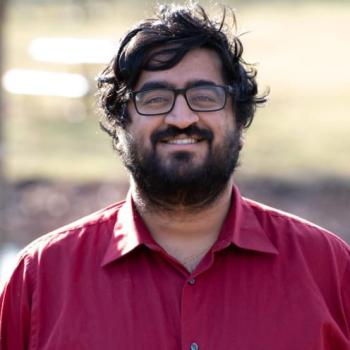
Photo credit: Steve Skojec [The American Conservative, 5-27-21]
***
Summary: Steve Skojec is openly expressing his disdain for Catholic “traditionalism” as a hopeless & essentially invalid cause. I document that & also discuss the vexed issue of sinners in the Church.
***
Inquisition & Crusades & Scandals
Traditionalism vs. Radical Catholic Reactionaries
Radical Catholic Reactionaries
Previous Post
May 28, 2021
Pearce’s Potshots #32: No Evidence for Joshua's Conquest?
Next Post
May 29, 2021 Dialogue on Prayers to Saints & for the Dead
Browse Our Archives
Select a Category & Last Things About Me Anti-Catholicism Atheism & Agnosticism Baptism and Sacramentalism Bible and Tradition Blessed Virgin Mary Books by Dave Armstrong C. S. Lewis Calvinism & General Protestantism Catholic Apologetics Catholic Apologists Catholic conversion Catholic converts Christmas Church (Ecclesiology) Church History Conversion and Converts Development of Doctrine Eastern Orthodoxy Ecumenism & Christian Unity Eucharist & Liturgy Fathers of the Church French Translations G. K. Chesterton Hell Hell & Satan Hell & Satan & Last Things Heresies & Comparative Religion Holistic Health Inquisition & Crusades & Scandals James White Jews & Judaism & Old Testament John Calvin John Henry Newman Liberal / Modernist Theology Life Issues Literary Resume Lutheranism Mariology Martin Luther Music Orthodoxy Papacy & Infallibility Personal Page Philosophy & Science Political & Ethical & Moral Issues Protestant Persecution & Intolerance Protestantism Purgatory Purgatory & Penance Romantic & Imaginative Theology Saints & Purgatory & Penance Salvation Salvation & Justification Satan & Last Things Sexuality and Gender Issues Spanish Translations Traditionalism vs. Radical Catholic Reactionaries Traducciones al español / tradução para português Trinitarianism & Christology Uncategorized Videos
Select a Month October 2026 September 2026 August 2026 July 2026 June 2026 May 2026 April 2026 March 2026 February 2026 January 2026 December 2025 November 2025 October 2025 September 2025 August 2025 July 2025 June 2025 May 2025 April 2025 March 2025 February 2025 January 2025 December 2024 November 2024 October 2024 September 2024 August 2024 July 2024 June 2024 May 2024 April 2024 March 2024 February 2024 January 2024 December 2023 November 2023 October 2023 September 2023 August 2023 July 2023 June 2023 May 2023 April 2023 March 2023 February 2023 January 2023 December 2022 November 2022 October 2022 September 2022 August 2022 July 2022 June 2022 May 2022 April 2022 March 2022 February 2022 January 2022 December 2021 November 2021 October 2021 September 2021 August 2021 July 2021 June 2021 May 2021 April 2021 March 2021 February 2021 January 2021 December 2020 November 2020 October 2020 September 2020 August 2020 July 2020 June 2020 May 2020 April 2020 March 2020 February 2020 January 2020 December 2019 November 2019 October 2019 September 2019 August 2019 July 2019 June 2019 May 2019 April 2019 March 2019 February 2019 January 2019 December 2018 November 2018 October 2018 September 2018 August 2018 July 2018 June 2018 May 2018 April 2018 March 2018 February 2018 January 2018 December 2017 November 2017 October 2017 September 2017 August 2017 July 2017 June 2017 May 2017 April 2017 March 2017 February 2017 January 2017 December 2016 November 2016 October 2016 September 2016 August 2016 July 2016 June 2016 May 2016 April 2016 March 2016 February 2016 January 2016 December 2015 November 2015 October 2015 September 2015 August 2015 July 2015 June 2015 May 2015 April 2015 March 2015 February 2015 January 2015 December 2014 November 2014 October 2014 September 2014 August 2014 July 2014 June 2014 April 2014 March 2014 February 2014 January 2014 December 2013 November 2013 October 2013 September 2013 August 2013 July 2013 June 2013 April 2013 March 2013 February 2013 January 2013 December 2012 November 2012 October 2012 September 2012 August 2012 July 2012 June 2012 May 2012 April 2012 March 2012 February 2012 January 2012 December 2011 November 2011 October 2011 September 2011 August 2011 July 2011 June 2011 April 2011 March 2011 February 2011 October 2010 September 2010 August 2010 July 2010 April 2010 March 2010 December 2009 October 2009 August 2009 July 2009 June 2009 May 2009 March 2009 February 2009 October 2008 September 2008 April 2008 March 2008 February 2008 January 2008 December 2007 November 2007 October 2007 May 2007 March 2007 February 2007 January 2007 November 2006 October 2006 September 2006 August 2006 July 2006 June 2006 May 2006 April 2006 March 2006 February 2006 October 2005 June 2005 April 2005 February 2005 July 2004 May 2004 April 2004
Follow Us!
TAKE THE
Religious Wisdom Quiz
Where was Paul's hometown?
Select your answer to see how you score.
Damascus Tarsus Antioch Jerusalem
Books by This Author Books by Dave Armstrong
Related posts from Biblical Evidence for Catholicism
Inspired Prophets: An Analogy to Infallible Popes
Biblical Evidence for Catholicism
Catholic "Wicked Married Sex"?: 4th Reply to Sean...
Biblical Evidence for Catholicism
2nd Reply to Anglican Sean Luke on Catholicism...
Biblical Evidence for Catholicism
Foreword: "Ignorance of Things Divine" (Andrew Mioni)
Biblical Evidence for Catholicism
TRENDING AT PATHEOS Catholic

The Sermon on the Mount, Part I: Matthew...
The Sermon on the Mount, Part I (Matthew 4:12-5:12) St. Matthew moves...

What's up from Crossway: Reviewing some of their latest A few weeks...

Janie Learns the Way of the Cross: A...
Teaching children about Jesus' Passion can be challenging. Many parents and educators...

Looking For Good Catholic Writing - October 2026
He alone extends the heavens, and he walks upon the waves of...

In "Irreplaceable," our book on vocation and technology, Trevor Sutton and I...

I was strolling through the top floor of the brand new Parthenon...
view all Catholic blogs
Ad-Free & Subscriber Log-In Subscription Support
- About Us
- 2026 Calendar
- Videos
- Podcasts
- Library of World Religions
- Faith In Media Tracker
- Advertise With Us
- Write for Us
- Privacy Policy
- Terms of Service
- Do Not Sell My Data
- Contact Us
- Radiant Digital
- Manage Newsletter Subscriptions
- Unsubscribe From Notifications
- Sitemap
Copyright 2008-2026, Patheos. All rights reserved.
Subscription Support Ad-Free & Subscriber Log-In
Follow Patheos