
BuddhistCatholicContemplativeEvangelicalGeneral ChristianHinduJewishLatter-day SaintMuslimNew VisionsProgressive Christian
Beliefs
- Buddhist
- Catholic
- Contemplative
- Evangelical
- General Christian
- Hindu
- Jewish
- Latter-day Saint
- More Voices
- Muslim
- New Visions
- Pagan
- Progressive Christian
Topics
- Religion News
- Food and Religion
- Sports and Religion
- Religious Art
- Religious Music and Entertainment
- Religious Events
- History and Religion
- Style and Religion
- Politics and Religion
- Women in Religion
- Recreation Outdoors and Religion
- Business Finance and Religion
- Careers Workplace and Religion
- Education and Religion
- Family Parenting and Religion
- Health Fitness and Religion
- Home and Religion
- Relationships and Religion
- Technology and Religion
- Travel and Religion
Columnists
- Buddhist Columnists
- Business Finance and Religion Columnists
- Careers Workplace and Religion Columnists
- Catholic Columnists
- Contemplative Columnists
- Education and Religion Columnists
- Evangelists Columnists
- Family Parenting and Religion Columnists
- General Christian Columnists
- Health Fitness and Religion Columnists
- Hindu Columnists
- History and Religion Columnists
- Home and Religion Columnists
- Jewish Columnists
- More Voices Columnists
- Latter Day Columnists
- Muslim Columnists
- New Visions Columnists
- Nonreligious Columnists
- Pagan Columnists
- Politics and Religion Columnists
- Progressive Columnists
- Recreation Outdoors and Religion Columnists
- Relationships and Religion Columnists
- Religion News Columnists
- Religious Art Columnists
- Religious Events Columnists
- Religious Music and Entertainment Columnists
- Sports and Religion Columnists
- Style and Religion Columnists
- Technology and Religion Columnists
- Travel and Religion Columnists
- Women in Religion Columnists
Resource Library
- 2026 Calendar
- Library of World Religions
- The 100 Most Holy Places on Earth
- Patheos Answers
- Podcasts
- Videos
- Faith Leaders Database
- Anglican Episcopalian
- Bahai
- Baptist
- Buddhism
- Christianity
- Confucianism
- Eastern Orthodoxy
- Hinduism
- Holiness and Pentecostal
- ISKCON
- Islam
- Judaism
- Lutheran
- Methodist
- The Church of Jesus Christ of Latter-day Saints
- New Age
- Paganism
- Presbytarian and Reformed
- Protestantism
- Religion Behind the Scenes
- Roman Catholic
- Scientology
- Shia Islam
- Sikhism
- Sufism
- Sunni Islam
- Taoism
- Zen
- See all religions
Research Tools
 Ad-Free & Subscriber Log-In Subscription Support
Ad-Free & Subscriber Log-In Subscription Support
Follow Patheos 

- Trending:
- Forgiveness
- |
- Marriage
- |
- Consciousness
- |
- Death Penalty
- |
- Election
- |
- Halloween

-
About
-
Catholic Apologetics
-
Church History
-
Great Apologists
-
Christian Worldview
-
Protestantism & Misc.
- Home
- Catholic
- History and Religion
- Resurrection #28: Remission of Sins “Contradictions”?
Resurrection #28: Remission of Sins “Contradictions”?
Last updated on: June 6, 2026 at 12:44 am by Dave Armstrong
Resurrection #28: Remission of Sins “Contradictions”? 2026-06-06T00:44:18-04:00 Dave Armstrong
Patheos Explore the world's faith through different perspectives on religion and spirituality! Patheos has the views of the prevalent religions and spiritualities of the world.
Michael J. Alter is the author of the copiously researched, 913-page volume, The Resurrection: a Critical Inquiry (2015). I initially offered 59 “brief” replies to as many alleged New Testament contradictions (March 2021). We later engaged in amiable correspondence and decided to enter into a major ongoing dialogue about his book. He graciously (and impressively!) sent me a PDF file of it, free of charge, for my review.
Mike describes himself as “of the Jewish faith” but is quick to point out that labels are often “misleading” and “divisive” (I agree to a large extent). He continues to be influenced by, for example, “Reformed, Conservative, Orthodox, and Chabad” variants of Judaism and learns “from those of other faiths, the secular, the non-theists, etc.” Fair enough. I have a great many influences, too, am very ecumenical, and am a great admirer of Judaism, as I told Michael in a combox comment on my blog.
He says his book “can be described as Jewish apologetics” and one that provides reasons for “why members of the Jewish community should not convert to Christianity.” I will be writing many critiques of the book and we’ll be engaging in ongoing discussion for likely a long time. I’m quite excited about it and am most grateful for Mike’s willingness to interact, minus any personal hostility.
To see all the other installments, search “Michael J. Alter” on either my Jews and Judaism or Trinitarianism & Christology web pages. That will take you to the subsection with the series.
I use RSV for all Bible verses that I cite. His words will be in blue.
*****
Michael Alter wrote:
CONTRADICTION #101 John versus the Three Synoptics and Acts
Perhaps one of the most important ideas taught in John is that the apostles had the power to remit the sins of “whose soever sins.”
John 20:23 If you forgive the sins of any, they are forgiven them; if you retain the sins of any, they are retained (NRSV 1989, 113).
John 20:23 If you forgive anyone his sins, they are forgiven; if you do not forgive them, they are not forgiven (NIV 1978, 1225).
Mark 16:16 instructed: “He that believeth and is baptized shall be saved; but he that believeth not shall be damned.” Therefore, no power delegating the apostles to forgive sins was mentioned or implied. Instead the power was in the hands of the sinner to be saved by believing and being baptized. (p. 584)
Yes, belief in Jesus and the Gospel and baptism are necessary for salvation, as a general, proverbial (true) statement. At the same time, sins can cause one to fall away from salvation:
1 John 5:16-17 If any one sees his brother committing what is not a mortal sin, he will ask, and God will give him life for those whose sin is not mortal. There is sin which is mortal; I do not say that one is to pray for that. [17] All wrongdoing is sin, but there is sin which is not mortal. [most translations have something similar to NASB: “a sin not leading to death”]
This is the NT basis for the Catholic notion of mortal sin: the sin that is so serious and grave that it can cause one to fall away from fellowship with God and salvation: which can be removed in the Catholic system by confession to a priest and subsequent absolution, which is what John is talking about above (and reiterating here in his first epistle). 1 John 5:16-17 is also the primary NT basis for a venial sin (“sin which is not mortal”): sin that is less serious and won’t cause loss of communion with God or salvation, and is not required to be absolved by a priest.
Mark happens to not mention absolution (though he alludes to John the Baptist’s foreshadowing of it: Mk 1:4-5; cf. Mt 3:6; Acts 19:18). No one can give good reasons for why he supposedly was obliged or required to do so, except for [I use sarcasm] “contradiction hunters” who foolishly think they “see” a supposed “contradiction” under every “NT rock.”
Matthew 28:18 reported that Jesus claimed: “And Jesus came and spake unto them, saying, All power is given unto me in heaven and in earth.” Here, too, no power to remit sins was given to the apostles. Instead Jesus instructed that his apostles: “Go ye therefore, and teach all nations, baptizing them in the name of the Father, and of the Son, and of the Holy Ghost.” (p. 584)
Matthew is simply teaching about the supreme importance of evangelizing and baptizing: the primary means by which people become Christians and can achieve salvation. As in the case of Mark, he is not obliged to discuss absolution in the same context, since it is not essentially about how to obtain salvation, but rather, about how not to lose it. But more on Matthew and absolution below . . . He doesn’t ignore it in his entire Gospel.
Luke reads similar to Matthew. Luke 24:47 declared: “And that repentance and remission of sins should be preached in his name among all
nations, beginning at Jerusalem.” Consequently, here, too, no power to remit sins was given to the apostles. Rather, they were commanded to teach all the nations. (p. 584)
Oddly, Alter looks at “remission of sins” in the text, but then obliviously states that in this passage “no power to remit sins was given to the apostles.” Huh? How does he know that? In fact, Matthew 28:18 and Luke 24:47 emphasize two aspects of remission of sins: Matthew is highlighting the initial remission of regeneration through baptism (see several other NT passages on that), and Luke is perhaps referring to the sort of absolution that John 20:23 also refers to: that remits sins committed after baptism. In Catholicism both things are sacraments: physical means or rituals by which more grace and power to conquer sin are obtained.
What Jesus said in John 20:23 was during one of His post-Resurrection appearances. Likewise, with Luke 24:47, the words were uttered right before He ascended. Thus, the Christian plausibly posits that “remission of sins” in Luke may very well parallel John 20:23 (“If you forgive the sins of any, they are forgiven; if you retain the sins of any, they are retained”).
Occasionally there are those instances where it seems inconceivable that some event or concept is omitted from the synoptic narrations and is present in John. This is one of those instances. Not even one of the synoptic writers or the author of Acts discussed the notion that the apostles had the unique power to forgive sins. (p. 584)
Ah, but Alter has it totally wrong. Matthew in fact does discuss the forgiveness or remission of sins by the disciples, and by extension, succession, and analogy, priests (absolution), two times:
Matthew 16:19 I will give you the keys of the kingdom of heaven, and whatever you bind on earth shall be bound in heaven, and whatever you loose on earth shall be loosed in heaven. [said to Peter alone]
Matthew 18:18 Truly, I say to you, whatever you bind on earth shall be bound in heaven, and whatever you loose on earth shall be loosed in heaven. [said to the entire group of disciples]
I wrote about these passages and this concept in my first “officially” published book, A Biblical Defense of Catholicism, in 1996:
Binding and loosing were technical rabbinical terms meaning, respectively, “to forbid” and “to permit,” with regard to interpretations of Jewish Law. In secondary usage, they also could mean “to condemn” and “to acquit.” This power is also given to the Apostles in Matthew 18:17-18, where it apparently refers particularly to discipline and excommunication in local jurisdictions (whereas Peter’s commission seems to apply to the universal Church).
In John 20:23 it is also granted to the Apostles (in a different terminology, which suggests the power to impose penance and grant indulgences and absolution). . . . Marvin Vincent [Word Studies in the New Testament, vol. I, 96] writes:
No other terms were in more constant use in Rabbinic canon-law than those of binding and loosing. They represented the legislative and judicial powers of the Rabbinic office. These powers Christ now transferred, . . . in their reality, to his Apostles; the first, here, to Peter, as their representative, the second, after his Resurrection, to the Church (John 20:23) . . . (p. 225)
For the Jewish background, see, Jewish Encyclopedia, “Binding and Loosing”: which also discusses the NT appropriation and development of this concept. Priests forgiving sins in the name of God is found in the epistles as well:
2 Corinthians 2:10 Any one whom you forgive, I also forgive. What I have forgiven, if I have forgiven anything, has been for your sake in the presence of Christ,
James 5:14-16 Is any among you sick? Let him call for the elders of the church, and let them pray over him, anointing him with oil in the name of the Lord; [15] and the prayer of faith will save the sick man, and the Lord will raise him up; and if he has committed sins, he will be forgiven. [16] Therefore confess your sins to one another, and pray for one another, that you may be healed. The prayer of a righteous man has great power in its effects.
1 John 1:8-9 If we say we have no sin, we deceive ourselves, and the truth is not in us. [9] If we confess our sins, he is faithful and just, and will forgive our sins and cleanse us from all unrighteousness.
All of this also, of course, is nothing essentially new, and goes back to the priestly sacrificial and atoning system of the Mosaic Law:
Exodus 32:30 On the morrow Moses said to the people, “You have sinned a great sin. And now I will go up to the LORD; perhaps I can make atonement for your sin.”
Leviticus 4:20 Thus shall he do with the bull; as he did with the bull of the sin offering, so shall he do with this; and the priest shall make atonement for them, and they shall be forgiven. (cf. 4:26, 35)
Leviticus 5:5-6 When a man is guilty in any of these, he shall confess the sin he has committed, [6] and he shall bring his guilt offering to the LORD for the sin which he has committed, a female from the flock, a lamb or a goat, for a sin offering; and the priest shall make atonement for him for his sin. (cf. 5:10, 12-13)
Leviticus 19:21-22 but he shall bring a guilt offering for himself to the LORD, to the door of the tent of meeting, a ram for a guilt offering. [22] And the priest shall make atonement for him with the ram of the guilt offering before the LORD for his sin which he has committed; and the sin which he has committed shall be forgiven him. (cf. 7:7; 9:7; 12:8; 14:19; 16:6, 11, 25, 27, 30)
Numbers 8:12 Then the Levites shall lay their hands upon the heads of the bulls; and you shall offer the one for a sin offering and the other for a burnt offering to the LORD, to make atonement for the Levites. (cf. 6:11; 15:24, 27-28; 28:22; 29:5, 11; 2 Chr 29:24; Neh 10:33; Ezek 45:17, 20)
***
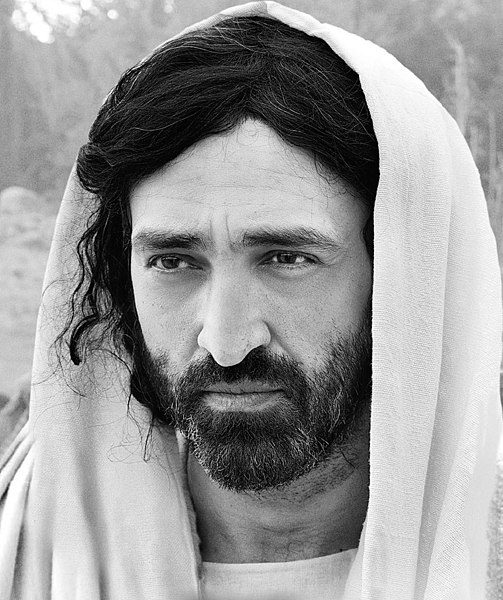
Photo credit: Selva Rasalingam as Jesus in the The Gospel of Luke (2016, Netflix USA) [Wikimedia Commons / Creative Commons CC0 1.0 Universal Public Domain Dedication]

Summary: Michael Alter writes on the topic of remission of sins “contradictions” & tries to claim that the Synoptic Gospels have no concept of remission of sin, as in John 20:23. Wrong! I provide proofs.
Tags: alleged Bible contradictions, alleged Resurrection contradictions, Bible “contradictions”, Bible “difficulties”, Bible Only, biblical inspiration, biblical prooftexts, biblical skeptics, biblical theology, exegesis, hermeneutics, Holy Bible, inerrancy, infallibility, Jewish anti-Christian polemics, Jewish apologetics, Jewish critique of Christianity, Jewish-Christian discussion, Michael J. Alter, New Testament, New Testament critics, New Testament skepticism, Resurrection “Contradictions”, Resurrection of Jesus, The Resurrection: A Critical Inquiry, remission of sins “contradictions”?
Jews & Judaism & Old Testament
alleged Resurrection contradictions
Jewish anti-Christian polemics
Jewish critique of Christianity
remission of sins "contradictions"?
The Resurrection: A Critical Inquiry
Previous Post
May 5, 2021
Resurrection #27: Jesus' View of Unbelief & Evidence
Next Post
May 6, 2021 Resurrection #29: Supposed Absence of the Ascension
Browse Our Archives
Select a Category & Last Things About Me Anti-Catholicism Atheism & Agnosticism Baptism and Sacramentalism Bible and Tradition Blessed Virgin Mary Books by Dave Armstrong C. S. Lewis Calvinism & General Protestantism Catholic Apologetics Catholic Apologists Catholic conversion Catholic converts Christmas Church (Ecclesiology) Church History Conversion and Converts Development of Doctrine Eastern Orthodoxy Ecumenism & Christian Unity Eucharist & Liturgy Fathers of the Church French Translations G. K. Chesterton Hell Hell & Satan Hell & Satan & Last Things Heresies & Comparative Religion Holistic Health Inquisition & Crusades & Scandals James White Jews & Judaism & Old Testament John Calvin John Henry Newman Liberal / Modernist Theology Life Issues Literary Resume Lutheranism Mariology Martin Luther Music Orthodoxy Papacy & Infallibility Personal Page Philosophy & Science Political & Ethical & Moral Issues Protestant Persecution & Intolerance Protestantism Purgatory Purgatory & Penance Romantic & Imaginative Theology Saints & Purgatory & Penance Salvation Salvation & Justification Satan & Last Things Sexuality and Gender Issues Spanish Translations Traditionalism vs. Radical Catholic Reactionaries Traducciones al español / tradução para português Trinitarianism & Christology Uncategorized Videos
Select a Month October 2026 September 2026 August 2026 July 2026 June 2026 May 2026 April 2026 March 2026 February 2026 January 2026 December 2025 November 2025 October 2025 September 2025 August 2025 July 2025 June 2025 May 2025 April 2025 March 2025 February 2025 January 2025 December 2024 November 2024 October 2024 September 2024 August 2024 July 2024 June 2024 May 2024 April 2024 March 2024 February 2024 January 2024 December 2023 November 2023 October 2023 September 2023 August 2023 July 2023 June 2023 May 2023 April 2023 March 2023 February 2023 January 2023 December 2022 November 2022 October 2022 September 2022 August 2022 July 2022 June 2022 May 2022 April 2022 March 2022 February 2022 January 2022 December 2021 November 2021 October 2021 September 2021 August 2021 July 2021 June 2021 May 2021 April 2021 March 2021 February 2021 January 2021 December 2020 November 2020 October 2020 September 2020 August 2020 July 2020 June 2020 May 2020 April 2020 March 2020 February 2020 January 2020 December 2019 November 2019 October 2019 September 2019 August 2019 July 2019 June 2019 May 2019 April 2019 March 2019 February 2019 January 2019 December 2018 November 2018 October 2018 September 2018 August 2018 July 2018 June 2018 May 2018 April 2018 March 2018 February 2018 January 2018 December 2017 November 2017 October 2017 September 2017 August 2017 July 2017 June 2017 May 2017 April 2017 March 2017 February 2017 January 2017 December 2016 November 2016 October 2016 September 2016 August 2016 July 2016 June 2016 May 2016 April 2016 March 2016 February 2016 January 2016 December 2015 November 2015 October 2015 September 2015 August 2015 July 2015 June 2015 May 2015 April 2015 March 2015 February 2015 January 2015 December 2014 November 2014 October 2014 September 2014 August 2014 July 2014 June 2014 April 2014 March 2014 February 2014 January 2014 December 2013 November 2013 October 2013 September 2013 August 2013 July 2013 June 2013 April 2013 March 2013 February 2013 January 2013 December 2012 November 2012 October 2012 September 2012 August 2012 July 2012 June 2012 May 2012 April 2012 March 2012 February 2012 January 2012 December 2011 November 2011 October 2011 September 2011 August 2011 July 2011 June 2011 April 2011 March 2011 February 2011 October 2010 September 2010 August 2010 July 2010 April 2010 March 2010 December 2009 October 2009 August 2009 July 2009 June 2009 May 2009 March 2009 February 2009 October 2008 September 2008 April 2008 March 2008 February 2008 January 2008 December 2007 November 2007 October 2007 May 2007 March 2007 February 2007 January 2007 November 2006 October 2006 September 2006 August 2006 July 2006 June 2006 May 2006 April 2006 March 2006 February 2006 October 2005 June 2005 April 2005 February 2005 July 2004 May 2004 April 2004
Follow Us!
TAKE THE
Religious Wisdom Quiz
What famous cathedral is in Paris, known for its flying buttresses and rose windows?
Select your answer to see how you score.
Notre Dame St. Paul's St. Peter's Canterbury
Books by This Author Books by Dave Armstrong
Related posts from Biblical Evidence for Catholicism

Jerusalem Council vs. James White & Sola Scriptura
Biblical Evidence for Catholicism

God, Modern Physics, & Dark Energy: An Analogy
Biblical Evidence for Catholicism

350 Bible Passages vs. Sola Scriptura
Biblical Evidence for Catholicism
Sola Scriptura: Self-Defeating, Unworkable, Unbiblical
Biblical Evidence for Catholicism
TRENDING AT PATHEOS Catholic

In "Irreplaceable," our book on vocation and technology, Trevor Sutton and I...

I was strolling through the top floor of the brand new Parthenon...

What Does Gêvâh Mean For Kimberley Guifoyle &...
This week, a lot of the news is focused on Kimberly Guilfoyle....

INNER CIRCLE: Profound Mystery (Of Christ In All...
Ephesians 5:31-32 “For this reason, a man will leave his father and...

Do Not Rejoice When Your Enemy Falls: The...
Turning an execution into a public spectacle is a disturbing expression of...

'The Chosen' S6 Trailer: The Passion Gets Very...
Not many watching 'The Chosen' worry about spoilers, but just because they...
view all Catholic blogs
Ad-Free & Subscriber Log-In Subscription Support
- About Us
- 2026 Calendar
- Videos
- Podcasts
- Library of World Religions
- Faith In Media Tracker
- Advertise With Us
- Write for Us
- Privacy Policy
- Terms of Service
- Do Not Sell My Data
- Contact Us
- Radiant Digital
- Manage Newsletter Subscriptions
- Unsubscribe From Notifications
- Sitemap
Copyright 2008-2026, Patheos. All rights reserved.
Subscription Support Ad-Free & Subscriber Log-In
Follow Patheos