
BuddhistCatholicContemplativeEvangelicalGeneral ChristianHinduJewishLatter-day SaintMuslimNew VisionsProgressive Christian
Beliefs
- Buddhist
- Catholic
- Contemplative
- Evangelical
- General Christian
- Hindu
- Jewish
- Latter-day Saint
- More Voices
- Muslim
- New Visions
- Pagan
- Progressive Christian
Topics
- Religion News
- Food and Religion
- Sports and Religion
- Religious Art
- Religious Music and Entertainment
- Religious Events
- History and Religion
- Style and Religion
- Politics and Religion
- Women in Religion
- Recreation Outdoors and Religion
- Business Finance and Religion
- Careers Workplace and Religion
- Education and Religion
- Family Parenting and Religion
- Health Fitness and Religion
- Home and Religion
- Relationships and Religion
- Technology and Religion
- Travel and Religion
Columnists
- Buddhist Columnists
- Business Finance and Religion Columnists
- Careers Workplace and Religion Columnists
- Catholic Columnists
- Contemplative Columnists
- Education and Religion Columnists
- Evangelists Columnists
- Family Parenting and Religion Columnists
- General Christian Columnists
- Health Fitness and Religion Columnists
- Hindu Columnists
- History and Religion Columnists
- Home and Religion Columnists
- Jewish Columnists
- More Voices Columnists
- Latter Day Columnists
- Muslim Columnists
- New Visions Columnists
- Nonreligious Columnists
- Pagan Columnists
- Politics and Religion Columnists
- Progressive Columnists
- Recreation Outdoors and Religion Columnists
- Relationships and Religion Columnists
- Religion News Columnists
- Religious Art Columnists
- Religious Events Columnists
- Religious Music and Entertainment Columnists
- Sports and Religion Columnists
- Style and Religion Columnists
- Technology and Religion Columnists
- Travel and Religion Columnists
- Women in Religion Columnists
Resource Library
- 2026 Calendar
- Library of World Religions
- The 100 Most Holy Places on Earth
- Patheos Answers
- Podcasts
- Videos
- Faith Leaders Database
- Anglican Episcopalian
- Bahai
- Baptist
- Buddhism
- Christianity
- Confucianism
- Eastern Orthodoxy
- Hinduism
- Holiness and Pentecostal
- ISKCON
- Islam
- Judaism
- Lutheran
- Methodist
- The Church of Jesus Christ of Latter-day Saints
- New Age
- Paganism
- Presbytarian and Reformed
- Protestantism
- Religion Behind the Scenes
- Roman Catholic
- Scientology
- Shia Islam
- Sikhism
- Sufism
- Sunni Islam
- Taoism
- Zen
- See all religions
Research Tools
 Ad-Free & Subscriber Log-In Subscription Support
Ad-Free & Subscriber Log-In Subscription Support
Follow Patheos 

- Trending:
- Forgiveness
- |
- Marriage
- |
- Consciousness
- |
- Death Penalty
- |
- Election
- |
- Halloween

-
About
-
Catholic Apologetics
-
Church History
-
Great Apologists
-
Christian Worldview
-
Protestantism & Misc.
- Home
- Catholic
- History and Religion
- Resurrection #22: Did Judas Repent Or Not?
Resurrection #22: Did Judas Repent Or Not?
Last updated on: June 5, 2026 at 11:58 pm by Dave Armstrong
Resurrection #22: Did Judas Repent Or Not? 2026-06-05T23:58:46-04:00 Dave Armstrong
Patheos Explore the world's faith through different perspectives on religion and spirituality! Patheos has the views of the prevalent religions and spiritualities of the world.
Michael J. Alter is the author of the copiously researched, 913-page volume, The Resurrection: a Critical Inquiry (2015). I initially offered 59 “brief” replies to as many alleged New Testament contradictions (March 2021). We later engaged in amiable correspondence and decided to enter into a major ongoing dialogue about his book. He graciously (and impressively!) sent me a PDF file of it, free of charge, for my review.
Mike describes himself as “of the Jewish faith” but is quick to point out that labels are often “misleading” and “divisive” (I agree to a large extent). He continues to be influenced by, for example, “Reformed, Conservative, Orthodox, and Chabad” variants of Judaism and learns “from those of other faiths, the secular, the non-theists, etc.” Fair enough. I have a great many influences, too, am very ecumenical, and am a great admirer of Judaism, as I told Michael in a combox comment on my blog.
He says his book “can be described as Jewish apologetics” and one that provides reasons for “why members of the Jewish community should not convert to Christianity.” I will be writing many critiques of the book and we’ll be engaging in ongoing discussion for likely a long time. I’m quite excited about it and am most grateful for Mike’s willingness to interact, minus any personal hostility.
To see all the other installments, search “Michael J. Alter” on either my Jews and Judaism or Trinitarianism & Christology web pages. That will take you to the subsection with the series.
I use RSV for all Bible verses that I cite. His words will be in blue.
*****
Alter wrote:
CONTRADICTION #85 Acts Contradicts Matthew—Judas’s Repentance
The account of Judas’s nonrepentance reported in Acts directly contradicts Matthew. This narration is perhaps one of the simplest and yet strongest arguments supporting the thesis that their respective authors wrote completely different stories. Unequivocally, these two stories demonstrate no resemblance to each other. . . .
Matthew 27:3-5 reports that after Jesus was arrested: “Then Judas, which had betrayed him, when he saw that he was condemned, repented himself, and brought again the thirty pieces of silver to the chief priests and elders, Saying, I have sinned in that I have betrayed the innocent blood. And they said, What is that to us? see thou to that. And he cast down the pieces of silver in the temple, and departed, and went and hanged himself.” . . . Judas repented (i.e., felt remorseful) . . . A careful analysis of Matthew’s Judas reveals a repentant and remorseful Judas. . . . Judas was so remorseful that he wanted nothing to do with the money that he had received for betraying Jesus. . . .
Contrary to Matthew, in Acts there is no repentance, no remorse, and no sense of guilt. (pp. 503-504, 507)
In Matthew 27:3-4, it says in RSV that Judas “repented” and said “I have sinned in betraying innocent blood.” Acts 1:16-20, in mentioning Judas’ suicide, simply doesn’t say one way or the other whether he repented or not. So it’s an argument from silence, from which nothing can be determined, as to alleged contradiction. But there is also a linguistic consideration (the following sources are all commenting on Matthew 27:3):
The Greek word is not that commonly used for “repentance,” as involving a change of mind and heart, but is rather “regret,” a simple change of feeling. (Ellicott’s Commentary for English Readers)
A different Greek word from that used, ch. Matthew 3:2; it implies no change of heart or life, but merely remorse or regret. See note ch. Matthew 21:29; Matthew 21:32. (Cambridge Bible for Schools and Colleges)
Repented himself (μεταμεληθείς). This word (differing from μετανοέω, which expresses change of heart) denotes only a change of feeling, a desire that what has been done could be undone; this is not repentance in the Scripture sense; it springs not from love of God, it has not that character which calls for pardon. (Pulpit Commentary)
Repented himself (μεταμελητεις — metamelētheis). Probably Judas saw Jesus led away to Pilate and thus knew that the condemnation had taken place. This verb (first aorist passive participle of μεταμελομαι — metamelomai) really means to be sorry afterwards like the English word repent from the Latin repoenitet, to have pain again or afterwards. See the same verb μεταμελητεις — metamelētheis in Matthew 21:30 of the boy who became sorry and changed to obedience. The word does not have an evil sense in itself. Paul uses it of his sorrow for his sharp letter to the Corinthians, a sorrow that ceased when good came of the letter (2 Corinthians 7:8). But mere sorrow avails nothing unless it leads to change of mind and life (μετανοια — metanoia), the sorrow according to God (2 Corinthians 7:9). This sorrow Peter had when he wept bitterly. It led Peter back to Christ. But Judas had only remorse that led to suicide. (A. T. Robertson, Word Pictures in the New Testament)
Repented ( μεταμεληθεὶς )
This is a different word from that in Matthew 3:2; Matthew 4:17; μετανοεῖτε , Repent ye. Though it is fairly claimed that the word here implies all that is implied in the other word, the New Testament writers evidently recognize a distinction, since the noun which corresponds to the verb in this passage ( μεταμέλεια ) is not used at all in the New Testament, and the verb itself only five times; and, in every case except the two in this passage (see Matthew 21:32), with a meaning quite foreign to repentance in the ordinary gospel sense. Thus it is used of Judas, when he brought back the thirty pieces (Matthew 27:3); of Paul’s not regretting his letter to the Corinthians (2 Corinthians 7:8); and of God (Hebrews 7:21). On the other hand, μετανοέω , repent, used by John and Jesus in their summons to repentance (Matthew 3:2; Matthew 4:17), occurs thirty-four times, and the noun μετάνοια , repentance (Matthew 3:8, Matthew 3:11), twenty-four times, and in every case with reference to that change of heart and life wrought by the Spirit of God, to which remission of sins and salvation are promised. It is not impossible, therefore, that the word in this passage may have been intended to carry a different shade of meaning, now lost to us. Μεταμέλομαι , as its etymology indicates ( μετά , after, and μέλω , to be an object of care), implies an after-care, as contrasted with the change of mind denoted by μετάνοια . Not sorrow for moral obliquity and sin against God, but annoyance at the consequences of an act or course of acts, and chagrin at not having known better. “It may be simply what our fathers were wont to call hadiwist (had-I-wist, or known better, I should have acted otherwise)” (Trench). Μεταμέλεια refers chiefly to single acts; μετάνοια denotes the repentance which affects the whole life. Hence the latter is often found in the imperative: Repent ye (Matthew 3:2; Matthew 4:17; Acts 2:38; Acts 3:19); the former never. Paul’s recognition of the distinction (2 Corinthians 7:10) is noteworthy. “Godly sorrow worketh repentance ( μετάνοιαν ) unto salvation,” a salvation or repentance “which bringeth no regret on thinking of it afterwards” ( ἀμεταμέλητον )There is no occasion for one ever to think better of either his repentance or the salvation in which it issued. (Marvin Vincent, Word Studies in the New Testament)
2 Corinthians 7:9-10 As it is, I rejoice, not because you were grieved, but because you were grieved into repenting; for you felt a godly grief, so that you suffered no loss through us. [10] For godly grief produces a repentance that leads to salvation and brings no regret, but worldly grief produces death.
Nathan Millican from the Theology Along the Way website, commented insightfully on Judas and this issue of his repentance (or lack thereof):
A worldly sorrow brings regret that leads to death, whereas a godly sorrow does not bring regret and leads to salvation. Barnett in his Second Corinthians Commentary writes, “the structure of Paul’s verse is: For the grief that is according to God works repentance [that] leads to salvation, [which] is without regret. But the grief that is of the world works death.”[1] Thus, there is a truth inferred here that is important for the discussion at hand, which is the “grief that is of the world works [unrepentance, which leads to] death [and is with regret].”[2] . . .
This type of sorrow as evidenced in Paul’s Second Letter to the Corinthians is not a sorrow that leads to salvation, but rather brings with it death. Judas regretted his actions or showed remorse or sorrow for his actions because of their consequences “not necessarily because they were wrong as sins against a holy God.”[5] What did Judas lack? He lacked a godly sorrow that brings no regrets that leads to salvation. His remorse was not commensurate with a remorse that God says is a prerequisite to salvation. And what was the end result of his remorse? He ended his life. “He was sorry for his sin, but instead of taking his sorrow to God, he despaired. He turned inward, not Godward, and his remorse became self-condemnation.”[6] (“Why wasn’t Judas’ repentance a repentance that leads to eternal life?”)
“A Tragic End for Judas” (Ligonier Ministries) adds:
Matthew’s juxtaposition of Peter’s denial and Judas’ death invites us to compare the state of their souls. Like Peter, Judas is remorseful after the fact, changing his mind about the wisdom of his deed after seeing Jesus condemned (Matt. 27:3–4). . . . Judas does not really try to stop what he has started and will not testify of Christ’s innocence before Pilate. John Calvin writes, “True repentance is displeasure at sin, arising out of fear and reverence for God, and producing, at the same time, a love and desire of righteousness.” Were Judas repentant, justice and righteousness would move him to intervene on Jesus’ behalf. Godly sorrow leads people to run to God, but Judas’ despair makes him run into the arms of death (v. 5).
Since Acts mentions no repentance or even remorse at all, and the remorse felt by Judas as described in Matthew 27:3 is by no means the normative New Testament repentance with grace-enabled profound reform of one’s life and joy accompanying, the alleged contradiction is refuted. Judas didn’t “repent” in the full NT sense in either passage.
***
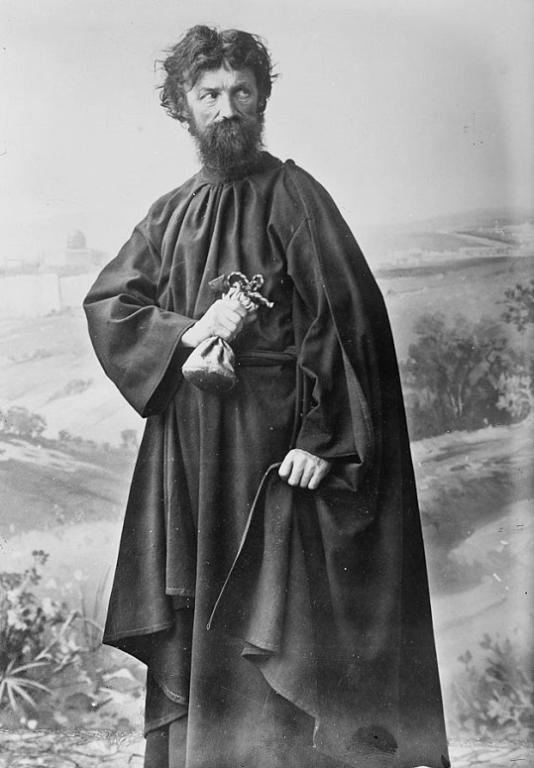
Photo credit: Judas (Johann Zwink) in passion play, Oberammergau, Germany (1900) [public domain / Library of Congress]
Summary: Michael Alter, dealing with the question of “did Judas repent or not?” tries to argue that Matthew records a true repentance, while Acts does not at all (hence, a contradiction: so he claims).
Tags: alleged Bible contradictions, alleged Resurrection contradictions, Bible “contradictions”, Bible “difficulties”, Bible Only, biblical inspiration, biblical prooftexts, biblical skeptics, biblical theology, exegesis, hermeneutics, Holy Bible, inerrancy, infallibility, Jewish anti-Christian polemics, Jewish apologetics, Jewish critique of Christianity, Jewish-Christian discussion, Michael J. Alter, New Testament, New Testament critics, New Testament skepticism, Resurrection “Contradictions”, Resurrection of Jesus, The Resurrection: A Critical Inquiry, Judas, motives of Judas, Judas’ repentance, repentance of Judas, did Judas repent?
Jews & Judaism & Old Testament
alleged Resurrection contradictions
Jewish anti-Christian polemics
Jewish critique of Christianity
The Resurrection: A Critical Inquiry
Previous Post

May 1, 2021
Resurrection #21: Chronology of Judas' Evil Plans
Next Post
May 3, 2021 Resurrection #23: How Did Judas Die?
Browse Our Archives
Select a Category & Last Things About Me Anti-Catholicism Atheism & Agnosticism Baptism and Sacramentalism Bible and Tradition Blessed Virgin Mary Books by Dave Armstrong C. S. Lewis Calvinism & General Protestantism Catholic Apologetics Catholic Apologists Catholic conversion Catholic converts Christmas Church (Ecclesiology) Church History Conversion and Converts Development of Doctrine Eastern Orthodoxy Ecumenism & Christian Unity Eucharist & Liturgy Fathers of the Church French Translations G. K. Chesterton Hell Hell & Satan Hell & Satan & Last Things Heresies & Comparative Religion Holistic Health Inquisition & Crusades & Scandals James White Jews & Judaism & Old Testament John Calvin John Henry Newman Liberal / Modernist Theology Life Issues Literary Resume Lutheranism Mariology Martin Luther Music Orthodoxy Papacy & Infallibility Personal Page Philosophy & Science Political & Ethical & Moral Issues Protestant Persecution & Intolerance Protestantism Purgatory Purgatory & Penance Romantic & Imaginative Theology Saints & Purgatory & Penance Salvation Salvation & Justification Satan & Last Things Sexuality and Gender Issues Spanish Translations Traditionalism vs. Radical Catholic Reactionaries Traducciones al español / tradução para português Trinitarianism & Christology Uncategorized Videos
Select a Month October 2026 September 2026 August 2026 July 2026 June 2026 May 2026 April 2026 March 2026 February 2026 January 2026 December 2025 November 2025 October 2025 September 2025 August 2025 July 2025 June 2025 May 2025 April 2025 March 2025 February 2025 January 2025 December 2024 November 2024 October 2024 September 2024 August 2024 July 2024 June 2024 May 2024 April 2024 March 2024 February 2024 January 2024 December 2023 November 2023 October 2023 September 2023 August 2023 July 2023 June 2023 May 2023 April 2023 March 2023 February 2023 January 2023 December 2022 November 2022 October 2022 September 2022 August 2022 July 2022 June 2022 May 2022 April 2022 March 2022 February 2022 January 2022 December 2021 November 2021 October 2021 September 2021 August 2021 July 2021 June 2021 May 2021 April 2021 March 2021 February 2021 January 2021 December 2020 November 2020 October 2020 September 2020 August 2020 July 2020 June 2020 May 2020 April 2020 March 2020 February 2020 January 2020 December 2019 November 2019 October 2019 September 2019 August 2019 July 2019 June 2019 May 2019 April 2019 March 2019 February 2019 January 2019 December 2018 November 2018 October 2018 September 2018 August 2018 July 2018 June 2018 May 2018 April 2018 March 2018 February 2018 January 2018 December 2017 November 2017 October 2017 September 2017 August 2017 July 2017 June 2017 May 2017 April 2017 March 2017 February 2017 January 2017 December 2016 November 2016 October 2016 September 2016 August 2016 July 2016 June 2016 May 2016 April 2016 March 2016 February 2016 January 2016 December 2015 November 2015 October 2015 September 2015 August 2015 July 2015 June 2015 May 2015 April 2015 March 2015 February 2015 January 2015 December 2014 November 2014 October 2014 September 2014 August 2014 July 2014 June 2014 April 2014 March 2014 February 2014 January 2014 December 2013 November 2013 October 2013 September 2013 August 2013 July 2013 June 2013 April 2013 March 2013 February 2013 January 2013 December 2012 November 2012 October 2012 September 2012 August 2012 July 2012 June 2012 May 2012 April 2012 March 2012 February 2012 January 2012 December 2011 November 2011 October 2011 September 2011 August 2011 July 2011 June 2011 April 2011 March 2011 February 2011 October 2010 September 2010 August 2010 July 2010 April 2010 March 2010 December 2009 October 2009 August 2009 July 2009 June 2009 May 2009 March 2009 February 2009 October 2008 September 2008 April 2008 March 2008 February 2008 January 2008 December 2007 November 2007 October 2007 May 2007 March 2007 February 2007 January 2007 November 2006 October 2006 September 2006 August 2006 July 2006 June 2006 May 2006 April 2006 March 2006 February 2006 October 2005 June 2005 April 2005 February 2005 July 2004 May 2004 April 2004
Follow Us!
TAKE THE
Religious Wisdom Quiz
According to 1 John, what does perfect love do?
Select your answer to see how you score.
Never fails Covers a multitude of sins Drives out fear Fulfills all the law
Books by This Author Books by Dave Armstrong
Related posts from Biblical Evidence for Catholicism

Jerusalem Council vs. James White & Sola Scriptura
Biblical Evidence for Catholicism

God, Modern Physics, & Dark Energy: An Analogy
Biblical Evidence for Catholicism

350 Bible Passages vs. Sola Scriptura
Biblical Evidence for Catholicism
Sola Scriptura: Self-Defeating, Unworkable, Unbiblical
Biblical Evidence for Catholicism
TRENDING AT PATHEOS Catholic

The Sermon on the Mount, Part I: Matthew...
The Sermon on the Mount, Part I (Matthew 4:12-5:12) St. Matthew moves...

What's up from Crossway: Reviewing some of their latest A few weeks...

Janie Learns the Way of the Cross: A...
Teaching children about Jesus' Passion can be challenging. Many parents and educators...

Looking For Good Catholic Writing - October 2026
He alone extends the heavens, and he walks upon the waves of...

In "Irreplaceable," our book on vocation and technology, Trevor Sutton and I...

I was strolling through the top floor of the brand new Parthenon...
view all Catholic blogs
Ad-Free & Subscriber Log-In Subscription Support
- About Us
- 2026 Calendar
- Videos
- Podcasts
- Library of World Religions
- Faith In Media Tracker
- Advertise With Us
- Write for Us
- Privacy Policy
- Terms of Service
- Do Not Sell My Data
- Contact Us
- Radiant Digital
- Manage Newsletter Subscriptions
- Unsubscribe From Notifications
- Sitemap
Copyright 2008-2026, Patheos. All rights reserved.
Subscription Support Ad-Free & Subscriber Log-In
Follow Patheos