
BuddhistCatholicContemplativeEvangelicalGeneral ChristianHinduJewishLatter-day SaintMuslimNew VisionsProgressive Christian
Beliefs
- Buddhist
- Catholic
- Contemplative
- Evangelical
- General Christian
- Hindu
- Jewish
- Latter-day Saint
- More Voices
- Muslim
- New Visions
- Pagan
- Progressive Christian
Topics
- Religion News
- Food and Religion
- Sports and Religion
- Religious Art
- Religious Music and Entertainment
- Religious Events
- History and Religion
- Style and Religion
- Politics and Religion
- Women in Religion
- Recreation Outdoors and Religion
- Business Finance and Religion
- Careers Workplace and Religion
- Education and Religion
- Family Parenting and Religion
- Health Fitness and Religion
- Home and Religion
- Relationships and Religion
- Technology and Religion
- Travel and Religion
Columnists
- Buddhist Columnists
- Business Finance and Religion Columnists
- Careers Workplace and Religion Columnists
- Catholic Columnists
- Contemplative Columnists
- Education and Religion Columnists
- Evangelists Columnists
- Family Parenting and Religion Columnists
- General Christian Columnists
- Health Fitness and Religion Columnists
- Hindu Columnists
- History and Religion Columnists
- Home and Religion Columnists
- Jewish Columnists
- More Voices Columnists
- Latter Day Columnists
- Muslim Columnists
- New Visions Columnists
- Nonreligious Columnists
- Pagan Columnists
- Politics and Religion Columnists
- Progressive Columnists
- Recreation Outdoors and Religion Columnists
- Relationships and Religion Columnists
- Religion News Columnists
- Religious Art Columnists
- Religious Events Columnists
- Religious Music and Entertainment Columnists
- Sports and Religion Columnists
- Style and Religion Columnists
- Technology and Religion Columnists
- Travel and Religion Columnists
- Women in Religion Columnists
Resource Library
- 2026 Calendar
- Library of World Religions
- The 100 Most Holy Places on Earth
- Patheos Answers
- Podcasts
- Videos
- Faith Leaders Database
- Anglican Episcopalian
- Bahai
- Baptist
- Buddhism
- Christianity
- Confucianism
- Eastern Orthodoxy
- Hinduism
- Holiness and Pentecostal
- ISKCON
- Islam
- Judaism
- Lutheran
- Methodist
- The Church of Jesus Christ of Latter-day Saints
- New Age
- Paganism
- Presbytarian and Reformed
- Protestantism
- Religion Behind the Scenes
- Roman Catholic
- Scientology
- Shia Islam
- Sikhism
- Sufism
- Sunni Islam
- Taoism
- Zen
- See all religions
Research Tools
 Ad-Free & Subscriber Log-In Subscription Support
Ad-Free & Subscriber Log-In Subscription Support
Follow Patheos 

- Trending:
- Forgiveness
- |
- Marriage
- |
- Consciousness
- |
- Death Penalty
- |
- Election
- |
- Halloween

-
About
-
Catholic Apologetics
-
Church History
-
Great Apologists
-
Christian Worldview
-
Protestantism & Misc.
- Home
- Catholic
- History and Religion
- Reply to Two Confessions: On the Church & Private Judgment
Reply to Two Confessions: On the Church & Private Judgment
Last updated on: June 6, 2026 at 12:44 am by Dave Armstrong
Reply to Two Confessions: On the Church & Private Judgment 2026-06-06T00:44:18-04:00 Dave Armstrong
Patheos Explore the world's faith through different perspectives on religion and spirituality! Patheos has the views of the prevalent religions and spiritualities of the world.
Reformed Belgic Confession (1561) and Second Helvetic Confession (1566)
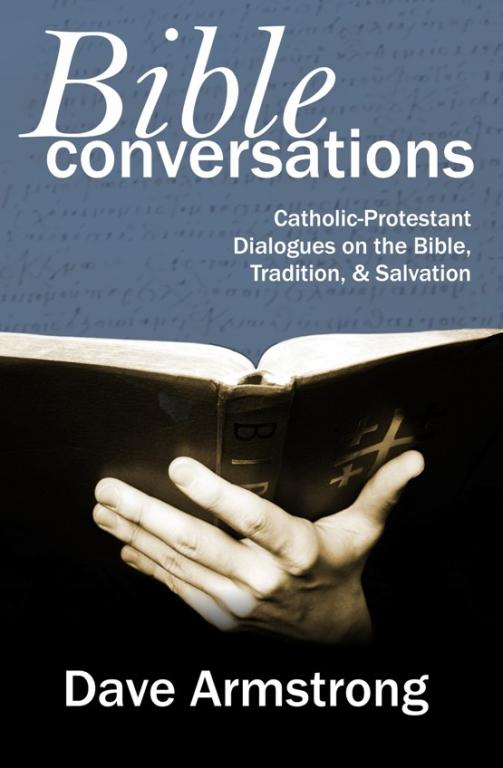
[Taken from Chapter Ten of the above volume (see book and purchase information), completed in June 2002]
Belgic Confession (1561)
[Words from the Belgic Confession will be in blue]
Article 29: The Marks of the True Church
We believe that we ought to discern diligently and very carefully, by the Word of God,
Who is to discern? The individual? Seems like it to me.
What is the true church– for all sects in the world today claim for themselves the name of “the church.” We are not speaking here of the company of hypocrites who are mixed among the good in the church and who nonetheless are not part of it, even though they are physically there. But we are speaking of distinguishing the body and fellowship of the true church from all sects that call themselves “the church.” The true church can be recognized if it has the following marks: The church engages in the pure preaching of the gospel;
What is the gospel? What is “pure preaching” of it? How many errors are allowed? For example, Luther’s baptismal regeneration is anathema to the Reformed, so is his gospel not a pure one; thus Lutherans — and many Anglicans and Methodists, etc. — are not in the “true church”; therefore not Christians? What about the Reformed Baptists who don’t baptize infants — some or many of whom would even deny that baptism is a sacrament at all?
If the gospel is defined as the Calvinist TULIP or suchlike, then this is circular reasoning (the gospel is merely what these folks say it is, on the basis of their own unproven and unsupported axioms). The Bible, which is supposedly the criteria of truthfulness here, does
no such thing. It defines the gospel as the birth (incarnation), life (with all its miracles and teaching), death, resurrection, and ascension of Christ, not as some technical theory of soteriology and justification. One can certainly deduce some theory of soteriology from it, but my point is that this is not what the Bible describes as “the gospel.”
it makes use of the pure administration of the sacraments as Christ instituted them;
How did Christ institute them? We have seen the differences concerning baptism above. So are Lutherans and Reformed Baptists and other sorts of Baptists out of the fold? As to the Eucharist, similarly serious differences arise. Lutherans believe in consubstantiation; so their belief here is not “pure.” And of course, if we look to the early Church Fathers, they unanimously accepted the Real Presence, so that one must believe that the
apostasy of the early Church on this score was well-nigh universal, and that only in the 16th-century was true eucharistic belief restored, and even then not by Luther (or for that matter, Zwingli), but by Calvin.
Now, what authority does he have? Certainly not apostolic authority, nor the prestige of passed-down apostolic Tradition, as his view is a novelty and an innovation. So there are a host of difficulties in almost every sentence here. The words may sound great, but they conceal myriad historical and biblical problems and contradictions, as clearly seen in this merely brief, cursory treatment.
it practices church discipline for correcting faults.
Sure, then when someone disagrees, he simply goes to another sect, on the basis of his own judgment as to what the pure church is, based on the Word of God (first sentence above). He applies the same criteria stated here to go somewhere else, because the final authority must reside in the individual, due to unresolvable difficulties and contradictions among the various sects. These appeared at the beginning of the Protestant Revolt
(inevitably) and will always remain, because of this flawed principle of how one determines theological truth. If in fact there had always been one Protestant Church and one only, then these axioms might hold at least some water, but as this has never been the case, the system is burdened by self-contradiction and an inability to consistently apply these standards to the real world.
In short, it governs itself according to the pure Word of God, rejecting all things contrary to it and holding Jesus Christ as the only Head.
This sounds noble and glorious, but it is not nearly this simple, because there were and are foundational differences on almost every issue where Protestantism is to be distinguished from Catholicism in the first place. Until these can be resolved, then such talk within the Protestant paradigm is a pipe dream of the most illusory sort.
By these marks one can be assured of recognizing the true church — and no one ought to be separated from it.
The only self-consistent, historically demonstrable way to establish this is by apostolic succession and an examination of history (as the Fathers taught). No Protestant sect can pass this test. But even using their own stated criteria of authenticity above, no one can figure out which sect is the true one, because the doctrinal disagreements run too deep and are too serious.
As for those who can belong to the church, we can recognize them by the distinguishing marks of Christians: namely by faith,
What is faith? Protestants disagree on this, too. How does regeneration and election relate to personal faith? How is one assured of saving faith? Can one lose that and fall away?, etc.
and by their fleeing from sin and pursuing righteousness, once they have received the one and only Savior, Jesus Christ. They love the true God and their neighbors, without turning to the right or left, and they crucify the flesh and its works.
This sounds great, too, but it has never occurred in an entire group. Since sin is present in all professed Christian groups, the absence of it can hardly be the “proof” of the authenticity of one sect over another.
Though great weakness remains in them, they fight against it by the Spirit all the days of their lives, appealing constantly to the blood, suffering, death, and obedience of the Lord Jesus, in whom they have forgiveness of their sins, through faith in him.
Virtually all Christian groups would adhere to this notion, so it is of no help for our task, either.
As for the false church, it assigns more authority to itself and its ordinances than to the Word of God; it does not want to subject itself to the yoke of Christ;
What does this mean?
it does not administer the sacraments as Christ commanded in his Word; it rather adds to them or subtracts from them as it pleases;
The problems in this statement were already discussed. One can either appeal to the constant Tradition throughout the ages and apostolic succession, or else choose one of a host of Protestant options, all themselves ultimately arbitrary and man-centered and unable to be supported by Church history.
it bases itself on men, more than on Jesus Christ;
No Christian system is more man-centered than Protestantism, where a single man’s word (Calvin, Luther, Fox et al) has the greatest authority, far greater than any pope ever dreamt of. Any local pastor has far more influence or effect on the lives of his congregation than the pope has on a Catholic, in a practical, everyday sense. That’s why Protestant congregations often split in two merely because a popular pastor might feel called to move on to another assembly.
it persecutes those who live holy lives according to the Word of God and who rebuke it for its faults, greed, and idolatry.
The sin argument resolves nothing. Protestants were at least as intolerant in the 16th century as Catholics — arguably far more, especially in light of their supposed principles of tolerance and supremacy of the individual conscience.
These two churches are easy to recognize and thus to distinguish from each other.
Not quite. Until Protestants can answer the difficulties I raised above, and many more brought about by their utter inability to resolve their own internal squabbles, any claim to a true Church in their ranks, of whatever character, visible or invisible, institutional, creedal, confessional, or metaphysical, over against the Catholic Church, is self-defeating, upon close scrutiny.
The Second Helvetic Confession (1566)
[Words in green]
Chapter 2 – Of Interpreting the Holy Scriptures; and of
Fathers, Councils, and Traditions [complete]
The True Interpretation of Scripture. The apostle Peter has said that the Holy Scriptures are not of private interpretation (II Peter 1:20), and thus we do not allow all possible interpretations.
How many are allowed then? Which ones, and why?
Nor consequently do we acknowledge as the true or genuine interpretation of the Scriptures what is called the conception of the Roman Church, that is, what the defenders of the Roman Church plainly maintain should be thrust upon all for acceptance.
Obviously not, having enthroned private judgment of individuals and traditions of men in its place . . .
But we hold that interpretation of the Scripture to be orthodox and genuine which is gleaned from the Scriptures themselves (from the nature of the language in which they were written, likewise according to the circumstances in which they were set down, and expounded in the light of like and unlike passages and of many and clearer passages) and which agree with the rule of faith and love, and contributes much to the glory of
God and man’s salvation.
More high-sounding, pious, noble language with little concrete or particular content. This assumes (quite absurdly) that Protestants are in sole possession of these hermeneutical tools, and that one “true” teaching on any topic will appear and be evident to all true followers of Christ. These are pipe dreams.
Interpretations of the Holy Fathers. Wherefore we do not despise the interpretations of the holy Greek and Latin fathers, nor reject their disputations and treatises concerning sacred matters as far as they agree with the Scriptures;
Who decides where they agree or disagree, and by what criteria? There are a host of doctrines where the Fathers contradict Reformed Christianity en masse.
but we modestly dissent from them when they are found to set down things differing from, or altogether contrary to, the Scriptures.
Who decides what the Scriptures teach? A panel of venerable, grey-bearded Reformed worthies, assembled in 1566?
Neither do we think that we do them any wrong in this matter; seeing that they all, with one consent, will not have their writings equated with the canonical Scriptures, but command us to prove how far they agree or disagree with them, and to accept what is in agreement and to reject what is in disagreement.
Yes, as judged by the apostolic Church and its authoritative Councils, and its popes, not by individuals eight, nine, or ten centuries later who count the noses of their comrades in some given sect and conclude that the majority opinion is therefore the “biblical” one.
Councils. And in the same order also we place the decrees and canons of councils. Wherefore we do not permit ourselves, in controversies about religion or matters of faith, to urge our case with only the opinions of the fathers or decrees of councils; much less by received customs, or by the large number who share the same opinion, or by the prescription of a long time. Who is the judge? Therefore, we do not admit any other judge than God himself, who proclaims by the Holy Scriptures what is true, what is false, what is to be followed, or what to be avoided.
But of course! God will settle all the issues! Who could argue with that? But as we are not God, but mere men — and prophets are a relatively rare occurrence –, there must be some human Christian authority as well — binding in some sense; to some degree. One can, then, either believe that God promised to guide His Church and preserve it free from error, under a properly unified authority, with councils and bishops and a gift of
infallibility (as Catholics believe) or that individuals ultimately decide what is or what is not true, dissenting from councils, Tradition, the Fathers, and apostolic succession alike if needs be. These are given lip service above and elsewhere in similar Protestant statements, but it is obvious that the individual retains the right to dissent from all of this ecclesiastical authority, since his conscience is supreme. It all began with Luther at Worms.
So we do assent to the judgments of spiritual men which are drawn from the Word of God. Certainly Jeremiah and other prophets vehemently condemned the assemblies of priests which were set up against the law of God; and diligently admonished us that we should not listen to the
fathers, or tread in their path who, walking in their own inventions, swerved from the law of God.
This is a large reason why I became a Catholic: because Protestant innovations were merely the inventions of men. They had no pedigree in Church history, and thus, no reason to be accepted. The Catholic believes that just as the Holy Spirit can teach people today, that He could do so in the past — that Christian history of thought means something. G.K. Chesterton insightfully described Tradition as “the democracy of the dead.”
Traditions of Men. Likewise we reject human traditions, even if they be adorned with high-sounding titles, as though they were divine and apostolical, delivered to the Church by the living voice of the apostles, and, as it were, through the hands of apostolical men to succeeding
bishops which, when compared with the Scriptures, disagree with them; and by their disagreement show that they are not apostolic at all. For as the apostles did not contradict themselves in doctrine, so the apostolic men did not set forth things contrary to the apostles. On the contrary, it would be wicked to assert that the apostles by a living voice delivered anything contrary to their writings. Paul affirms expressly that he taught the same things in all churches (1 Cor. 4:17). And, again, “For we write you nothing but what you can read and understand.” (2 Cor. 1:13). Also, in another place, he testifies that he and his disciples–that is, apostolic men–walked in the same way, and jointly by the same Spirit did all things (2 Cor. 12:18). Moreover, the Jews in former times had the traditions of their elders; but these traditions were severely rejected by the Lord, indicating that the keeping of them hinders God’s law, and that God is worshipped in vain by such traditions (Matt. 15:1ff.; Mark 7:1 ff.).
Who determines which teachings are “traditions of men” and how? And why should we value their opinions or heed their authority more so than the venerable Fathers of the Church?
***
Summary: I interact with two 16th century Protestant confessions: particularly their treatment of ecclesiology and private judgment. I ask the hard questions that these confessions ignore.
***
Calvinism & General Protestantism
pillar and foundation of truth
Previous Post
May 19, 2021
Westminster vs. Bible #1: Assurance of Salvation
Next Post

May 20, 2021 Atheist JMS Pearce Sez His Combox Will Be Civil (Right!)
Browse Our Archives
Select a Category & Last Things About Me Anti-Catholicism Atheism & Agnosticism Baptism and Sacramentalism Bible and Tradition Blessed Virgin Mary Books by Dave Armstrong C. S. Lewis Calvinism & General Protestantism Catholic Apologetics Catholic Apologists Catholic conversion Catholic converts Christmas Church (Ecclesiology) Church History Conversion and Converts Development of Doctrine Eastern Orthodoxy Ecumenism & Christian Unity Eucharist & Liturgy Fathers of the Church French Translations G. K. Chesterton Hell Hell & Satan Hell & Satan & Last Things Heresies & Comparative Religion Holistic Health Inquisition & Crusades & Scandals James White Jews & Judaism & Old Testament John Calvin John Henry Newman Liberal / Modernist Theology Life Issues Literary Resume Lutheranism Mariology Martin Luther Music Orthodoxy Papacy & Infallibility Personal Page Philosophy & Science Political & Ethical & Moral Issues Protestant Persecution & Intolerance Protestantism Purgatory Purgatory & Penance Romantic & Imaginative Theology Saints & Purgatory & Penance Salvation Salvation & Justification Satan & Last Things Sexuality and Gender Issues Spanish Translations Traditionalism vs. Radical Catholic Reactionaries Traducciones al español / tradução para português Trinitarianism & Christology Uncategorized Videos
Select a Month October 2026 September 2026 August 2026 July 2026 June 2026 May 2026 April 2026 March 2026 February 2026 January 2026 December 2025 November 2025 October 2025 September 2025 August 2025 July 2025 June 2025 May 2025 April 2025 March 2025 February 2025 January 2025 December 2024 November 2024 October 2024 September 2024 August 2024 July 2024 June 2024 May 2024 April 2024 March 2024 February 2024 January 2024 December 2023 November 2023 October 2023 September 2023 August 2023 July 2023 June 2023 May 2023 April 2023 March 2023 February 2023 January 2023 December 2022 November 2022 October 2022 September 2022 August 2022 July 2022 June 2022 May 2022 April 2022 March 2022 February 2022 January 2022 December 2021 November 2021 October 2021 September 2021 August 2021 July 2021 June 2021 May 2021 April 2021 March 2021 February 2021 January 2021 December 2020 November 2020 October 2020 September 2020 August 2020 July 2020 June 2020 May 2020 April 2020 March 2020 February 2020 January 2020 December 2019 November 2019 October 2019 September 2019 August 2019 July 2019 June 2019 May 2019 April 2019 March 2019 February 2019 January 2019 December 2018 November 2018 October 2018 September 2018 August 2018 July 2018 June 2018 May 2018 April 2018 March 2018 February 2018 January 2018 December 2017 November 2017 October 2017 September 2017 August 2017 July 2017 June 2017 May 2017 April 2017 March 2017 February 2017 January 2017 December 2016 November 2016 October 2016 September 2016 August 2016 July 2016 June 2016 May 2016 April 2016 March 2016 February 2016 January 2016 December 2015 November 2015 October 2015 September 2015 August 2015 July 2015 June 2015 May 2015 April 2015 March 2015 February 2015 January 2015 December 2014 November 2014 October 2014 September 2014 August 2014 July 2014 June 2014 April 2014 March 2014 February 2014 January 2014 December 2013 November 2013 October 2013 September 2013 August 2013 July 2013 June 2013 April 2013 March 2013 February 2013 January 2013 December 2012 November 2012 October 2012 September 2012 August 2012 July 2012 June 2012 May 2012 April 2012 March 2012 February 2012 January 2012 December 2011 November 2011 October 2011 September 2011 August 2011 July 2011 June 2011 April 2011 March 2011 February 2011 October 2010 September 2010 August 2010 July 2010 April 2010 March 2010 December 2009 October 2009 August 2009 July 2009 June 2009 May 2009 March 2009 February 2009 October 2008 September 2008 April 2008 March 2008 February 2008 January 2008 December 2007 November 2007 October 2007 May 2007 March 2007 February 2007 January 2007 November 2006 October 2006 September 2006 August 2006 July 2006 June 2006 May 2006 April 2006 March 2006 February 2006 October 2005 June 2005 April 2005 February 2005 July 2004 May 2004 April 2004
Follow Us!
TAKE THE
Religious Wisdom Quiz
What does "apostle" literally mean in Greek?
Select your answer to see how you score.
Sent one Friend Leader Writer
Books by This Author Books by Dave Armstrong
Related posts from Biblical Evidence for Catholicism

On Protestant Explanations of Catholic Conversion
Biblical Evidence for Catholicism

Protestant Confessions & "Ever-Virgin" Mary
Biblical Evidence for Catholicism

Jesus Founded the [Catholic] Church. If Not Him,...
Biblical Evidence for Catholicism

A Few "Worst" & "Best" Arguments vs. Protestantism
Biblical Evidence for Catholicism
TRENDING AT PATHEOS Catholic

The Sermon on the Mount, Part I: Matthew...
The Sermon on the Mount, Part I (Matthew 4:12-5:12) St. Matthew moves...

What's up from Crossway: Reviewing some of their latest A few weeks...

Janie Learns the Way of the Cross: A...
Teaching children about Jesus' Passion can be challenging. Many parents and educators...

Looking For Good Catholic Writing - October 2026
He alone extends the heavens, and he walks upon the waves of...

In "Irreplaceable," our book on vocation and technology, Trevor Sutton and I...

I was strolling through the top floor of the brand new Parthenon...
view all Catholic blogs
Ad-Free & Subscriber Log-In Subscription Support
- About Us
- 2026 Calendar
- Videos
- Podcasts
- Library of World Religions
- Faith In Media Tracker
- Advertise With Us
- Write for Us
- Privacy Policy
- Terms of Service
- Do Not Sell My Data
- Contact Us
- Radiant Digital
- Manage Newsletter Subscriptions
- Unsubscribe From Notifications
- Sitemap
Copyright 2008-2026, Patheos. All rights reserved.
Subscription Support Ad-Free & Subscriber Log-In
Follow Patheos