
BuddhistCatholicContemplativeEvangelicalGeneral ChristianHinduJewishLatter-day SaintMuslimNew VisionsProgressive Christian
Beliefs
- Buddhist
- Catholic
- Contemplative
- Evangelical
- General Christian
- Hindu
- Jewish
- Latter-day Saint
- More Voices
- Muslim
- New Visions
- Pagan
- Progressive Christian
Topics
- Religion News
- Food and Religion
- Sports and Religion
- Religious Art
- Religious Music and Entertainment
- Religious Events
- History and Religion
- Style and Religion
- Politics and Religion
- Women in Religion
- Recreation Outdoors and Religion
- Business Finance and Religion
- Careers Workplace and Religion
- Education and Religion
- Family Parenting and Religion
- Health Fitness and Religion
- Home and Religion
- Relationships and Religion
- Technology and Religion
- Travel and Religion
Columnists
- Buddhist Columnists
- Business Finance and Religion Columnists
- Careers Workplace and Religion Columnists
- Catholic Columnists
- Contemplative Columnists
- Education and Religion Columnists
- Evangelists Columnists
- Family Parenting and Religion Columnists
- General Christian Columnists
- Health Fitness and Religion Columnists
- Hindu Columnists
- History and Religion Columnists
- Home and Religion Columnists
- Jewish Columnists
- More Voices Columnists
- Latter Day Columnists
- Muslim Columnists
- New Visions Columnists
- Nonreligious Columnists
- Pagan Columnists
- Politics and Religion Columnists
- Progressive Columnists
- Recreation Outdoors and Religion Columnists
- Relationships and Religion Columnists
- Religion News Columnists
- Religious Art Columnists
- Religious Events Columnists
- Religious Music and Entertainment Columnists
- Sports and Religion Columnists
- Style and Religion Columnists
- Technology and Religion Columnists
- Travel and Religion Columnists
- Women in Religion Columnists
Resource Library
- 2026 Calendar
- Library of World Religions
- The 100 Most Holy Places on Earth
- Patheos Answers
- Podcasts
- Videos
- Faith Leaders Database
- Anglican Episcopalian
- Bahai
- Baptist
- Buddhism
- Christianity
- Confucianism
- Eastern Orthodoxy
- Hinduism
- Holiness and Pentecostal
- ISKCON
- Islam
- Judaism
- Lutheran
- Methodist
- The Church of Jesus Christ of Latter-day Saints
- New Age
- Paganism
- Presbytarian and Reformed
- Protestantism
- Religion Behind the Scenes
- Roman Catholic
- Scientology
- Shia Islam
- Sikhism
- Sufism
- Sunni Islam
- Taoism
- Zen
- See all religions
Research Tools
 Ad-Free & Subscriber Log-In Subscription Support
Ad-Free & Subscriber Log-In Subscription Support
Follow Patheos 

- Trending:
- Forgiveness
- |
- Marriage
- |
- Consciousness
- |
- Death Penalty
- |
- Election
- |
- Halloween

-
About
-
Catholic Apologetics
-
Church History
-
Great Apologists
-
Christian Worldview
-
Protestantism & Misc.
- Home
- Catholic
- History and Religion
- Resurrection Debate #3: Did Jesus Publicly Claim to Be the Messiah?
Resurrection Debate #3: Did Jesus Publicly Claim to Be the Messiah?
Last updated on: June 5, 2026 at 11:58 pm by Dave Armstrong
Resurrection Debate #3: Did Jesus Publicly Claim to Be the Messiah? 2026-06-05T23:58:08-04:00 Dave Armstrong
Patheos Explore the world's faith through different perspectives on religion and spirituality! Patheos has the views of the prevalent religions and spiritualities of the world.
Michael J. Alter is the author of the copiously researched, 913-page volume, The Resurrection: a Critical Inquiry (2015). I initially offered 59 “brief” replies to as many alleged New Testament contradictions (March 2021). We later engaged in amiable correspondence and decided to enter into a major ongoing dialogue about his book. He graciously sent me a PDF file of it, free of charge, for my review, and has committed himself to counter-response as well: a very rare trait these days. All of this is, I think, mightily impressive.
Mike describes himself as “of the Jewish faith” but is quick to point out that labels are often “misleading” and “divisive” (I agree to a large extent). He continues to be influenced by, for example, “Reformed, Conservative, Orthodox, and Chabad” variants of Judaism and learns “from those of other faiths, the secular, the non-theists, etc.” Fair enough. I have a great many influences, too, am very ecumenical, and am a great admirer of Judaism, as I told Michael in a combox comment on my blog.
He says his book “can be described as Jewish apologetics” and one that provides reasons for “why members of the Jewish community should not convert to Christianity.” I will be writing many critiques of the book and we’ll be engaging in ongoing discussion for likely a long time. I’m quite excited about it and eagerly enjoy the dialogue and debate. This is a rare opportunity these days and I am most grateful for Mike’s willingness to interact, minus any personal hostility.
I use RSV for all Bible verses that I cite. His words will be in blue.
*****
Alter claimed on page 53 of his book that “Jesus never taught publicly that he was the Messiah” (his italics). Some question arises as to what he meant by “publicly”. I take it to mean that saying it to His disciples only (Mt 16:16-20; see 24:3: “the disciples came to him privately”) or to single persons like the woman at the well (Jn 4:25-26), or the two disciples on the road to Emmaus (Lk 24:25-27) are not public.
On the other hand, when He said it to the high priest (Mk 14:61-62; cf. Mt 26:63-65; Lk 22:67-71) there was a group present:
Mark 14:53, 55-56, 64 And they led Jesus to the high priest; and all the chief priests and the elders and the scribes were assembled. . . . [55] Now the chief priests and the whole council sought testimony against Jesus to put him to death; but they found none. [56] For many bore false witness against him . . . [64] . . . they all condemned him as deserving death.
Matthew 26:57, 59-60 Then those who had seized Jesus led him to Ca’iaphas the high priest, where the scribes and the elders had gathered. . . . [59] . . . chief priests and the whole council sought false testimony against Jesus that they might put him to death, [60] but they found none, though many false witnesses came forward. . . .
Luke 22:66 . . . the assembly of the elders of the people gathered together, both chief priests and scribes; and they led him away to their council . . .
Alter could, I suppose, maintain that this is still not public, since it was a private meeting of high dignitaries. In any event, Jesus claimed to be the Messiah in this instance with many people present. Pontius Pilate also said to “the crowd” (Mt 27:15) twice: “Jesus who is called Christ [Greek for Messiah]” (27:17, 22). Moreover, Jesus’ appearance before Pontius Pilate as reported in Luke was before the “multitudes” and included a messianic claim:
Luke 23:1-4 Then the whole company of them arose, and brought him before Pilate. [2] And they began to accuse him, saying, “We found this man perverting our nation, and forbidding us to give tribute to Caesar, and saying that he himself is Christ a king.” [3] And Pilate asked him, “Are you the King of the Jews?” And he answered him, “You have said so.” [4] And Pilate said to the chief priests and the multitudes, “I find no crime in this man.”
But there is much more data to consider. The best proof that Jesus claimed to be the Messiah in public is His constant use of “son the man”: a well-known messianic description drawn from Daniel:
Daniel 7:13-14 I saw in the night visions, and behold, with the clouds of heaven there came one like a son of man, and he came to the Ancient of Days and was presented before him. [14] And to him was given dominion and glory and kingdom, that all peoples, nations, and languages should serve him; his dominion is an everlasting dominion, which shall not pass away, and his kingdom one that shall not be destroyed.
Jesus clearly alluded to this and meant that He was identical to “the son of man” in this passage; that is, the Messiah, in the same context in which He was responding affirmatively to the question, “Are you the Christ [Messiah]?”:
Mark 14:61-62 . . . Again the high priest asked him, “Are you the Christ, the Son of the Blessed?” [62] And Jesus said, “I am; and you will see the Son of man seated at the right hand of Power, and coming with the clouds of heaven.”
Matthew 26:63-64 And the high priest said to him, “I adjure you by the living God, tell us if you are the Christ, the Son of God.”
[64] Jesus said to him, “You have said so. But I tell you, hereafter you will see the Son of man seated at the right hand of Power, and coming on the clouds of heaven.”Luke 22:67-70 “If you are the Christ, tell us.” But he said to them, “If I tell you, you will not believe; [68] and if I ask you, you will not answer. [69] But from now on the Son of man shall be seated at the right hand of the power of God.” [70] And they all said, “Are you the Son of God, then?” And he said to them, “You say that I am.”
The reactions and words of the high priest and the assembly show beyond all doubt that they accepted the messianic nature of Daniel 7: applied by Jesus to Himself, and also that claiming to be Messiah and “son of man” is the equivalent to being the “Son of God” as well (cf. Mt 16:16: “Simon Peter replied, ‘You are the Christ, the Son of the living God.’ “; also John 19:7: “The Jews answered him, ‘We have a law, and by that law he ought to die, because he has made himself the Son of God.’ “).
Jesus claimed to be the “Son of God” at “the feast of the Dedication at Jerusalem; . . . Jesus was walking in the temple, in the portico of Solomon” (Jn 10:22-23). At that public place at a public feast the following exchange occurred:
John 10:24-36 So the Jews gathered round him and said to him, “How long will you keep us in suspense? If you are the Christ, tell us plainly.” [25] Jesus answered them, “I told you, and you do not believe. The works that I do in my Father’s name, they bear witness to me; [26] but you do not believe, because you do not belong to my sheep. [27] My sheep hear my voice, and I know them, and they follow me; [28] and I give them eternal life, and they shall never perish, and no one shall snatch them out of my hand. [29] My Father, who has given them to me, is greater than all, and no one is able to snatch them out of the Father’s hand. [30] I and the Father are one.” [31] The Jews took up stones again to stone him. [32] Jesus answered them, “I have shown you many good works from the Father; for which of these do you stone me?” [33] The Jews answered him, “It is not for a good work that we stone you but for blasphemy; because you, being a man, make yourself God.” [34] Jesus answered them, “Is it not written in your law, `I said, you are gods’? [35] If he called them gods to whom the word of God came (and scripture cannot be broken), [36] do you say of him whom the Father consecrated and sent into the world, `You are blaspheming,’ because I said, `I am the Son of God’? (cf. the similar but apparently less public John 5:17-40)
In these extraordinary public words, Jesus directly claimed to be the Messiah (10:24-25), and the equivalent “Son of God”: both directly (10:36) and by very strong indirect deduction, by constant reference to God being His “Father” in a profound sense that didn’t apply to every Jew. He claimed to be God, by claiming equality with God the father (10:30): which the Jews perfectly understood (10:33), and reacted to by attempting to stone Him for blasphemy (10:31, 33, 36), and He claimed to be the Savior of mankind (10:28): a thing which can only apply to God (Is 43:3, 11; 45:15, 21; 49:26; 60:16; 63:8; Hos 13:4).
Solomon’s portico or porch was undeniably a public gathering place. It’s referred to again in Acts:
Acts 3:11-12 . . . all the people ran together to them in the portico called Solomon’s, astounded. [12] And when Peter saw it he addressed the people, . . .
Acts 4:1-2 And as they were speaking to the people, the priests and the captain of the temple and the Sad’ducees came upon them, [2] annoyed because they were teaching the people . . .
This is the same place where Jesus gave His address in John 10:24-26, according to John 10:23. PUBLIC! The Jewish historian Josephus (Ant. xx.9.7) described it as having “walls that reached 400 cubits [in length].” 400 cubits is equal to 600 feet (almost 183 meters): which is two (American) football fields in length. Clearly, then, this was a large gathering place, is described as such in Acts 3:11-12 and 4:1-2, and is, therefore, quite “public.” Jesus explicitly claimed to be Messiah there and not only the Son of God but God the Son (which is why He was almost stoned for blasphemy, because the scribes and elders obviously disbelieved Him).
Does Jesus ever refer to Himself as “the son of man” (which we know is a messianic reference) in public besides in the “council” of the Jewish leaders and the “multitudes” addressed by Pilate? The answer is yes, and here’s the proof:
Mark 8:38 “For whoever is ashamed of me and of my words in this adulterous and sinful generation, of him will the Son of man also be ashamed, when he comes in the glory of his Father with the holy angels.” [spoken to “the multitude with his disciples”: 8:34]
Luke 11:29-32 When the crowds were increasing, he began to say, “This generation is an evil generation; it seeks a sign, but no sign shall be given to it except the sign of Jonah. [30] For as Jonah became a sign to the men of Nin’eveh, so will the Son of man be to this generation. [31] The queen of the South will arise at the judgment with the men of this generation and condemn them; for she came from the ends of the earth to hear the wisdom of Solomon, and behold, something greater than Solomon is here. [32] The men of Nin’eveh will arise at the judgment with this generation and condemn it; for they repented at the preaching of Jonah, and behold, something greater than Jonah is here.
We’ve thus seen lots of New Testament documentation of Jesus publicly claiming to be the Messiah. Yet Michael Alter curiously claimed in his book: “Jesus never taught publicly that he was the Messiah”. Lastly, the now manifest falsity of Jesus supposedly never claiming to be the Messiah in public also nullifies another of Alter’s arguments, that he had built upon that false premise. He wrote:
All the gospel accounts, except Luke’s, describe Jesus’s entry into Jerusalem with the people declaring Hosanna. “Hosanna” is the Greek rendering of a Hebrew phrase meaning “Save now” (Ps 118:25); “Blessed be he that cometh in the name of the LORD” is the next verse of that Psalm (Ps 118:26). From a Christian perspective, the crowds naturally connected this royal procession to the common hope in the coming of the Son of David, and the reception that they gave Jesus supposedly identified him as the Davidic Messiah who would deliver them from oppression. However, the Christian rationale behind this reception is impossible . . . (p. 53)
The “crowds” (Mt 21:9, 11) / “a great crowd” (Jn 12:12) / “all the city” that was / were “stirred” (Mt 21:10) cried, “Hosanna to the Son of David!” (Mt 21:9), “Blessed is the kingdom of our father David that is coming! Hosanna in the highest!” (Mk 11:10), and “Hosanna! Blessed is he who comes in the name of the Lord, even the King of Israel!” (Jn 12:13). Jesus not only did not rebuke such utterances; to the contrary, He accepted and defended them:
Matthew 21:15-16 But when the chief priests and the scribes saw the wonderful things that he did, and the children crying out in the temple, “Hosanna to the Son of David!” they were indignant; [16] and they said to him, “Do you hear what these are saying?” And Jesus said to them, “Yes; have you never read, ‘Out of the mouth of babes and sucklings thou hast brought perfect praise’?”
The parallel “Palm Sunday passage” in Luke elaborates upon the same oppositional dynamic and Jesus’ defense of the people’s acclamations of Him:
Luke 19:37-40 As he was now drawing near, at the descent of the Mount of Olives, the whole multitude of the disciples began to rejoice and praise God with a loud voice for all the mighty works that they had seen, [38] saying, “Blessed is the King who comes in the name of the Lord! Peace in heaven and glory in the highest!” [39] And some of the Pharisees in the multitude said to him, “Teacher, rebuke your disciples.” [40] He answered, “I tell you, if these were silent, the very stones would cry out.”
Therefore, this constitutes yet another public affirmation that He believed Himself to be the Messiah. The priests and scribes and “some of the Pharisees” were indignant precisely because they knew this was messianic language, which meant that He was accepting — in Jerusalem, near the holy temple — the public acclamation of Himself as the Messiah (a claim they utterly rejected). Earlier, it’s true that He wanted to avoid public recognition that He was the Messiah:
Matthew 16:20 Then he strictly charged the disciples to tell no one that he was the Christ.
Mark 8:29-30 And he asked them, “But who do you say that I am?” Peter answered him, “You are the Christ.” [30] And he charged them to tell no one about him.
That is, no doubt, some of the reason why Alter argued as he did. But later that “policy” changed, as evidenced by all the passages I produced above (which he somehow managed to overlook), to the extent that Jesus was telling all and sundry in the two-football-field-large Solomon’s portico that He was the Messiah and indeed, the incarnate God, referring to Himself with the messianic terminology “son of man” among the “multitude” and “crowds” and accepting messianic praise hearkening back to Psalm 118 on Palm Sunday. The latter event could hardly be more public than it was.
Case closed.
***
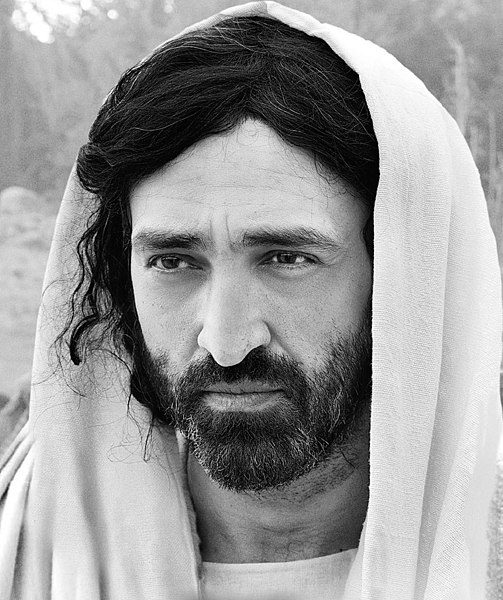
Photo credit: Selva Rasalingam as Jesus in the The Gospel of Luke (2016, Netflix USA) [Wikimedia Commons / Creative Commons CC0 1.0 Universal Public Domain Dedication]

Summary: Michael Alter asserted that Jesus never “publicly” claimed that He was the Messiah. I show how this is factually incorrect: particularly in light of His constant messianic self-identification as the “son of man”.
Tags: alleged Bible contradictions, alleged Resurrection contradictions, Bible “contradictions”, Bible “difficulties”, Bible Only, biblical inspiration, biblical prooftexts, biblical skeptics, biblical theology, exegesis, hermeneutics, Holy Bible, inerrancy, infallibility, Jewish anti-Christian polemics, Jewish apologetics, Jewish critique of Christianity, Jewish-Christian discussion, Michael J. Alter, New Testament, New Testament critics, New Testament skepticism, Resurrection “Contradictions”, Resurrection of Jesus, The Resurrection: A Critical Inquiry
***
Jews & Judaism & Old Testament
alleged Resurrection contradictions
Jewish anti-Christian polemics
Jewish critique of Christianity
The Resurrection: A Critical Inquiry
Previous Post
April 17, 2021
Resurrection Debate #2: Date of Jesus' Death
Next Post

April 19, 2021 Resurrection Debate #4: No "Leafy Branches" on Palm Sunday?
Browse Our Archives
Select a Category & Last Things About Me Anti-Catholicism Atheism & Agnosticism Baptism and Sacramentalism Bible and Tradition Blessed Virgin Mary Books by Dave Armstrong C. S. Lewis Calvinism & General Protestantism Catholic Apologetics Catholic Apologists Catholic conversion Catholic converts Christmas Church (Ecclesiology) Church History Conversion and Converts Development of Doctrine Eastern Orthodoxy Ecumenism & Christian Unity Eucharist & Liturgy Fathers of the Church French Translations G. K. Chesterton Hell Hell & Satan Hell & Satan & Last Things Heresies & Comparative Religion Holistic Health Inquisition & Crusades & Scandals James White Jews & Judaism & Old Testament John Calvin John Henry Newman Liberal / Modernist Theology Life Issues Literary Resume Lutheranism Mariology Martin Luther Music Orthodoxy Papacy & Infallibility Personal Page Philosophy & Science Political & Ethical & Moral Issues Protestant Persecution & Intolerance Protestantism Purgatory Purgatory & Penance Romantic & Imaginative Theology Saints & Purgatory & Penance Salvation Salvation & Justification Satan & Last Things Sexuality and Gender Issues Spanish Translations Traditionalism vs. Radical Catholic Reactionaries Traducciones al español / tradução para português Trinitarianism & Christology Uncategorized Videos
Select a Month October 2026 September 2026 August 2026 July 2026 June 2026 May 2026 April 2026 March 2026 February 2026 January 2026 December 2025 November 2025 October 2025 September 2025 August 2025 July 2025 June 2025 May 2025 April 2025 March 2025 February 2025 January 2025 December 2024 November 2024 October 2024 September 2024 August 2024 July 2024 June 2024 May 2024 April 2024 March 2024 February 2024 January 2024 December 2023 November 2023 October 2023 September 2023 August 2023 July 2023 June 2023 May 2023 April 2023 March 2023 February 2023 January 2023 December 2022 November 2022 October 2022 September 2022 August 2022 July 2022 June 2022 May 2022 April 2022 March 2022 February 2022 January 2022 December 2021 November 2021 October 2021 September 2021 August 2021 July 2021 June 2021 May 2021 April 2021 March 2021 February 2021 January 2021 December 2020 November 2020 October 2020 September 2020 August 2020 July 2020 June 2020 May 2020 April 2020 March 2020 February 2020 January 2020 December 2019 November 2019 October 2019 September 2019 August 2019 July 2019 June 2019 May 2019 April 2019 March 2019 February 2019 January 2019 December 2018 November 2018 October 2018 September 2018 August 2018 July 2018 June 2018 May 2018 April 2018 March 2018 February 2018 January 2018 December 2017 November 2017 October 2017 September 2017 August 2017 July 2017 June 2017 May 2017 April 2017 March 2017 February 2017 January 2017 December 2016 November 2016 October 2016 September 2016 August 2016 July 2016 June 2016 May 2016 April 2016 March 2016 February 2016 January 2016 December 2015 November 2015 October 2015 September 2015 August 2015 July 2015 June 2015 May 2015 April 2015 March 2015 February 2015 January 2015 December 2014 November 2014 October 2014 September 2014 August 2014 July 2014 June 2014 April 2014 March 2014 February 2014 January 2014 December 2013 November 2013 October 2013 September 2013 August 2013 July 2013 June 2013 April 2013 March 2013 February 2013 January 2013 December 2012 November 2012 October 2012 September 2012 August 2012 July 2012 June 2012 May 2012 April 2012 March 2012 February 2012 January 2012 December 2011 November 2011 October 2011 September 2011 August 2011 July 2011 June 2011 April 2011 March 2011 February 2011 October 2010 September 2010 August 2010 July 2010 April 2010 March 2010 December 2009 October 2009 August 2009 July 2009 June 2009 May 2009 March 2009 February 2009 October 2008 September 2008 April 2008 March 2008 February 2008 January 2008 December 2007 November 2007 October 2007 May 2007 March 2007 February 2007 January 2007 November 2006 October 2006 September 2006 August 2006 July 2006 June 2006 May 2006 April 2006 March 2006 February 2006 October 2005 June 2005 April 2005 February 2005 July 2004 May 2004 April 2004
Follow Us!
TAKE THE
Religious Wisdom Quiz
What was Paul’s profession before becoming an apostle?
Select your answer to see how you score.
Tentmaker Tax Collector Fisherman Carpenter
Books by This Author Books by Dave Armstrong
Related posts from Biblical Evidence for Catholicism

Jerusalem Council vs. James White & Sola Scriptura
Biblical Evidence for Catholicism

God, Modern Physics, & Dark Energy: An Analogy
Biblical Evidence for Catholicism

350 Bible Passages vs. Sola Scriptura
Biblical Evidence for Catholicism
Sola Scriptura: Self-Defeating, Unworkable, Unbiblical
Biblical Evidence for Catholicism
TRENDING AT PATHEOS Catholic

I was strolling through the top floor of the brand new Parthenon...

What Does Gêvâh Mean For Kimberley Guifoyle &...
This week, a lot of the news is focused on Kimberly Guilfoyle....

INNER CIRCLE: Profound Mystery (Of Christ In All...
Ephesians 5:31-32 “For this reason, a man will leave his father and...

Do Not Rejoice When Your Enemy Falls: The...
Turning an execution into a public spectacle is a disturbing expression of...

'The Chosen' S6 Trailer: The Passion Gets Very...
Not many watching 'The Chosen' worry about spoilers, but just because they...

The purpose-driven labor priest
A labor activist reads Rick Warren and it gets me wondering about...
view all Catholic blogs
Ad-Free & Subscriber Log-In Subscription Support
- About Us
- 2026 Calendar
- Videos
- Podcasts
- Library of World Religions
- Faith In Media Tracker
- Advertise With Us
- Write for Us
- Privacy Policy
- Terms of Service
- Do Not Sell My Data
- Contact Us
- Radiant Digital
- Manage Newsletter Subscriptions
- Unsubscribe From Notifications
- Sitemap
Copyright 2008-2026, Patheos. All rights reserved.
Subscription Support Ad-Free & Subscriber Log-In
Follow Patheos