
BuddhistCatholicContemplativeEvangelicalGeneral ChristianHinduJewishLatter-day SaintMuslimNew VisionsProgressive Christian
Beliefs
- Buddhist
- Catholic
- Contemplative
- Evangelical
- General Christian
- Hindu
- Jewish
- Latter-day Saint
- More Voices
- Muslim
- New Visions
- Pagan
- Progressive Christian
Topics
- Religion News
- Food and Religion
- Sports and Religion
- Religious Art
- Religious Music and Entertainment
- Religious Events
- History and Religion
- Style and Religion
- Politics and Religion
- Women in Religion
- Recreation Outdoors and Religion
- Business Finance and Religion
- Careers Workplace and Religion
- Education and Religion
- Family Parenting and Religion
- Health Fitness and Religion
- Home and Religion
- Relationships and Religion
- Technology and Religion
- Travel and Religion
Columnists
- Buddhist Columnists
- Business Finance and Religion Columnists
- Careers Workplace and Religion Columnists
- Catholic Columnists
- Contemplative Columnists
- Education and Religion Columnists
- Evangelists Columnists
- Family Parenting and Religion Columnists
- General Christian Columnists
- Health Fitness and Religion Columnists
- Hindu Columnists
- History and Religion Columnists
- Home and Religion Columnists
- Jewish Columnists
- More Voices Columnists
- Latter Day Columnists
- Muslim Columnists
- New Visions Columnists
- Nonreligious Columnists
- Pagan Columnists
- Politics and Religion Columnists
- Progressive Columnists
- Recreation Outdoors and Religion Columnists
- Relationships and Religion Columnists
- Religion News Columnists
- Religious Art Columnists
- Religious Events Columnists
- Religious Music and Entertainment Columnists
- Sports and Religion Columnists
- Style and Religion Columnists
- Technology and Religion Columnists
- Travel and Religion Columnists
- Women in Religion Columnists
Resource Library
- 2026 Calendar
- Library of World Religions
- The 100 Most Holy Places on Earth
- Patheos Answers
- Podcasts
- Videos
- Faith Leaders Database
- Anglican Episcopalian
- Bahai
- Baptist
- Buddhism
- Christianity
- Confucianism
- Eastern Orthodoxy
- Hinduism
- Holiness and Pentecostal
- ISKCON
- Islam
- Judaism
- Lutheran
- Methodist
- The Church of Jesus Christ of Latter-day Saints
- New Age
- Paganism
- Presbytarian and Reformed
- Protestantism
- Religion Behind the Scenes
- Roman Catholic
- Scientology
- Shia Islam
- Sikhism
- Sufism
- Sunni Islam
- Taoism
- Zen
- See all religions
Research Tools
 Ad-Free & Subscriber Log-In Subscription Support
Ad-Free & Subscriber Log-In Subscription Support
Follow Patheos 

- Trending:
- Forgiveness
- |
- Marriage
- |
- Consciousness
- |
- Death Penalty
- |
- Election
- |
- Halloween

-
About
-
Catholic Apologetics
-
Church History
-
Great Apologists
-
Christian Worldview
-
Protestantism & Misc.
- Home
- Catholic
- History and Religion
- Resurrection (?) #6: “Three Days and Three Nights”
Resurrection (?) #6: “Three Days and Three Nights”
Last updated on: June 5, 2026 at 11:58 pm by Dave Armstrong
Resurrection (?) #6: “Three Days and Three Nights” 2026-06-05T23:58:26-04:00 Dave Armstrong
Patheos Explore the world's faith through different perspectives on religion and spirituality! Patheos has the views of the prevalent religions and spiritualities of the world.
Michael J. Alter is the author of the copiously researched, 913-page volume, The Resurrection: a Critical Inquiry (2015). I initially offered 59 “brief” replies to as many alleged New Testament contradictions (March 2021). We later engaged in amiable correspondence and decided to enter into a major ongoing dialogue about his book. He graciously sent me a PDF file of it, free of charge, for my review, and has committed himself to counter-response as well: a very rare trait these days. All of this is, I think, mightily impressive.
Mike describes himself as “of the Jewish faith” but is quick to point out that labels are often “misleading” and “divisive” (I agree to a large extent). He continues to be influenced by, for example, “Reformed, Conservative, Orthodox, and Chabad” variants of Judaism and learns “from those of other faiths, the secular, the non-theists, etc.” Fair enough. I have a great many influences, too, am very ecumenical, and am a great admirer of Judaism, as I told Michael in a combox comment on my blog.
He says his book “can be described as Jewish apologetics” and one that provides reasons for “why members of the Jewish community should not convert to Christianity.” I will be writing many critiques of the book and we’ll be engaging in ongoing discussion for likely a long time. I’m quite excited about it and eagerly enjoy the dialogue and debate. This is a rare opportunity these days and I am most grateful for Mike’s willingness to interact, minus any personal hostility.
I use RSV for all Bible verses that I cite. His words will be in blue.
*****
Alter wrote, not in his book, but in reply to #2 in my series of replies, in my combox:
Let us return to the 72-hour controversy. Is it literal or not? This writer does not know the answer, and neither do you. Instead, this writer examines various possibilities – many written by Christian scholars and theologians. The burden of proof is for you to prove that the Gospel authors precisely meant part of a day counted as a whole day. Did all Jews living at that time accept 100 percent of that interpretation? Again, where is your evidentiary proof? Is it possible that some ancient people did not accept or construe time as you opine?
In his book, as is his custom, Alter offers several different theories of how Christians have approached this “problem”. Also, as he is in the habit of doing, he doesn’t take a stand on any given theory, but interprets the presence of many theories as indicative that a “problem” in the New Testament text exists (which doesn’t necessarily follow). Thus, above he claims he “does not know” if the 72 hours should be considered literal and also confidently claims that I don’t know, either. I noted there that I have dealt with the topic already, though not at great length. But Alter provides much of the rationale in his description of the Friday-to-Sunday “standard” Christian belief:
According to the Jewish custom of inclusive reckoning of time, any part of a day was reckoned as an entire day, including the night. Consequently, part of Friday, all of Saturday, and part of Sunday would have been counted as three days (see Gen 42:17; 1 Kgs 20:29; 2 Chron 10:5, 1 Sam 30:12; y. Shabbat 9:3; cf. b. Pesahim 4a). Therefore, a Friday burial and Sunday morning resurrection would count as three days. (p. 95)
He cites the two Old Testament passages that I utilized in my paper. Let’s take a look at them:
Genesis 42:17-18 And he put them all together in prison for three days. [18] On the third day Joseph said to them, “Do this and you will live, for I fear God:
1 Samuel 30:12-13 and they gave him a piece of a cake of figs and two clusters of raisins. And when he had eaten, his spirit revived; for he had not eaten bread or drunk water for three days and three nights. [13] And David said to him, “To whom do you belong? And where are you from?” He said, “I am a young man of Egypt, servant to an Amal’ekite; and my master left me behind because I fell sick three days ago. [“three days and three nights and “three days” are used interchangeably]
Here are Alter’s other two (that he presumably learned about from Christians making this argument):
1 Kings 20:29 And they encamped opposite one another seven days. Then on the seventh day the battle was joined; and the people of Israel smote of the Syrians a hundred thousand foot soldiers in one day.
2 Chronicles 10:5 He said to them, “Come to me again in three days.” So the people went away.
He also adds talmudic references (but only by citation). Pesachim 4a:2 specifically states: “And learn from it that with regard to the halakhot of mourning, the legal status of part of the day is like that of an entire day.” (cf. Mishna Shabbat 9:3).
I argued in my earlier paper that we use the same sort of idiom today, in English: ” ‘This is the third day I’ve been working on painting this room.’ I could have started painting late Friday and made this remark on early Sunday.” I gave a second analogical example:
[W]e will say that we are off for a long weekend vacation, of “three days of fun.” . . . But it is understood that this is not three full 24-hour days. Chances are we will depart part way through the first day and return before the third day ends. . . . Yet we speak of a “three-day vacation” and that we returned “after three days” or “on the third day.” . . . Such descriptions are understood, then, as non-literal. The ancient Jews and Romans simply added the clause “and nights” to such utterances, but understood them in the same way, as referring to any part of a 24-hour day.
I can’t absolutely prove that “all Jews living at that time accept[ed] 100 percent of that interpretation.” But that’s an unreasonable (indeed, impossible) demand in the first place. Rarely can anyone prove about some period of the past among one group of people (2000 years ago in this instance) that 100% believed in any given thing. How could one possibly do that? It’s absurd, and a classic example of excessive demands being put on the New Testament and the apologetic in favor of it that would rarely be extended to anything else.
If I can show that there was this idea in Jewish reckoning of time, including, as it is here, in the Talmud: most of which was compiled in writing after the New Testament (the Mishnah, c. 200 and the Gemara, c. 500), then that is plausible and sufficient enough. I have done all that I can be expected to do. We certainly know that there was a myriad of non-literal Jewish idioms and figures of speech. So it’s not unusual to posit a non-literal meaning in a passage. One source I cited in my paper gives two further examples:
Luke 13:32 shows Jesus speaking of “today, tomorrow, and the third day” – so the third day is the day after tomorrow, if we start counting today. If today is Friday, tomorrow is Saturday, then the third day is Sunday. Similarly in Exodus 19:10-11, God tells Moses to sanctify the people “today and tomorrow” and to be ready on “the third day“. If today is Friday, tomorrow is Saturday, then the third day is Sunday.
Here are those passages:
Luke 13:32-33 And he said to them, “Go and tell that fox, ‘Behold, I cast out demons and perform cures today and tomorrow, and the third day I finish my course. [33] Nevertheless I must go on my way today and tomorrow and the day following; . . .
Exodus 19:10-11 And the LORD said to Moses, “Go to the people and consecrate them today and tomorrow, and let them wash their garments, [11] and be ready by the third day; . . .
Here are two more:
Leviticus 19:6-7 It shall be eaten the same day you offer it, or on the morrow; and anything left over until the third day shall be burned with fire. [7] If it is eaten at all on the third day, it is an abomination; it will not be accepted,
1 Samuel 20:5 David said to Jonathan, “Behold, tomorrow is the new moon, and I should not fail to sit at table with the king; but let me go, that I may hide myself in the field till the third day at evening.
“Day and night” is also often used in Scripture to convey the meaning of “continuously” (Lev 8:35; Dt 28:66; Josh 1:8; 1 Kgs 8:59; 1 Chr 9:33; 2 Chr 6:20; Ps 1:2; 32:4; 42:3; Lk 18:7; Acts 9:24; 26:7; Rev 4:8).
Eric Lyons of Apologetics Press provides two more great examples from the Hebrew Bible and the New Testament:
Perhaps the most compelling Old Testament passage which clearly testifies that the ancients (at least occasionally) considered a portion of a twenty-four hour period “as the whole of it” is found in 2 Chronicles 10. When Israel asked King Rehoboam to lighten their burdens, he wanted time to contemplate their request, so he instructed Jeroboam and the people of Israel to return “after three days” (2 Chronicles 10:5, emp. added). Verse 12, however, indicates that Jeroboam and the people of Israel came to Rehoboam “on the third day, as the king had directed, saying, ‘ Come back to me the third day’ ” (emp. added). Fascinating, is it not, that even though Rehoboam instructed his people to return “after three days,” they understood this to mean “on the third day.”
From Acts 10, we can glean further insight into the ancient practice of counting consecutive days (in part or in whole) as complete days. Luke recorded how an angel appeared to Cornelius at “about the ninth hour of the day” (approximately 3:00 p.m.; Acts 10:3). “The next day” (10:9) Peter received a vision from God and welcomed visitors sent by Cornelius. “On the next day” (10:23) Peter and the servants of Cornelius departed for Caesarea. “And the following day they entered Caesarea” where Peter taught Cornelius and his household the Gospel (10:24). At one point during Peter’s visit,Cornelius spoke about his encounter with the angel of God. Notice carefully how he began the rehearsal of the event. He stated: “Four days ago to this hour, I was praying in my house during the ninth hour…” (10:30, NASB, emp. added). Although the event actually had occurred only 72 hours (or three literal days) earlier, Cornelius spoke of it as taking place “four days ago to this hour.” Why four days instead of three? Because according to the first-century method of reckoning time, a part of the first day and a part of the fourth day could be counted as whole days. Surely one can see how this information aligns itself perfectly with Jesus’ burial taking place on Friday and His resurrection occurring on Sunday. A part of Friday, all day Saturday, and a part of Sunday would be considered three days in ancient times, not one or two.
Note that it was Jesus Who repeatedly referred to “on the third day” with reference to His Resurrection (Mt 17:23; 20:19; Lk 9:22; 18:33; 24:7, 46). Therefore, to understand the meaning, we only have to ascertain what He meant; not 100% of “all Jews living at that time.” And we know that Jesus used the idiom as He exhibited in Luke 13:32-33: not literally (just as we often do today). No one else says this in the Gospels except Jesus, save for Matthew reporting that He said it (16:21). This is my demanded “evidentiary proof.” What more is needed? But I can provide more, to clinch my case:
Matthew 12:40 For as Jonah was three days and three nights in the belly of the whale, so will the Son of man be three days and three nights in the heart of the earth.
I have in my personal library a hardcover edition of E. W. Bullinger’s Figures of Speech Used in the Bible (1898). It’s an 1104-page volume. He states in the Introduction: “We have catalogued over 200 distinct figures, several of them with from 30 to 40 varieties.” (p. ix). He classifies the figurative use in Matthew 12:40 as “Idiom” or “the peculiar use of words and phrases” (p. 819). He devotes about one-and-a-half large pages to this one verse (pp. 845-847). Here it is:
Jonah i. 17 (ii. 1), quoted in Matt. xii. 40.
The expression, “three days and three nights,” is an idiom which covers any parts of three days and three nights.
In 1 Sam. xxx. 11 (12), it is said that a certain Egyptian had not eaten bread and drunk water for “three days and three nights,” and yet it was only three days since he fell sick (ver. 13), not four days.
In Est. iv. 16, Esther says she and her maidens will fast “three days and three nights,” and yet it was on ” the third day ” that Esther went into the king; not the fourth day, which it must have been if the expression were literally understood.
It may seem absurd to Gentiles and to Westerns to use words in such a manner, but that does not alter the fact.
Now the New Testament is for the most part Hebrew in idiom, but Greek in language. This is the simple explanation of the difference between it and classical Greek. Moreover, there is reason to believe that the First Gospel, as we have it, is a translation from a Hebrew Original. This is one of the idioms. It is used in Jonah i. 17 (ii. 1), and by our Lord in Matt. xii. 40. And yet many Scriptures say that He should rise, and did actually rise on ” the third day.” This could not have been if the expression were used in its literal sense. It must have been the fourth day and not the “third.”
The fact is that the idiom covers any part of “three days and three nights.” This method of Hebrew reckoning is as distinct from Gentile reckoning, as their commencing the day at sunset and our commencing it at midnight. All these different modes of reckoning are peculiar to the respective peoples and languages and must be duly taken into account.
The Lord’s words in Matt. xii. 40 do not disagree with the Scripture assertion that He should rise on “the third day.” We have the expression “after three days” once (Matt, xxvii 63), and “in three days ” once (John ii. 19). But the common expression is “on the third day,” and it occurs ten times. But if the expression be literal and not an idiom, all these passages should say the fourth day! Paul preached the resurrection on “the third day” according to the Scriptures (1 Cor. xv. 4), and this is the great Scriptural fact which we cannot get away from.
Neither can we alter the fact that He rose on “the first day of the week.” Neither can we alter the history which records His death and burial as taking place the day before the Sabbath. “The sabbath drew on” (Luke xxiii. 54. Matt, xxvii. 62) ; “the day before the sabbath ” (Mark xv. 42); and yet the two disciples going to Emmaus on the first day of the week say, ” This is the third day (not the fourth) since these things were done ” (Luke xxiv. 21).
From all this it is perfectly clear that nothing is to be gained by forcing the one passage (Matt. xii. 40) to have a literal meaning, in the face of all these other passages which distinctly state that the Lord died and was buried the day before the Sabbath and rose the day after it, viz., on the first day of the week. These many statements are literal and are history : but the one passage is an idiom which means any part of “three days and three nights.” The one complete day and night (24 hours) and the parts of two nights (36 hours in all) fully satisfy both the idiom and the history.
It may be added that we have a similar usage in English. When a person is sentenced to ” three days’ imprisonment,” it may be late in the evening of the first day when he arrives at the prison, but when the doors open on the morning of the third day (not the fourth) he walks out a free man. In other words, if a person is committed to prison for three days — and he reaches it on Monday night — he leaves it the first thing on Wednesday morning.
***
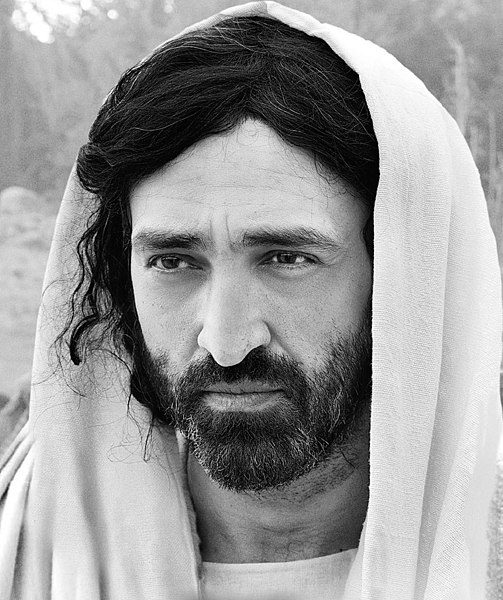
Photo credit: Selva Rasalingam as Jesus in the The Gospel of Luke (2016, Netflix USA) [Wikimedia Commons / Creative Commons CC0 1.0 Universal Public Domain Dedication]

Summary: Michael Alter argues against the phrase “three days and three nights” being Hebrew idiom for “parts of three days” as opposed to three literal 24-hour days. I provide massive biblical examples of idiomatic use.
Tags: alleged Bible contradictions, alleged Resurrection contradictions, Bible “contradictions”, Bible “difficulties”, Bible Only, biblical inspiration, biblical prooftexts, biblical skeptics, biblical theology, exegesis, hermeneutics, Holy Bible, inerrancy, infallibility, Jewish anti-Christian polemics, Jewish apologetics, Jewish critique of Christianity, Jewish-Christian discussion, Michael J. Alter, New Testament, New Testament critics, New Testament skepticism, Resurrection “Contradictions”, Resurrection of Jesus, The Resurrection: A Critical Inquiry, three days and three nights, sign of Jonah, on the third day
***
Jews & Judaism & Old Testament
alleged Resurrection contradictions
Jewish anti-Christian polemics
Jewish critique of Christianity
The Resurrection: A Critical Inquiry
Previous Post
April 20, 2021
Resurrection (?) #5: Did Jesus Claim to be Our Savior?
Next Post
April 21, 2021 Resurrection (?) #7: Crucified Thieves Taunting Jesus
Browse Our Archives
Select a Category & Last Things About Me Anti-Catholicism Atheism & Agnosticism Baptism and Sacramentalism Bible and Tradition Blessed Virgin Mary Books by Dave Armstrong C. S. Lewis Calvinism & General Protestantism Catholic Apologetics Catholic Apologists Catholic conversion Catholic converts Christmas Church (Ecclesiology) Church History Conversion and Converts Development of Doctrine Eastern Orthodoxy Ecumenism & Christian Unity Eucharist & Liturgy Fathers of the Church French Translations G. K. Chesterton Hell Hell & Satan Hell & Satan & Last Things Heresies & Comparative Religion Holistic Health Inquisition & Crusades & Scandals James White Jews & Judaism & Old Testament John Calvin John Henry Newman Liberal / Modernist Theology Life Issues Literary Resume Lutheranism Mariology Martin Luther Music Orthodoxy Papacy & Infallibility Personal Page Philosophy & Science Political & Ethical & Moral Issues Protestant Persecution & Intolerance Protestantism Purgatory Purgatory & Penance Romantic & Imaginative Theology Saints & Purgatory & Penance Salvation Salvation & Justification Satan & Last Things Sexuality and Gender Issues Spanish Translations Traditionalism vs. Radical Catholic Reactionaries Traducciones al español / tradução para português Trinitarianism & Christology Uncategorized Videos
Select a Month October 2026 September 2026 August 2026 July 2026 June 2026 May 2026 April 2026 March 2026 February 2026 January 2026 December 2025 November 2025 October 2025 September 2025 August 2025 July 2025 June 2025 May 2025 April 2025 March 2025 February 2025 January 2025 December 2024 November 2024 October 2024 September 2024 August 2024 July 2024 June 2024 May 2024 April 2024 March 2024 February 2024 January 2024 December 2023 November 2023 October 2023 September 2023 August 2023 July 2023 June 2023 May 2023 April 2023 March 2023 February 2023 January 2023 December 2022 November 2022 October 2022 September 2022 August 2022 July 2022 June 2022 May 2022 April 2022 March 2022 February 2022 January 2022 December 2021 November 2021 October 2021 September 2021 August 2021 July 2021 June 2021 May 2021 April 2021 March 2021 February 2021 January 2021 December 2020 November 2020 October 2020 September 2020 August 2020 July 2020 June 2020 May 2020 April 2020 March 2020 February 2020 January 2020 December 2019 November 2019 October 2019 September 2019 August 2019 July 2019 June 2019 May 2019 April 2019 March 2019 February 2019 January 2019 December 2018 November 2018 October 2018 September 2018 August 2018 July 2018 June 2018 May 2018 April 2018 March 2018 February 2018 January 2018 December 2017 November 2017 October 2017 September 2017 August 2017 July 2017 June 2017 May 2017 April 2017 March 2017 February 2017 January 2017 December 2016 November 2016 October 2016 September 2016 August 2016 July 2016 June 2016 May 2016 April 2016 March 2016 February 2016 January 2016 December 2015 November 2015 October 2015 September 2015 August 2015 July 2015 June 2015 May 2015 April 2015 March 2015 February 2015 January 2015 December 2014 November 2014 October 2014 September 2014 August 2014 July 2014 June 2014 April 2014 March 2014 February 2014 January 2014 December 2013 November 2013 October 2013 September 2013 August 2013 July 2013 June 2013 April 2013 March 2013 February 2013 January 2013 December 2012 November 2012 October 2012 September 2012 August 2012 July 2012 June 2012 May 2012 April 2012 March 2012 February 2012 January 2012 December 2011 November 2011 October 2011 September 2011 August 2011 July 2011 June 2011 April 2011 March 2011 February 2011 October 2010 September 2010 August 2010 July 2010 April 2010 March 2010 December 2009 October 2009 August 2009 July 2009 June 2009 May 2009 March 2009 February 2009 October 2008 September 2008 April 2008 March 2008 February 2008 January 2008 December 2007 November 2007 October 2007 May 2007 March 2007 February 2007 January 2007 November 2006 October 2006 September 2006 August 2006 July 2006 June 2006 May 2006 April 2006 March 2006 February 2006 October 2005 June 2005 April 2005 February 2005 July 2004 May 2004 April 2004
Follow Us!
TAKE THE
Religious Wisdom Quiz
Who prophesied destruction for Jerusalem but also promised a New Covenant?
Select your answer to see how you score.
Joel Isaiah Ezekiel Jeremiah
Books by This Author Books by Dave Armstrong
Related posts from Biblical Evidence for Catholicism

Jerusalem Council vs. James White & Sola Scriptura
Biblical Evidence for Catholicism

God, Modern Physics, & Dark Energy: An Analogy
Biblical Evidence for Catholicism

350 Bible Passages vs. Sola Scriptura
Biblical Evidence for Catholicism
Sola Scriptura: Self-Defeating, Unworkable, Unbiblical
Biblical Evidence for Catholicism
TRENDING AT PATHEOS Catholic

The Real AI Story Is Adoption Without Trust
Artificial intelligence has crossed a political threshold. It is no longer a...

A new article, written by Jeff Lindsay and Gale L. Pooley,...

Swimfan: Forgotten Aughts Pleasures
This is a recovery effort. In 2002, My Big Fat Greek Wedding...

Top Three Anti-Catholic Lies About Catholicism
This is my initial transcript for the video, "THE 3 WORST...

Pope Leo Celebrates Mass for Nurses & Docs...
I don't have any idea how he did it, but Pope Leo...

The Sermon on the Mount, Part I: Matthew...
The Sermon on the Mount, Part I (Matthew 4:12-5:12) St. Matthew moves...
view all Catholic blogs
Ad-Free & Subscriber Log-In Subscription Support
- About Us
- 2026 Calendar
- Videos
- Podcasts
- Library of World Religions
- Faith In Media Tracker
- Advertise With Us
- Write for Us
- Privacy Policy
- Terms of Service
- Do Not Sell My Data
- Contact Us
- Radiant Digital
- Manage Newsletter Subscriptions
- Unsubscribe From Notifications
- Sitemap
Copyright 2008-2026, Patheos. All rights reserved.
Subscription Support Ad-Free & Subscriber Log-In
Follow Patheos