
BuddhistCatholicContemplativeEvangelicalGeneral ChristianHinduJewishLatter-day SaintMuslimNew VisionsProgressive Christian
Beliefs
- Buddhist
- Catholic
- Contemplative
- Evangelical
- General Christian
- Hindu
- Jewish
- Latter-day Saint
- More Voices
- Muslim
- New Visions
- Pagan
- Progressive Christian
Topics
- Religion News
- Food and Religion
- Sports and Religion
- Religious Art
- Religious Music and Entertainment
- Religious Events
- History and Religion
- Style and Religion
- Politics and Religion
- Women in Religion
- Recreation Outdoors and Religion
- Business Finance and Religion
- Careers Workplace and Religion
- Education and Religion
- Family Parenting and Religion
- Health Fitness and Religion
- Home and Religion
- Relationships and Religion
- Technology and Religion
- Travel and Religion
Columnists
- Buddhist Columnists
- Business Finance and Religion Columnists
- Careers Workplace and Religion Columnists
- Catholic Columnists
- Contemplative Columnists
- Education and Religion Columnists
- Evangelists Columnists
- Family Parenting and Religion Columnists
- General Christian Columnists
- Health Fitness and Religion Columnists
- Hindu Columnists
- History and Religion Columnists
- Home and Religion Columnists
- Jewish Columnists
- More Voices Columnists
- Latter Day Columnists
- Muslim Columnists
- New Visions Columnists
- Nonreligious Columnists
- Pagan Columnists
- Politics and Religion Columnists
- Progressive Columnists
- Recreation Outdoors and Religion Columnists
- Relationships and Religion Columnists
- Religion News Columnists
- Religious Art Columnists
- Religious Events Columnists
- Religious Music and Entertainment Columnists
- Sports and Religion Columnists
- Style and Religion Columnists
- Technology and Religion Columnists
- Travel and Religion Columnists
- Women in Religion Columnists
Resource Library
- 2026 Calendar
- Library of World Religions
- The 100 Most Holy Places on Earth
- Patheos Answers
- Podcasts
- Videos
- Faith Leaders Database
- Anglican Episcopalian
- Bahai
- Baptist
- Buddhism
- Christianity
- Confucianism
- Eastern Orthodoxy
- Hinduism
- Holiness and Pentecostal
- ISKCON
- Islam
- Judaism
- Lutheran
- Methodist
- The Church of Jesus Christ of Latter-day Saints
- New Age
- Paganism
- Presbytarian and Reformed
- Protestantism
- Religion Behind the Scenes
- Roman Catholic
- Scientology
- Shia Islam
- Sikhism
- Sufism
- Sunni Islam
- Taoism
- Zen
- See all religions
Research Tools
 Ad-Free & Subscriber Log-In Subscription Support
Ad-Free & Subscriber Log-In Subscription Support
Follow Patheos 

- Trending:
- Forgiveness
- |
- Marriage
- |
- Consciousness
- |
- Death Penalty
- |
- Election
- |
- Halloween

-
About
-
Catholic Apologetics
-
Church History
-
Great Apologists
-
Christian Worldview
-
Protestantism & Misc.
- Home
- Catholic
- History and Religion
- Resurrection #18: “Touch Me Not” & Mary Magdalene
Resurrection #18: “Touch Me Not” & Mary Magdalene
Last updated on: June 6, 2026 at 12:44 am by Dave Armstrong
Resurrection #18: “Touch Me Not” & Mary Magdalene 2026-06-06T00:44:18-04:00 Dave Armstrong
Patheos Explore the world's faith through different perspectives on religion and spirituality! Patheos has the views of the prevalent religions and spiritualities of the world.
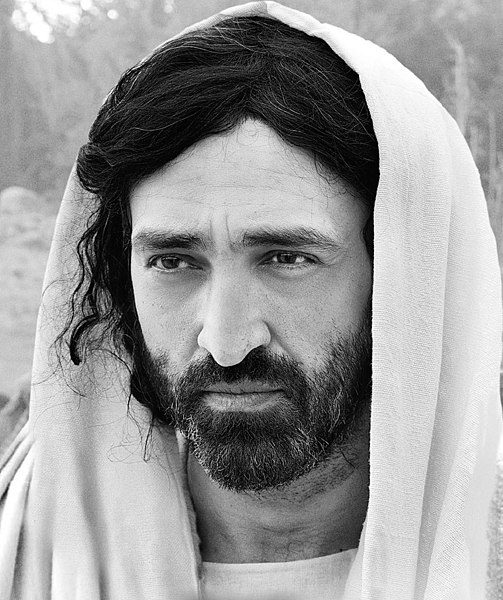
Michael J. Alter is the author of the copiously researched, 913-page volume, The Resurrection: a Critical Inquiry (2015). I initially offered 59 “brief” replies to as many alleged New Testament contradictions (March 2021). We later engaged in amiable correspondence and decided to enter into a major ongoing dialogue about his book. He graciously (and impressively!) sent me a PDF file of it, free of charge, for my review.
Mike describes himself as “of the Jewish faith” but is quick to point out that labels are often “misleading” and “divisive” (I agree to a large extent). He continues to be influenced by, for example, “Reformed, Conservative, Orthodox, and Chabad” variants of Judaism and learns “from those of other faiths, the secular, the non-theists, etc.” Fair enough. I have a great many influences, too, am very ecumenical, and am a great admirer of Judaism, as I told Michael in a combox comment on my blog.
He says his book “can be described as Jewish apologetics” and one that provides reasons for “why members of the Jewish community should not convert to Christianity.” I will be writing many critiques of the book and we’ll be engaging in ongoing discussion for likely a long time. I’m quite excited about it and am most grateful for Mike’s willingness to interact, minus any personal hostility.
To see all the other installments, search “Michael J. Alter” on either my Jews and Judaism or Trinitarianism & Christology web pages. That will take you to the subsection with the series.
I use RSV for all Bible verses that I cite. His words will be in blue.
*****
Alter wrote:
CONTRADICTION #76 John Versus Matthew and Luke
The Gospel of John directly contradicts Matthew and Luke. (p. 429)
Nonsense, as I will demonstrate below.
The original Mark 16 omits any mention of women meeting a resurrected Jesus. Consequently, there was no bodily contact with Jesus or even a message proffered. Based on a literal reading of the text, instead, the women met a young man, received a message, subsequently fled the tomb, and spoke to nobody. (p. 429)
This is the game of denying the canonical status of Mark 16:9-20. See several solid arguments in favor of that section’s inclusion in the Gospel of Mark and the biblical canon. But even if verses 9-20 are rejected, 16:8 doesn’t indicate how long the women “said nothing to any one.” Thus, even without the true traditional ending of Mark it’s not established that they told no one at any time that they saw the empty tomb and were told by an angel that Jesus had risen from the dead (thus leading to supposed “contradiction” #2,967,135 in the NT, etc., ad nauseam). It’s yet another desperate argument from silence from Alter.
Matthew 28:9 reports that several women left the tomb after meeting an angel and having received a communication. On their way to the disciples, they encountered the resurrected Jesus. Then, the women grasped hold of Jesus by his feet and worshiped him: “And as they went to tell his disciples, behold, Jesus met them saying, All hail. And they came and held him by the feet, and worshipped him.” (p. 429)
Yes indeed: all of this happened. And praise be to God that it did. This is the proof that Jesus was Who He claimed to be (God), which is. of course, also proof that God exists and that He loves us so much that He has provided a way for our sins to be forgiven, leading to eternal bliss in union with Him in heaven. That’s why we Christians refer to the gospel: the “Good News.” It’s the best possible news that human beings could receive.
Luke 24:13-33 extensively details Jesus traveling with two pilgrims on their way to Emmaus during most of the day. Later, Luke 24:34-43 had Jesus appearing before the Eleven gathered in Jerusalem as well as the two travelers previously mentioned. During this encounter Jesus states in verse 39: “Behold my hands and my feet, that it is I myself: handle me, and see; for a spirit hath no flesh and bones, as ye see me have.” Therefore, here, Jesus encouraged his disciples to touch him. It is unknown if the offer was accepted. (p. 429)
This is true as well, since Alter is merely recounting what the Gospel of Luke teaches. He’s setting us up for the alleged “zinger” and couldn’t resist one of the old chestnuts of biblical skepticism.
In direct contradiction, John 20:14 has Mary Magdalene alone meeting Jesus on Easter Sunday morning after her second visit to the tomb. After recognizing Jesus, she addressed him, saying, “Rabboni.” Then, John 20:17 reports that Jesus told Mary Magdalene, “Touch me not.”
John’s narration completely contradicts the synoptic accounts. (p. 429)
Not at all. Once again, Alter relies on the surface, prima facie reading, without delving more deeply into the words involved. When someone who believes in the inspiration of Scripture comes across a difficult-to-understand passage or ostensible “contradiction” at first glance, they look into (or at least have the potential to look into, with various available aids) the Greek or Hebrew word involved; to see how it is used elsewhere, etc. Or they pursue the different uses of words and questions of genre, possible non-literal intent, cultural background factors, etc. I have been doing this myself, throughout this series of replies.
Alter — in his replies to this series in my comboxes — often virtually mocks and derides this sort of Bible study, and seems to think that every Bible passage (purported or not) must be crystal clear and immediately self-evident to every reader. In this respect he seems to presuppose the Protestant false doctrine of “perspicuity” (clearness) of Scripture: i.e., the rejection of the necessity of authoritative interpretation, which is guided by the Church and tradition. But Catholicism, Eastern Orthodoxy, and historic Judaism all agree that guidance and aid in Bible interpretation is often necessary. I’ve written three books about the larger issue of sola Scriptura as the rule of faith (one / two / three).
Alter in this section attempts to make hay out of the women grabbing Jesus’ feet and worshiping Him in Matthew and disciples “handling” Him (to verify that He was flesh and blood) in Luke (and we could also mention Doubting Thomas later in this same chapter of John), while Mary Magdalene (here’s the ever-present alleged “contradiction”) was told “not to touch” Jesus in John 20:17. It’s much ado about nothing. A. T. Robertson’s Word Pictures in the New Testament explains it:
Touch me not (mh mou aptou). Present middle imperative in prohibition with genitive case, meaning “cease clinging to me” rather than “Do not touch me.” Jesus allowed the women to take hold of his feet (ekrathsan) and worship (prosekunhsan) as we read in Matthew 28:9 .
Almost all more recent English translations reflect this more specific (prolonged, more intense) sense of touch:
RSV: hold
TEV / NIV / NRSV / Beck: hold on to
NAB: holding on to
ESV / NKJV / Weymouth / Barclay / Goodspeed / NEB / REB / Jerusalem / Knox / Amplified: cling
NASB / Williams / Wuest / Moffatt: clinging
Marvin Vincent’s Word Studies in the New Testament agrees:
Touch me not ( μή μοῦ ἅπτου )
The verb, primarily, means to fasten to. Hence it implies here, not a mere momentary touch, but a clinging to.
The following two biblical commentaries elaborate along the same lines:
Ellicott’s Commentary for English Readers: The words themselves must be carefully considered. “Touch” represents a Greek word which means to “cling to,” to “fasten on,” to “grasp” an object. The tense is present, and the prohibition is, therefore, not of an individual act, but of a continuance of the act, of the habit, “Do not continue clinging to Me.”
Cambridge Bible for Schools and Colleges: The translation ‘touch Me not’ is inadequate and gives a false impression. The verb (haptesthai) does not mean to ‘touch’ and ‘handle’ with a view to seeing whether His body was real; this Christ not only allowed but enjoined (John 20:27; Luke 24:39; comp. 1 John 1:1): rather it means to ‘hold on to’ and ‘cling to.’ Moreover it is the present (not aorist) imperative; and the full meaning will therefore be, ‘Do not continue holding Me,’ . . .
So (you guessed it): no contradiction again. There are deeper waters of reflection regarding this passage, but they are inappropriate here. It’s enough to have demonstrated that a more prolonged and intense sense of “touch” was being referred to in this passage, compared to the others. In other words, it wasn’t touch per se that Jesus was forbidding, but a certain kind of touch: clinging. The reasons for the distinction of different sorts of touch are beyond my purview (they delve far more deeply into eschatological and Christological theology). I’ve accomplished my task as an apologist: to remove the plausibility of a supposed contradiction in these particular NT texts.
***
Photo credit: Selva Rasalingam as Jesus in the The Gospel of Luke (2016, Netflix USA) [Wikimedia Commons / Creative Commons CC0 1.0 Universal Public Domain Dedication]

Summary: Michael Alter seizes upon the “touch me not” passage of John 20:17 to try to establish a contradiction over against other “touching” NT passages. He fails, & I explain the relevant difference.
Tags: alleged Bible contradictions, alleged Resurrection contradictions, Bible “contradictions”, Bible “difficulties”, Bible Only, biblical inspiration, biblical prooftexts, biblical skeptics, biblical theology, exegesis, hermeneutics, Holy Bible, inerrancy, infallibility, Jewish anti-Christian polemics, Jewish apologetics, Jewish critique of Christianity, Jewish-Christian discussion, Michael J. Alter, New Testament, New Testament critics, New Testament skepticism, Resurrection “Contradictions”, Resurrection of Jesus, The Resurrection: A Critical Inquiry, “touch me not”, Mary Magdalene
Jews & Judaism & Old Testament
alleged Resurrection contradictions
Jewish anti-Christian polemics
Jewish critique of Christianity
The Resurrection: A Critical Inquiry
Previous Post
April 29, 2021
Resurrection #17: Women Who Saw the Risen Jesus
Next Post
April 30, 2021 Resurrection #19: When Was Judas Paid?
Browse Our Archives
Select a Category & Last Things About Me Anti-Catholicism Atheism & Agnosticism Baptism and Sacramentalism Bible and Tradition Blessed Virgin Mary Books by Dave Armstrong C. S. Lewis Calvinism & General Protestantism Catholic Apologetics Catholic Apologists Catholic conversion Catholic converts Christmas Church (Ecclesiology) Church History Conversion and Converts Development of Doctrine Eastern Orthodoxy Ecumenism & Christian Unity Eucharist & Liturgy Fathers of the Church French Translations G. K. Chesterton Hell Hell & Satan Hell & Satan & Last Things Heresies & Comparative Religion Holistic Health Inquisition & Crusades & Scandals James White Jews & Judaism & Old Testament John Calvin John Henry Newman Liberal / Modernist Theology Life Issues Literary Resume Lutheranism Mariology Martin Luther Music Orthodoxy Papacy & Infallibility Personal Page Philosophy & Science Political & Ethical & Moral Issues Protestant Persecution & Intolerance Protestantism Purgatory Purgatory & Penance Romantic & Imaginative Theology Saints & Purgatory & Penance Salvation Salvation & Justification Satan & Last Things Sexuality and Gender Issues Spanish Translations Traditionalism vs. Radical Catholic Reactionaries Traducciones al español / tradução para português Trinitarianism & Christology Uncategorized Videos
Select a Month October 2026 September 2026 August 2026 July 2026 June 2026 May 2026 April 2026 March 2026 February 2026 January 2026 December 2025 November 2025 October 2025 September 2025 August 2025 July 2025 June 2025 May 2025 April 2025 March 2025 February 2025 January 2025 December 2024 November 2024 October 2024 September 2024 August 2024 July 2024 June 2024 May 2024 April 2024 March 2024 February 2024 January 2024 December 2023 November 2023 October 2023 September 2023 August 2023 July 2023 June 2023 May 2023 April 2023 March 2023 February 2023 January 2023 December 2022 November 2022 October 2022 September 2022 August 2022 July 2022 June 2022 May 2022 April 2022 March 2022 February 2022 January 2022 December 2021 November 2021 October 2021 September 2021 August 2021 July 2021 June 2021 May 2021 April 2021 March 2021 February 2021 January 2021 December 2020 November 2020 October 2020 September 2020 August 2020 July 2020 June 2020 May 2020 April 2020 March 2020 February 2020 January 2020 December 2019 November 2019 October 2019 September 2019 August 2019 July 2019 June 2019 May 2019 April 2019 March 2019 February 2019 January 2019 December 2018 November 2018 October 2018 September 2018 August 2018 July 2018 June 2018 May 2018 April 2018 March 2018 February 2018 January 2018 December 2017 November 2017 October 2017 September 2017 August 2017 July 2017 June 2017 May 2017 April 2017 March 2017 February 2017 January 2017 December 2016 November 2016 October 2016 September 2016 August 2016 July 2016 June 2016 May 2016 April 2016 March 2016 February 2016 January 2016 December 2015 November 2015 October 2015 September 2015 August 2015 July 2015 June 2015 May 2015 April 2015 March 2015 February 2015 January 2015 December 2014 November 2014 October 2014 September 2014 August 2014 July 2014 June 2014 April 2014 March 2014 February 2014 January 2014 December 2013 November 2013 October 2013 September 2013 August 2013 July 2013 June 2013 April 2013 March 2013 February 2013 January 2013 December 2012 November 2012 October 2012 September 2012 August 2012 July 2012 June 2012 May 2012 April 2012 March 2012 February 2012 January 2012 December 2011 November 2011 October 2011 September 2011 August 2011 July 2011 June 2011 April 2011 March 2011 February 2011 October 2010 September 2010 August 2010 July 2010 April 2010 March 2010 December 2009 October 2009 August 2009 July 2009 June 2009 May 2009 March 2009 February 2009 October 2008 September 2008 April 2008 March 2008 February 2008 January 2008 December 2007 November 2007 October 2007 May 2007 March 2007 February 2007 January 2007 November 2006 October 2006 September 2006 August 2006 July 2006 June 2006 May 2006 April 2006 March 2006 February 2006 October 2005 June 2005 April 2005 February 2005 July 2004 May 2004 April 2004
Follow Us!
TAKE THE
Religious Wisdom Quiz
Who prayed for rain after a long drought and sent his servant to look seven times?
Select your answer to see how you score.
Elijah Isaiah Samuel Hosea
Books by This Author Books by Dave Armstrong
Related posts from Biblical Evidence for Catholicism

Jerusalem Council vs. James White & Sola Scriptura
Biblical Evidence for Catholicism

God, Modern Physics, & Dark Energy: An Analogy
Biblical Evidence for Catholicism

350 Bible Passages vs. Sola Scriptura
Biblical Evidence for Catholicism
Sola Scriptura: Self-Defeating, Unworkable, Unbiblical
Biblical Evidence for Catholicism
TRENDING AT PATHEOS Catholic

I was strolling through the top floor of the brand new Parthenon...

What Does Gêvâh Mean For Kimberley Guifoyle &...
This week, a lot of the news is focused on Kimberly Guilfoyle....

INNER CIRCLE: Profound Mystery (Of Christ In All...
Ephesians 5:31-32 “For this reason, a man will leave his father and...

Do Not Rejoice When Your Enemy Falls: The...
Turning an execution into a public spectacle is a disturbing expression of...

'The Chosen' S6 Trailer: The Passion Gets Very...
Not many watching 'The Chosen' worry about spoilers, but just because they...

The purpose-driven labor priest
A labor activist reads Rick Warren and it gets me wondering about...
view all Catholic blogs
Ad-Free & Subscriber Log-In Subscription Support
- About Us
- 2026 Calendar
- Videos
- Podcasts
- Library of World Religions
- Faith In Media Tracker
- Advertise With Us
- Write for Us
- Privacy Policy
- Terms of Service
- Do Not Sell My Data
- Contact Us
- Radiant Digital
- Manage Newsletter Subscriptions
- Unsubscribe From Notifications
- Sitemap
Copyright 2008-2026, Patheos. All rights reserved.
Subscription Support Ad-Free & Subscriber Log-In
Follow Patheos