
BuddhistCatholicContemplativeEvangelicalGeneral ChristianHinduJewishLatter-day SaintMuslimNew VisionsProgressive Christian
Beliefs
- Buddhist
- Catholic
- Contemplative
- Evangelical
- General Christian
- Hindu
- Jewish
- Latter-day Saint
- More Voices
- Muslim
- New Visions
- Pagan
- Progressive Christian
Topics
- Religion News
- Food and Religion
- Sports and Religion
- Religious Art
- Religious Music and Entertainment
- Religious Events
- History and Religion
- Style and Religion
- Politics and Religion
- Women in Religion
- Recreation Outdoors and Religion
- Business Finance and Religion
- Careers Workplace and Religion
- Education and Religion
- Family Parenting and Religion
- Health Fitness and Religion
- Home and Religion
- Relationships and Religion
- Technology and Religion
- Travel and Religion
Columnists
- Buddhist Columnists
- Business Finance and Religion Columnists
- Careers Workplace and Religion Columnists
- Catholic Columnists
- Contemplative Columnists
- Education and Religion Columnists
- Evangelists Columnists
- Family Parenting and Religion Columnists
- General Christian Columnists
- Health Fitness and Religion Columnists
- Hindu Columnists
- History and Religion Columnists
- Home and Religion Columnists
- Jewish Columnists
- More Voices Columnists
- Latter Day Columnists
- Muslim Columnists
- New Visions Columnists
- Nonreligious Columnists
- Pagan Columnists
- Politics and Religion Columnists
- Progressive Columnists
- Recreation Outdoors and Religion Columnists
- Relationships and Religion Columnists
- Religion News Columnists
- Religious Art Columnists
- Religious Events Columnists
- Religious Music and Entertainment Columnists
- Sports and Religion Columnists
- Style and Religion Columnists
- Technology and Religion Columnists
- Travel and Religion Columnists
- Women in Religion Columnists
Resource Library
- 2026 Calendar
- Library of World Religions
- The 100 Most Holy Places on Earth
- Patheos Answers
- Podcasts
- Videos
- Faith Leaders Database
- Anglican Episcopalian
- Bahai
- Baptist
- Buddhism
- Christianity
- Confucianism
- Eastern Orthodoxy
- Hinduism
- Holiness and Pentecostal
- ISKCON
- Islam
- Judaism
- Lutheran
- Methodist
- The Church of Jesus Christ of Latter-day Saints
- New Age
- Paganism
- Presbytarian and Reformed
- Protestantism
- Religion Behind the Scenes
- Roman Catholic
- Scientology
- Shia Islam
- Sikhism
- Sufism
- Sunni Islam
- Taoism
- Zen
- See all religions
Research Tools
 Ad-Free & Subscriber Log-In Subscription Support
Ad-Free & Subscriber Log-In Subscription Support
Follow Patheos 

- Trending:
- Forgiveness
- |
- Marriage
- |
- Consciousness
- |
- Death Penalty
- |
- Election
- |
- Halloween

-
About
-
Catholic Apologetics
-
Church History
-
Great Apologists
-
Christian Worldview
-
Protestantism & Misc.
- Home
- Catholic
- History and Religion
- Resurrection #14: When Was the Stone Rolled Away?
Resurrection #14: When Was the Stone Rolled Away?
Last updated on: June 5, 2026 at 11:58 pm by Dave Armstrong
Resurrection #14: When Was the Stone Rolled Away? 2026-06-05T23:58:27-04:00 Dave Armstrong
Patheos Explore the world's faith through different perspectives on religion and spirituality! Patheos has the views of the prevalent religions and spiritualities of the world.
Michael J. Alter is the author of the copiously researched, 913-page volume, The Resurrection: a Critical Inquiry (2015). I initially offered 59 “brief” replies to as many alleged New Testament contradictions (March 2021). We later engaged in amiable correspondence and decided to enter into a major ongoing dialogue about his book. He graciously sent me a PDF file of it, free of charge, for my review, and has committed himself to counter-response as well: a very rare trait these days. All of this is, I think, mightily impressive.
Mike describes himself as “of the Jewish faith” but is quick to point out that labels are often “misleading” and “divisive” (I agree to a large extent). He continues to be influenced by, for example, “Reformed, Conservative, Orthodox, and Chabad” variants of Judaism and learns “from those of other faiths, the secular, the non-theists, etc.” Fair enough. I have a great many influences, too, am very ecumenical, and am a great admirer of Judaism, as I told Michael in a combox comment on my blog.
He says his book “can be described as Jewish apologetics” and one that provides reasons for “why members of the Jewish community should not convert to Christianity.” I will be writing many critiques of the book and we’ll be engaging in ongoing discussion for likely a long time. I’m quite excited about it and eagerly enjoy the dialogue and debate. This is a rare opportunity these days and I am most grateful for Mike’s willingness to interact, minus any personal hostility.
I use RSV for all Bible verses that I cite. His words will be in blue.
*****
Alter wrote:
CONTRADICTION #57 Matthew’s Chronological Contradiction
Reimarus posits that Matthew 28:2 is self-contradictory: “And, behold, there was a great earthquake: for the angel of the Lord descended from heaven, and came and rolled back the stone from the door, and sat upon it.” Specifically, Reimarus (1971, 183) makes the claim that if Matthew’s report is true that “the stone had been rolled away by an angel in the presence of the women, then it must be untrue that the women became aware from a distance that the stone had been rolled away and that it was gone.” The NIV translation (1978, 1151) of Mark 16:2-3 supports Reimarus’s interpretation that from a distance (i.e., “they were on their way to the tomb”) the women observed that the tomb’s entrance was not blocked.
Mk 16:2 Very early on the first day of the week, they were on their way to the tomb. It was just after sunrise. They asked each other, “Who will roll the stone away from the entrance to the tomb?”
Mk 16:3 Then they looked up and saw that the stone had been rolled away. The stone was very large.
To recapitulate, Mark has the women viewing from a distance as the stone was being rolled away just prior to their physical arrival at the tomb. Therefore, Reimarus maintains that the chronological order of the text in Matthew is switched since he narrates (1) the women came to the sepulchre, (2) the angel descended from heaven, (3) there was an earthquake, and then (4) the stone was rolled away. (pp. 331-332)
It is readily observed also that the women saw the stone already rolled away when they arrived, as reported in Luke 24:2 and John 20:1. So how does the believer in biblical inspiration explain away what seems at first glance to be a glaring contradiction in Matthew’s account? Well, as is often the case and necessity, one has to examine the Greek word(s) involved and also the tense. Christian apologist Erik Manning presented these texts and then explained:
[L]et’s reconsider what Matthew says. We’re introduced to the passage about the angel by the Greek participle γὰρ (gar). Strong’s Greek Concordance defines it as: “For. A primary participle; properly, assigning a reason.” In other words, it exists to explain the earthquake and set of circumstances as the women found them.
As philosopher Tim McGrew points out, “Matthew uses an aorist participle, which could be (and in some versions is) translated with the English past perfect: “… for an angel of the Lord had descended …”
With this knowledge, let’s look to see how several Bible translations make this meaning of “happened in the past” more clear in Matthew 28:2:
Weymouth: . . . there had been a great earthquake; for an angel of the Lord had descended from Heaven, and had come and rolled back the stone, . . .
Young’s Literal Translation: . . . for a messenger of the Lord, having come down out of heaven, having come, did roll away the stone . . .
New American Standard Bible: And behold, a severe earthquake had occurred . . .
Amplified Bible: And a great earthquake had occurred, . . .
Williams: Now there had been a great earthquake . . .
Wuest: . . . an angel of the Lord having descended out of heaven and having come . . .
It’s true that this is a minority of translations, but this is significant, and shows that such a rendering is quite possible and permissible, according to the informed and educated judgment of these language scholars / translators. Moreover, the translations of Young, Wuest, and the Amplified Bible were specifically designed to bring out the precise and exact meaning of the Greek, including the sense of tense. This was their guiding principle in translation. It’s also notable that in the notes of the translators of the famous King James Version, it’s acknowledged that a valid alternate reading was “had been.”
Many commentaries also agree with this “past tense” understanding: thus showing that it is neither “fringe” nor simply apologetic special pleading; it is present in the text, according to them, and the translators noted above:
Barnes’ Notes on the Bible: There was a great earthquake – Rather there “had been.” It does not mean that this was while they were there, or while they were going, but that there “had been” so violent a commotion as to remove the stone.
Jamieson-Fausset-Brown Bible Commentary: And, behold, there was—that is, there had been, before the arrival of the women. . . . And this was the state of things when the women drew near. Some judicious critics think all this was transacted while the women were approaching; but the view we have given, which is the prevalent one, seems the more natural.
Gill’s Exposition of the Entire Bible: And behold there was a great earthquake,…. Or “there had been one” . . .
Clarke’s Commentary: All this had taken place before the women reached the sepulchre.
Ellicott’s Commentary: The words imply, not that they witnessed the earthquake, but that they inferred it from what they saw.
Expositor’s Bible Commentary: [W]hen they came, the sun just rising as they reached the spot, they found the stone already rolled away, and an angel of the Lord at the tomb . . .
King James Translators’ Notes: was: or, had been
This information removes Alter’s ever-present (and ever-fallacious) charge of contradiction with regard to Matthew 28:2. Nice try but no cigar . . .
***
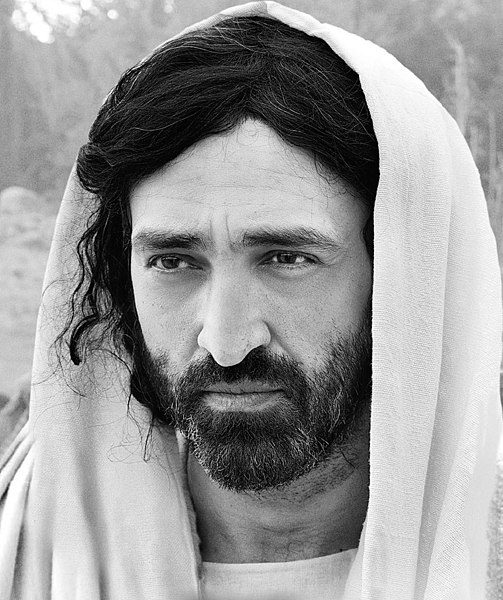
Photo credit: Selva Rasalingam as Jesus in the The Gospel of Luke (2016, Netflix USA) [Wikimedia Commons / Creative Commons CC0 1.0 Universal Public Domain Dedication]

Summary: Michael Alter says Matthew contradicts the other three Gospels re: “when was the stone rolled away?” But I show how Matthew’s Greek also allows a harmonious “past” interpretation.
Tags: alleged Bible contradictions, alleged Resurrection contradictions, Bible “contradictions”, Bible “difficulties”, Bible Only, biblical inspiration, biblical prooftexts, biblical skeptics, biblical theology, exegesis, hermeneutics, Holy Bible, inerrancy, infallibility, Jewish anti-Christian polemics, Jewish apologetics, Jewish critique of Christianity, Jewish-Christian discussion, Michael J. Alter, New Testament, New Testament critics, New Testament skepticism, Resurrection “Contradictions”, Resurrection of Jesus, The Resurrection: A Critical Inquiry, when was the stone rolled away
***
Jews & Judaism & Old Testament
alleged Resurrection contradictions
Jewish anti-Christian polemics
Jewish critique of Christianity
The Resurrection: A Critical Inquiry
when was the stone rolled away
Previous Post
April 27, 2021
Resurrection #13: Guards at the Tomb & Historiography
Next Post
April 28, 2021 Resurrection #15: Luke & Jesus' Galilee Appearances
Browse Our Archives
Select a Category & Last Things About Me Anti-Catholicism Atheism & Agnosticism Baptism and Sacramentalism Bible and Tradition Blessed Virgin Mary Books by Dave Armstrong C. S. Lewis Calvinism & General Protestantism Catholic Apologetics Catholic Apologists Catholic conversion Catholic converts Christmas Church (Ecclesiology) Church History Conversion and Converts Development of Doctrine Eastern Orthodoxy Ecumenism & Christian Unity Eucharist & Liturgy Fathers of the Church French Translations G. K. Chesterton Hell Hell & Satan Hell & Satan & Last Things Heresies & Comparative Religion Holistic Health Inquisition & Crusades & Scandals James White Jews & Judaism & Old Testament John Calvin John Henry Newman Liberal / Modernist Theology Life Issues Literary Resume Lutheranism Mariology Martin Luther Music Orthodoxy Papacy & Infallibility Personal Page Philosophy & Science Political & Ethical & Moral Issues Protestant Persecution & Intolerance Protestantism Purgatory Purgatory & Penance Romantic & Imaginative Theology Saints & Purgatory & Penance Salvation Salvation & Justification Satan & Last Things Sexuality and Gender Issues Spanish Translations Traditionalism vs. Radical Catholic Reactionaries Traducciones al español / tradução para português Trinitarianism & Christology Uncategorized Videos
Select a Month October 2026 September 2026 August 2026 July 2026 June 2026 May 2026 April 2026 March 2026 February 2026 January 2026 December 2025 November 2025 October 2025 September 2025 August 2025 July 2025 June 2025 May 2025 April 2025 March 2025 February 2025 January 2025 December 2024 November 2024 October 2024 September 2024 August 2024 July 2024 June 2024 May 2024 April 2024 March 2024 February 2024 January 2024 December 2023 November 2023 October 2023 September 2023 August 2023 July 2023 June 2023 May 2023 April 2023 March 2023 February 2023 January 2023 December 2022 November 2022 October 2022 September 2022 August 2022 July 2022 June 2022 May 2022 April 2022 March 2022 February 2022 January 2022 December 2021 November 2021 October 2021 September 2021 August 2021 July 2021 June 2021 May 2021 April 2021 March 2021 February 2021 January 2021 December 2020 November 2020 October 2020 September 2020 August 2020 July 2020 June 2020 May 2020 April 2020 March 2020 February 2020 January 2020 December 2019 November 2019 October 2019 September 2019 August 2019 July 2019 June 2019 May 2019 April 2019 March 2019 February 2019 January 2019 December 2018 November 2018 October 2018 September 2018 August 2018 July 2018 June 2018 May 2018 April 2018 March 2018 February 2018 January 2018 December 2017 November 2017 October 2017 September 2017 August 2017 July 2017 June 2017 May 2017 April 2017 March 2017 February 2017 January 2017 December 2016 November 2016 October 2016 September 2016 August 2016 July 2016 June 2016 May 2016 April 2016 March 2016 February 2016 January 2016 December 2015 November 2015 October 2015 September 2015 August 2015 July 2015 June 2015 May 2015 April 2015 March 2015 February 2015 January 2015 December 2014 November 2014 October 2014 September 2014 August 2014 July 2014 June 2014 April 2014 March 2014 February 2014 January 2014 December 2013 November 2013 October 2013 September 2013 August 2013 July 2013 June 2013 April 2013 March 2013 February 2013 January 2013 December 2012 November 2012 October 2012 September 2012 August 2012 July 2012 June 2012 May 2012 April 2012 March 2012 February 2012 January 2012 December 2011 November 2011 October 2011 September 2011 August 2011 July 2011 June 2011 April 2011 March 2011 February 2011 October 2010 September 2010 August 2010 July 2010 April 2010 March 2010 December 2009 October 2009 August 2009 July 2009 June 2009 May 2009 March 2009 February 2009 October 2008 September 2008 April 2008 March 2008 February 2008 January 2008 December 2007 November 2007 October 2007 May 2007 March 2007 February 2007 January 2007 November 2006 October 2006 September 2006 August 2006 July 2006 June 2006 May 2006 April 2006 March 2006 February 2006 October 2005 June 2005 April 2005 February 2005 July 2004 May 2004 April 2004
Follow Us!
TAKE THE
Religious Wisdom Quiz
According to 1 John, what does perfect love do?
Select your answer to see how you score.
Never fails Covers a multitude of sins Drives out fear Fulfills all the law
Books by This Author Books by Dave Armstrong
Related posts from Biblical Evidence for Catholicism

Jerusalem Council vs. James White & Sola Scriptura
Biblical Evidence for Catholicism

God, Modern Physics, & Dark Energy: An Analogy
Biblical Evidence for Catholicism

350 Bible Passages vs. Sola Scriptura
Biblical Evidence for Catholicism
Sola Scriptura: Self-Defeating, Unworkable, Unbiblical
Biblical Evidence for Catholicism
TRENDING AT PATHEOS Catholic

The Sermon on the Mount, Part I: Matthew...
The Sermon on the Mount, Part I (Matthew 4:12-5:12) St. Matthew moves...

What's up from Crossway: Reviewing some of their latest A few weeks...

Janie Learns the Way of the Cross: A...
Teaching children about Jesus' Passion can be challenging. Many parents and educators...

Looking For Good Catholic Writing - October 2026
He alone extends the heavens, and he walks upon the waves of...

In "Irreplaceable," our book on vocation and technology, Trevor Sutton and I...

I was strolling through the top floor of the brand new Parthenon...
view all Catholic blogs
Ad-Free & Subscriber Log-In Subscription Support
- About Us
- 2026 Calendar
- Videos
- Podcasts
- Library of World Religions
- Faith In Media Tracker
- Advertise With Us
- Write for Us
- Privacy Policy
- Terms of Service
- Do Not Sell My Data
- Contact Us
- Radiant Digital
- Manage Newsletter Subscriptions
- Unsubscribe From Notifications
- Sitemap
Copyright 2008-2026, Patheos. All rights reserved.
Subscription Support Ad-Free & Subscriber Log-In
Follow Patheos