
BuddhistCatholicContemplativeEvangelicalGeneral ChristianHinduJewishLatter-day SaintMuslimNew VisionsProgressive Christian
Beliefs
- Buddhist
- Catholic
- Contemplative
- Evangelical
- General Christian
- Hindu
- Jewish
- Latter-day Saint
- More Voices
- Muslim
- New Visions
- Pagan
- Progressive Christian
Topics
- Religion News
- Food and Religion
- Sports and Religion
- Religious Art
- Religious Music and Entertainment
- Religious Events
- History and Religion
- Style and Religion
- Politics and Religion
- Women in Religion
- Recreation Outdoors and Religion
- Business Finance and Religion
- Careers Workplace and Religion
- Education and Religion
- Family Parenting and Religion
- Health Fitness and Religion
- Home and Religion
- Relationships and Religion
- Technology and Religion
- Travel and Religion
Columnists
- Buddhist Columnists
- Business Finance and Religion Columnists
- Careers Workplace and Religion Columnists
- Catholic Columnists
- Contemplative Columnists
- Education and Religion Columnists
- Evangelists Columnists
- Family Parenting and Religion Columnists
- General Christian Columnists
- Health Fitness and Religion Columnists
- Hindu Columnists
- History and Religion Columnists
- Home and Religion Columnists
- Jewish Columnists
- More Voices Columnists
- Latter Day Columnists
- Muslim Columnists
- New Visions Columnists
- Nonreligious Columnists
- Pagan Columnists
- Politics and Religion Columnists
- Progressive Columnists
- Recreation Outdoors and Religion Columnists
- Relationships and Religion Columnists
- Religion News Columnists
- Religious Art Columnists
- Religious Events Columnists
- Religious Music and Entertainment Columnists
- Sports and Religion Columnists
- Style and Religion Columnists
- Technology and Religion Columnists
- Travel and Religion Columnists
- Women in Religion Columnists
Resource Library
- 2026 Calendar
- Library of World Religions
- The 100 Most Holy Places on Earth
- Patheos Answers
- Podcasts
- Videos
- Faith Leaders Database
- Anglican Episcopalian
- Bahai
- Baptist
- Buddhism
- Christianity
- Confucianism
- Eastern Orthodoxy
- Hinduism
- Holiness and Pentecostal
- ISKCON
- Islam
- Judaism
- Lutheran
- Methodist
- The Church of Jesus Christ of Latter-day Saints
- New Age
- Paganism
- Presbytarian and Reformed
- Protestantism
- Religion Behind the Scenes
- Roman Catholic
- Scientology
- Shia Islam
- Sikhism
- Sufism
- Sunni Islam
- Taoism
- Zen
- See all religions
Research Tools
 Ad-Free & Subscriber Log-In Subscription Support
Ad-Free & Subscriber Log-In Subscription Support
Follow Patheos 

- Trending:
- Forgiveness
- |
- Marriage
- |
- Consciousness
- |
- Death Penalty
- |
- Election
- |
- Halloween

-
About
-
Catholic Apologetics
-
Church History
-
Great Apologists
-
Christian Worldview
-
Protestantism & Misc.
- Home
- Catholic
- History and Religion
- Resurrection #11: “All the Council” / Joseph of Arimathea?
Resurrection #11: “All the Council” / Joseph of Arimathea?
Last updated on: June 5, 2026 at 11:58 pm by Dave Armstrong
Resurrection #11: “All the Council” / Joseph of Arimathea? 2026-06-05T23:58:26-04:00 Dave Armstrong
Patheos Explore the world's faith through different perspectives on religion and spirituality! Patheos has the views of the prevalent religions and spiritualities of the world.
Michael J. Alter is the author of the copiously researched, 913-page volume, The Resurrection: a Critical Inquiry (2015). I initially offered 59 “brief” replies to as many alleged New Testament contradictions (March 2021). We later engaged in amiable correspondence and decided to enter into a major ongoing dialogue about his book. He graciously sent me a PDF file of it, free of charge, for my review, and has committed himself to counter-response as well: a very rare trait these days. All of this is, I think, mightily impressive.
Mike describes himself as “of the Jewish faith” but is quick to point out that labels are often “misleading” and “divisive” (I agree to a large extent). He continues to be influenced by, for example, “Reformed, Conservative, Orthodox, and Chabad” variants of Judaism and learns “from those of other faiths, the secular, the non-theists, etc.” Fair enough. I have a great many influences, too, am very ecumenical, and am a great admirer of Judaism, as I told Michael in a combox comment on my blog.
He says his book “can be described as Jewish apologetics” and one that provides reasons for “why members of the Jewish community should not convert to Christianity.” I will be writing many critiques of the book and we’ll be engaging in ongoing discussion for likely a long time. I’m quite excited about it and eagerly enjoy the dialogue and debate. This is a rare opportunity these days and I am most grateful for Mike’s willingness to interact, minus any personal hostility.
I use RSV for all Bible verses that I cite. His words will be in blue.
*****
Alter wrote:
CONTRADICTION #35 Luke Contradicts Mark and Matthew
Luke contradicts Mark and Matthew regarding who in the Sanhedrin condemned and did not condemn Jesus. Mark 14:53 states that Jesus was brought before the high priest and all the chief priests and the elders and the scribes after his arrest. Later, Mark 14:64 reports: “And they all condemned him to be guilty of death.” Finally, in Mark 15:1 there is the added information that “in the morning the chief priests held a consultation with the elders and scribes and the whole council, and bound Jesus, and carried him away, and delivered him to Pilate.” Therefore, Mark went out of his way to emphasize that all members of the council, including Joseph, condemned Jesus and that the whole council delivered him to Pilate. . . .
Twice Matthew reports in his narrative that the council planned and participated in the actions against Jesus:
Mt 26:59 Now the chief priests, and elders, and all the council, sought false witness against Jesus, to put him to death.
Mt 27:1 When the morning was come, all the chief priests and elders of the people took counsel against Jesus to put him to death
Therefore, Matthew substantiates Mark’s narrative that all members of the Sanhedrin participated in the condemnation of Jesus.
Luke 23:50 reports that Joseph of Arimathea too is described as a bouleutēs or a counsellor (AV). Gigot (1910), writing in The Catholic Encyclopedia, elaborates: “He is also called by St. Mark and by St. Luke a bouleutēs, literally, ‘a senator’, whereby is meant a member of the Sanhedrin or supreme council of the Jews.” Similarly, Brown (1994a, 2:1227) states: “While preserving Mark’s bouleutēs, which he clearly understands to mean a member of the Sanhedrin responsible for Jesus’ death” (v. 51). Yet in the next verse, Luke directly and
undeniably contradicts Mark and Matthew by stating, “(The same had not consented to the counsel and deed of them;).” Consequently, Luke 23:51 stressed that all members of the council, except Joseph, condemned Jesus.
Therefore, according to Luke, Mark 14:64 must have been in error when he narrates: (1) “And they all condemned him to be guilty of death,” or (2) it was the whole council except Joseph of Arimathea. (pp. 211-212)
It could have been that Joseph of Arimathea was somehow not present at the council. We’re all familiar with situations in life where appearing somewhere would force us to do something we don’t want to do, so we find some way — any way — to simply not attend. This can’t be ruled out.
But I would rather argue from the biblical use of “all”: where in many instances it doesn’t have the meaning of “absolutely every person or thing without exception.” The particular word here for “all” is holos (Strong’s word #3650). The definition is “whole or complete.” It’s the same root as our word “holistic.” The question is whether it is to be taken absolutely literally every time it appears. And the answer is clearly “no.” Here are other instances of holos (out of 110 in the NT) where a literal interpretation would be nonsensical:
Matthew 4:23 (KJV) Jesus went about all Galilee, teaching
Matthew 4:24 (KJV) went throughout all Syria . . .
What does it even mean to say that someone traversed “all” of a large area? It’s always the case that there are some areas, even if just small ones, that weren’t covered.
Acts 2:46-47 (KJV) And they, continuing daily with one accord in the temple, and breaking bread from house to house, did eat their meat with gladness and singleness of heart, [47] Praising God, and having favour with all the people. . . .
The early Christians in Jerusalem couldn’t possibly have been liked and admired by absolutely “all” people without exception. Just 27 verses after this chapter, we read:
Acts 4:1-3 And as they were speaking to the people, the priests and the captain of the temple and the Sad’ducees came upon them, [2] annoyed because they were teaching the people and proclaiming in Jesus the resurrection from the dead. [3] And they arrested them and put them in custody until the morrow, for it was already evening.
Moreover, Stephen was stoned to death for preaching the gospel and strongly rebuking unbelievers in Jesus for consenting to His murder (Acts 7:54-60). Acts 8:1 adds: “And Saul [Paul] — before his conversion, of course, described in the next chapter — was consenting to his death.” We also read:
Acts 12:1-3 About that time Herod the king laid violent hands upon some who belonged to the church. [2] He killed James the brother of John with the sword; [3] and when he saw that it pleased the Jews, he proceeded to arrest Peter also.
Therefore, the first Christians obviously did not literally have “favour with all the people”. It meant in that particular context: “wide favour” or “favour generally speaking; particularly among the common people or the masses.”
Acts 21:30 Then all the city was aroused, and the people ran together; they seized Paul and dragged him out of the temple, and at once the gates were shut.
This was in Jerusalem: a city of about 60-80,000 people at this time. Are we to believe that every single person in Jerusalem was “aroused” and wanted to persecute Paul? Clearly not . . . They couldn’t possibly even all know what was happening. This is very similar to the passages in question: “all the council” [wanted to kill Jesus] / “all the city” [wanted to arrest and shut up Paul].
In Revelation 12:9 we are informed that “that ancient serpent, who is called the Devil and Satan” is “the deceiver of the whole world.” But he is not. Christians resist his tricks and his ploys, which is why the same book also talks about the devil causing some Christians to be thrown into prison (2:10).
Therefore, the word “all” applied to the council of Jewish leaders or Sanhedrin, or any such assembly, does not necessarily mean absolutely every, and does not rule out exceptions to the rule: of whom Joseph of Arimathea was one.
The Hebrew Bible has many similar instances:
Genesis 41:57 Moreover, all the earth came to Egypt to Joseph to buy grain, because the famine was severe over all the earth.
Psalms 29:9 . . . in his temple all cry, “Glory!”
Psalms 41:1-3 Blessed is he who considers the poor! The LORD delivers him in the day of trouble; [2] the LORD protects him and keeps him alive; he is called blessed in the land; thou dost not give him up to the will of his enemies. [3] The LORD sustains him on his sickbed; in his illness thou healest all his infirmities.
God doesn’t always heal. And being righteous doesn’t cause God to necessarily heal all infirmities. The book of Job alone proves this. God described Job as follows: “there is none like him on the earth, a blameless and upright man, who fears God and turns away from evil” (1:8). Yet Job went through intense suffering (which God allowed). The book is devoted to describing it (and the agony it caused) in excruciating detail. God never explains why. But He certainly didn’t heal him for a long time.
It’s the same in the New Testament. Paul had some sort of malady (many Bible scholars believe it was an eye disease: see 2 Cor 12:7). He asked God three times to heal him (12:8), but God said, “My grace is sufficient for you, for my power is made perfect in weakness” (12:9). And this is a man who healed others. He couldn’t always heal himself.
Many more instances of non-literal meanings of the word “all” in Scripture could easily be provided. What I have already demonstrated is more than enough to explain “all the council” as yet another non-literal / proverbial-type description, which can allow exceptions (in this instance, Joseph of Arimathea). The council as a whole condemned Jesus.
***
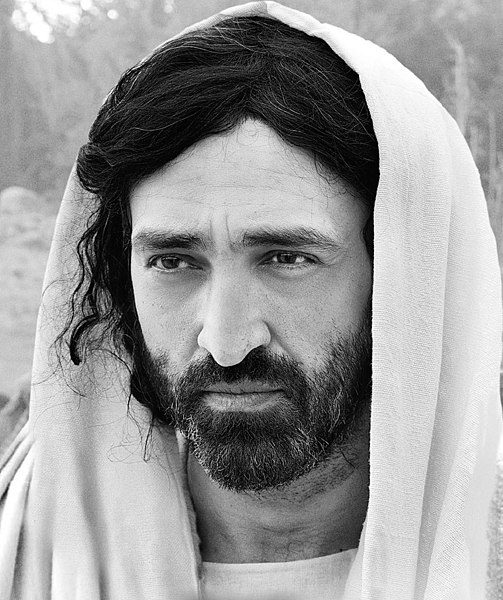
Photo credit: Selva Rasalingam as Jesus in the The Gospel of Luke (2016, Netflix USA) [Wikimedia Commons / Creative Commons CC0 1.0 Universal Public Domain Dedication]

Summary: Michael Alter contends that “all the council” condemned Jesus, & Joseph of Arimathea was a member of it; therefore, it’s a biblical contradiction. Or is it? I show how “all” is used in the NT.
Tags: alleged Bible contradictions, alleged Resurrection contradictions, Bible “contradictions”, Bible “difficulties”, Bible Only, biblical inspiration, biblical prooftexts, biblical skeptics, biblical theology, exegesis, hermeneutics, Holy Bible, inerrancy, infallibility, Jewish anti-Christian polemics, Jewish apologetics, Jewish critique of Christianity, Jewish-Christian discussion, Michael J. Alter, New Testament, New Testament critics, New Testament skepticism, Resurrection “Contradictions”, Resurrection of Jesus, The Resurrection: A Critical Inquiry, Joseph of Arimathea, Sanhedrin, Jewish council, chief priests & elders
Jews & Judaism & Old Testament
alleged Resurrection contradictions
Jewish anti-Christian polemics
Jewish critique of Christianity
The Resurrection: A Critical Inquiry
Previous Post
April 25, 2021
Resurrection (?) #10: "Blood & Water" & Medical Science
Next Post
April 26, 2021 Resurrection #12: Who Buried Jesus?
Browse Our Archives
Select a Category & Last Things About Me Anti-Catholicism Atheism & Agnosticism Baptism and Sacramentalism Bible and Tradition Blessed Virgin Mary Books by Dave Armstrong C. S. Lewis Calvinism & General Protestantism Catholic Apologetics Catholic Apologists Catholic conversion Catholic converts Christmas Church (Ecclesiology) Church History Conversion and Converts Development of Doctrine Eastern Orthodoxy Ecumenism & Christian Unity Eucharist & Liturgy Fathers of the Church French Translations G. K. Chesterton Hell Hell & Satan Hell & Satan & Last Things Heresies & Comparative Religion Holistic Health Inquisition & Crusades & Scandals James White Jews & Judaism & Old Testament John Calvin John Henry Newman Liberal / Modernist Theology Life Issues Literary Resume Lutheranism Mariology Martin Luther Music Orthodoxy Papacy & Infallibility Personal Page Philosophy & Science Political & Ethical & Moral Issues Protestant Persecution & Intolerance Protestantism Purgatory Purgatory & Penance Romantic & Imaginative Theology Saints & Purgatory & Penance Salvation Salvation & Justification Satan & Last Things Sexuality and Gender Issues Spanish Translations Traditionalism vs. Radical Catholic Reactionaries Traducciones al español / tradução para português Trinitarianism & Christology Uncategorized Videos
Select a Month October 2026 September 2026 August 2026 July 2026 June 2026 May 2026 April 2026 March 2026 February 2026 January 2026 December 2025 November 2025 October 2025 September 2025 August 2025 July 2025 June 2025 May 2025 April 2025 March 2025 February 2025 January 2025 December 2024 November 2024 October 2024 September 2024 August 2024 July 2024 June 2024 May 2024 April 2024 March 2024 February 2024 January 2024 December 2023 November 2023 October 2023 September 2023 August 2023 July 2023 June 2023 May 2023 April 2023 March 2023 February 2023 January 2023 December 2022 November 2022 October 2022 September 2022 August 2022 July 2022 June 2022 May 2022 April 2022 March 2022 February 2022 January 2022 December 2021 November 2021 October 2021 September 2021 August 2021 July 2021 June 2021 May 2021 April 2021 March 2021 February 2021 January 2021 December 2020 November 2020 October 2020 September 2020 August 2020 July 2020 June 2020 May 2020 April 2020 March 2020 February 2020 January 2020 December 2019 November 2019 October 2019 September 2019 August 2019 July 2019 June 2019 May 2019 April 2019 March 2019 February 2019 January 2019 December 2018 November 2018 October 2018 September 2018 August 2018 July 2018 June 2018 May 2018 April 2018 March 2018 February 2018 January 2018 December 2017 November 2017 October 2017 September 2017 August 2017 July 2017 June 2017 May 2017 April 2017 March 2017 February 2017 January 2017 December 2016 November 2016 October 2016 September 2016 August 2016 July 2016 June 2016 May 2016 April 2016 March 2016 February 2016 January 2016 December 2015 November 2015 October 2015 September 2015 August 2015 July 2015 June 2015 May 2015 April 2015 March 2015 February 2015 January 2015 December 2014 November 2014 October 2014 September 2014 August 2014 July 2014 June 2014 April 2014 March 2014 February 2014 January 2014 December 2013 November 2013 October 2013 September 2013 August 2013 July 2013 June 2013 April 2013 March 2013 February 2013 January 2013 December 2012 November 2012 October 2012 September 2012 August 2012 July 2012 June 2012 May 2012 April 2012 March 2012 February 2012 January 2012 December 2011 November 2011 October 2011 September 2011 August 2011 July 2011 June 2011 April 2011 March 2011 February 2011 October 2010 September 2010 August 2010 July 2010 April 2010 March 2010 December 2009 October 2009 August 2009 July 2009 June 2009 May 2009 March 2009 February 2009 October 2008 September 2008 April 2008 March 2008 February 2008 January 2008 December 2007 November 2007 October 2007 May 2007 March 2007 February 2007 January 2007 November 2006 October 2006 September 2006 August 2006 July 2006 June 2006 May 2006 April 2006 March 2006 February 2006 October 2005 June 2005 April 2005 February 2005 July 2004 May 2004 April 2004
Follow Us!
TAKE THE
Religious Wisdom Quiz
Who prayed for rain after a long drought and sent his servant to look seven times?
Select your answer to see how you score.
Elijah Isaiah Samuel Hosea
Books by This Author Books by Dave Armstrong
Related posts from Biblical Evidence for Catholicism

Jerusalem Council vs. James White & Sola Scriptura
Biblical Evidence for Catholicism

God, Modern Physics, & Dark Energy: An Analogy
Biblical Evidence for Catholicism

350 Bible Passages vs. Sola Scriptura
Biblical Evidence for Catholicism
Sola Scriptura: Self-Defeating, Unworkable, Unbiblical
Biblical Evidence for Catholicism
TRENDING AT PATHEOS Catholic

I was strolling through the top floor of the brand new Parthenon...

What Does Gêvâh Mean For Kimberley Guifoyle &...
This week, a lot of the news is focused on Kimberly Guilfoyle....

INNER CIRCLE: Profound Mystery (Of Christ In All...
Ephesians 5:31-32 “For this reason, a man will leave his father and...

Do Not Rejoice When Your Enemy Falls: The...
Turning an execution into a public spectacle is a disturbing expression of...

'The Chosen' S6 Trailer: The Passion Gets Very...
Not many watching 'The Chosen' worry about spoilers, but just because they...

The purpose-driven labor priest
A labor activist reads Rick Warren and it gets me wondering about...
view all Catholic blogs
Ad-Free & Subscriber Log-In Subscription Support
- About Us
- 2026 Calendar
- Videos
- Podcasts
- Library of World Religions
- Faith In Media Tracker
- Advertise With Us
- Write for Us
- Privacy Policy
- Terms of Service
- Do Not Sell My Data
- Contact Us
- Radiant Digital
- Manage Newsletter Subscriptions
- Unsubscribe From Notifications
- Sitemap
Copyright 2008-2026, Patheos. All rights reserved.
Subscription Support Ad-Free & Subscriber Log-In
Follow Patheos