
BuddhistCatholicContemplativeEvangelicalGeneral ChristianHinduJewishLatter-day SaintMuslimNew VisionsProgressive Christian
Beliefs
- Buddhist
- Catholic
- Contemplative
- Evangelical
- General Christian
- Hindu
- Jewish
- Latter-day Saint
- More Voices
- Muslim
- New Visions
- Pagan
- Progressive Christian
Topics
- Religion News
- Food and Religion
- Sports and Religion
- Religious Art
- Religious Music and Entertainment
- Religious Events
- History and Religion
- Style and Religion
- Politics and Religion
- Women in Religion
- Recreation Outdoors and Religion
- Business Finance and Religion
- Careers Workplace and Religion
- Education and Religion
- Family Parenting and Religion
- Health Fitness and Religion
- Home and Religion
- Relationships and Religion
- Technology and Religion
- Travel and Religion
Columnists
- Buddhist Columnists
- Business Finance and Religion Columnists
- Careers Workplace and Religion Columnists
- Catholic Columnists
- Contemplative Columnists
- Education and Religion Columnists
- Evangelists Columnists
- Family Parenting and Religion Columnists
- General Christian Columnists
- Health Fitness and Religion Columnists
- Hindu Columnists
- History and Religion Columnists
- Home and Religion Columnists
- Jewish Columnists
- More Voices Columnists
- Latter Day Columnists
- Muslim Columnists
- New Visions Columnists
- Nonreligious Columnists
- Pagan Columnists
- Politics and Religion Columnists
- Progressive Columnists
- Recreation Outdoors and Religion Columnists
- Relationships and Religion Columnists
- Religion News Columnists
- Religious Art Columnists
- Religious Events Columnists
- Religious Music and Entertainment Columnists
- Sports and Religion Columnists
- Style and Religion Columnists
- Technology and Religion Columnists
- Travel and Religion Columnists
- Women in Religion Columnists
Resource Library
- 2026 Calendar
- Library of World Religions
- The 100 Most Holy Places on Earth
- Patheos Answers
- Podcasts
- Videos
- Faith Leaders Database
- Anglican Episcopalian
- Bahai
- Baptist
- Buddhism
- Christianity
- Confucianism
- Eastern Orthodoxy
- Hinduism
- Holiness and Pentecostal
- ISKCON
- Islam
- Judaism
- Lutheran
- Methodist
- The Church of Jesus Christ of Latter-day Saints
- New Age
- Paganism
- Presbytarian and Reformed
- Protestantism
- Religion Behind the Scenes
- Roman Catholic
- Scientology
- Shia Islam
- Sikhism
- Sufism
- Sunni Islam
- Taoism
- Zen
- See all religions
Research Tools
 Ad-Free & Subscriber Log-In Subscription Support
Ad-Free & Subscriber Log-In Subscription Support
Follow Patheos 

- Trending:
- Forgiveness
- |
- Marriage
- |
- Consciousness
- |
- Death Penalty
- |
- Election
- |
- Halloween

-
About
-
Catholic Apologetics
-
Church History
-
Great Apologists
-
Christian Worldview
-
Protestantism & Misc.
- Home
- Catholic
- History and Religion
- Problem of Good: Further Discussions with Atheists
Problem of Good: Further Discussions with Atheists
Last updated on: April 5, 2021 at 11:59 am by Dave Armstrong
Problem of Good: Further Discussions with Atheists 2021-04-05T11:59:50-04:00 Dave Armstrong
Patheos Explore the world's faith through different perspectives on religion and spirituality! Patheos has the views of the prevalent religions and spiritualities of the world.
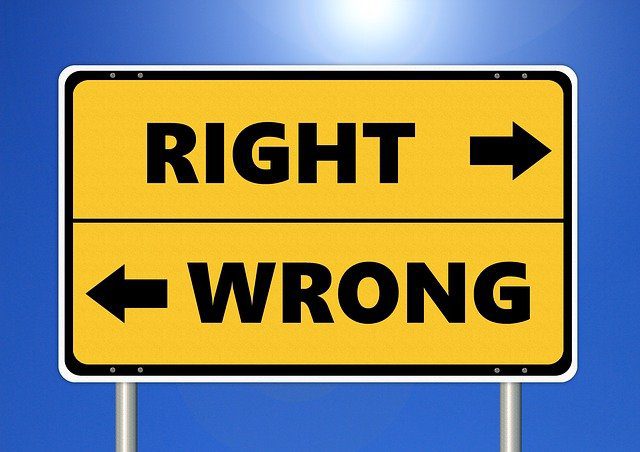
This is a follow-up to my article, Problem of Good: More Difficult than Problem of Evil? (4-3-21). The discussions took place in a long thread (currently 895 comments) on atheist Jonathan MS Pearce’s blog, A Tippling Philosopher. Words of my four dialogue opponents will be in various colors.
*****
Geoff Benson: I’ve read your article but it takes me back to my early days discussing the philosophy of religion, and addresses issues we’ve covered so many times. I’m not trying to be ‘anti Dave Armstrong’, but I really am not convinced by anything in this article.
Essentially it boils down to the idea that atheists may actually be good and decent people but that, ultimately, there’s no underlying foundation as to why they should be this way, whilst believers (and I concede that you are careful not to confine it to Christianity) have the ultimate foundation in god. Atheism gave rise to Hitler and Stalin, with regimes that we all agree were horrific beyond description. Under Dave’s belief system both of these genocidal dictators get to suffer, whilst atheism accepts they simply die, end of story. Without god atheists can’t really be sure what is meant by good, and so find it difficult to discuss evil in a meaningful way.
Where does one begin? Well for starters, the fact that Hitler and Stalin escape eternal punishment is simply a fact, if atheism is valid. Wishing it were otherwise (and this point alone is capable of lengthy analysis) doesn’t make it so. Life, the universe, and everything need not be fair under nature. In any event, Hitler, Stalin, and other dictators don’t demonstrate the dangers of atheism, they demonstrate the dangers of totalitarianism, combined with other incendiary features. Many of the worst genocidal dictators have been devoutly religious, Franco actually carrying out many of his policies in the name of his beloved Catholic Church, whilst the African genocides that are still being perpetrated for some reason go under the radar, and religious superstition is a major factor in these atrocities.
No heed is paid to the reality of what it means to have morality based on god. Where does this morality come from? Is it put into human natures, such that everybody has it? This doesn’t explain why it varies so much between people, seemingly absent in many, and also means that it would be imbued in atheists, which this article implies doesn’t happen. So it must actually be delivered by some sort of divine instruction, and the bible appears to be the only text which might be considered relevant in this respect (with all due lack of respect to Mormons). The problem is with any form of divine instruction that it must be clear, and it’s incredibly not clear! There are many hundreds of commandments littered throughout, especially the OT, and they are either obvious (thou shalt not kill, really!), or particular to the time they were written, or just plain silly. More especially, however, and I think this is the gotcha point, the recipient must make a conscious decision to accept the instruction, and that is subjective. Suppose god had said it’s actually okay to kill people, would it then be okay? Of course not. So everyone, you included, must make the, albeit unconscious, decision that a particular type of behaviour is consistent with your own standards of morality, but you then attribute it to god.
Morality is something that is slowly learned over time by cultures that exist in different circumstances, with different rules and religions, yet all seem to acquire similar principles. The argument that if atheism is valid then people are free to rape and murder as they please is so much nonsense, on every level. As Matt Dillahunty says, “I do rape and murder all I want, and that’s exactly nil”. Steven Pinker in his book The Better Angels of Our Nature: Why Violence Has Declined, argues convincingly that morality has improved throughout western society as religious belief has waned and secularism has become the norm. That’s my position. Religion is an obstacle to morality.
Finally, and on the same theme, your comment “The atheist is simply living off the cultural (and internal spiritual) “capital” of Christianity, whether he or she realizes it or not.” Oh no you don’t Dave, quite the reverse. To quote Jerry Coyne “Secular values brought about morality, and religion tried to take the credit”.
You make an interesting reply, and I appreciate it (as I do your usual amiability), but somehow you never got to my topic: the Problem of Good. Instead, it’s the same old tired atheist tactic of switching the topic over to Christianity. The Problem of Good is not about Christianity. It’s about atheism. It’s your problem, just as the Problem of Evil is ours to grapple with and explain. You have done exactly nothing to ameliorate it, because you haven’t discussed it. You’re certainly more than capable of it. You have a head on your shoulders. But you chose diversion.
Your task is to explain how a binding, objective moral system, applying to all (which is presupposed by all laws and justice systems, which enforce laws by punishing offenders), is constructed under atheist premises. And you need to explain how and why evil systems which expressly claim to be atheist or at least non-religious, such as Stalin’s Russia and Mao’s China, do not fall under “atheist consequences”; i.e., on what basis are they “out of the fold”?
I think I do address the point, though I did overlook your assertion that god instils goodness in everyone which helps offset any tendency to evil. Your article actually finds itself constantly constrained to talk about evil, whilst ostensibly stressing that it’s the existence of good that sinks the atheist argument. I thought I’d addressed every point in your final paragraph, but if there’s something on which I wasn’t clear then tell me.
It depends on what one thinks dialogue is. I think (if one is really serious and has the time and desire) it deals point-by-point with the opponent’s argument. It’s about actual interaction: not just “person A makes argument X” followed by “person B makes conflicting argument Y as opposed to a direct counter-reply to X.”
My challenge to you and all atheists here is to make a reply to the Problem of Good objection without ever mentioning Christianity or God and not resorting to the “your dad’s uglier than mine” topic-diverting mentality.
The reply concerning every difficulty in atheism raised by theists and Christians is not “But Christianity . . . ” or “But God . . . ” or “But the Bible . . . ”
You guys come off constantly looking like you’re obsessed with us and about a God you don’t even believe exists, rather than confident in your own position and ready to defend it against all critiques.
***
Carstonio: Ridiculous to try to prove the existence of a being through logical argument instead of consideration of evidence. There’s no way to know if any deities exist, and presupposing a deity creates the problem of evil, not the other way around. Better to take the concept of deity off the table entirely and address good and evil on their own.
And that’s what my present argument does. When I mentioned God and Christianity it was only as “diversions” in reply to my atheist debate opponents. They are not required to make the critique, since it’s a critique of the internal incoherence and arbitrariness of atheism with regard to ethics and morality.
***
im-skeptical: Well, I took a quick look at it. His argument assumes up-front that God is what creates goodness and meaning. He makes no allowance for human-derived conceptions of those things. Without the assumption of God, the whole thing has no basis. This is the kind of circular reasoning that typifies so many theistic arguments.
That’s my Christian assumption, yes, but it has no direct relation to my critique of the atheist problem of good. The two things are conceptually and logically distinct. If you took more than a “quick look” at my post you would realize that (whether you admitted it here in front of your echo chamber buddies or not).
The critique can be made with no reference to the Christian position at all. But in a very long dialogue, I did mention (as a separate sub-discussion) the Christian view as a superior and more plausible one, when confronted by my dialogue opponent. It doesn’t mean that I base my critique on that; let alone that I engaged in circular reasoning. I absolutely did not.
Christians take the problem of evil seriously. Atheists (as you did here) very often try to pretend that you have no similar problem according to your own presuppositions. This won’t do. It’s not serious thinking. We grapple with serious objections (that all belief-systems contain). You guys mostly ignore serious objections to your own outlook. And that doesn’t give anyone on the fence confidence that you have a more plausible or appealing case, or more truth than we do.
The only reason you suppose atheists have a “problem of good” is you think there is no way to explain it without resorting to God. A naturalist has no problem explaining human behavior as a product of evolution. And if you think there’s a problem with that, it’s only because you don’t understand how evolution could bring this about. It is your presuppositions, not mine, that prevent you from understanding.
***
Anri: With a possible difference being that atheists attribute their belief systems, irrational or not, to fallible humans rather than a perfect god.
Presumably, symmetrical issues should not be a problem when one side is being backed by the most powerful being possible. The explanation “Well, you have problem, too!” get kind of weak when one considers the presumed sources of the solutions – or lack thereof.
I’m not saying it’s not serious. I’m saying limited being should expect serious issues with what their moral systems. All-powerful beings, not so much. I’m not dismissing the issue, I’m pointing out the issues inherent with assuming symmetry.
It’s symmetrical only in the following sense:
1) The atheist assumes a good, all-powerful Christian God for the sake of argument and then proceeds to raise what are regarded as extreme or even fatal difficulties for Christians, that come about because of the existence (and ultimate basis or grounding) of evil.
2) The theist assumes the absence of a good, all-powerful Christian God for the sake of argument and then proceeds to raise what are regarded as extreme or even fatal difficulties for atheists, that come about because of the existence (and ultimate basis or grounding) of good.
In other words, the symmetry and analogy is between evil in relation to a posited God, and good in relation to a posited non-existence of God and therefore the necessity of human beings as the basis of good and determination of necessary ethical absolutes; rather than God vs. no God.
It’s a very serious and troubling internal difficulty in your position, just as you argue that the problem of evil is a very serious and troubling internal difficulty in ours. Both arguments have to do with morality and ethics and how we build such systems to be able to live in a (hopefully) good world. Both arguments presuppose that there is such a thing as “good” and it’s opposite: evil or (if one prefers) the lack of good, and that “good” is exponentially more preferable and desirable.
One argument assumes we can, and indeed, must, define good for ourselves, whereas the other presumes good is a quality handed down perfectly by a perfect being, who only fails at the hurdle of making it intelligible to us.
As an atheist, I don’t have to assume some Platonic ideal of good – a universal code of good goodness that supersedes all possible questioning and argument. I could, and some do, but it’s not needed.
I am willing to accept a flawed, entirely imperfect, in-process, in-progress, probably-never-to-be-perfected concept of good – so long as the premise of the argument does not require one. This concept only gains force when someone insists on it as a premise of their argument.
I’m entirely willing to abandon the concept of a perfect good to explain imperfect good in the world.
Are you?
If not, the premises of our arguments are not the same, so different results are only to be expected.
You assume that there is some semblance or actuality of absolute good (and the lack of it: “evil” or “bad” or “immoral” or “unethical”) in order to make the problem of evil in the first place (one of my arguments in my post).
You can believe whatever you wish. But if you deny any sense of an objective good, it seems to me that it follows that you can make no “problem of evil” argument against God and theism, because you have to presuppose it for the argument to get off the ground.
Thus, atheists presuppose in their endless problem of evil soliloquies that the Holocaust and child molestation and rape and murder and economic exploitation and slavery and racism and sexism and on and on, are objective evils that God is supposedly accountable for. If they weren’t, then the argument would instantly collapse.
As a Christian, I can’t not accept a perfect good, since in our view, that notion is grounded in God and His character and nature and essence. To do so would be to instantly cease being a Christian.
I was under the impression most Christians consider god to be the source of, and an example of, perfect good. If you think this is not, or should not be the case, I’ll be happy to refer any Christian saying such a thing to you for correction.
In making a ‘problem of evil’ argument, I am just accepting the Christian premise that god exists, and is perfectly good. Again, if you think this is a bad premise for Christians to accept, I’ll make sure to let everyone know if they ever go so.
If your argument is that the Christian god sanctioned the Holocaust due to him not having a basis for considering it evil, I’ll be sure to let folks know about that, too. Is that your argument? I don’t want to mischaracterize you.
How can good be “grounded in God and His character and nature and essence” [my words] and yet God is somehow NOT the source and example of it? What am I missing? Yeah, “[G]od exists, and is perfectly good.” What in the world would give you the notion that I would deny that? It’s hopelessly confused.
The last paragraph is so outrageous and absurd that it deserves no reply.
If you want to deal with my argument, then address it itself. These “meta” discussions (talking about things and “skating along the edges” rather than discussing the thing itself) get old very quick.
As it is, here we are (as always) discussing God and the Christian view, when my critique is of the atheist view. It’s the oldest atheist game in the book to always switch the conversation over to Christianity, so that they never have to have their own views scrutinized. It just makes you guys look intellectually lightweight.
So, if we accept that one side of the argument presupposes a universal perfect grounding for a universal good, and the other does not… good and evil are going to play out very differently in these worldviews, and thus they should not be presumed to be mirror images of one another.
But if you deny any sense of an objective good, it seems to me that it follows that you can make no “problem of evil” argument against God and theism, because you have to presuppose it for the argument to get off the ground.
But in arguments about the problem of evil, an accepted premise of the argument is that god exists, and is the source of perfect good. That’s why arguments along these lines are an issue for Christians – who (presumably) accept this premise, but not for atheists, who need not.
The atheist difficulty is that good exists at all. You have at least as much of a problem in defining and establishing that as we do in establishing the existence of God.
As I explicitly said, I am willing to accept the concept of good as something people agree upon, rather than something foisted upon us externally. In that respect, there’s no more of an issue for an atheist saying good exists than there is saying blue exists.
What I don’t require is that there is a single, all-encompassing, eternal, perfect code of good that humans must cleave to to correctly use the term.
I’m not saying objective, universal good is impossible – and there are atheists who argue for it – but I do not have to accept that it exists, or that we have or will ever have access to it if it does exist to use the term.
Do I have a rigorous definition of “good”? No, I don’t. I don’t know that one exists. But a broad, flawed, imperfect, lots-of-grey-area-type agreement can be made on at least some aspects of it.
And that’s exactly the same situation with religion. The difference being, an atheist doesn’t have to explain away a perfect god mucking up the delivery of it so terribly badly.
If you don’t have a definition of good, then you don’t have a problem, do you? You have made the problem vanish (or so you think) by your refusal to define. And you will be unable to condemn many evils concerning which virtually everyone agrees, if you have no definition of good.
If you don’t have a definition of good…
And this is the biggest issue with my own worldview. I don’t so much lack a definition of good (I would tentatively define it as a hypothetical balance point between respecting the greater good and respecting individual rights of self and freedom – all of which are themselves fraught terms, of course…) it’s that the definition isn’t exact or rigorous.
This is a problem, at least philosophically. One I don’t have a ready answer to.
And, yes, there is no way to identify things which are accepted as moral now which might be demonstrated as immoral at some future point.
The advantage (if it is one) is that I understand this – I am certain, entirely certain, that there are things I consider moral which will be viewed as immoral by a more enlightened future society, possibly even by a more enlightened, future me. And I don’t know what these are.
But my overall point is that unless theists can make an airtight case for god’s existence, and his essential goodness, they are in the same boat morally, except that they don’t admit it. They have the same problems of following a human-given set of laws, but they believe that these have come from somewhere else, somewhere better. If the specific god they believe in doesn’t exist, or isn’t as they imagined… they haven’t.
And the fact that the religious have participated in horrors and immorality – as often as not in the name of their god’s morality – leads me to believe that none of us have even partial access to some perfect moral source.
That’s why I think the comparison is not apt – one side claims a perfect source as a premise of the argument, the other does not.
I’m very impressed that you (alone in this forum so far) admit that this is a “problem” and an “issue” in your worldview. Likewise, we Christians acknowledge the problem of evil as our biggest difficulty. Obviously, neither of us consider these problems fatal to our views or we wouldn’t still hold them.
You have to determine what “enlightened” means, and who determines what is “enlightened” and what isn’t.
I think we need to distinguish between epistemology and internal coherence and consistency. The two problems are suggested as difficulties within particular systems. Our system includes many things that yours does not: God, revelation, the supernatural, faith; as well as things we hold in common (love of reason and science and philosophy).
Part of our system is the knowledge of what Jesus, the God-Man did for us. He chose to die one of the most horrible deaths imaginable for our sake. That shows us how much God loves us, and also (importantly) that He is also willing to suffer (as an incarnate man; God the Father actually can’t suffer). He didn’t separate Himself from all our sufferings. And so we believe He is loving based on that and how He revealed Himself in the Bible, and many of our experiences as Christians (of joy, peace, strength, and so forth).
That’s why we believe He is good, even though there are many things in this life very difficult to understand. And His Resurrection, that we will celebrate today, shows us that He is omnipotent and that He has conquered death. It’s one basis for believing in an afterlife: which itself makes sense, per the arguments I have already made about “cosmic justice.” There is much more than just this life. We all will live eternally: not just 70-80-odd years and then nothing whatsoever . . .
Why we believe all these things is, of course, a much more involved and complex discussion. I’m simply describing how the system works and is, we believe, coherent, with regard to this difficulty of evil: no matter how much we may not understand. That’s part of belief in God, too: there is a Supreme Being, of infinite intelligence and knowledge, Who understands things that we never could understand, without His help. That’s our system: believe it or not.
The main defense against the problem of evil objection is the free will defense: to which atheists respond by denying free will. So that’s another big discussion (but, alas, one that bores me). I see human free will and free choices as self-evidently true. If everything we do is determined, then it’s senseless to even have these conversations.
These are my thoughts for now. Thanks again for your openness and transparency and willingness to engage. I admire that.
I wanted to make a quick reply – nothing novel, of course – to a few things you said. If this thread is becoming cumbersome or tiresome, we can just use these two posts as kind of ‘policy positions’ and not get into point-by-point if you’d prefer.
A quick-and-dirty definition of ‘enlightened’ might be “more knowledgeable and understanding about the world”.
See, for myself, I assume a system in which someone has to suffer – when the person setting the rules can set literally any rules, including the rule “no-one has to suffer” already has missed a major point of ‘good’. I am in no way suggesting god is obligated to remove suffering, just that a system with less suffering is superior to a system that involves suffering, when there are no restrictions on the way the system is built.
The problem, for me, with merely invoking god’s mystery as an explanation for why human understanding falls short is that there’s no reason not to apply that to any aspect of god – that any and all attempts to understand any part of god’s will, or message, or anything, is essentially wrong-headed. Otherwise, you’re claiming at least a partial understanding of god.
If god is beyond human comprehension, than any statement attributing any coherence of god’s actions is automatically suspect. This includes what god ‘says’ directly through scripture – honestly might very well mean something very different to god than it does to us.
If the answer to this, in turn, is that that’s was faith is for, then the issue becomes that all faith positions about god become equally valid, as there’s no intelligible way to determine between them.
As far as free will goes, some atheists deny free will, some do not (you’ll find many argument to that effect on this blog, all between atheists). Personally, I believe in free will, but I suspect that’s an irrational belief. I comfort myself with the notion that if I am right, I’m right, and if I’m wrong, I lack the free will to change my mind.
But if free will exists in heaven, evil and sin and suffering can be entirely separated from it and thus it does not offer a way out of the problem of evil. And if free will does not exist in heaven, god does not respect it as much as many seem to say he does.
This got quite long, and I apologize for that. There’s a lot to unpack in what you said, and as I don’t use philosophical shorthand jargon – as I don’t know it – I often take quite a while explaining what I am trying to say using more common language. Hence my verbosity.
Most of this is about the problem of evil, which is off-topic. So is the nature of Christian faith, mysteries about God, and free will. I appreciate your comment, but I’m very strict about staying right on-topic.
I am developing my case further in the combox of my related article on my own blog, by suggesting a test case, with a prerogative to ask many more necessary socratic questions, which will clarify my case and also make clear my objections to the atheist position(s) on morality and right and wrong.
***
Photo credit: Tumisu (12-2-17) [Pixabay / Pixabay License]
***
Summary: The problem of good, which is a Christian “turning the tables” counter-reply to the problem of evil, is discussed in-depth with four atheists: one of whom admitted it was a problem.
***
Previous Post

April 3, 2021
Problem of Good: More Difficult than Problem of Evil?
Next Post

April 6, 2021 Refutation of Atheist Paul Carlson's 51 Bible "Contradictions"
Browse Our Archives
Select a Category & Last Things About Me Anti-Catholicism Atheism & Agnosticism Baptism and Sacramentalism Bible and Tradition Blessed Virgin Mary Books by Dave Armstrong C. S. Lewis Calvinism & General Protestantism Catholic Apologetics Catholic Apologists Catholic conversion Catholic converts Christmas Church (Ecclesiology) Church History Conversion and Converts Development of Doctrine Eastern Orthodoxy Ecumenism & Christian Unity Eucharist & Liturgy Fathers of the Church French Translations G. K. Chesterton Hell Hell & Satan Hell & Satan & Last Things Heresies & Comparative Religion Holistic Health Inquisition & Crusades & Scandals James White Jews & Judaism & Old Testament John Calvin John Henry Newman Liberal / Modernist Theology Life Issues Literary Resume Lutheranism Mariology Martin Luther Music Orthodoxy Papacy & Infallibility Personal Page Philosophy & Science Political & Ethical & Moral Issues Protestant Persecution & Intolerance Protestantism Purgatory Purgatory & Penance Romantic & Imaginative Theology Saints & Purgatory & Penance Salvation Salvation & Justification Satan & Last Things Sexuality and Gender Issues Spanish Translations Traditionalism vs. Radical Catholic Reactionaries Traducciones al español / tradução para português Trinitarianism & Christology Uncategorized Videos
Select a Month October 2026 September 2026 August 2026 July 2026 June 2026 May 2026 April 2026 March 2026 February 2026 January 2026 December 2025 November 2025 October 2025 September 2025 August 2025 July 2025 June 2025 May 2025 April 2025 March 2025 February 2025 January 2025 December 2024 November 2024 October 2024 September 2024 August 2024 July 2024 June 2024 May 2024 April 2024 March 2024 February 2024 January 2024 December 2023 November 2023 October 2023 September 2023 August 2023 July 2023 June 2023 May 2023 April 2023 March 2023 February 2023 January 2023 December 2022 November 2022 October 2022 September 2022 August 2022 July 2022 June 2022 May 2022 April 2022 March 2022 February 2022 January 2022 December 2021 November 2021 October 2021 September 2021 August 2021 July 2021 June 2021 May 2021 April 2021 March 2021 February 2021 January 2021 December 2020 November 2020 October 2020 September 2020 August 2020 July 2020 June 2020 May 2020 April 2020 March 2020 February 2020 January 2020 December 2019 November 2019 October 2019 September 2019 August 2019 July 2019 June 2019 May 2019 April 2019 March 2019 February 2019 January 2019 December 2018 November 2018 October 2018 September 2018 August 2018 July 2018 June 2018 May 2018 April 2018 March 2018 February 2018 January 2018 December 2017 November 2017 October 2017 September 2017 August 2017 July 2017 June 2017 May 2017 April 2017 March 2017 February 2017 January 2017 December 2016 November 2016 October 2016 September 2016 August 2016 July 2016 June 2016 May 2016 April 2016 March 2016 February 2016 January 2016 December 2015 November 2015 October 2015 September 2015 August 2015 July 2015 June 2015 May 2015 April 2015 March 2015 February 2015 January 2015 December 2014 November 2014 October 2014 September 2014 August 2014 July 2014 June 2014 April 2014 March 2014 February 2014 January 2014 December 2013 November 2013 October 2013 September 2013 August 2013 July 2013 June 2013 April 2013 March 2013 February 2013 January 2013 December 2012 November 2012 October 2012 September 2012 August 2012 July 2012 June 2012 May 2012 April 2012 March 2012 February 2012 January 2012 December 2011 November 2011 October 2011 September 2011 August 2011 July 2011 June 2011 April 2011 March 2011 February 2011 October 2010 September 2010 August 2010 July 2010 April 2010 March 2010 December 2009 October 2009 August 2009 July 2009 June 2009 May 2009 March 2009 February 2009 October 2008 September 2008 April 2008 March 2008 February 2008 January 2008 December 2007 November 2007 October 2007 May 2007 March 2007 February 2007 January 2007 November 2006 October 2006 September 2006 August 2006 July 2006 June 2006 May 2006 April 2006 March 2006 February 2006 October 2005 June 2005 April 2005 February 2005 July 2004 May 2004 April 2004
Follow Us!
TAKE THE
Religious Wisdom Quiz
What book of the Bible comes after Genesis?
Select your answer to see how you score.
Deuteronomy Exodus Leviticus Numbers
Books by This Author Books by Dave Armstrong
Related posts from Biblical Evidence for Catholicism

God, Modern Physics, & Dark Energy: An Analogy
Biblical Evidence for Catholicism
C. S. Lewis’ Argument for God from Desire
Biblical Evidence for Catholicism

General Debate on Christianity with an Atheist
Biblical Evidence for Catholicism

Parting of the Red Sea & Lake Erie...
Biblical Evidence for Catholicism
TRENDING AT PATHEOS Catholic

In "Irreplaceable," our book on vocation and technology, Trevor Sutton and I...

I was strolling through the top floor of the brand new Parthenon...

What Does Gêvâh Mean For Kimberley Guifoyle &...
This week, a lot of the news is focused on Kimberly Guilfoyle....

INNER CIRCLE: Profound Mystery (Of Christ In All...
Ephesians 5:31-32 “For this reason, a man will leave his father and...

Do Not Rejoice When Your Enemy Falls: The...
Turning an execution into a public spectacle is a disturbing expression of...

'The Chosen' S6 Trailer: The Passion Gets Very...
Not many watching 'The Chosen' worry about spoilers, but just because they...
view all Catholic blogs
Ad-Free & Subscriber Log-In Subscription Support
- About Us
- 2026 Calendar
- Videos
- Podcasts
- Library of World Religions
- Faith In Media Tracker
- Advertise With Us
- Write for Us
- Privacy Policy
- Terms of Service
- Do Not Sell My Data
- Contact Us
- Radiant Digital
- Manage Newsletter Subscriptions
- Unsubscribe From Notifications
- Sitemap
Copyright 2008-2026, Patheos. All rights reserved.
Subscription Support Ad-Free & Subscriber Log-In
Follow Patheos