
BuddhistCatholicContemplativeEvangelicalGeneral ChristianHinduJewishLatter-day SaintMuslimNew VisionsProgressive Christian
Beliefs
- Buddhist
- Catholic
- Contemplative
- Evangelical
- General Christian
- Hindu
- Jewish
- Latter-day Saint
- More Voices
- Muslim
- New Visions
- Pagan
- Progressive Christian
Topics
- Religion News
- Food and Religion
- Sports and Religion
- Religious Art
- Religious Music and Entertainment
- Religious Events
- History and Religion
- Style and Religion
- Politics and Religion
- Women in Religion
- Recreation Outdoors and Religion
- Business Finance and Religion
- Careers Workplace and Religion
- Education and Religion
- Family Parenting and Religion
- Health Fitness and Religion
- Home and Religion
- Relationships and Religion
- Technology and Religion
- Travel and Religion
Columnists
- Buddhist Columnists
- Business Finance and Religion Columnists
- Careers Workplace and Religion Columnists
- Catholic Columnists
- Contemplative Columnists
- Education and Religion Columnists
- Evangelists Columnists
- Family Parenting and Religion Columnists
- General Christian Columnists
- Health Fitness and Religion Columnists
- Hindu Columnists
- History and Religion Columnists
- Home and Religion Columnists
- Jewish Columnists
- More Voices Columnists
- Latter Day Columnists
- Muslim Columnists
- New Visions Columnists
- Nonreligious Columnists
- Pagan Columnists
- Politics and Religion Columnists
- Progressive Columnists
- Recreation Outdoors and Religion Columnists
- Relationships and Religion Columnists
- Religion News Columnists
- Religious Art Columnists
- Religious Events Columnists
- Religious Music and Entertainment Columnists
- Sports and Religion Columnists
- Style and Religion Columnists
- Technology and Religion Columnists
- Travel and Religion Columnists
- Women in Religion Columnists
Resource Library
- 2026 Calendar
- Library of World Religions
- The 100 Most Holy Places on Earth
- Patheos Answers
- Podcasts
- Videos
- Faith Leaders Database
- Anglican Episcopalian
- Bahai
- Baptist
- Buddhism
- Christianity
- Confucianism
- Eastern Orthodoxy
- Hinduism
- Holiness and Pentecostal
- ISKCON
- Islam
- Judaism
- Lutheran
- Methodist
- The Church of Jesus Christ of Latter-day Saints
- New Age
- Paganism
- Presbytarian and Reformed
- Protestantism
- Religion Behind the Scenes
- Roman Catholic
- Scientology
- Shia Islam
- Sikhism
- Sufism
- Sunni Islam
- Taoism
- Zen
- See all religions
Research Tools
 Ad-Free & Subscriber Log-In Subscription Support
Ad-Free & Subscriber Log-In Subscription Support
Follow Patheos 

- Trending:
- Forgiveness
- |
- Marriage
- |
- Consciousness
- |
- Death Penalty
- |
- Election
- |
- Halloween

-
About
-
Catholic Apologetics
-
Church History
-
Great Apologists
-
Christian Worldview
-
Protestantism & Misc.
- Home
- Catholic
- History and Religion
- Resurrection Debate #1: Preliminaries & Premises
Resurrection Debate #1: Preliminaries & Premises
Last updated on: June 5, 2026 at 11:58 pm by Dave Armstrong
Resurrection Debate #1: Preliminaries & Premises 2026-06-05T23:58:08-04:00 Dave Armstrong
Patheos Explore the world's faith through different perspectives on religion and spirituality! Patheos has the views of the prevalent religions and spiritualities of the world.
Michael J. Alter is the author of the copiously researched, 913-page volume, The Resurrection: a Critical Inquiry (2015). I initially offered 59 “brief” replies to as many alleged New Testament contradictions (March 2021). We later engaged in amiable correspondence and decided to enter into a major ongoing dialogue about his book. He graciously sent me a PDF file of it, free of charge, for my review, and has committed himself to counter-response as well: a very rare trait these days. All of this is, I think, mightily impressive.
Mike describes himself as “of the Jewish faith” but is quick to point out that labels are often “misleading” and “divisive” (I agree to a large extent). He continues to be influenced by, for example, “Reformed, Conservative, Orthodox, and Chabad” variants of Judaism and learns “from those of other faiths, the secular, the non-theists, etc.” Fair enough. I have a great many influences, too, am very ecumenical, and am a great admirer of Judaism, as I told Michael in a combox comment on my blog.
He says his book “can be described as Jewish apologetics” and one that provides reasons for “why members of the Jewish community should not convert to Christianity.” I will be writing many critiques of the book and we’ll be engaging in ongoing discussion for likely a long time. I’m quite excited about it and eagerly enjoy the dialogue and debate. This is a rare opportunity these days and I am most grateful for Mike’s willingness to interact, minus any personal hostility.
*****
You’ll soon discover that I have particular interests and am uninterested in other things. That will be true with regard to your book. I am primarily interested in demonstrating that alleged NT contradictions really aren’t so, or “defeating the defeaters”: as Protestant philosopher Alvin Plantinga likes to say. The idea is to question whether internal contradictions are present, and to refute each one that is alleged. That’s what I did so far in my 59 replies to your book: based on what I could read of it. So you already see what I will mostly be doing as I proceed.
*
It’s a “negative” sort of evidence for NT trustworthiness and internal consistency and cohesion. It doesn’t prove inspiration, but it is consistent with it; that is, inspired revelation would not and could not contain real contradictions. And it’s an objective enterprise: one of logic. Orthodox, traditional Christians like myself believe that the NT (and the OT) are ultimately “supervised” (quite different, however, from “dictated”), guided, and protected from error by God Himself, and that the results, therefore, are infallible (in the original autographs) and therefore, non-contradictory.
*
Where human authors, writing of their own accord, but inspired by God, may not have been intentionally seeking logical harmony with all other NT books (often not even knowing they existed), God saw to it that this harmony was in fact achieved. This is my presupposition, and it lies behind my view that the NT books are a coherent whole, and that cross-references from any one book are relevant to similar subject material in all the other books (one of the key premises of systematic theology, which I love).
*
Of course, this is a tenet of faith. One can hardly “prove” such a thing. Faith itself is (we say) consonant with reason and not antithetical to it at all. Reason can bolster it in quite a few ways; yet faith can never reduce to mere reason or philosophy. It is its own entity. And it is enabled by God’s grace. If “most” modern scholars reject these sorts of things, it is of little concern to me. From where I sit, they have adopted various false premises, leading to a loss of a faith they may have once had (whether Jewish or Christian), or preventing the attainment of such faith in the future. In our view, loss of faith, or never having had faith can’t help but harm their thinking processes as well.
*
In a word, they lack wisdom. I think much of liberal biblical scholarship and atheist “biblical scholarship” is outright and intrinsically dishonest. It is not approaching the Bible as it actually is, and is dedicated to forcing it into conceptions that it is not. I’m not a scholar and I can’t say that I have read 5,000 books like you or deal with this stuff on that level, but I do have some 40 years of experience debating atheists and defending the Bible and Christianity and (more broadly) theism.
*
Christianity cannot be reduced to philosophy or scholarship of the “pointy heads.” I’m not “anti-scholarship” at all; but I take a dim view of skeptical and theologically liberal scholarship (as you saw in my vigorous criticism of Fr. Raymond Brown). Catholics in particular believe that biblical scholarship from professed Catholics must seek to be in harmony with Church teachings and dogmas.
*
A lot of people don’t like that. Again it comes down to the beliefs of faith and one’s premises. Bertrand Russell maintained that St. Thomas Aquinas was not a philosopher because he was also a theologian and orthodox Catholic. For Russell, those two things were utterly incompatible. For St. Thomas (drawing largely from Aristotle) and virtually all Catholics, they are not at all. It’s two different things that are in harmony, just as science and faith / theology are also in harmony.
*
Many people view me as a fundamentally dishonest person, a sophist or special pleader, or even an outright liar because I am an apologist and defend a particular viewpoint. I respond that everyone has a viewpoint or a worldview, whether they acknowledge it or not, and they accept many axiomatic premises that cannot themselves be proven. A Catholic apologist simply has a few more ironclad premises than most, but it’s not an intrinsically dishonest enterprise.
*
This will give you an idea of how I approach these things, and where my main interest in your book lies. I will still have a lot to respond to, because you allege many contradictions. With atheists who propose many of these, the discussion often gets down to one about plausibility. I think I decisively refute a proposed contradiction, and they don’t see it at all, because they have these (arbitrary) notions that “the text shouldn’t read as it does, and should read a different way.” And of course they reject all miracles and even the honesty and integrity of the NT authors.
*
But on what basis can they say that (what the Bible writers should or shouldn’t have written if they were “honest” etc.)? It’s all arbitrary: as are all the convoluted, cynical theories they have about the NT writers being agenda-driven; special pleading sophists. Belief in biblical inspiration and internal coherence, on the other hand, is indeed a tenet of faith, but at least it leads to a consistent methodology of both respecting and analyzing the NT. It’s not inherently hostile to the NT.
*
These things that atheists constantly throw out as if they are Gospel Truths (ah, the irony!) can’t be objectively, reasonably argued, because there is nothing to base them on. You yourself wrote: “there is no way to know what the writers were thinking when they constructed their narratives” (p. 26). Well, I think we can often have a good idea, but for sure no one can possibly “know” all these cynical theories that atheists dream up and fantasize about, regarding the construction of the NT and its purpose to deceive and manipulate: as they think. These are the true myths in play here, in my opinions; not the NT stories.
*
But most of the time, in resolving these “difficulties” the argument comes down to (from my perspective) atheist ignorance of biblical / Hebraic thinking (particularly the many non-western or non-Greek elements) and ancient near eastern culture and the meaning of the Hebrew or Greek words involved, as well as not grasping what is said about the same topic in other parts of the NT and OT.
*
Lastly, though I won’t be arguing matters of philosophy of religion (e.g., whether miracles occur, etc.) much at all, you might be interested in knowing that the book along these lines that profoundly influenced me was An Essay in Aid of a Grammar of Assent, by St. John Henry Cardinal Newman: who is my “intellectual hero” and the primary intellectual influence on my conversion to Catholicism from evangelical Protestantism in 1990 (development of doctrine as classically analyzed by him being the main element).
*
My Quotable Newman was published by a major Catholic publisher, and I self-published two more books of his quotations. His thinking in that book was absolutely extraordinary and anticipated subtle and profound aspects of philosophy of religion and religious and philosophical epistemology (tacit knowledge or implicit knowledge) later expounded upon by Michael Polanyi some eighty years later. It’s by far the most difficult and complex book I have ever read, but one of the most rewarding in its incredible richness and depth.
*
I’m rambling a bit, but perhaps you will find this helpful to understand my presuppositions and methodology.
***
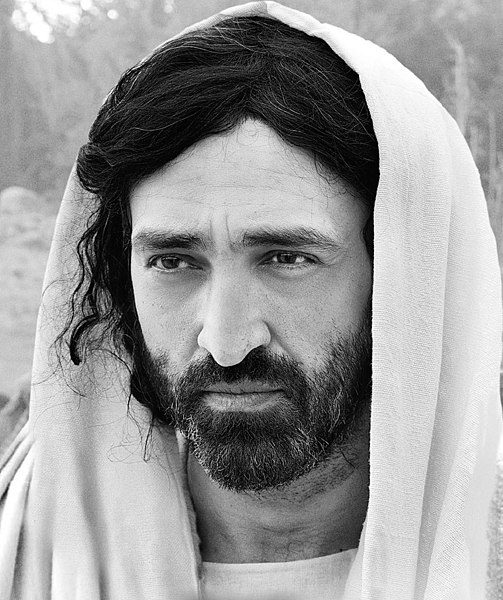
Photo credit: Selva Rasalingam as Jesus in the The Gospel of Luke (2016, Netflix USA) [Wikimedia Commons / Creative Commons CC0 1.0 Universal Public Domain Dedication]

Summary: In the first of a series of dialogues (“Resurrection Debate”) with Jewish author Michael Alter, I lay out my fundamental premises with regard to biblical inspiration and alleged “contradictions.”
Tags: alleged Bible contradictions, alleged Resurrection contradictions, Bible “contradictions”, Bible “difficulties”, Bible Only, biblical inspiration, biblical prooftexts, biblical skeptics, New Testament critics, New Testament skepticism, biblical theology, New Testament, exegesis, hermeneutics, Holy Bible, inerrancy, infallibility, Jewish anti-Christian polemics, Jewish apologetics, Jewish critique of Christianity, Jewish-Christian discussion, Michael J. Alter, Resurrection “Contradictions”, Resurrection of Jesus, The Resurrection: A Critical Inquiry
***
Jews & Judaism & Old Testament
alleged Resurrection contradictions
Jewish anti-Christian polemics
Jewish critique of Christianity
The Resurrection: A Critical Inquiry
Previous Post

April 16, 2021
COVID Potpourri: Herd Immunity, % of Critical Cases, Lord Fauci, Etc.
Next Post
April 17, 2021 Resurrection Debate #2: Date of Jesus' Death
Browse Our Archives
Select a Category & Last Things About Me Anti-Catholicism Atheism & Agnosticism Baptism and Sacramentalism Bible and Tradition Blessed Virgin Mary Books by Dave Armstrong C. S. Lewis Calvinism & General Protestantism Catholic Apologetics Catholic Apologists Catholic conversion Catholic converts Christmas Church (Ecclesiology) Church History Conversion and Converts Development of Doctrine Eastern Orthodoxy Ecumenism & Christian Unity Eucharist & Liturgy Fathers of the Church French Translations G. K. Chesterton Hell Hell & Satan Hell & Satan & Last Things Heresies & Comparative Religion Holistic Health Inquisition & Crusades & Scandals James White Jews & Judaism & Old Testament John Calvin John Henry Newman Liberal / Modernist Theology Life Issues Literary Resume Lutheranism Mariology Martin Luther Music Orthodoxy Papacy & Infallibility Personal Page Philosophy & Science Political & Ethical & Moral Issues Protestant Persecution & Intolerance Protestantism Purgatory Purgatory & Penance Romantic & Imaginative Theology Saints & Purgatory & Penance Salvation Salvation & Justification Satan & Last Things Sexuality and Gender Issues Spanish Translations Traditionalism vs. Radical Catholic Reactionaries Traducciones al español / tradução para português Trinitarianism & Christology Uncategorized Videos
Select a Month October 2026 September 2026 August 2026 July 2026 June 2026 May 2026 April 2026 March 2026 February 2026 January 2026 December 2025 November 2025 October 2025 September 2025 August 2025 July 2025 June 2025 May 2025 April 2025 March 2025 February 2025 January 2025 December 2024 November 2024 October 2024 September 2024 August 2024 July 2024 June 2024 May 2024 April 2024 March 2024 February 2024 January 2024 December 2023 November 2023 October 2023 September 2023 August 2023 July 2023 June 2023 May 2023 April 2023 March 2023 February 2023 January 2023 December 2022 November 2022 October 2022 September 2022 August 2022 July 2022 June 2022 May 2022 April 2022 March 2022 February 2022 January 2022 December 2021 November 2021 October 2021 September 2021 August 2021 July 2021 June 2021 May 2021 April 2021 March 2021 February 2021 January 2021 December 2020 November 2020 October 2020 September 2020 August 2020 July 2020 June 2020 May 2020 April 2020 March 2020 February 2020 January 2020 December 2019 November 2019 October 2019 September 2019 August 2019 July 2019 June 2019 May 2019 April 2019 March 2019 February 2019 January 2019 December 2018 November 2018 October 2018 September 2018 August 2018 July 2018 June 2018 May 2018 April 2018 March 2018 February 2018 January 2018 December 2017 November 2017 October 2017 September 2017 August 2017 July 2017 June 2017 May 2017 April 2017 March 2017 February 2017 January 2017 December 2016 November 2016 October 2016 September 2016 August 2016 July 2016 June 2016 May 2016 April 2016 March 2016 February 2016 January 2016 December 2015 November 2015 October 2015 September 2015 August 2015 July 2015 June 2015 May 2015 April 2015 March 2015 February 2015 January 2015 December 2014 November 2014 October 2014 September 2014 August 2014 July 2014 June 2014 April 2014 March 2014 February 2014 January 2014 December 2013 November 2013 October 2013 September 2013 August 2013 July 2013 June 2013 April 2013 March 2013 February 2013 January 2013 December 2012 November 2012 October 2012 September 2012 August 2012 July 2012 June 2012 May 2012 April 2012 March 2012 February 2012 January 2012 December 2011 November 2011 October 2011 September 2011 August 2011 July 2011 June 2011 April 2011 March 2011 February 2011 October 2010 September 2010 August 2010 July 2010 April 2010 March 2010 December 2009 October 2009 August 2009 July 2009 June 2009 May 2009 March 2009 February 2009 October 2008 September 2008 April 2008 March 2008 February 2008 January 2008 December 2007 November 2007 October 2007 May 2007 March 2007 February 2007 January 2007 November 2006 October 2006 September 2006 August 2006 July 2006 June 2006 May 2006 April 2006 March 2006 February 2006 October 2005 June 2005 April 2005 February 2005 July 2004 May 2004 April 2004
Follow Us!
TAKE THE
Religious Wisdom Quiz
Who asked Jesus, "What is truth?"
Select your answer to see how you score.
Caiaphas Pilate Nicodemus Herod
Books by This Author Books by Dave Armstrong
Related posts from Biblical Evidence for Catholicism

Jerusalem Council vs. James White & Sola Scriptura
Biblical Evidence for Catholicism

God, Modern Physics, & Dark Energy: An Analogy
Biblical Evidence for Catholicism

350 Bible Passages vs. Sola Scriptura
Biblical Evidence for Catholicism
Sola Scriptura: Self-Defeating, Unworkable, Unbiblical
Biblical Evidence for Catholicism
TRENDING AT PATHEOS Catholic

I was strolling through the top floor of the brand new Parthenon...

What Does Gêvâh Mean For Kimberley Guifoyle &...
This week, a lot of the news is focused on Kimberly Guilfoyle....

INNER CIRCLE: Profound Mystery (Of Christ In All...
Ephesians 5:31-32 “For this reason, a man will leave his father and...

Do Not Rejoice When Your Enemy Falls: The...
Turning an execution into a public spectacle is a disturbing expression of...

'The Chosen' S6 Trailer: The Passion Gets Very...
Not many watching 'The Chosen' worry about spoilers, but just because they...

The purpose-driven labor priest
A labor activist reads Rick Warren and it gets me wondering about...
view all Catholic blogs
Ad-Free & Subscriber Log-In Subscription Support
- About Us
- 2026 Calendar
- Videos
- Podcasts
- Library of World Religions
- Faith In Media Tracker
- Advertise With Us
- Write for Us
- Privacy Policy
- Terms of Service
- Do Not Sell My Data
- Contact Us
- Radiant Digital
- Manage Newsletter Subscriptions
- Unsubscribe From Notifications
- Sitemap
Copyright 2008-2026, Patheos. All rights reserved.
Subscription Support Ad-Free & Subscriber Log-In
Follow Patheos