
BuddhistCatholicContemplativeEvangelicalGeneral ChristianHinduJewishLatter-day SaintMuslimNew VisionsProgressive Christian
Beliefs
- Buddhist
- Catholic
- Contemplative
- Evangelical
- General Christian
- Hindu
- Jewish
- Latter-day Saint
- More Voices
- Muslim
- New Visions
- Pagan
- Progressive Christian
Topics
- Religion News
- Food and Religion
- Sports and Religion
- Religious Art
- Religious Music and Entertainment
- Religious Events
- History and Religion
- Style and Religion
- Politics and Religion
- Women in Religion
- Recreation Outdoors and Religion
- Business Finance and Religion
- Careers Workplace and Religion
- Education and Religion
- Family Parenting and Religion
- Health Fitness and Religion
- Home and Religion
- Relationships and Religion
- Technology and Religion
- Travel and Religion
Columnists
- Buddhist Columnists
- Business Finance and Religion Columnists
- Careers Workplace and Religion Columnists
- Catholic Columnists
- Contemplative Columnists
- Education and Religion Columnists
- Evangelists Columnists
- Family Parenting and Religion Columnists
- General Christian Columnists
- Health Fitness and Religion Columnists
- Hindu Columnists
- History and Religion Columnists
- Home and Religion Columnists
- Jewish Columnists
- More Voices Columnists
- Latter Day Columnists
- Muslim Columnists
- New Visions Columnists
- Nonreligious Columnists
- Pagan Columnists
- Politics and Religion Columnists
- Progressive Columnists
- Recreation Outdoors and Religion Columnists
- Relationships and Religion Columnists
- Religion News Columnists
- Religious Art Columnists
- Religious Events Columnists
- Religious Music and Entertainment Columnists
- Sports and Religion Columnists
- Style and Religion Columnists
- Technology and Religion Columnists
- Travel and Religion Columnists
- Women in Religion Columnists
Resource Library
- 2026 Calendar
- Library of World Religions
- The 100 Most Holy Places on Earth
- Patheos Answers
- Podcasts
- Videos
- Faith Leaders Database
- Anglican Episcopalian
- Bahai
- Baptist
- Buddhism
- Christianity
- Confucianism
- Eastern Orthodoxy
- Hinduism
- Holiness and Pentecostal
- ISKCON
- Islam
- Judaism
- Lutheran
- Methodist
- The Church of Jesus Christ of Latter-day Saints
- New Age
- Paganism
- Presbytarian and Reformed
- Protestantism
- Religion Behind the Scenes
- Roman Catholic
- Scientology
- Shia Islam
- Sikhism
- Sufism
- Sunni Islam
- Taoism
- Zen
- See all religions
Research Tools
 Ad-Free & Subscriber Log-In Subscription Support
Ad-Free & Subscriber Log-In Subscription Support
Follow Patheos 

- Trending:
- Forgiveness
- |
- Marriage
- |
- Consciousness
- |
- Death Penalty
- |
- Election
- |
- Halloween

-
About
-
Catholic Apologetics
-
Church History
-
Great Apologists
-
Christian Worldview
-
Protestantism & Misc.
- Home
- Catholic
- History and Religion
- Rufinus (d. 411) vs. Sola Scriptura as the Rule of Faith
Rufinus (d. 411) vs. Sola Scriptura as the Rule of Faith
Last updated on: June 5, 2026 at 11:58 pm by Dave Armstrong
Rufinus (d. 411) vs. Sola Scriptura as the Rule of Faith 2026-06-05T23:58:08-04:00 Dave Armstrong
Patheos Explore the world's faith through different perspectives on religion and spirituality! Patheos has the views of the prevalent religions and spiritualities of the world.
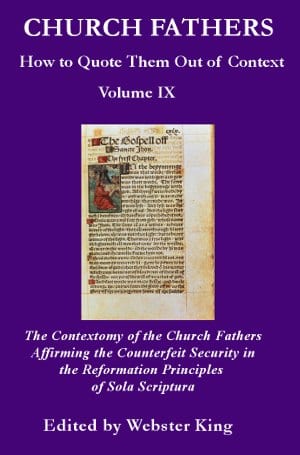
Protestant anti-Catholic polemicists David T. King and William Webster are the editors of a three-volume series, entitled, Holy Scripture: The Ground and Pillar of Our Faith (self-published by Webster’s outfit, Christian Resources Inc. [Battle Ground, Washington] in 2001). I’m most interested in Volume III: subtitled, “The Writings of the Church Fathers Affirming the Reformation Principle of Sola Scriptura” (edited by both Webster and King). In the Introduction to Vol. III (p. 9) they make the fantastically absurd, demonstrably false assertion:
[T]he Church fathers . . . universally taught sola Scriptura in the fullest sense of the term embracing both the material and formal sufficiency of Scripture.
The definition of sola Scriptura, according to three of the most able and articulate Protestant defenders of it in our time, is the following:
[T]he Bible alone is the infallible written authority for faith and morals (Norman Geisler)
Scripture . . . is the only inspired and inherently infallible norm, and therefore Scripture is the only final authoritative norm. (Keith A. Mathison)
The doctrine of sola scriptura . . . is that the Scriptures alone are sufficient to function as the regula fidei, the infallible rule of faith for the Church. (James R. White) [my bolding; see the sources for these quotations and also a fuller explication by each man]
Such a definition entails also understanding what sola Scriptura is not. It logically rules out tradition, the Church, ecumenical councils, bishops, popes, or appeal to apostolic succession as infallibly and finally authoritative. Only the Bible is that. Therefore, if any Church father believes that any of these are infallible or a final authority, then he (by the same token) does not and indeed cannot believe in sola Scriptura. I didn’t “set the rules”. Protestants have by defining sola Scriptura as they do. Thus, they have to live with their own definition and unbiblical rule of faith.
I shall be examining (in this series of papers) several Church fathers that Webster and King bring up, and documenting that they rejected sola Scriptura. I’ve already done this documentation with regard to Augustine, Athanasius, John Chrysostom, Jerome, Ambrose, Irenaeus, Justin Martyr, Clement of Alexandria, Hippolytus, Dionysius, Basil the Great, Cyril of Jerusalem, Theodoret, Gregory of Nyssa, Tertullian, Origen, Gregory Nazianzen, Epiphanius, Lactantius, Cyprian, Papias, Hilary of Poitiers, Cyril of Alexandria, Pope St. Gregory the Great, and John Damascene.
All citations are from Volume III unless otherwise indicated.
*****
These are the writings which the Fathers included in the canon, and on which they desired the affirmations of our faith to be based. (Commentary on the Apostles’ Creed, 38) [p. 80]
[T]he truth of this is guaranteed for us by numerous testimonies in Holy Scripture. (Commentary on the Apostles’ Creed, 33) [p. 80]
. . . we believe, according to wat is written . . . These things and many like these you will find in the divine Scriptures . . . (Commentary on the Apostles’ Creed, 47) [p. 190]
All of this is simply material sufficiency, which poses no problem at all for Catholics or our rule of faith (per the explanation of several past installments). As always, we have to dig much further to see what a given Church father believes about the rule of faith. Webster and King persistently (and we must sadly, say, dishonestly) systematically refuse to do this. If they did, they’d have to give up their entire project in the three volumes, as a pack of falsehoods in its conclusion, so the stakes are high!
***
Rufinus believed in the infallibility of the Church:
I as yet remain in ignorance on the subject, except so far as this, that the Church delivers it as an article of faith that God is the creator of souls as well as of bodies. (Apology sent to Anastasius, Bishop of the City of Rome, 6)
Where can simple faith and innocence be safe if they are not protected in the Church? (Apology sent to Anastasius, Bishop of the City of Rome, 7)
As for me, I declare in Christ’s name that I never held, nor ever will hold, any other faith but that which I have set forth above, that is, the faith which is held by the Church of Rome, by that of Alexandria, and by my own church of Aquileia; and which is also preached at Jerusalem; and if there is any one who believes otherwise, whoever he may be, let him be Anathema. (Apology sent to Anastasius, Bishop of the City of Rome, 8)
This is that holy Church which is without spot or wrinkle. . . . this Church which keeps the faith of Christ entire, . . . (Commentary on the Apostles’ Creed, 39)
Rufinus accepted the sublime, infallible authority and indefectibility of the Apostolic See of Rome:
[T]he body . . . is sown in corruption, it is raised in incorruption; it is sown in weakness, it is raised in power; it is sown in dishonour, it is raised in glory; it is sown a natural body, it is raised a spiritual body. This is the doctrine which has been handed down to me by those from whom I received holy baptism in the Church of Aquileia; and I think that it is the same which the Apostolic See has by long usage handed down and taught. (Apology sent to Anastasius, Bishop of the City of Rome, 4)
. . . the Church of the city of Rome . . . no heresy has had its origin there . . . (Commentary on the Apostles’ Creed, 4)
Rufinus held to infallible tradition, preserved by the Church:
And therefore it seems proper in this place to enumerate, as we have learned from the tradition of the Fathers, the books of the New and of the Old Testament, which, according to the tradition of our forefathers, are believed to have been inspired by the Holy Ghost, and have been handed down to the Churches of Christ. (Commentary on the Apostles’ Creed, 36)
These are the traditions which the Fathers have handed down to us, which, as I said, I have thought it opportune to set forth in this place, for the instruction of those who are being taught the first elements of the Church and of the Faith, that they may know from what fountains of the Word of God their draughts must be taken. (Commentary on the Apostles’ Creed, 38)
. . . in accordance with the traditional and natural meaning of the Creed . . . (Commentary on the Apostles’ Creed, 1)
Our forefathers have handed down to us the tradition, that, after the Lord’s ascension, when, through the coming of the Holy Ghost, tongues of flame had settled upon each of the Apostles, that they might speak diverse languages, so that no race however foreign, no tongue however barbarous, might be inaccessible to them and beyond their reach, they were commanded by the Lord to go severally to the several nations to preach the word of God. . . . And for this reason, the tradition continues, the Creed is not written on paper or parchment, but is retained in the hearts of the faithful, that it may be certain that no one has learned it by reading, as is sometimes the case with unbelievers, but by tradition from the Apostles. (Commentary on the Apostles’ Creed, 2)
[I]f, I say, we have intelligently followed these in succession in accordance with the rule of the tradition hereinbefore expounded, we pray that the Lord will grant to us, and to all who hear these words, that having kept the faith which we have received, having finished our course, we may await the crown of righteousness laid up for us, . . . (Commentary on the Apostles’ Creed, 48)
Clement, the disciple of the Apostles, who was bishop of the Roman church next to the Apostles, was a martyr, wrote the work which is called in the Greek ᾽Αναγνωρισμός, or in Latin, The Recognition. In these books he sets forth again and again in the name of the Apostle Peter a doctrine which appears to be truly apostolic . . . There are also some other things inserted into his books which the church’s creed does not admit. I ask, then, what we are to think of these things? Are we to believe that an apostolic man, nay, almost an apostle (since he writes the things which the apostles speak), one to whom the apostle Paul bore his testimony in the words, With Clement and others, my fellow labourers, whose names are in the book of life was the writer of words which contradict the book of life? . . . in the case of these very reverend men and doctors of the church; we have found it impossible, I say, to believe that those reverend men who again and again have supported the church’s belief should in particular points have held opinions contradictory to themselves. (Epilogue to Pamphilus the Martyr’s Apology for Origen)
Rufinus accepted popes as the “rulers” of the Church, with succession from St. Peter:
There is a letter in which this same Clement writing to James the Lord’s brother, gives an account of the death of Peter, and says that he has left him as his successor, as ruler and teacher of the church; and further incorporates a whole scheme of ecclesiastical government. (The Preface to the Books of Recognitions of St. Clement)
Finally, Rufinus reports the following opinion and action of others, but it may very well have been his own belief also:
Putting aside all Greek literature, they [St. Basil and St. Gregory] are said to have passed thirteen years together in studying the Scriptures alone, and followed out their sense, not from their private opinions, but by the writings and authority of the Fathers. (Church History, 2:9)
***
Summary: Rufinus rejected sola Scriptura & believed in the infallibility of the Church and the See of Rome, infallible tradition, as well as Petrine primacy and historical papal succession from St. Peter.
***
Previous Post
March 1, 2021
Cyril of Alexandria (d. 444) vs. Sola Scriptura as the Rule of Faith
Next Post
March 3, 2021 John Cassian (d. 435) vs. Sola Scriptura
Browse Our Archives
Select a Category & Last Things About Me Anti-Catholicism Atheism & Agnosticism Baptism and Sacramentalism Bible and Tradition Blessed Virgin Mary Books by Dave Armstrong C. S. Lewis Calvinism & General Protestantism Catholic Apologetics Catholic Apologists Catholic conversion Catholic converts Christmas Church (Ecclesiology) Church History Conversion and Converts Development of Doctrine Eastern Orthodoxy Ecumenism & Christian Unity Eucharist & Liturgy Fathers of the Church French Translations G. K. Chesterton Hell Hell & Satan Hell & Satan & Last Things Heresies & Comparative Religion Holistic Health Inquisition & Crusades & Scandals James White Jews & Judaism & Old Testament John Calvin John Henry Newman Liberal / Modernist Theology Life Issues Literary Resume Lutheranism Mariology Martin Luther Music Orthodoxy Papacy & Infallibility Personal Page Philosophy & Science Political & Ethical & Moral Issues Protestant Persecution & Intolerance Protestantism Purgatory Purgatory & Penance Romantic & Imaginative Theology Saints & Purgatory & Penance Salvation Salvation & Justification Satan & Last Things Sexuality and Gender Issues Spanish Translations Traditionalism vs. Radical Catholic Reactionaries Traducciones al español / tradução para português Trinitarianism & Christology Uncategorized Videos
Select a Month October 2026 September 2026 August 2026 July 2026 June 2026 May 2026 April 2026 March 2026 February 2026 January 2026 December 2025 November 2025 October 2025 September 2025 August 2025 July 2025 June 2025 May 2025 April 2025 March 2025 February 2025 January 2025 December 2024 November 2024 October 2024 September 2024 August 2024 July 2024 June 2024 May 2024 April 2024 March 2024 February 2024 January 2024 December 2023 November 2023 October 2023 September 2023 August 2023 July 2023 June 2023 May 2023 April 2023 March 2023 February 2023 January 2023 December 2022 November 2022 October 2022 September 2022 August 2022 July 2022 June 2022 May 2022 April 2022 March 2022 February 2022 January 2022 December 2021 November 2021 October 2021 September 2021 August 2021 July 2021 June 2021 May 2021 April 2021 March 2021 February 2021 January 2021 December 2020 November 2020 October 2020 September 2020 August 2020 July 2020 June 2020 May 2020 April 2020 March 2020 February 2020 January 2020 December 2019 November 2019 October 2019 September 2019 August 2019 July 2019 June 2019 May 2019 April 2019 March 2019 February 2019 January 2019 December 2018 November 2018 October 2018 September 2018 August 2018 July 2018 June 2018 May 2018 April 2018 March 2018 February 2018 January 2018 December 2017 November 2017 October 2017 September 2017 August 2017 July 2017 June 2017 May 2017 April 2017 March 2017 February 2017 January 2017 December 2016 November 2016 October 2016 September 2016 August 2016 July 2016 June 2016 May 2016 April 2016 March 2016 February 2016 January 2016 December 2015 November 2015 October 2015 September 2015 August 2015 July 2015 June 2015 May 2015 April 2015 March 2015 February 2015 January 2015 December 2014 November 2014 October 2014 September 2014 August 2014 July 2014 June 2014 April 2014 March 2014 February 2014 January 2014 December 2013 November 2013 October 2013 September 2013 August 2013 July 2013 June 2013 April 2013 March 2013 February 2013 January 2013 December 2012 November 2012 October 2012 September 2012 August 2012 July 2012 June 2012 May 2012 April 2012 March 2012 February 2012 January 2012 December 2011 November 2011 October 2011 September 2011 August 2011 July 2011 June 2011 April 2011 March 2011 February 2011 October 2010 September 2010 August 2010 July 2010 April 2010 March 2010 December 2009 October 2009 August 2009 July 2009 June 2009 May 2009 March 2009 February 2009 October 2008 September 2008 April 2008 March 2008 February 2008 January 2008 December 2007 November 2007 October 2007 May 2007 March 2007 February 2007 January 2007 November 2006 October 2006 September 2006 August 2006 July 2006 June 2006 May 2006 April 2006 March 2006 February 2006 October 2005 June 2005 April 2005 February 2005 July 2004 May 2004 April 2004
Follow Us!
TAKE THE
Religious Wisdom Quiz
Which apostle did Jesus say, "Get thee behind me, Satan…"
Select your answer to see how you score.
Peter Judas John James
Books by This Author Books by Dave Armstrong
Related posts from Biblical Evidence for Catholicism

17 Church Fathers on Purgatory (Esp. 1 Cor...
Biblical Evidence for Catholicism

Deuterocanon & Javier Perdomo's Straw Men
Biblical Evidence for Catholicism

St. Athanasius & the Deuterocanon (vs. Javier Perdomo)
Biblical Evidence for Catholicism

Jerusalem Council vs. James White & Sola Scriptura
Biblical Evidence for Catholicism
TRENDING AT PATHEOS Catholic

I was strolling through the top floor of the brand new Parthenon...

What Does Gêvâh Mean For Kimberley Guifoyle &...
This week, a lot of the news is focused on Kimberly Guilfoyle....

INNER CIRCLE: Profound Mystery (Of Christ In All...
Ephesians 5:31-32 “For this reason, a man will leave his father and...

Do Not Rejoice When Your Enemy Falls: The...
Turning an execution into a public spectacle is a disturbing expression of...

'The Chosen' S6 Trailer: The Passion Gets Very...
Not many watching 'The Chosen' worry about spoilers, but just because they...

The purpose-driven labor priest
A labor activist reads Rick Warren and it gets me wondering about...
view all Catholic blogs
Ad-Free & Subscriber Log-In Subscription Support
- About Us
- 2026 Calendar
- Videos
- Podcasts
- Library of World Religions
- Faith In Media Tracker
- Advertise With Us
- Write for Us
- Privacy Policy
- Terms of Service
- Do Not Sell My Data
- Contact Us
- Radiant Digital
- Manage Newsletter Subscriptions
- Unsubscribe From Notifications
- Sitemap
Copyright 2008-2026, Patheos. All rights reserved.
Subscription Support Ad-Free & Subscriber Log-In
Follow Patheos