
BuddhistCatholicContemplativeEvangelicalGeneral ChristianHinduJewishLatter-day SaintMuslimNew VisionsProgressive Christian
Beliefs
- Buddhist
- Catholic
- Contemplative
- Evangelical
- General Christian
- Hindu
- Jewish
- Latter-day Saint
- More Voices
- Muslim
- New Visions
- Pagan
- Progressive Christian
Topics
- Religion News
- Food and Religion
- Sports and Religion
- Religious Art
- Religious Music and Entertainment
- Religious Events
- History and Religion
- Style and Religion
- Politics and Religion
- Women in Religion
- Recreation Outdoors and Religion
- Business Finance and Religion
- Careers Workplace and Religion
- Education and Religion
- Family Parenting and Religion
- Health Fitness and Religion
- Home and Religion
- Relationships and Religion
- Technology and Religion
- Travel and Religion
Columnists
- Buddhist Columnists
- Business Finance and Religion Columnists
- Careers Workplace and Religion Columnists
- Catholic Columnists
- Contemplative Columnists
- Education and Religion Columnists
- Evangelists Columnists
- Family Parenting and Religion Columnists
- General Christian Columnists
- Health Fitness and Religion Columnists
- Hindu Columnists
- History and Religion Columnists
- Home and Religion Columnists
- Jewish Columnists
- More Voices Columnists
- Latter Day Columnists
- Muslim Columnists
- New Visions Columnists
- Nonreligious Columnists
- Pagan Columnists
- Politics and Religion Columnists
- Progressive Columnists
- Recreation Outdoors and Religion Columnists
- Relationships and Religion Columnists
- Religion News Columnists
- Religious Art Columnists
- Religious Events Columnists
- Religious Music and Entertainment Columnists
- Sports and Religion Columnists
- Style and Religion Columnists
- Technology and Religion Columnists
- Travel and Religion Columnists
- Women in Religion Columnists
Resource Library
- 2026 Calendar
- Library of World Religions
- The 100 Most Holy Places on Earth
- Patheos Answers
- Podcasts
- Videos
- Faith Leaders Database
- Anglican Episcopalian
- Bahai
- Baptist
- Buddhism
- Christianity
- Confucianism
- Eastern Orthodoxy
- Hinduism
- Holiness and Pentecostal
- ISKCON
- Islam
- Judaism
- Lutheran
- Methodist
- The Church of Jesus Christ of Latter-day Saints
- New Age
- Paganism
- Presbytarian and Reformed
- Protestantism
- Religion Behind the Scenes
- Roman Catholic
- Scientology
- Shia Islam
- Sikhism
- Sufism
- Sunni Islam
- Taoism
- Zen
- See all religions
Research Tools
 Ad-Free & Subscriber Log-In Subscription Support
Ad-Free & Subscriber Log-In Subscription Support
Follow Patheos 

- Trending:
- Forgiveness
- |
- Marriage
- |
- Consciousness
- |
- Death Penalty
- |
- Election
- |
- Halloween

-
About
-
Catholic Apologetics
-
Church History
-
Great Apologists
-
Christian Worldview
-
Protestantism & Misc.
- Home
- Catholic
- History and Religion
- Thomas Howard Quotations
Thomas Howard Quotations
Last updated on: June 5, 2026 at 11:57 pm by Dave Armstrong
Thomas Howard Quotations 2026-06-05T23:57:49-04:00 Dave Armstrong
Patheos Explore the world's faith through different perspectives on religion and spirituality! Patheos has the views of the prevalent religions and spiritualities of the world.
Biographical Brief
*
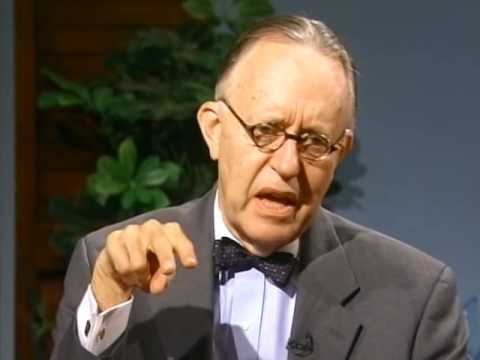
The late Thomas Howard was one of the most insightful and eloquent Catholic authors of our time, and (in my humble opinion) the stylistic successor to C. S. Lewis. Like Lewis, he was an English professor, at Gordon College and St. John’s Seminary (both in Massachusetts). He was raised in a solidly evangelical family, and was the brother of the well-known missionary and writer Elisabeth Elliot. After becoming interested in a more liturgical style of worship at Wheaton College in the late 1950s, he became an Episcopalian.
*
In 1985, Howard was received into the Catholic Church at the age of 50, after a “20-year pilgrimage,” shortly after publishing perhaps his most famous book, Evangelical is Not Enough. He cited the influence of great Catholic writers such as Newman, Knox, Chesterton, Guardini, Ratzinger, Karl Adam, Louis Bouyer, and St. Augustine on his final decision. Howard’s always stylistically excellent prose is especially noteworthy for its emphasis on the sacramental, incarnational and “transcendent” aspects of Christianity.
*
His conversion caused quite a stir in Protestant evangelical circles, and was the subject of a mildly frantic and somewhat defensive feature article in the leading evangelical periodical Christianity Today (“Well-known Evangelical Author Thomas Howard Converts to Catholicism,” May 17, 1985, pp. 46-62).
*
Bibliography
*
1967 Christ the Tiger
1969 Chance or the Dance?
1980 The Achievement of C. S. Lewis
1984 Evangelical is Not Enough
1985 Christianity: The True Humanism (with J. I. Packer)
1987 C. S. Lewis: Man of Letters: A Reading of His Fiction
1987 Narnia & Beyond: A Guide to the Fiction of C. S. Lewis
1991 The Novels of Charles Williams
1994 Lead, Kindly Light: My Journey to Rome
1997 On Being Catholic
2001 If Your Mind Wanders at Mass
2003 The Secret of New York Revealed
2006 The Dove Descending: A Journey Into T.S. Eliot’s “Four Quartets”
2007 The Night is Far Spent: A Treasury of Thomas Howard (edited by Vivian W. Dudro)
*
Evangelical Strengths and Weaknesses
*
I owe my nurture to evangelicalism. The evangelical wins hands down in the history of the church when it comes to nurturing a biblically literate laity. When we think of evangelism, evangelicals are the most resourceful, the most intrepid, and the most creative. But evangelicals themselves would say that they have never come to grips with what the whole mystery of the church is. I don’t know whether I’ve ever met an evangelical who does not lament the desperate, barren, parched nature of evangelical worship. They’re frantic over the evangelical poverty when it comes to the deeper reaches of Christian spirituality and what the mystery of worship is all about. (Interview: “Why Did Thomas Howard Become a Roman Catholic?,” Christianity Today, 15 May 1985, 49)
*
The Meaning of Existence
*
There were some ages in Western history that have occasionally been called Dark. They were dark, it is said, because in them learning declined, and progress paused, and men labored under the pall of belief. A cause-effect relationship is frequently felt to exist between the pause and the belief. Men believed in things like the Last Judgment and fiery torment . . . Then the light came . . . Men were freed from the fear of the Last Judgment; it was felt to be more bracing to face Nothing than to face the Tribunal . . . The myth sovereign in the old age was that everything means everything. The myth sovereign in the new is that nothing means anything. (Chance or the Dance: A Critique of Modern Secularism, San Francisco: Ignatius Press, 1969, 11-12)
*
Chronological Snobbery
*
Because a given era lacked a given body of information, we feel that its whole consciousness was naive. We can, therefore, sniff at, say, twelfth-century imagery of evil along with twelfth-century notions as to the shape of the solar system. The idea is that, having come upon information that supervenes the medieval cosmology, we can thereby dismiss all medieval notions as merely medieval . . . Their credulity left them open to the possibility of such touching vagaries as dragons, hell, and Virgin Birth. We, of course, know better . . . We now know that nothing exists that we cannot examine through a glass or on the consulting couch. (Christ the Tiger, San Francisco: Ignatius Press, 1967, 138)
*
Genuflection
*
The eternal . . . attires itself in the routine, the inauspicious, the anonymous. It does this because it reserves itself (it is so holy) for the pure eye of faith . . . The eye of faith alone can pierce the surface and see Reality. That is why Catholics genuflect when they come to church. They know that this is a holy place, and to be found on one’s knee is a very good posture in such precincts. It says, ceremonially, not verbally, “I am a creature, and thou art my Creator. I am thy child and thou art my Father. I am a subject and thou art my Sovereign. And alas, I am a sinner, and thou art holy” . . . A Catholic has difficulty in grasping what it is that non-Catholics espouse that precludes this act. Surely we are not mere minds? Surely all of us bring physical gesture to bear on all situations (a wave, a nod, a kiss). Why is the physical excluded here? Surely to exclude it here and here alone is to imply a gnostic (disembodied), not a Christian (incarnational) state of affairs? (On Being Catholic, San Francisco: Ignatius Press, 1997, 69-70)
*
Church Unity
*
Where we (non-Catholics) were pleased to live with a muddle, and even with stark contradictions (Luther vs. Zwingli, for example, on the Lord’s Supper), the Church of antiquity was united. No one needed to remain in doubt forever as to what the Church might be, or where it might be found . . . There was one Church: the Church was one. And this was a discernible, visible, embodied unity, not a loose aggregate of moderately like-minded believers with their various task forces all across the globe. The bishop of Antioch was not analogous to the General Secretary of the World Evangelical Fellowship, nor to the head of the National Association of Evangelicals . . . . He could speak with the full authority of the Church behind him, whereas these latter gentlemen can only speak for their own organizations. (Lead, Kindly Light: My Journey to Rome, Steubenville, Ohio: Franciscan University Press, 1994, 38-39)
*
The Sins of the Catholic Church
*
Rome’s opulence, her political machinations down through the centuries, her tyrannies and hauteur and self-assertiveness, not to mention the Dionysian romp in the Vatican in the Renaissance, what with Borgia popes and catamites and so forth: all of that is bad – very bad. The Catholic Church knows that. Dante, of course, had half of the popes head down in fiery pits in hell. Chaucer, contemporary with the Lollard Wyclif, but himself a loyal Catholic, is merciless – scathing even – in his portraiture of filthy and cynical clergy. St. Thomas More and Erasmus, contemporary with Luther and Calvin, were at least as vitriolic in their condemnation of Roman evils as were the Reformers . . . [But] Israel was not less Israel when she was being wicked . . . The Church is in the same position in its identity as people of God. We have Judas Iscariot, as it were, and Ananias and Sapphira, and other unsavory types amongst us, but we have no warrant to set up shop outside the camp, so to speak . . . Evangelicals, in their just horror at rampant evils in Catholic history, . . . unwittingly place themselves somewhat with the Donatists of the fourth century, who wanted to hive off because of certain evils which they felt were widespread in the Church. Augustine and others held the view that you can’t go that far. You can’t set up shop independently of the lineage of bishops . . . As far as the ancient, orthodox Church was concerned, nobody could split off . . . The problems of the Roman Catholic Church (sin, worldliness, ignorance) are, precisely, the problems of the Church. St. Paul never got out of Corinth before he had all of the above problems. Multiply that small company of Christians by 2000 years and hundreds of millions, and you have what the Catholic Church has to cope with. Furthermore, remember that the poor Catholics aren’t the only ones who have to cope. Anyone who has ever tried to start himself a church has run slap into it all, with a vengeance . . . Worldliness, second-generation apathy, ossification, infidelity, loss of vision, loss of zeal, loss of discipline, jiggery-pokery, heresy — it’s all there. (“Letter to my Brother: A Convert Defends Catholicism,” Crisis, December 1991, 23-24, 26)
*
Monogamy and Fidelity
*
For Christians, the reason why it is ordinarily assumed that a marriage will go on “till death do us part” has been that this advanced lesson in Charity which marriage opens into is a long, a difficult one, and the life span that my spouse and I are allowed will certainly not be nearly long enough to finish the lesson . . . I will have as much as I can do to learn this advanced lesson well with one other person; a harem will only confuse my efforts. (Hallowed be This House, Wheaton, Illinois: Tyndale House, 1976, 112-113)
*
Eucharist and Incarnation
*
The Sacrament of the Eucharist is, of course, one step away from the Incarnation itself, where the thing signified (The Word) and the signifier (Jesus) were absolutely one. Symbol and sign and metaphor strain towards this union; Sacrament presents it, but the Incarnation is that perfect union. Again, it is a scandal. God is not man, any more than bread is flesh. But faith overrides the implacable prudence of logic and chemistry and says “Lo!” (Evangelical is Not Enough, Nashville: Thomas Nelson Publishers, 1984, 111)
*
Christian Ceremony
*
Ceremony assists us to cope with the otherwise unmanageable. Far from erecting a barrier between us and the truth, it ushers us closer in to the truth. It dramatizes the truth for us. Ceremony does what words alone can never do. It carries us beyond the merely explicit, the expository, the verbal, the propositional, the cerebral, to the center where the Dance goes on . . . Ceremony belongs to the essential fabric of what we are. We do not need verses from the Bible to validate ceremony for us any more than we need verses to tell us to eat our meals or to have sex. The Bible is not a handbook of everything . . . To prohibit ceremony, or even to distrust it, and to reduce the worship of God Himself to the meager resources available to verbalism, is surely to have dealt Christendom a dolorous blow. (Evangelical is Not Enough, Nashville: Thomas Nelson Publishers, 1984, 98, 100)
*
C. S. Lewis as Rhetorician
*
Anyone who has . . . read Mere Christianity . . . knows something of the sheer force and magnificence of Lewis in argument. There is nothing snide, nothing petty, nothing ad hominem, disingenuous, or irrelevant. All is magnanimity, clarity, and craftsmanship. Lewis knew backwards and forwards the art of argument – of rhetoric, actually, in its Renaissance meaning, designating the whole enterprise of opening up and articulating and working through a given line of thought. (C. S. Lewis: Man of Letters, San Francisco: Ignatius Press, 1987, 15)
*
Orthodox Worship
*
When I walk into an Orthodox Church . . . one is immediately aware that one has stepped into the presence of what St. Paul would call the whole family in heaven and earth. You have stepped into the precincts of heaven! . . . I love the Orthodox Church’s spirit. I think the Orthodox Church many, many centuries ago, discovered a mode of music and worship which is timeless, which is quite apart from fashion, and which somehow answers to the mystery and the solemnity and the sacramental reality of the liturgy. (“A Conversation With Thomas Howard and Frank Schaeffer,” The Christian Activist, vol. 9, Fall/Winter 1996, 43)
*
Justification
*
A rigorous doctrine of imputation is not only limiting but ends up doing a disservice to the nature of grace and justification. It makes the transactions of the gospel basically juridical. In the Roman view, justification and sanctification are a seamless fabric. It is more than a question of God simply seeing us through a legal scrim of Christ’s righteousness. Righteousness actually begins to transform us. (Interview: “Why Did Thomas Howard Become a Roman Catholic?,” Christianity Today, 15 May 1985, 57)
*
The Gospel in the Mass
*
It is in the familiar structure of the Mass itself that a Catholic not only encounters but finds himself received into the very gospel itself, day by day, year after year . . . the entire liturgy is a seamless gospel fabric, so to speak. It is the gospel, in public, ceremonial, ritual, explicit form.
(On Being Catholic, San Francisco: Ignatius Press, 1997, 122)
*
The Church Off the Rails by 95 AD
*
As a Fundamentalist I had discovered while I was in college that it is possible to dismiss the entire Church as having gone off the rails by about AD 95. That is, we, with our open Bibles, knew better than did old Ignatius or Clement, who had been taught by the very apostles themselves, just what the Church is and what it should look like. Never mind that our worship services would have been unrecognizable to them, or that our governance would have been equally unrecognizable: we were right, and the fathers were wrong (about bishops, and about the Eucharist). That settled the matter. (Lead, Kindly Light: My Journey to Rome, Steubenville, Ohio: Franciscan University Press, 1994, 32)
*
Devotional Legalism and “Magic”
*
Another thing that worried me . . . was the array of devout exercises that was seen by each group as having a unique and a divine validity. That is, people who were loyalists of any form of religious orthodoxy assumed that their set of gestures, and their set alone, represented true love for God . . . The great thing is to discover some activity that signals good intentions before God . . . There is almost no way of keeping ourselves free from the inclination to magic. We like to see others’ gestures as vain, idolatrous, or superstitious, but it does not often occur to us to think about what would be left of our own righteousness if the familiar equipment were suddenly to vanish. (Christ the Tiger, San Francisco: Ignatius Press, 1967, 72-73)
*
Sacraments and Nature
*
Sacrament is metaphor lifted by redemption from the mortal world, locked as that world is into mere “nature” . . . Sacrament, recalling and presenting the Incarnation itself, is not so much supernatural as quintessentially natural, because it restores to nature its true function of being full of God . . . , not in a pantheistic [sense] that blurs the distinction between Creator and creation but in testimony that indeed heaven and earth are full of His glory. Nature is the God-bearer, so to speak, not the god, nor God and nature merged. (Evangelical is Not Enough, Nashville: Thomas Nelson Publishers, 1984, 110)
*
Adam and Eve and the Fall
*
There is, like it or no, a Dance going on, and one may join or not . . . The implication . . . of the Adam and Eve story is that if they had bowed to the interdict placed on the forbidden fruit, life and not death would have been the guerdon. That is, paradoxically, if they had knuckled under to what looked emphatically like a denial of their freedom, . . . they would have discovered something unimaginable to them – something that, according to the story, was at that very point lost to them and us for the duration of human time. (Chance or the Dance: A Critique of Modern Secularism, San Francisco: Ignatius Press, 1969, 106-107)
*
Inquisitorial Orthodoxy
*
That religious earnestness forever tends toward fright and hence towards brittleness and inquisition is clear enough in mythology and history. In the story of Job, for instance, God took the side of Job, who had complained and accused him, against Job’s orthodox friends. They were correct in their propositions, but their loyalty to what they were sure was true had led them into subhuman attitudes. They had become inquisitors. Christ had a similar problem with the Pharisees, and Saint Paul with the leaders of early Christendom. (Christ the Tiger, San Francisco: Ignatius Press, 1967, 97)
*
Love
*
Love . . . asks that you disavow your attempt to enlarge your own identity by diminishing that of others. It asks that you cease your effort to safeguard your own claim to well-being by assuming the inferiority of others’ claims. It asks, actually, that you die. (Christ the Tiger, San Francisco: Ignatius Press, 1967, 144-145)
*
Sacraments and the Incarnation
*
Sacraments, like the Incarnation itself, constitute physical points at which the eternal touches time, or the unseen touches the seen, or grace touches nature. It is the Gnostics and Manicheans who want a purely disembodied religion. (Lead, Kindly Light: My Journey to Rome, Steubenville, Ohio: Franciscan University Press, 1994, 43)
*
Catholic vs. Protestant Heterodoxy
*
“Trouble,” especially doctrinal conflict and the various efforts to include moral (read “sexual”) innovations within the pale of the Church, is qualitatively different in the Catholic Church from what it is in the denominations . . . In church X, shall we say, we may find a bishop urging homosexuality as a profoundly Christian “style of life,” or ostentatiously doubting the Lord’s virgin birth, or busily eroding the confidence of his flock in the text of Scripture. Nothing can be done except ad hoc protest. Good men in the denomination may get up a White Paper, or write articles, or introduce a resolution in the next General Convention. But we all know what this sort of thing ends in. Alas. In the Catholic Church there occurs this same heresy and false teaching, often loudly taught in high theological quarters. But everyone – both in the world and the Church – knows that there is a desk on which the buck stops, so to speak, and that when Rome has spoken on the issue, it is concluded . . . Rome can say and does say to the Church and the world, “This which you hear Fathers C. and F. teaching is not Catholic teaching. It is not in accord with the Faith once for all delivered to us by the apostles.” . . . No one need be in the slightest doubt on the point; whereas another denomination, if it can ever get up the votes, can only pass a resolution. (Lead, Kindly Light: My Journey to Rome, Steubenville, Ohio: Franciscan University Press, 1994, 84-85)
*
The “Embarrassed Catholic”
*
An embarrassed Catholic . . . goes to Mass, to be sure. But an onlooker might suppose that he was seeing a man awaiting the dentist’s drill. Great gloom emanating from the facial expression, heavy winter jacket all bunched up, mouth clamped firmly shut during anything as stupid as singing, and a beeline for the door at the instant of dismissal. It can happen that, upon being asked about his faith, such a man will only mutter awkwardly, and change the subject. (“Catholic is Not Enough,” Envoy, May/June 1997, 39)
*
***
*
(originally compiled and uploaded in 1997; slight revisions on 2-16-21)
*
Photo credit: from You Tube: The Journey Home (9-10-07)
*
***
*
Summary: Thomas Howard (1935-2020) was one of the most popular and eloquent Catholic authors of our time, and (in my humble opinion) the stylistic successor to C. S. Lewis. Like Lewis, he was an English professor. He became a Catholic in 1985, shortly after publishing perhaps his most famous book, Evangelical is Not Enough.
*
***
Previous Post

February 16, 2021
Malcolm Muggeridge Quotations
Next Post
February 17, 2021 Dialogue: Prayer For & To the Dead (w Dr. Lydia McGrew)
Browse Our Archives
Select a Category & Last Things About Me Anti-Catholicism Atheism & Agnosticism Baptism and Sacramentalism Bible and Tradition Blessed Virgin Mary Books by Dave Armstrong C. S. Lewis Calvinism & General Protestantism Catholic Apologetics Catholic Apologists Catholic conversion Catholic converts Christmas Church (Ecclesiology) Church History Conversion and Converts Development of Doctrine Eastern Orthodoxy Ecumenism & Christian Unity Eucharist & Liturgy Fathers of the Church French Translations G. K. Chesterton Hell Hell & Satan Hell & Satan & Last Things Heresies & Comparative Religion Holistic Health Inquisition & Crusades & Scandals James White Jews & Judaism & Old Testament John Calvin John Henry Newman Liberal / Modernist Theology Life Issues Literary Resume Lutheranism Mariology Martin Luther Music Orthodoxy Papacy & Infallibility Personal Page Philosophy & Science Political & Ethical & Moral Issues Protestant Persecution & Intolerance Protestantism Purgatory Purgatory & Penance Romantic & Imaginative Theology Saints & Purgatory & Penance Salvation Salvation & Justification Satan & Last Things Sexuality and Gender Issues Spanish Translations Traditionalism vs. Radical Catholic Reactionaries Traducciones al español / tradução para português Trinitarianism & Christology Uncategorized Videos
Select a Month October 2026 September 2026 August 2026 July 2026 June 2026 May 2026 April 2026 March 2026 February 2026 January 2026 December 2025 November 2025 October 2025 September 2025 August 2025 July 2025 June 2025 May 2025 April 2025 March 2025 February 2025 January 2025 December 2024 November 2024 October 2024 September 2024 August 2024 July 2024 June 2024 May 2024 April 2024 March 2024 February 2024 January 2024 December 2023 November 2023 October 2023 September 2023 August 2023 July 2023 June 2023 May 2023 April 2023 March 2023 February 2023 January 2023 December 2022 November 2022 October 2022 September 2022 August 2022 July 2022 June 2022 May 2022 April 2022 March 2022 February 2022 January 2022 December 2021 November 2021 October 2021 September 2021 August 2021 July 2021 June 2021 May 2021 April 2021 March 2021 February 2021 January 2021 December 2020 November 2020 October 2020 September 2020 August 2020 July 2020 June 2020 May 2020 April 2020 March 2020 February 2020 January 2020 December 2019 November 2019 October 2019 September 2019 August 2019 July 2019 June 2019 May 2019 April 2019 March 2019 February 2019 January 2019 December 2018 November 2018 October 2018 September 2018 August 2018 July 2018 June 2018 May 2018 April 2018 March 2018 February 2018 January 2018 December 2017 November 2017 October 2017 September 2017 August 2017 July 2017 June 2017 May 2017 April 2017 March 2017 February 2017 January 2017 December 2016 November 2016 October 2016 September 2016 August 2016 July 2016 June 2016 May 2016 April 2016 March 2016 February 2016 January 2016 December 2015 November 2015 October 2015 September 2015 August 2015 July 2015 June 2015 May 2015 April 2015 March 2015 February 2015 January 2015 December 2014 November 2014 October 2014 September 2014 August 2014 July 2014 June 2014 April 2014 March 2014 February 2014 January 2014 December 2013 November 2013 October 2013 September 2013 August 2013 July 2013 June 2013 April 2013 March 2013 February 2013 January 2013 December 2012 November 2012 October 2012 September 2012 August 2012 July 2012 June 2012 May 2012 April 2012 March 2012 February 2012 January 2012 December 2011 November 2011 October 2011 September 2011 August 2011 July 2011 June 2011 April 2011 March 2011 February 2011 October 2010 September 2010 August 2010 July 2010 April 2010 March 2010 December 2009 October 2009 August 2009 July 2009 June 2009 May 2009 March 2009 February 2009 October 2008 September 2008 April 2008 March 2008 February 2008 January 2008 December 2007 November 2007 October 2007 May 2007 March 2007 February 2007 January 2007 November 2006 October 2006 September 2006 August 2006 July 2006 June 2006 May 2006 April 2006 March 2006 February 2006 October 2005 June 2005 April 2005 February 2005 July 2004 May 2004 April 2004
Follow Us!
TAKE THE
Religious Wisdom Quiz
Which country has the largest number of Christians?
Select your answer to see how you score.
Brazil Russia United States Germany
Books by This Author Books by Dave Armstrong
Related posts from Biblical Evidence for Catholicism

Why Wes Huff (and Everyone) Should Be Catholic
Biblical Evidence for Catholicism

Invocation of Saints: Catholic Scholars vs. Me? Nope!
Biblical Evidence for Catholicism

My “Number Articles”: Alphabetized by Topic
Biblical Evidence for Catholicism

General Debate on Christianity with an Atheist
Biblical Evidence for Catholicism
TRENDING AT PATHEOS Catholic

In "Irreplaceable," our book on vocation and technology, Trevor Sutton and I...

I was strolling through the top floor of the brand new Parthenon...

What Does Gêvâh Mean For Kimberley Guifoyle &...
This week, a lot of the news is focused on Kimberly Guilfoyle....

INNER CIRCLE: Profound Mystery (Of Christ In All...
Ephesians 5:31-32 “For this reason, a man will leave his father and...

Do Not Rejoice When Your Enemy Falls: The...
Turning an execution into a public spectacle is a disturbing expression of...

'The Chosen' S6 Trailer: The Passion Gets Very...
Not many watching 'The Chosen' worry about spoilers, but just because they...
view all Catholic blogs
Ad-Free & Subscriber Log-In Subscription Support
- About Us
- 2026 Calendar
- Videos
- Podcasts
- Library of World Religions
- Faith In Media Tracker
- Advertise With Us
- Write for Us
- Privacy Policy
- Terms of Service
- Do Not Sell My Data
- Contact Us
- Radiant Digital
- Manage Newsletter Subscriptions
- Unsubscribe From Notifications
- Sitemap
Copyright 2008-2026, Patheos. All rights reserved.
Subscription Support Ad-Free & Subscriber Log-In
Follow Patheos