
BuddhistCatholicContemplativeEvangelicalGeneral ChristianHinduJewishLatter-day SaintMuslimNew VisionsProgressive Christian
Beliefs
- Buddhist
- Catholic
- Contemplative
- Evangelical
- General Christian
- Hindu
- Jewish
- Latter-day Saint
- More Voices
- Muslim
- New Visions
- Pagan
- Progressive Christian
Topics
- Religion News
- Food and Religion
- Sports and Religion
- Religious Art
- Religious Music and Entertainment
- Religious Events
- History and Religion
- Style and Religion
- Politics and Religion
- Women in Religion
- Recreation Outdoors and Religion
- Business Finance and Religion
- Careers Workplace and Religion
- Education and Religion
- Family Parenting and Religion
- Health Fitness and Religion
- Home and Religion
- Relationships and Religion
- Technology and Religion
- Travel and Religion
Columnists
- Buddhist Columnists
- Business Finance and Religion Columnists
- Careers Workplace and Religion Columnists
- Catholic Columnists
- Contemplative Columnists
- Education and Religion Columnists
- Evangelists Columnists
- Family Parenting and Religion Columnists
- General Christian Columnists
- Health Fitness and Religion Columnists
- Hindu Columnists
- History and Religion Columnists
- Home and Religion Columnists
- Jewish Columnists
- More Voices Columnists
- Latter Day Columnists
- Muslim Columnists
- New Visions Columnists
- Nonreligious Columnists
- Pagan Columnists
- Politics and Religion Columnists
- Progressive Columnists
- Recreation Outdoors and Religion Columnists
- Relationships and Religion Columnists
- Religion News Columnists
- Religious Art Columnists
- Religious Events Columnists
- Religious Music and Entertainment Columnists
- Sports and Religion Columnists
- Style and Religion Columnists
- Technology and Religion Columnists
- Travel and Religion Columnists
- Women in Religion Columnists
Resource Library
- 2026 Calendar
- Library of World Religions
- The 100 Most Holy Places on Earth
- Patheos Answers
- Podcasts
- Videos
- Faith Leaders Database
- Anglican Episcopalian
- Bahai
- Baptist
- Buddhism
- Christianity
- Confucianism
- Eastern Orthodoxy
- Hinduism
- Holiness and Pentecostal
- ISKCON
- Islam
- Judaism
- Lutheran
- Methodist
- The Church of Jesus Christ of Latter-day Saints
- New Age
- Paganism
- Presbytarian and Reformed
- Protestantism
- Religion Behind the Scenes
- Roman Catholic
- Scientology
- Shia Islam
- Sikhism
- Sufism
- Sunni Islam
- Taoism
- Zen
- See all religions
Research Tools
 Ad-Free & Subscriber Log-In Subscription Support
Ad-Free & Subscriber Log-In Subscription Support
Follow Patheos 

- Trending:
- Forgiveness
- |
- Marriage
- |
- Consciousness
- |
- Death Penalty
- |
- Election
- |
- Halloween

-
About
-
Catholic Apologetics
-
Church History
-
Great Apologists
-
Christian Worldview
-
Protestantism & Misc.
- Home
- Catholic
- History and Religion
- Oral Tradition: More Biblical (Pauline) Evidence
Oral Tradition: More Biblical (Pauline) Evidence
Last updated on: June 6, 2026 at 12:43 am by Dave Armstrong
Oral Tradition: More Biblical (Pauline) Evidence 2026-06-06T00:43:42-04:00 Dave Armstrong
Patheos Explore the world's faith through different perspectives on religion and spirituality! Patheos has the views of the prevalent religions and spiritualities of the world.
. . . and an Examination of the False and Unbiblical Protestant Supposed Refutation of “Inscripturation”
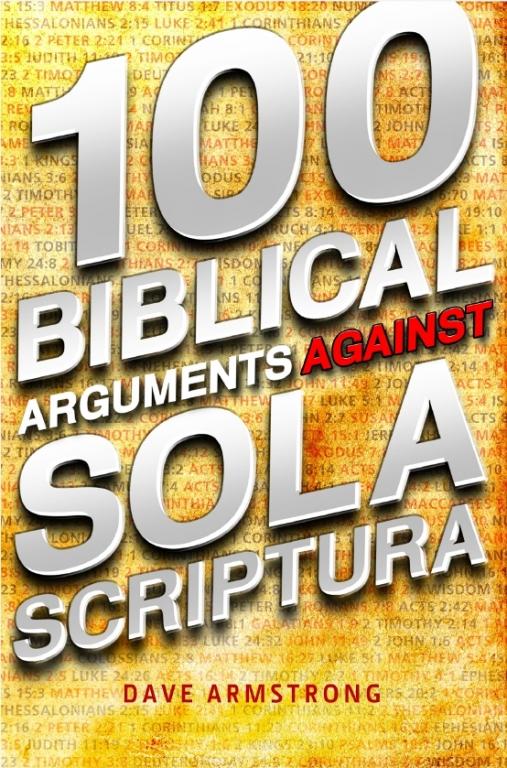
[see book and purchase information]
I have addressed this topic several times, in papers that will be listed at the end. But — to my great delight — I’ve discovered some additional insights from Scripture, which were found in searches, after happening upon a passage in 2nd Thessalonians, while critiquing the false and unbiblical doctrine and tradition of sola Scriptura. I enjoy almost nothing more than finding “treasures” in the Bible: much as King David and the prophets did, over two or three thousand years ago:
Psalm 119:130 (RSV) The unfolding of thy words gives light; it imparts understanding to the simple.
Psalm 119:162 I rejoice at thy word like one who finds great spoil.
Jeremiah 15:16 . . . thy words became to me a joy and the delight of my heart . . .
One thing I love so much about the Bible and being an apologist is experiences such as this, where some particular insight or teaching is found in Holy Scripture that was never thought of before, and which bolsters the Catholic conception of Christianity all the more, confirming its protection by the Holy Spirit, the “Counselor” (Jn 14:16, 26) Whom, so Jesus taught us, will “guide” us “into all the truth” (Jn 16:13) and “teach” us “all things” (Jn 14:26). The Holy Spirit protects the Catholic Church (Acts 20:28; 1 Tim 3:15) and the popes who lead it (“Simon [Peter] . . . I have prayed for you that your faith may not fail; and when you have turned again, strengthen your brethren”: Lk 22:32; cf. Jn 21:15-17; Mt 16:18-19).
So here are some things that occurred to me today. They were in Holy Scripture all along. But sometimes we miss things that are obvious, even though they have been right in front of us all along. In some cases it’s the result of seeing familiar passages with “new eyes” or a different perspective in terms of interpretation and cross-referencing.
2 Thessalonians 2:1-2, 5 Now concerning the coming of our Lord Jesus Christ and our assembling to meet him, we beg you, brethren, [2] not to be quickly shaken in mind or excited, either by spirit or by word, or by letter purporting to be from us, to the effect that the day of the Lord has come. . . . [5] Do you not remember that when I was still with you I told you this?
These are the passages that stimulated me to undertake this present analysis. I happened to see them while I was examining the context for the famous prooftext for apostolic tradition, 2 Thessalonians 2:15: “stand firm and hold to the traditions which you were taught by us, either by word of mouth or by letter.” What’s striking — especially in context — is Paul’s free and easy equation of the authority and trustworthiness of oral teaching alongside written.
He clearly asserts the authority of his epistle (and by implication, all his epistles), in 2:15 and also 3:14: “If any one refuses to obey what we say in this letter, note that man, and have nothing to do with him, that he may be ashamed” (cf. 1 Thess 5:27; Col 4:16). Protestants readily agree with us in that regard. But they seem to overlook the fact that he also gives his oral word the same authority (in 2:13 and 2:2, 5; cf. 1 Thess 2:13; 2 Tim 1:13-14; 2:2).
1 Thessalonians 3:2-4 and we sent Timothy, our brother and God’s servant in the gospel of Christ, to establish you in your faith and to exhort you, [3] that no one be moved by these afflictions. You yourselves know that this is to be our lot. [4] For when we were with you, we told you beforehand that we were to suffer affliction; just as it has come to pass, and as you know.
This is a fascinating equation of written and oral teaching. The teaching (that Christians were to fully expect afflictions and sufferings) is in writing as part of this epistle. But note that it was also authoritatively proclaimed orally by Paul (“beforehand”) and also by Timothy (“exhort[ed] you”). Thus, in three verses Paul provides proof of “equal” oral and written proclamation of the same teaching. The logical conclusion is that he sees no difference in authority, whether a teaching comes through oral proclamation or tradition, or the written medium.
In other words, it’s the Catholic understanding of the rule of faith, whereby tradition (including oral tradition) and writing in what was to be understood (later) as Scripture have the same authority and binding nature. The Thessalonians were just as bound by the teaching when Paul spoke it to them and Timothy further exhorted them, as when they received Paul’s letter.
1 Thessalonians 2:13 And we also thank God constantly for this, that when you received the word of God which you heard from us, you accepted it not as the word of men but as what it really is, the word of God, which is at work in you believers.
I’ve noted in books and several papers that “word of God” in Scripture is much more often referring to authoritative prophetic or apostolic preaching rather than to Holy Scripture itself. In this instance, what the Thessalonians “heard” was not only the true gospel and accompanying Christian teachings, but indeed, the very “word of God.” It’s hard to imagine a stronger statement of the veracity and trustworthiness of oral tradition.
2 Timothy 2:2 and what you have heard from me before many witnesses entrust to faithful men who will be able to teach others also.
Here Timothy receives oral traditions and passes them on to others (orally or, if in writing, not inspired writing like Scripture), who in turn teach yet more people. Conclusion: oral tradition has the same authority as written / scriptural tradition. Otherwise, Paul would have to restrict such things, passed on in turn to others, to what was in his epistles only. But he never does that. He tells Timothy (in inspired Scripture) to “entrust” his oral teaching to others to in turn pass on. He refers to his epistles in a “non-exclusive” way that doesn’t rule out oral teachings alongside them (precisely as in the rule of faith of Catholicism, not Protestantism).
Ephesians 1:13 . . . you also, who have heard the word of truth, the gospel of your salvation . . .
Ephesians 3:2 assuming that you have heard of the stewardship of God’s grace that was given to me for you,
Ephesians 4:21 assuming that you have heard about him [Christ] and were taught in him, as the truth is in Jesus.
Philippians 4:9 What you have learned and received and heard and seen in me, do; and the God of peace will be with you.
Colossians 1:5-6 because of the hope laid up for you in heaven. Of this you have heard before in the word of the truth, the gospel [6] which has come to you, as indeed in the whole world it is bearing fruit and growing — so among yourselves, from the day you heard and understood the grace of God in truth,
Colossians 1:23 . . . not shifting from the hope of the gospel which you heard, . . .
These are many instances of hearing the oral tradition, or gospel (which are essentially synonymous in the New Testament and especially in St. Paul’s usage). The Philippians were bound to “do” not only what they learned from Paul’s letters, but also what they heard him orally teach (Phil 4:9). Oral tradition or proclamation was “the word of [the] truth” (Eph 1:13; Col 1:5) and a form of the “gospel” (Eph 1:13; Col 1:5, 23).
1 Corinthians 2:1, 4, 13 When I came to you, brethren, I did not come proclaiming to you the testimony of God in lofty words or wisdom. . . . [4] and my speech and my message were not in plausible words of wisdom, but in demonstration of the Spirit and of power, . . . [13] And we impart this in words not taught by human wisdom but taught by the Spirit, interpreting spiritual truths to those who possess the Spirit.
This is more indication of the authoritative weightiness and power of oral proclamation / tradition.
2 Corinthians 10:9-11 I would not seem to be frightening you with letters. [10] For they say, “His letters are weighty and strong, but his bodily presence is weak, and his speech of no account.” [11] Let such people understand that what we say by letter when absent, we do when present.
This is an interesting sort of equivalence between Paul’s letters and his providing an example when he is with the Corinthians. He’s teaching that his example when with them is a form of teaching also, which is not written (see Phil 4:9 above and 1 Cor 4:16; 11:1; Phil 3:17; 1 Thess 1:6-7; 2 Thess 3:7-9). St. Paul in turn imitates Christ (1 Cor 11:1; 1 Thess 1:6).
2 Corinthians 3:1-3 Are we beginning to commend ourselves again? Or do we need, as some do, letters of recommendation to you, or from you? [2] You yourselves are our letter of recommendation, written on your hearts, to be known and read by all men; [3] and you show that you are a letter from Christ delivered by us, written not with ink but with the Spirit of the living God, not on tablets of stone but on tablets of human hearts.
Here, St. Paul continues (in a fascinating rhetorical and splendidly eloquent way) the same sort of analysis of the harmonious nature of writing and behavior of believers.
Acts 15:22-23, 27-32, 35; 16:4 Then it seemed good to the apostles and the elders, with the whole church, to choose men from among them and send them to Antioch with Paul and Barnabas. They sent Judas called Barsab’bas, and Silas, leading men among the brethren, [23] with the following letter: . . . [27] We have therefore sent Judas and Silas, who themselves will tell you the same things by word of mouth. [28] For it has seemed good to the Holy Spirit and to us to lay upon you no greater burden than these necessary things: [29] that you abstain from what has been sacrificed to idols and from blood and from what is strangled and from unchastity. If you keep yourselves from these, you will do well. Farewell.” [30] So when they were sent off, they went down to Antioch; and having gathered the congregation together, they delivered the letter. [31] And when they read it, they rejoiced at the exhortation. [32] And Judas and Silas, who were themselves prophets, exhorted the brethren with many words and strengthened them. . . . [35] But Paul and Barnabas remained in Antioch, teaching and preaching the word of the Lord, with many others also. . . . [16:4] As they went on their way through the cities, they delivered to them for observance the decisions which had been reached by the apostles and elders who were at Jerusalem.
This is Paul-related, but written by Luke. It shows the same outlook: equality of authority whether something is taught orally or through a letter. It had to do with the decision of the Jerusalem Council, which decreed a teaching which was binding on all churches (as seen in Acts 16:4). The teaching was delivered through a written letter (15:23; 30-31; cf. 16:4). Note that the decision was determined by an assembly of apostles and other elders in the early Church (without any known or stated biblical argumentation, in order to arrive at the decision), and then sent out to be observed by the Church as a whole (this is the Catholic understanding of authoritative ecumenical councils).
What is remarkable is how the verbal proclamation is made equal to the letter itself, in the words, “Judas and Silas, . . . will tell you the same things by word of mouth” (15:27). Then reference is made to Judas and Silas exhorting and strengthening “the brethren” (15:32) and Paul and Barnabas “teaching and preaching the word of the Lord” (15:35).
There isn’t the slightest hint of a verbal oral tradition or proclamation being lesser than a written one. The entire episode is completely in accord with the Catholic understanding of the rule of faith: the “three-legged stool” of Bible-Tradition-Church.
Protestants (as always) offer a counter-reply to our rule of faith. They call it “inscripturation.” It is explained at length by the late Protestant apologist Norman Geisler, writing with Ralph MacKenzie, in the article, “A Defense of Sola Scriptura” (Christian Research Institute, 4-8-09):
[T]he only reason Jesus and the apostles could appeal to an authority outside the Bible was that God was still giving normative (i.e., standard-setting) revelation for the faith and morals of believers. This revelation was often first communicated orally before it was finally committed to writing (e.g., 2 Thess. 2:5). Therefore, it is not legitimate to appeal to any oral revelation in New Testament times as proof that nonbiblical infallible authority is in existence today. . . .
Roman Catholics admit that the New Testament is the only infallible record of apostolic teaching we have from the first century. However, they do not seem to appreciate the significance of this fact as it bears on the Protestant argument for sola Scriptura. For even many early fathers testified to the fact that all apostolic teaching was put in the New Testament. While acknowledging the existence of apostolic tradition, J. D. N. Kelly concluded that “admittedly there is no evidence for beliefs or practices current in the period which were not vouched for in the books later known as the New Testament.” . . .
It is true that the New Testament speaks of following the “traditions” (=teachings) of the apostles, whether oral or written. This is because they were living authorities set up by Christ (Matt. 18:18; Acts 2:42; Eph. 2:20). When they died, however, there was no longer a living apostolic authority since only those who were eyewitnesses of the resurrected Christ could have apostolic authority (Acts 1:22; 1 Cor. 9:1). Because the New Testament is the only inspired (infallible) record of what the apostles taught, it follows that since the death of the apostles the only apostolic authority we have is the inspired record of their teaching in the New Testament. That is, all apostolic tradition (teaching) on faith and practice is in the New Testament. This does not necessarily mean that everything the apostles ever taught is in the New Testament, any more than everything Jesus said is there (cf. John 20:30; 21:25). What it does mean is that all apostolic teaching that God deemed necessary for the faith and practice (morals) of the church was preserved (2 Tim. 3:15-17). It is only reasonable to infer that God would preserve what He inspired. The fact that apostles sometimes referred to “traditions” they gave orally as authoritative in no way diminishes the Protestant argument for sola Scriptura. First, it is not necessary to claim that these oral teachings were inspired or infallible, only that they were authoritative. . . .
[H]owever authoritative the apostles were by their office, only their inscripturated words are inspired and infallible (2 Tim. 3:16-17; cf. John 10:35). There is not a shred of evidence that any of the revelation God gave them to express was not inscripturated by them in the only books — the inspired books of the New Testament — that they left for the church. [my bolding]
Inscripturation as a counter-reply to the biblical / Catholic rule of faith utterly fails, and is itself merely an unbiblical tradition of men (therefore, self-refuting, given Protestant premises of sola Scriptura). It’s simply not taught in the Bible. Rather, it’s assumed without any biblical indication (neither expressly stated nor even deduced). The Bible never teaches what Geisler teaches: “all apostolic tradition (teaching) on faith and practice is in the New Testament.” How could he or any Protestant possibly know that? The Bible doesn’t state it.
If they disagree, let them produce any statement in the Bible that claims such a thing. They usually don’t even try, but Geisler (in desperation, whether he knew it or not) trots out the old reliable warhorse, 2 Timothy 3:15-17. It says nothing whatsoever along these lines. It simply teaches that Scripture is great for teaching and reproof, etc. (which no one disagrees with). For all the biblical references above, and articulate presentation, Geisler’s teaching above is, in the final analysis, not based on what the Bible teaches (all things considered) regarding these matters, and contrary to many things that it does undeniably teach.
In a paper of mine from 2004, I refuted this notion of “inscripturation” from the Bible, in reply to Reformed Baptist anti-Catholic polemicist James White:
[T]his is a foolish approach because it would require us to believe that Paul and other apostles were in error with regard to how Christian or Church authority works. . . . If they believed in sola Scriptura (as models for us), then they would have taught what they knew to be Scripture (in those days, the Old Testament), and that alone, as binding and authoritative (for this is what sola Scriptura holds). If they didn’t understand authority in the way that God desired, how could they be our models [1 Cor 4:16; Phil 3:17; 2 Thess 3:7-9]? And if the very apostles who wrote Scripture didn’t understand it, and applied it incorrectly in such an important matter, how can we be expected to, from that same Scripture? A stream can’t rise above its source.
Lastly, White implicitly assumes here, as he often does, that everything the apostles taught was later doctrinally recorded in Scripture. This is his hidden premise (or it follows from his reasoning, whether he is aware of it or not). But this is a completely arbitrary assumption. Protestants have to believe something akin to this notion, because of their aversion to authoritative, binding tradition, but the notion itself is unbiblical. They agree that what apostles taught was binding, but they fail to see that some of that teaching would be “extrabiblical” (i.e., not recorded in Scripture). The Bible itself, however, teaches us that there are such teachings and deeds not recorded in it (Jn 20:30, 21:25, Acts 1:2-3, Lk 24:15-16,25-27). The logic is simple (at least when laid out for all to see):
- Apostles’ teaching was authoritative and binding [i.e., for all practical purposes, “infallible”].
- Some of that teaching was recorded in Scripture, but some was not.
- The folks who heard their teaching were bound to it whether it was later “inscripturated” or not.
- Therefore, early Christians were bound to “unbiblical” teachings or those not known to be “biblical” (as the Bible would not yet be canonized until more than three centuries later).
- If they were so bound, it stands to reason that we could and should be, also.
- Scripture itself does not rule out the presence of an authoritative oral tradition, not recorded in words. Paul refers more than once to a non-written tradition (e.g., 2 Tim 1:13-14, 2:2).
- Scripture informs us that much more was taught by Jesus and apostles than what is recorded in it.
- Scripture nowhere teaches that it is the sole rule of faith or that what is recorded in it about early Church history has no relevance to later Christians because this was the apostolic or “inscripturation” period. Those are all arbitrary, unbiblical traditions of men.
. . . Where in the Bible does it say that this period is absolutely unique because the Bible was being written during it? The inspired Bible either has examples of historical events in it which are models for us, or it doesn’t. If it does, White’s case collapses again. If it doesn’t, I need to hear why someone would think that, based on the Bible itself, which doesn’t even list its own books, let alone teach us that we can’t determine how the Church was to be governed by observing how the first Christians did it.
Why do we have to still have apostles around in order to follow their example, as we are commanded to do? What does the ending of revelation have to do with that, either? Therefore, it is (strictly-speaking) an “extrabiblical tradition.” If so, then it is inadmissible (in the sense of being binding) according to the doctrine of sola Scriptura. If that is the case, then I am under no obligation to accept it; it is merely white’s arbitrary opinion. Nor is White himself. He contradicts himself, and this is a self-defeating scenario, involving the following self-contradiction: “In upholding the principle which holds only biblical teachings as infallible and binding, I must appeal to an extrabiblical teaching.”
This is utterly incoherent, inconsistent reasoning, and must, therefore, be rejected.
I also addressed the topic again in my 2012 book, 100 Biblical Arguments Against Sola Scriptura (pp. 39-41):
19) Inscripturation is not the final determinant of binding truthfulness
When Paul was preaching to the Corinthians, Galatians, Thessalonians, et al, he preached authoritatively, as an apostle. Not everything he said was later included in the Bible; therefore it was not all inspired (he was no walking Bible-machine any more than Jesus was). But he was an authority, and acted consciously upon this authority.
Some Protestants who hold to extreme variants of sola scriptura, on the other hand, would have us believe that his authority, in the final analysis, depends upon the Christian being able to read an epistle of Paul’s, knowing that it was part of the New Testament, and doing so without the aid of an authoritative Church that could declare what was Scripture and make the canon binding on all Christians.
This is directly implied in some Protestant arguments contending that everything Paul taught, including every tradition to which he alludes, was later inscripturated. Thus anything not recorded in Scripture could not have been taught or passed down by Paul, so the flip side of the same proposition would hold — a contention that is absurd on its face.
Sixteenth-century Anglican apologist William Whitaker asserts this in his elaborate defense of sola scriptura (highly touted by proponents today, especially anti-Catholic ones), entitled A Disputation on Holy Scripture [1]:
I confess that Christ said many things about the kingdom, but of the popish traditions not a word. . . . From Matt, xxviii., Mark xvi., John xx. and xxi., Luke xxiv., and Acts i., we may gather the nature of his discourses. He expounded to them the scriptures; he gave them authority to cast out devils, to retain and remit sins; he attested his resurrection to them; he bade them preach the gospel to all nations, and said other things of the same kind, which we can read in scripture, so that we have no need of such conjectures as the papists rely upon in this question (p. 548)
The things which Paul delivered orally were not different from, but absolutely the same with, those which were written (p. 552)
The Jesuit answers, in the second place, that, even though it were conceded that all is written in other books, yet this would be no objection to believing in traditions also. For (says he) the apostle does not say, I promise that I or the other apostles will commit all the rest to writing, but, “hold the traditions.” I answer; Although Paul had never written or made such a promise, does it follow that all the rest were not written by other apostles? (p. 554)
The third place cited by the Jesuit in this fourth testimony is contained in 2 Tim. ii. 2, where Paul thus addresses Timothy: “Those things which thou hast heard of me before many witnesses, the same commit thou to faithful men, who shall be able to instruct others also.” . . . The apostle in these words commends sound doctrine to Timothy, and that no other than what is contained in the scriptures (p. 557)
This assumption—that no legitimate apostolic traditions could possibly have been passed down that are not also explicitly laid out in Holy Scripture—is not found anywhere in Scripture itself. Since it is based on no solid evidence, whether biblical or historiographical, and, as seen, is contradicted by many biblical indications, we can safely dismiss it—as most Protestants do.
[1] from the online version, translated and edited by William Fitzgerald and published by The University Press, Cambridge, in 1849.
As an example of a Protestant who accepts the binding, infallible nature of a teaching even if it isn’t taught in the Bible, I submit Martin Luther, the founder of Protestantism. The following is from a paper of mine, dated 1-18-08:
[Protestant historian Philip] Schaff, on page 95 cites Luther’s letter to Albrecht (or Albert), Margrave of Brandenburg and Duke of Prussia, dated April 1532 by some and February or early March by others (cf. another Schaff reference to the quote). The well-known Luther biographer Roland H. Bainton cites the following portion of it:
This testimony of the universal holy Christian Church, even if we had nothing else, would be a sufficient warrant for holding this article [on the sacrament] and refusing to suffer or listen to a sectary, for it is dangerous and fearful to hear or believe anything against the unanimous testimony, belief, and teaching of the universal holy Christian churches, unanimously held in all the world from the beginning until now over fifteen hundred years. (Studies on the Reformation, Boston: Beacon Press, 1963, p. 26; primary source: WA [Werke, Weimar edition in German], Vol. XXX, 552)
This letter, apparently passed over by Luther’s Works, Vol. 50 (Letters III), was, thankfully, cited at some length by Schaff on his page 95, and refers to, as Schaff notes, “the real presence of Christ in the Lord’s Supper”:
Moreover, this article has been unanimously believed and held from the beginning of the Christian Church to the present hour, as may be shown from the books and writings of the dear fathers, both in the Greek and Latin languages, — which testimony of the entire holy Christian Church ought to be sufficient for us, even if we had nothing more. For it is dangerous and dreadful to hear or believe anything against the unanimous testimony, faith, and doctrine of the entire holy Christian Church, as it has been held unanimously in all the world up to this year 1500. Whoever now doubts of this, he does just as much as if he believed in no Christian Church, and condemns not only the entire holy Christian Church as a damnable heresy, but Christ Himself, and all the Apostles and Prophets, who founded this article, when we say, ‘I believe in a holy Christian Church,’ to which Christ bears powerful testimony in Matt. 28.20: ‘Lo, I am with you alway, to the end of the world,’ and Paul, in 1 Tim. 3.15: ‘The Church is the pillar and ground of the truth.’ (italics are Schaff’s own; cf. abridged [?] version in Preserved Smith, The Life and Letters of Martin Luther [Boston and New York: Houghton Mifflin Company, 1911], pp. 290-292; Johann Adam Mohler, Symbolism, 1844, p. 400)
Philip Schaff, writing in The Reformed Quarterly Review, July, 1888, p. 295, cites the passage yet again, and reiterates:
Luther combined with the boldest independence a strong reverence for the historical faith. He derives from the unbroken tradition of the church an argument against the Zwinglians for the real presence in the Eucharist . . . A Roman controversialist could not lay more stress on tradition than Luther does in this passage.
St. Augustine taught the same with regard to apostolic tradition and a denial of “inscripturation”: about infant baptism, rebaptizing schismatics, baptismal regeneration and other issues:
As to those other things which we hold on the authority, not of Scripture, but of tradition, and which are observed throughout the whole world, it may be understood that they are held as approved and instituted either by the apostles themselves, or by plenary Councils, whose authority in the Church is most useful, . . .For often have I perceived, with extreme sorrow, many disquietudes caused to weak brethren by the contentious pertinacity or superstitious vacillation of some who, in matters of this kind, which do not admit of final decision by the authority of Holy Scripture, or by the tradition of the universal Church. (Letter to Januarius, 54, 1, 1; 54, 2, 3; cf. NPNF I, I:301)
I believe that this practice [of not rebaptizing heretics and schismatics] comes from apostolic tradition, just as so many other practices not found in their writings nor in the councils of their successors, but which, because they are kept by the whole Church everywhere, are believed to have been commanded and handed down by the Apostles themselves. (On Baptism, 2, 7, 12; from William A. Jurgens, editor and translator, The Faith of the Early Fathers, 3 volumes, Collegeville, Minnesota: Liturgical Press, 1970, vol. 3: 66; cf. NPNF I, IV:430)
[T]he custom, which is opposed to Cyprian, may be supposed to have had its origin in apostolic tradition, just as there are many things which are observed by the whole Church, and therefore are fairly held to have been enjoined by the apostles, which yet are not mentioned in their writings. (On Baptism, 5,23:31, in NPNF I, IV:475)
The Christians of Carthage have an excellent name for the sacraments, when they say that baptism is nothing else than “salvation” and the sacrament of the body of Christ nothing else than “life.” Whence, however, was this derived, but from that primitive, as I suppose, and apostolic tradition, by which the Churches of Christ maintain it to be an inherent principle, that without baptism and partaking of the supper of the Lord it is impossible for any man to attain either to the kingdom of God or to salvation and everlasting life? (On Forgiveness of Sins and Baptism, 1:34, in NPNF I, V:28)
[F]rom whatever source it was handed down to the Church – although the authority of the canonical Scriptures cannot be brought forward as speaking expressly in its support. (Letter to Evodius of Uzalis, Epistle 164:6, in NPNF I, I:516)
The custom of Mother Church in baptizing infants [is] certainly not to be scorned, nor is it to be regarded in any way as superfluous, nor is it to be believed that its tradition is anything except Apostolic. (The Literal Interpretation of Genesis, 10,23:39, in William A. Jurgens, editor and translator, The Faith of the Early Fathers, 3 volumes, Collegeville, Minnesota: Liturgical Press, 1970, vol. 3: 86)
It is obvious; the faith allows it; the Catholic Church approves; it is true. (Sermon 117, 6)
***
Related Reading
Dialogue on “Perspicuous Apostolic Teaching” (vs. James White) [May-June 1996]
Biblical Evidence for Apostolic Oral Tradition [2-20-09]
Biblical Evidence for the Oral Torah [10-18-11]
Dialogue on Oral Tradition & Apostolic Succession (vs. John E. Taylor) [5-17-17]
Anglican Newman on Oral & Written Apostolic Tradition [10-12-19]
Oral Tradition According to Great Historic Apologists [10-18-19]
***
Summary: I briefly present and comment on passages regarding oral tradition that I had overlooked up till now. Then I take on the false and desperate Protestant tradition of men: “inscripturation.”
***
Previous Post
February 26, 2021
Hilary of Poitiers (d. 367) vs. Sola Scriptura as the Rule of Faith
Next Post

March 1, 2021 Gregory the Great vs. Sola Scriptura as the Rule of Faith
Browse Our Archives
Select a Category & Last Things About Me Anti-Catholicism Atheism & Agnosticism Baptism and Sacramentalism Bible and Tradition Blessed Virgin Mary Books by Dave Armstrong C. S. Lewis Calvinism & General Protestantism Catholic Apologetics Catholic Apologists Catholic conversion Catholic converts Christmas Church (Ecclesiology) Church History Conversion and Converts Development of Doctrine Eastern Orthodoxy Ecumenism & Christian Unity Eucharist & Liturgy Fathers of the Church French Translations G. K. Chesterton Hell Hell & Satan Hell & Satan & Last Things Heresies & Comparative Religion Holistic Health Inquisition & Crusades & Scandals James White Jews & Judaism & Old Testament John Calvin John Henry Newman Liberal / Modernist Theology Life Issues Literary Resume Lutheranism Mariology Martin Luther Music Orthodoxy Papacy & Infallibility Personal Page Philosophy & Science Political & Ethical & Moral Issues Protestant Persecution & Intolerance Protestantism Purgatory Purgatory & Penance Romantic & Imaginative Theology Saints & Purgatory & Penance Salvation Salvation & Justification Satan & Last Things Sexuality and Gender Issues Spanish Translations Traditionalism vs. Radical Catholic Reactionaries Traducciones al español / tradução para português Trinitarianism & Christology Uncategorized Videos
Select a Month October 2026 September 2026 August 2026 July 2026 June 2026 May 2026 April 2026 March 2026 February 2026 January 2026 December 2025 November 2025 October 2025 September 2025 August 2025 July 2025 June 2025 May 2025 April 2025 March 2025 February 2025 January 2025 December 2024 November 2024 October 2024 September 2024 August 2024 July 2024 June 2024 May 2024 April 2024 March 2024 February 2024 January 2024 December 2023 November 2023 October 2023 September 2023 August 2023 July 2023 June 2023 May 2023 April 2023 March 2023 February 2023 January 2023 December 2022 November 2022 October 2022 September 2022 August 2022 July 2022 June 2022 May 2022 April 2022 March 2022 February 2022 January 2022 December 2021 November 2021 October 2021 September 2021 August 2021 July 2021 June 2021 May 2021 April 2021 March 2021 February 2021 January 2021 December 2020 November 2020 October 2020 September 2020 August 2020 July 2020 June 2020 May 2020 April 2020 March 2020 February 2020 January 2020 December 2019 November 2019 October 2019 September 2019 August 2019 July 2019 June 2019 May 2019 April 2019 March 2019 February 2019 January 2019 December 2018 November 2018 October 2018 September 2018 August 2018 July 2018 June 2018 May 2018 April 2018 March 2018 February 2018 January 2018 December 2017 November 2017 October 2017 September 2017 August 2017 July 2017 June 2017 May 2017 April 2017 March 2017 February 2017 January 2017 December 2016 November 2016 October 2016 September 2016 August 2016 July 2016 June 2016 May 2016 April 2016 March 2016 February 2016 January 2016 December 2015 November 2015 October 2015 September 2015 August 2015 July 2015 June 2015 May 2015 April 2015 March 2015 February 2015 January 2015 December 2014 November 2014 October 2014 September 2014 August 2014 July 2014 June 2014 April 2014 March 2014 February 2014 January 2014 December 2013 November 2013 October 2013 September 2013 August 2013 July 2013 June 2013 April 2013 March 2013 February 2013 January 2013 December 2012 November 2012 October 2012 September 2012 August 2012 July 2012 June 2012 May 2012 April 2012 March 2012 February 2012 January 2012 December 2011 November 2011 October 2011 September 2011 August 2011 July 2011 June 2011 April 2011 March 2011 February 2011 October 2010 September 2010 August 2010 July 2010 April 2010 March 2010 December 2009 October 2009 August 2009 July 2009 June 2009 May 2009 March 2009 February 2009 October 2008 September 2008 April 2008 March 2008 February 2008 January 2008 December 2007 November 2007 October 2007 May 2007 March 2007 February 2007 January 2007 November 2006 October 2006 September 2006 August 2006 July 2006 June 2006 May 2006 April 2006 March 2006 February 2006 October 2005 June 2005 April 2005 February 2005 July 2004 May 2004 April 2004
Follow Us!
TAKE THE
Religious Wisdom Quiz
What does Revelation say will wipe away every tear from their eyes?
Select your answer to see how you score.
The river of life God himself An angel The tree of life
Books by This Author Books by Dave Armstrong
Related posts from Biblical Evidence for Catholicism

A Few "Worst" & "Best" Arguments vs. Protestantism
Biblical Evidence for Catholicism

Jerusalem Council vs. James White & Sola Scriptura
Biblical Evidence for Catholicism

Book: Martin Luther: Dissenter and Defender
Biblical Evidence for Catholicism

Biblical Perspicuity: Absurd Anti-Catholic "Defense"
Biblical Evidence for Catholicism
TRENDING AT PATHEOS Catholic

Letters on Living the Faith by C.S. Lewis
Most of us met C.S. Lewis as a public intellectual. Mere Christianity....

When Halloween Unmasks Married Hearts
Written by Dr. David K. Ewen from Eternal Truth Bible College Behind...

Aristotle. He’s been called the father of logic, the father of the...

Methodist Central Hall and Westminster Abbey
Situated on the same square is Methodist Central Hall and Westminster Abbey. ...

57th Dove Awards Honor Dolly Parton, Crown New...
On gospel music’s biggest night, the 57th annual GMA Dove Awards honored...

The First Eucharistic Controversy: Christ’s Real Presence
For Catholics, the Eucharist is the source and summit of the Christian...
view all Catholic blogs
Ad-Free & Subscriber Log-In Subscription Support
- About Us
- 2026 Calendar
- Videos
- Podcasts
- Library of World Religions
- Faith In Media Tracker
- Advertise With Us
- Write for Us
- Privacy Policy
- Terms of Service
- Do Not Sell My Data
- Contact Us
- Radiant Digital
- Manage Newsletter Subscriptions
- Unsubscribe From Notifications
- Sitemap
Copyright 2008-2026, Patheos. All rights reserved.
Subscription Support Ad-Free & Subscriber Log-In
Follow Patheos