
BuddhistCatholicContemplativeEvangelicalGeneral ChristianHinduJewishLatter-day SaintMuslimNew VisionsProgressive Christian
Beliefs
- Buddhist
- Catholic
- Contemplative
- Evangelical
- General Christian
- Hindu
- Jewish
- Latter-day Saint
- More Voices
- Muslim
- New Visions
- Pagan
- Progressive Christian
Topics
- Religion News
- Food and Religion
- Sports and Religion
- Religious Art
- Religious Music and Entertainment
- Religious Events
- History and Religion
- Style and Religion
- Politics and Religion
- Women in Religion
- Recreation Outdoors and Religion
- Business Finance and Religion
- Careers Workplace and Religion
- Education and Religion
- Family Parenting and Religion
- Health Fitness and Religion
- Home and Religion
- Relationships and Religion
- Technology and Religion
- Travel and Religion
Columnists
- Buddhist Columnists
- Business Finance and Religion Columnists
- Careers Workplace and Religion Columnists
- Catholic Columnists
- Contemplative Columnists
- Education and Religion Columnists
- Evangelists Columnists
- Family Parenting and Religion Columnists
- General Christian Columnists
- Health Fitness and Religion Columnists
- Hindu Columnists
- History and Religion Columnists
- Home and Religion Columnists
- Jewish Columnists
- More Voices Columnists
- Latter Day Columnists
- Muslim Columnists
- New Visions Columnists
- Nonreligious Columnists
- Pagan Columnists
- Politics and Religion Columnists
- Progressive Columnists
- Recreation Outdoors and Religion Columnists
- Relationships and Religion Columnists
- Religion News Columnists
- Religious Art Columnists
- Religious Events Columnists
- Religious Music and Entertainment Columnists
- Sports and Religion Columnists
- Style and Religion Columnists
- Technology and Religion Columnists
- Travel and Religion Columnists
- Women in Religion Columnists
Resource Library
- 2026 Calendar
- Library of World Religions
- The 100 Most Holy Places on Earth
- Patheos Answers
- Podcasts
- Videos
- Faith Leaders Database
- Anglican Episcopalian
- Bahai
- Baptist
- Buddhism
- Christianity
- Confucianism
- Eastern Orthodoxy
- Hinduism
- Holiness and Pentecostal
- ISKCON
- Islam
- Judaism
- Lutheran
- Methodist
- The Church of Jesus Christ of Latter-day Saints
- New Age
- Paganism
- Presbytarian and Reformed
- Protestantism
- Religion Behind the Scenes
- Roman Catholic
- Scientology
- Shia Islam
- Sikhism
- Sufism
- Sunni Islam
- Taoism
- Zen
- See all religions
Research Tools
 Ad-Free & Subscriber Log-In Subscription Support
Ad-Free & Subscriber Log-In Subscription Support
Follow Patheos 

- Trending:
- Forgiveness
- |
- Marriage
- |
- Consciousness
- |
- Death Penalty
- |
- Election
- |
- Halloween

-
About
-
Catholic Apologetics
-
Church History
-
Great Apologists
-
Christian Worldview
-
Protestantism & Misc.
- Home
- Catholic
- History and Religion
- Malcolm Muggeridge Quotations
Malcolm Muggeridge Quotations
Last updated on: June 5, 2026 at 11:57 pm by Dave Armstrong
Malcolm Muggeridge Quotations 2026-06-05T23:57:49-04:00 Dave Armstrong
Patheos Explore the world's faith through different perspectives on religion and spirituality! Patheos has the views of the prevalent religions and spiritualities of the world.
*
Contraception
*
It was the Catholic Church’s firm stand against contraception and abortion which finally made me decide to become a Catholic . . . As the Romans treated eating as an end in itself, making themselves sick in a vomitorium so as to enable them to return to the table and stuff themselves with more delicacies, so people now end up in a sort of sexual vomitorium. The Church’s stand is absolutely correct. It is to its eternal honour that it opposed contraception, even if the opposition failed. I think, historically, people will say it was a very gallant effort to prevent a moral disaster . . . (Confessions of a Twentieth-Century Pilgrim, San Francisco: Harper and Row, 1988, 140-141)
*
Media Orthodoxy
*
There is something, to me, very sinister about this emergence of a weird kind of conformity, or orthodoxy, particularly among the people who operate the media, so that you can tell in advance exactly what they will say and think about anything. It is true that so far they have not got an Inquisition to enforce their orthodoxy, but they do have ways of enforcing it which make the old thumbscrews and racks seem quite paltry. (Christ and the Media, Grand Rapids, Michigan: Eerdmans, 1977, 91)
*
Absurdity Among the Eminent
*
The eminent so often say and do things which are infinitely more ridiculous than anything you can invent for them. That might not sound to you like a terrible difficulty but it is, believe me, the main headache of the editor of an ostensibly humorous paper. You go to great trouble to invent a ridiculous Archbishop of Canterbury and give him ridiculous lines to say and then suddenly he rises in his seat at the theatre [at a performance of Godspell] and shouts out: “Long live God” . . . which, as I reflected at the time, was like shouting, “carry on eternity” or “keep going infinity” . . . And you’re defeated, you’re broken. (The End of Christendom, Grand Rapids, Michigan: Eerdmans, 1980, 13)
*
St. Teresa of Calcutta (Mother Teresa)
*
If God counts the hairs of each of their heads, if none are excluded from the salvation the Crucifixion offers, who will venture to exclude them from earthly blessings and esteem; pronounce this life unnecessary, that one better terminated or never begun? I never experienced so perfect a sense of human equality as with Mother Teresa among her poor. Her love for them, reflecting God’s love, makes them equal, as brothers and sisters within a family are equal, however widely they differ in intellectual and other attainments, in physical beauty and grace. (Something Beautiful for God, New York: Harper and Row, 1971, 23)
*
Concerning Cistercian Monks
*
What good are they doing? What future have they got? Prayers don’t show in the Gross National Product, and so cannot be said to lighten the Chancellor of the Exchequer’s burdens. Nor do they, like napalm and hot air, serve the cause of freedom in any perceptible way . . . Telly-deprived, denied access to the treasures of the daily and periodical press, how can the monks be expected to have meaningful views on the birth pill, LSD, the Stones and other burning issues of the day? . . . In an increasingly materialistic world they are non-productive citizens . . . By all the laws of Freud and the psycho-prophets, the monks are depriving themselves of the sensual satisfactions which alone make a whole life possible; they ought to be up the wall and screaming. Actually, . . . it is the children of affluence, not deprived monks, who howl and fret in psychiatric wards. (Jesus Rediscovered, Bungay, Suffolk, UK: Fontana Books, 1969, 64-65)
*
Liberals and Stalin
*
Liberal minds flocked to the USSR in an unending procession, from the great ones like Shaw and Gide and Barbusse and Julian Huxley and Harold Laski and Sidney and Beatrice Webb, down to poor little teachers, crazed clergymen and millionaires, drivelling dons, all utterly convinced that, under the aegis of the great Stalin, a new dawn is breaking in the world, so that the human race may at last be united in liberty, equality and fraternity forevermore . . . These Liberal minds are prepared to believe anything, however preposterous, to overlook anything, however villainous, to approve anything, however obscurantist and brutally authoritarian, in order to be able to preserve intact the confident expectation that one of the most thoroughgoing, ruthless and bloody tyrannies ever to exist on earth can be relied on to champion human freedom, the brotherhood of man, and all the other good Liberal causes to which they had dedicated their lives . . . They are unquestionably one of the marvels of the age . . . all chanting the praises of the Dictatorship of the Proletariat, and of Stalin as its most gracious and beloved figurehead. It was as though a Salvation Army contingent had turned out with bands and banners in honour of some ferocious tribal deity, or as though a vegetarian society had issued a passionate plea for cannibalism. (Confessions of a Twentieth-Century Pilgrim, San Francisco: Harper and Row, 1988, 87-88)
*
Jesus and History
*
In his own lifetime Jesus made no impact on history. This is something that I cannot but regard as a special dispensation on God’s part, and, I like to think, yet another example of the ironical humour which informs so many of His purposes. To me, it seems highly appropriate that the most important figure in all history should thus escape the notice of memoirists, diarists, commentators, all the tribe of chroniclers who even then existed . . . (Jesus: The Man Who Lives, New York: Harper and Row, 1975, 23)
*
20th Century Credulity
*
Our twentieth century, far from being notable for scientific scepticism, is one of the most credulous eras in all history. It is not that people believe in nothing – which would be bad enough — but that they believe in anything – which is really terrible. Recoiling, as they do, from accepting the validity of miracles, and priding themselves on seeing the Incarnation as a transcendental con-trick, they will accept at its face value any proposition, however nonsensical, that is presented in scientific or sociological jargon — for instance, the existence of a population explosion, which has been so expertly and decisively demolished by Professor Colin Clark of Monash University. Could any mediaeval schoolman, I ask myself, sit through a universally applauded television series like Bronowski’s Ascent of Man without a smile of derision at such infantile acceptance of unproven and unprovable assertions? (Vintage Muggeridge, edited by Geoffrey Barlow, Grand Rapids, Michigan: Eerdmans, 1985, 74-75, “The Bible Today,” from a lecture delivered on 7 October 1976)
*
Alexander Solzhenitsyn
*
The pack [i.e., the media and the “intelligentsia”] is after him and because what he says is unbearable: that the answer to dictatorship is not liberalism, but Christianity. I mean, that is an unbearable proposition from their point of view, and it is where he stands . . . It has been something wonderful to watch and, to more people than you might think, enormously heartening: that that is what this man should have to say instead of a lot of claptrap . . . They started off by never mentioning that he was a Christian. I mean, for a long time, he was made a hero of the cause for freedom, but it was never mentioned that an integral and essential part of it was his Christian belief. (Vintage Muggeridge, edited by Geoffrey Barlow, Grand Rapids, Michigan: Eerdmans, 1985, 132; interview on William F. Buckley’s Firing Line, 1978)
*
Words and Electronic Images
*
Words, printed words, are words that have arisen in a human mind. They are connected with thought and with art. But photography or filming, is a completely different thing. It is machine made; . . . it is seeing with, not through, the eye; looking but not seeing. (Christ and the Media, Grand Rapids, Michigan: Eerdmans, 1977, 106)
*
Marx and Freud
*
Marx and Freud are the two great destroyers of Christian civilization, the first replacing the gospel of love by the gospel of hate, the other undermining the essential concept of human responsibility. (My Life in Pictures, New York: William Morrow and Co., 1987, 94)
*
The First Personal Epiphany
*
[In atheistic despair over the meaninglessness and futility of life and the universe, Muggeridge decided to commit suicide in 1942, by walking out into the sea and drowning himself. But something strange happened to prevent this, as he recalls:]
*
Suddenly, without thinking or deciding, I started swimming back to shore . . . I shouted foolishly for help, and kept my eyes fixed on the lights of Peter’s Cafe and the Costa da Sol. They were the lights of the world; they were the lights of my home, my habitat, where I belonged. I must reach them. There followed an overwhelming joy such as I had never experienced before; an ecstasy. In some mysterious way it became clear to me that there was no darkness, only the possibility of losing sight of a light which shone eternally; . . . that our sufferings, our affliction, are part of a drama – an essential, even an ecstatic part – endlessly revolving around the two great propositions of good and evil, of light and darkness. A brief interlude, an incarnation, reaching back into the beginning of time, and forward into an ultimate fulfilment in the universal spirit of love which informs, animates, illuminates all creation, from the tiniest particle of insentient matter to the radiance of God’s very throne . . . Though I scarcely realised it at the time and subsequently only very slowly and dimly, this episode represented for me one of those deep changes which take place in our lives; as, for instance, in adolescence, only more drastic and fundamental. A kind of spiritual adolescence, whereby, thenceforth, all my values and pursuits and hopes were going to undergo a total transformation — from the carnal towards the spiritual; from the immediate, the now, towards the everlasting, the eternal. In a tiny dark dungeon of the ego, chained and manacled, I had glimpsed a glimmer of light . . . (Chronicles of Wasted Time, Washington, D.C.: Regnery Gateway, 1973, 458-459)
*
Meeting the Risen Christ
*
It was while I was in the Holy Land for the purpose of making three B.B.C. television programmes on the New Testament that a curious, almost magical, certainty seized me about Jesus’ birth, ministry and Crucifixion . . . I became aware that there really had been a man, Jesus, who was also God — I was conscious of his presence. He really had spoken those sublime words — I heard them. He really had died on a cross and risen from the dead. Otherwise, how was it possible for me to meet him, as I did? . . . The words Jesus spoke are living words, as relevant today as when they were first spoken; the light he shone continues to shine as brightly as ever. Thus he is alive, as for instance Socrates — who also chose to lay down his life for truth’s sake — isn’t . . . The Cross is where history and life, legend and reality, time and eternity, intersect. There, Jesus is nailed for ever to show us how God could become a man and a man become God. (Jesus Rediscovered, Bungay, Suffolk, UK: Fontana Books, 1969, 8 [Foreword] )
*
The Religion of Sex
*
When the devil makes his offer (always open incidentally) of the kingdoms of the earth, it is the bordellos which glow so alluringly to most of us, not the banks and the counting-houses and the snow-swept corridors of power . . . Sex is the mysticism of a materialistic society — in the beginning was the Flesh, and the Flesh became Word; with its own mysteries — this is my birth pill; swallow it in remembrance of me! – and its own sacred texts and scriptures — the erotica which fall like black atomic rain on the just and unjust alike, drenching us, stupefying us. To be carnally minded is life! (Jesus Rediscovered, Bungay, Suffolk, UK: Fontana Books, 1969, 33)
*
Kierkegaard’s Prediction of Mass Stupefaction
*
Marx and Kierkegaard, the two key voices of the twentieth century. The curious thing is that though Marx purported to have an infallible scientific key to history, almost all his prophecies have failed to happen. On the other hand, Kierkegaard’s forecasts have been fulfilled to a remarkable degree. Take for instance his profound sense that if men lost the isolation, the separateness, which awareness of the presence of God alone can give, they would soon find themselves irretrievably part of a collectivity with only mass communications to shape their hopes, formulate their values and arrange their thinking . . .
*
[Kierkegaard:] Day in and day out the daily press does nothing but delude men with the supreme axiom . . . that numbers are decisive. Christianity, on the other hand, is based on the thought that the truth lies in the single individual . . . . . Not until the single individual has established an ethical stance in despite of the whole world, not until then can there be any question of genuinely uniting. Otherwise it gets to be a union of people who separately are weak; a union as unbeautiful and depraved as a child marriage. (A Third Testament, New York: Ballantine Books, 1976, 104-106)
*
The Sacredness of Life
*
This life in us, . . . however low it flickers or fiercely burns, is still a divine flame which no man dare presume to put out, be his motives never so humane and enlightened. To suppose otherwise is to countenance a death-wish. Either life is always and in all circumstances sacred, or intrinsically of no account; it is inconceivable that it should be in some cases the one, and in some the other. (Something Beautiful for God, New York: Harper and Row, 1971, 29)
*
Great Minds, Fools, and Christianity
*
The greatest artists, saints, philosophers and, until quite recent times, scientists, through the Christian centuries, . . . have all assumed that the New Testament promise of eternal life is valid, and that the great drama of the Incarnation which embodies it, is indeed the master-drama of our existence. To suppose that these distinguished believers were all credulous fools whose folly and credulity in holding such beliefs has now been finally exposed, would seem to me untenable; and anyway I’d rather be wrong with Dante and Shakespeare and Milton, with Augustine of Hippo and Francis of Assisi, with Dr Johnson, Blake and Dostoevsky than right with Voltaire, Rousseau, the Huxleys, Herbert Spencer, H.G. Wells and Bernard Shaw. (Vintage Muggeridge, edited by Geoffrey Barlow, Grand Rapids, Michigan: Eerdmans, 1985, 32-33)
*
TV and Fantasy
*
There is a gulf between reality, which for Christians is Christ, and the world of fantasy that the media project, and . . . Western people are being enormously misled by being induced to regard things on the screen as real, when actually they are fantasy. But, of course, God can use all things – even television, even you and me. (Christ and the Media, Grand Rapids, Michigan: Eerdmans, 1977, 90)
*
Imagination vs. Fantasy
*
When I use the word “fantasy”, I do not mean the imagination, because the imagination is the heart and source of all art. Coleridge has a splendid exposition of the difference between fancy, or fantasy, and the imagination. When Blake said he believed in the imagination, he saw the imagination as providing an image of truth. But fantasy is the creation of images and ideas which are not truth, which have no relation to truth, and which cannot have a relation to truth . . . It’s an entirely different thing — like the difference between sentimentality and sentiment. (Christ and the Media, Grand Rapids, Michigan: Eerdmans, 1977, 107)
*
The Incarnation
*
As far as the Incarnation is concerned, I believe firmly in it. I believe that God did lean down to become Man in order that we could reach up to Him, and that the drama which embodies that Incarnation, the drama described in the Creed, took place. (Confessions of a Twentieth-Century Pilgrim, San Francisco: Harper and Row, 1988, 140)
*
Men Like Gods
*
Writers like Aldous Huxley and George Orwell have imagined the sort of scientific utopia which is coming to pass, but already their nightmare fancies are hopelessly out of date. A vast, air-conditioned, neon-lighted, glass-and-chromium broiler-house begins to take shape, in which geneticists select the best stocks to fertilise, and watch over the developing embryo to ensure that all possibilities of error and distortion are eliminated. Where is the need for God in such a set-up? Or even for a moral law? When man is thus able to shape and control his environment and being, then surely he may be relied on to create his own earthly paradise and live happily ever after in it. But can he? . . . Is the endlessly repeated message of the media – that money and sex are the only pursuits in life, violence its only excitement, and success its only fulfillment – irresistible? . . . The Way begins where for Christ himself its mortal part ended — at the cross. There alone, with all our earthly defences down and our earthly pretensions relinquished, we can confront the true circumstances of our being . . . There, contemplating God in the likeness of man, we may understand how foolish and inept is man when he sees himself in the likeness of God. (Jesus Rediscovered, Bungay, Suffolk, UK: Fontana Books, 1969, 112-113, 115-116)
*
Pope St. John Paul II
*
The Pope is a brave man and a tough man . . . he is an admirable choice as Pope precisely because he has been a cardinal in a communist country and therefore knows at first hand what it means to be at the mercy of an atheistic, tyrannical regime . . . His experience makes him — when faced by hostile movements or undermining tactics such as “liberation theology” in Latin America — the best champion to strengthen the authority of Pope and Church. And that strengthening is sorely needed in an irreligious, materialistic world, even at the cost of a certain conservatism.
(My Life in Pictures, New York: William Morrow and Co., 1987, 104)
*
Related Reading
*
Malcolm Muggeridge & His Conversion to Catholicism [1991; published by The Coming Home Newsletter, March / April 1997]
*
Malcolm Muggeridge: The Iconoclast (Old Links Page) [4-18-16]
*
Malcolm Muggeridge & Mother Teresa: A Blessed, Fruitful Meeting [9-6-16]
*
The Holy Collaboration of Mother Teresa and Malcom Muggeridge [National Catholic Register, 6-20-18]
*
***
*
(originally compiled and uploaded in 1997)
*
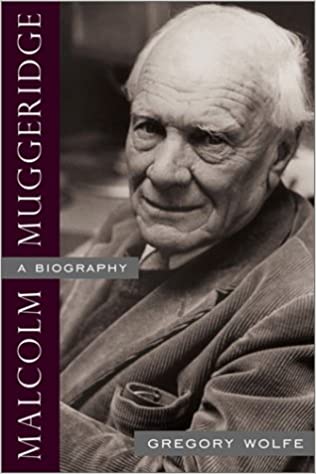
Photo credit: From the Amazon page for the book, Malcolm Muggeridge: A Biography, by Gregory Wolfe (Intercollegiate Studies Inst; Paperback edition: April 1, 2003).
***
Summary: Malcolm Muggeridge (1903-1990 was a journalist, satirist, social commentator, author & great Christian & Catholic thinker. I collected examples of some of his most brilliant observations.
***
Previous Post

February 15, 2021
Top Ten All-Time Favorite Insults Sent My Way
Next Post

February 16, 2021 Thomas Howard Quotations
Browse Our Archives
Select a Category & Last Things About Me Anti-Catholicism Atheism & Agnosticism Baptism and Sacramentalism Bible and Tradition Blessed Virgin Mary Books by Dave Armstrong C. S. Lewis Calvinism & General Protestantism Catholic Apologetics Catholic Apologists Catholic conversion Catholic converts Christmas Church (Ecclesiology) Church History Conversion and Converts Development of Doctrine Eastern Orthodoxy Ecumenism & Christian Unity Eucharist & Liturgy Fathers of the Church French Translations G. K. Chesterton Hell Hell & Satan Hell & Satan & Last Things Heresies & Comparative Religion Holistic Health Inquisition & Crusades & Scandals James White Jews & Judaism & Old Testament John Calvin John Henry Newman Liberal / Modernist Theology Life Issues Literary Resume Lutheranism Mariology Martin Luther Music Orthodoxy Papacy & Infallibility Personal Page Philosophy & Science Political & Ethical & Moral Issues Protestant Persecution & Intolerance Protestantism Purgatory Purgatory & Penance Romantic & Imaginative Theology Saints & Purgatory & Penance Salvation Salvation & Justification Satan & Last Things Sexuality and Gender Issues Spanish Translations Traditionalism vs. Radical Catholic Reactionaries Traducciones al español / tradução para português Trinitarianism & Christology Uncategorized Videos
Select a Month October 2026 September 2026 August 2026 July 2026 June 2026 May 2026 April 2026 March 2026 February 2026 January 2026 December 2025 November 2025 October 2025 September 2025 August 2025 July 2025 June 2025 May 2025 April 2025 March 2025 February 2025 January 2025 December 2024 November 2024 October 2024 September 2024 August 2024 July 2024 June 2024 May 2024 April 2024 March 2024 February 2024 January 2024 December 2023 November 2023 October 2023 September 2023 August 2023 July 2023 June 2023 May 2023 April 2023 March 2023 February 2023 January 2023 December 2022 November 2022 October 2022 September 2022 August 2022 July 2022 June 2022 May 2022 April 2022 March 2022 February 2022 January 2022 December 2021 November 2021 October 2021 September 2021 August 2021 July 2021 June 2021 May 2021 April 2021 March 2021 February 2021 January 2021 December 2020 November 2020 October 2020 September 2020 August 2020 July 2020 June 2020 May 2020 April 2020 March 2020 February 2020 January 2020 December 2019 November 2019 October 2019 September 2019 August 2019 July 2019 June 2019 May 2019 April 2019 March 2019 February 2019 January 2019 December 2018 November 2018 October 2018 September 2018 August 2018 July 2018 June 2018 May 2018 April 2018 March 2018 February 2018 January 2018 December 2017 November 2017 October 2017 September 2017 August 2017 July 2017 June 2017 May 2017 April 2017 March 2017 February 2017 January 2017 December 2016 November 2016 October 2016 September 2016 August 2016 July 2016 June 2016 May 2016 April 2016 March 2016 February 2016 January 2016 December 2015 November 2015 October 2015 September 2015 August 2015 July 2015 June 2015 May 2015 April 2015 March 2015 February 2015 January 2015 December 2014 November 2014 October 2014 September 2014 August 2014 July 2014 June 2014 April 2014 March 2014 February 2014 January 2014 December 2013 November 2013 October 2013 September 2013 August 2013 July 2013 June 2013 April 2013 March 2013 February 2013 January 2013 December 2012 November 2012 October 2012 September 2012 August 2012 July 2012 June 2012 May 2012 April 2012 March 2012 February 2012 January 2012 December 2011 November 2011 October 2011 September 2011 August 2011 July 2011 June 2011 April 2011 March 2011 February 2011 October 2010 September 2010 August 2010 July 2010 April 2010 March 2010 December 2009 October 2009 August 2009 July 2009 June 2009 May 2009 March 2009 February 2009 October 2008 September 2008 April 2008 March 2008 February 2008 January 2008 December 2007 November 2007 October 2007 May 2007 March 2007 February 2007 January 2007 November 2006 October 2006 September 2006 August 2006 July 2006 June 2006 May 2006 April 2006 March 2006 February 2006 October 2005 June 2005 April 2005 February 2005 July 2004 May 2004 April 2004
Follow Us!
TAKE THE
Religious Wisdom Quiz
What was Paul’s profession before becoming an apostle?
Select your answer to see how you score.
Tentmaker Tax Collector Fisherman Carpenter
Books by This Author Books by Dave Armstrong
Related posts from Biblical Evidence for Catholicism

Why Wes Huff (and Everyone) Should Be Catholic
Biblical Evidence for Catholicism

Invocation of Saints: Catholic Scholars vs. Me? Nope!
Biblical Evidence for Catholicism

My “Number Articles”: Alphabetized by Topic
Biblical Evidence for Catholicism

General Debate on Christianity with an Atheist
Biblical Evidence for Catholicism
TRENDING AT PATHEOS Catholic

I was strolling through the top floor of the brand new Parthenon...

What Does Gêvâh Mean For Kimberley Guifoyle &...
This week, a lot of the news is focused on Kimberly Guilfoyle....

INNER CIRCLE: Profound Mystery (Of Christ In All...
Ephesians 5:31-32 “For this reason, a man will leave his father and...

Do Not Rejoice When Your Enemy Falls: The...
Turning an execution into a public spectacle is a disturbing expression of...

'The Chosen' S6 Trailer: The Passion Gets Very...
Not many watching 'The Chosen' worry about spoilers, but just because they...

The purpose-driven labor priest
A labor activist reads Rick Warren and it gets me wondering about...
view all Catholic blogs
Ad-Free & Subscriber Log-In Subscription Support
- About Us
- 2026 Calendar
- Videos
- Podcasts
- Library of World Religions
- Faith In Media Tracker
- Advertise With Us
- Write for Us
- Privacy Policy
- Terms of Service
- Do Not Sell My Data
- Contact Us
- Radiant Digital
- Manage Newsletter Subscriptions
- Unsubscribe From Notifications
- Sitemap
Copyright 2008-2026, Patheos. All rights reserved.
Subscription Support Ad-Free & Subscriber Log-In
Follow Patheos