
BuddhistCatholicContemplativeEvangelicalGeneral ChristianHinduJewishLatter-day SaintMuslimNew VisionsProgressive Christian
Beliefs
- Buddhist
- Catholic
- Contemplative
- Evangelical
- General Christian
- Hindu
- Jewish
- Latter-day Saint
- More Voices
- Muslim
- New Visions
- Pagan
- Progressive Christian
Topics
- Religion News
- Food and Religion
- Sports and Religion
- Religious Art
- Religious Music and Entertainment
- Religious Events
- History and Religion
- Style and Religion
- Politics and Religion
- Women in Religion
- Recreation Outdoors and Religion
- Business Finance and Religion
- Careers Workplace and Religion
- Education and Religion
- Family Parenting and Religion
- Health Fitness and Religion
- Home and Religion
- Relationships and Religion
- Technology and Religion
- Travel and Religion
Columnists
- Buddhist Columnists
- Business Finance and Religion Columnists
- Careers Workplace and Religion Columnists
- Catholic Columnists
- Contemplative Columnists
- Education and Religion Columnists
- Evangelists Columnists
- Family Parenting and Religion Columnists
- General Christian Columnists
- Health Fitness and Religion Columnists
- Hindu Columnists
- History and Religion Columnists
- Home and Religion Columnists
- Jewish Columnists
- More Voices Columnists
- Latter Day Columnists
- Muslim Columnists
- New Visions Columnists
- Nonreligious Columnists
- Pagan Columnists
- Politics and Religion Columnists
- Progressive Columnists
- Recreation Outdoors and Religion Columnists
- Relationships and Religion Columnists
- Religion News Columnists
- Religious Art Columnists
- Religious Events Columnists
- Religious Music and Entertainment Columnists
- Sports and Religion Columnists
- Style and Religion Columnists
- Technology and Religion Columnists
- Travel and Religion Columnists
- Women in Religion Columnists
Resource Library
- 2026 Calendar
- Library of World Religions
- The 100 Most Holy Places on Earth
- Patheos Answers
- Podcasts
- Videos
- Faith Leaders Database
- Anglican Episcopalian
- Bahai
- Baptist
- Buddhism
- Christianity
- Confucianism
- Eastern Orthodoxy
- Hinduism
- Holiness and Pentecostal
- ISKCON
- Islam
- Judaism
- Lutheran
- Methodist
- The Church of Jesus Christ of Latter-day Saints
- New Age
- Paganism
- Presbytarian and Reformed
- Protestantism
- Religion Behind the Scenes
- Roman Catholic
- Scientology
- Shia Islam
- Sikhism
- Sufism
- Sunni Islam
- Taoism
- Zen
- See all religions
Research Tools
 Ad-Free & Subscriber Log-In Subscription Support
Ad-Free & Subscriber Log-In Subscription Support
Follow Patheos 

- Trending:
- Forgiveness
- |
- Marriage
- |
- Consciousness
- |
- Death Penalty
- |
- Election
- |
- Halloween

-
About
-
Catholic Apologetics
-
Church History
-
Great Apologists
-
Christian Worldview
-
Protestantism & Misc.
- Home
- Catholic
- History and Religion
- Gregory Nazianzen (d. 389) vs. Sola Scriptura as the Rule of Faith
Gregory Nazianzen (d. 389) vs. Sola Scriptura as the Rule of Faith
Last updated on: June 5, 2026 at 11:57 pm by Dave Armstrong
Gregory Nazianzen (d. 389) vs. Sola Scriptura as the Rule of Faith 2026-06-05T23:57:49-04:00 Dave Armstrong
Patheos Explore the world's faith through different perspectives on religion and spirituality! Patheos has the views of the prevalent religions and spiritualities of the world.
Protestant anti-Catholic polemicists David T. King and William Webster are the editors of a three-volume series, entitled, Holy Scripture: The Ground and Pillar of Our Faith (self-published by Webster’s outfit, Christian Resources Inc. [Battle Ground, Washington] in 2001). I’m most interested in Volume III: subtitled, “The Writings of the Church Fathers Affirming the Reformation Principle of Sola Scriptura” (edited by both Webster and King). In the Introduction to Vol. III (p. 9) they make the fantastically absurd, demonstrably false assertion:
[T]he Church fathers . . . universally taught sola Scriptura in the fullest sense of the term embracing both the material and formal sufficiency of Scripture.
The definition of sola Scriptura, according to three of the most able and articulate Protestant defenders of it in our time, is the following:
[T]he Bible alone is the infallible written authority for faith and morals (Norman Geisler)
Scripture . . . is the only inspired and inherently infallible norm, and therefore Scripture is the only final authoritative norm. (Keith A. Mathison)
The doctrine of sola scriptura . . . is that the Scriptures alone are sufficient to function as the regula fidei, the infallible rule of faith for the Church. (James R. White) [my bolding; see the sources for these quotations and also a fuller explication by each man]
Such a definition entails also understanding what sola Scriptura is not. It logically rules out tradition, the Church, ecumenical councils, bishops, popes, or appeal to apostolic succession as infallibly and finally authoritative. Only the Bible is that. Therefore, if any Church father believes that any of these are infallible or a final authority, then he (by the same token) does not and indeed cannot believe in sola Scriptura. I didn’t “set the rules”. Protestants have by defining sola Scriptura as they do. Thus, they have to live with their own definition and unbiblical rule of faith.
I shall be examining (in this series of papers) several Church fathers that Webster and King bring up, and documenting that they rejected sola Scriptura. I’ve already done this documentation (generally speaking) with regard to Augustine, Athanasius, John Chrysostom, Jerome, Ambrose, Irenaeus, Justin Martyr, Clement of Alexandria, Hippolytus, Dionysius, Basil the Great, Cyril of Jerusalem, Theodoret, Gregory of Nyssa, Tertullian, Origen, Epiphanius, Lactantius, Cyprian, Papias, and John Damascene.
All citations are from Volume III unless otherwise indicated.
*****
We however, following the Divine Scriptures, and removing out of the way of the blind the stumbling blocks contained in them, will cling to salvation . . . (St. Gregory Nazianzen, Oration 42, section 18; cited on p. 80)
Who is the man, whose heart has never been made to burn, as the Scriptures have been opened to him, with the pure words of God which have been tried in a furnace; who has not, by a triple inscription of them upon the breadth of his heart, attained the mind of Christ; nor been admitted to the treasures which to most men remain hidden, secret, and dark, to gaze upon the riches therein? and become able to enrich others, comparing spiritual things with spiritual. (Oration 2, section 96; cited on p. 263)
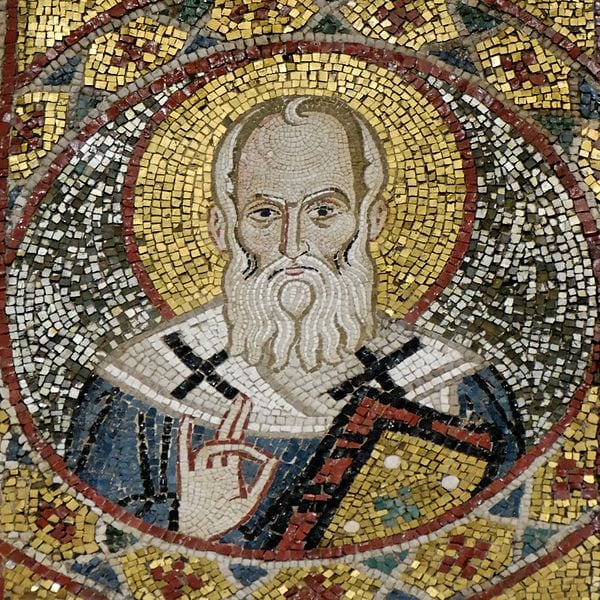
St. Gregory Nazianzen [or “of Nazianzus”] (c. 330-c. 389) is one of the “Three Holy Hierarchs” of Eastern Christian Tradition, and is a Doctor of the Catholic Church as well.
What have Webster and King proven by these two citations? Absolutely nothing . . . This is the entirety of their “proof” for St. Gregory. Do these two statements prove that he accepted the Bible as the only and final infallible authority in all matters (i.e., sola Scriptura)? Not at all. St. Gregory made a practice of “following” the Bible and knew that Scripture contained “the pure words of God” and the power and “treasures” to enable men to attain “the mind of God”: as all Christians do (all alike believing it is uniquely inspired revelation). That tells us nothing whatsoever about his view of the rule of faith. What he writes is completely consistent with Catholic or Orthodox belief (or Protestant).
Now we shall see what St. Gregory said about other related things, which show that he did not believe in sola Scriptura, and sadly observe that Webster and King deliberately ignored other relevant information (which contradicts their agenda), in their rush to engage in dishonest selective citation only. A half-truth is no better than a lie. This is why people testifying in court take an oath to tell the “whole truth.”
St. Gregory believed in the infallibility of ecumenical councils (which is anathema to sola Scriptura):
I never have and never can honour anything above the Nicene Faith, that of the Holy Fathers who met there to destroy the Arian heresy; but am, and by God’s help ever will be, of that faith; completing in detail that which was incompletely said by them concerning the Holy Ghost; for that question had not then been mooted, namely, that we are to believe that the Father, Son, and Holy Ghost are of one Godhead, thus confessing the Spirit also to be God. Receive then to communion those who think and teach thus, as I also do; but those who are otherwise minded refuse, and hold them as strangers to God and the Catholic Church. (Letter #102: Second to Cledonius the Priest, Against Apollinarius; NPNF2-7)
And therefore, first in the holy Synod of Nicaea, the gathering of the three hundred and eighteen chosen men, united by the Holy Ghost, as far as in him lay, he [St. Athanasius] stayed the disease. (Oration 21, section 14, in NPNF2,VII:273)
He rejected (with biting sarcasm) the perspicuity or apparent clearness of Scripture, and its self-interpreting nature (aspects that Webster and King devote 95 pages to, as key tenets of sola Scriptura):
[T]he wiser of the Hebrews tell us that there was of old among the Hebrews a most excellent and praiseworthy law, that every age was not entrusted with the whole of Scripture, inasmuch as this would not be the more profitable course, since the whole of it is not at once intelligible to everyone, and its more recondite parts would, by their apparent meaning, do a very great injury to most people. Some portions therefore, whose exterior is unexceptionable, are from the first permitted and common to all; while others are only entrusted to those who have attained their twenty-fifth year, viz., such as hide their mystical beauty under a mean-looking cloak, to be the reward of diligence and an illustrious life; flashing forth and presenting itself only to those whose mind has been purified, on the ground that this age alone can be superior to the body, and properly rise from the letter to the spirit. Among us, however, there is no boundary line between giving and receiving instruction, like the stones of old between the tribes within and beyond the Jordan: nor is a certain part entrusted to some, another to others; nor any rule for degrees of experience; but the matter has been so disturbed and thrown into confusion, that most of us, not to say all, almost before we have lost our childish curls and lisp, before we have entered the house of God, before we know even the names of the Sacred Books, before we have learnt the character and authors of the Old and New Testaments: . . . if, I say, we have furnished ourselves with two or three expressions of pious authors, and that by hearsay, not by study; if we have had a brief experience of David, or clad ourselves properly in a cloaklet, or are wearing at least a philosopher’s girdle, or have girt about us some form and appearance of piety—phew! how we take the chair and show our spirit! Samuel was holy even in his swaddling-clothes: we are at once wise teachers, of high estimation in Divine things, the first of scribes and lawyers; we ordain ourselves men of heaven and seek to be called Rabbi by men; the letter is nowhere, everything is to be understood spiritually, . . . This is the case with the better and more simple of us: what of those who are more spiritual and noble? . . . we may rightly, in my opinion, apply to them the saying of Solomon: There is an evil which I have seen under the sun, a man wise in his own conceit; and a still greater evil is to charge with the instruction of others a man who is not even aware of his own ignorance. (Oration 2: Exposition on the Character of the Priestly Office, sections 47-50; NPNF2-7)
Imagine Pastor King teaching his congregation that certain portions of Scripture can’t be read till one is 25 years old! He can’t even comprehend such a thing. But this was common in the Church fathers and the early Church: a gradual introduction of children and catechumens to the mysteries of the faith.
When St. Gregory rejected reincarnation, he did so not based on only the Bible, but also “the traditions of the Church”:
I fear lest some monstrous reasoning may come in, as of the soul having lived elsewhere, and then having been bound to this body, and that it is from that other life that some receive the gift of prophecy, and others are condemned, namely, those who lived badly. But since such a conception is too absurd, and contrary to the traditions of the Church . . . (Oration 37, section 15; NPNF2-7)
Protestants don’t talk like that, or think like that. They would always appeal to the biblical teaching. Of course Catholics do that, too (my own apologetics apostolate greatly emphasizes this very thing). But the difference is that we acknowledge other infallible authority (apostolic tradition and Church authority) besides the Bible: in perfect harmony with it.
St. Gregory believed in apostolic tradition and apostolic succession (dramatically equating such tradition with “the oracles of God”):
My sheep hear my voice, which I heard from the oracles of God, which I have been taught by the Holy Fathers, which I have taught alike on all occasions, . . . (Oration 33, section 15)
He [St. Athanasius] is led up to the throne of Saint Mark, to succeed him in piety, no less than in office; in the latter indeed at a great distance from him, in the former, which is the genuine right of succession, following him closely. For unity in doctrine deserves unity in office; and a rival teacher sets up a rival throne; the one is a successor in reality, the other but in name. For it is not the intruder, but he whose rights are intruded upon, who is the successor, not the lawbreaker, but the lawfully appointed, not the man of contrary opinions, but the man of the same faith; . . . (Oration 21, section 8, in NPNF2, VII:271)
For if the faith began thirty years ago, when nearly four hundred years had passed since Christ was manifested, vain all that time will have been our Gospel, and vain our faith; in vain will the Martyrs have borne their witness, and in vain have so many and so great Prelates presided over the people; and Grace is a matter of metres and not of the faith. (Letter #102: Second to Cledonius the Priest, Against Apollinarius; NPNF2-7)
He believed in authoritative oral teaching:
[O]ur faith has been proclaimed, both in writing and without writing, here and in distant parts, in times of danger and of safety, . . . (Letter #101, First to Cledonius the Priest, Against Apollinarius; NPNF2-7)
He believed that a pope (Damasus: r. 366-384) could utter an anathema for heresy:
But, that they may not accuse us of having once accepted but of now repudiating the faith of their beloved Vitalius which he handed in in writing at the request of the blessed Bishop Damasus of Rome, I will give a short explanation on this point also. . . . Since then these expressions, rightly understood, make for orthodoxy, but wrongly interpreted are heretical, what is there to be surprised at if we received the words of Vitalius in the more orthodox sense; our desire that they should be so meant persuading us, though others are angry at the intention of his writings? This is, I think, the reason why Damasus himself, having been subsequently better informed, and at the same time learning that they hold by their former explanations, excommunicated them and overturned their written confession of faith with an Anathema; . . . (Letter #102: Second to Cledonius the Priest, Against Apollinarius; NPNF2-7)
He even (I add this as a “bonus” at no extra charge) makes Marian doctrines one of the the rationales for deciding if a person knows God or not (exactly what Protestants loathe when language like this is connected to the Blessed Virgin Mary’s Immaculate Conception or Assumption):
If anyone does not believe that Holy Mary is the Mother of God, he is severed from the Godhead. If anyone should assert that He passed through the Virgin as through a channel, and was not at once divinely and humanly formed in her (divinely, because without the intervention of a man; humanly, because in accordance with the laws of gestation), he is in like manner godless. If any assert that the Manhood was formed and afterward was clothed with the Godhead, he too is to be condemned. (Letter #101, First to Cledonius the Priest, Against Apollinarius; NPNF2-7)
Therefore, St. Gregory Nazianzen assuredly did not believe in sola Scriptura.
***
Photo credit: St. Gregory Nazianzen: 12th-century mosaic: from Santa Maria dell’Ammiraglio in Palermo, Sicily. Photographed by Jastrow (8-27-08) [Wikimedia Commons / Creative Commons Attribution 2.5 Generic license]

***
Summary: St. Gregory Nazianzen: one of the “Three Holy Hierarchs” of Eastern Christianity, & Doctor of the Catholic Church, did not believe in sola Scriptura, as William Webster & David T. King falsely claim.
***
Gregory Nazianzen & sola Scriptura
Gregory Nazianzen & the rule of faith
Previous Post
February 23, 2021
Dialogue on St. John Chrysostom & Sola Scriptura
Next Post
February 26, 2021 Hilary of Poitiers (d. 367) vs. Sola Scriptura as the Rule of Faith
Browse Our Archives
Select a Category & Last Things About Me Anti-Catholicism Atheism & Agnosticism Baptism and Sacramentalism Bible and Tradition Blessed Virgin Mary Books by Dave Armstrong C. S. Lewis Calvinism & General Protestantism Catholic Apologetics Catholic Apologists Catholic conversion Catholic converts Christmas Church (Ecclesiology) Church History Conversion and Converts Development of Doctrine Eastern Orthodoxy Ecumenism & Christian Unity Eucharist & Liturgy Fathers of the Church French Translations G. K. Chesterton Hell Hell & Satan Hell & Satan & Last Things Heresies & Comparative Religion Holistic Health Inquisition & Crusades & Scandals James White Jews & Judaism & Old Testament John Calvin John Henry Newman Liberal / Modernist Theology Life Issues Literary Resume Lutheranism Mariology Martin Luther Music Orthodoxy Papacy & Infallibility Personal Page Philosophy & Science Political & Ethical & Moral Issues Protestant Persecution & Intolerance Protestantism Purgatory Purgatory & Penance Romantic & Imaginative Theology Saints & Purgatory & Penance Salvation Salvation & Justification Satan & Last Things Sexuality and Gender Issues Spanish Translations Traditionalism vs. Radical Catholic Reactionaries Traducciones al español / tradução para português Trinitarianism & Christology Uncategorized Videos
Select a Month October 2026 September 2026 August 2026 July 2026 June 2026 May 2026 April 2026 March 2026 February 2026 January 2026 December 2025 November 2025 October 2025 September 2025 August 2025 July 2025 June 2025 May 2025 April 2025 March 2025 February 2025 January 2025 December 2024 November 2024 October 2024 September 2024 August 2024 July 2024 June 2024 May 2024 April 2024 March 2024 February 2024 January 2024 December 2023 November 2023 October 2023 September 2023 August 2023 July 2023 June 2023 May 2023 April 2023 March 2023 February 2023 January 2023 December 2022 November 2022 October 2022 September 2022 August 2022 July 2022 June 2022 May 2022 April 2022 March 2022 February 2022 January 2022 December 2021 November 2021 October 2021 September 2021 August 2021 July 2021 June 2021 May 2021 April 2021 March 2021 February 2021 January 2021 December 2020 November 2020 October 2020 September 2020 August 2020 July 2020 June 2020 May 2020 April 2020 March 2020 February 2020 January 2020 December 2019 November 2019 October 2019 September 2019 August 2019 July 2019 June 2019 May 2019 April 2019 March 2019 February 2019 January 2019 December 2018 November 2018 October 2018 September 2018 August 2018 July 2018 June 2018 May 2018 April 2018 March 2018 February 2018 January 2018 December 2017 November 2017 October 2017 September 2017 August 2017 July 2017 June 2017 May 2017 April 2017 March 2017 February 2017 January 2017 December 2016 November 2016 October 2016 September 2016 August 2016 July 2016 June 2016 May 2016 April 2016 March 2016 February 2016 January 2016 December 2015 November 2015 October 2015 September 2015 August 2015 July 2015 June 2015 May 2015 April 2015 March 2015 February 2015 January 2015 December 2014 November 2014 October 2014 September 2014 August 2014 July 2014 June 2014 April 2014 March 2014 February 2014 January 2014 December 2013 November 2013 October 2013 September 2013 August 2013 July 2013 June 2013 April 2013 March 2013 February 2013 January 2013 December 2012 November 2012 October 2012 September 2012 August 2012 July 2012 June 2012 May 2012 April 2012 March 2012 February 2012 January 2012 December 2011 November 2011 October 2011 September 2011 August 2011 July 2011 June 2011 April 2011 March 2011 February 2011 October 2010 September 2010 August 2010 July 2010 April 2010 March 2010 December 2009 October 2009 August 2009 July 2009 June 2009 May 2009 March 2009 February 2009 October 2008 September 2008 April 2008 March 2008 February 2008 January 2008 December 2007 November 2007 October 2007 May 2007 March 2007 February 2007 January 2007 November 2006 October 2006 September 2006 August 2006 July 2006 June 2006 May 2006 April 2006 March 2006 February 2006 October 2005 June 2005 April 2005 February 2005 July 2004 May 2004 April 2004
Follow Us!
TAKE THE
Religious Wisdom Quiz
Who asked Jesus, "What is truth?"
Select your answer to see how you score.
Caiaphas Pilate Nicodemus Herod
Books by This Author Books by Dave Armstrong
Related posts from Biblical Evidence for Catholicism

17 Church Fathers on Purgatory (Esp. 1 Cor...
Biblical Evidence for Catholicism

Deuterocanon & Javier Perdomo's Straw Men
Biblical Evidence for Catholicism

St. Athanasius & the Deuterocanon (vs. Javier Perdomo)
Biblical Evidence for Catholicism

Jerusalem Council vs. James White & Sola Scriptura
Biblical Evidence for Catholicism
TRENDING AT PATHEOS Catholic

I was strolling through the top floor of the brand new Parthenon...

What Does Gêvâh Mean For Kimberley Guifoyle &...
This week, a lot of the news is focused on Kimberly Guilfoyle....

INNER CIRCLE: Profound Mystery (Of Christ In All...
Ephesians 5:31-32 “For this reason, a man will leave his father and...

Do Not Rejoice When Your Enemy Falls: The...
Turning an execution into a public spectacle is a disturbing expression of...

'The Chosen' S6 Trailer: The Passion Gets Very...
Not many watching 'The Chosen' worry about spoilers, but just because they...

The purpose-driven labor priest
A labor activist reads Rick Warren and it gets me wondering about...
view all Catholic blogs
Ad-Free & Subscriber Log-In Subscription Support
- About Us
- 2026 Calendar
- Videos
- Podcasts
- Library of World Religions
- Faith In Media Tracker
- Advertise With Us
- Write for Us
- Privacy Policy
- Terms of Service
- Do Not Sell My Data
- Contact Us
- Radiant Digital
- Manage Newsletter Subscriptions
- Unsubscribe From Notifications
- Sitemap
Copyright 2008-2026, Patheos. All rights reserved.
Subscription Support Ad-Free & Subscriber Log-In
Follow Patheos