
BuddhistCatholicContemplativeEvangelicalGeneral ChristianHinduJewishLatter-day SaintMuslimNew VisionsProgressive Christian
Beliefs
- Buddhist
- Catholic
- Contemplative
- Evangelical
- General Christian
- Hindu
- Jewish
- Latter-day Saint
- More Voices
- Muslim
- New Visions
- Pagan
- Progressive Christian
Topics
- Religion News
- Food and Religion
- Sports and Religion
- Religious Art
- Religious Music and Entertainment
- Religious Events
- History and Religion
- Style and Religion
- Politics and Religion
- Women in Religion
- Recreation Outdoors and Religion
- Business Finance and Religion
- Careers Workplace and Religion
- Education and Religion
- Family Parenting and Religion
- Health Fitness and Religion
- Home and Religion
- Relationships and Religion
- Technology and Religion
- Travel and Religion
Columnists
- Buddhist Columnists
- Business Finance and Religion Columnists
- Careers Workplace and Religion Columnists
- Catholic Columnists
- Contemplative Columnists
- Education and Religion Columnists
- Evangelists Columnists
- Family Parenting and Religion Columnists
- General Christian Columnists
- Health Fitness and Religion Columnists
- Hindu Columnists
- History and Religion Columnists
- Home and Religion Columnists
- Jewish Columnists
- More Voices Columnists
- Latter Day Columnists
- Muslim Columnists
- New Visions Columnists
- Nonreligious Columnists
- Pagan Columnists
- Politics and Religion Columnists
- Progressive Columnists
- Recreation Outdoors and Religion Columnists
- Relationships and Religion Columnists
- Religion News Columnists
- Religious Art Columnists
- Religious Events Columnists
- Religious Music and Entertainment Columnists
- Sports and Religion Columnists
- Style and Religion Columnists
- Technology and Religion Columnists
- Travel and Religion Columnists
- Women in Religion Columnists
Resource Library
- 2026 Calendar
- Library of World Religions
- The 100 Most Holy Places on Earth
- Patheos Answers
- Podcasts
- Videos
- Faith Leaders Database
- Anglican Episcopalian
- Bahai
- Baptist
- Buddhism
- Christianity
- Confucianism
- Eastern Orthodoxy
- Hinduism
- Holiness and Pentecostal
- ISKCON
- Islam
- Judaism
- Lutheran
- Methodist
- The Church of Jesus Christ of Latter-day Saints
- New Age
- Paganism
- Presbytarian and Reformed
- Protestantism
- Religion Behind the Scenes
- Roman Catholic
- Scientology
- Shia Islam
- Sikhism
- Sufism
- Sunni Islam
- Taoism
- Zen
- See all religions
Research Tools
 Ad-Free & Subscriber Log-In Subscription Support
Ad-Free & Subscriber Log-In Subscription Support
Follow Patheos 

- Trending:
- Forgiveness
- |
- Marriage
- |
- Consciousness
- |
- Death Penalty
- |
- Election
- |
- Halloween

-
About
-
Catholic Apologetics
-
Church History
-
Great Apologists
-
Christian Worldview
-
Protestantism & Misc.
- Home
- Catholic
- History and Religion
- Predestination to Hell? (vs. Calvin #61)
Predestination to Hell? (vs. Calvin #61)
Last updated on: June 6, 2026 at 12:43 am by Dave Armstrong
Predestination to Hell? (vs. Calvin #61) 2026-06-06T00:43:23-04:00 Dave Armstrong
Patheos Explore the world's faith through different perspectives on religion and spirituality! Patheos has the views of the prevalent religions and spiritualities of the world.
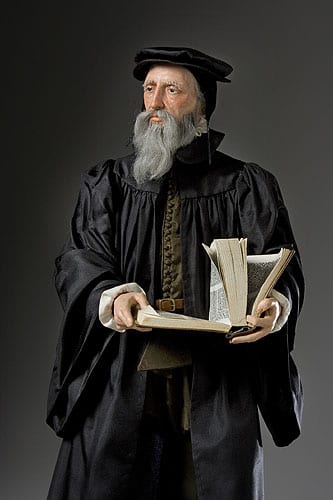
This is an installment of a series of replies (see the Introduction and Master List) to much of Book IV (Of the Holy Catholic Church) — and some portions of Books I-III — of Institutes of the Christian Religion, by early Protestant leader John Calvin (1509-1564). I utilize the public domain translation of Henry Beveridge, dated 1846, from the 1559 edition in Latin; available online. Calvin’s words will be in blue. All biblical citations (in my portions) will be from RSV unless otherwise noted.
Related reading from yours truly:
Biblical Catholic Answers for John Calvin (2010 book: 388 pages)
A Biblical Critique of Calvinism (2012 book: 178 pages)
Biblical Catholic Salvation: “Faith Working Through Love” (2010 book: 187 pages; includes biblical critiques of all five points of “TULIP”)
*****
III, 22:1-3
***
1. Many controvert all the positions which we have laid down, especially the gratuitous election of believers, which however cannot be overthrown.
I don’t know who Calvin thinks he is contending against on this score. It’s not Catholics. We (along with virtually all other non-Calvinist Christians) believe in the predestination of the elect:
Catholic Teaching: Predestination of the Elect (Ludwig Ott) [1996]
Predestination & the Ingenious “Solution” of Fr. Most [4-22-06]
Do Catholics Believe in Predestination? Yes! But . . . [8-29-06]
For they commonly imagine that God distinguishes between men according to the merits which he foresees that each individual is to have, giving the adoption of sons to those whom he foreknows will not be unworthy of his grace, and dooming those to destruction whose dispositions he perceives will be prone to mischief and wickedness. Thus by interposing foreknowledge as a veil, they not only obscure election, but pretend to give it a different origin. Nor is this the commonly received opinion of the vulgar merely, for it has in all ages had great supporters (see sec. 8).
Now he switches from the fact / belief in the predestination of the elect / eschatologically saved, to how God decides such predestination. And that is a very different issue. Since all agree that this is one of the most mysterious aspects of Christianity, one should expect different theories on the inner workings of it (essentially trying to decipher an omniscient God’s mind and will). And these should be allowed.
I have defended a Molinist (non-Calvinist and non-Thomist) understanding of predestination:
Dialogue on God’s Middle Knowledge & Foreknowledge (vs. Dr. Alexander Pruss) [1997]
Dialogue on Molinism and on How God Predestines (+ Part II) [4-15-06 and 4-24-06]
Dialogue: Molinism & How God Predestines (Pt. III) (+ Pt. IV) [5-2-06 and 5-14-06]
Catholic Predestination, Molinism, & Thomism in a Nutshell [3-27-08]
This broad view does not “obscure” election at all. It’s simply a way to try to theorize and understand God’s choices, within an understanding that He is as loving and merciful as He is just. Calvin ought to be tolerant of different opinions regarding this mystery of the faith. He doesn’t know everything. And on this issue, no one does.
This I candidly confess, lest any one should expect greatly to prejudice our cause by opposing it with their names. The truth of God is here too certain to be shaken, too clear to be overborne by human authority.
To the contrary, we don’t know enough about how God predestined to be dogmatic about it.
Others, who are neither versed in Scripture, nor entitled to any weight, assail sound doctrine with a petulance and improbity which it is impossible to tolerate. Because God of his mere good pleasure electing some passes by others, they raise a plea against him.
It’s not against God; it’s against notions of God that would turn Him into a merciless tyrant and unjust judge. We know that He is not those things, from many other clear scriptural passages.
But if the fact is certain, what can they gain by quarrelling with God?
Nothing; but it’s not what we’re doing. We’re quarelling with Calvin’s demotion of God to a mere petty, arbitrary tyrant.
We teach nothing but what experience proves to be true—viz. that God has always been at liberty to bestow his grace on whom he would.
That’s right. And He does it in a loving, fair, just fashion. Calvin’s system is contrary to that.
Not to ask in what respect the posterity of Abraham excelled others, if it be not in a worth, the cause of which has no existence out of God, let them tell why men are better than oxen or asses.
Because God made us in His image in a way that He did not in the case of the animals.
God might have made them dogs when he formed them in his own image.
Sure; but He didn’t, so why is this line of thought relevant?
Will they allow the lower animals to expostulate with God, as if the inferiority of their condition were unjust?
Again, we’re not arguing with God, but with Calvin (the two being quite distinct).
It is certainly not more equitable that men should enjoy the privilege which they have not acquired by any merit, than that he should variously distribute favours as seems to him meet.
What we in fact know from Holy Scripture is that meritorious works have a great deal indeed to do with who is saved in the end. I found fifty passages that teach this very thing:
Final Judgment & Works (Not Faith): 50 Passages [2-10-08]
If they pass to the case of individuals where inequality is more offensive to them, they ought at least, in regard to the example of our Saviour, to be restrained by feelings of awe from talking so confidently of this sublime mystery.
Projection if there ever was such a thing . . .
He is conceived a mortal man of the seed of David; what, I would ask them, are the virtues by which he deserved to become in the very womb, the head of angels, the only begotten Son of God, the image and glory of the Father, the light, righteousness, and salvation of the world? It is wisely observed by Augustine, that in the very head of the Church we have a bright mirror of free election, lest it should give any trouble to us the members—viz. that he did not become the Son of God by living righteously, but was freely presented with this great honour, that he might afterwards make others partakers of his gifts. Should any one here ask, why others are not what he was, or why we are all at so great a distance from him, why we are all corrupt while he is purity, he would not only betray his madness, but his effrontery also. But if they are bent on depriving God of the free right of electing and reprobating, let them at the same time take away what has been given to Christ.
I don’t have the slightest idea what he is trying to argue here . . . whatever it is, it has little to do with the topic.
It will now be proper to attend to what Scripture declares concerning each. When Paul declares that we were chosen in Christ before the foundation of the world (Eph. i. 4), he certainly shows that no regard is had to our own worth;
Well, this text doesn’t indicate why the elect were chosen; simply that they were chosen.
for it is just as if he had said, Since in the whole seed of Adam our heavenly Father found nothing worthy of his election, he turned his eye upon his own Anointed, that he might select as members of his body those whom he was to assume into the fellowship of life. Let believers, then, give full effect to this reason—viz. that we were in Christ adopted unto the heavenly inheritance, because in ourselves we were incapable of such excellence.
No one is denying that. Catholics believe in salvation by grace alone just as Calvinists do:
Grace Alone: Perfectly Acceptable Catholic Teaching [2-3-09]
Grace Alone: Biblical & Catholic Teaching [12-1-15]
But we refuse to deny that it is without our free will cooperation and minus any consideration whatever of our good works (enabled by grace) and merit obtained thereof (which St. Augustine said was “God crowning His own gifts”).
This he elsewhere observes in another passage, in which he exhorts the Colossians to give thanks that they had been made meet to be partakers of the inheritance of the saints (Col. i. 12).
Of course we give thanks. No one disagrees with that.
If election precedes that divine grace by which we are made fit to obtain immortal life, what can God find in us to induce him to elect us?
Only our free will cooperation with His enabling, preceding will that gave us the power to cooperate. He’s crowning His own gifts.
What I mean is still more clearly explained in another passage: God, says he, “hath chosen us in him before the foundation of the world, that we might be holy and without blame before him in love: having predestinated us unto the adoption of children by Jesus Christ to himself, according to the good pleasure of his will” (Eph. i. 4, 5). Here he opposes the good pleasure of God to our merits of every description.
Calvin assumes what isn’t in the text. This text and others like it don’t rule out merit and cooperation with good works. Again, it says that He chose the elect; not how or why, or with what criteria. That’s mostly why it’s such a great mystery, because revelation simply doesn’t tell us those things, and we have to speculate based on what we do know of God’s nature and His benevolence and mercy towards all, and in light of several passages indicating that He desires the salvation of all (not universalism, but universal atonement; availability to all who accept His free grace of salvation). See:
Bible vs. Double Predestination (No Reprobate Parallels) [4-22-10]
2. That the proof may be more complete, it is of importance to attend to the separate clauses of that passage. When they are connected together they leave no doubt. From giving them the name of elect, it is clear that he is addressing believers, as indeed he shortly after declares. It is, therefore, a complete perversion of the name to confine it to the age in which the gospel was published. By saying they were elected before the foundation of the world, he takes away all reference to worth.
The latter topic was never mentioned in the passage. But “worth” and merit certainly are prominently mentioned as a major criteria of salvation in at least 50 passage I have found. Notice how Calvin brings in no more Scripture in this section. Imagine him trying to refute all fifty of my proofs. That would be a sight to see! But as it is, he’s just spouting off the top of his head, with little biblical grounding.
For what ground of distinction was there between persons who as yet existed not, and persons who were afterwards like them to exist in Adam?
The distinction lies in how each human being responds to God’s sufficient grace:
Does Catholic Merit = “Works Salvation”? [2007]
Catholic Bible Verses on Sanctification and Merit [12-20-07]
Our Merit is Based on Our Response to God’s Grace [2009]
Bible: God Shares Glory with His Creatures [1-3-10]
But if they were elected in Christ, it follows not only that each was elected on some extrinsic ground, but that some were placed on a different footing from others, since we see that all are not members of Christ.
Yes, grace is distributed differentially, as I have written about. The question then becomes: “why?”. And that is the question where Calvin punts every time.
Degrees of Grace / Quantifiable Differences in Grace [5-4-17]
In the additional statement that they were elected that they might be holy, the apostle openly refutes the error of those who deduce election from prescience, since he declares that whatever virtue appears in men is the result of election.
Yes, of course. Catholics agree that absolutely every good thing we do must be preceded by God’s enabling grace.
Then, if a higher cause is asked, Paul answers that God so predestined, and predestined according to the good pleasure of his will. By these words, he overturns all the grounds of election which men imagine to exist in themselves.
Not at all. Again, this is only dealing with the ultimate reality: that God elects whoever is elect. It doesn’t touch upon the reasons.
For he shows that whatever favours God bestows in reference to the spiritual life flow from this one fountain, because God chose whom he would, and before they were born had the grace which he designed to bestow upon them set apart for their use.
Indeed. None of this proves that he predestined people to hell without their free will in freely rejecting God and His grace. That’s the awful and wicked conclusion that Calvin’s denial of free will and merit and works as part and parcel of faith inexorably leads to. It turns God (i.e., what is falsely imagined to be God) into a cruel tyrant and despot.
3. Wherever this good pleasure of God reigns, no good works are taken into account.
If they are taken into account as regards salvation on Judgment Day, chances are that they have already been taken into account in God’s decision of who will be among the elect. In other words, it’s highly implausible that works and merit play such an absolutely central role in the criteria of salvation, while at the same time supposedly playing none in God’s decision in choosing who to elect.
The Apostle, indeed, does not follow out the antithesis, but it is to be understood, as he himself explains it in another passage, “Who hath called us with a holy calling, not according to our works, but according to his own purpose and grace, which was given us in Christ Jesus before the world began” (1 Tim. ii. 9).
[It’s actually 2 Tim 1:9, that Calvin refers to] That’s simply the denial of works-salvation, or Pelagianism. We’re not saved by works themselves, yet they are necessary and central in terms of being a “working-out” of our grace-enabled faith. Molinists believe that God elected by His grace and sovereign will, but took into consideration how each person responded to His grace (which He knows in His foreknowledge and middle knowledge (of all worlds and all possibilities of what might have ben in different circumstances).
We have already shown that the additional words, “that we might be holy,” remove every doubt. If you say that he foresaw they would be holy, and therefore elected them, you invert the order of Paul. You may, therefore, safely infer, If he elected us that we might be holy, he did not elect us because he foresaw that we would be holy. The two things are evidently inconsistent
They’re not inconsistent at all. This is a classic example of Calvin’s illogical “either/or” reasoning that is contrary to the Bible. The Bible teaches that God does things in us, but that we freely cooperated at the same time:
Man’s Grace-Enabled Cooperation w God (1 Cor 3:9) [5-8-02]
Merit and Cooperating with God for Salvation [7-8-07]
Merit & Human Cooperation with God (vs. Calvin #35) [10-19-09]
Scripture on Being Co-Workers with God for Salvation [2013]
“Reply to Calvin” #3: Synergism, Grace Alone, & the Elect [4-3-17]
—viz. that the pious owe it to election that they are holy, and yet attain to election by means of works.
But we are not saying that they earn election by works; rather, that God took into consideration our response to His grace, in electing and predestining.
There is no force in the cavil to which they are ever recurring, that the Lord does not bestow election in recompense of preceding, but bestows it in consideration of future merits. For when it is said that believers were elected that they might be holy, it is at the same time intimated that the holiness which was to be in them has its origin in election.
Yes, of course it does. But it doesn’t follow that we don’t get credit or merit for cooperating with this free grace.
And how can it be consistently said, that things derived from election are the cause of election?
They’re not the ultimate cause. God’s grace and His decision are the cause.
The very thing which the Apostle had said, he seems afterwards to confirm by adding, “According to his good pleasure which he hath purposed in himself” (Eph. i. 9); for the expression that God “purposed in himself,” is the same as if it had been said, that in forming his decree he considered nothing external to himself; and, accordingly, it is immediately subjoined, that the whole object contemplated in our election is, that “we should be to the praise of his glory.”
In the same epistle, St. Paul states that, though we are not saved by works, God ordained that we should walk in them, as part and parcel of salvation:
Ephesians 2:8-10 For by grace you have been saved through faith; and this is not your own doing, it is the gift of God — [9] not because of works, lest any man should boast. [10] For we are his workmanship, created in Christ Jesus for good works, which God prepared beforehand, that we should walk in them.
God doesn’t think in “either/or” terms, like Calvin does.
Assuredly divine grace would not deserve all the praise of election, were not election gratuitous;
It’s free and gratuitous; we cooperate; which is meritorious (God’s crowning of His own gifts).
and it would not be gratuitous, did God in electing any individual pay regard to his future works.
This isn’t true. It’s gratuitous, because it is offered freely by God, by His grace, to be accepted by us. We can’t do any good thing without His grace. That’s Catholic dogma.
Hence, what Christ said to his disciples is found to be universally applicable to all believers, “Ye have not chosen me, but I have chosen you” (John xv. 16). Here he not only excludes past merits, but declares that they had nothing in themselves for which they could be chosen, except in so far as his mercy anticipated.
That simply doesn’t logically follow. One tires of pointing this out.
And how are we to understand the words of Paul, “Who hath first given to him, and it shall be recompensed unto him again?” (Rom. xi. 35).
As St. Augustine understood it, and merit: it’s God crowning His own gifts.
His meaning obviously is, that men are altogether indebted to the preventing goodness of God, there being nothing in them, either past or future, to conciliate his favour.
Nothing in us can intrinsically save us. That’s different from a position whereby we can do things to attain merit and greater favor from God.
***
Photo credit: Historical mixed media figure of John Calvin produced by artist/historian George S. Stuart and photographed by Peter d’Aprix: from the George S. Stuart Gallery of Historical Figures archive [Wikimedia Commons / Creative Commons Attribution-Share Alike 3.0 Unported license]

***
INstitutes of the Christian Religion
Previous Post

January 19, 2021
Star Researcher Aaron Adair: "Liar, Liar, Pants on Fire!"
Next Post

January 21, 2021 Bible vs. the Reformed Doctrine of Total Depravity
Browse Our Archives
Select a Category & Last Things About Me Anti-Catholicism Atheism & Agnosticism Baptism and Sacramentalism Bible and Tradition Blessed Virgin Mary Books by Dave Armstrong C. S. Lewis Calvinism & General Protestantism Catholic Apologetics Catholic Apologists Catholic conversion Catholic converts Christmas Church (Ecclesiology) Church History Conversion and Converts Development of Doctrine Eastern Orthodoxy Ecumenism & Christian Unity Eucharist & Liturgy Fathers of the Church French Translations G. K. Chesterton Hell Hell & Satan Hell & Satan & Last Things Heresies & Comparative Religion Holistic Health Inquisition & Crusades & Scandals James White Jews & Judaism & Old Testament John Calvin John Henry Newman Liberal / Modernist Theology Life Issues Literary Resume Lutheranism Mariology Martin Luther Music Orthodoxy Papacy & Infallibility Personal Page Philosophy & Science Political & Ethical & Moral Issues Protestant Persecution & Intolerance Protestantism Purgatory Purgatory & Penance Romantic & Imaginative Theology Saints & Purgatory & Penance Salvation Salvation & Justification Satan & Last Things Sexuality and Gender Issues Spanish Translations Traditionalism vs. Radical Catholic Reactionaries Traducciones al español / tradução para português Trinitarianism & Christology Uncategorized Videos
Select a Month October 2026 September 2026 August 2026 July 2026 June 2026 May 2026 April 2026 March 2026 February 2026 January 2026 December 2025 November 2025 October 2025 September 2025 August 2025 July 2025 June 2025 May 2025 April 2025 March 2025 February 2025 January 2025 December 2024 November 2024 October 2024 September 2024 August 2024 July 2024 June 2024 May 2024 April 2024 March 2024 February 2024 January 2024 December 2023 November 2023 October 2023 September 2023 August 2023 July 2023 June 2023 May 2023 April 2023 March 2023 February 2023 January 2023 December 2022 November 2022 October 2022 September 2022 August 2022 July 2022 June 2022 May 2022 April 2022 March 2022 February 2022 January 2022 December 2021 November 2021 October 2021 September 2021 August 2021 July 2021 June 2021 May 2021 April 2021 March 2021 February 2021 January 2021 December 2020 November 2020 October 2020 September 2020 August 2020 July 2020 June 2020 May 2020 April 2020 March 2020 February 2020 January 2020 December 2019 November 2019 October 2019 September 2019 August 2019 July 2019 June 2019 May 2019 April 2019 March 2019 February 2019 January 2019 December 2018 November 2018 October 2018 September 2018 August 2018 July 2018 June 2018 May 2018 April 2018 March 2018 February 2018 January 2018 December 2017 November 2017 October 2017 September 2017 August 2017 July 2017 June 2017 May 2017 April 2017 March 2017 February 2017 January 2017 December 2016 November 2016 October 2016 September 2016 August 2016 July 2016 June 2016 May 2016 April 2016 March 2016 February 2016 January 2016 December 2015 November 2015 October 2015 September 2015 August 2015 July 2015 June 2015 May 2015 April 2015 March 2015 February 2015 January 2015 December 2014 November 2014 October 2014 September 2014 August 2014 July 2014 June 2014 April 2014 March 2014 February 2014 January 2014 December 2013 November 2013 October 2013 September 2013 August 2013 July 2013 June 2013 April 2013 March 2013 February 2013 January 2013 December 2012 November 2012 October 2012 September 2012 August 2012 July 2012 June 2012 May 2012 April 2012 March 2012 February 2012 January 2012 December 2011 November 2011 October 2011 September 2011 August 2011 July 2011 June 2011 April 2011 March 2011 February 2011 October 2010 September 2010 August 2010 July 2010 April 2010 March 2010 December 2009 October 2009 August 2009 July 2009 June 2009 May 2009 March 2009 February 2009 October 2008 September 2008 April 2008 March 2008 February 2008 January 2008 December 2007 November 2007 October 2007 May 2007 March 2007 February 2007 January 2007 November 2006 October 2006 September 2006 August 2006 July 2006 June 2006 May 2006 April 2006 March 2006 February 2006 October 2005 June 2005 April 2005 February 2005 July 2004 May 2004 April 2004
Follow Us!
TAKE THE
Religious Wisdom Quiz
Which book follows Psalms in the Bible?
Select your answer to see how you score.
Job Proverbs Ecclesiastes Song of Solomon
Books by This Author Books by Dave Armstrong
Related posts from Biblical Evidence for Catholicism

Bible & Catholicism on Mortal Sin (vs. John...
Biblical Evidence for Catholicism

Dialogue on Eternal Security / Absolute Assurance
Biblical Evidence for Catholicism

"Faith Alone" Dialogue with a Calvinist
Biblical Evidence for Catholicism

Exegesis of 75 NT Faith [Alone?] & Works...
Biblical Evidence for Catholicism
TRENDING AT PATHEOS Catholic

Janie Learns the Way of the Cross: A...
Teaching children about Jesus' Passion can be challenging. Many parents and educators...

Looking For Good Catholic Writing - October 2026
He alone extends the heavens, and he walks upon the waves of...

In "Irreplaceable," our book on vocation and technology, Trevor Sutton and I...

I was strolling through the top floor of the brand new Parthenon...

What Does Gêvâh Mean For Kimberley Guifoyle &...
This week, a lot of the news is focused on Kimberly Guilfoyle....

INNER CIRCLE: Profound Mystery (Of Christ In All...
Ephesians 5:31-32 “For this reason, a man will leave his father and...
view all Catholic blogs
Ad-Free & Subscriber Log-In Subscription Support
- About Us
- 2026 Calendar
- Videos
- Podcasts
- Library of World Religions
- Faith In Media Tracker
- Advertise With Us
- Write for Us
- Privacy Policy
- Terms of Service
- Do Not Sell My Data
- Contact Us
- Radiant Digital
- Manage Newsletter Subscriptions
- Unsubscribe From Notifications
- Sitemap
Copyright 2008-2026, Patheos. All rights reserved.
Subscription Support Ad-Free & Subscriber Log-In
Follow Patheos