
BuddhistCatholicContemplativeEvangelicalGeneral ChristianHinduJewishLatter-day SaintMuslimNew VisionsProgressive Christian
Beliefs
- Buddhist
- Catholic
- Contemplative
- Evangelical
- General Christian
- Hindu
- Jewish
- Latter-day Saint
- More Voices
- Muslim
- New Visions
- Pagan
- Progressive Christian
Topics
- Religion News
- Food and Religion
- Sports and Religion
- Religious Art
- Religious Music and Entertainment
- Religious Events
- History and Religion
- Style and Religion
- Politics and Religion
- Women in Religion
- Recreation Outdoors and Religion
- Business Finance and Religion
- Careers Workplace and Religion
- Education and Religion
- Family Parenting and Religion
- Health Fitness and Religion
- Home and Religion
- Relationships and Religion
- Technology and Religion
- Travel and Religion
Columnists
- Buddhist Columnists
- Business Finance and Religion Columnists
- Careers Workplace and Religion Columnists
- Catholic Columnists
- Contemplative Columnists
- Education and Religion Columnists
- Evangelists Columnists
- Family Parenting and Religion Columnists
- General Christian Columnists
- Health Fitness and Religion Columnists
- Hindu Columnists
- History and Religion Columnists
- Home and Religion Columnists
- Jewish Columnists
- More Voices Columnists
- Latter Day Columnists
- Muslim Columnists
- New Visions Columnists
- Nonreligious Columnists
- Pagan Columnists
- Politics and Religion Columnists
- Progressive Columnists
- Recreation Outdoors and Religion Columnists
- Relationships and Religion Columnists
- Religion News Columnists
- Religious Art Columnists
- Religious Events Columnists
- Religious Music and Entertainment Columnists
- Sports and Religion Columnists
- Style and Religion Columnists
- Technology and Religion Columnists
- Travel and Religion Columnists
- Women in Religion Columnists
Resource Library
- 2026 Calendar
- Library of World Religions
- The 100 Most Holy Places on Earth
- Patheos Answers
- Podcasts
- Videos
- Faith Leaders Database
- Anglican Episcopalian
- Bahai
- Baptist
- Buddhism
- Christianity
- Confucianism
- Eastern Orthodoxy
- Hinduism
- Holiness and Pentecostal
- ISKCON
- Islam
- Judaism
- Lutheran
- Methodist
- The Church of Jesus Christ of Latter-day Saints
- New Age
- Paganism
- Presbytarian and Reformed
- Protestantism
- Religion Behind the Scenes
- Roman Catholic
- Scientology
- Shia Islam
- Sikhism
- Sufism
- Sunni Islam
- Taoism
- Zen
- See all religions
Research Tools
 Ad-Free & Subscriber Log-In Subscription Support
Ad-Free & Subscriber Log-In Subscription Support
Follow Patheos 

- Trending:
- Forgiveness
- |
- Marriage
- |
- Consciousness
- |
- Death Penalty
- |
- Election
- |
- Halloween

-
About
-
Catholic Apologetics
-
Church History
-
Great Apologists
-
Christian Worldview
-
Protestantism & Misc.
- Home
- Catholic
- History and Religion
- Bible Commentaries & Matthew 2:9 (Star of Bethlehem)
Bible Commentaries & Matthew 2:9 (Star of Bethlehem)
Last updated on: January 21, 2021 at 1:55 pm by Dave Armstrong
Bible Commentaries & Matthew 2:9 (Star of Bethlehem) 2021-01-21T13:55:21-04:00 Dave Armstrong
Patheos Explore the world's faith through different perspectives on religion and spirituality! Patheos has the views of the prevalent religions and spiritualities of the world.
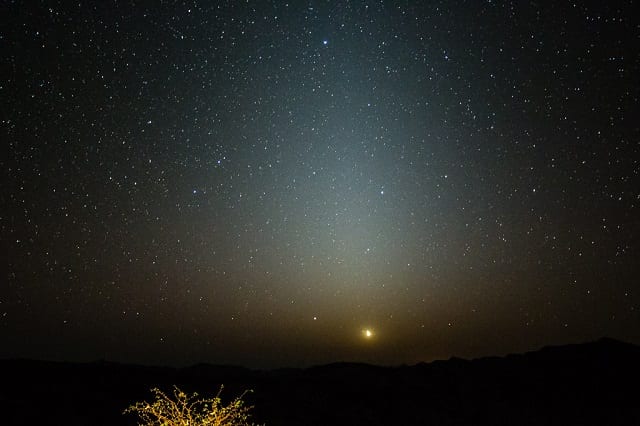
Atheist Jonathan MS Pearce takes the position that the star of Bethlehem can only reasonably be interpreted (according to the biblical text, which they of course don’t believe in) as a supernatural occurrence, as opposed to a natural one (conjunction, supernova, or comet being the three most suggested possibilities): as I have argued.
Moreover, he claims that this “star” specifically shone down on (to identify) the “house” where Jesus was, even though the biblical text (Matthew 2:9) never states this and refers (in 19 Bible versions I have found) only to a “place” that can be a large regional area.
I have contended that the star of Bethlehem was the combination of an extraordinary conjunction (when the wise men saw it from Persia) and a very bright Jupiter when the wise men saw that planet between Jerusalem and Bethlehem in December 2 BC, and used it as a guide: my best guess based on many considerations, for their visit to the toddler (not newborn) Jesus.
I decided to undertake a survey of many biblical commentaries to see if — here and there — perhaps one or two (needle in a haystack) might be found that agree with what I am contending about the star of Bethlehem being a natural phenomenon, and not shining specifically on one house in Bethlehem.
For the sake of brevity, I only cite them where they agree with me or when they claim not to know what it was (neutral or agnostic position: II and IV below). I’m not denying at all that these commentators may also disagree on the other major point or additional ones. Readers who want to see their entire comment on Matthew 2:9 can follow the links I provide.
I. Star of Bethlehem Was a Natural Celestial Phenomenon
A) Meteor
[I]t appears to have been a simple luminous meteor in a star-like form, and at a very short distance from the ground . . . (Adam Clarke, 1832)
it appears that the star was a luminous meteor, perhaps at no great distance from the ground. (Albert Barnes, 1832)
[Note: Alastair McBeath, in his article, “Meteor Beliefs Project: ‘meteor’ and related terms in English usage” (WGN, Journal of the International Meteor Organization, vol. 32, no.1, p.35-38, 2004) states that formerly there were several different understandings of the word meteor, and four major classes: airy, watery, luminous, and fiery. He stated that the “luminous” variety were not “the ‘shooting-star’ type, but consist of other phenomena such as the aurora, the rainbow or any of the halo effects seen mainly with the Sun or Moon.” But then the plot thickens, as he explains further:
Looking at mid-19th century information suggests the preferred term for shooting-stars then, in the scientific literature at least, was ‘luminous meteors’, not ‘fiery’ ones, however. . . .
‘Fiery meteors’ was still in use, then, as well as the more general ‘meteor’ for almost anything in the sky . . . However, this seems to have been more among the poetic or philosophical communities.
So it’s difficult to determine with absolute certainty in the two 19th century citations above, which exact sense is in mind. It may be that a sense is being used that is not “natural” per se, and thus would be classified as a supernaturalist explanation. But in Barnes’ case he seems to be expressing what we mean today by “meteor” by stating in his commentary on Matthew 2:2: “meteor, such as we now see sometimes shoot from the sky, which the wise men saw, . . .” (i.e., a “shooting star” in the modern accepted sense. At least that seems to me the most plausible take of what Barnes is contending). ]
B) Comet
Many suggest that it was a natural phenomenon that can be traced back to some known astronomical event, whether a comet, a supernova, or a conjunction of planets. (Michael J. Wilkins, 2009)
C) Conjunction
The astronomical theory thus explains the passage: The most remarkable conjunction of Jupiter and Saturn took place in May, and would be visible before sunrise (i.e., in the east), five months afterwards, a sufficient time to perform the journey; another conjunction took place which would be visible near the meridian shortly after sunset. If then they set out in the early night this phenomenon would be apparent in the direction of Bethlehem. (Philip Schaff, 1890)
The way Matthew narrates the story supports the interpretation that an earlier conjunction started them on their way, and now a major and subsequent conjunction . . . proves that their reading of the stars was correct. (Robert H, Mounce, 2011)
D) Supernova
Many suggest that it was a natural phenomenon that can be traced back to some known astronomical event, whether a comet, a supernova, or a conjunction of planets. (Michael J. Wilkins, 2009)
*
II. Unsure Whether it Was Supernatural or Natural
. . . we may not know the exact nature of that star . . . (Coffman Commentaries, 1983-1999)
Many suggest that it was a natural phenomenon that can be traced back to some known astronomical event, whether a comet, a supernova, or a conjunction of planets. (Michael J. Wilkins, 2009)
What they saw remains uncertain . . . [The] supernatural [view] is possible and obviously impossible to falsify, but v. 9 is not as determinative as is often suggested. (D. A. Carson, 2017)
*
III. Star Of Bethlehem Did Not Specifically Shine Down on the House Where Jesus Was
It is not said to indicate the precise house, but the general location where the child was. (R. T. France, 1985)
And then Bethlehem came into sight with the star still in front of them and to their delight it appeared as though the star hovered over Bethlehem. There was Bethlehem below them, and the light of the star appeared to be reflecting on the town. It was clear to them from this that the wonder child was indeed there. They had reached the end of their journey. Note the very vague ‘over where the young child was’. It is totally open to interpretation. We may make of it what we want. (Peter Pett, 2013)
The Greek text does not imply that the star pointed out the house where Jesus was or that it led the travelers through twisty streets; it may simply have hovered over Bethlehem as the Magi approached it. (D. A. Carson, 2017)
*
IV. Unsure Whether the Star of Bethlehem Specifically Shone Down on the House Where Jesus Was
the manner in which the particular house is indicated is left undetermined. (Heinrich Meyer, 1832)
may mean, ‘over that part of Bethlehem where the young child was,’ which they might have ascertained by enquiry. Or it may even mean, ‘over the whole town of Bethlehem.’ If it is to be understood as standing over the house, and thus indicating to the magi the position of the object of their search, the whole incident must be regarded as miraculous. But this is not necessarily implied, even if the words of the text be literally understood . . . (Henry Alford, 1878)
The expression, where the young child was, may, however, refer to Bethlehem. (Philip Schaff, 1890)
Either over Bethlehem, or over the house where the young child was sheltered. (People’s New Testament, 1891)
Stopped over the place. Either over Bethlehem, or the house where the young child was sheltered. (The Bible Study New Testament, 1974)
*
V. Star of Bethlehem “Stopping” as the “Retrograde Motion” or “Stationary Point” of Jupiter
(Whether the star did actually in any way stop, apart from because they were stopping, we do not know. But for any who quibble about whether a star could ‘stop’ we supply the following extract from an article by an expert astronomer, based on the assumption that having seen the conjunction of Jupiter with another star, producing an excessively bright star, they had continued to monitor Jupiter while on their travels, something which must be considered quite likely. They were after all observers of the stars. “The word “stop” was used for what we now call a planet’s “stationary point.” A planet normally moves eastward through the stars from night to night and month to month, but regularly exhibits a “retrograde loop.” As it approaches the opposite point in the sky from the sun, it appears to slow, come to a full stop, and move backward (westward) through the sky for some weeks. Again it slows, stops, and resumes its eastward course. It seems plausible that the Magi were “overjoyed” at again seeing before them, as they travelled southward, the ‘star’, Jupiter, which at its stationary point was standing still over Bethlehem. We do know for certain that Jupiter performed a retrograde loop in 2 BC, and that it was actually stationary on December 25, interestingly enough, during Hanukkah, the season for giving presents. (Peter Pett, 2013; excessive italics removed)
*
VI. Phenomenological, Non-Literal Language of Appearances Employed in Matthew 2:9
in a matter like astronomy, where popular language is so universally broad, and the Scriptures so generally use popular language, it is surely not the letter, but the spirit of the narrative with which we are concerned. (Henry Alford, 1878)
Being near the zenith it would seem to go before them on their way. (Philip Schaff, 1890)
The words would seem to imply that they started in the evening, and, as they started, saw the star in the direction of Bethlehem. In popular language it served to guide them, and so led them on. (Charles John Ellicott, 1905)
The star ‘went before them’. It does not say that they specifically followed it. That was unnecessary. They only had to follow the road, and there is no more reason to think that the star moved as it ‘went before them’, than there would have been to think that the road moved if it had said that they ‘followed the road’. It is the language of appearance (just as we say that ‘the sun rises’ when we know perfectly well that literally it does not). All that was necessary was that they thought that it moved before them, because that was what it appeared to do. After all they knew that stars moved, otherwise their months and years spent in calculating their movements would have been a waste of time, and those who travel widely often feel that the stars are moving before them. Many a mariner has spoken of following the north star, and of the north star, or some other heavenly lights, going before their ship, when it was only their ship that moved. (Peter Pett, 2013)
Related Reading
Star of Bethlehem, Astronomy, Wise Men, & Josephus (Amazing Astronomically Verified Data in Relation to the Journey of the Wise Men & Jesus’ Birth & Infancy) [12-14-20]
Star of Bethlehem: Refuting Silly Atheist Objections [12-26-20]
Star of Bethlehem: More Silly Atheist “Objections” [12-29-20]
Star of Bethlehem: Natural or Supernatural? [1-13-21]
Star of Bethlehem: Reply to Obnoxious Atheist Aaron Adair (Plus Further Related Exchanges with Aaron and a Few Others in an Atheist Combox) [1-14-21]
Star of Bethlehem: 2nd Reply to Arrogant Aaron Adair [1-18-21]
Star Researcher Aaron Adair: “Liar, Liar, Pants on Fire!” [1-19-21]
***
Exchange with atheist commenter eric (his words in blue):
Mr. Armstrong, personally I don’t think the idea of only quoting those bits of another scholar that agree with you when they disagree with your overall conclusion is good practice.
Telling your audience their overall disagreement may not be necessary, but if a scientist disagreed with my paper’s overall conclusions, but agreed with some small particular of my analysis, and I quoted that person in my paper, I would mention their overall disagreement. It’s a “full disclosure” type of practice to inform your audience that while you might reason A -> B, the folks whom you cite as authoritative sources for supporting ‘A is true’ do not reason from it to B…and in fact they conclude not-B.
This is (in my opinion) a key difference between the ‘legal/apologetic way’ of arguing and the ‘scientific/academic way’ of arguing; in the legal system, it’s your peers and opponent’s job to bring up the flaws in your argument – you are not obligated to bring them up (in fact, it may be considered unethical to do so!). But in the professional scientific and academic way of arguing, if you know of a flaw in your own logic, and it’s important to your thesis or paper, you yourself are obligated to bring it up (in fact, it may be considered unethical not to!).
Of course I did note the disagreements, in the same paper Aaron despises so much:
For the sake of brevity, I only cite them where they agree with me or when they claim not to know what it was (neutral or agnostic position: II and IV below). I’m not denying at all that these commentators may also disagree on the other major point or additional ones. Readers who want to see their entire comment on Matthew 2:9 can follow the links I provide.
I conceded three points, based on Aaron’s latest critique. They were relatively minor points, and didn’t affect my overall case at all. I noted many errors in Aaron’s analysis. He retracts nothing. When I do so, this is how he reacts:
I’ll let others interpret how best to take that. It would suggest honesty, only insofar as he has to have is faced pushed next to the text to admit what it says. Conversely, it shows he cannot do reliable research.
ROFL. So this is my choice: if I deny all of Aaron’s accusations, I am, of course, a “liar”: as he has now stated literally about a hundred times. In fact I have conceded three points and another partial point (the past use of the word “meteor”). Therefore, I am a lousy, unreliable researcher. That’s the choice: liar or dumbbell and ignoramus.
I would say that I am an open-minded thinker, capable of changing his mind and being convinced by contrary facts and reasoning: even by a persistent slander who calls me a liar every two seconds and has acted like a total ass ever since our first exchange. That’s exactly what I want to be. I’m not ashamed of it. I’ve always had an open mind. That’s why I could convert from evangelical Protestant to Catholic and undergo many other changes of mind through the years (politically, morally, etc.).
This particular sub-discussion was in the realm of theology (particularly, biblical exegesis: what commentators believe what, about the star), not science. I was simply looking for examples of exegetes who took a natural view of the star: something that Aaron implied scarcely existed. There are all kinds of disagreements among Christians regarding the star, which I have always noted from the start. I also constantly note that my view is only a speculative theory: no more.
I read your first quotation before, but (again, just in my opinion), that doesn’t do the needed academic work. “I only cite Bob on A, not on B, so readers should keep in mind Bob might have different ideas about B” is nowhere near as forthright, accurate, or transparent a cite as “Bob agrees with me on A, but thinks it’s wrong to derive B from A like I do, and in fact he thinks B is wrong.”
This particular sub-discussion was in the realm of theology (particularly, biblical exegesis: what commentators believe what, about the star), not science.
Agreed. And maybe academic theology has different standard practices (than science) about how to cite publications and experts that agree with you in part but dissent with you in part. I’m offering what I see as a ‘best practice,’ not a ‘thou shalt, else you are a liar.’
I continue to respectfully disagree, but thank you for a civil, substantive comment, minus the ubiquitous (and beyond silly) accusation that I am a liar.
That paper was simply an effort to find commentators who believed six particular things that I categorized. It’s not making any pretense to being “academic” or “scholarly” (me being a mere lay apologist and nothing more). It’s no big deal. It was a simple overview / summary of what a bunch of biblical commentators believe on various aspects relating to the star.
So it’s arguing: “commentators a, b, c, believe in proposition x, related to the star of Bethlehem [one of six].” There is no insinuation whatsoever that commentators a, b, c also believe in propositions y, z, etc. regarding the star, and I took pains to note that they often didn’t.
***
Photo credit: Martin Junius: Conjunction of Jupiter and Venus [mj’s photography / CC BY-ND-NC 3.0 license]
***
astronomy & the star of Bethlehem
atheists & the star of Bethlehem
Previous Post
January 13, 2021
Star of Bethlehem: Natural or Supernatural?
Next Post

January 14, 2021 Star of Bethlehem: Reply to Obnoxious Atheist Aaron Adair
Browse Our Archives
Select a Category & Last Things About Me Anti-Catholicism Atheism & Agnosticism Baptism and Sacramentalism Bible and Tradition Blessed Virgin Mary Books by Dave Armstrong C. S. Lewis Calvinism & General Protestantism Catholic Apologetics Catholic Apologists Catholic conversion Catholic converts Christmas Church (Ecclesiology) Church History Conversion and Converts Development of Doctrine Eastern Orthodoxy Ecumenism & Christian Unity Eucharist & Liturgy Fathers of the Church French Translations G. K. Chesterton Hell Hell & Satan Hell & Satan & Last Things Heresies & Comparative Religion Holistic Health Inquisition & Crusades & Scandals James White Jews & Judaism & Old Testament John Calvin John Henry Newman Liberal / Modernist Theology Life Issues Literary Resume Lutheranism Mariology Martin Luther Music Orthodoxy Papacy & Infallibility Personal Page Philosophy & Science Political & Ethical & Moral Issues Protestant Persecution & Intolerance Protestantism Purgatory Purgatory & Penance Romantic & Imaginative Theology Saints & Purgatory & Penance Salvation Salvation & Justification Satan & Last Things Sexuality and Gender Issues Spanish Translations Traditionalism vs. Radical Catholic Reactionaries Traducciones al español / tradução para português Trinitarianism & Christology Uncategorized Videos
Select a Month October 2026 September 2026 August 2026 July 2026 June 2026 May 2026 April 2026 March 2026 February 2026 January 2026 December 2025 November 2025 October 2025 September 2025 August 2025 July 2025 June 2025 May 2025 April 2025 March 2025 February 2025 January 2025 December 2024 November 2024 October 2024 September 2024 August 2024 July 2024 June 2024 May 2024 April 2024 March 2024 February 2024 January 2024 December 2023 November 2023 October 2023 September 2023 August 2023 July 2023 June 2023 May 2023 April 2023 March 2023 February 2023 January 2023 December 2022 November 2022 October 2022 September 2022 August 2022 July 2022 June 2022 May 2022 April 2022 March 2022 February 2022 January 2022 December 2021 November 2021 October 2021 September 2021 August 2021 July 2021 June 2021 May 2021 April 2021 March 2021 February 2021 January 2021 December 2020 November 2020 October 2020 September 2020 August 2020 July 2020 June 2020 May 2020 April 2020 March 2020 February 2020 January 2020 December 2019 November 2019 October 2019 September 2019 August 2019 July 2019 June 2019 May 2019 April 2019 March 2019 February 2019 January 2019 December 2018 November 2018 October 2018 September 2018 August 2018 July 2018 June 2018 May 2018 April 2018 March 2018 February 2018 January 2018 December 2017 November 2017 October 2017 September 2017 August 2017 July 2017 June 2017 May 2017 April 2017 March 2017 February 2017 January 2017 December 2016 November 2016 October 2016 September 2016 August 2016 July 2016 June 2016 May 2016 April 2016 March 2016 February 2016 January 2016 December 2015 November 2015 October 2015 September 2015 August 2015 July 2015 June 2015 May 2015 April 2015 March 2015 February 2015 January 2015 December 2014 November 2014 October 2014 September 2014 August 2014 July 2014 June 2014 April 2014 March 2014 February 2014 January 2014 December 2013 November 2013 October 2013 September 2013 August 2013 July 2013 June 2013 April 2013 March 2013 February 2013 January 2013 December 2012 November 2012 October 2012 September 2012 August 2012 July 2012 June 2012 May 2012 April 2012 March 2012 February 2012 January 2012 December 2011 November 2011 October 2011 September 2011 August 2011 July 2011 June 2011 April 2011 March 2011 February 2011 October 2010 September 2010 August 2010 July 2010 April 2010 March 2010 December 2009 October 2009 August 2009 July 2009 June 2009 May 2009 March 2009 February 2009 October 2008 September 2008 April 2008 March 2008 February 2008 January 2008 December 2007 November 2007 October 2007 May 2007 March 2007 February 2007 January 2007 November 2006 October 2006 September 2006 August 2006 July 2006 June 2006 May 2006 April 2006 March 2006 February 2006 October 2005 June 2005 April 2005 February 2005 July 2004 May 2004 April 2004
Follow Us!
TAKE THE
Religious Wisdom Quiz
What did Jesus do for Lazarus in Bethany?
Select your answer to see how you score.
Healed his blindness Turned him invisible Raised him from the dead Fed him
Books by This Author Books by Dave Armstrong
Related posts from Biblical Evidence for Catholicism

"The Star Went Before Them" ("The Word Set...
Biblical Evidence for Catholicism
Herod's Slaughter of the Innocents: Myth & Fiction?
Biblical Evidence for Catholicism

Lutheran Professor Ken Howes Reviews "The Word Set...
Biblical Evidence for Catholicism
Archaeology & First-Temple Period Bethlehem
Biblical Evidence for Catholicism
TRENDING AT PATHEOS Catholic

Janie Learns the Way of the Cross: A...
Teaching children about Jesus' Passion can be challenging. Many parents and educators...

Looking For Good Catholic Writing - October 2026
He alone extends the heavens, and he walks upon the waves of...

In "Irreplaceable," our book on vocation and technology, Trevor Sutton and I...

I was strolling through the top floor of the brand new Parthenon...

What Does Gêvâh Mean For Kimberley Guifoyle &...
This week, a lot of the news is focused on Kimberly Guilfoyle....

INNER CIRCLE: Profound Mystery (Of Christ In All...
Ephesians 5:31-32 “For this reason, a man will leave his father and...
view all Catholic blogs
Ad-Free & Subscriber Log-In Subscription Support
- About Us
- 2026 Calendar
- Videos
- Podcasts
- Library of World Religions
- Faith In Media Tracker
- Advertise With Us
- Write for Us
- Privacy Policy
- Terms of Service
- Do Not Sell My Data
- Contact Us
- Radiant Digital
- Manage Newsletter Subscriptions
- Unsubscribe From Notifications
- Sitemap
Copyright 2008-2026, Patheos. All rights reserved.
Subscription Support Ad-Free & Subscriber Log-In
Follow Patheos