
BuddhistCatholicContemplativeEvangelicalGeneral ChristianHinduJewishLatter-day SaintMuslimNew VisionsProgressive Christian
Beliefs
- Buddhist
- Catholic
- Contemplative
- Evangelical
- General Christian
- Hindu
- Jewish
- Latter-day Saint
- More Voices
- Muslim
- New Visions
- Pagan
- Progressive Christian
Topics
- Religion News
- Food and Religion
- Sports and Religion
- Religious Art
- Religious Music and Entertainment
- Religious Events
- History and Religion
- Style and Religion
- Politics and Religion
- Women in Religion
- Recreation Outdoors and Religion
- Business Finance and Religion
- Careers Workplace and Religion
- Education and Religion
- Family Parenting and Religion
- Health Fitness and Religion
- Home and Religion
- Relationships and Religion
- Technology and Religion
- Travel and Religion
Columnists
- Buddhist Columnists
- Business Finance and Religion Columnists
- Careers Workplace and Religion Columnists
- Catholic Columnists
- Contemplative Columnists
- Education and Religion Columnists
- Evangelists Columnists
- Family Parenting and Religion Columnists
- General Christian Columnists
- Health Fitness and Religion Columnists
- Hindu Columnists
- History and Religion Columnists
- Home and Religion Columnists
- Jewish Columnists
- More Voices Columnists
- Latter Day Columnists
- Muslim Columnists
- New Visions Columnists
- Nonreligious Columnists
- Pagan Columnists
- Politics and Religion Columnists
- Progressive Columnists
- Recreation Outdoors and Religion Columnists
- Relationships and Religion Columnists
- Religion News Columnists
- Religious Art Columnists
- Religious Events Columnists
- Religious Music and Entertainment Columnists
- Sports and Religion Columnists
- Style and Religion Columnists
- Technology and Religion Columnists
- Travel and Religion Columnists
- Women in Religion Columnists
Resource Library
- 2026 Calendar
- Library of World Religions
- The 100 Most Holy Places on Earth
- Patheos Answers
- Podcasts
- Videos
- Faith Leaders Database
- Anglican Episcopalian
- Bahai
- Baptist
- Buddhism
- Christianity
- Confucianism
- Eastern Orthodoxy
- Hinduism
- Holiness and Pentecostal
- ISKCON
- Islam
- Judaism
- Lutheran
- Methodist
- The Church of Jesus Christ of Latter-day Saints
- New Age
- Paganism
- Presbytarian and Reformed
- Protestantism
- Religion Behind the Scenes
- Roman Catholic
- Scientology
- Shia Islam
- Sikhism
- Sufism
- Sunni Islam
- Taoism
- Zen
- See all religions
Research Tools
 Ad-Free & Subscriber Log-In Subscription Support
Ad-Free & Subscriber Log-In Subscription Support
Follow Patheos 

- Trending:
- Forgiveness
- |
- Marriage
- |
- Consciousness
- |
- Death Penalty
- |
- Election
- |
- Halloween

-
About
-
Catholic Apologetics
-
Church History
-
Great Apologists
-
Christian Worldview
-
Protestantism & Misc.
- Home
- Catholic
- History and Religion
- Kwasniewski vs. Pope Francis Re “Fundamentalism”
Kwasniewski vs. Pope Francis Re “Fundamentalism”
Last updated on: December 9, 2020 at 3:38 pm by Dave Armstrong
Kwasniewski vs. Pope Francis Re “Fundamentalism” 2020-12-09T15:38:21-04:00 Dave Armstrong
Patheos Explore the world's faith through different perspectives on religion and spirituality! Patheos has the views of the prevalent religions and spiritualities of the world.
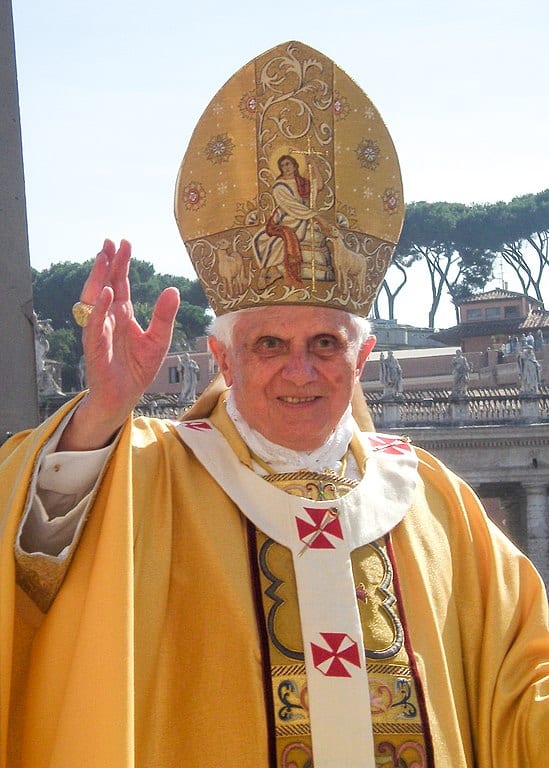
Pope St. John Paul II and Pope Benedict XVI Fully Concur with Pope Francis
Dr. Peter Kwasniewski is a radical Catholic reactionary writer and speaker. His words will be in blue. Pope Francis’ words will be in green.
*****
In his article, “Catholics who hold fast to truths of faith are now condemned as ‘fundamentalists’” (LifeSite, 11-28-18), Dr. Kwasniewski attempts to argue that Pope Francis uses the term “fundamentalism / -ist” in a despicable way, to describe Catholics who are simply faithful, obedient, and orthodox. This is, of course, an outrageous calumny, like much of reactionary anti-papal rhetoric and polemics.
He goes on to cite a 2001 article by a Catholic bishop, about “Catholic fundamentalism.” No link is provided, so that readers can read it in context (and determine whether it is good or bad or liberal or orthodox or some mixture of the same). I found a link in about half a minute. Whatever this article says can be debated on its own (glancing at it, it seems to be dubious in several ways, from where I sit).
But that’s an entirely different question from how Pope Francis is using the same term. “Fundamentalism” is one of those “large and lumpy” words that is used in many different ways. That being the case, one must investigate how any given person (including a pope) uses it.
Broad-brushing is one technique that severe critics (which Catholic reactionaries are in relation to Pope Francis) utilize in order to paint a negative, objectionable picture of their target. It’s done all the time by Democrats against Republicans (and vice versa), anti-Catholic Protestants against Catholics, anti-theist atheists against theists and Christians, etc. Dr. Kwasniewski has a doctorate in philosophy and apparently much formal education in theology also. It’s a disgrace for him to engage in such tactics. Note how he cleverly broad-brushes Pope Francis as identical or highly similar to this Bishop Henrici:
Instead, Henrici explained the ways in which faithful Catholics are guilty of an intellectual and spiritual vice he called “fundamentalism” — a theme Pope Francis has also made his own. He was critical of those who want to cling to a plank of certainty, who cite the Catechism or other ecclesial documents without realizing that such things need to be “mediated” to them by their bishops. [my bolding]
Okay, so he provides us one link to a source with Pope Francis. Of course it’s to another reactionary article by John-Henry Westen, at LifeSite. We get a few papal lines in this article, dated 11-30-15, taken from yet another article:
Fundamentalism is a sickness that is in all religions . . . We Catholics have some — and not some, many — who believe in the absolute truth and go ahead dirtying the other with calumny, with disinformation, and doing evil. They do evil. I say this because it is my church. We have to combat it. Religious fundamentalism is not religious, because it lacks God. It is idolatry, like the idolatry of money.
I see nothing wrong here; nothing that any Catholic should disagree with. I suspect, however, that Dr. Kwasniewski is focusing on the reference to “absolute truth.” In my take, the pope means it in this context as “belief that one’s notions and opinions cannot be questioned by anyone; i.e., dogmatism in the objectionable, common use of the term.”
Dr. Kwasniewski is likely assuming that this indicates philosophical and moral relativism in the pope, because he has flat-out accused him of it many times (e.g., “Pope Francis in his indifferentism and relativism . . .”: 10-9-19). That’s not likely, seeing that in this cited article, the pope also says (very un-relativistically): “This is not communism, this is truth. The truth, it is not easy to see it.”
The second cited article also provides more of a clue as to what Pope Francis was referring to. To be fair, the article by Westen also cites him saying: “Like everything, there are religious people with values and those without. But how many wars … have Christians made? The sacking of Rome was not done by Muslims, eh?” And it refers to idolatry as well. Thus, we have a clue that he is talking about moral lapses and idolatry, not mere adherence to creeds and Catholic beliefs, as Dr. Kwasniewski makes out, without proof. The second cited article, from National Catholic Reporter, provides further clues:
You cannot cancel out a religion because there are some groups, or many groups in a certain point of history, of fundamentalists . . . Idolatry is when a man, a woman loses their identity card of being a child of God and prefers to look for a God of their own measure. If humanity doesn’t change, miseries, tragedies, wars, the children that die of hunger, of injustice, will continue.
Again, idolatry and bad, negligent behavior leading to wars, hunger, etc. this has nothing to do with a supposed antipathy to doctrinal orthodoxy. We can investigate further and find corroboration of this usage of “fundamentalism” / “fundamentalists” by the pope.
Recalling a scene from the 11th-century poem, “The Song of Roland,” in which Christians threatened Muslims “to choose between baptism or death,” the pope denounced the fundamentalist mentality which “we cannot accept nor understand and cannot function anymore.”
“We must beware of fundamentalist groups; each (religion) has their own. In Argentina, there are some fundamentalist corners there,” he said. “Fundamentalism is a plague and all religions have some fundamentalist first cousin,” he said. (“Pope Francis: Religious fundamentalism is a ‘plague’”, Junno Arocho Esteves – Catholic News Service / America, 11-19-19)
The meaning is the same as above and utterly clear and unambiguous: nothing to do with dogma or doctrine. No one today would endorse Muslims converting and getting baptized under the threat of death. So if that is the sort of thing the pope is referring to, no one disagrees with it. Does Dr. Kwasniewski endorse such ludicrous forced conversion tactics? I highly doubt it.
An Episcopal site noted further information from the same plane interview that Dr. Kwasniewski mentioned:
[T]hey go on sullying others through slander and defamation and this is wrong. . . . Religious fundamentalism is threatening the whole planet, we saw this with the Paris attacks.
Slander, terrorist attacks . . . nothing to do with believing in Catholic dogmas and being orthodox . . . Nothing here attacks “faithful Catholics,” as Dr. Kwasniewski unethically tries to make out. Another article from June 2014 quotes Pope Francis:
A fundamentalist group, although it may not kill anyone, although it may not strike anyone, is violent. The mental structure of fundamentalists is violence in the name of God.
And again, from an interview on 9-13-15:
Our God is a God who is close, who accompanies. Fundamentalists keep God away from accompanying his people, they divert their minds from him and transform him into an ideology. So in the name of this ideological god, they kill, they attack, destroy, slander. Practically speaking, they transform that God into a Baal, an idol . . .
No religion is immune from its own fundamentalisms. In every religion there will be a small group of fundamentalists whose work is to destroy for the sake of an idea, and not reality. And reality is superior to ideas.
Now, one may quibble with the specific definition of the word used by Pope Francis. That’s fair game, and Carl E. Olson at The Catholic World Report, did exactly that in an article from 9-9-16. But what cannot be done is to pretend that he means something entirely different by it, with the intent to slander faithful, obedient, orthodox Catholics. It’s wrong. It’s bearing false witness. Dr. Kwasniewski is committing objective mortal sin in doing precisely this.
Pope Francis is completely orthodox, as has been documented by several writers:
Documentation: Pope Francis is Orthodox, Pro-Tradition and Against Modernism (Dan Marcum, Catholic Answers Forum, 1-9-15)
Is Pope Francis a Heretic?: Options and Respectful Speculations on the Synod on the Family, Amoris Laetitia and Practical Applications [yours truly, 12-13-16]
Pope Francis On . . . [31 different issues] (Mark Mallett, The Now Word, 4-24-18)
If anyone wants to discuss any particular dogma that they think the pope has denied, I’m here. Have at it. But we’re in a world now where people don’t talk to others when there are disagreements. Instead they seek endless affirmation from those who totally agree with them. This is a very dangerous and spiritually debilitating tendency.
And, as usual (I get so tired of pointing this out, with regard to many many issues), prior popes have undeniably used the same or almost the same definition of “fundamentalism” that Pope Francis uses. Pope Benedict XVI, in a plane interview on 9-14-12, stated:
“The basic message of religion must be against violence which is a falsification like fundamentalism,” stated the Pope. Instead, the message must be one of “education and the illumination and purification of conscience to promote dialogue, reconciliation and peace.”
Of course, he himself has been called a “fundamentalist” in the other usage of the word that skeptics and religious liberals use. On 1-1-06, Pope Benedict (sounding so much like supposed “liberal” Pope Francis) reiterated:
It becomes ever more important to work together for peace when confronting the situations of injustice and violence that continue to oppress various parts of the world, those that are the new and most insidious threats to peace: terrorism, nihilism and fanatic fundamentalism.
Fanaticism, fundamentalism and practices contrary to human dignity can never be justified, even less so in the name of religion. The profession of a religion cannot be exploited or imposed by force. States and the various human communities must never forget that religious freedom is the condition for the pursuit of truth, and truth does not impose itself by violence but “by the force of its own truth”. [section 7]
The same determination that condemns every form of fanaticism and religious fundamentalism must also oppose every form of hostility to religion that would restrict the public role of believers in civil and political life.
It should be clear that religious fundamentalism and secularism are alike in that both represent extreme forms of a rejection of legitimate pluralism and the principle of secularity. Both absolutize a reductive and partial vision of the human person, favouring in the one case forms of religious integralism and, in the other, of rationalism. [section 8]
If all of us who believe in God desire to promote reconciliation, justice and peace, we must work together to banish every form of discrimination, intolerance and religious fundamentalism. In her social apostolate, the Church does not make religious distinctions. She comes to the help of those in need, be they Christian, Muslim or animist. In this way she bears witness to the love of God, creator of all, and she invites the followers of other religions to demonstrate respect and to practise reciprocity in a spirit of esteem. I ask the whole Church, through patient dialogue with Muslims, to seek juridical and practical recognition of religious freedom, so that every citizen in Africa may enjoy not only the right to choose his religion freely and to engage in worship, but also the right to freedom of conscience. Religious freedom is the road to peace. [section 94]
This led Catholic Herald to proclaim in the title of an article dated 11-25-11: “Benedict XVI is the apostle of anti-fundamentalism.” Yep. So is Pope Francis. Pope Benedict, according to an article from 12-17-10, stated shortly before:
It should be clear that religious fundamentalism and secularism are alike in that both represent extreme forms of a rejection of legitimate pluralism and the principle of secularity.
Looks like there is plenty more to be found there. How about Pope St. John Paul II? Would he disagree with how Pope Francis construes “fundamentalism”? No. According to an article from 12-19-90, St. John Paul II wrote in his message for the upcoming World Youth Day:
Unfortunately, we are still witnessing attempts to impose a particular idea on others, either directly–by a proselytism which relies on means which are truly coercive–or indirectly, by the denial of certain civil or political rights. . . .
A serious threat to peace is imposed by intolerance, which manifests itself in the denial of freedom of conscience to others. The excesses to which intolerance can lead us has been one of history’s most painful lessons. . . .
Intolerance can also result from the recurring temptation to fundamentalism, which easily leads to serious abuses, such as the radical suppression of all public manifestations of diversity, or even the outright denial of freedom of expression.
In his encyclical, Centesimus Annus (5-1-91), Pope John Paul the Great observed:
[I]n some countries new forms of religious fundamentalism are emerging which covertly, or even openly, deny to citizens of faiths other than that of the majority the full exercise of their civil and religious rights, preventing them from taking part in the cultural process, and restricting both the Church’s right to preach the Gospel and the rights of those who hear this preaching to accept it and to be converted to Christ. No authentic progress is possible without respect for the natural and fundamental right to know the truth and live according to that truth. The exercise and development of this right includes the right to discover and freely to accept Jesus Christ, who is man’s true good. [section 29]
Nor does the Church close her eyes to the danger of fanaticism or fundamentalism among those who, in the name of an ideology which purports to be scientific or religious, claim the right to impose on others their own concept of what is true and good. Christian truth is not of this kind. Since it is not an ideology, the Christian faith does not presume to imprison changing socio-political realities in a rigid schema, and it recognizes that human life is realized in history in conditions that are diverse and imperfect. Furthermore, in constantly reaffirming the transcendent dignity of the person, the Church’s method is always that of respect for freedom. [section 46]
Ho-hum. Yawn . . . Nothing whatever’s changed. Next question?
***
Photo credit: Rvin88: Pope Benedict XVI (10-12-08) [Wikimedia Commons / Creative Commons Attribution 3.0 Unported license]

***
Traditionalism vs. Radical Catholic Reactionaries
Radical Catholic Reactionaries
Previous Post

December 9, 2020
Seidensticker Folly #66: Biblical "Evidence-Less Faith"?
Next Post

December 10, 2020 Election Fraud: Conspiracy or Valid Concern? (vs. S. Greydanus)
Browse Our Archives
Select a Category & Last Things About Me Anti-Catholicism Atheism & Agnosticism Baptism and Sacramentalism Bible and Tradition Blessed Virgin Mary Books by Dave Armstrong C. S. Lewis Calvinism & General Protestantism Catholic Apologetics Catholic Apologists Catholic conversion Catholic converts Christmas Church (Ecclesiology) Church History Conversion and Converts Development of Doctrine Eastern Orthodoxy Ecumenism & Christian Unity Eucharist & Liturgy Fathers of the Church French Translations G. K. Chesterton Hell Hell & Satan Hell & Satan & Last Things Heresies & Comparative Religion Holistic Health Inquisition & Crusades & Scandals James White Jews & Judaism & Old Testament John Calvin John Henry Newman Liberal / Modernist Theology Life Issues Literary Resume Lutheranism Mariology Martin Luther Music Orthodoxy Papacy & Infallibility Personal Page Philosophy & Science Political & Ethical & Moral Issues Protestant Persecution & Intolerance Protestantism Purgatory Purgatory & Penance Romantic & Imaginative Theology Saints & Purgatory & Penance Salvation Salvation & Justification Satan & Last Things Sexuality and Gender Issues Spanish Translations Traditionalism vs. Radical Catholic Reactionaries Traducciones al español / tradução para português Trinitarianism & Christology Uncategorized Videos
Select a Month October 2026 September 2026 August 2026 July 2026 June 2026 May 2026 April 2026 March 2026 February 2026 January 2026 December 2025 November 2025 October 2025 September 2025 August 2025 July 2025 June 2025 May 2025 April 2025 March 2025 February 2025 January 2025 December 2024 November 2024 October 2024 September 2024 August 2024 July 2024 June 2024 May 2024 April 2024 March 2024 February 2024 January 2024 December 2023 November 2023 October 2023 September 2023 August 2023 July 2023 June 2023 May 2023 April 2023 March 2023 February 2023 January 2023 December 2022 November 2022 October 2022 September 2022 August 2022 July 2022 June 2022 May 2022 April 2022 March 2022 February 2022 January 2022 December 2021 November 2021 October 2021 September 2021 August 2021 July 2021 June 2021 May 2021 April 2021 March 2021 February 2021 January 2021 December 2020 November 2020 October 2020 September 2020 August 2020 July 2020 June 2020 May 2020 April 2020 March 2020 February 2020 January 2020 December 2019 November 2019 October 2019 September 2019 August 2019 July 2019 June 2019 May 2019 April 2019 March 2019 February 2019 January 2019 December 2018 November 2018 October 2018 September 2018 August 2018 July 2018 June 2018 May 2018 April 2018 March 2018 February 2018 January 2018 December 2017 November 2017 October 2017 September 2017 August 2017 July 2017 June 2017 May 2017 April 2017 March 2017 February 2017 January 2017 December 2016 November 2016 October 2016 September 2016 August 2016 July 2016 June 2016 May 2016 April 2016 March 2016 February 2016 January 2016 December 2015 November 2015 October 2015 September 2015 August 2015 July 2015 June 2015 May 2015 April 2015 March 2015 February 2015 January 2015 December 2014 November 2014 October 2014 September 2014 August 2014 July 2014 June 2014 April 2014 March 2014 February 2014 January 2014 December 2013 November 2013 October 2013 September 2013 August 2013 July 2013 June 2013 April 2013 March 2013 February 2013 January 2013 December 2012 November 2012 October 2012 September 2012 August 2012 July 2012 June 2012 May 2012 April 2012 March 2012 February 2012 January 2012 December 2011 November 2011 October 2011 September 2011 August 2011 July 2011 June 2011 April 2011 March 2011 February 2011 October 2010 September 2010 August 2010 July 2010 April 2010 March 2010 December 2009 October 2009 August 2009 July 2009 June 2009 May 2009 March 2009 February 2009 October 2008 September 2008 April 2008 March 2008 February 2008 January 2008 December 2007 November 2007 October 2007 May 2007 March 2007 February 2007 January 2007 November 2006 October 2006 September 2006 August 2006 July 2006 June 2006 May 2006 April 2006 March 2006 February 2006 October 2005 June 2005 April 2005 February 2005 July 2004 May 2004 April 2004
Follow Us!
TAKE THE
Religious Wisdom Quiz
I wrote of a new covenant where God's law would be written not on stone but where?
Select your answer to see how you score.
On scrolls On their hearts In the temple In a book
Books by This Author Books by Dave Armstrong
Related posts from Biblical Evidence for Catholicism

Was Peter "Any Old" Apostle? 10 Anti-Papal Arguments
Biblical Evidence for Catholicism

11 Protestant Objections to Papal Authority Debunked
Biblical Evidence for Catholicism

Matthew 16 & the Papacy (vs. Patrick O'Brien)
Biblical Evidence for Catholicism
Inspired Prophets: An Analogy to Infallible Popes
Biblical Evidence for Catholicism
TRENDING AT PATHEOS Catholic

Janie Learns the Way of the Cross: A...
Teaching children about Jesus' Passion can be challenging. Many parents and educators...

Looking For Good Catholic Writing - October 2026
He alone extends the heavens, and he walks upon the waves of...

In "Irreplaceable," our book on vocation and technology, Trevor Sutton and I...

I was strolling through the top floor of the brand new Parthenon...

What Does Gêvâh Mean For Kimberley Guifoyle &...
This week, a lot of the news is focused on Kimberly Guilfoyle....

INNER CIRCLE: Profound Mystery (Of Christ In All...
Ephesians 5:31-32 “For this reason, a man will leave his father and...
view all Catholic blogs
Ad-Free & Subscriber Log-In Subscription Support
- About Us
- 2026 Calendar
- Videos
- Podcasts
- Library of World Religions
- Faith In Media Tracker
- Advertise With Us
- Write for Us
- Privacy Policy
- Terms of Service
- Do Not Sell My Data
- Contact Us
- Radiant Digital
- Manage Newsletter Subscriptions
- Unsubscribe From Notifications
- Sitemap
Copyright 2008-2026, Patheos. All rights reserved.
Subscription Support Ad-Free & Subscriber Log-In
Follow Patheos