
BuddhistCatholicContemplativeEvangelicalGeneral ChristianHinduJewishLatter-day SaintMuslimNew VisionsProgressive Christian
Beliefs
- Buddhist
- Catholic
- Contemplative
- Evangelical
- General Christian
- Hindu
- Jewish
- Latter-day Saint
- More Voices
- Muslim
- New Visions
- Pagan
- Progressive Christian
Topics
- Religion News
- Food and Religion
- Sports and Religion
- Religious Art
- Religious Music and Entertainment
- Religious Events
- History and Religion
- Style and Religion
- Politics and Religion
- Women in Religion
- Recreation Outdoors and Religion
- Business Finance and Religion
- Careers Workplace and Religion
- Education and Religion
- Family Parenting and Religion
- Health Fitness and Religion
- Home and Religion
- Relationships and Religion
- Technology and Religion
- Travel and Religion
Columnists
- Buddhist Columnists
- Business Finance and Religion Columnists
- Careers Workplace and Religion Columnists
- Catholic Columnists
- Contemplative Columnists
- Education and Religion Columnists
- Evangelists Columnists
- Family Parenting and Religion Columnists
- General Christian Columnists
- Health Fitness and Religion Columnists
- Hindu Columnists
- History and Religion Columnists
- Home and Religion Columnists
- Jewish Columnists
- More Voices Columnists
- Latter Day Columnists
- Muslim Columnists
- New Visions Columnists
- Nonreligious Columnists
- Pagan Columnists
- Politics and Religion Columnists
- Progressive Columnists
- Recreation Outdoors and Religion Columnists
- Relationships and Religion Columnists
- Religion News Columnists
- Religious Art Columnists
- Religious Events Columnists
- Religious Music and Entertainment Columnists
- Sports and Religion Columnists
- Style and Religion Columnists
- Technology and Religion Columnists
- Travel and Religion Columnists
- Women in Religion Columnists
Resource Library
- 2026 Calendar
- Library of World Religions
- The 100 Most Holy Places on Earth
- Patheos Answers
- Podcasts
- Videos
- Faith Leaders Database
- Anglican Episcopalian
- Bahai
- Baptist
- Buddhism
- Christianity
- Confucianism
- Eastern Orthodoxy
- Hinduism
- Holiness and Pentecostal
- ISKCON
- Islam
- Judaism
- Lutheran
- Methodist
- The Church of Jesus Christ of Latter-day Saints
- New Age
- Paganism
- Presbytarian and Reformed
- Protestantism
- Religion Behind the Scenes
- Roman Catholic
- Scientology
- Shia Islam
- Sikhism
- Sufism
- Sunni Islam
- Taoism
- Zen
- See all religions
Research Tools
 Ad-Free & Subscriber Log-In Subscription Support
Ad-Free & Subscriber Log-In Subscription Support
Follow Patheos 

- Trending:
- Forgiveness
- |
- Marriage
- |
- Consciousness
- |
- Death Penalty
- |
- Election
- |
- Halloween

-
About
-
Catholic Apologetics
-
Church History
-
Great Apologists
-
Christian Worldview
-
Protestantism & Misc.
- Home
- Catholic
- History and Religion
- Dual Fulfillment of Prophecy & the Virgin Birth (vs. JMS Pearce)
Dual Fulfillment of Prophecy & the Virgin Birth (vs. JMS Pearce)
Last updated on: June 5, 2026 at 11:57 pm by Dave Armstrong
Dual Fulfillment of Prophecy & the Virgin Birth (vs. JMS Pearce) 2026-06-05T23:57:29-04:00 Dave Armstrong
Patheos Explore the world's faith through different perspectives on religion and spirituality! Patheos has the views of the prevalent religions and spiritualities of the world.
Jonathan M. S. Pearce’s “About” page (for A Tippling Philosopher) states: “Pearce is a philosopher, author, blogger, public speaker and teacher from Hampshire in the UK. He specialises in philosophy of religion, but likes to turn his hand to science, psychology, politics and anything involved in investigating reality.” His words will be in blue.
*****
Atheist anti-theist writer Jonathan M. S. Pearce wrote a post entitled, “The Mistranslation of ‘Virgin’” (12-7-16). I replied with Reply to Atheist Jonathan MS Pearce: “Mistranslation” of “Virgin”? (Isaiah 7:14) (with Glenn Miller) (7-26-17). Jonathan then counter-replied with Rebutting Armstrong’s Double Reference Prophecy Defence (8-2-17). Presently I shall respond to the heart (i.e., central underlying hostile premise) of that article’s critique. Jonathan’s words will be in blue.
*****
I said the following:
It has been claimed that this prophecy, then, was a dual prophecy predicting two different outcomes. However, dual prophecies have no precedent—there are simply no other examples of such a thing.
To which he countered:
To the contrary, dual application or dual fulfillment or “double reference” of prophecies is a fairly common occurrence in biblical prophecy (particularly in messianic prophecies). An article on biblicalresearch.info website explains this and provides many examples.
I advise you to read that linked article. It is thoroughly underwhelming and only presents examples of Christ being the double reference, which was exactly the point.
*
I freely grant that this article was not the best I could find, and it certainly is not the sum of what can be found in support of my contentions. I was just trying to find a fast link. In debates, we don’t always spend hours and hours of time (out of lack of same or lack of specific desire / priorities, etc.) on any one given point. But presently I will argue this point far more strenuously, with many backing materials.
*
Double prophecies only appear to get applied to Jesus, because that is all Christians can do. For the non-Christian (i.e. Jew), the Messiah is yet to appear and these prophecies only apply to the people in the OT itself to which they obviously do apply prima facie. The Christian has to make a case for these prophecies to apply to the original protagonist (e.g. King Ahaz) and Jesus. This is a tough sell, and I don’t buy it. It looks ad hoc because it almost certainly is. And that linked article does the square root of naff all to convince me otherwise.
*
We shall see if there is no such thing as a dual application even within an Old Testament framework only. If there is (as I believe I shall prove), then it is thinkable and possible for such a prophecy to be applied to Jesus, as a messianic prophecy. There are certainly messianic prophecies in the Old Testament. No one denies that. Jews, of course, — as Jonathan notes — deny that they apply to Jesus, whom we claim was the Messiah. They think they will apply to the Messiah yet to come.
*
Point being, that Jesus is the only application of double reference prophecies. There are never double reference prophecies as far as I know within the OT.
*
Then he is about to be schooled on that point, for these surely do exist, as I will document.
*
. . . you really have to stretch things to allow for a double reference to signify someone who comes almost a thousand years later . . .
*
[T]he prophecy is being completely misappropriated in being later assigned to Jesus. . . .
*
[I]f Armstrong and others want to massage and apply these verses to fit the Jesus narrative, then it all needs to fit, not just the verses in the paragraph that they can (at a stretch) apply, with all others being ignored.
*
Well, no, it doesn’t. Some of it can apply to the more-or-less present and other portions to the future and a different specific referent.
*
This whole enterprise is so desperately ad hoc and it is amazing to see the lengths apologists will go to harmonise particular things.
Duly noted. Let’s proceed, then, shall we?
Baptist theologian Augustus H. Strong wrote:
Certain prophecies apparently contain a fulness of meaning which is not exhausted by the event to which they most obviously and literally refer. A prophecy which had a partial fulfillment at a time not remote from its utterance, may find it’s chief fulfillment in an event far distant. Since the principles of God’s administration find ever recurring and enlarging illustration in history, prophecies which have already had a partial fulfillment may have whole cycles of fulfillment yet before them. (Systematic Theology, Vol. II; Philadelphia: Griffith and Rowland Press, 1907, p. 138)
Charles Feinberg adds that the law of dual fulfillment:
. . . may assume anyone of several forms. Two or more events of a like character may be described by a common profile. Future events placed side by side in the prophecy, may have great gaps between them in their fulfillment. (Premillennialism or Amillennialism, Grand Rapids: Zondervan Publishing House, 1937, p. 38)
Isaiah, chapter 14 is an example of prophetic writing that has application to both the king of Babylon and to Satan (most obvious in 14:13-14). That’s not about Jesus or even about the Messiah (whoever he is or was). It has a dual application that any and every Jew could wholeheartedly accept.
Robert B. Chisholm, Jr. provides another non-Christological example:
From our perspective many of these prophecies have already been fulfilled, while others still await realization. . . . For example, Zephaniah’s vision of the Lord’s Day includes the destruction of Jerusalem by the Babylonians (1:4-13), judgment on surrounding nations of his time (2:4-15), judgment more cosmic and universal in scope (1:2-3, 18), the restoration of God’s people (3:11-20) . . . Zephaniah and his prophetic counterparts saw a unified picture of the future that, from our vantage point, tends to blur the chronological distinctions that eventually emerge with the progressive fulfillment of each element in their visions. (Interpreting the Minor Prophets, Grand Rapids, Michigan: Zondervan, 1990, p. 20)
Baker’s Evangelical Dictionary of Biblical Theology (edited by Walter A. Elwell, Grand Rapids, Michigan: Baker Book House, 1996) presents a similar type of prophecy from the prophet Joel:
Joel understands the “day of the Lord” (2:31) to be not a single event but a theological concept with multiple fulfillments, or perhaps better, multiple manifestations. The locust plague, a terrible judgment of God on his people, was the day of the Lord, but an apocalyptic invasion yet to come (vv. 1-11, referring to a human, not locust, army) was still another manifestation of the day of the Lord. Even so, the day of the Lord was also salvation for his people, as seen in the restoration of the land (vv. 21-27), the pouring out of the Spirit (vv. 28-32), and the judgment on the nations (3:1-21). Each of these events is a separate manifestation of the day of the Lord and each can be called a “fulfillment.” (“Type / Typology”)
H. Wayne House and J. Randall Price explain a similar or identical phenomenon under another name:
Prophetic telescoping describes the fact that the prophetic vision is often included in close juxtaposition to prophecies whose fulfillment is widely separated in time from portions of the prophecy. (Charts of Bible Prophecy, Grand Rapids, Michigan: Zondervan, 2003, p. 47)
In a lengthy scholarly source strictly about biblical prophecy, it’s noted in a section about “prophetic telescoping”:
Biblical prophecy may leap from one prominent peak in predictive topography to another, without notice of the valley between, which may involve no inconsiderable lapse in chronology. (Encyclopedia of Biblical Prophecy: The Complete Guide to Scriptural Predictions and Their Fulfillment, J. Barton Payne, Wipf and Stock Publishers, Sep 30, 2020 [782 pages], p. 137)
Again, similarly:
Prophecy has its own peculiar perspective. The element of time is a rather negligible quantity in the prophets. While designations of time are not altogether wanting, their number is exceptionally small. The prophets compressed great events into a brief space of time, brought momentous movements close together in a temporal sense, and took them in at a single glance. This is called “the prophetic perspective,” or, as Delitzsch calls it, “the foreshortening of the prophet’s horizon.” They looked upon the future as the traveler does upon a mountain range in the distance. He fancies that one mountain-top rises up right behind the other, when in reality they are miles apart. (Louis Berkhof, Principles of Biblical Interpretation, Grand Rapids, Michigan: Baker Book House, p. 150)
And again:
“Prophetic perspective” suggests that the prophets were little concerned about specificity in the timing of their predictions and could speak in the same breath of events near and far in chronology. (Randall E. Otto, “The Prophets and Their Perspective,” The Catholic Biblical Quarterly, Vol. 63, No. 2 (April 2001), pp. 219-240; citation from p. 219)
The great Baptist scholar Bernard Ramm concurs:
There is the possibility of multiple fulfilment. There is a difference between “multiple sense” and “multiple fulfilment.” Misunderstanding has arisen due to the failure to distinguish double sense from double fulfilment. Beecher speaks of generic prophecy which he defines as “one which regards an event as occurring in a series of parts separated by intervals, and expresses itself in language that may apply indifferently to the nearest part, or to the remoter parts, or to the whole-in other words a prediction which, in applying to the whole of a complex of event, also applies to some of the parts.” To be sure, Beecher affirms, if the Scriptures had many meanings interpretation would be equivocal, but manifold fulfilment of a generic prophecy preserves the one sense of Scripture. [Cf. Willis Judson Beecher, The Prophets and the Promises, 1905, p. 129 ff.] Both promises and threats work themselves out over a period of time and therefore may pass through several fulfilments. Or one may view the same event from more than one perspective. The destruction of Jerusalem is prophesied by our Lord and through it we have a perspective through which to envision the end of the world.
Johnson has an extended discussion of double reference. Double reference is characteristic of all great literature, and the Bible being great literature contains it. (Protestant Biblical Interpretation, 3rd revised edition, Grand Rapids, Michigan: Baker Book House, pp. 252-253)
In St. Thomas Aquinas’s preface to his commentary on the Psalms, he writes:
Prophecies however sometimes are said of things which were of the time then, but are not principally said of those things, but insofar as they are a figure of future things; and therefore the Holy Spirit ordained that when such things were said, we should infer things that excede the condition of the event, so that our attention might be raised to that which is prefigured.
Just as in Daniel many things are said of Antioch as a prefigurement of the Antichrist, so there some things are said which were not fulfilled in Antioch, but will be fulfilled in the Antichrist; . . . [see Daniel 9:24-27; see more information on Antiochus IV Epiphanes (c. 215 BC – 154) and the “abomination of desolation” that Daniel referred to in Daniel 9:27]
Lastly, the Jewish Qumran community had an outlook on dual prophetic fulfillment very much like the early Church and subsequent Christian hermeneutics:
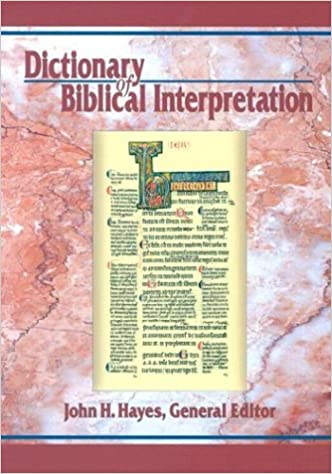
In the early church and at Qumran . . ., the Prophets and other prophetic literature . . . were read through two perspectives: (1) as if it were apocalyptic literature . . . — that is, as if it were all written in prediction of the last days whose true meaning would be disclosed in the final events of the end time . . .; and (2) as if the life, history, and destiny of the two respective communities were the objects of the prophetic predictions and descriptions. Such a reading presupposed (1) that the biblical material or prophecies contain hidden or secondary meanings and frames of reference . . . that transcend the simple and common-sense reading, and (2) that this secondary dimension of the text had become evident through its subsequent fulfillment or manifestation. NT and Qumran authors did not discuss whether the original hearers/readers understood this secondary or true referent. (Dictionary of Biblical Interpretation, vol. 2: K-Z, John H. Hayes, general editor, Nashville: Abingdon Press, 1999, “Prophecy and Prophets, Hebrew Bible,” p. 311).
I rest my case. Remember what Jonathan claimed: “Point being, that Jesus is the only application of double reference prophecies. There are never double reference prophecies as far as I know within the OT.” This is now thoroughly refuted as a falsehood. And if it is, there can be such a thing also, as a messianic prophecy that has dual application: one of which is applicable to Jesus.
***
Photo credit: image of Dictionary of Biblical Interpretation from its Amazon page.
***
Jews & Judaism & Old Testament
double application of prophecy
Previous Post

December 17, 2020
Jesus the "Nazarene": Did Matthew Make Up a "Prophecy"?
Next Post

December 18, 2020 Demons, Gadara, & Biblical Numbers (vs. JMS Pearce)
Browse Our Archives
Select a Category & Last Things About Me Anti-Catholicism Atheism & Agnosticism Baptism and Sacramentalism Bible and Tradition Blessed Virgin Mary Books by Dave Armstrong C. S. Lewis Calvinism & General Protestantism Catholic Apologetics Catholic Apologists Catholic conversion Catholic converts Christmas Church (Ecclesiology) Church History Conversion and Converts Development of Doctrine Eastern Orthodoxy Ecumenism & Christian Unity Eucharist & Liturgy Fathers of the Church French Translations G. K. Chesterton Hell Hell & Satan Hell & Satan & Last Things Heresies & Comparative Religion Holistic Health Inquisition & Crusades & Scandals James White Jews & Judaism & Old Testament John Calvin John Henry Newman Liberal / Modernist Theology Life Issues Literary Resume Lutheranism Mariology Martin Luther Music Orthodoxy Papacy & Infallibility Personal Page Philosophy & Science Political & Ethical & Moral Issues Protestant Persecution & Intolerance Protestantism Purgatory Purgatory & Penance Romantic & Imaginative Theology Saints & Purgatory & Penance Salvation Salvation & Justification Satan & Last Things Sexuality and Gender Issues Spanish Translations Traditionalism vs. Radical Catholic Reactionaries Traducciones al español / tradução para português Trinitarianism & Christology Uncategorized Videos
Select a Month October 2026 September 2026 August 2026 July 2026 June 2026 May 2026 April 2026 March 2026 February 2026 January 2026 December 2025 November 2025 October 2025 September 2025 August 2025 July 2025 June 2025 May 2025 April 2025 March 2025 February 2025 January 2025 December 2024 November 2024 October 2024 September 2024 August 2024 July 2024 June 2024 May 2024 April 2024 March 2024 February 2024 January 2024 December 2023 November 2023 October 2023 September 2023 August 2023 July 2023 June 2023 May 2023 April 2023 March 2023 February 2023 January 2023 December 2022 November 2022 October 2022 September 2022 August 2022 July 2022 June 2022 May 2022 April 2022 March 2022 February 2022 January 2022 December 2021 November 2021 October 2021 September 2021 August 2021 July 2021 June 2021 May 2021 April 2021 March 2021 February 2021 January 2021 December 2020 November 2020 October 2020 September 2020 August 2020 July 2020 June 2020 May 2020 April 2020 March 2020 February 2020 January 2020 December 2019 November 2019 October 2019 September 2019 August 2019 July 2019 June 2019 May 2019 April 2019 March 2019 February 2019 January 2019 December 2018 November 2018 October 2018 September 2018 August 2018 July 2018 June 2018 May 2018 April 2018 March 2018 February 2018 January 2018 December 2017 November 2017 October 2017 September 2017 August 2017 July 2017 June 2017 May 2017 April 2017 March 2017 February 2017 January 2017 December 2016 November 2016 October 2016 September 2016 August 2016 July 2016 June 2016 May 2016 April 2016 March 2016 February 2016 January 2016 December 2015 November 2015 October 2015 September 2015 August 2015 July 2015 June 2015 May 2015 April 2015 March 2015 February 2015 January 2015 December 2014 November 2014 October 2014 September 2014 August 2014 July 2014 June 2014 April 2014 March 2014 February 2014 January 2014 December 2013 November 2013 October 2013 September 2013 August 2013 July 2013 June 2013 April 2013 March 2013 February 2013 January 2013 December 2012 November 2012 October 2012 September 2012 August 2012 July 2012 June 2012 May 2012 April 2012 March 2012 February 2012 January 2012 December 2011 November 2011 October 2011 September 2011 August 2011 July 2011 June 2011 April 2011 March 2011 February 2011 October 2010 September 2010 August 2010 July 2010 April 2010 March 2010 December 2009 October 2009 August 2009 July 2009 June 2009 May 2009 March 2009 February 2009 October 2008 September 2008 April 2008 March 2008 February 2008 January 2008 December 2007 November 2007 October 2007 May 2007 March 2007 February 2007 January 2007 November 2006 October 2006 September 2006 August 2006 July 2006 June 2006 May 2006 April 2006 March 2006 February 2006 October 2005 June 2005 April 2005 February 2005 July 2004 May 2004 April 2004
Follow Us!
TAKE THE
Religious Wisdom Quiz
We celebrate a feast with feasting and joy, remembering deliverance from destruction in Persia. What feast are we?
Select your answer to see how you score.
Purim Pentecost Hanukkah Passover
Books by This Author Books by Dave Armstrong
Related posts from Biblical Evidence for Catholicism

Holy Ground: Why Mary Had NO Other Children...
Biblical Evidence for Catholicism
Protestant Confessions & "Ever-Virgin" Mary
Biblical Evidence for Catholicism

A Few "Worst" & "Best" Arguments vs. Protestantism
Biblical Evidence for Catholicism

Mary Wife of Clopas (Jn 19:25): Mary's Sister-in-Law?
Biblical Evidence for Catholicism
TRENDING AT PATHEOS Catholic

I was strolling through the top floor of the brand new Parthenon...

What Does Gêvâh Mean For Kimberley Guifoyle &...
This week, a lot of the news is focused on Kimberly Guilfoyle....

INNER CIRCLE: Profound Mystery (Of Christ In All...
Ephesians 5:31-32 “For this reason, a man will leave his father and...

Do Not Rejoice When Your Enemy Falls: The...
Turning an execution into a public spectacle is a disturbing expression of...

'The Chosen' S6 Trailer: The Passion Gets Very...
Not many watching 'The Chosen' worry about spoilers, but just because they...

The purpose-driven labor priest
A labor activist reads Rick Warren and it gets me wondering about...
view all Catholic blogs
Ad-Free & Subscriber Log-In Subscription Support
- About Us
- 2026 Calendar
- Videos
- Podcasts
- Library of World Religions
- Faith In Media Tracker
- Advertise With Us
- Write for Us
- Privacy Policy
- Terms of Service
- Do Not Sell My Data
- Contact Us
- Radiant Digital
- Manage Newsletter Subscriptions
- Unsubscribe From Notifications
- Sitemap
Copyright 2008-2026, Patheos. All rights reserved.
Subscription Support Ad-Free & Subscriber Log-In
Follow Patheos