
BuddhistCatholicContemplativeEvangelicalGeneral ChristianHinduJewishLatter-day SaintMuslimNew VisionsProgressive Christian
Beliefs
- Buddhist
- Catholic
- Contemplative
- Evangelical
- General Christian
- Hindu
- Jewish
- Latter-day Saint
- More Voices
- Muslim
- New Visions
- Pagan
- Progressive Christian
Topics
- Religion News
- Food and Religion
- Sports and Religion
- Religious Art
- Religious Music and Entertainment
- Religious Events
- History and Religion
- Style and Religion
- Politics and Religion
- Women in Religion
- Recreation Outdoors and Religion
- Business Finance and Religion
- Careers Workplace and Religion
- Education and Religion
- Family Parenting and Religion
- Health Fitness and Religion
- Home and Religion
- Relationships and Religion
- Technology and Religion
- Travel and Religion
Columnists
- Buddhist Columnists
- Business Finance and Religion Columnists
- Careers Workplace and Religion Columnists
- Catholic Columnists
- Contemplative Columnists
- Education and Religion Columnists
- Evangelists Columnists
- Family Parenting and Religion Columnists
- General Christian Columnists
- Health Fitness and Religion Columnists
- Hindu Columnists
- History and Religion Columnists
- Home and Religion Columnists
- Jewish Columnists
- More Voices Columnists
- Latter Day Columnists
- Muslim Columnists
- New Visions Columnists
- Nonreligious Columnists
- Pagan Columnists
- Politics and Religion Columnists
- Progressive Columnists
- Recreation Outdoors and Religion Columnists
- Relationships and Religion Columnists
- Religion News Columnists
- Religious Art Columnists
- Religious Events Columnists
- Religious Music and Entertainment Columnists
- Sports and Religion Columnists
- Style and Religion Columnists
- Technology and Religion Columnists
- Travel and Religion Columnists
- Women in Religion Columnists
Resource Library
- 2026 Calendar
- Library of World Religions
- The 100 Most Holy Places on Earth
- Patheos Answers
- Podcasts
- Videos
- Faith Leaders Database
- Anglican Episcopalian
- Bahai
- Baptist
- Buddhism
- Christianity
- Confucianism
- Eastern Orthodoxy
- Hinduism
- Holiness and Pentecostal
- ISKCON
- Islam
- Judaism
- Lutheran
- Methodist
- The Church of Jesus Christ of Latter-day Saints
- New Age
- Paganism
- Presbytarian and Reformed
- Protestantism
- Religion Behind the Scenes
- Roman Catholic
- Scientology
- Shia Islam
- Sikhism
- Sufism
- Sunni Islam
- Taoism
- Zen
- See all religions
Research Tools
 Ad-Free & Subscriber Log-In Subscription Support
Ad-Free & Subscriber Log-In Subscription Support
Follow Patheos 

- Trending:
- Forgiveness
- |
- Marriage
- |
- Consciousness
- |
- Death Penalty
- |
- Election
- |
- Halloween

-
About
-
Catholic Apologetics
-
Church History
-
Great Apologists
-
Christian Worldview
-
Protestantism & Misc.
- Home
- Catholic
- History and Religion
- Review of US Version Beatles Albums: 1964
Review of US Version Beatles Albums: 1964
Last updated on: June 5, 2026 at 11:57 pm by Dave Armstrong
Review of US Version Beatles Albums: 1964 2026-06-05T23:57:10-04:00 Dave Armstrong
Patheos Explore the world's faith through different perspectives on religion and spirituality! Patheos has the views of the prevalent religions and spiritualities of the world.
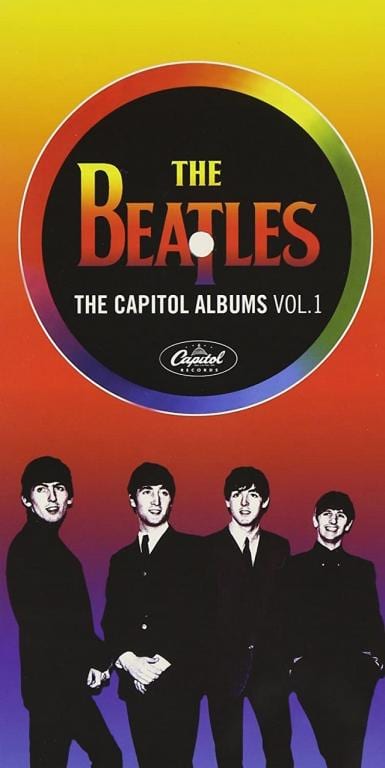
The Beatles: The Capitol Albums, Vol. 1 (“CAV1”)
Four-CD box set re-release (11-16-04) of the first four Beatles record albums on Capitol Records (all of the 45 songs in both stereo and mono):
Meet the Beatles! (originally released on 20 January 1964) “MTB”
The Beatles’ Second Album (10 April 1964) “BSA”
Something New (20 July 1964) “SNE”
Beatles ’65 (15 December 1964) “B65”
British EMI-Parlophone Versions of (Related) Beatles’ Record Albums, Singles (*), and Extended Plays (“EP”) in 1963-1964 and Later CD collections:
Please Please Me (22 March 1963 / re-released on mono CD in 1987) “PPM”
*From me to you / Thank you girl (11 April 1963)
*She loves you / I’ll get you (23 August 1963)
With the Beatles (22 November 1963 / re-released on mono CD in 1987) “WTB”
*I want to hold your hand / This boy (29 November 1963)
*Can’t buy me love / You can’t do that (20 March 1964)
(EP) Long tall Sally / I call your name / Slow down / Matchbox (19 June 1964)
A Hard Day’s Night (10 July 1964 / re-released on mono CD in 1987) “HDN”
*I feel fine / She’s a woman (27 November 1964)
Beatles for Sale (4 December 1964 / re-released on mono CD in 1987) “BFS”
Past Masters, Volume One (1988) [collection of British singles and EP’s] (“PMV1”)
1 (2000) [collection of #1 hit singles] (“1”)
The following are random remarks gleaned from reading many Internet articles (especially the reviews on Amazon): in no particular order. Every now and then I throw in some knowledge of my own, as a longtime Beatles fanatic. Hopefully, this collection of thoughts and information will serve as a good reference source for other fans:
Miscellaneous Recording Information and Trivia
The sound of the Capitol final mixes are said to be “quite unlike” the original British recordings. Capitol added reverberation or echo (“to suit the American market”) fairly heavily on ten songs (and seemingly at least a little on most or all other songs on the first two albums), and a quasi-stereo process called “Duophonic” (on seven of these 45 songs), which used two monophonic or monaural channels, equalized and compressed them to simulate the two channels of stereo, and added reverberation. Thus, 38 of the 45 songs on this set are from the true stereo mixes prepared by George Martin. See my chart below to see which songs were thus enhanced.
The Beatles’ producer, George Martin and Beatles’ manager Brian Epstein cooperated with Capitol to a large extent, but with some mixed feelings. In fact, Bad boy and Dizzy Miss Lizzie (neither on this set) were recorded specifically for Capitol.
CAV1 offers the stereo debut on CD of 32 Beatles songs (some songs from this period had been previously included on “1” or “PMV1”).
The songs were not remixed from the original Capitol versions, but they were tweaked a bit to “optimize their playback capabilities” on today’s audio systems, and equalized for more bass presence. Vacuum tube and valve equipment from that time was used, for authentic period sound (it succeeded). The set shows how much CD mastering has improved in the past few years
American Beatles fans have been demanding for some time a release of the early Beatles albums as they first knew and heard them. This is not simply Capitol greed, but also a matter of quite valid consumer demand. The release of songs in both stereo and mono was an aspect of fan demand that actually cut into Capitol’s royalties.
Many think that these CD’s accurately reproduce the great sound of the vinyl LPs (I’ve always preferred the vinyl, analogue sound, myself, so this is music to my ears — no pun intended).
One reviewer on amazon.com wrote (truly and insightfully, I think, after having heard it: this is a later added note), “If you want to hear The Beatles, play the British-version CDs. If you want to rock to The Beatles, play the Capitol CDs.”
George Martin and the Beatles themselves preferred the monophonic version of the first four albums (and all albums up to Sgt. Pepper), and this is how they were re-released on CD in 1987 (boo!). Also, single records were generally in mono until the late 60s.
Martin and Brian Epstein believed that singles should not be on albums because it forced consumers to buy the same songs twice. But Capitol records in the US believed that hit singles made for hit albums.
The running order for the US albums was constructed by Capitol Records executive Dave Dexter, who had turned down the Beatles four times in 1963 (!). But there was significant rhyme and reason in how the order was selected (see more on that below, in the next section).
The stereo mixes on Something New and Beatles ’65 are those sent by George Martin. Almost all are the same as the mixes on the UK albums HDN and BFS. Echo wasn’t added, excepting I feel fine and She’s a woman. EMI didn’t send Capitol the original 2-track and 4-track master tapes, but the stereo tracks were Martin’s mixes. In a few instances, Martin sent a different mix, sometimes intentional, and sometimes an earlier mix later improved upon by Martin.
The masters of the earliest Beatles songs were recorded in two tracks: one mostly instrumental. Arguably, then, it is not unreasonable or even (technically-speaking) “fake” to produce Duophonic quasi-“stereo” mixes of these songs. George Martin’s intentions were to mix these two-track recordings down to mono, since stereo wasn’t prevalent in the pop and rock market till the mid-to-late 1960s. Songs from WTB that appear on the mono versions of MTB and BSA were created in the same manner: by reducing the stereo master in a 2-to-1 mixdown. Some engineers thought that such mixdowns gave the mono songs a fuller sound.
In the early 1960s, every song on a “stereo”-labelled album was true or simulated (in this case, “Duophonic”) –often called “fake” — stereo. All record companies did this, including EMI-Parlophone. For example, the British Please Please Me album utilized fake stereo on Love me do and P.S. I love you. Capitol made Duophonic mixes only for songs that had no stereo masters at the time. In any event, it is untrue that these albums are full of the obvious added effects.
There are 13 or 14 unique monophonic versions of songs: some unique to Capitol.
The notorious “bad packaging” (a host of complaints on amazon.com: present in almost every review), is said to be the work of Apple, not Capitol.
Magical Mystery Tour is the only American version Beatles album which eventually became the “standard.” It had six songs from the British EP, plus five additional songs. EMI-Parlophone issued the same album in 1976, even using the Capitol master tapes, which had Duophonic mixes of three songs! The CD re-release, however, restored true stereo for all songs.
US Album Track Information
Meet the Beatles! opened with I want to hold your hand (the 1st US single, released a week earlier), followed by I saw her standing there (arguably the Beatles most appealing, exciting, and compelling early recording, and the only song on this set from the UK album PPM), followed by the melodious, soft, British B-side, This boy (The first and third songs were not on any British LP). The rest of the songs were seven Lennon-McCartney original compositions (like the first three), from WTB, Harrison’s Don’t bother me, and the MOR cover Till there was you (one for the parents — very wise marketing there). The nine songs from WTB (out of 14 on that album) followed the running order of George Martin. Five cover versions on that album, however, were dropped; thus MTB highlights the Beatles’ songwriting abilities (11 of 12 originals), as well as musical versatility. WTB had 6 covers out of a total of 14 songs.
The Beatles’ Second Album included the five leftover cover songs from WTB, three B-sides of singles, two new songs that would later appear on a British EP (extended play: a single-sized record with four songs instead of two — Long tall Sally and I call your name), and the hit single She Loves You (not on any early British record album, as with many UK singles in those days).
Something New had five songs on both the UK and US (United Artists) versions of HDN, three more from the UK HDN, two from a British EP (Slow down and Matchbox), and the German-language alternate of I want to hold your hand (a tip of the hat to the band’s pre-stardom lengthy stint in Hamburg).
Beatles ’65 included eight songs from BFS (out of that album’s 14), in the same running order as that album, plus I’ll be back, from the UK HDN, and both sides of the latest single: I feel fine and She’s a woman.
Songs not included in this box set: A hard day’s night, Can’t buy me love, and I should have known better, from HDN (UK). The first two songs appear on “1”. Songs from BFS not included: Eight days a week, Words of love, Every little thing, I don’t want to spoil the party, What you’re doing, and Kansas City. All six were included in the Capitol album, Beatles VI, released on 14 June 1965. Eight days a week also appears on “1”. WTB is the only UK album from 1963-1964 that has all its songs included on this box set.
Sonic Comparisons and Alternate Mixes and Versions in Individual Songs
The versions of I feel fine and She’s a woman are the most criticized (called “horrendous” by some; I readily agree with regard to the latter). They are the only two songs with both added echo and Duophonic fake stereo.
I want to hold your hand, She loves you, and I’ll get you, are thought by more than a few to be fairly effective Duophonic mixes.
I call your name in stereo is very different from UK vinyl versions and the CD version on PMV1. The mono version has a different guitar intro.
The mono version of I’ll cry instead has an extra verse: the same as the American United Artist HDN.
The clarity of the stereo versions of Things we said today and If I fell have been described as “striking” and “incredible”, with the harmonies really standing out.
The stereo and mono versions of And I love her and If I fell are different: for each, there is a single-voiced (mono) and double-tracked voice version (stereo). Paul’s voice changes at the words “in vain” in only one version.
This is the first time Thank you girl has been released in true stereo in the UK. It also has extra overdubbed harmonica from John Lennon.
When I get home — mono version, has a slightly different vocal by John, in the middle section.
Money is an alternate version to the UK release. It has guitar overdub.
Even the mono Capitol mixes sound better than the UK mono versions: they have a richer bass, brighter guitar, and clearer vocals.
As an example of greatly improved sound, one reviewer suggests You really got a hold on me in both stereo and mono.
My Own Personal Reflections on Beatles Stuff
One is now able to construct an “American version of With the Beatles” on (burned) CD, with the stereo versions: which would approximate the old stereo record of that album (which I have in my record collection). The same is true of the British version of A Hard Day’s Night, with the exception of three songs: two can be gotten from “1” and one monophonic from the current CD (I Should Have Known Better). All but one song, then, can be heard in stereo on CD.
Based on what I have learned (which provided a tremendously entertaining night of new Beatles trivia), I’ve gone from not caring at all about the set (I saw it in a music store and hardly even looked at it) to not being able to wait to hear it. Particularly interesting to me, as a Beatles fanatic of long standing, and an audiophile (as much as finances permit, anyway) are the alternate takes and the reverb and Duophonic elements, and the vaunted “excitement” and “punch” of these recordings; also the fact that it is said to sound like the old vinyl records. With improvements in technology, CDs are starting to sound more like records — which is a long overdue and most welcome development (at least for these ears).
I still have many records (some 500-600), and my old turntable, and don’t plan on getting rid of them (why should I have to buy every album twice?). I’ve always been a big fan of the British versions of the Beatles’ records, because they were how the band itself wanted the albums to be, and they had more songs. I have all the EMI-Parlophone British imports of vinyl records of early Beatles (I bought them in the late 70s): eight in all, up through Revolver, and also the British Rarities. They sound fantastic, and mine are all in stereo (I don’t much like the mono sound of the British Hard Day’s Night CD — it sounds very flat and dull to me).
I didn’t care at all about purchasing used record versions of the American Capitol catalogue, with the exception of “Yesterday” . . . and Today, which included an alternate take of I’m Only Sleeping. (I found it for $8 a few years ago in a used record store). Also, of course, I have sought to obtain as much Beatles’ music on CD as I could; particularly for burning purposes, now.
It has often been stated that the box set is coveted particularly by American baby boomers who grew up with Beatles music in this form; thus there is great sentimental value in hearing them this way again, and that this is its own sufficient justification, despite what one thinks of Capitol profit-mongering, or the artistic issues of changing the final mix of songs, order of songs, etc. That makes perfect sense, given the drive for nostalgia, having listened to an album over and over in a certain form, and enjoying the particular sounds involved.
This is not, however, really what drives my own interest, which is simply to hear the songs in a higher quality, and to possess the different versions available.To me, that is more fascinating and desirable than the truly alternate takes of the 6-CD Anthology series, which are only mildly interesting, and primarily of historical value (as even George Martin stated, in the liner notes).
My own background with the Beatles is not dependent on the US-version albums, because my family (i.e., my brother and sister: 10 years and 6 years older than me) didn’t have them. We had A Hard Day’s Night, which was actually released by United Artists, and included silly, boring instrumentals. We also had Magical Mystery Tour and The “White Album”. That was the extent of my experience with Beatles albums until the mid-70s, when I started buying them on my own.
I remember seeing the Beatles on the Ed Sullivan Show, and of course we went to see A Hard Day’s Night and Help at the movies. Beyond that, I knew of their music from AM radio and a few singles (particularly, as I recall, Day Tripper, backed with We Can Work it Out, and Yellow Submarine / Eleanor Rigby). I can still distinctly remember hearing I want to hold your hand on the radio, in the car near my home. I’m not sure if that was before Ed Sullivan or not, but it was certainly in the same time period (January 1964). I was five-and-a-half years old.
I am about as young as one can be (46), as a baby boomer, and still have a direct memory of the Beatles’ arrival on the American scene. It’s difficult to describe how exciting this was, to someone who hasn’t experienced it. It was an incredible time, and the music was so revolutionary and fresh and exciting, in its original context. What is fascinating now to ponder, is the song order of the US albums, and how their impact is differentiated from the British albums (a factor often mentioned in the amazon reviews). I’ve never cared much about song order, either. I always valued each individual Beatles song, and it was far less important to me how they were grouped together (until Sgt. Pepper). But it seems fun now to envision listening to the “first” Beatles album, as it was heard in America, and to see how it comes across.
The First Four Capitol Beatles Albums: Track Rundown and Comparison to UK Albums
x = Duophonic “fake” or simulated stereo
* = added reverberation / echo
— Numbers following British record albums (available in stereo) where the track appears, refer to side one or two of the original record and number of song on that side —
Meet The Beatles! (MTB)
1. I Want To Hold Your Hand x (true stereo on PMV1)
2. I Saw Her Standing There PPM 1-1
3. This Boy x (true stereo on PMV1)
4. It Won’t Be Long WTB 1-1
5. All I’ve Got To Do WTB 1-2
6. All My Loving WTB 1-3
7. Don’t Bother Me WTB 1-4
8. Little Child WTB 1-5
9. Till There Was You WTB 1-6
10. Hold Me Tight WTB 2-2
11. I Wanna Be Your Man WTB 2-4
12. Not A Second Time WTB 2-6
The Beatles’ Second Album (BSA)
1. Roll Over Beethoven * WTB 2-1 (no reverb on WTB)
2. Thank You Girl * (no reverb / mono version on PMV1)
3. You Really Got A Hold On Me * WTB 2-3 (no reverb)
4. Devil In Her Heart * WTB 2-5 (no reverb)
5. Money * WTB 2-7 (no reverb)
6. You Can’t Do That x HDN 2-5 (mono on HDN UK version)
7. Long Tall Sally * (EP in UK / no reverb on PMV1)
8. I Call Your Name * (EP in UK / no reverb on PMV1)
9. Please Mr. Postman * WTB 1-7 (no reverb on WTB)
10. I’ll Get You x (mono version on PMV1)
11. She Loves You x (mono version on PMV1)
Something New (SNE)
1. I’ll Cry Instead HDN 2-2
2. Things We Said Today HDN 2-3
3. Any Time At All HDN 2-1
4. When I Get Home HDN 2-4
5. Slow Down (EP in UK / PMV1)
6. Matchbox (EP in UK / PMV1)
7. Tell Me Why HDN 1-6
8. And I Love Her HDN 1-5
9. I’m Happy Just To Dance With You HDN 1-4
10. If I Fell HDN 1-3
11. Komm, Gib Mir Deine Hand (I Want To Hold Your Hand) (mono on PMV1)
Beatles ’65 (B65)
1. No Reply BFS 1-1
2. I’m A Loser BFS 1-2
3. Baby’s In Black BFS 1-3
4. Rock And Roll Music BFS 1-4
5. I’ll Follow The Sun BFS 1-5
6. Mr. Moonlight BFS 1-6
7. Honey Don’t BFS 2-3
8. I’ll Be Back HDN 2-6
9. She’s A Woman x * (no reverb, true stereo: PMV1)
10. I Feel Fine x * (no reverb, true stereo: PMV1)
11. Everybody’s Trying To Be My Baby BFS 2-7
PPM: 1 song of 14 on CAV1 (I Saw Her Standing There)
WTB: all 14 songs on CAV1 (MTB: 9 / BSA: 5)
HDN: 10 of 13 songs on CAV1 (SNE: 8 / BSA: 1 / B65: 1)
BFS: 8 of 14 songs on CAV1 (on B65)
PMV1: 12 of 18 songs on CAV1
My Impressions of 26 of 45 (Stereo) Songs (Comparisons of Sound and Impact with Previous Available Versions)
[all of the above — apart from a few revisions — was written before I actually listened to anything; from Internet information, and my Beatles books and previous knowledge; now this is my own particular opinion of how it sounds, after purchasing the set last night — for the great price of $49.99. The following observations were based on direct listening to the different versions]
I Want To Hold Your Hand — good “presence”, but the true stereo on PMV1 is considerably cleaner and superior (the track on “1” seems even better).
I Saw Her Standing There — less “clean”, but is explosive, with a great presence. The drums are more powerful, as befitting such a classic rocker, and it has more reverb compared to the PPM stereo record. This will have you dancing all over the house.
This Boy — the Duophonic mix is sonically inferior to the stereo on PMV1, though perhaps more “listenable.” One can, I suppose, differentiate between hearing and listening, in a music sense.
It Won’t Be Long — sounds slightly better than the stereo record WTB. The reverb adds “punch.”
All My Loving — more presence and vitality than the stereo record WTB.
Roll Over Beethoven — more exciting and danceable than the stereo record WTB due to reverb and presence. The vocals are more upfront. This is probably the second best-sounding, satisfying, and most exciting song on the set after I Saw Her Standing There.
Thank You Girl — stereo with reverb is more listenable and pleasing than the mono version on PMV1.
I Call Your Name — reverb again adds “punch” and zest, compared to PMV1.
Please Mr. Postman — it rocks better than the stereo record WTB. This recording, like many on CAV1, seems to better approximate the “Beatles on the car radio in 1964” feel.
She Loves You — Duophonic (and mono) slightly inferior to the mono version on “1.” This was not one of the better-recorded Beatle tunes (don’t listen to it on headphones, as I did at 3 in the morning). The Beatles seem to be singing too close to the microphone (an impression I also get, unfortunately, of a lot of earlier Motown recordings)
I’ll Cry Instead — wonderful sound, and a clear advance in recording from two to four tracks is apparent; about the same quality as the stereo HDN record, but clearly superior to the mono HDN CD.
Things We Said Today — more presence and excitement than the stereo HDN record, and better than the mono HDN CD.
Tell Me Why / And I Love Her / If I Fell — about the same as the stereo HDN record, and better than the mono HDN CD.
The songs on B65 (excepting the two below) all sound wonderful (especially the two rockabilly / Carl Perkins covers: Honey Don’t and Everybody’s Trying To Be My Baby), much like the glorious, warm sonics of the old vinyl (from the album BFS in this instance). This shows the long-overdue improvements in CD technology.
She’s A Woman — undoubtedly the worst mix on the box set. Paul McCartney sounds like he is singing through a megaphone halfway through a long tunnel. The mono version succeeds a little better, but not much. The vastly superior real stereo track on PMV1 is appropriately clean, with marvelous, crisp guitar chords. This is a kind of “roots rock”, or “straight ahead rock and roll” song, and shouldn’t be tampered with in this manner (it sounds downright ridiculous).
I Feel Fine — the twangy muddiness and very strong reverb of the Duophonic mix works better here because of the nature of the song (and John Lennon’s unique, colorful songwriting style). But for my money, the much cleaner true stereo on PMV1 and “1” is musically and sonically superior. As with all these songs, judgment is largely subjective (after all, there’s more than one way to record and mix and arrange and perform a great song in the first place). If one loves the Daniel Lanois- / U2-anticipating “reverb / echoey atmosphere” they will prefer this version. But if they favor (as I do) Nowhere Man-like crisp harmonies and a more “folksy” sound, they will prefer the original UK / George Martin mix (I like “cleaner” and “sharper” recordings, generally-speaking). The latter is obviously the Beatles’ and Martin’s preference, since it was modified. And that ought to count for more than a little as a contributing factor in the whole equation.
Totals:
Same quality as records: 13
Better than previous versions: 8
Worse: 5
Since CDs have rarely achieved the inviting, satisfying sound of the old vinyl records (maybe its just my music system, but that’s been my listening experience — to me CDs often sound “tinny”, out of balance, and a little distorted), this amounts to high praise for a set to even equal that sound, let alone surpass it in several individual songs. So my overall review is quite positive.
Lastly, for the purpose of making my song comparisons, I listened to all these songs first on headphones, since I wanted to hear the differences very closely. Listening through speakers (and at higher volume) presents more variables and factors to consider, perhaps causing one to have different opinions of some of the songs. This would apply especially, I think, to a song like I Want To Hold Your Hand, which sounds muddy and of somewhat distorted and poor quality real close to your ear in a headphone, but much better travelling through the air, bouncing off walls; depending on room acoustics, quality of systems and speakers, etc. That was, of course, how most people heard it initially in 1964 — usually on relatively primitive record players or car radios.
***
(originally posted on 12-1-04)
Photo credit: The Beatles The Capitol Albums Vol. 1; from the Amazon page.
***
Previous Post

November 14, 2020
Defense of John Lennon Contra Scathing Critique
Next Post

November 16, 2020 Jason Engwer and a Supposedly Sinful Mary
Browse Our Archives
Select a Category & Last Things About Me Anti-Catholicism Atheism & Agnosticism Baptism and Sacramentalism Bible and Tradition Blessed Virgin Mary Books by Dave Armstrong C. S. Lewis Calvinism & General Protestantism Catholic Apologetics Catholic Apologists Catholic conversion Catholic converts Christmas Church (Ecclesiology) Church History Conversion and Converts Development of Doctrine Eastern Orthodoxy Ecumenism & Christian Unity Eucharist & Liturgy Fathers of the Church French Translations G. K. Chesterton Hell Hell & Satan Hell & Satan & Last Things Heresies & Comparative Religion Holistic Health Inquisition & Crusades & Scandals James White Jews & Judaism & Old Testament John Calvin John Henry Newman Liberal / Modernist Theology Life Issues Literary Resume Lutheranism Mariology Martin Luther Music Orthodoxy Papacy & Infallibility Personal Page Philosophy & Science Political & Ethical & Moral Issues Protestant Persecution & Intolerance Protestantism Purgatory Purgatory & Penance Romantic & Imaginative Theology Saints & Purgatory & Penance Salvation Salvation & Justification Satan & Last Things Sexuality and Gender Issues Spanish Translations Traditionalism vs. Radical Catholic Reactionaries Traducciones al español / tradução para português Trinitarianism & Christology Uncategorized Videos
Select a Month October 2026 September 2026 August 2026 July 2026 June 2026 May 2026 April 2026 March 2026 February 2026 January 2026 December 2025 November 2025 October 2025 September 2025 August 2025 July 2025 June 2025 May 2025 April 2025 March 2025 February 2025 January 2025 December 2024 November 2024 October 2024 September 2024 August 2024 July 2024 June 2024 May 2024 April 2024 March 2024 February 2024 January 2024 December 2023 November 2023 October 2023 September 2023 August 2023 July 2023 June 2023 May 2023 April 2023 March 2023 February 2023 January 2023 December 2022 November 2022 October 2022 September 2022 August 2022 July 2022 June 2022 May 2022 April 2022 March 2022 February 2022 January 2022 December 2021 November 2021 October 2021 September 2021 August 2021 July 2021 June 2021 May 2021 April 2021 March 2021 February 2021 January 2021 December 2020 November 2020 October 2020 September 2020 August 2020 July 2020 June 2020 May 2020 April 2020 March 2020 February 2020 January 2020 December 2019 November 2019 October 2019 September 2019 August 2019 July 2019 June 2019 May 2019 April 2019 March 2019 February 2019 January 2019 December 2018 November 2018 October 2018 September 2018 August 2018 July 2018 June 2018 May 2018 April 2018 March 2018 February 2018 January 2018 December 2017 November 2017 October 2017 September 2017 August 2017 July 2017 June 2017 May 2017 April 2017 March 2017 February 2017 January 2017 December 2016 November 2016 October 2016 September 2016 August 2016 July 2016 June 2016 May 2016 April 2016 March 2016 February 2016 January 2016 December 2015 November 2015 October 2015 September 2015 August 2015 July 2015 June 2015 May 2015 April 2015 March 2015 February 2015 January 2015 December 2014 November 2014 October 2014 September 2014 August 2014 July 2014 June 2014 April 2014 March 2014 February 2014 January 2014 December 2013 November 2013 October 2013 September 2013 August 2013 July 2013 June 2013 April 2013 March 2013 February 2013 January 2013 December 2012 November 2012 October 2012 September 2012 August 2012 July 2012 June 2012 May 2012 April 2012 March 2012 February 2012 January 2012 December 2011 November 2011 October 2011 September 2011 August 2011 July 2011 June 2011 April 2011 March 2011 February 2011 October 2010 September 2010 August 2010 July 2010 April 2010 March 2010 December 2009 October 2009 August 2009 July 2009 June 2009 May 2009 March 2009 February 2009 October 2008 September 2008 April 2008 March 2008 February 2008 January 2008 December 2007 November 2007 October 2007 May 2007 March 2007 February 2007 January 2007 November 2006 October 2006 September 2006 August 2006 July 2006 June 2006 May 2006 April 2006 March 2006 February 2006 October 2005 June 2005 April 2005 February 2005 July 2004 May 2004 April 2004
Follow Us!
TAKE THE
Religious Wisdom Quiz
Who asked Jesus, "What is truth?"
Select your answer to see how you score.
Caiaphas Pilate Nicodemus Herod
Books by This Author Books by Dave Armstrong
Related posts from Biblical Evidence for Catholicism

100 Motown Stars: Info. & Links / My...
Biblical Evidence for Catholicism

My 19 Imprimaturs vs. James Swan's Slanders
Biblical Evidence for Catholicism

My “Number Articles”: Alphabetized by Topic
Biblical Evidence for Catholicism
Big Plans for Catholic Bible Highlights in 2026!
Biblical Evidence for Catholicism
TRENDING AT PATHEOS Catholic

I was strolling through the top floor of the brand new Parthenon...

What Does Gêvâh Mean For Kimberley Guifoyle &...
This week, a lot of the news is focused on Kimberly Guilfoyle....

INNER CIRCLE: Profound Mystery (Of Christ In All...
Ephesians 5:31-32 “For this reason, a man will leave his father and...

Do Not Rejoice When Your Enemy Falls: The...
Turning an execution into a public spectacle is a disturbing expression of...

'The Chosen' S6 Trailer: The Passion Gets Very...
Not many watching 'The Chosen' worry about spoilers, but just because they...

The purpose-driven labor priest
A labor activist reads Rick Warren and it gets me wondering about...
view all Catholic blogs
Ad-Free & Subscriber Log-In Subscription Support
- About Us
- 2026 Calendar
- Videos
- Podcasts
- Library of World Religions
- Faith In Media Tracker
- Advertise With Us
- Write for Us
- Privacy Policy
- Terms of Service
- Do Not Sell My Data
- Contact Us
- Radiant Digital
- Manage Newsletter Subscriptions
- Unsubscribe From Notifications
- Sitemap
Copyright 2008-2026, Patheos. All rights reserved.
Subscription Support Ad-Free & Subscriber Log-In
Follow Patheos