
BuddhistCatholicContemplativeEvangelicalGeneral ChristianHinduJewishLatter-day SaintMuslimNew VisionsProgressive Christian
Beliefs
- Buddhist
- Catholic
- Contemplative
- Evangelical
- General Christian
- Hindu
- Jewish
- Latter-day Saint
- More Voices
- Muslim
- New Visions
- Pagan
- Progressive Christian
Topics
- Religion News
- Food and Religion
- Sports and Religion
- Religious Art
- Religious Music and Entertainment
- Religious Events
- History and Religion
- Style and Religion
- Politics and Religion
- Women in Religion
- Recreation Outdoors and Religion
- Business Finance and Religion
- Careers Workplace and Religion
- Education and Religion
- Family Parenting and Religion
- Health Fitness and Religion
- Home and Religion
- Relationships and Religion
- Technology and Religion
- Travel and Religion
Columnists
- Buddhist Columnists
- Business Finance and Religion Columnists
- Careers Workplace and Religion Columnists
- Catholic Columnists
- Contemplative Columnists
- Education and Religion Columnists
- Evangelists Columnists
- Family Parenting and Religion Columnists
- General Christian Columnists
- Health Fitness and Religion Columnists
- Hindu Columnists
- History and Religion Columnists
- Home and Religion Columnists
- Jewish Columnists
- More Voices Columnists
- Latter Day Columnists
- Muslim Columnists
- New Visions Columnists
- Nonreligious Columnists
- Pagan Columnists
- Politics and Religion Columnists
- Progressive Columnists
- Recreation Outdoors and Religion Columnists
- Relationships and Religion Columnists
- Religion News Columnists
- Religious Art Columnists
- Religious Events Columnists
- Religious Music and Entertainment Columnists
- Sports and Religion Columnists
- Style and Religion Columnists
- Technology and Religion Columnists
- Travel and Religion Columnists
- Women in Religion Columnists
Resource Library
- 2026 Calendar
- Library of World Religions
- The 100 Most Holy Places on Earth
- Patheos Answers
- Podcasts
- Videos
- Faith Leaders Database
- Anglican Episcopalian
- Bahai
- Baptist
- Buddhism
- Christianity
- Confucianism
- Eastern Orthodoxy
- Hinduism
- Holiness and Pentecostal
- ISKCON
- Islam
- Judaism
- Lutheran
- Methodist
- The Church of Jesus Christ of Latter-day Saints
- New Age
- Paganism
- Presbytarian and Reformed
- Protestantism
- Religion Behind the Scenes
- Roman Catholic
- Scientology
- Shia Islam
- Sikhism
- Sufism
- Sunni Islam
- Taoism
- Zen
- See all religions
Research Tools
 Ad-Free & Subscriber Log-In Subscription Support
Ad-Free & Subscriber Log-In Subscription Support
Follow Patheos 

- Trending:
- Forgiveness
- |
- Marriage
- |
- Consciousness
- |
- Death Penalty
- |
- Election
- |
- Halloween

-
About
-
Catholic Apologetics
-
Church History
-
Great Apologists
-
Christian Worldview
-
Protestantism & Misc.
- Home
- Catholic
- History and Religion
- Seidensticker Folly #58: Jesus Erred on Time of 2nd Coming?
Seidensticker Folly #58: Jesus Erred on Time of 2nd Coming?
Last updated on: October 20, 2020 at 10:09 am by Dave Armstrong
Seidensticker Folly #58: Jesus Erred on Time of 2nd Coming? 2020-10-20T10:09:48-04:00 Dave Armstrong
Patheos Explore the world's faith through different perspectives on religion and spirituality! Patheos has the views of the prevalent religions and spiritualities of the world.
with David Palm
Atheist and anti-theist Bob Seidensticker, who was “raised Presbyterian”, runs the influential Cross Examined blog. He asked me there, on 8-11-18: “I’ve got 1000+ posts here attacking your worldview. You just going to let that stand? Or could you present a helpful new perspective that I’ve ignored on one or two of those posts?” He added in June 2017 in a combox: “If I’ve misunderstood the Christian position or Christian arguments, point that out. Show me where I’ve mischaracterized them.” Delighted to oblige his wishes . . .
Bob (for the record) virtually begged and pleaded with me to dialogue with him in May 2018, via email. But by 10-3-18, following massive, childish name-calling attacks against me, encouraged by Bob on his blog, he banned me from commenting there. I also banned him for violation of my rules for discussion, but (unlike him) provided detailed reasons for why it was justified.
Bob’s cowardly hypocrisy knows no bounds. On 6-30-19, he was chiding someone for something very much like he himself: “Spoken like a true weasel trying to run away from a previous argument. You know, you could just say, ‘Let me retract my previous statement of X’ or something like that.” Yeah, Bob could! He still hasn’t yet uttered one peep in reply to — now — 57 of my critiques of his atrocious reasoning.
Bible-Basher Bob reiterated and rationalized his intellectual cowardice yet again on 10-17-20: “Every engagement with him devolves into pointlessness. I don’t believe I’ve ever learned anything from him. But if you find a compelling argument of his, summarize it for us.” And again the next day: “He has certainly not earned a spot in my heart, so I will pass on funding his evidence-free project. Like you, I also find that he’s frustrating to talk with. Again, I evaluate such conversations as useful if I can learn something–find a mistake in my argument, uncover an error I made in Christians’ worldview, and so on. Dave is good at bluster, and that’s about it.”
Bible-Basher Bob’s words will be in blue. To find these posts, follow this link: “Seidensticker Folly #” or see all of them linked under his own section on my Atheism page.
*****
Bob writes in his article, “Top 20 Most Damning Bible Contradictions (3 of 4)” (10-24-18):
Jesus should’ve returned already.
Jesus promised to return within the lifetimes of those listening to him. This Apocalyptic message (Apocalypticism claims that the end times are very close) is found in the three synoptic gospels. It takes a passage in Isaiah 13 that predicts calamity for Babylon—that the sun and moon will darken and the stars will fall—and repurposes it as a prediction of the end. It also predicts:
[All people on earth will] see the Son of Man coming on the clouds of heaven, with power and great glory. And he will send his angels with a loud trumpet call, and they will gather his elect from the four winds. (Matthew 24:30–31)
The prediction ends saying that this will all happen soon.
This generation will certainly not pass away until all these things have happened (Matthew 24:34).
Let me emphasize those two points: “these things” will happen soon (within months or years, not centuries), and “these things” are obvious and world-destroyingly calamitous. The popular Christian response that this referred to the fall of the Temple won’t fly.
Earlier in the same gospel, we find other references to the imminent coming of the Son of Man:
When you are persecuted in one place [as you spread the gospel], flee to another. Truly I tell you, you will not finish going through the towns of Israel before the Son of Man comes. (Matthew 10:23)
Some who are standing here will not taste death before they see the Son of Man coming in his kingdom (Matthew 16:28).
It’s been a lot longer than one generation. Jesus made a mistake.
I’ve already covered this general topic at least three times: including twice with other Bible-Bashing atheists or agnostics:
“The Last Days”: Meaning in Hebrew, Biblical Thought [12-5-08]
Dr. David Madison vs. Jesus #3: Nature & Time of 2nd Coming [8-3-19]
But I was just made aware of an online copy of a master’s thesis on this topic by a friend of mine, David Palm, entitled “The Signs of His Coming”: for Trinity Evangelical Divinity School, Deerfield, Illinois (1993). He wrote it as an evangelical Protestant, later became a Catholic, and recently noted that he would change nothing in it. I thought it would be very instructive to delve into that to give more thorough and researched answers to Bob’s cynically skeptical assertions above. Palm summarizes (his words in green henceforth):
Our view is that the predictions of Mark 13:5-29 [parallel passage to Matthew 24] depict events leading up to and surrounding the destruction of Jerusalem in A.D. 70 and not some mixture of Jerusalem’s demise and the parousia . 4 Instead of mingling the destruction of the Temple and the parousia in his answer to the disciple’s query, Jesus clearly demarcates the two. Verses 5-29 concern the events leading up to the Jewish War, culminating in the destruction of the Temple. Jesus declares that, “this generation will certainly not pass away until all these things have happened” (v.30). But then, switching topics to discuss the time of his parousia he states, “No one knows about that day or hour, not even the angels in heaven, nor the Son, but only the Father” (v.32). The disciples are told to watch diligently for this event because, unlike the fall of Jerusalem, it may be a long time in coming and will not be accompanied by such remarkable signs. Thus the two events, which were mingled in the disciple’s minds, are separated and expounded individually by Jesus. (pp. 4-6)
Palm finds clues in the text of an interpretation other than the end times:
[W]hy would the elect need to be concerned to flee to the mountains [Mt 24:16; Mk 13:14] if the parousia and the end of time were to occur “immediately” after that tribulation [Mt 24:29-31; Mk 13:24-26]? And why would it matter if their flight was in the winter, if their ultimate deliverance was so close at hand [Mt 24:20; Mk 13:18]? . . . In the same vein, the statement that, “those will be days of distress unequaled from the beginning . . . and never to be equaled again,” (v.19) [Mt 24:21] may be somewhat hyperbolic if applied to the Jewish War, but makes little sense if applied to a final catastrophe that precedes the end of the world. If some Great Tribulation at the end of history is portrayed here, then it goes without saying that its severity will not be equaled again. (pp. 14-15)
Another significant change in the text, Palm argues (p. 28), is in the switch from the terminology of “those days” (Mt 24:19, 22 [2], 29; Mk 13:17, 19, 24, RSV) — i.e., plural –or “days” (Mk 13:20 [2]) to “that day” or “day” (Mt 24:36, 42, 50; Mk 13:32): the latter referring to the last day or the final judgment. Palm adds:
Jesus had already spoken of “that day” in connection with the universal day of judgment at the end of all things (Matt 7:22; 11:22). 48 It seems likely that he is speaking of that same event here. This is borne out further by Matthew’s insertion of the parables of the talents (25:14-30) and of the sheep and goats (25:31-46) with their depiction of eternal punishment. (p. 29)
The two separate sections of the discourse differ in how events (or lack thereof) are described:
There is no set time frame, such as one generation, in which this will take place; instead, “not even the angels in heaven, nor the Son, but only the Father knows the time,” (v.32) and, “you do not know when that time will come” (v.33). They need to “stay alert ” (vv.33) and “keep watch” (v.35), presumably because the long delay and lack of signs could cause them to become lackadaisical in their faith. The first section is dominated by signs that the disciples are to look for and act upon, because all will certainly take place very shortly. The second section, on the other hand, assumes that there may be a long delay before the Lord’s coming. The disciples are told that patient watchfulness is paramount, “because you do not know when the owner of the house will come back—whether in the evening, or at midnight, or when the rooster crows, or at dawn” (v.35). The parousia will not be preceded by signs as will the destruction of Jerusalem. There is no corollary in this section to the parable of the fig tree. Whereas earlier the disciples are bidden to look around and see the wars, earthquakes, famines, persecution, spread of the gospel and finally the abomination of desolation, which all point to Jerusalem’s imminent downfall, here they are given no signs that will evidence the parousia but are instead told only to “watch” (vv.34-35). The Master can come back at any time and if his servants are not looking for him they will be caught unaware (v.36). Whereas Jesus tells them “everything ahead of time” (v.23) about the fall of Jerusalem he gives them no details at all about what signs might precede his parousia. (pp. 29-30)
Matthew has made all of this even more explicit by including a number of parables to heighten the contrast between the soon-coming destruction of Jerusalem and the potentially distant parousia. The second section depicts an almost tranquil scene. Life continues normally—with people “eating and drinking, marrying and giving in marriage” (24:38), tending their fields and caring for their households (vv.40-41)—right up to the time when they are “taken”. All of this is in contrast to the time preceding the fall of Jerusalem in which the peace is shattered by calamitous events: wars, famines, earthquakes, persecution and a “great tribulation”. And while there will be ample time for some to flee to the mountains before Jerusalem’s downfall (v.16), the people in the latter section are taken totally by surprise, for the Son of Man comes like a “thief” (v.43), 49 Again, there is no fixing of a time frame such as “this generation” in which the parousia must take place. Rather, the parable of the two servants shows that a long delay is anticipated, for the wicked servant schemes to himself, “My master is staying away a long time” (v.48). The parable of the ten virgins (25:1-13) again highlights the possibility of long delay. Both the “wise” and “foolish” virgins fall asleep because “the bridegroom was a long time coming” (v.5) . The same is true of the parable of the talents (25:14-30); the master returns after a “long time” (v.19). So we find that while a transition between the near and distant future in vv.5-31 does not readily present itself, we find just such a transition in v.32ff. All of the material that follows assumes that the parousia may be far in the future. (pp. 30-32)
Palm cites Old Testament analogies of the mingling of historical, place-bound events and the last day:
[W]e again see imagery of almost cosmic proportions attached to events that occur within history. In an oracle concerning judgment on Nineveh (ca. 615 B.C.), Nahum says:
The Lord is slow to anger and great in power; the Lord will not leave the guilty unpunished. His way is in the whirlwind and the storm, and clouds are the dust of his feet. He rebukes the sea and dries it up; he makes all the rivers run dry. Bashan and Carmel wither and the blossoms of Lebanon fade. The mountains quake before him and the hills melt away. The earth trembles at his presence, the world and all who live in it. Who can withstand his indignation? Who can endure his fierce anger? His wrath is poured out like fire; the rocks are shattered before him. [Nahum 1:2-6]
Micah says of God’s coming in judgment against Samaria and Jerusalem (ca. 722 and 701 B.C.):
Look! The Lord is coming from his dwelling place; he comes down and treads the high places of the earth. The mountains melt beneath him and the valleys split apart, like wax before the fire, like water rushing down a slope. [Micah 1:3-4]
In both of these passages we have a blend of the universal and the local. Nahum states that “the earth and all who live in it” tremble when the Lord comes in judgment (1:5), and yet the oracle is very specifically confined to Nineveh (cf. 1:1, 8, 11, 14). And Micah calls all the nations of the earth to account (1:2), even though God’s vengeance is relegated in this instance to Judea and Samaria (1: 5-6). (pp. 57-58)
In Ezekiel political upheaval and impending judgment is portrayed as signs among the heavenly bodies:
When I snuff you out, I will cover the heavens and darken their stars. I will cover the sun with a cloud, and the moon will not give its light. All the shining lights in the heavens I will darken over you; I will bring darkness over your land, declares the Sovereign Lord. [Ezek 32:7-8]
We see in the passages cited above evidence that descriptions of celestial signs are not found exclusively in passages that deal with universal disaster. Rather, it appears that the ancient Hebrew used such phrases idiomatically, much as we might speak of a particularly bad event in our life as a time when “the world came to an end,” or when “my world came crashing down,” or perhaps as “a dark, dark day.” (pp. 58-59)
In several places, a judgment on Israel, and specifically the destruction of Jerusalem, is described as if it were the destruction of the whole world. For instance, Deut 32:22 says, “For a fire has been kindled by my wrath, one that burns to the realm of death below. It will devour the earth and its harvests and set afire the foundations of the mountains.” Here the judgment that will fall on Israel if she forsakes the Covenant is depicted as engulfing the entire earth. (pp. 59-60)
In Mark 13:24-27, Jesus uses language replete with references to the Old Testament prophets. Although the majority of scholars have concluded that his statements must be taken literally, we believe that the evidence cited above demonstrates that it was common for the Hebrew prophets to speak of calamitous events within history using the language of cosmic doom. Thus, it seems entirely reasonable that Jesus also could speak of an event as monumental as the fall of Jerusalem using the extravagant imagery of the prophets, without intending his words to be interpreted literally. And the context of the Olivet Discourse seems to bear out our conclusion that the parousia is not in view until Mark 13:32. (p. 73)
Palm notes how “cosmic events” were often used symbolically to denote the fall of cities or nations in the Old Testament:
[T]his language in its original Old Testament context refers not to actual astronomical phenomena that signal the end of the world, but to the fall of nations within history. It is probably safe to say that the authors never intended their language to be taken in a strictly literal sense. The sun, moon, and stars symbolize what is immovable and steadfast; when they are darkened or cast down it symbolizes great change and upheaval. In the Old Testament it is the kind of language used first and foremost to refer to the downfall of nations: Babylon (Isa 13:10), Edom (Isa 34:4), Egypt (Ezek 32:7), and Israel (Jer 4:23; Joel 2:10; Mic 3:6). Thus, its application is primarily to the political, not the astronomical, sphere. Luke adds that in addition to, “signs in the sun, moon and stars” the nations of the earth, “will be in anguish and perplexity at the roaring and tossing of the sea” (Luke 21:25). . . . But the background to this verse, Isa 17:12, says, “Oh, the raging of many nations—they rage like the raging sea! Oh the uproar of the peoples—they roar like the roaring of great waters!” It seems clear that here the churning of the ocean is an apocalyptic symbol for national upheaval. . . .
We contend, then, that the darkening of sun and moon, and falling of the stars have nothing to do with literal disturbances of the heavenly bodies but rather is a metaphorical way of describing the fall of a nation. (pp. 105-106)
Palm tackles a passage that atheists and pother biblical skeptics feel to be an ironclad proof that He made an error:
Jesus solemnly affirms that, “this generation will certainly not pass away until all these things have happened.” We have already responded to the many different ways that exegetes have attempted to evade the force of this verse. But we believe that the intent is clear. Jesus expected the whole of what he had predicted prior to this verse to take place within the lifetimes of his contemporaries. This verse sets the definitive terminus ad queum for the events described, including the coming of the Son of man on the clouds. But it is important to note that our view in no way assumes that there is no future parousia presented in the Olivet Discourse.
As we have argued at length above, Jesus addresses two subjects in the Olivet Discourse; the fall of Jerusalem and his Second Coming. But he does so separately. “But of that day or that hour no one knows” (Mark 13:32; RSV) . With this statement we believe Jesus introduces a new topic, his parousia at the end of history. Matthew expands this material (Matt 24:36ff.) and in doing so makes more clear the contrast. The fall of Jerusalem and destruction of the Temple will be preceded by clearly visible signs and will take place within the lifetimes of the disciples. The parousia, on the other hand, will come like a thief, completely unannounced, and may be a long time in the future. (pp. 131-132)
It’s clear, then, I submit, that the interpretation of these passages is not nearly as simple as Bob the Bible-Basher makes out.
Matthew 10:23 (RSV) When they persecute you in one town, flee to the next; for truly, I say to you, you will not have gone through all the towns of Israel, before the Son of man comes.
Bob highlights this passage as supposedly referring to the Second Coming of Jesus very soon: in the disciples’ lifetime? But is that necessarily the meaning here? The entire context of the saying (chapter 10) is not about the last days: it is about the present age. There is nothing whatsoever about Jesus coming, nothing about seeing “the sign of the Son of man in heaven” or “the Son of man coming on the clouds of heaven with power and great glory” (Mt 24:30).
Moreover, there are different senses of Jesus “coming” to the disciples. Jesus stated at the Last Supper:
John 14:18-19, 28 “I will not leave you desolate; I will come to you. [19] Yet a little while, and the world will see me no more, but you will see me; because I live, you will live also. . . . [28] You heard me say to you, `I go away, and I will come to you.’ . . .
What happened in “a little while” was that Jesus was resurrected and came to, or appeared to the disciples: which was indeed during the time that they were still evangelizing in the towns of Israel. Thus, in the same book, a post-Resurrection appearance of Jesus to the disciples is recounted (Jn 19:20-23) and the word “came” is used to describe it: “Now Thomas, one of the twelve, called the Twin, was not with them when Jesus came” (Jn 20:24). We see the same terminology again, two verses later:
John 20:26 Eight days later, his disciples were again in the house, and Thomas was with them. The doors were shut, but Jesus came and stood among them, and said, “Peace be with you.”
A similar reference appears also in Matthew, referring to another post-Resurrection appearance of Jesus: “And Jesus came . . .” (Mt 28:18).
Matthew 16:28 Truly, I say to you, there are some standing here who will not taste death before they see the Son of man coming in his kingdom.
This is another alleged “problem verse” that Bob submits as proof that Jesus was wrong, and in error (a thing that Christians believe is not possible). Presbyterian Bible scholar Keith Mathison offers a plausible explanation of it:
In order to come to an understanding of this saying, we must again be reminded that when Jesus speaks of the “coming of the Son of Man,” he is purposefully alluding to Daniel 7:13–14. And again we must recall that the coming of the Son of Man in Daniel 7 is set within a judgment scene before the throne of God (cf. Dan. 7:9–10). Unlike the saying in Matthew 10:23, the saying in 16:28 is found in the immediate context of words regarding judgment (v. 27). The point that Jesus is making when he says that there are some standing here who will not die before they see the Son of Man coming in his kingdom is that there are some to whom he is speaking who will not die before the prophecy of Daniel 7 is fulfilled, in other words, before Jesus receives the kingdom from his Father.
A comparison of Matthew 16:28 with its parallels in Mark 9:1 and Luke 9:27 lends support to this interpretation. All three sayings are set within the same context immediately before the Transfiguration, yet whereas Matthew speaks of some living long enough to see the coming of the Son of Man, Mark and Luke speak of some living long enough to see the coming of the kingdom of God. The “coming of the Son of Man” then is simply another way of saying “the coming of the kingdom of God.” It is the assumption that the words “coming of the Son of Man” must mean “Second Coming” that has caused much of the confusion. Once we realize that Jesus is simply using a phrase from Daniel 7 to allude to the whole prophecy, texts such as Matthew 16:28 are much more readily understood. Jesus was not predicting that his Second Coming would occur within the lifetime of some of his hearers. He wasn’t speaking of the Second Coming at all.v He was referring to the fulfillment of Daniel 7, his reception of the kingdom from the Father, and this was fulfilled within the lifetime of some of his hearers (cf. Matt. 28:18). (“Some Standing Here Will Not Taste Death — The Unfolding of Biblical Eschatology,” Ligonier Ministries, 5-14-12)
Of course, such extensive cross-referencing, exegesis, and systematic theology is far beyond Bible-Bashing Bob’s capacity to grasp: which shortcoming has been glaringly obvious throughout these 58 refutations of his critical assertions.
But that is no skin off of our backs. His ignorance and ridiculous, foolish presumption of “knowledge of the Bible and Christianity” doesn’t change the fact that there are students of the Bible who have an infinitely deeper and more accurate comprehension of the Bible than Bob does.
***
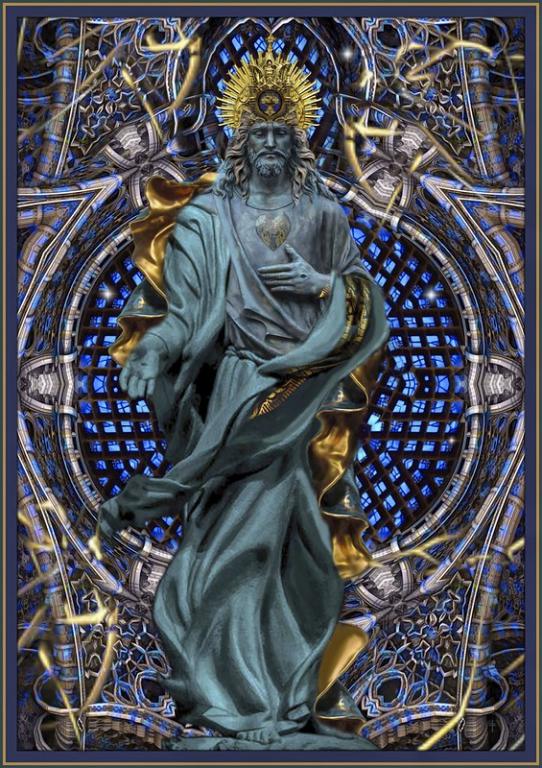
Photo credit: Daniel Arrhakis, Jesus – The Second Coming (2018) [Flickr / CC BY-NC 2.0 license]
***
Previous Post
October 1, 2020
Prayer to Creatures Proven from Holy Scripture
Next Post
October 8, 2020 Fratelli tutti: Love is Great; How to Best Apply It?
Browse Our Archives
Select a Category & Last Things About Me Anti-Catholicism Atheism & Agnosticism Baptism and Sacramentalism Bible and Tradition Blessed Virgin Mary Books by Dave Armstrong C. S. Lewis Calvinism & General Protestantism Catholic Apologetics Catholic Apologists Catholic conversion Catholic converts Christmas Church (Ecclesiology) Church History Conversion and Converts Development of Doctrine Eastern Orthodoxy Ecumenism & Christian Unity Eucharist & Liturgy Fathers of the Church French Translations G. K. Chesterton Hell Hell & Satan Hell & Satan & Last Things Heresies & Comparative Religion Holistic Health Inquisition & Crusades & Scandals James White Jews & Judaism & Old Testament John Calvin John Henry Newman Liberal / Modernist Theology Life Issues Literary Resume Lutheranism Mariology Martin Luther Music Orthodoxy Papacy & Infallibility Personal Page Philosophy & Science Political & Ethical & Moral Issues Protestant Persecution & Intolerance Protestantism Purgatory Purgatory & Penance Romantic & Imaginative Theology Saints & Purgatory & Penance Salvation Salvation & Justification Satan & Last Things Sexuality and Gender Issues Spanish Translations Traditionalism vs. Radical Catholic Reactionaries Traducciones al español / tradução para português Trinitarianism & Christology Uncategorized Videos
Select a Month October 2026 September 2026 August 2026 July 2026 June 2026 May 2026 April 2026 March 2026 February 2026 January 2026 December 2025 November 2025 October 2025 September 2025 August 2025 July 2025 June 2025 May 2025 April 2025 March 2025 February 2025 January 2025 December 2024 November 2024 October 2024 September 2024 August 2024 July 2024 June 2024 May 2024 April 2024 March 2024 February 2024 January 2024 December 2023 November 2023 October 2023 September 2023 August 2023 July 2023 June 2023 May 2023 April 2023 March 2023 February 2023 January 2023 December 2022 November 2022 October 2022 September 2022 August 2022 July 2022 June 2022 May 2022 April 2022 March 2022 February 2022 January 2022 December 2021 November 2021 October 2021 September 2021 August 2021 July 2021 June 2021 May 2021 April 2021 March 2021 February 2021 January 2021 December 2020 November 2020 October 2020 September 2020 August 2020 July 2020 June 2020 May 2020 April 2020 March 2020 February 2020 January 2020 December 2019 November 2019 October 2019 September 2019 August 2019 July 2019 June 2019 May 2019 April 2019 March 2019 February 2019 January 2019 December 2018 November 2018 October 2018 September 2018 August 2018 July 2018 June 2018 May 2018 April 2018 March 2018 February 2018 January 2018 December 2017 November 2017 October 2017 September 2017 August 2017 July 2017 June 2017 May 2017 April 2017 March 2017 February 2017 January 2017 December 2016 November 2016 October 2016 September 2016 August 2016 July 2016 June 2016 May 2016 April 2016 March 2016 February 2016 January 2016 December 2015 November 2015 October 2015 September 2015 August 2015 July 2015 June 2015 May 2015 April 2015 March 2015 February 2015 January 2015 December 2014 November 2014 October 2014 September 2014 August 2014 July 2014 June 2014 April 2014 March 2014 February 2014 January 2014 December 2013 November 2013 October 2013 September 2013 August 2013 July 2013 June 2013 April 2013 March 2013 February 2013 January 2013 December 2012 November 2012 October 2012 September 2012 August 2012 July 2012 June 2012 May 2012 April 2012 March 2012 February 2012 January 2012 December 2011 November 2011 October 2011 September 2011 August 2011 July 2011 June 2011 April 2011 March 2011 February 2011 October 2010 September 2010 August 2010 July 2010 April 2010 March 2010 December 2009 October 2009 August 2009 July 2009 June 2009 May 2009 March 2009 February 2009 October 2008 September 2008 April 2008 March 2008 February 2008 January 2008 December 2007 November 2007 October 2007 May 2007 March 2007 February 2007 January 2007 November 2006 October 2006 September 2006 August 2006 July 2006 June 2006 May 2006 April 2006 March 2006 February 2006 October 2005 June 2005 April 2005 February 2005 July 2004 May 2004 April 2004
Follow Us!
TAKE THE
Religious Wisdom Quiz
What famous cathedral is in Paris, known for its flying buttresses and rose windows?
Select your answer to see how you score.
Notre Dame St. Paul's St. Peter's Canterbury
Books by This Author Books by Dave Armstrong
Related posts from Biblical Evidence for Catholicism

No Hell? Dialogue on Conditional Immortality, Pt. 3
Biblical Evidence for Catholicism
No Hell? Dialogue on Conditional Immortality, Pt. 2
Biblical Evidence for Catholicism
No Hell? Dialogue on Conditional Immortality
Biblical Evidence for Catholicism
Eternal Hell: Biblical? 25 Verses Say So
Biblical Evidence for Catholicism
TRENDING AT PATHEOS Catholic

In "Irreplaceable," our book on vocation and technology, Trevor Sutton and I...

I was strolling through the top floor of the brand new Parthenon...

What Does Gêvâh Mean For Kimberley Guifoyle &...
This week, a lot of the news is focused on Kimberly Guilfoyle....

INNER CIRCLE: Profound Mystery (Of Christ In All...
Ephesians 5:31-32 “For this reason, a man will leave his father and...

Do Not Rejoice When Your Enemy Falls: The...
Turning an execution into a public spectacle is a disturbing expression of...

'The Chosen' S6 Trailer: The Passion Gets Very...
Not many watching 'The Chosen' worry about spoilers, but just because they...
view all Catholic blogs
Ad-Free & Subscriber Log-In Subscription Support
- About Us
- 2026 Calendar
- Videos
- Podcasts
- Library of World Religions
- Faith In Media Tracker
- Advertise With Us
- Write for Us
- Privacy Policy
- Terms of Service
- Do Not Sell My Data
- Contact Us
- Radiant Digital
- Manage Newsletter Subscriptions
- Unsubscribe From Notifications
- Sitemap
Copyright 2008-2026, Patheos. All rights reserved.
Subscription Support Ad-Free & Subscriber Log-In
Follow Patheos