
BuddhistCatholicContemplativeEvangelicalGeneral ChristianHinduJewishLatter-day SaintMuslimNew VisionsProgressive Christian
Beliefs
- Buddhist
- Catholic
- Contemplative
- Evangelical
- General Christian
- Hindu
- Jewish
- Latter-day Saint
- More Voices
- Muslim
- New Visions
- Pagan
- Progressive Christian
Topics
- Religion News
- Food and Religion
- Sports and Religion
- Religious Art
- Religious Music and Entertainment
- Religious Events
- History and Religion
- Style and Religion
- Politics and Religion
- Women in Religion
- Recreation Outdoors and Religion
- Business Finance and Religion
- Careers Workplace and Religion
- Education and Religion
- Family Parenting and Religion
- Health Fitness and Religion
- Home and Religion
- Relationships and Religion
- Technology and Religion
- Travel and Religion
Columnists
- Buddhist Columnists
- Business Finance and Religion Columnists
- Careers Workplace and Religion Columnists
- Catholic Columnists
- Contemplative Columnists
- Education and Religion Columnists
- Evangelists Columnists
- Family Parenting and Religion Columnists
- General Christian Columnists
- Health Fitness and Religion Columnists
- Hindu Columnists
- History and Religion Columnists
- Home and Religion Columnists
- Jewish Columnists
- More Voices Columnists
- Latter Day Columnists
- Muslim Columnists
- New Visions Columnists
- Nonreligious Columnists
- Pagan Columnists
- Politics and Religion Columnists
- Progressive Columnists
- Recreation Outdoors and Religion Columnists
- Relationships and Religion Columnists
- Religion News Columnists
- Religious Art Columnists
- Religious Events Columnists
- Religious Music and Entertainment Columnists
- Sports and Religion Columnists
- Style and Religion Columnists
- Technology and Religion Columnists
- Travel and Religion Columnists
- Women in Religion Columnists
Resource Library
- 2026 Calendar
- Library of World Religions
- The 100 Most Holy Places on Earth
- Patheos Answers
- Podcasts
- Videos
- Faith Leaders Database
- Anglican Episcopalian
- Bahai
- Baptist
- Buddhism
- Christianity
- Confucianism
- Eastern Orthodoxy
- Hinduism
- Holiness and Pentecostal
- ISKCON
- Islam
- Judaism
- Lutheran
- Methodist
- The Church of Jesus Christ of Latter-day Saints
- New Age
- Paganism
- Presbytarian and Reformed
- Protestantism
- Religion Behind the Scenes
- Roman Catholic
- Scientology
- Shia Islam
- Sikhism
- Sufism
- Sunni Islam
- Taoism
- Zen
- See all religions
Research Tools
 Ad-Free & Subscriber Log-In Subscription Support
Ad-Free & Subscriber Log-In Subscription Support
Follow Patheos 

- Trending:
- Forgiveness
- |
- Marriage
- |
- Consciousness
- |
- Death Penalty
- |
- Election
- |
- Halloween

-
About
-
Catholic Apologetics
-
Church History
-
Great Apologists
-
Christian Worldview
-
Protestantism & Misc.
- Home
- Catholic
- History and Religion
- Jason Engwer, Origen, & the New Testament Canon
Jason Engwer, Origen, & the New Testament Canon
Last updated on: October 15, 2020 at 12:01 pm by Dave Armstrong
Jason Engwer, Origen, & the New Testament Canon 2020-10-15T12:01:36-04:00 Dave Armstrong
Patheos Explore the world's faith through different perspectives on religion and spirituality! Patheos has the views of the prevalent religions and spiritualities of the world.
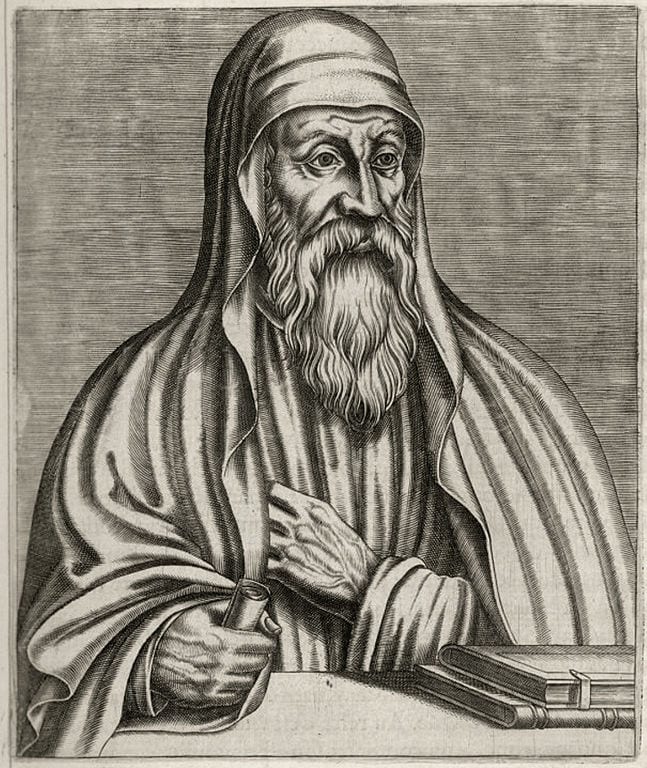
Protestant apologist Jason Engwer (words in blue below) recently wrote:
It’s common to allege that the twenty-seven-book New Testament canon we have today doesn’t first appear in the historical record until around the middle of the fourth century, in Athanasius. But it probably was advocated in multiple locations prior to that time, including in Origen more than a century earlier. (10-14-20)
He links to an 11-year-old paper of his where he fleshes this out:
The earliest extant source I’m aware of who advocates that twenty-seven-book canon is Origen, more than a century before Athanasius. . . . Near the end of his life, Origen commented:
our Lord, whose advent was typified by the son of Nun [Joshua], when He came, sent His Apostles as priests bearing well-wrought trumpets. Matthew first sounded the priestly trumpet in his Gospel. Mark also, Luke and John, each gave forth a strain on their priestly trumpets. Peter moreover sounds loudly on the twofold trumpet of his Epistles; and also James and Jude. Still the number is incomplete, and John gives forth the trumpet-sound in his Epistles and Apocalypse; and Luke while describing the Acts of the Apostles. Lastly however came he who said: ‘I think that God has set forth us Apostles last of all,’ and thundering on the fourteen trumpets of his Epistles, threw down even to the ground the walls of Jericho, that is to say all the instruments of idolatry and the doctrines of philosophers. (Homilies On Joshua, 7:1 . . .)
This passage is controversial. The scholarly reactions to it are diverse. Bruce Metzger argues that the passage is genuine and seems to refer to our twenty-seven-book canon . . ., which is the position I hold. . . .
I conclude, then, that Origen is the earliest extant source to advocate the twenty-seven-book New Testament canon. But even if it would be argued that he held a twenty-five-book or twenty-six-book canon instead, the similarity to our canon would be highly significant. (5-4-09)
What Jason curiously neglects to note is that a deficient canon is not only a list with less books than the 27 New Testament books all Christians now accept; it also includes lists with more books than the 27. This was the beauty of St. Athanasius in 367 (the very thing Jason is trying to dispute). He not only listed the present 27 books, but did not hold that any other books were also scriptural.
Jason argues that Origen (c. 184 – c. 253) was the first to present all 27 and no other additional ones (114 years before Athanasius undoubtedly did so), since Jason says he was “the earliest extant source to advocate the twenty-seven-book New Testament canon.”
But Jason did what so many Protestants who argue from the Church fathers unfortunately do: he selectively presented patristic evidence that backs him up and ignored other evidence that does not. This won’t do (needless to say). Jason neglected to tell his readers which non-canonical books Origen also thought were Scripture: the Epistle of Barnabas, the Didache, and Shepherd of Hermas. So he could hardly have accepted a 27-book canon if he accepted these, now, could he?
Origen often referred to the Shepherd of Hermas, and late in his life (around 244-246), he referred to it as “a work which seems to me very useful, and, as I believe, divinely inspired” (Comm. in Rom. 10.31). He appeared to accept the canonicity of the Epistle of Barnabas in his Contra Celsus: one of the three times he cited it:
[H]e seems, in order to bring an accusation against Christianity, to believe the Gospel accounts only where he pleases, and to express his disbelief of them, in order that he may not be forced to admit the manifestations of Divinity related in these same books; whereas one who sees the spirit of truth by which the writers are influenced, ought, from their narration of things of inferior importance, to believe also the account of divine things. Now in the general Epistle of Barnabas, from which perhaps Celsus took the statement that the apostles were notoriously wicked men, it is recorded that Jesus selected His own apostles, as persons who were more guilty of sin than all other evildoers. And in the Gospel according to Luke, Peter says to Jesus, Depart from me, O Lord, for I am a sinful man. (I, 63; also written late in his life, in 248)
Many scholars also think that Origen regarded the Didache as inspired and canonical. Lee Martin McDonald, in his book, The Formation of the Biblical Canon: Volume 2: The New Testament: Its Authority and Canonicity (Bloomsbury Publishing, 2017), stated:
Origen also refers to the Epistle of Barnabas, Shepherd of Hermas, and Didache, possibly or apparently acknowledging them as Scripture. . . . If one claims that Origen acknowledged James and Jude as canon because he made use of them, then the same could also be said for Epistle of Barnabas, Shepherd of Hermas, and the Didache. (p. 83)
In a related article written on 30 May 2009, Jason shows that he is aware of two of these three books: “The Shepherd Of Hermas and The Epistle Of Barnabas weren’t as popular as is often suggested.” Nor does he mention Origen at all in the article. “Out of sight, out of mind” is, I guess, Jason’s philosophy, when he runs across anomalies that don’t fit into his preconceived notions. He discusses all three of these books in another paper on the New Testament canon (dated 5-7-09), but again never informs his readers that Origen thought they were canonical Scripture, even though he is mentioned three times. Instead, he reiterates:
Athanasius’ twenty-seven-book New Testament was held by some of his contemporaries and by some before his time. Origen is the earliest source I’m aware of who advocates the twenty-seven-book canon in the records extant to us. Though Athanasius’ Festal Letter 39 from the middle of the fourth century is often cited as the first reference to the twenty-seven-book canon, the evidence suggests that it was advocated at least more than a century earlier.
It’s not at all certain that Origen even accepted all 27 New Testament books (later decreed as such in the late 4th and early 5th centuries by the Catholic Church, along with the Old Testament, including the Deuterocanon). He never cited 2 Peter, and Eusebius records him as stating:
And Peter, on whom the Church of Christ is built, ‘against which the gates of hell shall not prevail’ (Matt. 16:18), has left one acknowledged Epistle; possibly also a second, but this is doubtful. (Church History, 6.25.8)
He also never cited 2 or 3 John, and wrote:
He has left also an epistle of very few lines; perhaps also a second and third; but not all consider them genuine, . . . (Ibid., 6.25.10)
On the other hand Origen did cite the Gospel of Peter (Comm. in Matt. 10.17) and the Gospel of the Hebrews (e.g., Comm. in John 2.12; Comm. in Matt. 16.12), sometimes adding a phrase like “if any one receives it” (Hom. in Jeremiah 15.4; Comm. in Matt. 15.14). He cited the Preaching of Peter twice (Comm. in John 13.17; De Princ. praef. 8), the Acts of Paul twice (De Principiis, 12.3; Comm. in John 20.12), and 1 Clement four times.
It’s far worse, from the minority anti-Catholic position within Protestantism, for one to hold that a non-biblical book is inspired, than for Catholics to hold to authoritative tradition, which is not inspired.
For much of the above data, I drew from Glenn Davis’ superb overview, “The Development of the Canon of the New Testament”: Origen.
I think Jason’s readers are entitled to know these relevant facts, in light of his claims that Origen got the 27 New Testament books right.
As we would expect, while there was a broad consensus as to which books belonged in the New Testament in the first four centuries, still there was enough disagreement, and the inclusion of non-canonical books, to make a Church proclamation necessary. The books were not self-attesting or “perspicuous” enough for the Bible itself to accomplish the task of determining the canon.
***
Related Reading
The New Testament Canon & Historical Processes [1996]
Dialogue on Doctrinal Development (Papacy & NT Canon) (vs. Jason Engwer) [2-26-02]
Development of the Biblical Canon: Protestant Difficulties [2-26-02 and 3-19-02, abridged with slight revisions and additions on 7-19-18]
Are All Bible Books Self-Evidently Inspired? [6-19-06]
Are All the Biblical Books Self-Evidently Canonical? [6-22-06]
25 Brief Arguments on the Biblical Canon & Protestantism [2009]
Catholic Development of Doctrine: A Defense (vs. Jason Engwer; Emphasis on the Canon of the Bible & Church Infallibility) (+ Pt. II / Pt. III / Pt. IV) [1-15-10]
Biblical Canon vs. Protestant Sola Scriptura [6-5-10]
Church Authority & the Canon (vs. Calvin #59) [2012]
Conundrum! Scripture Alone Cannot Establish the Biblical Canon [National Catholic Register, 5-16-17]
The New Testament Canon is a “Late” Doctrine [National Catholic Register, 1-22-18]
Is Inspiration Immediately Evident in Every Biblical Book? [National Catholic Register, 7-28-18]
Vs. James White #10: Arbitrary Tradition Re the Canon [11-14-19]
***
Photo credit: Imaginative portrayal of Origen from Les Vrais Portraits Et Vies Des Hommes Illustres by André Thévet (1516-1590) [public domain / Wikimedia Commons]

***
Previous Post

October 14, 2020
Anti-Catholic Hypocrisy Re the Term "Anti-Catholic"
Next Post
October 16, 2020 Jason Engwer, Origen, & Intercession of Saints
Browse Our Archives
Select a Category & Last Things About Me Anti-Catholicism Atheism & Agnosticism Baptism and Sacramentalism Bible and Tradition Blessed Virgin Mary Books by Dave Armstrong C. S. Lewis Calvinism & General Protestantism Catholic Apologetics Catholic Apologists Catholic conversion Catholic converts Christmas Church (Ecclesiology) Church History Conversion and Converts Development of Doctrine Eastern Orthodoxy Ecumenism & Christian Unity Eucharist & Liturgy Fathers of the Church French Translations G. K. Chesterton Hell Hell & Satan Hell & Satan & Last Things Heresies & Comparative Religion Holistic Health Inquisition & Crusades & Scandals James White Jews & Judaism & Old Testament John Calvin John Henry Newman Liberal / Modernist Theology Life Issues Literary Resume Lutheranism Mariology Martin Luther Music Orthodoxy Papacy & Infallibility Personal Page Philosophy & Science Political & Ethical & Moral Issues Protestant Persecution & Intolerance Protestantism Purgatory Purgatory & Penance Romantic & Imaginative Theology Saints & Purgatory & Penance Salvation Salvation & Justification Satan & Last Things Sexuality and Gender Issues Spanish Translations Traditionalism vs. Radical Catholic Reactionaries Traducciones al español / tradução para português Trinitarianism & Christology Uncategorized Videos
Select a Month October 2026 September 2026 August 2026 July 2026 June 2026 May 2026 April 2026 March 2026 February 2026 January 2026 December 2025 November 2025 October 2025 September 2025 August 2025 July 2025 June 2025 May 2025 April 2025 March 2025 February 2025 January 2025 December 2024 November 2024 October 2024 September 2024 August 2024 July 2024 June 2024 May 2024 April 2024 March 2024 February 2024 January 2024 December 2023 November 2023 October 2023 September 2023 August 2023 July 2023 June 2023 May 2023 April 2023 March 2023 February 2023 January 2023 December 2022 November 2022 October 2022 September 2022 August 2022 July 2022 June 2022 May 2022 April 2022 March 2022 February 2022 January 2022 December 2021 November 2021 October 2021 September 2021 August 2021 July 2021 June 2021 May 2021 April 2021 March 2021 February 2021 January 2021 December 2020 November 2020 October 2020 September 2020 August 2020 July 2020 June 2020 May 2020 April 2020 March 2020 February 2020 January 2020 December 2019 November 2019 October 2019 September 2019 August 2019 July 2019 June 2019 May 2019 April 2019 March 2019 February 2019 January 2019 December 2018 November 2018 October 2018 September 2018 August 2018 July 2018 June 2018 May 2018 April 2018 March 2018 February 2018 January 2018 December 2017 November 2017 October 2017 September 2017 August 2017 July 2017 June 2017 May 2017 April 2017 March 2017 February 2017 January 2017 December 2016 November 2016 October 2016 September 2016 August 2016 July 2016 June 2016 May 2016 April 2016 March 2016 February 2016 January 2016 December 2015 November 2015 October 2015 September 2015 August 2015 July 2015 June 2015 May 2015 April 2015 March 2015 February 2015 January 2015 December 2014 November 2014 October 2014 September 2014 August 2014 July 2014 June 2014 April 2014 March 2014 February 2014 January 2014 December 2013 November 2013 October 2013 September 2013 August 2013 July 2013 June 2013 April 2013 March 2013 February 2013 January 2013 December 2012 November 2012 October 2012 September 2012 August 2012 July 2012 June 2012 May 2012 April 2012 March 2012 February 2012 January 2012 December 2011 November 2011 October 2011 September 2011 August 2011 July 2011 June 2011 April 2011 March 2011 February 2011 October 2010 September 2010 August 2010 July 2010 April 2010 March 2010 December 2009 October 2009 August 2009 July 2009 June 2009 May 2009 March 2009 February 2009 October 2008 September 2008 April 2008 March 2008 February 2008 January 2008 December 2007 November 2007 October 2007 May 2007 March 2007 February 2007 January 2007 November 2006 October 2006 September 2006 August 2006 July 2006 June 2006 May 2006 April 2006 March 2006 February 2006 October 2005 June 2005 April 2005 February 2005 July 2004 May 2004 April 2004
Follow Us!
TAKE THE
Religious Wisdom Quiz
What famous cathedral is in Paris, known for its flying buttresses and rose windows?
Select your answer to see how you score.
Notre Dame St. Paul's St. Peter's Canterbury
Books by This Author Books by Dave Armstrong
Related posts from Biblical Evidence for Catholicism

Three More Anti-Catholic Lies About Catholicism (#6-4)
Biblical Evidence for Catholicism

Top Ten Anti-Catholic Lies (#10-7)
Biblical Evidence for Catholicism

A Few "Worst" & "Best" Arguments vs. Protestantism
Biblical Evidence for Catholicism

17 Church Fathers on Purgatory (Esp. 1 Cor...
Biblical Evidence for Catholicism
TRENDING AT PATHEOS Catholic

In "Irreplaceable," our book on vocation and technology, Trevor Sutton and I...

I was strolling through the top floor of the brand new Parthenon...

What Does Gêvâh Mean For Kimberley Guifoyle &...
This week, a lot of the news is focused on Kimberly Guilfoyle....

INNER CIRCLE: Profound Mystery (Of Christ In All...
Ephesians 5:31-32 “For this reason, a man will leave his father and...

Do Not Rejoice When Your Enemy Falls: The...
Turning an execution into a public spectacle is a disturbing expression of...

'The Chosen' S6 Trailer: The Passion Gets Very...
Not many watching 'The Chosen' worry about spoilers, but just because they...
view all Catholic blogs
Ad-Free & Subscriber Log-In Subscription Support
- About Us
- 2026 Calendar
- Videos
- Podcasts
- Library of World Religions
- Faith In Media Tracker
- Advertise With Us
- Write for Us
- Privacy Policy
- Terms of Service
- Do Not Sell My Data
- Contact Us
- Radiant Digital
- Manage Newsletter Subscriptions
- Unsubscribe From Notifications
- Sitemap
Copyright 2008-2026, Patheos. All rights reserved.
Subscription Support Ad-Free & Subscriber Log-In
Follow Patheos