
BuddhistCatholicContemplativeEvangelicalGeneral ChristianHinduJewishLatter-day SaintMuslimNew VisionsProgressive Christian
Beliefs
- Buddhist
- Catholic
- Contemplative
- Evangelical
- General Christian
- Hindu
- Jewish
- Latter-day Saint
- More Voices
- Muslim
- New Visions
- Pagan
- Progressive Christian
Topics
- Religion News
- Food and Religion
- Sports and Religion
- Religious Art
- Religious Music and Entertainment
- Religious Events
- History and Religion
- Style and Religion
- Politics and Religion
- Women in Religion
- Recreation Outdoors and Religion
- Business Finance and Religion
- Careers Workplace and Religion
- Education and Religion
- Family Parenting and Religion
- Health Fitness and Religion
- Home and Religion
- Relationships and Religion
- Technology and Religion
- Travel and Religion
Columnists
- Buddhist Columnists
- Business Finance and Religion Columnists
- Careers Workplace and Religion Columnists
- Catholic Columnists
- Contemplative Columnists
- Education and Religion Columnists
- Evangelists Columnists
- Family Parenting and Religion Columnists
- General Christian Columnists
- Health Fitness and Religion Columnists
- Hindu Columnists
- History and Religion Columnists
- Home and Religion Columnists
- Jewish Columnists
- More Voices Columnists
- Latter Day Columnists
- Muslim Columnists
- New Visions Columnists
- Nonreligious Columnists
- Pagan Columnists
- Politics and Religion Columnists
- Progressive Columnists
- Recreation Outdoors and Religion Columnists
- Relationships and Religion Columnists
- Religion News Columnists
- Religious Art Columnists
- Religious Events Columnists
- Religious Music and Entertainment Columnists
- Sports and Religion Columnists
- Style and Religion Columnists
- Technology and Religion Columnists
- Travel and Religion Columnists
- Women in Religion Columnists
Resource Library
- 2026 Calendar
- Library of World Religions
- The 100 Most Holy Places on Earth
- Patheos Answers
- Podcasts
- Videos
- Faith Leaders Database
- Anglican Episcopalian
- Bahai
- Baptist
- Buddhism
- Christianity
- Confucianism
- Eastern Orthodoxy
- Hinduism
- Holiness and Pentecostal
- ISKCON
- Islam
- Judaism
- Lutheran
- Methodist
- The Church of Jesus Christ of Latter-day Saints
- New Age
- Paganism
- Presbytarian and Reformed
- Protestantism
- Religion Behind the Scenes
- Roman Catholic
- Scientology
- Shia Islam
- Sikhism
- Sufism
- Sunni Islam
- Taoism
- Zen
- See all religions
Research Tools
 Ad-Free & Subscriber Log-In Subscription Support
Ad-Free & Subscriber Log-In Subscription Support
Follow Patheos 

- Trending:
- Forgiveness
- |
- Marriage
- |
- Consciousness
- |
- Death Penalty
- |
- Election
- |
- Halloween

-
About
-
Catholic Apologetics
-
Church History
-
Great Apologists
-
Christian Worldview
-
Protestantism & Misc.
- Home
- Catholic
- History and Religion
- Fratelli tutti: Love is Great; How to Best Apply It?
Fratelli tutti: Love is Great; How to Best Apply It?
Last updated on: June 6, 2026 at 12:43 am by Dave Armstrong
Fratelli tutti: Love is Great; How to Best Apply It? 2026-06-06T00:43:04-04:00 Dave Armstrong
Patheos Explore the world's faith through different perspectives on religion and spirituality! Patheos has the views of the prevalent religions and spiritualities of the world.
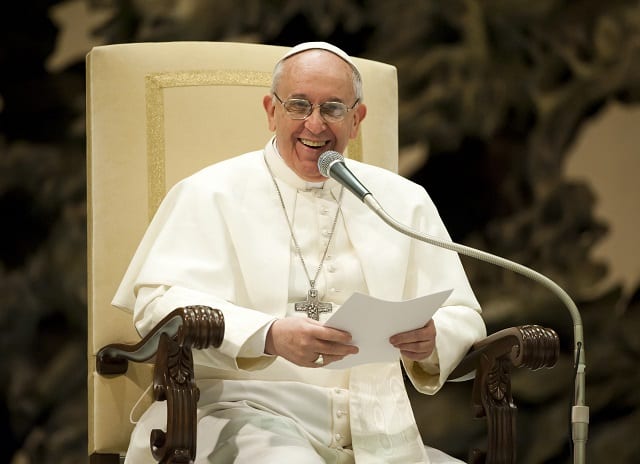
First, a bit of humor before I get super-serious: when I first saw the name of this encyclical, all I could think of was the late great Little Richard’s 1955 hit song, Tutti Frutti. Many inevitable, inveterate critics of this latest encyclical of Pope Francis will, no doubt, say that its contents are about as clear as the lyrics of that song.
I, too, will offer some criticism, but it is done with the utmost reverence towards the office of the papacy and Pope Francis as a person, within the framework of an awareness of the limitations of the papacy’s purview and scope. Popes are not necessarily (and not normally expected to be) the world’s leading experts on political and economic theories or particulars. Their primary domain is theology and spirituality.
They can and do offer their thoughts and opinions on such things, as we would fully expect (Jesus being Lord of all of life), but the faithful are not bound to every jot and tittle of those expressions, and views on the means to the end of love, which is the central notion of this encyclical, may differ widely among faithful Catholics and all people of good will and benevolent intent. Thus, we are fully allowed to disagree on various particulars, without any hint of even disrespect, let alone dissent.
If anyone has the “right” to offer a bit of criticism of this pope’s (non-doctrinal) social teaching, I submit that it would be yours truly. I have defended him no less than 173 times, collected 233 other defenses of him, and wrote a book defending him very early on (in January 2014). No one can accuse me, therefore, of having any predisposition of bias against him.
The pope mentions dialogue 49 times in this encyclical. I love that, as a huge advocate of dialogue myself, having engaged in probably over 1000 of them (preserved in writing on my blog and in my books) in my thirty years of Catholic apologetics, and another ten of Protestant and general Christian apologetics before that. Pope Francis wrote, citing Pope Pius XI at the end:
- When conflicts are not resolved but kept hidden or buried in the past, silence can lead to complicity in grave misdeeds and sins. Authentic reconciliation does not flee from conflict, but is achieved in conflict, resolving it through dialogue and open, honest and patient negotiation. Conflict between different groups “if it abstains from enmities and mutual hatred, gradually changes into an honest discussion of differences founded on a desire for justice”.
That’s what I’m doing now: in effect, dialoguing and interacting with him, within a common shared “desire for justice.” The Holy Father also stated: “I have sought to make this reflection an invitation to dialogue among all people of good will” (6) and “Together, we can seek the truth in dialogue, in relaxed conversation or in passionate debate” (50) and “in a true spirit of dialogue, we grow in our ability to grasp the significance of what others say and do, even if we cannot accept it as our own conviction” (203) . This doesn’t strike me as a “know-it-all” position. He’s not writing about dogma in this proclamation. It allows disagreement, while hoping for common ground, at least in goals, if not always in methods and means to shared ends.
Likewise, when I wrote about the pope’s “environmental encyclical” Laudato si in June 2015, I praised it to the skies (“wonderful and positively innovative encyclical . . . a goldmine of wisdom . . . innumerable gems of insight”), but I did respectfully dissent on two points: climate change and nuclear energy. And I was quite free to do so, by virtue of the pope’s own words:
There are certain environmental issues where it is not easy to achieve a broad consensus. Here I would state once more that the Church does not presume to settle scientific questions or to replace politics. But I am concerned to encourage an honest and open debate so that particular interests or ideologies will not prejudice the common good. [188]
I’m doing the same thing now: expressing my disagreement on non-doctrinal / non-theological issues, because the pope has called for open and honest dialogue.
As for this encyclical (released on 3 October 2020), let me say first that it contains throughout many magnificent and helpful expressions of the Christian duty of loving all people. I have no beef with any of that, as a general matter of overall intent and purpose. I can’t stress highly enough that all of his repeated expressions of Christian charity are wonderful and edifying, with much insight to offer all of us. Where I respectfully differ is in a criticism of what the pope inexplicably omitted from his analysis, and of a certain (if I dare say so) naivete in terms of how he thinks the lofty, noble goals of the encyclical are to be achieved and attained. And this is where equally honest and charitable Christians — even thoroughly orthodox Catholics like myself, who are also genuinely “fans” of his — may legitimately differ with him.
My strongest criticism comes from the depths of my heart as a pro-life advocate and activist since 1982. Pope Francis has condemned abortion many times, let there be no doubt: and with considerable passion and eloquence. This makes it all the more mysterious that he hasn’t highlighted (front and center, I would expect) this gravest social evil of our time (as the Church and popes have repeatedly asserted), in an encyclical devoted to loving one another. For what is less loving than the wanton destruction of innocent, helpless preborn human beings?
According to the pro-abortion Guttmacher Institute, in 1995 there were approximately “26 million legal and 20 million illegal abortions” worldwide. As a rough estimate, projecting this number to all years since 1965, when contraception laws were struck down in the United States, leading legally and philosophically to legal abortion only eight years later, this would add up to 2.53 billion abortions: an act which is considered gravely sinful murder by the Catholic Church, Orthodox Christians, and many Protestant denominations, as well as several world religions and other pro-life people without religious affiliation.
To get a perspective on such a massive, almost incomprehensible number, it is about 422 times more than the most infamous number widely known as a terrible massacre and genocide: Hitler’s murder of 6 million Jews during the Nazi period (1933-1945). Even in the US since that time, some 61 million abortions have occurred: ten times more than Hitler’s abominable total.
The evil of this cannot be adequately described in words. Yet in this encyclical about loving our fellow man, the pope mentioned it one time in the context of human trafficking that “forces” women “to abort” (24). That’s not even legal abortion. He mentions the “unborn” exactly once, too (along with an indirect condemnation of the contraceptive mentality):
Some parts of our human family, it appears, can be readily sacrificed for the sake of others considered worthy of a carefree existence. Ultimately, “persons are no longer seen as a paramount value to be cared for and respected, especially when they are poor and disabled, ‘not yet useful’ – like the unborn, or ‘no longer needed’ – like the elderly. . . .
A decline in the birthrate, which leads to the aging of the population, together with the relegation of the elderly to a sad and lonely existence, is a subtle way of stating that it is all about us, that our individual concerns are the only thing that matters. In this way, “what is thrown away are not only food and dispensable objects, but often human beings themselves”.
Equally evil (now increasingly widespread) practices of euthanasia and infanticide are never mentioned at all by name (though many other societal evils — especially economic-type ones — are, which is the odd thing). He does state that “each human being is sacred and inviolable” (207), but not with any direct connection to these three practices.
I’m not arguing that abortion has to be mentioned every time we talk about any social issues (the old tired “single issue” canard). But what I am saying is that it is incomprehensible how the gravest, most widespread societal evil of our time could figure so little in an encyclical about love. It’s an alarming lack of perspective on the “big picture.”
The entire encyclical is what I would call “vaguely leftist / leftish.” It may not be technically socialist (neither “socialism” nor “socialist” ever appear) — more like a European social Democrat outlook –, but it is at the same time seemingly oblivious to the wealth-producing properties of historic capitalism (which word never appears, either). Again, in an encyclical devoted to repeatedly pleading for the empowerment and betterment of the poor, how can he fail to mention what it is that enables them to escape poverty? That requires jobs and means to make an adequate living. These don’t come from nowhere, out of the ether. They derive from economic systems and laws upholding and encouraging same.
The pope mentions “employment” four times (110, 130, 162, 265) and “unemployment” (20). He even writes (passionately and dead-on, in my opinion):
- The biggest issue is employment. The truly “popular” thing – since it promotes the good of the people – is to provide everyone with the opportunity to nurture the seeds that God has planted in each of us: our talents, our initiative and our innate resources. This is the finest help we can give to the poor, the best path to a life of dignity. Hence my insistence that, “helping the poor financially must always be a provisional solution in the face of pressing needs. The broader objective should always be to allow them a dignified life through work”.[136] Since production systems may change, political systems must keep working to structure society in such a way that everyone has a chance to contribute his or her own talents and efforts. For “there is no poverty worse than that which takes away work and the dignity of work”.[137] In a genuinely developed society, work is an essential dimension of social life, for it is not only a means of earning one’s daily bread, but also of personal growth, the building of healthy relationships, self-expression and the exchange of gifts. Work gives us a sense of shared responsibility for the development of the world, and ultimately, for our life as a people. [my bolding]
[alternate translation by Joe Garcia] The great issue is employment. The truly “popular” thing – since it promotes the good of the people – is to ensure that all have the opportunity to sprout the seeds that God has planted in each of us: our talents, our initiative and our strength. This is the best help for the poor person, the best path to a life of dignity. For this reason, I insist that, “helping the poor with money must always be a temporary solution to solve immediately urgent needs. The great objective should always be to allow them to lead a dignified life through work”. However much production systems may change, politics/policies must not resign from the effort that the structure of a society is such that each person is guaranteed some way to contribute his own capabilities and efforts. For “there is no poverty worse than that which takes away work and the dignity of work”. In a truly developed society, work is an inalienable [literally, “un-resignable”] dimension of social life, for it is not only a means of earning one’s daily bread, but also the means of personal growth, the means of building healthy relationships, self-expression and the exchange of gifts [in the sense of “talent”], for the sense of shared responsibility for the betterment of the world, and ultimately, for living life as a people. [my bolding]
I couldn’t agree more. It so happens, that under President Trump, unemployment reached record lows: particularly the lowest ever among African-Americans, Hispanic Americans, and women. Those undeniable facts are truly something to celebrate. It is a direct fulfillment of what the pope calls for. And it came, of course, from a capitalist outlook. Pope Francis calls for jobs to raise up poor people. Trump’s policies led to exactly that. It’s a concrete example of what can be achieved. It could have been mentioned as a sterling and encouraging example of helping poor people, and treating them in a loving fashion, but it wasn’t.
Immigration is massively treated in the encyclical, yet neither the phrases nor concepts of “illegal immigrants” / “illegal immigration” ever appear. It’s as if this huge problem (especially in America) is simply wished out of existence. There is plenty of biblical data to bring to bear on the topic, as I have written about at length — and more than once. But none of that appears here. Instead, immigration is talked about with no differentiation between legal and illegal immigrants. It’s as if sensible border policies, that all countries have, are utterly irrelevant to the overall discussion. This is — with all due respect — simply naive and lacking all practical suggestion for what to do about real crises. To oppose illegal immigration is not at all necessarily an opposition to legal migrants and legitimate oppressed refugees.
In a similar vein, “terrorism” or “terror” are mentioned nine times and roundly condemned, along with modern-day “slavery” many times, which is great. But couldn’t the pope provide a concrete example of how such things are defeated? I am thinking of the obliteration of ISIS by President Trump, through military means. As Vice President Pence mentioned last night in his debate with Senator Kamala Harris, ISIS possessed land the size of Pennsylvania during the tenure of President Obama. He did nothing. President Trump immediately set to work destroying this evil organization, which mercilessly slaughtered and raped many thousands of civilians (including, for example burning to death reluctant sex slaves in cages: 19 Yazidi girls on one occasion in Mosul, Iraq). Is that not love in action? Is that not the same as what the Good Samaritan (highlighted in the document) did?
But it required the necessary use of force. And the pope made what I thought was a shocking and ill-advised statement: almost (but not quite) condemning all war and endorsing pacifism:
- War can easily be chosen by invoking all sorts of allegedly humanitarian, defensive or precautionary excuses, and even resorting to the manipulation of information. In recent decades, every single war has been ostensibly “justified”. The Catechism of the Catholic Church speaks of the possibility of legitimate defence by means of military force, which involves demonstrating that certain “rigorous conditions of moral legitimacy”[239] have been met. Yet it is easy to fall into an overly broad interpretation of this potential right. . . . We can no longer think of war as a solution, because its risks will probably always be greater than its supposed benefits. In view of this, it is very difficult nowadays to invoke the rational criteria elaborated in earlier centuries to speak of the possibility of a “just war”. Never again war![242]
[. . .]
- Every war leaves our world worse than it was before. War is a failure of politics and of humanity, a shameful capitulation, a stinging defeat before the forces of evil.
Now the pope rightly and appropriately condemned the Nazi Holocaust against the Jews:
- The Shoah must not be forgotten. It is “the enduring symbol of the depths to which human evil can sink when, spurred by false ideologies, it fails to recognize the fundamental dignity of each person, which merits unconditional respect regardless of ethnic origin or religious belief”.[231]
But how does he think that unspeakable evil was ended? Of course it was through necessary military force. It wasn’t as a result of people like Gandhi (cited in section 286), who urged Neville Chamberlain-like negotiations with Hitler and opined that he “was not a bad man.” His nonviolent protest methods may have worked against England, but not at all against the Nazis. It required a systematic military dismantling of the evil system that was Nazi Germany. As such it saved the world from many millions more deaths and horrendous despotic tyranny that can hardly be imagined, if Hitler and his diabolical minions had prevailed. And that is assuredly love in action.
Yet — discounting all that — all the pope can say is “Every war leaves our world worse than it was before”? Was that the case with World War II? Virtually no one would think so. The world before we won that victory for humanity was overrun by Nazi and Japanese imperialistic, fascist despots. It was certainly much better in 1946 than it had been in 1942. How could anyone possibly argue otherwise?
Not that the Allies were morally perfect. I have argued for 40 years in my apologetics that the nuclear bombings of Japan were gravely evil, as were the firebombings of Dresden and Tokyo. And there were many other evils committed as well. But it doesn’t follow that World War II — however morally flawed — was not an altogether necessary war against massive societal evil.
He says not a word about China and all the brutal monstrosities that occur there: from forced abortion to the suppression of the Hong Kong protesters, to the suppression of religious freedom (of Christians and Muslims alike) and slave camps for who knows how many. The words “China” and “Chinese” never appear. Nor does he ever mention Iran: the largest state that finances terrorism, ever-threatening North Korea, or Nigeria and the Sudan: where atrocities against Christians occur regularly. How about the historic peace deal between Israel and two Arab nations? Isn’t that something to celebrate as an act of positive peacemaking? Apparently not.
These constitute my biggest objections to the encyclical. Pope Francis calls for dialogue. I think a broadly conservative / capitalist outlook has much to bring to the table of such debates about how to empower poor people and enable them to fully participate in society and lead a dignified existence. I would say that we need to not only “talk the talk” but “walk the walk”: conservatism and capitalism have produced the wealth that raises the poor out of poverty, and we hold realistic views of how to oppose profound evil that have led to the defeat of organized wickedness like the Nazis and ISIS. Part and parcel of love is defending the innocent from murderous tyrants and enemies of freedom. Yet such notions and actions are scarcely mentioned in this encyclical.
I think that makes it seriously deficient, not so much in what it positively asserts (much of which is great and needful) but in terms of omission of many necessary aspects of the overall discussion which were simply ignored. The pope, too, has his own bias in social and political matters (as we all do) and it is not above criticism. No Catholic doctrine is violated in my criticisms. These are honest disagreements from a fellow Catholic concerning how to achieve the agreed-upon noble and crucial ends of love and justice and mercy.
***
Photo credit: Pope Francis: 16 March 2013 / © Mazur/catholicnews.org.uk [Flickr / CC BY-NC-SA 2.0 license]
***
Political & Ethical & Moral Issues
Previous Post

October 7, 2020
Seidensticker Folly #58: Jesus Erred on Time of 2nd Coming?
Next Post

October 8, 2020 Steve Skojec: Pope Sez Death Penalty is Intrinsically Evil (?)
Browse Our Archives
Select a Category & Last Things About Me Anti-Catholicism Atheism & Agnosticism Baptism and Sacramentalism Bible and Tradition Blessed Virgin Mary Books by Dave Armstrong C. S. Lewis Calvinism & General Protestantism Catholic Apologetics Catholic Apologists Catholic conversion Catholic converts Christmas Church (Ecclesiology) Church History Conversion and Converts Development of Doctrine Eastern Orthodoxy Ecumenism & Christian Unity Eucharist & Liturgy Fathers of the Church French Translations G. K. Chesterton Hell Hell & Satan Hell & Satan & Last Things Heresies & Comparative Religion Holistic Health Inquisition & Crusades & Scandals James White Jews & Judaism & Old Testament John Calvin John Henry Newman Liberal / Modernist Theology Life Issues Literary Resume Lutheranism Mariology Martin Luther Music Orthodoxy Papacy & Infallibility Personal Page Philosophy & Science Political & Ethical & Moral Issues Protestant Persecution & Intolerance Protestantism Purgatory Purgatory & Penance Romantic & Imaginative Theology Saints & Purgatory & Penance Salvation Salvation & Justification Satan & Last Things Sexuality and Gender Issues Spanish Translations Traditionalism vs. Radical Catholic Reactionaries Traducciones al español / tradução para português Trinitarianism & Christology Uncategorized Videos
Select a Month October 2026 September 2026 August 2026 July 2026 June 2026 May 2026 April 2026 March 2026 February 2026 January 2026 December 2025 November 2025 October 2025 September 2025 August 2025 July 2025 June 2025 May 2025 April 2025 March 2025 February 2025 January 2025 December 2024 November 2024 October 2024 September 2024 August 2024 July 2024 June 2024 May 2024 April 2024 March 2024 February 2024 January 2024 December 2023 November 2023 October 2023 September 2023 August 2023 July 2023 June 2023 May 2023 April 2023 March 2023 February 2023 January 2023 December 2022 November 2022 October 2022 September 2022 August 2022 July 2022 June 2022 May 2022 April 2022 March 2022 February 2022 January 2022 December 2021 November 2021 October 2021 September 2021 August 2021 July 2021 June 2021 May 2021 April 2021 March 2021 February 2021 January 2021 December 2020 November 2020 October 2020 September 2020 August 2020 July 2020 June 2020 May 2020 April 2020 March 2020 February 2020 January 2020 December 2019 November 2019 October 2019 September 2019 August 2019 July 2019 June 2019 May 2019 April 2019 March 2019 February 2019 January 2019 December 2018 November 2018 October 2018 September 2018 August 2018 July 2018 June 2018 May 2018 April 2018 March 2018 February 2018 January 2018 December 2017 November 2017 October 2017 September 2017 August 2017 July 2017 June 2017 May 2017 April 2017 March 2017 February 2017 January 2017 December 2016 November 2016 October 2016 September 2016 August 2016 July 2016 June 2016 May 2016 April 2016 March 2016 February 2016 January 2016 December 2015 November 2015 October 2015 September 2015 August 2015 July 2015 June 2015 May 2015 April 2015 March 2015 February 2015 January 2015 December 2014 November 2014 October 2014 September 2014 August 2014 July 2014 June 2014 April 2014 March 2014 February 2014 January 2014 December 2013 November 2013 October 2013 September 2013 August 2013 July 2013 June 2013 April 2013 March 2013 February 2013 January 2013 December 2012 November 2012 October 2012 September 2012 August 2012 July 2012 June 2012 May 2012 April 2012 March 2012 February 2012 January 2012 December 2011 November 2011 October 2011 September 2011 August 2011 July 2011 June 2011 April 2011 March 2011 February 2011 October 2010 September 2010 August 2010 July 2010 April 2010 March 2010 December 2009 October 2009 August 2009 July 2009 June 2009 May 2009 March 2009 February 2009 October 2008 September 2008 April 2008 March 2008 February 2008 January 2008 December 2007 November 2007 October 2007 May 2007 March 2007 February 2007 January 2007 November 2006 October 2006 September 2006 August 2006 July 2006 June 2006 May 2006 April 2006 March 2006 February 2006 October 2005 June 2005 April 2005 February 2005 July 2004 May 2004 April 2004
Follow Us!
TAKE THE
Religious Wisdom Quiz
Which book of the Bible has the most chapters?
Select your answer to see how you score.
Proverbs Genesis Psalms Isaiah
Books by This Author Books by Dave Armstrong
Related posts from Biblical Evidence for Catholicism

Was Peter "Any Old" Apostle? 10 Anti-Papal Arguments
Biblical Evidence for Catholicism

11 Protestant Objections to Papal Authority Debunked
Biblical Evidence for Catholicism

Matthew 16 & the Papacy (vs. Patrick O'Brien)
Biblical Evidence for Catholicism
Inspired Prophets: An Analogy to Infallible Popes
Biblical Evidence for Catholicism
TRENDING AT PATHEOS Catholic

The Sermon on the Mount, Part I: Matthew...
The Sermon on the Mount, Part I (Matthew 4:12-5:12) St. Matthew moves...

What's up from Crossway: Reviewing some of their latest A few weeks...

Janie Learns the Way of the Cross: A...
Teaching children about Jesus' Passion can be challenging. Many parents and educators...

Looking For Good Catholic Writing - October 2026
He alone extends the heavens, and he walks upon the waves of...

In "Irreplaceable," our book on vocation and technology, Trevor Sutton and I...

I was strolling through the top floor of the brand new Parthenon...
view all Catholic blogs
Ad-Free & Subscriber Log-In Subscription Support
- About Us
- 2026 Calendar
- Videos
- Podcasts
- Library of World Religions
- Faith In Media Tracker
- Advertise With Us
- Write for Us
- Privacy Policy
- Terms of Service
- Do Not Sell My Data
- Contact Us
- Radiant Digital
- Manage Newsletter Subscriptions
- Unsubscribe From Notifications
- Sitemap
Copyright 2008-2026, Patheos. All rights reserved.
Subscription Support Ad-Free & Subscriber Log-In
Follow Patheos