
BuddhistCatholicContemplativeEvangelicalGeneral ChristianHinduJewishLatter-day SaintMuslimNew VisionsProgressive Christian
Beliefs
- Buddhist
- Catholic
- Contemplative
- Evangelical
- General Christian
- Hindu
- Jewish
- Latter-day Saint
- More Voices
- Muslim
- New Visions
- Pagan
- Progressive Christian
Topics
- Religion News
- Food and Religion
- Sports and Religion
- Religious Art
- Religious Music and Entertainment
- Religious Events
- History and Religion
- Style and Religion
- Politics and Religion
- Women in Religion
- Recreation Outdoors and Religion
- Business Finance and Religion
- Careers Workplace and Religion
- Education and Religion
- Family Parenting and Religion
- Health Fitness and Religion
- Home and Religion
- Relationships and Religion
- Technology and Religion
- Travel and Religion
Columnists
- Buddhist Columnists
- Business Finance and Religion Columnists
- Careers Workplace and Religion Columnists
- Catholic Columnists
- Contemplative Columnists
- Education and Religion Columnists
- Evangelists Columnists
- Family Parenting and Religion Columnists
- General Christian Columnists
- Health Fitness and Religion Columnists
- Hindu Columnists
- History and Religion Columnists
- Home and Religion Columnists
- Jewish Columnists
- More Voices Columnists
- Latter Day Columnists
- Muslim Columnists
- New Visions Columnists
- Nonreligious Columnists
- Pagan Columnists
- Politics and Religion Columnists
- Progressive Columnists
- Recreation Outdoors and Religion Columnists
- Relationships and Religion Columnists
- Religion News Columnists
- Religious Art Columnists
- Religious Events Columnists
- Religious Music and Entertainment Columnists
- Sports and Religion Columnists
- Style and Religion Columnists
- Technology and Religion Columnists
- Travel and Religion Columnists
- Women in Religion Columnists
Resource Library
- 2026 Calendar
- Library of World Religions
- The 100 Most Holy Places on Earth
- Patheos Answers
- Podcasts
- Videos
- Faith Leaders Database
- Anglican Episcopalian
- Bahai
- Baptist
- Buddhism
- Christianity
- Confucianism
- Eastern Orthodoxy
- Hinduism
- Holiness and Pentecostal
- ISKCON
- Islam
- Judaism
- Lutheran
- Methodist
- The Church of Jesus Christ of Latter-day Saints
- New Age
- Paganism
- Presbytarian and Reformed
- Protestantism
- Religion Behind the Scenes
- Roman Catholic
- Scientology
- Shia Islam
- Sikhism
- Sufism
- Sunni Islam
- Taoism
- Zen
- See all religions
Research Tools
 Ad-Free & Subscriber Log-In Subscription Support
Ad-Free & Subscriber Log-In Subscription Support
Follow Patheos 

- Trending:
- Forgiveness
- |
- Marriage
- |
- Consciousness
- |
- Death Penalty
- |
- Election
- |
- Halloween

-
About
-
Catholic Apologetics
-
Church History
-
Great Apologists
-
Christian Worldview
-
Protestantism & Misc.
- Home
- Catholic
- History and Religion
- Seidensticker Folly #56: Many Jesuses in the New Testament?
Seidensticker Folly #56: Many Jesuses in the New Testament?
Last updated on: September 13, 2020 at 1:21 pm by Dave Armstrong
Seidensticker Folly #56: Many Jesuses in the New Testament? 2020-09-13T13:21:25-04:00 Dave Armstrong
Patheos Explore the world's faith through different perspectives on religion and spirituality! Patheos has the views of the prevalent religions and spiritualities of the world.
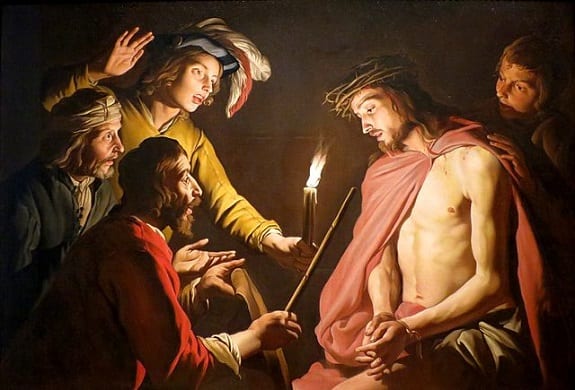
Atheist and anti-theist Bob Seidensticker, who was “raised Presbyterian”, runs the influential Cross Examined blog. He asked me there, on 8-11-18: “I’ve got 1000+ posts here attacking your worldview. You just going to let that stand? Or could you present a helpful new perspective that I’ve ignored on one or two of those posts?” He added in June 2017 in a combox: “If I’ve misunderstood the Christian position or Christian arguments, point that out. Show me where I’ve mischaracterized them.” Delighted to oblige his wishes . . .
Bob (for the record) virtually begged and pleaded with me to dialogue with him in May 2018, via email. But by 10-3-18, following massive, childish name-calling attacks against me, encouraged by Bob on his blog, he banned me from commenting there. I also banned him for violation of my rules for discussion, but (unlike him) provided detailed reasons for why it was justified.
Bob’s cowardly hypocrisy knows no bounds. On 6-30-19, he was chiding someone for something very much like he himself: “Spoken like a true weasel trying to run away from a previous argument. You know, you could just say, ‘Let me retract my previous statement of X’ or something like that.” Yeah, Bob could! He still hasn’t yet uttered one peep in reply to — now — 55 of my critiques of his atrocious reasoning.
Bible-Basher Bob’s words will be in blue. To find these posts, follow this link: “Seidensticker Folly #” or see all of them linked under his own section on my Atheism page.
*****
Bob tries to outdo even his own rock-bottom standards for Bible “exegesis” [choke] in his article, “Responding to “10 Myths About God” (2 of 3)” (11-26-14):
What you do see in the New Testament is the divinity of Jesus evolving with time. Sort the books chronologically and see the evolution. In Romans, Jesus was “appointed the Son of God” at his resurrection. In Mark, Jesus becomes divine earlier, at his baptism. In Matthew and Luke, it’s at his birth. And in John, since forever.
This is one of those hyper-ridiculous statements from atheists and Bob in particular, as an extraordinarily ignorant and self-deluded one, that makes a Christian apologist feel like a mosquito in a nudist camp: “where to begin?” But I shall barge ahead.
First, he spews this nonsense that the doctrine of Jesus evolves chronologically as the New Testament books are written. Like all good lies, this has a kernel of truth. All Christian doctrines develop, but that is a self-consistent notion, as opposed to the (not just biological) notion of evolution, where a thing can become a completely other thing. The latter does not occur in the New Testament, as regards the deity of Christ. He is always presented as God incarnate, and nothing in the New Testament denies that He is God in the flesh.
But let’s play Bob’s game for a moment and see what happens. I will deal with the Romans passage shortly. 2nd Thessalonians is one of the earliest New Testament books (estimated 52-53 AD), whereas Romans was written around 57-58. So, according to Bob, who thinks that Paul in Romans didn’t know that Jesus was God from all eternity (as indeed, God must be, by definition), 2 Thessalonians must have an even more primitive notion — and lack of knowledge and comprehension of — Jesus as God. But this is untrue. It teaches that Jesus judges the world in His Second Coming:
2 Thessalonians 1:7-8 (RSV) . . . when the Lord Jesus is revealed from heaven with his mighty angels in flaming fire, [8] inflicting vengeance . . .
2 Thessalonians 2:1-3, 8 Now concerning the coming of our Lord Jesus Christ and our assembling to meet him, we beg you, brethren, [2] not to be quickly shaken in mind or excited, either by spirit or by word, or by letter purporting to be from us, to the effect that the day of the Lord has come. [3] Let no one deceive you in any way; for that day will not come, unless the rebellion comes first, and the man of lawlessness is revealed, the son of perdition, . . . [8] And then the lawless one will be revealed, and the Lord Jesus will slay him with the breath of his mouth and destroy him by his appearing and his coming.
Now how does that prove He is necessarily God? Well, for one who (unlike Bible-Basher Bob) actually studies and understands the Bible, it is comprehended that the Old Testament teaches that it is God Who does this at the end of the age:
1 Samuel 2:10 …The LORD will judge the ends of the earth… (cf. Gen 18:25; 1 Chr 16:33; Ps 7:11; 9:8; 96:10; Is 2:4; 33:22)
Ecclesiastes 12:14 For God will bring every deed into judgment, with every secret thing, whether good or evil. (cf. 3:17; Ezek 18:30; 33:20; Joel 3:12)
Isaiah 11:4 …he shall smite the earth with the rod of his mouth, and with the breath of his lips he shall slay the wicked. [referring to the Messiah, Who is God]
Isaiah 40:10 Behold, the Lord GOD comes with might, and his arm rules for him; behold, his reward is with him, and his recompense before him. (cf. 40:5; Ps 96:13; 98:9)
Isaiah 66:15-16 For behold, the LORD will come in fire, and his chariots like the stormwind, to render his anger in fury, and his rebuke with flames of fire. [16] For by fire will the LORD execute judgment, and by his sword, upon all flesh; and those slain by the LORD shall be many. (cf. 59:20; Joel 2:11; Zech 2:10)
Conclusion: Jesus is God, and this is taught in 2 Thessalonians: one of the earliest book in the New Testament. There is no “evolution” in this respect. And that’s not the only evidence. Even more compelling is the fact that Jesus is called kurios (“Lord Jesus Christ”) 12 times in the book. This is, of course, calling Him God, since God the Father is called kurios many times in the New Testament. 1st Thessalonians was written at the same time and it also refers to “Lord Jesus Christ” or “Lord Jesus” another twelve times.
Yet Bob wants to pretend that St. Paul thinks Jesus became God at His Resurrection. He refers to this passage as his supposes “proof”:
Romans 1:4 and designated Son of God in power according to the Spirit of holiness by his resurrection from the dead, Jesus Christ our Lord,
The key to understanding this passage is the clause “in power.” The Greek scholar A. T. Robertson explains the passage:
Who was declared (tou orisqento). Articular participle (first aorist passive) of orizw for which verb see on Luke 22:22 ; Acts 2:23 . He was the Son of God in his preincarnate state ( 2 Corinthians 8:9 ; Philippians 2:6 ) and still so after his Incarnation (verse Romans 1:3 , “of the seed of David”), but it was the Resurrection of the dead (ex anastasew nekrwn, the general resurrection implied by that of Christ) that definitely marked Jesus off as God’s Son because of his claims about himself as God’s Son and his prophecy that he would rise on the third day. This event (cf. 1 Corinthians 15:1 ff.) gave God’s seal “with power” (en dunamei), “in power,” declared so in power ( 2 Corinthians 13:4 ). The Resurrection of Christ is the miracle of miracles. “The resurrection only declared him to be what he truly was” (Denney).
Greek linguist Marvin Vincent adds: “He was declared or instated mightily; in a striking, triumphant manner, through His resurrection.” So as usual, the passage Bob simply mentions as proof of his idiotic interpretations, means nothing of the sort. It basically means, “The resurrection proved that Jesus was Who He claimed to be [God].” And Jesus is again called kurios in the same manner as in the two epistles to the Thessalonians 18 times in this book as well. Both God the Father and God the Son, Jesus, are called kurios in one passage:
Romans 10:9-13 because, if you confess with your lips that Jesus is Lord and believe in your heart that God raised him from the dead, you will be saved. [10] For man believes with his heart and so is justified, and he confesses with his lips and so is saved. [11] The scripture says, “No one who believes in him will be put to shame.” [12] For there is no distinction between Jew and Greek; the same Lord is Lord of all and bestows his riches upon all who call upon him. [13] For, “every one who calls upon the name of the Lord will be saved.”
Romans 10:13 cites Joel 2:32: “And it shall come to pass that all who call upon the name of the LORD shall be delivered; for in Mount Zion and in Jerusalem there shall be those who escape, as the LORD has said, and among the survivors shall be those whom the LORD calls.” Thus, the NT is applying OT passages about God directly to Jesus.
Having disposed of this nonsense, let’s see what Bob thinks about the Gospels and the divinity of Jesus. He claims that in Mark, Jesus “becomes divine . . . at his baptism.“ Does the text support this? Nope:
Mark 1:9-11 In those days Jesus came from Nazareth of Galilee and was baptized by John in the Jordan. [10] And when he came up out of the water, immediately he saw the heavens opened and the Spirit descending upon him like a dove; [11] and a voice came from heaven, “Thou art my beloved Son; with thee I am well pleased.”
How in the world can any rational person think that this proves that Mark thought that Jesus became God at His baptism? God the Father simply calls Jesus His Son. So what! It would be like a new father (which one of my sons will become in less than two months) saying when his son was three months old: “this is my beloved son, who greatly pleases me” and someone interpreting that to mean that the child became his son at three months because he said that. It’s ridiculous; beneath contempt as an “argument.”
Bob claims that in Matthew and Luke Jesus “becomes divine . . . at his birth.” This is equally ludicrous. The texts say no such thing. They simply never do; and if Bob claims otherwise, then let him produce the text, instead of making his typical idiotic summary with no textual argument or serious exegetical effort. What Matthew does state is that Jesus’ birth is a fulfillment of Micah 5:2, which was understood by “all the chief priests and scribes” to refer to the Messiah (Christ in Greek: see Mt 2:1-6).
The New Testament citation of Micah 5:2 here doesn’t include its final portion: “whose origin is from of old, from ancient days.” The Hebrew word for “from ancient days” here (KJV: “from everlasting”) is olam; it’s often used to describe God the Father’s eternal existence (e.g., Ps 41:13; 90:2; 93:2; 106:48; Is 40:28). If this word means “eternal and uncreated” when applied to God the Father (YHWH), then it must mean the same thing when it is applied to Jesus. This shows that the Messiah, Who is God, was eternal, as does another famous Old Testament messianic passage:
Isaiah 9:6 For to us a child is born, to us a son is given; and the government will be upon his shoulder, and his name will be called “Wonderful Counselor, Mighty God, Everlasting Father, Prince of Peace.”
God the Father is also called “Mighty God” (the same phrase in Hebrew: El Gibbor): Dt 10:17; Neh 9:32; Is 10:21; Jer 32:18. The word for “everlasting,” ad, is applied to God the Father in Isaiah 57:15.
Jesus, then, obviously didn’t become God at His birth. Even though the final portion of Micah 5:2 wasn’t cited by Matthew, of course the Jews knew the entire passage, since it was a prominent messianic text. Matthew, like the other Gospels, consistently teaches that Jesus is God (therefore, eternal, since God is that by definition), as I showed at length in my reply yesterday to yet more errors and whoppers from Bob. If He’s eternal (which is made explicit in John, as even Bob admits), then He cannot have “become divine” at His birth.
As for Luke, proof is present showing that the author didn’t think Jesus became God when He was born, since Elizabeth, mother of John the Baptist calls him “Lord” (kurios) — which term is massively applied to God the Father also — even before He was born:
Luke 1:43 And why is this granted me, that the mother of my Lord should come to me?
As for Bob’s silly, goofy “chronological” view that the Bible only gradually comes to learn that Jesus is God, St. Paul wrote in Colossians: estimated to be written at the same time as Luke:
Colossians 1:15-17 He is the image of the invisible God, the first-born of all creation; [16] for in him all things were created, in heaven and on earth, visible and invisible, whether thrones or dominions or principalities or authorities — all things were created through him and for him. [17] He is before all things, and in him all things hold together.
The Greek for “firstborn” is prototokos, which means “preeminence” and “eternal preexistence,” according to Greek lexicons. It does not mean “first-created.” Apart from being untrue linguistically, this heretical interpretation is contradicted in the next two verses, which inform us that Christ “created all things,” and that He “is before all things.” The same book states about Jesus:
Colossians 2:9 For in him the whole fulness of deity dwells bodily,
Case closed. Another pitiful argument from Bob is exposed for the worthless piece of anti-biblical, anti-Christian lying propaganda that it is: ignorant, cynical, and plain old stupid.
***
Photo credit: Christ Crowned with Thorns (c. 1633-1639), by Matthias Stom (fl. 1615-1649) [public domain / Wikimedia Commons]

***
Previous Post
September 12, 2020
Seidensticker Folly #55: Godhood of Jesus in the Synoptics
Next Post

September 14, 2020 Follow-Up on My "Trump Wins Again" Post
Browse Our Archives
Select a Category & Last Things About Me Anti-Catholicism Atheism & Agnosticism Baptism and Sacramentalism Bible and Tradition Blessed Virgin Mary Books by Dave Armstrong C. S. Lewis Calvinism & General Protestantism Catholic Apologetics Catholic Apologists Catholic conversion Catholic converts Christmas Church (Ecclesiology) Church History Conversion and Converts Development of Doctrine Eastern Orthodoxy Ecumenism & Christian Unity Eucharist & Liturgy Fathers of the Church French Translations G. K. Chesterton Hell Hell & Satan Hell & Satan & Last Things Heresies & Comparative Religion Holistic Health Inquisition & Crusades & Scandals James White Jews & Judaism & Old Testament John Calvin John Henry Newman Liberal / Modernist Theology Life Issues Literary Resume Lutheranism Mariology Martin Luther Music Orthodoxy Papacy & Infallibility Personal Page Philosophy & Science Political & Ethical & Moral Issues Protestant Persecution & Intolerance Protestantism Purgatory Purgatory & Penance Romantic & Imaginative Theology Saints & Purgatory & Penance Salvation Salvation & Justification Satan & Last Things Sexuality and Gender Issues Spanish Translations Traditionalism vs. Radical Catholic Reactionaries Traducciones al español / tradução para português Trinitarianism & Christology Uncategorized Videos
Select a Month October 2026 September 2026 August 2026 July 2026 June 2026 May 2026 April 2026 March 2026 February 2026 January 2026 December 2025 November 2025 October 2025 September 2025 August 2025 July 2025 June 2025 May 2025 April 2025 March 2025 February 2025 January 2025 December 2024 November 2024 October 2024 September 2024 August 2024 July 2024 June 2024 May 2024 April 2024 March 2024 February 2024 January 2024 December 2023 November 2023 October 2023 September 2023 August 2023 July 2023 June 2023 May 2023 April 2023 March 2023 February 2023 January 2023 December 2022 November 2022 October 2022 September 2022 August 2022 July 2022 June 2022 May 2022 April 2022 March 2022 February 2022 January 2022 December 2021 November 2021 October 2021 September 2021 August 2021 July 2021 June 2021 May 2021 April 2021 March 2021 February 2021 January 2021 December 2020 November 2020 October 2020 September 2020 August 2020 July 2020 June 2020 May 2020 April 2020 March 2020 February 2020 January 2020 December 2019 November 2019 October 2019 September 2019 August 2019 July 2019 June 2019 May 2019 April 2019 March 2019 February 2019 January 2019 December 2018 November 2018 October 2018 September 2018 August 2018 July 2018 June 2018 May 2018 April 2018 March 2018 February 2018 January 2018 December 2017 November 2017 October 2017 September 2017 August 2017 July 2017 June 2017 May 2017 April 2017 March 2017 February 2017 January 2017 December 2016 November 2016 October 2016 September 2016 August 2016 July 2016 June 2016 May 2016 April 2016 March 2016 February 2016 January 2016 December 2015 November 2015 October 2015 September 2015 August 2015 July 2015 June 2015 May 2015 April 2015 March 2015 February 2015 January 2015 December 2014 November 2014 October 2014 September 2014 August 2014 July 2014 June 2014 April 2014 March 2014 February 2014 January 2014 December 2013 November 2013 October 2013 September 2013 August 2013 July 2013 June 2013 April 2013 March 2013 February 2013 January 2013 December 2012 November 2012 October 2012 September 2012 August 2012 July 2012 June 2012 May 2012 April 2012 March 2012 February 2012 January 2012 December 2011 November 2011 October 2011 September 2011 August 2011 July 2011 June 2011 April 2011 March 2011 February 2011 October 2010 September 2010 August 2010 July 2010 April 2010 March 2010 December 2009 October 2009 August 2009 July 2009 June 2009 May 2009 March 2009 February 2009 October 2008 September 2008 April 2008 March 2008 February 2008 January 2008 December 2007 November 2007 October 2007 May 2007 March 2007 February 2007 January 2007 November 2006 October 2006 September 2006 August 2006 July 2006 June 2006 May 2006 April 2006 March 2006 February 2006 October 2005 June 2005 April 2005 February 2005 July 2004 May 2004 April 2004
Follow Us!
TAKE THE
Religious Wisdom Quiz
Who prayed for rain after a long drought and sent his servant to look seven times?
Select your answer to see how you score.
Elijah Isaiah Samuel Hosea
Books by This Author Books by Dave Armstrong
Related posts from Biblical Evidence for Catholicism
Mary Mother of God: Reply to Allie Beth...
Biblical Evidence for Catholicism

God, Modern Physics, & Dark Energy: An Analogy
Biblical Evidence for Catholicism
Jesus Proved He Was God in Six Ways...
Biblical Evidence for Catholicism

General Debate on Christianity with an Atheist
Biblical Evidence for Catholicism
TRENDING AT PATHEOS Catholic

I was strolling through the top floor of the brand new Parthenon...

What Does Gêvâh Mean For Kimberley Guifoyle &...
This week, a lot of the news is focused on Kimberly Guilfoyle....

INNER CIRCLE: Profound Mystery (Of Christ In All...
Ephesians 5:31-32 “For this reason, a man will leave his father and...

Do Not Rejoice When Your Enemy Falls: The...
Turning an execution into a public spectacle is a disturbing expression of...

'The Chosen' S6 Trailer: The Passion Gets Very...
Not many watching 'The Chosen' worry about spoilers, but just because they...

The purpose-driven labor priest
A labor activist reads Rick Warren and it gets me wondering about...
view all Catholic blogs
Ad-Free & Subscriber Log-In Subscription Support
- About Us
- 2026 Calendar
- Videos
- Podcasts
- Library of World Religions
- Faith In Media Tracker
- Advertise With Us
- Write for Us
- Privacy Policy
- Terms of Service
- Do Not Sell My Data
- Contact Us
- Radiant Digital
- Manage Newsletter Subscriptions
- Unsubscribe From Notifications
- Sitemap
Copyright 2008-2026, Patheos. All rights reserved.
Subscription Support Ad-Free & Subscriber Log-In
Follow Patheos