
BuddhistCatholicContemplativeEvangelicalGeneral ChristianHinduJewishLatter-day SaintMuslimNew VisionsProgressive Christian
Beliefs
- Buddhist
- Catholic
- Contemplative
- Evangelical
- General Christian
- Hindu
- Jewish
- Latter-day Saint
- More Voices
- Muslim
- New Visions
- Pagan
- Progressive Christian
Topics
- Religion News
- Food and Religion
- Sports and Religion
- Religious Art
- Religious Music and Entertainment
- Religious Events
- History and Religion
- Style and Religion
- Politics and Religion
- Women in Religion
- Recreation Outdoors and Religion
- Business Finance and Religion
- Careers Workplace and Religion
- Education and Religion
- Family Parenting and Religion
- Health Fitness and Religion
- Home and Religion
- Relationships and Religion
- Technology and Religion
- Travel and Religion
Columnists
- Buddhist Columnists
- Business Finance and Religion Columnists
- Careers Workplace and Religion Columnists
- Catholic Columnists
- Contemplative Columnists
- Education and Religion Columnists
- Evangelists Columnists
- Family Parenting and Religion Columnists
- General Christian Columnists
- Health Fitness and Religion Columnists
- Hindu Columnists
- History and Religion Columnists
- Home and Religion Columnists
- Jewish Columnists
- More Voices Columnists
- Latter Day Columnists
- Muslim Columnists
- New Visions Columnists
- Nonreligious Columnists
- Pagan Columnists
- Politics and Religion Columnists
- Progressive Columnists
- Recreation Outdoors and Religion Columnists
- Relationships and Religion Columnists
- Religion News Columnists
- Religious Art Columnists
- Religious Events Columnists
- Religious Music and Entertainment Columnists
- Sports and Religion Columnists
- Style and Religion Columnists
- Technology and Religion Columnists
- Travel and Religion Columnists
- Women in Religion Columnists
Resource Library
- 2026 Calendar
- Library of World Religions
- The 100 Most Holy Places on Earth
- Patheos Answers
- Podcasts
- Videos
- Faith Leaders Database
- Anglican Episcopalian
- Bahai
- Baptist
- Buddhism
- Christianity
- Confucianism
- Eastern Orthodoxy
- Hinduism
- Holiness and Pentecostal
- ISKCON
- Islam
- Judaism
- Lutheran
- Methodist
- The Church of Jesus Christ of Latter-day Saints
- New Age
- Paganism
- Presbytarian and Reformed
- Protestantism
- Religion Behind the Scenes
- Roman Catholic
- Scientology
- Shia Islam
- Sikhism
- Sufism
- Sunni Islam
- Taoism
- Zen
- See all religions
Research Tools
 Ad-Free & Subscriber Log-In Subscription Support
Ad-Free & Subscriber Log-In Subscription Support
Follow Patheos 

- Trending:
- Forgiveness
- |
- Marriage
- |
- Consciousness
- |
- Death Penalty
- |
- Election
- |
- Halloween

-
About
-
Catholic Apologetics
-
Church History
-
Great Apologists
-
Christian Worldview
-
Protestantism & Misc.
- Home
- Catholic
- History and Religion
- God and “Natural Evil”: A Thought Experiment
God and “Natural Evil”: A Thought Experiment
Last updated on: June 6, 2026 at 12:43 am by Dave Armstrong
God and “Natural Evil”: A Thought Experiment 2026-06-06T00:43:04-04:00 Dave Armstrong
Patheos Explore the world's faith through different perspectives on religion and spirituality! Patheos has the views of the prevalent religions and spiritualities of the world.
This is a portion of a 2002 article that was included (with additional Augustine and Aquinas quotations) in my book, Christian Worldview vs. Postmodernism (see the entire article). It deals with the problem of evil, which I, and I think, most Christian apologists and philosophers of religion, regard as the most serious objection to Christianity and God’s existence.
*****
Critics object that the free will defense (FWD) doesn’t address natural evils (things such as disease, earthquakes, famine, falling off a mountain, etc.), thus it is insufficient, and fails. This isn’t true at all. FWD doesn’t have to address natural evils because these are a necessary consequence of natural laws themselves. For example:
Rocks are hard.
Gravity exists.
Human faces, after a significant fall due to gravity, do not mix very well with rocks (assuming they happen to sit at the bottom of the fall).
The “natural evil” of a crushed skull or broken nose and severe scrapes may, therefore, occur.
Logical conclusion(s):
A. #1-3 are all natural laws (physics, chemistry, and biochemistry).
B. Natural laws are such (by their very nature, and given physical objects) that “injuries” and “annihilations” will inevitably occur.
C. Therefore, “natural evil” (insofar as the term makes any sense at all – it simply reduces to “unfortunate natural events”) is a necessary result of natural laws.
D. Therefore, to eliminate so-called “natural evil” is tantamount to the elimination of natural laws of matter, energy, etc. themselves.
E. Ergo: since elimination of natural laws would produce a chaotic, utterly unpredictable and formless world, this cannot be a possibility in the natural world as we know it; therefore the entire objection to this “absence” in FWD fails utterly.
Natural disasters are a necessary result of natural laws as we currently know them, and this is the real world, not one of the fantasy worlds atheists sometimes invent in order to maintain their rejection of theism, on these grounds. God could have changed these laws and made them operate some other way. But He didn’t.
We don’t have all the answers as to why He did what he did. He also could have made a world where atheists would see the clear evidence for His existence, and never resist it. But He didn’t. That’s because He values human choice and free will more than even obedience to Himself, even when He knows that being children of God is the best and most fulfilling choice for human beings. He doesn’t want coerced slaves; He wants children. And, for our part, we would much rather be sons and daughters of a loving Father than slaves of a wicked Master.
Unfortunately, natural laws as we know them involve decay and death. Everyone dies; we all get a “disease” in that sense. To have no disease and illness would mean being immortal and never having to age, decay or die. But cells, unfortunately, degenerate. Galaxies, stars, and universes all eventually “die.” So does biological life (much more quickly). That’s just how it is. The universe is winding down, and so is every one of us.
It is said that God could and should have performed many more miracles than Christians say He performs, to alleviate “unnecessary” suffering. But this is precisely what a natural world with laws and a uniformitarian principle precludes from the outset. How is it that the atheist can (in their hypothetical theories and arguments against Christianity) imagine all sorts of miracles and supernatural events that God should have done when it comes to evil and the FWD? “God should do this,” “He should have done that,” “I could have done much better than God did,” . . .
Yet when it comes to natural science (which is precisely what we are talking about, in terms of ”natural evil”), all of a sudden none of this is plausible (barely even possible) at all. Why is that? Legions of materialistic, naturalistic, and/or atheist scientists and their intellectual followers won’t allow the slightest miracle or direct divine intervention (not even in terms of intelligent design within the evolutionary hypothesis) with regard to the origin of life or DNA or mammals, or the human brain or eye, or even unique psychological/mental traits which humans possess.
Why would this be? I submit that it is because they have an extreme reluctance to introduce the miraculous when the natural can conceivably explain anything. They will resist any supernatural intervention into biological processes till their dying breath.
Yet when we switch the conversation over to FWD all of a sudden atheists — almost in spite of themselves – are introducing “superior” supernatural options for God to exercise, right and left. God is supposed to eliminate all disease, even though they are inevitable (even “normative”) according to the laws of biology as we know them. God is supposed to transform the entire structure of the laws of physics, so no one will ever get a scratch on their face. He is supposed to suspend a bullet in mid-air so it won’t kill its intended target, or make a knife turn to liquid before it rips into the flesh of yet another murder victim.
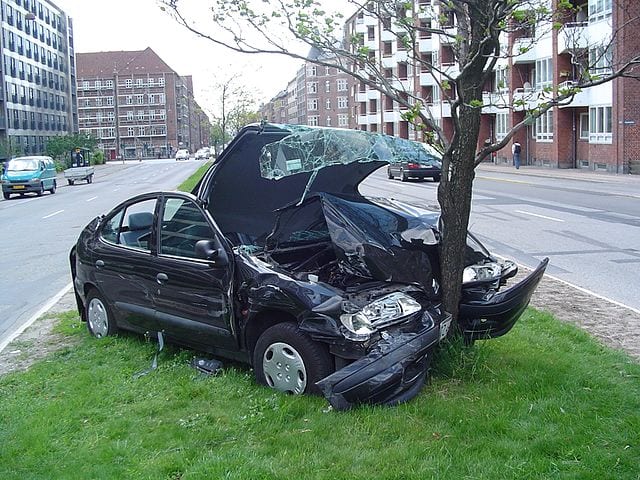
In the world these atheist critics demand of God, if He is to be a “good” God, or to exist at all, according to their exalted criteria, no one should ever have to get a corn on their toe, or a pimple, or have to blow their nose, or have chapped lips. God should turn rocks into Jello every time a child is to fall on one. Cars should turn into silly putty or steam or cellophane when they are about to crash. The sexually promiscuous should have their sexual diseases immediately healed so that no one else will catch them, and so that they can go on their merry way, etc.
Clearly, these sorts of critics find “plausible” whatever opposes against theism and Christianity, no matter what the subject is; no matter how contradictory and far-fetched such arguments are, compared to their attacks against other portions of the Christian apologetic or theistic philosophical defenses. Otherwise, they would argue consistently and accept the natural world as it is, rather than adopting a desperate, glaring logical double standard.
In effect, then, if we follow their reasoning, the entire universe becomes an Alice in Wonderland fantasy-land where man is at the center. This is the Anthropic Principle! Atheists then in effect demand from God the very things they claim to loathe when they are arguing against theism on other grounds. Man must be at the center of the universe and suffer no harm, in order for theism to be true. Miracles must take place here, there, and everywhere, if theism is to be accepted as a plausible or superior alternative to atheism.
The same atheists will argue till they’re blue in the face against demonstrable miracles such as Jesus’ Resurrection. What they demand in order to accept Christianity they are never willing to accept when in fact it occurs to any degree (say, e.g., the healings performed by Jesus). God is not bound by human whims and fancies and demands. The proofs and evidences He has already provided are summarily rejected by atheists, one-by-one, as never “good enough.”
Atheists and other skeptics seem to want to go to any lengths of intellectual inconsistency and hostility in order to preserve their skepticism. They refuse to bow down to God unless He creates an entirely different world, in order to conform to their ultimately illogical imaginings and excessive, absurd requests for what He should have done. They’re consistent in their inconsistency.
By definition, the natural world entails suffering. One doesn’t eliminate that “difficulty” simply by resorting to a hypothetical fantasy-world where God eliminates every suffering by recourse to miracle and suspension of the natural laws He put into place.
In any event, the world as He created it did not originally involve suffering (nor will it in the future, for the redeemed). Man could have chosen to live in such a world, just as the unfallen angels did. They chose never to rebel. But man did, and having done so, now he wants to blame God for everything for which the blame in actuality lies squarely upon his own shoulders.
The natural world can’t modify itself every time someone stubs their toe or gets a sunburn. That would require infinitely more miracles than any Christian claims have occurred. With a natural world and natural laws, any number of diseases are bound to occur. One could stay out in the cold too long and get pneumonia. Oh, so atheists want God – if He exists – to immediately cure every disease that comes about?
Again, the miraculous, by definition, is not the normative. It is the extraordinary, rare event. I might stay underwater too long, swallow water, and damage my lungs. I could fall while ice skating, bump my head severely and damage my brain. I might eat a poisonous mushroom, or get stung by a poisonous snake, etc., etc. That’s how the world works. It is not God’s fault’ it is the nature of things, and the things of nature.
In an orderly, uniformitarian, largely predictable natural world which makes any sense at all, there will be diseases, torn ligaments, colds, and so forth. The question then becomes: “how much is too much suffering?” or “how many miracles is God required to perform to be a good and just God?” At that point the atheist can, of course, give no substantive, non-arbitrary answer, and his outlook is reduced to wishful thinking and pipe dreams.
Materialistic evolutionists resist miraculous creation at all costs precisely because they think miracles are exceedingly rare. Christians apply the same outlook to reality-at-large. We say that miracles will be very infrequent, by their very nature (“SUPERnatural”). And that must be the case so that the world is orderly and predictable enough to comfortably live in, in the first place.
The many atheists with whom I discussed this subject (I was on a list with some 40-60 atheists or agnostics) didn’t really deal at all with the difficulties inherent in making a world where there is not even any “natural evil.” All they did was imagine a world in which there was no suffering (which is easy enough for anyone to do, but extremely simplistic and not exactly a rigorously philosophical approach).
They did not ponder all the logical – even physical – conundrums such a world would entail. A small child could opine that the world ought not to have any suffering whatever. But an adult has the responsibility to properly think through all the ramifications of that. He no longer has the luxury of the child, to create fairy-tales at his whim and fancy, about reality.
***
Photo credit: Thue (5-24-05). A car crash on Jagtvej, a road in Copenhagen, Denmark. [public domain / Wikimedia Commons]

***
Previous Post
August 15, 2020
Mary's Assumption: Patristic Analogy to Protestant Distinctives
Next Post

August 16, 2020 Face Masks: Is Scientific Evidence Unanimous?
Browse Our Archives
Select a Category & Last Things About Me Anti-Catholicism Atheism & Agnosticism Baptism and Sacramentalism Bible and Tradition Blessed Virgin Mary Books by Dave Armstrong C. S. Lewis Calvinism & General Protestantism Catholic Apologetics Catholic Apologists Catholic conversion Catholic converts Christmas Church (Ecclesiology) Church History Conversion and Converts Development of Doctrine Eastern Orthodoxy Ecumenism & Christian Unity Eucharist & Liturgy Fathers of the Church French Translations G. K. Chesterton Hell Hell & Satan Hell & Satan & Last Things Heresies & Comparative Religion Holistic Health Inquisition & Crusades & Scandals James White Jews & Judaism & Old Testament John Calvin John Henry Newman Liberal / Modernist Theology Life Issues Literary Resume Lutheranism Mariology Martin Luther Music Orthodoxy Papacy & Infallibility Personal Page Philosophy & Science Political & Ethical & Moral Issues Protestant Persecution & Intolerance Protestantism Purgatory Purgatory & Penance Romantic & Imaginative Theology Saints & Purgatory & Penance Salvation Salvation & Justification Satan & Last Things Sexuality and Gender Issues Spanish Translations Traditionalism vs. Radical Catholic Reactionaries Traducciones al español / tradução para português Trinitarianism & Christology Uncategorized Videos
Select a Month October 2026 September 2026 August 2026 July 2026 June 2026 May 2026 April 2026 March 2026 February 2026 January 2026 December 2025 November 2025 October 2025 September 2025 August 2025 July 2025 June 2025 May 2025 April 2025 March 2025 February 2025 January 2025 December 2024 November 2024 October 2024 September 2024 August 2024 July 2024 June 2024 May 2024 April 2024 March 2024 February 2024 January 2024 December 2023 November 2023 October 2023 September 2023 August 2023 July 2023 June 2023 May 2023 April 2023 March 2023 February 2023 January 2023 December 2022 November 2022 October 2022 September 2022 August 2022 July 2022 June 2022 May 2022 April 2022 March 2022 February 2022 January 2022 December 2021 November 2021 October 2021 September 2021 August 2021 July 2021 June 2021 May 2021 April 2021 March 2021 February 2021 January 2021 December 2020 November 2020 October 2020 September 2020 August 2020 July 2020 June 2020 May 2020 April 2020 March 2020 February 2020 January 2020 December 2019 November 2019 October 2019 September 2019 August 2019 July 2019 June 2019 May 2019 April 2019 March 2019 February 2019 January 2019 December 2018 November 2018 October 2018 September 2018 August 2018 July 2018 June 2018 May 2018 April 2018 March 2018 February 2018 January 2018 December 2017 November 2017 October 2017 September 2017 August 2017 July 2017 June 2017 May 2017 April 2017 March 2017 February 2017 January 2017 December 2016 November 2016 October 2016 September 2016 August 2016 July 2016 June 2016 May 2016 April 2016 March 2016 February 2016 January 2016 December 2015 November 2015 October 2015 September 2015 August 2015 July 2015 June 2015 May 2015 April 2015 March 2015 February 2015 January 2015 December 2014 November 2014 October 2014 September 2014 August 2014 July 2014 June 2014 April 2014 March 2014 February 2014 January 2014 December 2013 November 2013 October 2013 September 2013 August 2013 July 2013 June 2013 April 2013 March 2013 February 2013 January 2013 December 2012 November 2012 October 2012 September 2012 August 2012 July 2012 June 2012 May 2012 April 2012 March 2012 February 2012 January 2012 December 2011 November 2011 October 2011 September 2011 August 2011 July 2011 June 2011 April 2011 March 2011 February 2011 October 2010 September 2010 August 2010 July 2010 April 2010 March 2010 December 2009 October 2009 August 2009 July 2009 June 2009 May 2009 March 2009 February 2009 October 2008 September 2008 April 2008 March 2008 February 2008 January 2008 December 2007 November 2007 October 2007 May 2007 March 2007 February 2007 January 2007 November 2006 October 2006 September 2006 August 2006 July 2006 June 2006 May 2006 April 2006 March 2006 February 2006 October 2005 June 2005 April 2005 February 2005 July 2004 May 2004 April 2004
Follow Us!
TAKE THE
Religious Wisdom Quiz
I am twelve stones taken from a riverbed and set up as a memorial to a miraculous crossing. What am I?
Select your answer to see how you score.
Altar stones The memorial stones The Stones of remembrance Bethel
Books by This Author Books by Dave Armstrong
Related posts from Biblical Evidence for Catholicism

God, Modern Physics, & Dark Energy: An Analogy
Biblical Evidence for Catholicism

Reply to a Calvinist Defender of Total Depravity
Biblical Evidence for Catholicism
Total Depravity Debunked by the Bible
Biblical Evidence for Catholicism

General Debate on Christianity with an Atheist
Biblical Evidence for Catholicism
TRENDING AT PATHEOS Catholic

The Sermon on the Mount, Part I: Matthew...
The Sermon on the Mount, Part I (Matthew 4:12-5:12) St. Matthew moves...

What's up from Crossway: Reviewing some of their latest A few weeks...

Janie Learns the Way of the Cross: A...
Teaching children about Jesus' Passion can be challenging. Many parents and educators...

Looking For Good Catholic Writing - October 2026
He alone extends the heavens, and he walks upon the waves of...

In "Irreplaceable," our book on vocation and technology, Trevor Sutton and I...

I was strolling through the top floor of the brand new Parthenon...
view all Catholic blogs
Ad-Free & Subscriber Log-In Subscription Support
- About Us
- 2026 Calendar
- Videos
- Podcasts
- Library of World Religions
- Faith In Media Tracker
- Advertise With Us
- Write for Us
- Privacy Policy
- Terms of Service
- Do Not Sell My Data
- Contact Us
- Radiant Digital
- Manage Newsletter Subscriptions
- Unsubscribe From Notifications
- Sitemap
Copyright 2008-2026, Patheos. All rights reserved.
Subscription Support Ad-Free & Subscriber Log-In
Follow Patheos