
BuddhistCatholicContemplativeEvangelicalGeneral ChristianHinduJewishLatter-day SaintMuslimNew VisionsProgressive Christian
Beliefs
- Buddhist
- Catholic
- Contemplative
- Evangelical
- General Christian
- Hindu
- Jewish
- Latter-day Saint
- More Voices
- Muslim
- New Visions
- Pagan
- Progressive Christian
Topics
- Religion News
- Food and Religion
- Sports and Religion
- Religious Art
- Religious Music and Entertainment
- Religious Events
- History and Religion
- Style and Religion
- Politics and Religion
- Women in Religion
- Recreation Outdoors and Religion
- Business Finance and Religion
- Careers Workplace and Religion
- Education and Religion
- Family Parenting and Religion
- Health Fitness and Religion
- Home and Religion
- Relationships and Religion
- Technology and Religion
- Travel and Religion
Columnists
- Buddhist Columnists
- Business Finance and Religion Columnists
- Careers Workplace and Religion Columnists
- Catholic Columnists
- Contemplative Columnists
- Education and Religion Columnists
- Evangelists Columnists
- Family Parenting and Religion Columnists
- General Christian Columnists
- Health Fitness and Religion Columnists
- Hindu Columnists
- History and Religion Columnists
- Home and Religion Columnists
- Jewish Columnists
- More Voices Columnists
- Latter Day Columnists
- Muslim Columnists
- New Visions Columnists
- Nonreligious Columnists
- Pagan Columnists
- Politics and Religion Columnists
- Progressive Columnists
- Recreation Outdoors and Religion Columnists
- Relationships and Religion Columnists
- Religion News Columnists
- Religious Art Columnists
- Religious Events Columnists
- Religious Music and Entertainment Columnists
- Sports and Religion Columnists
- Style and Religion Columnists
- Technology and Religion Columnists
- Travel and Religion Columnists
- Women in Religion Columnists
Resource Library
- 2026 Calendar
- Library of World Religions
- The 100 Most Holy Places on Earth
- Patheos Answers
- Podcasts
- Videos
- Faith Leaders Database
- Anglican Episcopalian
- Bahai
- Baptist
- Buddhism
- Christianity
- Confucianism
- Eastern Orthodoxy
- Hinduism
- Holiness and Pentecostal
- ISKCON
- Islam
- Judaism
- Lutheran
- Methodist
- The Church of Jesus Christ of Latter-day Saints
- New Age
- Paganism
- Presbytarian and Reformed
- Protestantism
- Religion Behind the Scenes
- Roman Catholic
- Scientology
- Shia Islam
- Sikhism
- Sufism
- Sunni Islam
- Taoism
- Zen
- See all religions
Research Tools
 Ad-Free & Subscriber Log-In Subscription Support
Ad-Free & Subscriber Log-In Subscription Support
Follow Patheos 

- Trending:
- Forgiveness
- |
- Marriage
- |
- Consciousness
- |
- Death Penalty
- |
- Election
- |
- Halloween

-
About
-
Catholic Apologetics
-
Church History
-
Great Apologists
-
Christian Worldview
-
Protestantism & Misc.
- Home
- Catholic
- History and Religion
- C. S. Lewis Left Christianity Due to Masturbation?
C. S. Lewis Left Christianity Due to Masturbation?
Last updated on: June 5, 2026 at 11:56 pm by Dave Armstrong
C. S. Lewis Left Christianity Due to Masturbation? 2026-06-05T23:56:50-04:00 Dave Armstrong
Patheos Explore the world's faith through different perspectives on religion and spirituality! Patheos has the views of the prevalent religions and spiritualities of the world.
Case Study of the Saying, “Heresy Begins Below the Belt”
The above saying expresses the notion that sexual urges and drives and acts (i.e., outside of heterosexual marriage and procreation) run contrary to a theology that defines many of them as intrinsically immoral. Therefore, the person who enjoys these thoughts and acts tends to want to reject the theology rather than their own chosen sexuality. And so they wander off into heresy because of this.
Perhaps the classic expression of this mentality is the famous statement of the English writer and philosopher Aldous Huxley (1894-1963): author of almost fifty books; most notably, Brave New World (1932) and The Doors of Perception (1954). Coincidentally, he died, along with President Kennedy, on the same day that Lewis did. In his 1937 collection of essays, Ends and Means, Huxley wrote:
I had motives for not wanting the world to have a meaning; and consequently assumed that it had none, and was able without any difficulty to find satisfying reasons for this assumption. The philosopher who finds no meaning in the world is not concerned exclusively with a problem in pure metaphysics. He is also concerned to prove that there is no valid reason why he personally should not do as he wants to do. For myself, as no doubt for most of my friends, the philosophy of meaninglessness was essentially an instrument of liberation from a certain system of morality. We objected to the morality because it interfered with our sexual freedom. The supporters of this system claimed that it embodied the meaning – the Christian meaning, they insisted – of the world. There was one admirably simple method of confuting these people and justifying ourselves in our erotic revolt: we would deny that the world had any meaning whatever. [my added italics]
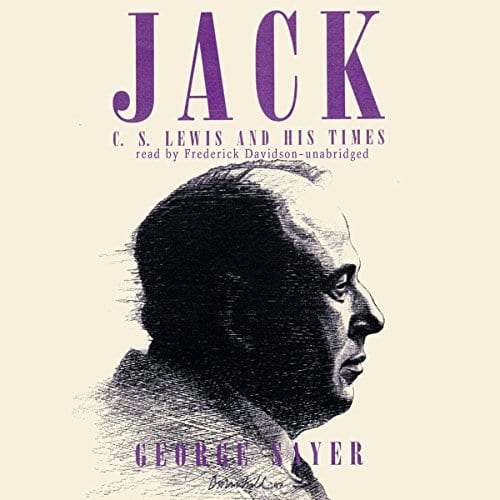
In reading the highly regarded biography of Lewis by his friend George Sayer, entitled Jack: C. S. Lewis and His Times (Harper & Row, 1988), I was surprised to learn that young Lewis (around the ages of 13-15) lost his initial Christian faith — according to Sayer’s account — because of falling into a regular practice of masturbation. This, and what Huxley describes, support my long-time contention as an apologist, that loss of faith and apostasy far too often (if not usually) occur as a result of non-rational processes and urges, rather than Christianity failing the test of serious intellectual examination. Sayer writes on page 31 of his book:
He began to masturbate. One can only imagine the sense of guilt he felt. . . . The habit caused him more misery than anything else in his early life.
Of course, he struggled against it, but the agony of the struggle intensified the sense of guilt. He resolved fiercely never to do it again, and then suffered over and over the humiliation of failing to keep his resolution. His state, he tells us, was that described by Saint Paul in Romans 7:19-24: “. . . for the good that I would do, I do not: but the evil that I would not, that I do. . . . I delight in the law of God . . . but I see another law in my members, warring against the law of my mind. . . . O wretched man that I am who shall deliver me from the body of this death?”
He prayed, too, and, because his prayers were not answered, he soon lost his faith. . . .
To attain psychological balance, he had to suppress his strong feelings of guilt, a feat he accomplished by rejecting Christianity and its morality. He went in for bravado, blasphemy, and smut, startling and shocking the boys who knew him best.
I’d like to analyze the “philosophical / apologetic” ramifications of this for a moment. I can imagine an atheist or one otherwise skeptical of Christianity (or particularly of Catholic Christianity) saying, “well, how can you blame young Lewis? After all, he sincerely resolved to end his practice, which he [wrongly] felt to be wrong, and sincerely prayed to God for aid in that resolve, and God [assuming for the sake of argument that he does exist] failed him. Is that not, then, God‘s fault, rather than his own?”
Like so many “armchair” garden variety atheist arguments (real or so-called), this one appears only at first glance to have weight and force. As a matter of indisputable fact, there are a number of seriously addictive or obsessive behaviors that human beings willingly begin and fall into, only to find later on that they are in “bondage”, would like to cease, and alas, cannot. Usually at first, it’s not understood that the behaviors will become so controlling and addictive. But once one is caught by the behavior, it’s very difficult to escape.
But whose fault is that? Is it God’s or the person who began the journey into the behavior? I would contend that it’s the latter, and that recourse to blaming God is simply blame-shifting. One can imagine many addictions, whether it is, for example, pedophilia, or smoking cigarettes, or various drug habits, or wife-beating, or gluttony, or rampant sexual promiscuity. Even intrinsically good things can become addictive and destructive; say, for example, that a man wants to read books or do gardening all day long, and as a result, neglects his duty to make a living.
We start these things and then in foolish pride, we want to blame someone else when it’s clear that we are engaged in unhealthy, destructive behavior. God is one such misguided target, because we can always convince ourselves that “God ought to enable me to stop if I ask Him.” Therefore, if He doesn’t do so, we can say that He is either weak or nonexistent. It’s a variation of the old “problem of evil” objection to Christianity.
On the other hand, I am certainly not denying altogether that there is such a thing as divine grace or power to overcome sin and evil. St. Paul tells us that “I can do all things in him who strengthens me” (Phil 4:13, RSV) and that “in all these things we are more than conquerors through him who loved us” (Rom 8:37). I and virtually any serious Christian have experienced this help many times, and indeed, highly successful groups such as Alcoholics Anonymous presuppose that it exists in order to help alcoholics stop drinking.
So I’m not discounting that per se. What I’m saying is that it is unreasonable to demand that God (an omniscient Being infinitely higher than we are, and therefore, obviously often inexplicable to us as a result, as we would be to an ant) do what I want right now; under the pain of being rejected or disbelieved if He does not. God is under no obligation to perform any given miracle or to answer any and every prayer. He does what He does in His own time, for His own inscrutable reasons and providential purposes, and Christianity fully understands this. Biblical prayer is not automatic and unconditional, as I explained to two atheist apostates (Seidensticker and Madison).
The same Bible that contains the above verses also includes the book of Job, in which a most righteous (“blameless”) person terribly suffers for seemingly no reason. The same Paul who wrote those verses, had God turn down his request to remove a “thorn in the flesh” from him. God is not a magic wand or our own personal sock puppet, to maneuver as we will.
All this becomes simply a pretext for a rejection of God that was already present in kernel form. “Either God does X or I’m through with Him!” It’s kindergarten spirituality and rationalization of self-excess or an exaggerated sense of pseudo-“freedom.” It’s the initial sin of Adam and Eve and the devil: choosing their self-will over God’s. Aldous Huxley (admirably) admitted that this was what he was doing.
And I think that young C. S. Lewis (assuming Sayer’s opinion is correct) was doing the same thing, and that it’s irrational and unreasonable, for the reasons stated. Lewis later explained how and why masturbation is immoral (see below).
Related Reading
Masturbation: C. S. Lewis Explains Why it is Wrong [10-28-19]
Why Did God Kill Onan? (Bible and Contraception) [2-9-04]
Dialogue: Why Did God Kill Onan? (Contraception) [2-13-04]
Onan, Contraception, & Two Protestant Bible Dictionaries [2-21-04]
Masturbation: Thoughts on Why it is as Wrong as it Ever Was [3-14-04 and 9-7-05; abridged, edited, and slightly modified on 8-14-19]
*
Masturbation Remains a Grave Sin (Debate w Steve Hays) [1-6-07; links added on 8-13-19]
Martin Luther Condemned Masturbation (“Secret Sin”) [6-2-10]
Masturbation & the Sermon on the Mount (Talmudic Parallels) [10-18-11]
Biblical Data Against Contraception: Onan’s Sin and Punishment: a Concise “Catholic” Argument [3-7-14]
Bible vs. Contraception: Onan’s Sin and Punishment [National Catholic Register, 5-30-17]
Masturbation: Gravely Disordered According to Catholicism [8-16-19]
Biblical Hyperbole, Masturbation, & Intransigent Atheists [9-3-19]
Debate: Masturbation Okay in Moderation or Intrinsically Wrong? [10-31-19]
***
*
Practical Matters: Perhaps some of my 3,900+ free online articles (the most comprehensive “one-stop” Catholic apologetics site) or fifty books have helped you (by God’s grace) to decide to become Catholic or to return to the Church, or better understand some doctrines and why we believe them.
*
Or you may believe my work is worthy to support for the purpose of apologetics and evangelism in general. If so, please seriously consider a much-needed financial contribution. I’m always in need of more funds: especially monthly support. “The laborer is worthy of his wages” (1 Tim 5:18, NKJV). 1 December 2021 was my 20th anniversary as a full-time Catholic apologist, and February 2022 marked the 25th anniversary of my blog.
*
PayPal donations are the easiest: just send to my email address: [email protected]. You’ll see the term “Catholic Used Book Service”, which is my old side-business. To learn about the different methods of contributing, including 100% tax deduction, etc., see my page: About Catholic Apologist Dave Armstrong / Donation Information. Thanks a million from the bottom of my heart!*
*
***
Photo credit: original dust cover for George Sayer’s 1988 biography on C. S. Lewis [Amazon book page]
***
Previous Post

July 26, 2020
Reply to Protestant Challenges Re Eternal Security
Next Post

August 11, 2020 Is Vatican II Analogous to "Failed" Lateran Council V?
Browse Our Archives
Select a Category & Last Things About Me Anti-Catholicism Atheism & Agnosticism Baptism and Sacramentalism Bible and Tradition Blessed Virgin Mary Books by Dave Armstrong C. S. Lewis Calvinism & General Protestantism Catholic Apologetics Catholic Apologists Catholic conversion Catholic converts Christmas Church (Ecclesiology) Church History Conversion and Converts Development of Doctrine Eastern Orthodoxy Ecumenism & Christian Unity Eucharist & Liturgy Fathers of the Church French Translations G. K. Chesterton Hell Hell & Satan Hell & Satan & Last Things Heresies & Comparative Religion Holistic Health Inquisition & Crusades & Scandals James White Jews & Judaism & Old Testament John Calvin John Henry Newman Liberal / Modernist Theology Life Issues Literary Resume Lutheranism Mariology Martin Luther Music Orthodoxy Papacy & Infallibility Personal Page Philosophy & Science Political & Ethical & Moral Issues Protestant Persecution & Intolerance Protestantism Purgatory Purgatory & Penance Romantic & Imaginative Theology Saints & Purgatory & Penance Salvation Salvation & Justification Satan & Last Things Sexuality and Gender Issues Spanish Translations Traditionalism vs. Radical Catholic Reactionaries Traducciones al español / tradução para português Trinitarianism & Christology Uncategorized Videos
Select a Month October 2026 September 2026 August 2026 July 2026 June 2026 May 2026 April 2026 March 2026 February 2026 January 2026 December 2025 November 2025 October 2025 September 2025 August 2025 July 2025 June 2025 May 2025 April 2025 March 2025 February 2025 January 2025 December 2024 November 2024 October 2024 September 2024 August 2024 July 2024 June 2024 May 2024 April 2024 March 2024 February 2024 January 2024 December 2023 November 2023 October 2023 September 2023 August 2023 July 2023 June 2023 May 2023 April 2023 March 2023 February 2023 January 2023 December 2022 November 2022 October 2022 September 2022 August 2022 July 2022 June 2022 May 2022 April 2022 March 2022 February 2022 January 2022 December 2021 November 2021 October 2021 September 2021 August 2021 July 2021 June 2021 May 2021 April 2021 March 2021 February 2021 January 2021 December 2020 November 2020 October 2020 September 2020 August 2020 July 2020 June 2020 May 2020 April 2020 March 2020 February 2020 January 2020 December 2019 November 2019 October 2019 September 2019 August 2019 July 2019 June 2019 May 2019 April 2019 March 2019 February 2019 January 2019 December 2018 November 2018 October 2018 September 2018 August 2018 July 2018 June 2018 May 2018 April 2018 March 2018 February 2018 January 2018 December 2017 November 2017 October 2017 September 2017 August 2017 July 2017 June 2017 May 2017 April 2017 March 2017 February 2017 January 2017 December 2016 November 2016 October 2016 September 2016 August 2016 July 2016 June 2016 May 2016 April 2016 March 2016 February 2016 January 2016 December 2015 November 2015 October 2015 September 2015 August 2015 July 2015 June 2015 May 2015 April 2015 March 2015 February 2015 January 2015 December 2014 November 2014 October 2014 September 2014 August 2014 July 2014 June 2014 April 2014 March 2014 February 2014 January 2014 December 2013 November 2013 October 2013 September 2013 August 2013 July 2013 June 2013 April 2013 March 2013 February 2013 January 2013 December 2012 November 2012 October 2012 September 2012 August 2012 July 2012 June 2012 May 2012 April 2012 March 2012 February 2012 January 2012 December 2011 November 2011 October 2011 September 2011 August 2011 July 2011 June 2011 April 2011 March 2011 February 2011 October 2010 September 2010 August 2010 July 2010 April 2010 March 2010 December 2009 October 2009 August 2009 July 2009 June 2009 May 2009 March 2009 February 2009 October 2008 September 2008 April 2008 March 2008 February 2008 January 2008 December 2007 November 2007 October 2007 May 2007 March 2007 February 2007 January 2007 November 2006 October 2006 September 2006 August 2006 July 2006 June 2006 May 2006 April 2006 March 2006 February 2006 October 2005 June 2005 April 2005 February 2005 July 2004 May 2004 April 2004
Follow Us!
TAKE THE
Religious Wisdom Quiz
Who denied Jesus three times before the rooster crowed?
Select your answer to see how you score.
Paul John Peter Judas
Books by This Author Books by Dave Armstrong
Related posts from Biblical Evidence for Catholicism

Catholic "Wicked Married Sex"?: 4th Reply to Sean...
Biblical Evidence for Catholicism
2nd Reply to Anglican Sean Luke on Catholicism...
Biblical Evidence for Catholicism

History of Required Celibacy Disproves Catholicism?
Biblical Evidence for Catholicism

No Women Priests in the Catholic Church: Why?
Biblical Evidence for Catholicism
TRENDING AT PATHEOS Catholic

The Sermon on the Mount, Part I: Matthew...
The Sermon on the Mount, Part I (Matthew 4:12-5:12) St. Matthew moves...

What's up from Crossway: Reviewing some of their latest A few weeks...

Janie Learns the Way of the Cross: A...
Teaching children about Jesus' Passion can be challenging. Many parents and educators...

Looking For Good Catholic Writing - October 2026
He alone extends the heavens, and he walks upon the waves of...

In "Irreplaceable," our book on vocation and technology, Trevor Sutton and I...

I was strolling through the top floor of the brand new Parthenon...
view all Catholic blogs
Ad-Free & Subscriber Log-In Subscription Support
- About Us
- 2026 Calendar
- Videos
- Podcasts
- Library of World Religions
- Faith In Media Tracker
- Advertise With Us
- Write for Us
- Privacy Policy
- Terms of Service
- Do Not Sell My Data
- Contact Us
- Radiant Digital
- Manage Newsletter Subscriptions
- Unsubscribe From Notifications
- Sitemap
Copyright 2008-2026, Patheos. All rights reserved.
Subscription Support Ad-Free & Subscriber Log-In
Follow Patheos