
BuddhistCatholicContemplativeEvangelicalGeneral ChristianHinduJewishLatter-day SaintMuslimNew VisionsProgressive Christian
Beliefs
- Buddhist
- Catholic
- Contemplative
- Evangelical
- General Christian
- Hindu
- Jewish
- Latter-day Saint
- More Voices
- Muslim
- New Visions
- Pagan
- Progressive Christian
Topics
- Religion News
- Food and Religion
- Sports and Religion
- Religious Art
- Religious Music and Entertainment
- Religious Events
- History and Religion
- Style and Religion
- Politics and Religion
- Women in Religion
- Recreation Outdoors and Religion
- Business Finance and Religion
- Careers Workplace and Religion
- Education and Religion
- Family Parenting and Religion
- Health Fitness and Religion
- Home and Religion
- Relationships and Religion
- Technology and Religion
- Travel and Religion
Columnists
- Buddhist Columnists
- Business Finance and Religion Columnists
- Careers Workplace and Religion Columnists
- Catholic Columnists
- Contemplative Columnists
- Education and Religion Columnists
- Evangelists Columnists
- Family Parenting and Religion Columnists
- General Christian Columnists
- Health Fitness and Religion Columnists
- Hindu Columnists
- History and Religion Columnists
- Home and Religion Columnists
- Jewish Columnists
- More Voices Columnists
- Latter Day Columnists
- Muslim Columnists
- New Visions Columnists
- Nonreligious Columnists
- Pagan Columnists
- Politics and Religion Columnists
- Progressive Columnists
- Recreation Outdoors and Religion Columnists
- Relationships and Religion Columnists
- Religion News Columnists
- Religious Art Columnists
- Religious Events Columnists
- Religious Music and Entertainment Columnists
- Sports and Religion Columnists
- Style and Religion Columnists
- Technology and Religion Columnists
- Travel and Religion Columnists
- Women in Religion Columnists
Resource Library
- 2026 Calendar
- Library of World Religions
- The 100 Most Holy Places on Earth
- Patheos Answers
- Podcasts
- Videos
- Faith Leaders Database
- Anglican Episcopalian
- Bahai
- Baptist
- Buddhism
- Christianity
- Confucianism
- Eastern Orthodoxy
- Hinduism
- Holiness and Pentecostal
- ISKCON
- Islam
- Judaism
- Lutheran
- Methodist
- The Church of Jesus Christ of Latter-day Saints
- New Age
- Paganism
- Presbytarian and Reformed
- Protestantism
- Religion Behind the Scenes
- Roman Catholic
- Scientology
- Shia Islam
- Sikhism
- Sufism
- Sunni Islam
- Taoism
- Zen
- See all religions
Research Tools
 Ad-Free & Subscriber Log-In Subscription Support
Ad-Free & Subscriber Log-In Subscription Support
Follow Patheos 

- Trending:
- Forgiveness
- |
- Marriage
- |
- Consciousness
- |
- Death Penalty
- |
- Election
- |
- Halloween

-
About
-
Catholic Apologetics
-
Church History
-
Great Apologists
-
Christian Worldview
-
Protestantism & Misc.
- Home
- Catholic
- History and Religion
- Should We Pray for “All Men” (1 Tim 2:1) or Not?
Should We Pray for “All Men” (1 Tim 2:1) or Not?
Last updated on: July 24, 2020 at 1:17 pm by Dave Armstrong
Should We Pray for “All Men” (1 Tim 2:1) or Not? 2020-07-24T13:17:38-04:00 Dave Armstrong
Patheos Explore the world's faith through different perspectives on religion and spirituality! Patheos has the views of the prevalent religions and spiritualities of the world.
Bible and Calvin Say Yes; Anti-Catholic Calvinist Ron Van Brenk Sez No
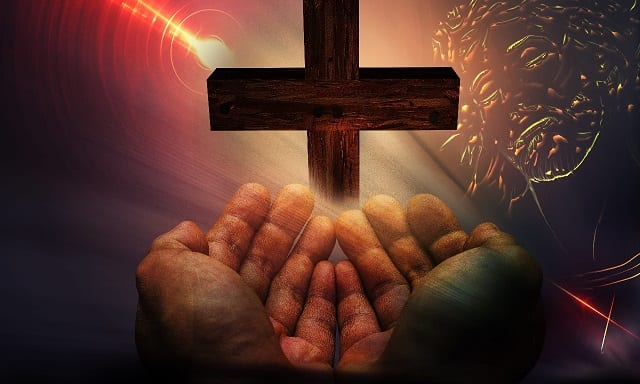
In the course of a dispute with anti-Catholic Presbyterian polemicist John Bugay, mention was made of an atrociously uncharitable post by Ron Van Brenk, entitled, “Do NOT Pray for Patty!”. I described this as “one of the most outrageous pieces from a purported Christian that I have ever seen in my life.”
Anti-Catholic TAO (The Anonymous One, or “Turretinfan”) is aware of it because he critiqued some of this material of mine, and is aware of my response, that prominently mentioned it. But he won’t rebuke this notion of deliberately not praying for another human being (because — I speculate — she is deemed as wicked and non-elect, and/or unregenerate; hence totally depraved?).
John Bugay won’t renounce this disgraceful display of supposedly “Christian” piety. Steve Hays, on whose blog this link was posted, has not done so, either. It seems that none of the fringe wing of (active, online) anti-Catholic Calvinists (thus, far, anyway) will denounce or renounce this article or the concept it highlights.
In order to refute the notion of deliberately refusing to pray for folks one deems too wicked to deserve it, I brought Holy Scripture to the table (expanded for more context presently):
1 Timothy 2:1-4 (RSV) First of all, then, I urge that supplications, prayers, intercessions, and thanksgivings be made for all men, [2] for kings and all who are in high positions, that we may lead a quiet and peaceable life, godly and respectful in every way. [3] This is good, and it is acceptable in the sight of God our Savior, [4] who desires all men to be saved and to come to the knowledge of the truth.
Since we’re dealing with Calvinists, then it is sensible to see what John Calvin would have to say about this. First, let’s look at what Ron Van Brenk (words in blue henceforth), digging in his heels, reiterated today, on TAO’s blog:
Now, as I mentioned in the first part of that “Do NOT Pray” series- there are several times when we are commanded NOT to pray for people. And Dave’s recourse to 1 Tim. 2:1 does not stand up to proper scrutiny. Will be addressing a response [to] him later tonight on that.
Now, let’s see what John Calvin had to say about the matter, from his Commentaries (for 1 Timothy 2:1-4):
That, above all, prayers be made. First, he speaks of public prayers, which he enjoins to be offered, not only for believers, but for all mankind. Some might reason thus with themselves: “Why should we be anxious about the salvation of unbelievers, with whom we have no connection? Is it not enough, if we, who are brethren, pray mutually for our brethren, and recommend to God the whole of his Church? for we have nothing to do with strangers.” This perverse view Paul meets, and enjoins the Ephesians to include in their prayers all men, and not to limit them to the body of the Church.
. . . Paul, in my own opinion, simply enjoins that, whenever public prayers are offered, petitions and supplications should be made for all men, even for those who at present are not at all related to us. And yet this heaping up of words is not superfluous; but Paul appears to me purposely to join together three terms for the same purpose, in order to recommend more warmly, and urge more strongly, earnest and constant prayer. We know now sluggish we are in this religious duty; and therefore we need not wonder if, for the purpose of arousing us to it, the Holy Spirit, by the mouth of Paul, employs various excitements.
And thanksgivings. As to this term, there is no obscurity; for, as he bids us make supplication to God for the salvation of unbelievers, so also to give thanks on account of their prosperity and success. That wonderful goodness which he shews every day, when “he maketh his sun to rise on the good and the bad,” (Matthew 5:45,) is worthy of being praised; and our love of our neighbor ought also to extend to those who are unworthy of it.
2 For kings He expressly mentions kings and other magistrates because, more than all others, they might be hated by Christians. All the magistrates who existed at that time were so many sworn enemies of Christ; and therefore this thought might occur to them, that they ought not to pray for those who devoted all their power and all their wealth to fight against the kingdom of Christ, the extension of which is above all things desirable. The apostle meets this difficulty, and expressly enjoins Christians to pray for them also. And, indeed, the depravity of men is not a reason why God’s ordinance should not be loved. Accordingly, seeing that God appointed magistrates and princes for the preservation of mankind, however much they fall short of the divine appointment, still we must not on that account cease to love what belongs to God, and to desire that it may remain in force. That is the reason why believers, in whatever country they live, must not only obey the laws and the government of magistrates, but likewise in their prayers supplicate God for their salvation. Jeremiah said to the Israelites, “Pray for the peace of Babylon, for in their peace ye shall have peace.” (Jeremiah 29:7.) The universal doctrine is this, that we should desire the continuance and peaceful condition of those governments which have been appointed by God.
. . . If any one ask, Ought we to pray for kings, from whom we obtain none of these advantages? I answer, the object of our prayer is, that, guided by the Spirit of God, they may begin to impart to us those benefits of which they formerly deprived us. It is our duty, therefore, not only to pray for those who are already worthy, but we must pray to God that he may make bad men good.
Other Calvinists agree. For example, Barnes’ Notes (for this passage):
For all men. Prayers should be made for all men–for all need the grace and mercy of God; thanks should be rendered for all, for all may be saved. Does not this direction imply that Christ died for all mankind? How could we give thanks in their behalf if there were no mercy for them, and no way had been provided by which they could be saved? It may be observed here, that the direction to pray and to give thanks for all men, showed the large and catholic nature of Christianity. It was opposed entirely to the narrow and bigoted feelings of the Jews, who regarded the whole Gentile world as excluded from covenant mercies, and as having no offer of life. Christianity threw down all these barriers, and all men are on a level; and since Christ has died for all, there is ample ground for thanksgiving and praise in behalf of the whole human race.
Likewise, John Gill:
not only for all the saints, for all the churches of Christ, and, ministers of the Gospel; nor only for near relations and friends, according to the flesh; but for all the inhabitants of the country and city in which men dwell, the peace and prosperity of which are to be prayed for; yea, for enemies, and such as reproach, persecute, and despitefully use the saints, even for all sorts of men, Jews and Gentiles, rich and poor, high and low, bond and free, good men and bad men:
And the 1599 Geneva Study Bible:
Having dispatched those things which pertain to doctrine, he speaks now in the second place of the other part of the ministry of the word, that is, of public prayers. And first of all, answering the question for whom we ought to pray, he teaches that we must pray for all men, and especially for every type of magistrate. And this thing was at that time somewhat doubted of, seeing that kings, indeed, and most of the magistrates, were at that time enemies of the Church.
And Matthew Henry:
A charge given to Christians to pray for all men in general, and particularly for all in authority. . . . Observe, The design of the Christian religion is to promote prayer; and the disciples of Christ must be praying people. Pray always with all prayer, Ephesians 6:18. There must be prayers for ourselves in the first place; this is implied here. We must also pray for all men, for the world of mankind in general, for particular persons who need or desire our prayers. See how far the Christian religion was from being a sect, when it taught men this diffusive charity, to pray, not only for those of their own way, but for all men. Pray for kings (1 Timothy 2:2); though the kings at this time were heathens, enemies to Christianity, and persecutors of Christians, yet they must pray for them, because it is for the public good that there should be civil government, and proper persons entrusted with the administration of it, for whom therefore we ought to pray, yea, though we ourselves suffer under them. . . .
In our prayers we are to have a generous concern for others as well as for ourselves; we are to pray for all men, and to give thanks for all men; and must not confine our prayers nor thanksgiving to our own persons or families. 3. Prayer consists of various parts, of supplications, intercessions, and thanksgivings; for we must pray for the mercies we want, as well as be thankful for mercies already received; and we are to deprecate the judgments which our own sins or the sins of others have deserved. 4. All men, yea, kings themselves, and those who are in authority, are to be prayed for.
Hi Dave,
I won’t be praying for you either.
Sound “outrageous” again? To repeat myself from my ‘Evangelistic Blog’, Dave, some folks should NOT be prayed for. And that includes you.
Now, I know you don’t like “asinine jeremiads” but check out the Jeremiah references (Jer. 7:16, 11:14 and 14:11) that I provided on that ‘Evangelistic Blog’, Dave.
Or the 1 John 5:16 reference that I provided. Did you not read them? Can you interact with them?
Now for you to appeal to a universal prayer (and universal do-gooding as Natamllc rightly pointed out with Gal 6:10) in light of the above… is absurd. There are distinctions there Dave. Distinctions that you are “perverting”.
But let’s take a look at your 1 Tim. 2:1 proof-text. That “prayers should be made for all men”: Now you know very well, Dave- that “all” doesn’t always mean “every”. Nor does it usually mean “every”. And that in his context, Paul was referring to praying that select “Kings” and authorities would enable us to lead godly lives. You know that all kings and authorities are not in mind here. Only relevant ones.
And that is quite clear in the commentaries that you cited above, Dave. So why do you deceive us? But let’s look at the back end of your proof-text, Dave:
Here we have Paul telling Timothy that he handed Hymenaeus and Alexander over to Satan- so that they will be taught “not to blaspheme”. And in the very next verse you think Paul is asking Timothy to pray for those “blasphemers”? To drag them away from Satan?
That’s ridiculous, Dave. Is Satan going to answer Timothy’s prayers? Is Satan going to restore “blasphemers” to a non-blaspheming state?
Dave… you are a blasphemer. You have “suffered shipwreck in regard to your faith” just like Hymenaeus and Alexander. You claim to have faith in Christ. But it is a faith in Jesus-plus-sacraments. That is your Christ. No different than the Jesus-plus-circumcision that bewitched the foolish Galatians. And no different than the Jesus-plus-baptism that bewitches the Mormons.
No, you have been bewitched by an impotent god, Dave. Not a God that is an employer of means… but a god that is a slave to means. A god that requires a mediator. A god that is certainly not God. Unless of course… you never had faith in Christ in the first place, Dave. Then I can pray for you. But that seems incredibly improbable.
So, I’ll pray for ‘select’ kings and authorities instead. Those that never had faith in Christ in the first place. And give a credible profession of such.
You didn’t make the cut, Dave. C’est la vie…
Makes perfect sense with your false assumptions and butchery of the Bible.
Can’t respond to the apostle Jesus loved huh, Dave? And can’t respond to Jeremiah either?
I do think it is a tendency among Calvinists, though, to read someone out of the elect and treat them accordingly. I’ve been treated in this fashion myself, many times. They may not be as frank as Ron and come right out and advise no prayer, but the coldness and chilling judgmentalism and utter lack of any manifestation of Christian love is crystal-clear. I know the basic thrust of it: what is behind that mentality.
And it goes against Calvin himself and the better lights among Calvinists, historically. It’s a distortion of a view that is already wracked with many difficulties and falsehoods.
[added on 7-24-20] The three Jeremiah passages are all of the same nature: the prophet was told not to pray any longer for his people whom God had decided were only fit for judgment. That’s why Jeremiah was told to not pray for them: via a direct revelation from the Lord. We, on the other hand, are not prophets, and do not generally have such direct revelation from God. We don’t know who will be saved or damned in the end (Calvin agrees), and we don’t know who is of the elect or not. Therefore, we pray for all people, since we don’t know those things and therefore don’t know who is beyond hope of redemption.
***
(originally posted on 11-16-11; slight addition on 7-24-20)
Photo credit: [Wallpaper Flare / public domain]
***
Calvinism & General Protestantism
Previous Post

July 24, 2020
Jay Dyer: Intellectual Limbo Re Catholic Belief in Limbo
Next Post

July 26, 2020 Reply to Protestant Challenges Re Eternal Security
Browse Our Archives
Select a Category & Last Things About Me Anti-Catholicism Atheism & Agnosticism Baptism and Sacramentalism Bible and Tradition Blessed Virgin Mary Books by Dave Armstrong C. S. Lewis Calvinism & General Protestantism Catholic Apologetics Catholic Apologists Catholic conversion Catholic converts Christmas Church (Ecclesiology) Church History Conversion and Converts Development of Doctrine Eastern Orthodoxy Ecumenism & Christian Unity Eucharist & Liturgy Fathers of the Church French Translations G. K. Chesterton Hell Hell & Satan Hell & Satan & Last Things Heresies & Comparative Religion Holistic Health Inquisition & Crusades & Scandals James White Jews & Judaism & Old Testament John Calvin John Henry Newman Liberal / Modernist Theology Life Issues Literary Resume Lutheranism Mariology Martin Luther Music Orthodoxy Papacy & Infallibility Personal Page Philosophy & Science Political & Ethical & Moral Issues Protestant Persecution & Intolerance Protestantism Purgatory Purgatory & Penance Romantic & Imaginative Theology Saints & Purgatory & Penance Salvation Salvation & Justification Satan & Last Things Sexuality and Gender Issues Spanish Translations Traditionalism vs. Radical Catholic Reactionaries Traducciones al español / tradução para português Trinitarianism & Christology Uncategorized Videos
Select a Month October 2026 September 2026 August 2026 July 2026 June 2026 May 2026 April 2026 March 2026 February 2026 January 2026 December 2025 November 2025 October 2025 September 2025 August 2025 July 2025 June 2025 May 2025 April 2025 March 2025 February 2025 January 2025 December 2024 November 2024 October 2024 September 2024 August 2024 July 2024 June 2024 May 2024 April 2024 March 2024 February 2024 January 2024 December 2023 November 2023 October 2023 September 2023 August 2023 July 2023 June 2023 May 2023 April 2023 March 2023 February 2023 January 2023 December 2022 November 2022 October 2022 September 2022 August 2022 July 2022 June 2022 May 2022 April 2022 March 2022 February 2022 January 2022 December 2021 November 2021 October 2021 September 2021 August 2021 July 2021 June 2021 May 2021 April 2021 March 2021 February 2021 January 2021 December 2020 November 2020 October 2020 September 2020 August 2020 July 2020 June 2020 May 2020 April 2020 March 2020 February 2020 January 2020 December 2019 November 2019 October 2019 September 2019 August 2019 July 2019 June 2019 May 2019 April 2019 March 2019 February 2019 January 2019 December 2018 November 2018 October 2018 September 2018 August 2018 July 2018 June 2018 May 2018 April 2018 March 2018 February 2018 January 2018 December 2017 November 2017 October 2017 September 2017 August 2017 July 2017 June 2017 May 2017 April 2017 March 2017 February 2017 January 2017 December 2016 November 2016 October 2016 September 2016 August 2016 July 2016 June 2016 May 2016 April 2016 March 2016 February 2016 January 2016 December 2015 November 2015 October 2015 September 2015 August 2015 July 2015 June 2015 May 2015 April 2015 March 2015 February 2015 January 2015 December 2014 November 2014 October 2014 September 2014 August 2014 July 2014 June 2014 April 2014 March 2014 February 2014 January 2014 December 2013 November 2013 October 2013 September 2013 August 2013 July 2013 June 2013 April 2013 March 2013 February 2013 January 2013 December 2012 November 2012 October 2012 September 2012 August 2012 July 2012 June 2012 May 2012 April 2012 March 2012 February 2012 January 2012 December 2011 November 2011 October 2011 September 2011 August 2011 July 2011 June 2011 April 2011 March 2011 February 2011 October 2010 September 2010 August 2010 July 2010 April 2010 March 2010 December 2009 October 2009 August 2009 July 2009 June 2009 May 2009 March 2009 February 2009 October 2008 September 2008 April 2008 March 2008 February 2008 January 2008 December 2007 November 2007 October 2007 May 2007 March 2007 February 2007 January 2007 November 2006 October 2006 September 2006 August 2006 July 2006 June 2006 May 2006 April 2006 March 2006 February 2006 October 2005 June 2005 April 2005 February 2005 July 2004 May 2004 April 2004
Follow Us!
TAKE THE
Religious Wisdom Quiz
Who prayed for rain after a long drought and sent his servant to look seven times?
Select your answer to see how you score.
Elijah Isaiah Samuel Hosea
Books by This Author Books by Dave Armstrong
Related posts from Biblical Evidence for Catholicism

On Protestant Explanations of Catholic Conversion
Biblical Evidence for Catholicism

Bible & Catholicism on Mortal Sin (vs. John...
Biblical Evidence for Catholicism

Dialogue on Eternal Security / Absolute Assurance
Biblical Evidence for Catholicism

Protestant Confessions & "Ever-Virgin" Mary
Biblical Evidence for Catholicism
TRENDING AT PATHEOS Catholic

I was strolling through the top floor of the brand new Parthenon...

What Does Gêvâh Mean For Kimberley Guifoyle &...
This week, a lot of the news is focused on Kimberly Guilfoyle....

INNER CIRCLE: Profound Mystery (Of Christ In All...
Ephesians 5:31-32 “For this reason, a man will leave his father and...

Do Not Rejoice When Your Enemy Falls: The...
Turning an execution into a public spectacle is a disturbing expression of...

'The Chosen' S6 Trailer: The Passion Gets Very...
Not many watching 'The Chosen' worry about spoilers, but just because they...

The purpose-driven labor priest
A labor activist reads Rick Warren and it gets me wondering about...
view all Catholic blogs
Ad-Free & Subscriber Log-In Subscription Support
- About Us
- 2026 Calendar
- Videos
- Podcasts
- Library of World Religions
- Faith In Media Tracker
- Advertise With Us
- Write for Us
- Privacy Policy
- Terms of Service
- Do Not Sell My Data
- Contact Us
- Radiant Digital
- Manage Newsletter Subscriptions
- Unsubscribe From Notifications
- Sitemap
Copyright 2008-2026, Patheos. All rights reserved.
Subscription Support Ad-Free & Subscriber Log-In
Follow Patheos