
BuddhistCatholicContemplativeEvangelicalGeneral ChristianHinduJewishLatter-day SaintMuslimNew VisionsProgressive Christian
Beliefs
- Buddhist
- Catholic
- Contemplative
- Evangelical
- General Christian
- Hindu
- Jewish
- Latter-day Saint
- More Voices
- Muslim
- New Visions
- Pagan
- Progressive Christian
Topics
- Religion News
- Food and Religion
- Sports and Religion
- Religious Art
- Religious Music and Entertainment
- Religious Events
- History and Religion
- Style and Religion
- Politics and Religion
- Women in Religion
- Recreation Outdoors and Religion
- Business Finance and Religion
- Careers Workplace and Religion
- Education and Religion
- Family Parenting and Religion
- Health Fitness and Religion
- Home and Religion
- Relationships and Religion
- Technology and Religion
- Travel and Religion
Columnists
- Buddhist Columnists
- Business Finance and Religion Columnists
- Careers Workplace and Religion Columnists
- Catholic Columnists
- Contemplative Columnists
- Education and Religion Columnists
- Evangelists Columnists
- Family Parenting and Religion Columnists
- General Christian Columnists
- Health Fitness and Religion Columnists
- Hindu Columnists
- History and Religion Columnists
- Home and Religion Columnists
- Jewish Columnists
- More Voices Columnists
- Latter Day Columnists
- Muslim Columnists
- New Visions Columnists
- Nonreligious Columnists
- Pagan Columnists
- Politics and Religion Columnists
- Progressive Columnists
- Recreation Outdoors and Religion Columnists
- Relationships and Religion Columnists
- Religion News Columnists
- Religious Art Columnists
- Religious Events Columnists
- Religious Music and Entertainment Columnists
- Sports and Religion Columnists
- Style and Religion Columnists
- Technology and Religion Columnists
- Travel and Religion Columnists
- Women in Religion Columnists
Resource Library
- 2026 Calendar
- Library of World Religions
- The 100 Most Holy Places on Earth
- Patheos Answers
- Podcasts
- Videos
- Faith Leaders Database
- Anglican Episcopalian
- Bahai
- Baptist
- Buddhism
- Christianity
- Confucianism
- Eastern Orthodoxy
- Hinduism
- Holiness and Pentecostal
- ISKCON
- Islam
- Judaism
- Lutheran
- Methodist
- The Church of Jesus Christ of Latter-day Saints
- New Age
- Paganism
- Presbytarian and Reformed
- Protestantism
- Religion Behind the Scenes
- Roman Catholic
- Scientology
- Shia Islam
- Sikhism
- Sufism
- Sunni Islam
- Taoism
- Zen
- See all religions
Research Tools
 Ad-Free & Subscriber Log-In Subscription Support
Ad-Free & Subscriber Log-In Subscription Support
Follow Patheos 

- Trending:
- Forgiveness
- |
- Marriage
- |
- Consciousness
- |
- Death Penalty
- |
- Election
- |
- Halloween

-
About
-
Catholic Apologetics
-
Church History
-
Great Apologists
-
Christian Worldview
-
Protestantism & Misc.
- Home
- Catholic
- History and Religion
- Reply to Protestant Challenges Re Eternal Security
Reply to Protestant Challenges Re Eternal Security
Last updated on: July 26, 2020 at 9:15 pm by Dave Armstrong
Reply to Protestant Challenges Re Eternal Security 2020-07-26T21:15:17-04:00 Dave Armstrong
Patheos Explore the world's faith through different perspectives on religion and spirituality! Patheos has the views of the prevalent religions and spiritualities of the world.
vs. Anti-Catholic Apologist Jason Engwer

This is my answer to the questions posed in the paper, A Challenge to Those Who Deny Eternal Security (aka, “Why Christians Cannot Lose Their Salvation”). It was written, c. December 1998. Jason’s words will be in blue. I will cite his entire paper in replying to it. Jason is notorious for picking and choosing what he will reply to in opponents’ material (sometimes even ignoring the vast majority of material). Not me; I generally offer a point-by-point refutation. When I cite Scripture, I will use the RSV.
*****
Why were the apostles sure that they would go to Heaven, even though they still had time to sin (2 Timothy 4:18, 1 Peter 5:1, 2 John 2-3)?
2 Timothy 4:18 is from St. Paul, who also offers many passages in which he appears quite unsure that he (or any given Christian) will be eschatologically saved (i.e., will go to heaven), and states that believers (including himself: 1 Cor 9:27; Phil 3:8-14) must remain vigilant to do so (1 Cor 10:12; Gal 5:1). Thus, the two types of passages need to be harmonized with each other somehow. Calvinists and eternal security advocates think they can answer our “counter-verses” and we believe that we can answer their alleged prooftexts. Paul specifically states that some believers have “fallen away from grace” (Gal 5:4), and in his first letter to Timothy proclaims:
1 Timothy 4:1 Now the Spirit expressly says that in later times some will depart from the faith by giving heed to deceitful spirits and doctrines of demons.
Likewise, St. Peter writes in his other epistle:
2 Peter 2:15, 20-22 Forsaking the right way they have gone astray; they have followed the way of Balaam, the son of Be’or, who loved gain from wrongdoing, . . . [20] For if, after they have escaped the defilements of the world through the knowledge of our Lord and Savior Jesus Christ, they are again entangled in them and overpowered, the last state has become worse for them than the first. [21] For it would have been better for them never to have known the way of righteousness than after knowing it to turn back from the holy commandment delivered to them. [22] It has happened to them according to the true proverb, The dog turns back to his own vomit, and the sow is washed only to wallow in the mire.
It seems to me that Paul and Peter in the passages Jason cites are thinking in terms of present possession of salvation and being in God’s good grace, provided they examine themselves and are not in mortal sin that can separate them from God. But that’s just it: that situation can possibly change in the future.
As for St. John, he often speaks in a proverbial or idealistic genre. So, for example, he writes:
1 John 3:6 No one who abides in him sins; no one who sins has either seen him or known him.
1 John 3:9 No one born of God commits sin; for God’s nature abides in him, and he cannot sin because he is born of God.
But then he also writes (in a much more practical and “realistic” vein):
1 John 1:8-10 If we say we have no sin, we deceive ourselves, and the truth is not in us. [9] If we confess our sins, he is faithful and just, and will forgive our sins and cleanse us from all unrighteousness. [10] If we say we have not sinned, we make him a liar, and his word is not in us.
Why did the apostles want the believers to whom they wrote to be sure of their future in Heaven (Romans 5:9, 1 Corinthians 1:8, Philippians 3:20-21, 1 Peter 1:3-5, 5:4, 1 John 5:13, 2 John 2-3)?
The Pauline passages have to be synthesized and understood in the context of this passage:
Colossians 1:22-23 he has now reconciled in his body of flesh by his death, in order to present you holy and blameless and irreproachable before him, [23] provided that you continue in the faith, stable and steadfast, not shifting from the hope of the gospel which you heard, which has been preached to every creature under heaven, . . .
Paul warns the Corinthians against falling away twice in the same book (1 Cor 9:27; 10:12). Pete likewise warns in the same chapter 1 of his first epistle:
1 Peter 1:14, 17 As obedient children, do not be conformed to the passions of your former ignorance, . . . [17] And if you invoke as Father him who judges each one impartially according to his deeds, conduct yourselves with fear throughout the time of your exile.
The context of 1 Peter 5:4 is a number of conditional promises (very common in Scripture): “if you do x, then you will receive y“. These, of course, involved works, or merit (which are always grace-enabled, yet we must agree in our will to do them):
1 Peter 5:2-4, 6, 8-10 Tend the flock of God that is your charge, not by constraint but willingly, not for shameful gain but eagerly, [3] not as domineering over those in your charge but being examples to the flock. [4] And when the chief Shepherd is manifested you will obtain the unfading crown of glory. . . . [6] Humble yourselves therefore under the mighty hand of God, that in due time he may exalt you. . . . [8] Be sober, be watchful. Your adversary the devil prowls around like a roaring lion, seeking some one to devour. [9] Resist him, firm in your faith, knowing that the same experience of suffering is required of your brotherhood throughout the world. [10] And after you have suffered a little while, the God of all grace, who has called you to his eternal glory in Christ, will himself restore, establish, and strengthen you.
I devoted an article to 1 John 5:13: “Certainty” of Eternal Life? (1 Jn 5:13 & Jn 5:24). 2 John 2-3 was already dealt with above.
It’s obvious, then, that if we are required to do certain things in order to be saved in the end (Matthew 25 — about the judgment — affirms this over and over), then if we don’t do them, we could lose the salvation and good standing in God’s grace that we have. See also my paper, Final Judgment & Works (Not Faith): 50 Passages.
Critics of eternal security argue that salvation depends on our present faith and our present behavior. Why, then, do the scriptures refer to people having salvation, or something associated with salvation, in the present because of a past faith or a past justification (Luke 7:50, Acts 19:2, Romans 5:1)?
Because at that time they do have it: meaning that if they died at that instant, they would go to heaven. What’s not certain is that they will never reject God or fall away in the future. The same Gospel of Luke contains the parable of the sower (Lk 8:5-8). Jesus’ explanation of it includes the notion of believers falling away:
Luke 8:13-14 And the ones on the rock are those who, when they hear the word, receive it with joy; but these have no root, they believe for a while and in time of temptation fall away. [14] And as for what fell among the thorns, they are those who hear, but as they go on their way they are choked by the cares and riches and pleasures of life, and their fruit does not mature.
Acts 19:2 refers to receiving the Holy Spirit. But in Hebrews it’s revealed that we can lose the Holy Spirit:
Hebrews 6:4-8 For it is impossible to restore again to repentance those who have once been enlightened, who have tasted the heavenly gift, and have become partakers of the Holy Spirit, [5] and have tasted the goodness of the word of God and the powers of the age to come, [6] if they then commit apostasy, since they crucify the Son of God on their own account and hold him up to contempt. [7] For land which has drunk the rain that often falls upon it, and brings forth vegetation useful to those for whose sake it is cultivated, receives a blessing from God. [8] But if it bears thorns and thistles, it is worthless and near to being cursed; its end is to be burned.
How is this possible if there isn’t a moment of faith in the past that results in our future salvation?
We don’t deny that. We only deny that such a moment is good for all time or that it cannot be reversed by our free will decision to forsake God and salvation.
Why do the scriptures say that salvation is a free gift of God’s grace (Romans 3:24, 5:17, 6:23, Revelation 22:17)?
No one denies that. To do so is the heresy Pelagianism.
If attaining salvation through works would contradict grace (Romans 4:4, 11:6), then how can maintaining salvation through works be consistent with grace? If I give you a car, and tell you that it’s a “free gift”, but then I send you monthly bills for it thereafter, was the car really a “free gift”?
We don’t attain it through works. But works are the inevitable fruit of genuine faith (as both Luther and Calvin affirmed) and show that the faith isn’t dead, per the book of James:
What does it profit, my brethren, if a man says he has faith but has not works? Can his faith save him? (James 2:14; RSV)
So faith itself, if it has no works, is dead. (James 2:17; cf. 2:20, 2:26)
You see that a man is justified by works and not by faith alone. (James 2:24)
Therefore, if we don’t see such works, we know that saving faith is not present, either. That’s why works play such a prominent role in 50 passages that refer to God’s judgment and decision regarding who is saved and who is damned. Strikingly, faith is only mentioned in three of those 50 passages, as being central in salvation and even then it is in conjunction with works, not by itself:
2 Thessalonians 1:7-12 . . . when the Lord Jesus is revealed from heaven with his mighty angels in flaming fire, inflicting vengeance upon those who do not know God and upon those who do not obey the gospel of our Lord Jesus. They shall suffer the punishment of eternal destruction and exclusion from the presence of the Lord and from the glory of his might, when he comes on that day to be glorified in his saints, and to be marveled at in all who have believed, because our testimony to you was believed. To this end we always pray for you, that our God may make you worthy of his call, and may fulfil every good resolve and work of faith by his power, so that the name of our Lord Jesus may be glorified in you, and you in him, according to the grace of our God and the Lord Jesus Christ.
Jude 20-21 But you, beloved, build yourselves up on your most holy faith; pray in the Holy Spirit; keep yourselves in the love of God; wait for the mercy of our Lord Jesus Christ unto eternal life.
Revelation 21:8 But as for the cowardly, the faithless, the polluted, as for murderers, fornicators, sorcerers, idolaters, and all liars, their lot shall be in the lake that burns with fire and sulphur, which is the second death.
Why does Paul write, “where there is no law, neither is there violation…For sin shall not be master over you, for you are not under law, but under grace” (Romans 4:15, 6:14), as well as emphasizing elsewhere that once a person becomes a Christian he is no longer under any law of works (Romans 5:13, 10:4, 1 Corinthians 6:12, Galatians 3:11-25)?
What is the “liberty” to which Paul and James refer (Galatians 2:4, Galatians 5:1, James 2:12)? If Christians are still in bondage to a law of works, and the sting of eternal death still remains in some sins, then how can a Christian have “liberty”, and how can “all things be lawful” to him (1 Corinthians 6:12)? Don’t Paul’s and James’ comments in these passages require that the Christian be free from all bondage of the law, not just some?
All that has to do with observing the works of the law; i.e., following Mosaic law, not all works whatever, which Paul repeatedly commands us to perform. See Theopedia, “New Perspective on Paul.”
If some “really bad” sins cause the loss of salvation, while other sins don’t, as critics of eternal security tend to believe, then why do Paul and James say that a person would have to maintain a law of works perfectly in order to be saved by it, and that any violation of any aspect of that law makes a person guilty of violating the entire law (Galatians 3:10, James 2:8-10)?
To show that the Mosaic law never saved anyone; only justification by grace through faith and the finished work of our Lord and Savior Jesus Christ on the cross did that.
If perfection is the standard that must be met in order to be righteous before God, as we know it is (Matthew 5:48), then how can anybody hope to attain to that standard through their own behavior (Romans 3:23)? If Christ’s perfect righteousness is imputed to us through faith (Romans 3:21-22, 4:5-6, 2 Corinthians 5:21, Philippians 3:9), then why would we need our own imperfect righteousness to be added to His perfect righteousness in order to have eternal life?
This is now morphing into a standard / stock Protestant apologetic for justification by faith alone, which is a different topic. I’m dealing (and so was Jason at first) with the possibility of apostasy or falling away from grace and salvation. I’ve dealt with this other stuff in many other papers of mine.
If assuring believers of their future in Heaven is wrong, because it encourages them to sin, as critics of eternal security suggest, then why did Jesus and the apostles repeatedly assure believers of their future in Heaven (Matthew 26:29, Luke 23:39-43, John 11:25, Romans 5:9, 1 Corinthians 1:8, Philippians 3:20-21, 1 Peter 1:3-5, 5:4, 1 John 5:13, 2 John 2-3)?
Most of these are simply repeating passages already addressed above. I’ll reply to the three new ones. Matthew 26:29 was addressed to the eleven disciples (minus Judas). Jesus knew they were to be saved. But of course the passage doesn’t apply to every believer. Likewise, Luke 23:39-43 applies only to the thief on the cross. John 11:25 simply states that Jesus is the sole way to attain salvation, not who will be saved.
Aren’t there motivations for keeping our faith, and for not sinning, aside from loss of salvation (Proverbs 22:5, John 14:23-24, Acts 17:31, Romans 5:5, 1 Corinthians 3:11-15, 2 Corinthians 5:14-17)?
Yes, but that’s not a disagreement between Catholics and Protestants.
If passages like 1 Corinthians 6:9-10 and Galatians 5:19-21 are lists of sins that cause the loss of salvation, as many critics of eternal security claim, then why do we see examples in scripture of people committing those sins, yet remaining saved (1 Corinthians 3:1-3, 11:17-32)?
Because they repented of them. The lists have to do with habitual sins and cases where people never repent of them. In Catholic and biblical theology, they are mortal sins that cause loss of grace and salvation if one persists in them.
Don’t the examples of people committing these sins, yet remaining saved, necessitate that we acknowledge that passages like 1 Corinthians 6 and Galatians 5 are not about how Christians can lose salvation? Instead, aren’t they telling believers not to behave like the unregenerate, who prove that they won’t inherit eternal life by continually living in sin (1 Corinthians 6:11-12)?
They may be partially about that aspect, too. Both / and . . .
In other words, aren’t the unregenerate the ones who will not inherit eternal life, as opposed to believers who sometimes commit one of these sins not inheriting eternal life?
They will not, but also those who willfully fall into these serious sins will not, either. Hebrews and Revelation provide unarguable, irrefutable evidence that believers can fall away:
Hebrews 3:12-14 Take care, brethren, lest there be in any of you an evil, unbelieving heart, leading you to fall away from the living God. But exhort one another every day . . . that none of you may be hardened by the deceitfulness of sin. For we share in Christ, if only we hold our first confidence firm to the end.
Hebrews 6:11-12 And we desire each one of you to show the same earnestness in realizing the full assurance of hope until the end, [12] so that you may not be sluggish, but imitators of those who through faith and patience inherit the promises.
Hebrews 10:26-29, 36, 39 For if we sin deliberately after receiving the knowledge of the truth, there no longer remains a sacrifice for sins, [27] but a fearful prospect of judgment, and a fury of fire which will consume the adversaries. [28] A man who has violated the law of Moses dies without mercy at the testimony of two or three witnesses. [29] How much worse punishment do you think will be deserved by the man who has spurned the Son of God, and profaned the blood of the covenant by which he was sanctified, and outraged the Spirit of grace? . . . [36] For you have need of endurance, so that you may do the will of God and receive what is promised. . . . [39] But we are not of those who shrink back and are destroyed, but of those who have faith and keep their souls.
Hebrews 12:15 See to it that no one fail to obtain the grace of God; that no “root of bitterness” spring up and cause trouble, and by it the many become defiled;
Revelation 2:4-5 But I have this against you, that you have abandoned the love you had at first. [5] Remember then from what you have fallen, repent and do the works you did at first. If not, I will come to you and remove your lampstand from its place, unless you repent.
Doesn’t the man in 1 Corinthians 3:11-15, whose works are entirely bad, yet he’s saved, prove that what’s at stake as far as the Christian’s behavior is concerned is rewards in Heaven, not entrance to Heaven?
The passage talks about differential works (“the fire will test what sort of work each one has done: 3:13). Some of the good work “survives” (3:14), and others had little or no additional merit, and that “work is burned up” (3:15). The overall passage is about merit, rewards, and purgatory.
When passages like Ephesians 1:7 and Colossians 2:13-14 place no limits on which sins are forgiven, and tell us instead that Christ’s sacrifice covered all sins,
Yes, of course. Any and all sins can be forgiven if one repents. The one unforgivable sin is blasphemy against the Holy Spirit (basically calling evil good and total unbelief).
on what basis can the critic of eternal security maintain that those who have trusted Christ are actually only forgiven of past sins and some future sins that “aren’t real bad”, while the “really bad” future sins remain uncovered?
By the biblical distinction between mortal and venial sins. The Bible taught it (1 Jn 5:16-17; cf. James 1:14-15). We didn’t make it up. And based on all the passages I have brought to bear on falling away . . .
If Jesus is the Intercessor for and Advocate of the believer only when the believer commits sins that “aren’t real bad”, as the critic of eternal security must maintain, then why do Hebrews 7:25 and 1 John 2:1 suggest no such limits? Why do these passages suggest instead that Christ is forever the Intercessor for and Advocate of the believer, no matter what sin has been committed?
The Bible teaches that our sins are judged in part based on how much we know (degrees of culpability, just as in civil law; see Lk 12:47-48; 23:34; Jn 19:11 [“greater sin”]; 1 Tim 1:12-13). All Hebrews 7:25 states is that Jesus can save all who seek Him, and we know that even the greatest sinners can be saved if they repent. 1 John 2:1 says the same. These aspects are not controversial.
If salvation could be lost, it couldn’t be regained (Hebrews 6:4-6).
How is this passage admitted to be talking about salvation being lost, when supposedly this is impossible in the first place? Jason deftly and decisively refutes himself here, and appears not to realize it. But I suppose he would try to force-fit and eisegete the passage into a mere hypothetical that can’t actually happen. But Hebrews 6 is referring to the most extreme cases: those who “crucify the Son of God on their own account and hold him up to contempt.” That doesn’t cover all cases of apostasy and is essentially the same as the unpardonable sin.
How, then, were people like David and Peter saved after committing sins such as adultery and denying Christ?
Obviously, because they repented.
If such sins aren’t bad enough to cause the loss of salvation, what would be?
David acknowledged — in his famous Psalm of repentance — that if he hadn’t repented, the Holy Spirit could indeed have left him, as well as salvation:
Psalm 51:11-12 Cast me not away from thy presence, and take not thy holy Spirit from me. [12] Restore to me the joy of thy salvation, and uphold me with a willing spirit.
They would have lost their salvation if they hadn’t repented. The Bible describes in King Saul’s case that “the Spirit of the LORD departed from Saul” (1 Sam 16:14).
Why does the book of the Bible that most often refers to salvation as a gift (Romans 3:24, 5:15, 5:16, 6:23, etc.) also tell us that the gifts of God are irrevocable (Romans 11:29)?
I imagine the answer would have something to do with the many related strains of argument that I have been presenting above. Why would the same book of Romans contain the following passage, too?:
Romans 2:5-13 But by your hard and impenitent heart you are storing up wrath for yourself on the day of wrath when God’s righteous judgment will be revealed. For he will render to every man according to his works: To those who by patience in well-doing seek for glory and honour and immortality, he will give eternal life; but for those who are factious and do not obey the truth, but obey wickedness, there will be wrath and fury. There will be tribulation and distress for every human being who does evil, the Jew first and also the Greek, but glory and honour and peace for every one who does good, the Jew first and also the Greek. For God shows no partiality. All who have sinned without the law will also perish without the law, and all who have sinned under the law will be judged by the law. For it is not the hearers of the law who are righteous before God, but the doers of the law who will be justified.
Even the great chapter of Romans 8 (beloved by one and all Protestants and Catholics too!) contains a conditional for salvation beyond faith:
Romans 8:14-17 For all who are led by the Spirit of God are sons of God. [15] For you did not receive the spirit of slavery to fall back into fear, but you have received the spirit of sonship. When we cry, “Abba! Father!” [16] it is the Spirit himself bearing witness with our spirit that we are children of God, [17] and if children, then heirs, heirs of God and fellow heirs with Christ, provided we suffer with him in order that we may also be glorified with him.
***
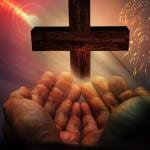
Photo credit: Piotr Siedlecki, “Heaven Gates” [public domain / PublicDomainPictures.Net]
***
Previous Post
July 24, 2020
Should We Pray for "All Men" (1 Tim 2:1) or Not?
Next Post

August 11, 2020 C. S. Lewis Left Christianity Due to Masturbation?
Browse Our Archives
Select a Category & Last Things About Me Anti-Catholicism Atheism & Agnosticism Baptism and Sacramentalism Bible and Tradition Blessed Virgin Mary Books by Dave Armstrong C. S. Lewis Calvinism & General Protestantism Catholic Apologetics Catholic Apologists Catholic conversion Catholic converts Christmas Church (Ecclesiology) Church History Conversion and Converts Development of Doctrine Eastern Orthodoxy Ecumenism & Christian Unity Eucharist & Liturgy Fathers of the Church French Translations G. K. Chesterton Hell Hell & Satan Hell & Satan & Last Things Heresies & Comparative Religion Holistic Health Inquisition & Crusades & Scandals James White Jews & Judaism & Old Testament John Calvin John Henry Newman Liberal / Modernist Theology Life Issues Literary Resume Lutheranism Mariology Martin Luther Music Orthodoxy Papacy & Infallibility Personal Page Philosophy & Science Political & Ethical & Moral Issues Protestant Persecution & Intolerance Protestantism Purgatory Purgatory & Penance Romantic & Imaginative Theology Saints & Purgatory & Penance Salvation Salvation & Justification Satan & Last Things Sexuality and Gender Issues Spanish Translations Traditionalism vs. Radical Catholic Reactionaries Traducciones al español / tradução para português Trinitarianism & Christology Uncategorized Videos
Select a Month October 2026 September 2026 August 2026 July 2026 June 2026 May 2026 April 2026 March 2026 February 2026 January 2026 December 2025 November 2025 October 2025 September 2025 August 2025 July 2025 June 2025 May 2025 April 2025 March 2025 February 2025 January 2025 December 2024 November 2024 October 2024 September 2024 August 2024 July 2024 June 2024 May 2024 April 2024 March 2024 February 2024 January 2024 December 2023 November 2023 October 2023 September 2023 August 2023 July 2023 June 2023 May 2023 April 2023 March 2023 February 2023 January 2023 December 2022 November 2022 October 2022 September 2022 August 2022 July 2022 June 2022 May 2022 April 2022 March 2022 February 2022 January 2022 December 2021 November 2021 October 2021 September 2021 August 2021 July 2021 June 2021 May 2021 April 2021 March 2021 February 2021 January 2021 December 2020 November 2020 October 2020 September 2020 August 2020 July 2020 June 2020 May 2020 April 2020 March 2020 February 2020 January 2020 December 2019 November 2019 October 2019 September 2019 August 2019 July 2019 June 2019 May 2019 April 2019 March 2019 February 2019 January 2019 December 2018 November 2018 October 2018 September 2018 August 2018 July 2018 June 2018 May 2018 April 2018 March 2018 February 2018 January 2018 December 2017 November 2017 October 2017 September 2017 August 2017 July 2017 June 2017 May 2017 April 2017 March 2017 February 2017 January 2017 December 2016 November 2016 October 2016 September 2016 August 2016 July 2016 June 2016 May 2016 April 2016 March 2016 February 2016 January 2016 December 2015 November 2015 October 2015 September 2015 August 2015 July 2015 June 2015 May 2015 April 2015 March 2015 February 2015 January 2015 December 2014 November 2014 October 2014 September 2014 August 2014 July 2014 June 2014 April 2014 March 2014 February 2014 January 2014 December 2013 November 2013 October 2013 September 2013 August 2013 July 2013 June 2013 April 2013 March 2013 February 2013 January 2013 December 2012 November 2012 October 2012 September 2012 August 2012 July 2012 June 2012 May 2012 April 2012 March 2012 February 2012 January 2012 December 2011 November 2011 October 2011 September 2011 August 2011 July 2011 June 2011 April 2011 March 2011 February 2011 October 2010 September 2010 August 2010 July 2010 April 2010 March 2010 December 2009 October 2009 August 2009 July 2009 June 2009 May 2009 March 2009 February 2009 October 2008 September 2008 April 2008 March 2008 February 2008 January 2008 December 2007 November 2007 October 2007 May 2007 March 2007 February 2007 January 2007 November 2006 October 2006 September 2006 August 2006 July 2006 June 2006 May 2006 April 2006 March 2006 February 2006 October 2005 June 2005 April 2005 February 2005 July 2004 May 2004 April 2004
Follow Us!
TAKE THE
Religious Wisdom Quiz
According to 1 John, what three things testify on earth?
Select your answer to see how you score.
Prayer, fasting, and almsgiving The Father, the Son, and the Holy Spirit The Spirit, the water, and the blood Faith, hope, and love
Books by This Author Books by Dave Armstrong
Related posts from Biblical Evidence for Catholicism

Top Three Anti-Catholic Lies About Catholicism
Biblical Evidence for Catholicism

Three More Anti-Catholic Lies About Catholicism (#6-4)
Biblical Evidence for Catholicism

Bible & Catholicism on Mortal Sin (vs. John...
Biblical Evidence for Catholicism

Top Ten Anti-Catholic Lies (#10-7)
Biblical Evidence for Catholicism
TRENDING AT PATHEOS Catholic

Methodist Central Hall and Westminster Abbey
Situated on the same square is Methodist Central Hall and Westminster Abbey. ...

57th Dove Awards Honor Dolly Parton, Crown New...
On gospel music’s biggest night, the 57th annual GMA Dove Awards honored...

The First Eucharistic Controversy: Christ’s Real Presence
For Catholics, the Eucharist is the source and summit of the Christian...

What a Stop Sign Can Teach Us About...
How to Make a Decision When You Can't Hear God Main point:...

Archdiocese Hosts Military Marriage Retreat in Germany
RASTATT, Germany — The transient military lifestyle, with its frequent deployments and...

Nearly every morning, I make the drive to Detroit with my high-school-age...
view all Catholic blogs
Ad-Free & Subscriber Log-In Subscription Support
- About Us
- 2026 Calendar
- Videos
- Podcasts
- Library of World Religions
- Faith In Media Tracker
- Advertise With Us
- Write for Us
- Privacy Policy
- Terms of Service
- Do Not Sell My Data
- Contact Us
- Radiant Digital
- Manage Newsletter Subscriptions
- Unsubscribe From Notifications
- Sitemap
Copyright 2008-2026, Patheos. All rights reserved.
Subscription Support Ad-Free & Subscriber Log-In
Follow Patheos