
BuddhistCatholicContemplativeEvangelicalGeneral ChristianHinduJewishLatter-day SaintMuslimNew VisionsProgressive Christian
Beliefs
- Buddhist
- Catholic
- Contemplative
- Evangelical
- General Christian
- Hindu
- Jewish
- Latter-day Saint
- More Voices
- Muslim
- New Visions
- Pagan
- Progressive Christian
Topics
- Religion News
- Food and Religion
- Sports and Religion
- Religious Art
- Religious Music and Entertainment
- Religious Events
- History and Religion
- Style and Religion
- Politics and Religion
- Women in Religion
- Recreation Outdoors and Religion
- Business Finance and Religion
- Careers Workplace and Religion
- Education and Religion
- Family Parenting and Religion
- Health Fitness and Religion
- Home and Religion
- Relationships and Religion
- Technology and Religion
- Travel and Religion
Columnists
- Buddhist Columnists
- Business Finance and Religion Columnists
- Careers Workplace and Religion Columnists
- Catholic Columnists
- Contemplative Columnists
- Education and Religion Columnists
- Evangelists Columnists
- Family Parenting and Religion Columnists
- General Christian Columnists
- Health Fitness and Religion Columnists
- Hindu Columnists
- History and Religion Columnists
- Home and Religion Columnists
- Jewish Columnists
- More Voices Columnists
- Latter Day Columnists
- Muslim Columnists
- New Visions Columnists
- Nonreligious Columnists
- Pagan Columnists
- Politics and Religion Columnists
- Progressive Columnists
- Recreation Outdoors and Religion Columnists
- Relationships and Religion Columnists
- Religion News Columnists
- Religious Art Columnists
- Religious Events Columnists
- Religious Music and Entertainment Columnists
- Sports and Religion Columnists
- Style and Religion Columnists
- Technology and Religion Columnists
- Travel and Religion Columnists
- Women in Religion Columnists
Resource Library
- 2026 Calendar
- Library of World Religions
- The 100 Most Holy Places on Earth
- Patheos Answers
- Podcasts
- Videos
- Faith Leaders Database
- Anglican Episcopalian
- Bahai
- Baptist
- Buddhism
- Christianity
- Confucianism
- Eastern Orthodoxy
- Hinduism
- Holiness and Pentecostal
- ISKCON
- Islam
- Judaism
- Lutheran
- Methodist
- The Church of Jesus Christ of Latter-day Saints
- New Age
- Paganism
- Presbytarian and Reformed
- Protestantism
- Religion Behind the Scenes
- Roman Catholic
- Scientology
- Shia Islam
- Sikhism
- Sufism
- Sunni Islam
- Taoism
- Zen
- See all religions
Research Tools
 Ad-Free & Subscriber Log-In Subscription Support
Ad-Free & Subscriber Log-In Subscription Support
Follow Patheos 

- Trending:
- Forgiveness
- |
- Marriage
- |
- Consciousness
- |
- Death Penalty
- |
- Election
- |
- Halloween

-
About
-
Catholic Apologetics
-
Church History
-
Great Apologists
-
Christian Worldview
-
Protestantism & Misc.
- Home
- Catholic
- History and Religion
- Martin Luther on Suffering, Mortification, & Sanctity
Martin Luther on Suffering, Mortification, & Sanctity
Last updated on: July 21, 2020 at 6:05 pm by Dave Armstrong
Martin Luther on Suffering, Mortification, & Sanctity 2020-07-21T18:05:22-04:00 Dave Armstrong
Patheos Explore the world's faith through different perspectives on religion and spirituality! Patheos has the views of the prevalent religions and spiritualities of the world.
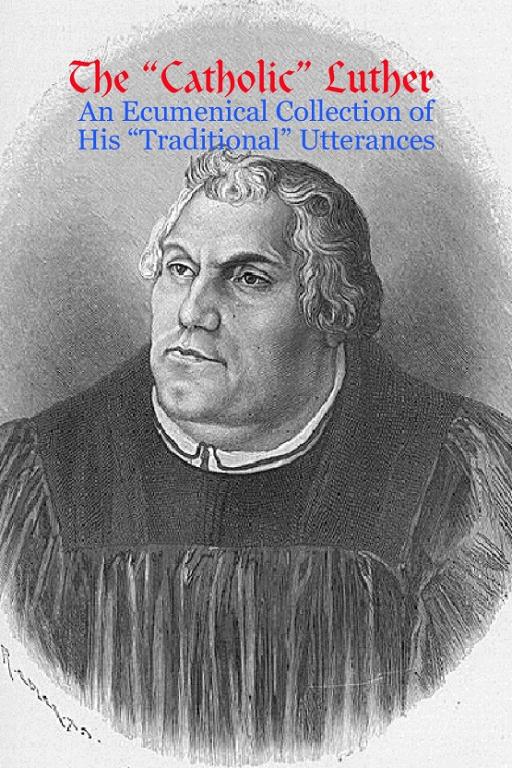
I compiled Luther’s thoughts on these topics, as part of my book, The “Catholic” Luther: An Ecumenical Collection of His “Traditional” Utterances”: published in 2014.
*****
- Suffering and Sanctification
[B]aptism makes all sufferings and especially death, profitable and helpful, since these things can only serve baptism in the doing of its work, i. e., in the slaying of sin. (Treatise on Baptism, Nov. 1519; tr. C. M. Jacobs; in W1)
Who must not be terrified at these words of Paul, in which he plainly states that they who are without the chastisement of God are not the sons of God! Again, what greater strengthening and what better comfort can there be than to hear that they who are chastened are beloved of the Lord, that they are sons of God, that they have part in the communion of saints, that they are not alone in their sufferings! So forceful an exhortation must make chastisement a thing to be loved. (The Fourteen of Consolation, 1520; Pt. I; ch. 6; tr. A. T. W. Steinhaeuser; in W1)
If you suffer because of your sins, then you ought to rejoice that your sins are being purged away. And, besides, were not the saints, too, sinners? (Ibid., Pt. I; ch. 6)
[T]he sufferings which are borne in this faith excel all works of faith. Therefore between such works and sufferings there is an immeasurable difference and the sufferings are infinitely better. (Treatise on Good Works, March 1520; tr. W. A. Lambert; in W1)
He declares that there are no more precious things than suffering, dying, and all manner of misfortune. For they are holy and sanctify a man from his works to God’s works, just as a church is consecrated from natural works to the worship of God. Therefore a man shall also recognise them as holy things, be glad and thank God when they come upon him. For when they come they make him holy, so that he fulfils this Commandment and is saved, redeemed from all his sinful works. Thus says David: “Precious in the sight of the Lord is the death of His saints.” [Ps. 116:15] (Ibid.)
Christ is not mighty within us, his word and his faith are not strong in us, unless our bodies suffer affliction. The false apostles, however, take excellent care to escape suffering. (Sermon for the Second Sunday Before Lent; 2 Corinthians 11:19-33; 12:1-9, 1525; in Serm., v. 7)
[J]ust as we cannot get along without eating and drinking so we cannot get along without affliction and suffering. . . . the gospel cannot come to the fore except through and in suffering and cross. . . . since Christ himself suffered, he also hallowed the suffering of all his Christians. (Sermons I, ed. and tr. John W. Doberstein; Sermon at Coburg on Cross and Suffering, 16 April 1530; in LW, v. 51)
One has to suffer if he wants to possess Christ. (Letters II, ed. and tr. Gottfried G. Krodel; to Philip Melanchthon, 29 June 1530; in LW, v. 49)
But when you are condemned for Christ’s sake, cursed, accused, slandered, plagued, – that makes you holy, for it slays the old Adam, and makes him learn patience, humility, gentleness, teaching him to praise and thank God and to be joyful in suffering. That is what it means to be made holy by the Holy Ghost and renewed to the new life in Christ and thus we learn to believe God, trust Him, hope in Him, love Him; as Romans v says, etc. (On the Councils and the Churches, March 1539; tr. C. M. Jacobs; in W5)
- Fasting and Abstinence
After this comes the discipline of the flesh, to kill its gross, evil lust, to give it rest and relief. This we must kill and quiet with fasting, watching and labor, and from this we learn how much and why we shall fast, watch and labor. (Treatise on Good Works, March 1520; tr. W. A. Lambert; in W1)
It is not wrong to fast in honor of the name of an apostle, or to confess during Lent. (Sermon for the Second Sunday in Advent; Romans 15:4-13, 1521; in Serm., v. 6)
Fasting, praying, going to church are good works, if they are done in the right spirit. . . . If you desire to fast and pray like Anna, well and good. But take good care that first of all you imitate her character, and then her works. (Sermon for the Sunday After Christmas; Luke 2:33-40, tr. B. Lederer, 1522; in Serm., v. 1)
- Bodily Mortification
[T]here is no inward repentance which does not outwardly work divers mortifications of the flesh. (The 95 Theses, #3; 31 October 1517; tr. C. M. Jacobs; in W1)
[A]ll mortifications which the conscience-stricken man brings upon himself are the fruit of inner penance, whether they be vigils, work, privation, study, prayers, abstinence from sex and pleasures, insofar as they minister to the spirit. (Explanations of the Ninety-Five Theses, Aug. 1518; tr. Carl W. Folkemer; in LW, v. 31)
[A]fter St. Paul has taught the Romans faith, he begins in Rom. 12,1 to teach them many good works, exhorting them to present their bodies a living sacrifice, holy, acceptable to God, which would be their spiritual service. This is rendered to God in that the body is mortified by fasting, watching and labors, which is done by Anna. All the saints of old have done this, for fasting means all chastisement and discipline of the body. Although the soul is just and holy by faith, the body is not yet entirely free from sin and carnal appetites, wherefore it must be subdued and disciplined and made subject to the soul, as St. Paul says of himself in 1 Cor. 9,27: “But I buffet my body, and bring it into bondage: lest by any means, after that I have preached to others, I myself should be rejected. We also read in 1 Peter 2, 5 that we should offer up spiritual sacrifices, that is to say not sheep nor calves, as under the law of Moses, but our own body and ourselves, by the mortification of sin in our flesh and the discipline of the body. No one can do this who does not first believe. (Sermon for the Sunday After Christmas; Luke 2:33-40, tr. B. Lederer, 1522; in Serm., v. 1)
No one can mortify the flesh, bear the cross, and follow the example of Christ before he is a Christian . . . Then you proceed to the mortification and the cross and the works of love. (Against the Heavenly Prophets in the Matter of Images and Sacraments, Jan. 1525, tr. Conrad Bergendoff; in LW, v. 40)
[T]he apostle considers first the discipline of the body–the mortification of evil lusts. He handles the subject here in a manner wholly unlike his method in other epistles. In Galatians he speaks of crucifying the flesh with its lusts; in Hebrews and Colossians, of putting off the old man and mortifying the members on earth. Here he mentions presenting the body as a sacrifice; . . . (Sermon for the First Sunday After Epiphany; Romans 12:1-6, 1525; in Serm., v. 7)
This is the head and foundation of my doctrine, on which I build and teach love of one’s neighbor, obedience to the civil magistrates and mortification and crucifixion of the body of sin, as the Christian faith prescribes. (To King Henry VIII, 1 Sep. 1525; in LL2)
“Mortification of the flesh” is also, properly, penance. (Instructions for the Visitors of Parish Pastors in Electoral Saxony, Jan. 1528, tr. Conrad Bergendoff; in LW, v. 40)
- Sharing the Sufferings of Christ
[T]he church dies constantly with Christ and celebrates the mystical Passover, . . . (Lectures on Titus, Philemon, and Hebrews; tr. Jaroslav Pelikan [first two] and Walter A. Hansen; this citation from the Hebrews portion, April 1517 to March 1518; in LW, v. 29)
For God’s commands are sweet, when we find that they are to be read not in books alone, but in the wounds of our sweet Saviour. (Letter to Johann Staupitz Accompanying the “Resolutions” to The 95 Theses, 1518; tr. C. M. Jacobs; in W1)
[P]unishments, crosses, and death are the most precious treasury of all and the most sacred relics which the Lord of this theology himself has consecrated and blessed, not alone by the touch of his most holy flesh but also by the embrace of his exceedingly holy and divine will, and he has left these relics here to be kissed, sought after, and embraced. Indeed fortunate and blessed is he who is considered by God to be so worthy that these treasures of the relics of Christ should be given to him; rather, who understands that they are given to him. For tho whom are they not offered? As St. James says, “Count it all joy, my brethren, when you meet various trials” [Jas. 1:2]. For not all have this grace and glory to receive these treasures, but only the most elect of the children of God . . . with the greatest thirst and constant tears we should beg God that such precious relics of Christ, which are the most sacred of all, be given to us . . . (Explanations of the Ninety-Five Theses, Aug. 1518; tr. Carl W. Folkemer; in LW, v. 31)
And this is the true foundation, thoroughly to know Christ’s passion, when we not only understand and lay hold of Christ’s sufferings, but also of his heart and will in those sufferings, . . . (Sermon for Quincagesima Sunday; Luke 18:31-43, 1525; in Serm., v. 2)
If we really wish to be Christians and have eternal life yonder, we can have no better way than the way our Lord Himself had and all the saints, nay, the way He still has. Christ must always bear the Cross; the world will not bear it, but lays it upon Him, and we Christians, too, must bear it so that it may never be empty. (To the Elector John of Saxony, 18 Nov. 1529; in LL2)
Christ by his suffering not only saved us from the devil, death, and sin, but also that his suffering is an example, which we are to follow in our suffering. . . . we should suffer after Christ, that we may be conformed to him. For God has appointed that we should not only believe in the crucified Christ, but also be crucified with him, . . . each one must bear a part of the holy cross; nor can it be otherwise. St. Paul too says, “In my flesh I complete what is lacking in Christ’s afflictions” [Col. 1:24]. (Sermons I, ed. and tr. John W. Doberstein; Sermon at Coburg on Cross and Suffering, 16 April 1530; in LW, v. 51)
Through the suffering of Christ, the suffering of all his saints has become utterly holy, for it has been touched with Christ’s suffering. (Ibid.)
Bibliography
LL2 Luther’s Correspondence and Other Contemporary Letters, Vol. II: 1521-1530; translated and edited by Preserved Smith and Charles M. Jacobs (Philadelphia: The Lutheran Publication Society: 1918).
LW Luther’s Works, American edition, edited by Jaroslav Pelikan (volumes 1-30) and Helmut T. Lehmann (volumes 31-55), St. Louis: Concordia Publishing House (volumes 1-30); Philadelphia: Fortress Press (volumes 31-55), starting in 1955.
Serm. Sermons of Martin Luther, The Church Postils; edited and partially translated by John Nicholas Lenker, 8 volumes. Volumes 1-5 were originally published in Minneapolis by Lutherans of All Lands, 1904-1906. Volumes 6-8 were originally published in Minneapolis by The Luther Press, 1908-1909.
W1 Works of Martin Luther, Volume I (Philadelphia: A. J. Holman Co.: 1915).
W5 Works of Martin Luther, Volume V (Philadelphia: A. J. Holman Co. and The Castle Press: 1931).
***
Previous Post
July 21, 2020
Trump: Like King Ahab? Can We Vote for Him? (vs. Dr Edwin Tait)
Next Post

July 22, 2020 Debate: Trump, Sexual Misconduct, & the Christian Vote
Browse Our Archives
Select a Category & Last Things About Me Anti-Catholicism Atheism & Agnosticism Baptism and Sacramentalism Bible and Tradition Blessed Virgin Mary Books by Dave Armstrong C. S. Lewis Calvinism & General Protestantism Catholic Apologetics Catholic Apologists Catholic conversion Catholic converts Christmas Church (Ecclesiology) Church History Conversion and Converts Development of Doctrine Eastern Orthodoxy Ecumenism & Christian Unity Eucharist & Liturgy Fathers of the Church French Translations G. K. Chesterton Hell Hell & Satan Hell & Satan & Last Things Heresies & Comparative Religion Holistic Health Inquisition & Crusades & Scandals James White Jews & Judaism & Old Testament John Calvin John Henry Newman Liberal / Modernist Theology Life Issues Literary Resume Lutheranism Mariology Martin Luther Music Orthodoxy Papacy & Infallibility Personal Page Philosophy & Science Political & Ethical & Moral Issues Protestant Persecution & Intolerance Protestantism Purgatory Purgatory & Penance Romantic & Imaginative Theology Saints & Purgatory & Penance Salvation Salvation & Justification Satan & Last Things Sexuality and Gender Issues Spanish Translations Traditionalism vs. Radical Catholic Reactionaries Traducciones al español / tradução para português Trinitarianism & Christology Uncategorized Videos
Select a Month October 2026 September 2026 August 2026 July 2026 June 2026 May 2026 April 2026 March 2026 February 2026 January 2026 December 2025 November 2025 October 2025 September 2025 August 2025 July 2025 June 2025 May 2025 April 2025 March 2025 February 2025 January 2025 December 2024 November 2024 October 2024 September 2024 August 2024 July 2024 June 2024 May 2024 April 2024 March 2024 February 2024 January 2024 December 2023 November 2023 October 2023 September 2023 August 2023 July 2023 June 2023 May 2023 April 2023 March 2023 February 2023 January 2023 December 2022 November 2022 October 2022 September 2022 August 2022 July 2022 June 2022 May 2022 April 2022 March 2022 February 2022 January 2022 December 2021 November 2021 October 2021 September 2021 August 2021 July 2021 June 2021 May 2021 April 2021 March 2021 February 2021 January 2021 December 2020 November 2020 October 2020 September 2020 August 2020 July 2020 June 2020 May 2020 April 2020 March 2020 February 2020 January 2020 December 2019 November 2019 October 2019 September 2019 August 2019 July 2019 June 2019 May 2019 April 2019 March 2019 February 2019 January 2019 December 2018 November 2018 October 2018 September 2018 August 2018 July 2018 June 2018 May 2018 April 2018 March 2018 February 2018 January 2018 December 2017 November 2017 October 2017 September 2017 August 2017 July 2017 June 2017 May 2017 April 2017 March 2017 February 2017 January 2017 December 2016 November 2016 October 2016 September 2016 August 2016 July 2016 June 2016 May 2016 April 2016 March 2016 February 2016 January 2016 December 2015 November 2015 October 2015 September 2015 August 2015 July 2015 June 2015 May 2015 April 2015 March 2015 February 2015 January 2015 December 2014 November 2014 October 2014 September 2014 August 2014 July 2014 June 2014 April 2014 March 2014 February 2014 January 2014 December 2013 November 2013 October 2013 September 2013 August 2013 July 2013 June 2013 April 2013 March 2013 February 2013 January 2013 December 2012 November 2012 October 2012 September 2012 August 2012 July 2012 June 2012 May 2012 April 2012 March 2012 February 2012 January 2012 December 2011 November 2011 October 2011 September 2011 August 2011 July 2011 June 2011 April 2011 March 2011 February 2011 October 2010 September 2010 August 2010 July 2010 April 2010 March 2010 December 2009 October 2009 August 2009 July 2009 June 2009 May 2009 March 2009 February 2009 October 2008 September 2008 April 2008 March 2008 February 2008 January 2008 December 2007 November 2007 October 2007 May 2007 March 2007 February 2007 January 2007 November 2006 October 2006 September 2006 August 2006 July 2006 June 2006 May 2006 April 2006 March 2006 February 2006 October 2005 June 2005 April 2005 February 2005 July 2004 May 2004 April 2004
Follow Us!
TAKE THE
Religious Wisdom Quiz
Who prayed for rain after a long drought and sent his servant to look seven times?
Select your answer to see how you score.
Elijah Isaiah Samuel Hosea
Books by This Author Books by Dave Armstrong
Related posts from Biblical Evidence for Catholicism

Bible & Catholicism on Mortal Sin (vs. John...
Biblical Evidence for Catholicism

Does Catholic Intercession of Saints Require Omniscience?
Biblical Evidence for Catholicism

Capabilities of Heavenly Saints: Protestant Commentaries
Biblical Evidence for Catholicism

Revelation 5 & 8 (Intercession of Saints &...
Biblical Evidence for Catholicism
TRENDING AT PATHEOS Catholic

I was strolling through the top floor of the brand new Parthenon...

What Does Gêvâh Mean For Kimberley Guifoyle &...
This week, a lot of the news is focused on Kimberly Guilfoyle....

INNER CIRCLE: Profound Mystery (Of Christ In All...
Ephesians 5:31-32 “For this reason, a man will leave his father and...

Do Not Rejoice When Your Enemy Falls: The...
Turning an execution into a public spectacle is a disturbing expression of...

'The Chosen' S6 Trailer: The Passion Gets Very...
Not many watching 'The Chosen' worry about spoilers, but just because they...

The purpose-driven labor priest
A labor activist reads Rick Warren and it gets me wondering about...
view all Catholic blogs
Ad-Free & Subscriber Log-In Subscription Support
- About Us
- 2026 Calendar
- Videos
- Podcasts
- Library of World Religions
- Faith In Media Tracker
- Advertise With Us
- Write for Us
- Privacy Policy
- Terms of Service
- Do Not Sell My Data
- Contact Us
- Radiant Digital
- Manage Newsletter Subscriptions
- Unsubscribe From Notifications
- Sitemap
Copyright 2008-2026, Patheos. All rights reserved.
Subscription Support Ad-Free & Subscriber Log-In
Follow Patheos