
BuddhistCatholicContemplativeEvangelicalGeneral ChristianHinduJewishLatter-day SaintMuslimNew VisionsProgressive Christian
Beliefs
- Buddhist
- Catholic
- Contemplative
- Evangelical
- General Christian
- Hindu
- Jewish
- Latter-day Saint
- More Voices
- Muslim
- New Visions
- Pagan
- Progressive Christian
Topics
- Religion News
- Food and Religion
- Sports and Religion
- Religious Art
- Religious Music and Entertainment
- Religious Events
- History and Religion
- Style and Religion
- Politics and Religion
- Women in Religion
- Recreation Outdoors and Religion
- Business Finance and Religion
- Careers Workplace and Religion
- Education and Religion
- Family Parenting and Religion
- Health Fitness and Religion
- Home and Religion
- Relationships and Religion
- Technology and Religion
- Travel and Religion
Columnists
- Buddhist Columnists
- Business Finance and Religion Columnists
- Careers Workplace and Religion Columnists
- Catholic Columnists
- Contemplative Columnists
- Education and Religion Columnists
- Evangelists Columnists
- Family Parenting and Religion Columnists
- General Christian Columnists
- Health Fitness and Religion Columnists
- Hindu Columnists
- History and Religion Columnists
- Home and Religion Columnists
- Jewish Columnists
- More Voices Columnists
- Latter Day Columnists
- Muslim Columnists
- New Visions Columnists
- Nonreligious Columnists
- Pagan Columnists
- Politics and Religion Columnists
- Progressive Columnists
- Recreation Outdoors and Religion Columnists
- Relationships and Religion Columnists
- Religion News Columnists
- Religious Art Columnists
- Religious Events Columnists
- Religious Music and Entertainment Columnists
- Sports and Religion Columnists
- Style and Religion Columnists
- Technology and Religion Columnists
- Travel and Religion Columnists
- Women in Religion Columnists
Resource Library
- 2026 Calendar
- Library of World Religions
- The 100 Most Holy Places on Earth
- Patheos Answers
- Podcasts
- Videos
- Faith Leaders Database
- Anglican Episcopalian
- Bahai
- Baptist
- Buddhism
- Christianity
- Confucianism
- Eastern Orthodoxy
- Hinduism
- Holiness and Pentecostal
- ISKCON
- Islam
- Judaism
- Lutheran
- Methodist
- The Church of Jesus Christ of Latter-day Saints
- New Age
- Paganism
- Presbytarian and Reformed
- Protestantism
- Religion Behind the Scenes
- Roman Catholic
- Scientology
- Shia Islam
- Sikhism
- Sufism
- Sunni Islam
- Taoism
- Zen
- See all religions
Research Tools
 Ad-Free & Subscriber Log-In Subscription Support
Ad-Free & Subscriber Log-In Subscription Support
Follow Patheos 

- Trending:
- Forgiveness
- |
- Marriage
- |
- Consciousness
- |
- Death Penalty
- |
- Election
- |
- Halloween

-
About
-
Catholic Apologetics
-
Church History
-
Great Apologists
-
Christian Worldview
-
Protestantism & Misc.
- Home
- Catholic
- History and Religion
- Dispute Over the Nature of Doctrinal Development
Dispute Over the Nature of Doctrinal Development
Last updated on: July 6, 2020 at 10:15 am by Dave Armstrong
Dispute Over the Nature of Doctrinal Development 2020-07-06T10:15:24-04:00 Dave Armstrong
Patheos Explore the world's faith through different perspectives on religion and spirituality! Patheos has the views of the prevalent religions and spiritualities of the world.
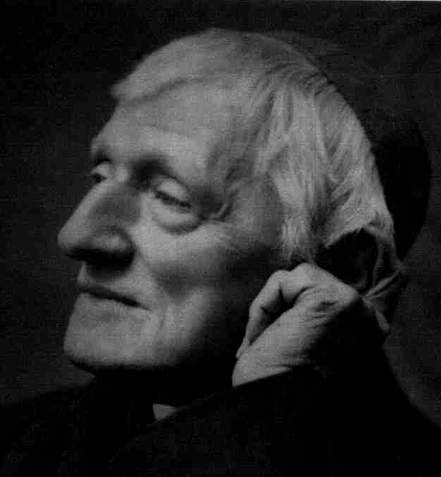
This took place on Anglican Church historian Dr. Edwin Tait’s Ithilien blog. “thoughtspot’s” words will be in blue.
*****
[A]lthough I tire of making every discussion about authority, I’m not sure you can talk about development without talking about authority. I recently read a very nice scholarly book (by N. T. Wright) in which “developing” a theological doctrine was consistently contrasted with “deviating” from the earlier doctrine. And yet Wright did not (at least in that work) tell us how to distinguish between the two. I’m afraid that, with no neutral place to make such judgments, authority of some sort may sneak back in as the way to distinguish “development” from “deviation.” Again, this is as true (potentially) for Protestants as for RCs.
My own attempt to make a more careful, specific, and debatable claim about development would be this: Both Protestants and Catholics affirm things doctrinally, even in official church settings, that would not have been dreamed of by the first-century Christians (my field of study).
I agree. But (here is my own explanation of that) they wouldn’t have been because Christians in those times were far too early to have understood the more complex reflections that came about due to centuries of reflection. No first or second century Christian could have grasped the complicated Chalcedonian Christology and trinitarianism (even many Christians who lived in that period failed to accept or grasp it: the Monophysites and Nestorians, etc., and later the Monothelites).
Yet the doctrines of the Holy Trinity or the Deity of Christ are no innovations (as I assume you would agree). So I must dissent from what you say here, that we are talking about innovations rather than developments.
or by the first 2d / 3d century Christians (Edwin’s field of study).
To a lesser extent than in the post-apostolic age, but yes, it was still a relatively early stage. Plus, one figures that (from a Protestant perspective) it also took 15 centuries to grasp supposedly elementary and altogether biblically perspicuous claims such as sola fide and sola Scriptura. :-) :-)
I know of no fair reason not to call these doctrines innovations.
I just gave one (I think) rather obvious example to the contrary. I could provide many more, but that would involve getting into particulars. I think the only way to properly resolve this dispute is to either:
- laboriously go over the principles of development and how they are arrived at (Edwin and I started that years ago but it was never resolved one way or the other, including my recent exchanges with him);
or,
- to examine some individual doctrine and to discuss what elements were legitimate developments of it and which were corruptions. Newman does both in his Essay on Development.
If you would be willing to engage in either discussion, nothing (in terms of interaction with opposing ideas) would interest me more, as development has long been my favorite theological topic (and of course it was key in my own conversion).
I know of no neutral ground for determining which of these innovations are “in continuity” or “developments” of earlier doctrines–much less of determining which ones are “infallible.”
That requires one of the two huge discussions I mentioned above to determine pro or con. I don’t see how you can contend this, given the actual course Christian theology has taken, even considering only the doctrines that we all hold in common.
Certainly the official RC line is that the official RC line is correct. (Surprise, surprise!)
This has nothing to do with that anymore than Newman’s Essay did. He wrote it while still an Anglican. This is about serious consideration of particular Christian doctrines and what is or isn’t consistent with them: something which has always been done by all kinds of Christians without necessary consideration of development.
Secondly, it is an historical question which can be verified or falsified by historical fact (inasmuch as we can ascertain same, within historiographical guidelines for determining historical “fact”), just as any other historical dispute proceeds.
But the average RC (in my experience) seems to think that his own church is mostly right most of the time, just as I think mine is mostly right most of the time, in a humbler fashion.
*
Of course, but again, none of that is required here. I rarely appeal merely to Catholic Church authority in my apologetics. I appeal to historical fact, reason, and the Bible. At the end of that inquiry, of course I might state that this is what the Catholic Church teaches, and that it has just been supported by the above three elements of proof and evidence, but the authority itself formed no part of my actual apologetic argument.
What is your church, by the way?
Thanks for your comments, and let me know if you want to do a serious discussion on one or more of the very important questions that you raised.
Hey, Dave. Thanks. You’ve pretty much cleared up for me what you’re discussing and why. I’m not sure how much I’d agree with or not, but much of it isn’t my area of interest enough for me to have done the “homework” necessary for the discussion. (By the way, I wasn’t assuming that an “innovation” was invalid; I wasn’t opposing it to “development.”)
As to my own “church”–well, I belong to the only church there is (as, I trust, do you). But my own “chunk” of it is called the Christian Churches (Restoration Movement). We are an “ad fontes” group who are slightly uncomfortable with leaning too heavily on doctrinal reflections that the first-century Christians “could not have grasped.” So development is less important to me than to you.
My question is always–if I believe, and teach, the doctrinal content that Paul’s churches believed and taught, why isn’t that enough?
Of course it is enough. The Bible is materially sufficient for doctrine and salvation. I believe that as a Catholic. I deny, however, that it is formally sufficient as a rule of faith, which is a different question altogether, involving the role and place and relative authority of Church and Tradition as well as Scripture.
I’m not saying that everything subsequent–from Chalcedonian Trinitarianism (with which I think I agree) to Catholic doctrines of the papacy(with which I think I disagree)–is a corruption. But surely it is most important, and even sufficient, to believe/teach things that Paul COULD have grasped.
I don’t disagree. Everything was present in the apostles (what we call the “apostolic deposit”) that was later developed by theologians and saints. The essentials or “kernels” were there, from which later orthodox reflection derived. We simply understand some things more deeply with the reflection of centuries. Theology is not a static enterprise.
As for St. Paul himself, it is not necessarily the case that he wouldn’t have been able to grasp the Chalcedonian theology of God. He happened to have been philosophically trained and I think he would have readily understood it if it had been explained to him by a hypothetical visitor from the 5th century.
On the other hand, he may have simply never have thought of such things as were discussed 400 years later (just as many Fathers previous to that did not, if their lack of treating certain topics is any indication). That is no reflection (negatively) on him, anymore than a lack of understanding of Einstein’s relativity by Isaac Newton diminishes the latter’s import and profound influence on later physics and astronomy.
It’s also true that St. Paul, being an apostle, and an instrument of divine inspiration when he wrote Scripture, may have likely understood a far more complex theology, but simplified it in his writing because of the purpose of the New Testament and the capacity of the great bulk of those who would read it through the centuries.
Fascinating to ponder . . .
Restoring first-century doctrines is, I know, a debatable project. But the project is (in its own way) interesting and (I think) a more solid basis for truth and unity than choosing between competing doctrines neither of which 1st-century Christians could have understood. So I’m a Biblical scholar more than a historical theologian.
Thanks for the discussion. Have fun.
***
(originally posted on 11-12-05)
Photo credit: St. John Henry Cardinal Newman [public domain]
***
Previous Post

July 5, 2020
Critique of Theologically Liberal Bible-Basher
Next Post
July 6, 2020 Early Christology: Development in Relation to Councils & Creeds
Browse Our Archives
Select a Category & Last Things About Me Anti-Catholicism Atheism & Agnosticism Baptism and Sacramentalism Bible and Tradition Blessed Virgin Mary Books by Dave Armstrong C. S. Lewis Calvinism & General Protestantism Catholic Apologetics Catholic Apologists Catholic conversion Catholic converts Christmas Church (Ecclesiology) Church History Conversion and Converts Development of Doctrine Eastern Orthodoxy Ecumenism & Christian Unity Eucharist & Liturgy Fathers of the Church French Translations G. K. Chesterton Hell Hell & Satan Hell & Satan & Last Things Heresies & Comparative Religion Holistic Health Inquisition & Crusades & Scandals James White Jews & Judaism & Old Testament John Calvin John Henry Newman Liberal / Modernist Theology Life Issues Literary Resume Lutheranism Mariology Martin Luther Music Orthodoxy Papacy & Infallibility Personal Page Philosophy & Science Political & Ethical & Moral Issues Protestant Persecution & Intolerance Protestantism Purgatory Purgatory & Penance Romantic & Imaginative Theology Saints & Purgatory & Penance Salvation Salvation & Justification Satan & Last Things Sexuality and Gender Issues Spanish Translations Traditionalism vs. Radical Catholic Reactionaries Traducciones al español / tradução para português Trinitarianism & Christology Uncategorized Videos
Select a Month October 2026 September 2026 August 2026 July 2026 June 2026 May 2026 April 2026 March 2026 February 2026 January 2026 December 2025 November 2025 October 2025 September 2025 August 2025 July 2025 June 2025 May 2025 April 2025 March 2025 February 2025 January 2025 December 2024 November 2024 October 2024 September 2024 August 2024 July 2024 June 2024 May 2024 April 2024 March 2024 February 2024 January 2024 December 2023 November 2023 October 2023 September 2023 August 2023 July 2023 June 2023 May 2023 April 2023 March 2023 February 2023 January 2023 December 2022 November 2022 October 2022 September 2022 August 2022 July 2022 June 2022 May 2022 April 2022 March 2022 February 2022 January 2022 December 2021 November 2021 October 2021 September 2021 August 2021 July 2021 June 2021 May 2021 April 2021 March 2021 February 2021 January 2021 December 2020 November 2020 October 2020 September 2020 August 2020 July 2020 June 2020 May 2020 April 2020 March 2020 February 2020 January 2020 December 2019 November 2019 October 2019 September 2019 August 2019 July 2019 June 2019 May 2019 April 2019 March 2019 February 2019 January 2019 December 2018 November 2018 October 2018 September 2018 August 2018 July 2018 June 2018 May 2018 April 2018 March 2018 February 2018 January 2018 December 2017 November 2017 October 2017 September 2017 August 2017 July 2017 June 2017 May 2017 April 2017 March 2017 February 2017 January 2017 December 2016 November 2016 October 2016 September 2016 August 2016 July 2016 June 2016 May 2016 April 2016 March 2016 February 2016 January 2016 December 2015 November 2015 October 2015 September 2015 August 2015 July 2015 June 2015 May 2015 April 2015 March 2015 February 2015 January 2015 December 2014 November 2014 October 2014 September 2014 August 2014 July 2014 June 2014 April 2014 March 2014 February 2014 January 2014 December 2013 November 2013 October 2013 September 2013 August 2013 July 2013 June 2013 April 2013 March 2013 February 2013 January 2013 December 2012 November 2012 October 2012 September 2012 August 2012 July 2012 June 2012 May 2012 April 2012 March 2012 February 2012 January 2012 December 2011 November 2011 October 2011 September 2011 August 2011 July 2011 June 2011 April 2011 March 2011 February 2011 October 2010 September 2010 August 2010 July 2010 April 2010 March 2010 December 2009 October 2009 August 2009 July 2009 June 2009 May 2009 March 2009 February 2009 October 2008 September 2008 April 2008 March 2008 February 2008 January 2008 December 2007 November 2007 October 2007 May 2007 March 2007 February 2007 January 2007 November 2006 October 2006 September 2006 August 2006 July 2006 June 2006 May 2006 April 2006 March 2006 February 2006 October 2005 June 2005 April 2005 February 2005 July 2004 May 2004 April 2004
Follow Us!
TAKE THE
Religious Wisdom Quiz
Who asked Jesus, "What is truth?"
Select your answer to see how you score.
Caiaphas Pilate Nicodemus Herod
Books by This Author Books by Dave Armstrong
Related posts from Biblical Evidence for Catholicism

The Mass & Development of Doctrine (vs. Wes...
Biblical Evidence for Catholicism
Newman, Sinless Mary, & Development (vs. Javier Perdomo)
Biblical Evidence for Catholicism
Patristic Development of a Sinless Mary (Cdl. Newman)
Biblical Evidence for Catholicism
Mary's Sinlessness & the Fathers (vs. Javier Perdomo)
Biblical Evidence for Catholicism
TRENDING AT PATHEOS Catholic

I was strolling through the top floor of the brand new Parthenon...

What Does Gêvâh Mean For Kimberley Guifoyle &...
This week, a lot of the news is focused on Kimberly Guilfoyle....

INNER CIRCLE: Profound Mystery (Of Christ In All...
Ephesians 5:31-32 “For this reason, a man will leave his father and...

Do Not Rejoice When Your Enemy Falls: The...
Turning an execution into a public spectacle is a disturbing expression of...

'The Chosen' S6 Trailer: The Passion Gets Very...
Not many watching 'The Chosen' worry about spoilers, but just because they...

The purpose-driven labor priest
A labor activist reads Rick Warren and it gets me wondering about...
view all Catholic blogs
Ad-Free & Subscriber Log-In Subscription Support
- About Us
- 2026 Calendar
- Videos
- Podcasts
- Library of World Religions
- Faith In Media Tracker
- Advertise With Us
- Write for Us
- Privacy Policy
- Terms of Service
- Do Not Sell My Data
- Contact Us
- Radiant Digital
- Manage Newsletter Subscriptions
- Unsubscribe From Notifications
- Sitemap
Copyright 2008-2026, Patheos. All rights reserved.
Subscription Support Ad-Free & Subscriber Log-In
Follow Patheos