
BuddhistCatholicContemplativeEvangelicalGeneral ChristianHinduJewishLatter-day SaintMuslimNew VisionsProgressive Christian
Beliefs
- Buddhist
- Catholic
- Contemplative
- Evangelical
- General Christian
- Hindu
- Jewish
- Latter-day Saint
- More Voices
- Muslim
- New Visions
- Pagan
- Progressive Christian
Topics
- Religion News
- Food and Religion
- Sports and Religion
- Religious Art
- Religious Music and Entertainment
- Religious Events
- History and Religion
- Style and Religion
- Politics and Religion
- Women in Religion
- Recreation Outdoors and Religion
- Business Finance and Religion
- Careers Workplace and Religion
- Education and Religion
- Family Parenting and Religion
- Health Fitness and Religion
- Home and Religion
- Relationships and Religion
- Technology and Religion
- Travel and Religion
Columnists
- Buddhist Columnists
- Business Finance and Religion Columnists
- Careers Workplace and Religion Columnists
- Catholic Columnists
- Contemplative Columnists
- Education and Religion Columnists
- Evangelists Columnists
- Family Parenting and Religion Columnists
- General Christian Columnists
- Health Fitness and Religion Columnists
- Hindu Columnists
- History and Religion Columnists
- Home and Religion Columnists
- Jewish Columnists
- More Voices Columnists
- Latter Day Columnists
- Muslim Columnists
- New Visions Columnists
- Nonreligious Columnists
- Pagan Columnists
- Politics and Religion Columnists
- Progressive Columnists
- Recreation Outdoors and Religion Columnists
- Relationships and Religion Columnists
- Religion News Columnists
- Religious Art Columnists
- Religious Events Columnists
- Religious Music and Entertainment Columnists
- Sports and Religion Columnists
- Style and Religion Columnists
- Technology and Religion Columnists
- Travel and Religion Columnists
- Women in Religion Columnists
Resource Library
- 2026 Calendar
- Library of World Religions
- The 100 Most Holy Places on Earth
- Patheos Answers
- Podcasts
- Videos
- Faith Leaders Database
- Anglican Episcopalian
- Bahai
- Baptist
- Buddhism
- Christianity
- Confucianism
- Eastern Orthodoxy
- Hinduism
- Holiness and Pentecostal
- ISKCON
- Islam
- Judaism
- Lutheran
- Methodist
- The Church of Jesus Christ of Latter-day Saints
- New Age
- Paganism
- Presbytarian and Reformed
- Protestantism
- Religion Behind the Scenes
- Roman Catholic
- Scientology
- Shia Islam
- Sikhism
- Sufism
- Sunni Islam
- Taoism
- Zen
- See all religions
Research Tools
 Ad-Free & Subscriber Log-In Subscription Support
Ad-Free & Subscriber Log-In Subscription Support
Follow Patheos 

- Trending:
- Forgiveness
- |
- Marriage
- |
- Consciousness
- |
- Death Penalty
- |
- Election
- |
- Halloween

-
About
-
Catholic Apologetics
-
Church History
-
Great Apologists
-
Christian Worldview
-
Protestantism & Misc.
- Home
- Catholic
- History and Religion
- Dialogue: “Obscure” Bible Before Luther’s Translation?
Dialogue: “Obscure” Bible Before Luther’s Translation?
Last updated on: June 15, 2020 at 11:06 am by Dave Armstrong
Dialogue: “Obscure” Bible Before Luther’s Translation? 2020-06-15T11:06:28-04:00 Dave Armstrong
Patheos Explore the world's faith through different perspectives on religion and spirituality! Patheos has the views of the prevalent religions and spiritualities of the world.
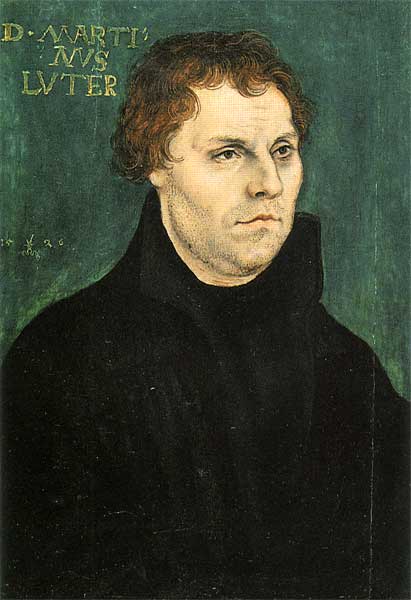
This was originally a lengthy Facebook discussion (7-24-14) about my article, Were Vernacular Bibles Unknown Before Luther? (Luther’s Dubious Claims About the Supposed Utter Obscurity of the Bible Before His Translation) [6-15-11]. Dr. Edwin Tait’s words will be in blue, and words of Pastor Ken Howes [LCMS] in green.
*****
Here I go again with the nuancing and qualification:
1. Luther was not lying when he said that there was a pretty common opinion to the effect that the Bible as a whole should not be put into the hands of the laity because of the possibility of heretical misrepresentation. Ironically, this wasn’t a huge concern in Germany before Luther, because heresy wasn’t a huge problem. But there are instances of church leaders expressing concern about the widespread availability of Scripture. Of course, that still leaves Luther guilty of wild exaggeration and misrepresentation. But as you say, the metaphor of Scripture being “kicked under the bench” could mean a lot of things. So I don’t think the word “lie” is appropriate here. [I later changed that language, as a result of these dialogues]
2. I disagree more strongly with your claim that modern Protestants believe in the myth of an inaccessible Bible in the Middle Ages primarily because of Luther. In England in the century or so before the Revolt (I use that term out of courtesy to you!), laypeople were forbidden to read Scripture in the vernacular. Sure, that was a response to the Lollard Bible, but the Church did not sponsor an orthodox translation. The fact that there were 17 editions of the Bible in Germany (none of them, as far as I know, linked with heretical groups or condemned by the Church, though some clergy did mutter about the danger of heretical misinterpretation) highlights the fact that the only vernacular Bible available to the English was a heretical one. English-speaking Protestants have typically assumed that England was typical in this respect, when actually it was (in the fifteenth and early sixteenth centuries) unique to my knowledge. Certainly Luther’s over-the-top statements gave cover to this misunderstanding, but they were not solely responsible for it.
3. A further factor is the fact that the Council of Toulouse had banned vernacular Bibles (probably the versions in mind were actually heretical paraphrases, but the wording of the Council covers all vernacular translations) in 1229, and that from Trent until the 19th century the general policy of the Catholic Church (with notable exceptions, especially in England, ironically given the earlier history but understandably since England was a Protestant country and Catholics needed their own version) was to discourage lay reading of the Bible. It is therefore understandable that Protestants, especially English-speaking ones, would put together the 1229 condemnation, Arundel’s late medieval condemnation, Luther’s misleading language about the Bible being “under the bench,” and the post-Tridentine repressive policy toward vernacular Bibles, and assume mistakenly that the Middle Ages as a whole were a time when the Bible was unknown.
4. As you make clear, the Middle Ages were in fact a time when culture was saturated by the Bible. People who think that medieval people (devout people, at least) were ignorant of the Bible clearly haven’t read much medieval literature or seen much medieval art. However, the Bible wasn’t primarily read “straight” as the Protestant tradition would encourage. It was known above all through allusion, interpretation, preaching, art, drama, etc. The Renaissance brought a new way of thinking about texts and authors, and the printing press made it much easier to produce and handle large books as unified objects. So there was a new way of thinking about the Bible and using it in the age of the printing press, and some of Luther’s language can be explained on those grounds. Much medieval engagement with the Bible wouldn’t have seemed significant to Luther. For instance, he claims absurdly that the scholastics ignored the Bible. Actually the main job of a scholastic theology professor was to comment on the Bible, but Biblical books were typically treated as sources of theological propositions rather than as literary works.
So we agree that Luther’s language was highly misleading, and that Protestants widely misunderstand the depth and breadth of medieval engagement with the Bible. However, I don’t think “lie” is fair, and more to the point the Protestant belief that the Catholic Church discouraged lay Bible reading is not without foundation and is not solely based on these statements by Luther.
[see also the extensive comments in the thread by Catholic Alfonso Taboada Portal. I have to omit something due to the length of this thread, but they remain on Facebook for folks who want to delve more deeply into this topic (one / two / three / four / five / six / seven).]
Alfonso Taboada Portal, I note that your examples of the Church encouraging lay Bible reading are all from the years before the Reformation. As I said in my earlier long post, this was a period when lay Bible reading was allowed except in England. I am aware of St. Thomas More’s attempt to explain away the regulations of Archbishop Arundel, and I do not find them convincing. More apparently claimed that he knew of people reading vernacular versions, but I’ve never even seen a specific citation of the passage where More claims this (in other words, I’ve only seen this alleged by other people such as yourself), much less any evidence corroborating his claim. Of course Arundel was banning the Lollard translation, but the point, again, is that no other translation was available. In 13th-century France, in 15th-century England, and in most Catholic countries from Trent until the mid-19th century, the standard Catholic response to heretical use of the Bible was to limit or prohibit lay access to Scripture. Pope Clement XI condemned Paschasius Quesnel for saying that laypeople ought to read Scripture (see especially condemned propositions 79-81) [link].
So if you concede that Bible reading was prevalent in Germany before the Protestant Revolt, then how is it you say that Luther didn’t misrepresent this history? What does he care about England? He never even visited there, and I don’t believe he knew English. He must have been talking mainly about Germany, and we know it had many Bible versions before his and that they were available. I hear they are greatly inferior but they were there, and he claims that the populace was almost entirely ignorant of them, because of the wickedness of the Catholic Church in hiding the Bible.
I am very sad to see this unfair and unhelpful attack on Luther.
If you demonstrate any inaccuracies in it, Ken, I’ll be happy to modify them. I always respect your opinion. Certainly you are well aware that Luther said lots of disparaging things about the Catholic Church, and we are entitled to respond to them, no? It’s not like we have no answers and just wilt and die in the face of some attack made against us.
I like Luther in other ways. In fact, I am seriously considering doing a book collecting his writings where he says things that we agree with (just as a third of my book about him did). [I did later put together that book] But that doesn’t wipe out the fact that he is often quite unfair to the Catholic Church too.
Part of different kinds of Christians getting to know each other better includes, unfortunately, the negative things in our histories as well. We need to face those squarely, in all camps. But I am always open to correction, and will link to these discussions for a fuller perspective that all can benefit from.
I would add, too, that I am always happy to learn that some opinion or other in Luther was not as bad (from our perspective) as I first suspected. So to receive information that runs counter to what I have presented would be most welcome indeed.
I’m happy to talk about anything here. I’m not out to embarrass people or make them feel uncomfortable. I simply care about learning theological and historical truth, to the best of my ability.
I did not “deal with” the citations from Luther because obviously I accept that Luther said those things and that they are misleading. But you did not, as far as I can see, present any evidence that Luther actually denied that there were a number of editions of the Bible available. He spoke in a way that has misled later Protestants (especially in light of the rather different English history on this point) into thinking that this was the case. Luther’s language, as you cite it, is metaphorical and vague (you show that his favorite term was “leaving Scripture under the bench,” which can mean a lot of things). To justify the term “lie” you have to show that there was a specific claim Luther made which was factually false rather than simply being exaggerated or rhetorically misleading (like “leaving Scripture under the bench”).
I don’t see that you have done that. I’m not, by the way, denying that Luther did lie on occasion–he certainly advocated lying to cover up the bigamy of Philip of Hesse. But in his context, lying about the obvious fact that there were existing versions of the Bible would be pointless. In fact, if he had been able to deceive people on that score, this would prove that these versions can’t have been very well known. Luther’s words have deceived later generations of Protestants who didn’t know about the pre-Reformation versions. But it’s a bit odd to suggest that he was so fore-sighted in his deception as to lie for the benefit of generations yet unborn!
Okay; that’s fair. So you are saying that Luther wasn’t denying that they existed altogether, but was asserting that the Church deliberately kept people from them (perhaps a variation of the old fallacious “chained Bible” argument)?
I’m saying that his language is so rhetorical and over the top that it’s not clear exactly what he was claiming. Insofar as he was claiming that there was a widespread opinion that it was dangerous for laypeople to read Scripture, he was right. But obviously in Germany (and most other countries, except for England, on the eve of the “Revolt”) these concerns were not pressed very vigorously by the Church. I don’t know how far the Bible versions available in Germany were actually encouraged by the authorities of the Church, as they were in Spain if I remember rightly (contrasting sharply with the post-Reformation situation in Spain). I know that I came across a reference (I think in the Cambridge History of the Bible, but I don’t remember precisely) to at least one German bishop or other church official expressing disapproval of vernacular translations. But that’s pretty mild. Ironically, as on so many other points, the Reformation would turn out to be a self-fulfilling prophecy in many ways, since Church leaders responded to Protestantism by cracking down on lay Bible reading throughout the entire Church, instead of dealing with the issue locally as in the Middle Ages.
Let me clarify: my argument in the paper was that Luther was saying that the Catholic Church “obscured” the Bible (see its very title): not that Luther denied that earlier vernacular versions in German existed. He never mentions them, that I can see, so one might opine that he implied (for the less educated reader) that they didn’t exist, if he didn’t flat-out deny their existence. And so I wrote in the paper:
The big myth under consideration is the commonly heard legend among Protestants (especially of an anti-Catholic bent) of Catholic hostility to the Bible and desire to keep it out of the hands of the people, for fear that its doctrines will be exposed as contrary to the Bible. . . . the controversy at hand was whether the Bible was available to the populace in (mostly High) German to any significant extent before Luther. It certainly was.
One comment of mine above was poorly worded, in light of these considerations, and I changed the wording a bit.
I don’t know how far the Bible versions available in Germany were actually encouraged by the authorities of the Church, as they were in Spain if I remember rightly (contrasting sharply with the post-Reformation situation in Spain).
Actual evidence that I have presented in other papers of mine (linked in this one) strongly suggests both Church encouragement of vernacular translations (which definitely means lay readership, since scholars worked mostly in Latin, right?), and wide reading, since there were so many editions. Here are some of those facts:
The number of translations . . . of the complete Bible, was indeed very great . . . Between this period [1466] and the separation of the Churches at least fourteen complete editions of the Bible were published in High German, and five in the low German dialect. The first High German edition was brought out in 1466 by Johann Mendel, of Strasburg . . .
[Other editions in High German: Strasburg: 1470,1485 / Basel, Switzerland: 1474 / Augsburg: 1473 (2),1477 (2),1480,1487,1490,1507,1518 / Nuremburg: 1483]. Bible Translations in Low German: Cologne: 1480 (2) / Lubeck: 1494 / Halberstadt: 1522 / Delf: before 1522]
(Janssen, History of the German People From the Close of the Middle Ages, 16 volumes, translated by A.M. Christie, St. Louis: B. Herder, 1910 [orig. 1891], vol. 1, 56-57; vol. 14, 388)
We know from history that there were popular translations of the Bible and Gospels in Spanish, Italian, Danish, French, Norwegian, Polish, Bohemian and Hungarian for the Catholics of those lands before the days of printing . . .
In Italy there were more than 40 editions of the Bible before the first Protestant version appeared, beginning at Venice in 1471; and 25 of these were in the Italian language before 1500, with the express permission of Rome. In France there were 18 editions before 1547, the first appearing in 1478. Spain began to publish editions in the same year, and issued Bibles with the full approval of the Spanish Inquisition (of course one can hardly expect Protestants to believe this). In Hungary by the year 1456, in Bohemia by the year 1478, in Flanders before 1500, and in other lands groaning under the yoke of Rome, we know that editions of the Sacred Scriptures had been given to the people. In all . . . 626 editions of the Bible, in which 198 were in the language of the laity, had issued from the press, with the sanction and at the instance of the Church, in the countries where she reigned supreme, before the first Protestant version of the Scriptures was sent forth into the world . . . What, then, becomes of the pathetic delusion . . . that an acquaintance with the open Bible in our own tongue must necessarily prove fatal to Catholicism? . . .
Many senseless charges are laid at the door of the Catholic Church; but surely the accusation that, during the centuries preceding the 16th, she was the enemy of the Bible and of Bible reading must, to any one who does not wilfully shut his eyes to facts, appear of all accusations the most ludicrous . . .
We may examine and investigate the action of the Church in various countries and in various centuries as to her legislation in regard to Bible reading among the people; and wherever we find some apparently severe or unaccountable prohibition of it, we shall on enquiry find that it was necessitated by the foolish or sinful conduct on the part either of some of her own people, or of bitter and aggressive enemies who literally forced her to forbid what in ordinary circumstances she would not only have allowed but have approved and encouraged.
(Henry G. Graham, Where We Got the Bible, St. Louis: B. Herder, revised edition: 1939, 98, 105-106, 108, 120)
And in contrast we have Luther saying stupid stuff like:
[T]he Holy Word of God has not only been laid under the bench but has almost been destroyed by dust and filth. [1518]
But up to this time, the idea that the laity should read the Scriptures has been treated with derision. For in this the devil has hit on a fine trick to tear the Bible out of the hands of the laity; and he has thought thus: If I can keep the laity from reading the Scriptures, I will then turn the priests from the Bible to Aristotle, and so let them gossip as they will, the laity must hear just what they preach; . . . [1523]
When in our own day we saw how Scripture lay under the bench, and how the devil was deluding us and taking us captive with the hay and straw of men-made prayers, we tried, by the Grace of God, to mend matters, and have indeed with great and bitter pains brought Scripture back to light once more, and, sending human ordinances to the winds, set ourselves free and escaped from the devil. [1527]
[T]he Bible lies forgotten in the dust under the bench (as happened to the book of Deuteronomy, in the time of the kings of Judah). [1539]
Sorry, guys, but I have to object to these statements, as a Catholic apologist and lover of accurate history.
For the sake of charity and unity I took the word “lie” out of the paper’s title and contents.
Here is my new revised ending:
Luther’s Commentary on Peter and Jude from 1523 (cited at length above), explicitly states that Catholics (or the Church) supposedly desired to keep the Bible out of the laity’s hands. As a general statement, this is untrue. And it’s a bit difficult to believe that he could have been this ignorant of Church history and Catholicism (being quite a sharp guy).
But we know that Luther was prone to hyper-polemical utterances and exaggeration (and that context is always very important in interpretation of Luther); thus we hope (in charity) that this is altogether an instance of that, rather than reflective of his literal opinion as to the historical facts.
See, I did change some language and am trying to be more fair, taking into account your criticisms. “Lie” ain’t in the paper anymore . . . I continue to strongly disagree with Luther’s statements (in this regard and many others) about Catholic history and supposed “attitudes.”
Okay. We can differ about the accuracy of what he said; I’m glad that the accusation of deliberate falsehood is gone.
Of course the Catholic Church, and its apologists, are entitled to respond to charges Luther, or anyone else made. It’s your job to do that., just as it was my job to make the protest I made above. Grave charges have been made more than once on both sides, and neither side has always been fair. I think that we will get somewhere when each side understands that the other has taught and said what it thought was right. No one, certainly no one within the orthodoxy of each tradition, has gone out with the intention of doing evil, and very few have gone out to lie intentionally (we’ll assume that the idea of the “pious lie” that one group propagated in the 16th to the 18th centuries has been laid to rest). As in most things, we’ll probably ultimately discover that there was some justice to much of what each side said, and that much of the rancor has been misreading of what each other said. I don’t believe that the Catholic Church is now, if it ever was, anti-Biblical; Catholics should drop their common accusation that Lutherans are antinomians (my major project is the translation of the book by Finnish theologian Lauri Haikola Usus Legis from German into English, which is rather specifically covering the Antinomian Controversy of the 1550’s). There is in the works a project for a joint observance in 2017 of the events of October 31, 1517. It would be wonderful if some of the issues that have divided us were resolved by then.
Great, Ken! I’ve defended Luther against antinomianism:
Martin Luther: Good Works Prove Authentic Faith [4-16-08]
Martin Luther: Faith Alone is Not Lawless Antinomianism [2-28-10]
Luther on Theosis & Sanctification [11-23-09]
Merit & Sanctification: Martin Luther’s Point of View [11-10-14]
Excellent!
We mustn’t unfairly approach those who differ from us theologically. There is more than enough actual error in Luther’s teaching, from a Catholic perspective, without having to make up additional errors and distort and twist his views by cynically selective citations taken out of context (as happens in some Catholic circles, sadly, all too often).
Our duty as Christians is to be truthful about the views of those we disagree with. It’s not optional. Bearing false witness violates one of the Ten Commandments. If we fail to do this, it only reflects badly on us, not the ones whose true opinions we caricature and distort.
I totally agree. This is why I have vehemently opposed anti-Catholicism and anti-Protestantism alike. Both sides commit these errors and, yes, sins.
I don’t see that I’ve misrepresented Luther here. I think he has done that regarding the Catholic Church and the Bible, and plenty of evidence that I give here and in further links backs me up on that.
And as I said, if you have some data that shows otherwise, or puts these comments of Luther in a larger, more favorable context, no one would be happier than me, to learn about that and to add it to the paper, for a fuller picture.
I do have quotes from Luther extolling the Catholic Church in several respects, too (about true Catholic tradition that he agrees with), so, as always, he was complex and seemingly contradictory at times.
That was very well said; I would have said much the same in reverse; I would say there are errors in Aquinas and Bellarmine, but we should not invent errors on their part–nor should an error in one matter undermine our respect for the good work they did in another. Rather, we should as Christian brothers establish where we agree and see first that we do not misunderstand each other where we appear to differ, and then, if we really do differ, attempt to write respectfully of each other. We can look at the way Bellarmine and Gerhard interacted. Neither misrepresented the other’s arguments. Each, where he thought the other had gotten something right, acknowledged that. We can look at the fact that when the Catholic theologians wrote the Confutatio against the Augsburg Confession, they approved a good many articles of the Augsburg Confession–and when Martin Chemnitz wrote the Examination of the Council of Trent, there are many canons where Chemnitz said, “We do not disagree with this canon; just don’t include us in your condemnation of those who disagree with both you and us.’
I think Luther was stating accurately what he observed. He could be intemperate, but he wasn’t a liar. I wrote a paper in seminary on the efficacy of Scripture that looks at some Catholic statements from the 16th century that sound very much like what Luther complained of. But fairness from the Lutheran side requires that Lutherans recognize that it was not all that way. I wouldn’t be able to use St. Anselm, St. Bernard of Clairvaux and St. Thomas Aquinas nearly as much in my work as I do if their work was all bad. They, especially St. Anselm, wrote some great stuff that showed a profound grasp of Scripture. Even some late Scholastics, like Gerson and Cajetan, wrote some very good things that were soundly based in Scripture. So if you rap Luther for an insufficiently broad perspective of pre-Reformation Catholic writing or for not giving more weight to the better Catholic writers of the Middle Ages, you have at least a defensible case. (Luther did like St. Bernard very much.) Many other Lutheran writers, like Melanchthon, Chemnitz and Gerhard, do recognize the good work that had been done in that era.
Great historical information there; thanks.
***
Photo credit: Martin Luther, 31 December 1525 (age 42), by Lucas Cranach the Elder [public domain / Wikimedia Commons]

***
Catholic German translations of the Bible
Previous Post

June 14, 2020
Sola Scriptura Can't Definitively Refute Christological Heresy
Next Post

June 15, 2020 Communion in the Hand: More Reflections & Opinions
Browse Our Archives
Select a Category & Last Things About Me Anti-Catholicism Atheism & Agnosticism Baptism and Sacramentalism Bible and Tradition Blessed Virgin Mary Books by Dave Armstrong C. S. Lewis Calvinism & General Protestantism Catholic Apologetics Catholic Apologists Catholic conversion Catholic converts Christmas Church (Ecclesiology) Church History Conversion and Converts Development of Doctrine Eastern Orthodoxy Ecumenism & Christian Unity Eucharist & Liturgy Fathers of the Church French Translations G. K. Chesterton Hell Hell & Satan Hell & Satan & Last Things Heresies & Comparative Religion Holistic Health Inquisition & Crusades & Scandals James White Jews & Judaism & Old Testament John Calvin John Henry Newman Liberal / Modernist Theology Life Issues Literary Resume Lutheranism Mariology Martin Luther Music Orthodoxy Papacy & Infallibility Personal Page Philosophy & Science Political & Ethical & Moral Issues Protestant Persecution & Intolerance Protestantism Purgatory Purgatory & Penance Romantic & Imaginative Theology Saints & Purgatory & Penance Salvation Salvation & Justification Satan & Last Things Sexuality and Gender Issues Spanish Translations Traditionalism vs. Radical Catholic Reactionaries Traducciones al español / tradução para português Trinitarianism & Christology Uncategorized Videos
Select a Month October 2026 September 2026 August 2026 July 2026 June 2026 May 2026 April 2026 March 2026 February 2026 January 2026 December 2025 November 2025 October 2025 September 2025 August 2025 July 2025 June 2025 May 2025 April 2025 March 2025 February 2025 January 2025 December 2024 November 2024 October 2024 September 2024 August 2024 July 2024 June 2024 May 2024 April 2024 March 2024 February 2024 January 2024 December 2023 November 2023 October 2023 September 2023 August 2023 July 2023 June 2023 May 2023 April 2023 March 2023 February 2023 January 2023 December 2022 November 2022 October 2022 September 2022 August 2022 July 2022 June 2022 May 2022 April 2022 March 2022 February 2022 January 2022 December 2021 November 2021 October 2021 September 2021 August 2021 July 2021 June 2021 May 2021 April 2021 March 2021 February 2021 January 2021 December 2020 November 2020 October 2020 September 2020 August 2020 July 2020 June 2020 May 2020 April 2020 March 2020 February 2020 January 2020 December 2019 November 2019 October 2019 September 2019 August 2019 July 2019 June 2019 May 2019 April 2019 March 2019 February 2019 January 2019 December 2018 November 2018 October 2018 September 2018 August 2018 July 2018 June 2018 May 2018 April 2018 March 2018 February 2018 January 2018 December 2017 November 2017 October 2017 September 2017 August 2017 July 2017 June 2017 May 2017 April 2017 March 2017 February 2017 January 2017 December 2016 November 2016 October 2016 September 2016 August 2016 July 2016 June 2016 May 2016 April 2016 March 2016 February 2016 January 2016 December 2015 November 2015 October 2015 September 2015 August 2015 July 2015 June 2015 May 2015 April 2015 March 2015 February 2015 January 2015 December 2014 November 2014 October 2014 September 2014 August 2014 July 2014 June 2014 April 2014 March 2014 February 2014 January 2014 December 2013 November 2013 October 2013 September 2013 August 2013 July 2013 June 2013 April 2013 March 2013 February 2013 January 2013 December 2012 November 2012 October 2012 September 2012 August 2012 July 2012 June 2012 May 2012 April 2012 March 2012 February 2012 January 2012 December 2011 November 2011 October 2011 September 2011 August 2011 July 2011 June 2011 April 2011 March 2011 February 2011 October 2010 September 2010 August 2010 July 2010 April 2010 March 2010 December 2009 October 2009 August 2009 July 2009 June 2009 May 2009 March 2009 February 2009 October 2008 September 2008 April 2008 March 2008 February 2008 January 2008 December 2007 November 2007 October 2007 May 2007 March 2007 February 2007 January 2007 November 2006 October 2006 September 2006 August 2006 July 2006 June 2006 May 2006 April 2006 March 2006 February 2006 October 2005 June 2005 April 2005 February 2005 July 2004 May 2004 April 2004
Follow Us!
TAKE THE
Religious Wisdom Quiz
Which name means "the mother of all living" in Genesis?
Select your answer to see how you score.
Sarah Eden Mary Eve
Books by This Author Books by Dave Armstrong
Related posts from Biblical Evidence for Catholicism

Jesus Founded the [Catholic] Church. If Not Him,...
Biblical Evidence for Catholicism

A Few "Worst" & "Best" Arguments vs. Protestantism
Biblical Evidence for Catholicism

Jerusalem Council vs. James White & Sola Scriptura
Biblical Evidence for Catholicism

Book: Martin Luther: Dissenter and Defender
Biblical Evidence for Catholicism
TRENDING AT PATHEOS Catholic

Swimfan: Forgotten Aughts Pleasures
This is a recovery effort. In 2002, My Big Fat Greek Wedding...

Top Three Anti-Catholic Lies About Catholicism
This is my initial transcript for the video, "THE 3 WORST...

Pope Leo Celebrates Mass for Nurses & Docs...
I don't have any idea how he did it, but Pope Leo...

The Sermon on the Mount, Part I: Matthew...
The Sermon on the Mount, Part I (Matthew 4:12-5:12) St. Matthew moves...

What's up from Crossway: Reviewing some of their latest A few weeks...

Janie Learns the Way of the Cross: A...
Teaching children about Jesus' Passion can be challenging. Many parents and educators...
view all Catholic blogs
Ad-Free & Subscriber Log-In Subscription Support
- About Us
- 2026 Calendar
- Videos
- Podcasts
- Library of World Religions
- Faith In Media Tracker
- Advertise With Us
- Write for Us
- Privacy Policy
- Terms of Service
- Do Not Sell My Data
- Contact Us
- Radiant Digital
- Manage Newsletter Subscriptions
- Unsubscribe From Notifications
- Sitemap
Copyright 2008-2026, Patheos. All rights reserved.
Subscription Support Ad-Free & Subscriber Log-In
Follow Patheos