
BuddhistCatholicContemplativeEvangelicalGeneral ChristianHinduJewishLatter-day SaintMuslimNew VisionsProgressive Christian
Beliefs
- Buddhist
- Catholic
- Contemplative
- Evangelical
- General Christian
- Hindu
- Jewish
- Latter-day Saint
- More Voices
- Muslim
- New Visions
- Pagan
- Progressive Christian
Topics
- Religion News
- Food and Religion
- Sports and Religion
- Religious Art
- Religious Music and Entertainment
- Religious Events
- History and Religion
- Style and Religion
- Politics and Religion
- Women in Religion
- Recreation Outdoors and Religion
- Business Finance and Religion
- Careers Workplace and Religion
- Education and Religion
- Family Parenting and Religion
- Health Fitness and Religion
- Home and Religion
- Relationships and Religion
- Technology and Religion
- Travel and Religion
Columnists
- Buddhist Columnists
- Business Finance and Religion Columnists
- Careers Workplace and Religion Columnists
- Catholic Columnists
- Contemplative Columnists
- Education and Religion Columnists
- Evangelists Columnists
- Family Parenting and Religion Columnists
- General Christian Columnists
- Health Fitness and Religion Columnists
- Hindu Columnists
- History and Religion Columnists
- Home and Religion Columnists
- Jewish Columnists
- More Voices Columnists
- Latter Day Columnists
- Muslim Columnists
- New Visions Columnists
- Nonreligious Columnists
- Pagan Columnists
- Politics and Religion Columnists
- Progressive Columnists
- Recreation Outdoors and Religion Columnists
- Relationships and Religion Columnists
- Religion News Columnists
- Religious Art Columnists
- Religious Events Columnists
- Religious Music and Entertainment Columnists
- Sports and Religion Columnists
- Style and Religion Columnists
- Technology and Religion Columnists
- Travel and Religion Columnists
- Women in Religion Columnists
Resource Library
- 2026 Calendar
- Library of World Religions
- The 100 Most Holy Places on Earth
- Patheos Answers
- Podcasts
- Videos
- Faith Leaders Database
- Anglican Episcopalian
- Bahai
- Baptist
- Buddhism
- Christianity
- Confucianism
- Eastern Orthodoxy
- Hinduism
- Holiness and Pentecostal
- ISKCON
- Islam
- Judaism
- Lutheran
- Methodist
- The Church of Jesus Christ of Latter-day Saints
- New Age
- Paganism
- Presbytarian and Reformed
- Protestantism
- Religion Behind the Scenes
- Roman Catholic
- Scientology
- Shia Islam
- Sikhism
- Sufism
- Sunni Islam
- Taoism
- Zen
- See all religions
Research Tools
 Ad-Free & Subscriber Log-In Subscription Support
Ad-Free & Subscriber Log-In Subscription Support
Follow Patheos 

- Trending:
- Forgiveness
- |
- Marriage
- |
- Consciousness
- |
- Death Penalty
- |
- Election
- |
- Halloween

-
About
-
Catholic Apologetics
-
Church History
-
Great Apologists
-
Christian Worldview
-
Protestantism & Misc.
- Home
- Catholic
- History and Religion
- Can Only Regenerate Men Perform Truly Good Works?
Can Only Regenerate Men Perform Truly Good Works?
Last updated on: June 27, 2020 at 11:29 am by Dave Armstrong
Can Only Regenerate Men Perform Truly Good Works? 2020-06-27T11:29:29-04:00 Dave Armstrong
Patheos Explore the world's faith through different perspectives on religion and spirituality! Patheos has the views of the prevalent religions and spiritualities of the world.
vs. John Calvin
[excerpt from my book, A Biblical Critique of Calvinism (Oct. 2012, 178p), pp. 22-28. Follow the link for content and purchase information]
***
I’ll be using, the (public domain) translation of Institutes of the Christian Religion by Henry Beveridge, produced for the Calvin Translation Society in 1845, from the 1559 edition in Latin; reprinted by William B. Eerdmans Publishing Company (Grand Rapids, Michigan), 1995, and available online at the wonderful Christian Classics Ethereal Library site. My own Bible passages are from RSV. Calvin’s words will be in blue.
***
For our nature is not only utterly devoid of goodness, but so prolific in all kinds of evil, that it can never be idle. (II, 1:8)
Here I only wished briefly to observe, that the whole man, from the crown of the head to the sole of the foot, is so deluged, as it were, that no part remains exempt from sin, and, therefore, everything which proceeds from him is imputed as sin. Thus Paul says, that all carnal thoughts and affections are enmity against God, and consequently death (Rom. 8:7). (II, 1:9)
. . . it will be beyond dispute, that free will does not enable any man to perform good works, unless he is assisted by grace; indeed, the special grace which the elect alone receive through regeneration. (II, 2:6)
Therefore, since reason, by which man discerns between good and evil, and by which he understands and judges, is a natural gift, it could not be entirely destroyed; but being partly weakened and partly corrupted, a shapeless ruin is all that remains. In this sense it is said (John 1:5), that “the light shineth in darkness, and the darkness comprehended it not;” these words clearly expressing both points—viz. that in the perverted and degenerate nature of man there are still some sparks which show that he is a rational animal, and differs from the brutes, inasmuch as he is endued with intelligence, and yet, that this light is so smothered by clouds of darkness that it cannot shine forth to any good effect. In like manner, the will, because inseparable from the nature of man, did not perish, but was so enslaved by depraved lusts as to be incapable of one righteous desire. The definition now given is complete, but there are several points which require to be explained. (II, 2:12)
Therefore, since it is manifest that men whom the Scriptures term carnal, are so acute and clear-sighted in the investigation of inferior things, their example should teach us how many gifts the Lord has left in possession of human nature, notwithstanding of its having been despoiled of the true good. (II, 2:15)
. . . whatever is not illuminated by his Spirit is wholly darkness. (II, 2:21)
And, indeed if we admit that men, without grace, have any motions to good, however feeble, what answer shall we give to the apostles who declares that “we are incapable of thinking a good thought?” (2 Cor. 3:6). What answer shall we give to the Lord, who declares, by Moses, that “every imagination of man’s heart is only evil continually?” (Gen. 8:21). (II, 2:27)
Catholics and Calvinists agree generally speaking on original sin: the doctrine that all human beings were corporately affected by the fall of man and fell “in” Adam. It is found in passages such as Psalm 51:5; Romans 5:12-19; and 1 Corinthians 15:22. The dominion of the devil resulted from original sin, and caused a catastrophic disorder in the cosmos (Gen 3:15; Jn 12:31; 14:30; 2 Cor 4:4; 2 Pet 2:19; Heb 2:14).
Catholics also heartily agree that the unregenerate man is utterly unable to save himself or able to do anything whatsoever to turn to God and be justified or regenerated (Calvin asserts this in various ways in II, 2:20). That can only happen as a result of God’s grace.
What we deny is the Calvinist notion of total depravity, such that unregenerate man is “utterly devoid of goodness” or “true good” and that “everything which proceeds from him is imputed as sin” and that he is “incapable of one righteous desire” and that he can perform no good works whatever unless assisted by “the special grace which the elect alone receive through regeneration.”
For Calvin, then, a truly good work is literally impossible unless a man has already been regenerated by God; hence can be enabled by His grace to do good works.
This goes too far, and can’t be squared with biblical teaching. It’s a false “tradition of men” – deriving from prior positions and a philosophy that is brought to Scripture, rather than from Scriptural revelation itself. It forces Holy Scripture into a view that it doesn’t teach: much like trying to force a square peg into a round hole.
What do we make of, for example, King Jehoshaphat? He was subjected to the wrath of God, yet nevertheless the Bible informs us that he possessed some “good” and even sought God:
2 Chronicles 19:2-3 But Jehu the son of Hana’ni the seer went out to meet him, and said to King Jehosh’aphat, “Should you help the wicked and love those who hate the LORD? Because of this, wrath has gone out against you from the LORD. [3] Nevertheless some good is found in you, for you destroyed the Ashe’rahs out of the land, and have set your heart to seek God.”
2 Chronicles 20:32-33 He walked in the way of Asa his father and did not turn aside from it; he did what was right in the sight of the LORD. [33] The high places, however, were not taken away; the people had not yet set their hearts upon the God of their fathers.
Was King Jehoshaphat regenerated and hence ultimately saved? We simply don’t know. But if he wasn’t, he couldn’t do any true “good” at all, according to Calvin. The Bible clearly states that he “did what was right in the sight of the LORD”.
*
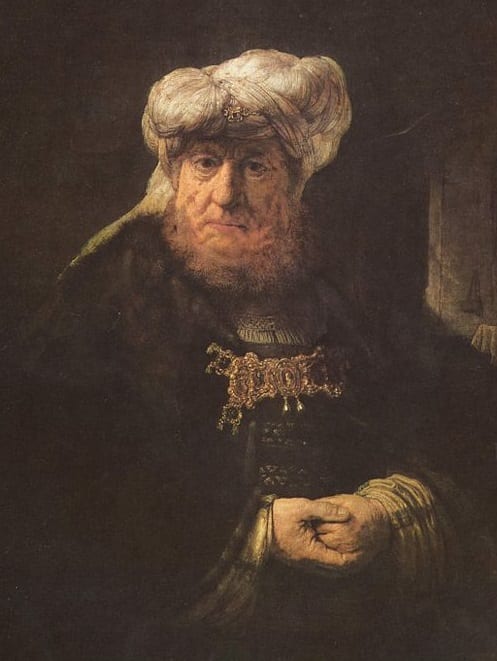
Yet it was a mixed record. He didn’t get rid of the “high places,” which were shrines to idols, and the last thing we learn about him was that he was condemned by a prophet because he allied himself with wicked King Ahaziah of Israel. How about King Uzziah? The Bible says he sought God too:
2 Chronicles 26:4-5 And he did what was right in the eyes of the LORD, according to all that his father Amazi’ah had done. [5] He set himself to seek God in the days of Zechari’ah, who instructed him in the fear of God; and as long as he sought the LORD, God made him prosper.
But Uzziah met an even more tragic end than Jehoshaphat:
2 Chronicles 26:16, 20-21 But when he was strong he grew proud, to his destruction. For he was false to the LORD his God, and entered the temple of the LORD to burn incense on the altar of incense. . . . [20] And Azari’ah the chief priest, and all the priests, looked at him, and behold, he was leprous in his forehead! And they thrust him out quickly, and he himself hastened to go out, because the LORD had smitten him. [21] And King Uzzi’ah was a leper to the day of his death, and being a leper dwelt in a separate house, for he was excluded from the house of the LORD. . . .
If Calvin wants to maintain that only a regenerate person can seek God and do any good at all, Uzziah must have been regenerated, but then how is his spiritual demise explained (since Calvin and Calvinists also deny the possibility of a truly regenerate, elect person ever falling away (unconditional election, irresistible grace, and perseverance of the saints)? If Uzziah was saved in the end (as he must be in the Calvinist schema, if it is accepted that he ever did a good work), again there is no text whatsoever that would indicate such a thing.
The case of King Asa presents yet another similar difficulty for Calvin and the Calvinist theological system. He had an initial zeal for God (2 Chr 14:11; 15:8-13). He destroyed idols (15:16), excluding the ones in the high places (15:17a), “nevertheless the heart of Asa was blameless all his days” (15:17b). Yet in the next chapter we observe his spiritual demise or backsliding (apostasy?):
2 Chronicles 16:7, 10, 12 At that time Hana’ni the seer came to Asa king of Judah, and said to him, “Because you relied on the king of Syria, and did not rely on the LORD your God, the army of the king of Syria has escaped you. . . . [10] Then Asa was angry with the seer, and put him in the stocks, in prison, for he was in a rage with him because of this. And Asa inflicted cruelties upon some of the people at the same time. . . . [12] In the thirty-ninth year of his reign Asa was diseased in his feet, and his disease became severe; yet even in his disease he did not seek the LORD, but sought help from physicians.
This scarcely presents King Asa as regenerated and saved. If not, how can it be claimed (under Calvin’s and Calvinists’ premises) that he ever “relied on the LORD” (2 Chr 16:8)?
The self-contradiction and tension in his position is so great that Calvin, to his credit, at least (probably unconsciously) feels compelled to create some sort of halfhearted loophole (though without biblical support):
But we ought to consider, that, notwithstanding of the corruption of our nature, there is some room for divine grace, such grace as, without purifying it, may lay it under internal restraint. . . . In the elect, God cures these diseases in the mode which will shortly be explained; in others, he only lays them under such restraint as may prevent them from breaking forth to a degree incompatible with the preservation of the established order of things. Hence, how much soever men may disguise their impurity, some are restrained only by shame, others by a fear of the laws, from breaking out into many kinds of wickedness. Some aspire to an honest life, as deeming it most conducive to their interest, while others are raised above the vulgar lot, that, by the dignity of their station, they may keep inferiors to their duty. Thus God, by his providence, curbs the perverseness of nature, preventing it from breaking forth into action, yet without rendering it inwardly pure.
. . . those are not common endowments of nature, but special gifts of God, which he distributes in divers forms, and, in a definite measure, to men otherwise profane. For which reason, we hesitate not, in common language, to say, that one is of a good, another of a vicious nature; though we cease not to hold that both are placed under the universal condition of human depravity. All we mean is that God has conferred on the one a special grace which he has not seen it meet to confer on the other. When he was pleased to set Saul over the kingdom, he made him as it were a new man. . . . The virtues which deceive us by an empty show may have their praise in civil society and the common intercourse of life, but before the judgment-seat of God they will be of no value to establish a claim of righteousness. (II, 3:3-4)
This almost becomes, in effect, a distinction without a difference. If Calvin isn’t careful with his “exception clauses” they may end up defeating his position, as too-numerous counter-examples that he hasn’t sufficiently explained away.
***
Photo credit: King Uzziah Stricken with Leprosy (c. 1639), by Rembrandt (1606-1669) [public domain / Wikimedia Commons]

***
Calvinism & General Protestantism
INstitutes of the Christian Religion
Previous Post
June 27, 2020
Is God the Author of Evil? (vs. John Calvin)
Next Post

June 27, 2020 Me Me Me (My Earliest "Apologetics")
Browse Our Archives
Select a Category & Last Things About Me Anti-Catholicism Atheism & Agnosticism Baptism and Sacramentalism Bible and Tradition Blessed Virgin Mary Books by Dave Armstrong C. S. Lewis Calvinism & General Protestantism Catholic Apologetics Catholic Apologists Catholic conversion Catholic converts Christmas Church (Ecclesiology) Church History Conversion and Converts Development of Doctrine Eastern Orthodoxy Ecumenism & Christian Unity Eucharist & Liturgy Fathers of the Church French Translations G. K. Chesterton Hell Hell & Satan Hell & Satan & Last Things Heresies & Comparative Religion Holistic Health Inquisition & Crusades & Scandals James White Jews & Judaism & Old Testament John Calvin John Henry Newman Liberal / Modernist Theology Life Issues Literary Resume Lutheranism Mariology Martin Luther Music Orthodoxy Papacy & Infallibility Personal Page Philosophy & Science Political & Ethical & Moral Issues Protestant Persecution & Intolerance Protestantism Purgatory Purgatory & Penance Romantic & Imaginative Theology Saints & Purgatory & Penance Salvation Salvation & Justification Satan & Last Things Sexuality and Gender Issues Spanish Translations Traditionalism vs. Radical Catholic Reactionaries Traducciones al español / tradução para português Trinitarianism & Christology Uncategorized Videos
Select a Month October 2026 September 2026 August 2026 July 2026 June 2026 May 2026 April 2026 March 2026 February 2026 January 2026 December 2025 November 2025 October 2025 September 2025 August 2025 July 2025 June 2025 May 2025 April 2025 March 2025 February 2025 January 2025 December 2024 November 2024 October 2024 September 2024 August 2024 July 2024 June 2024 May 2024 April 2024 March 2024 February 2024 January 2024 December 2023 November 2023 October 2023 September 2023 August 2023 July 2023 June 2023 May 2023 April 2023 March 2023 February 2023 January 2023 December 2022 November 2022 October 2022 September 2022 August 2022 July 2022 June 2022 May 2022 April 2022 March 2022 February 2022 January 2022 December 2021 November 2021 October 2021 September 2021 August 2021 July 2021 June 2021 May 2021 April 2021 March 2021 February 2021 January 2021 December 2020 November 2020 October 2020 September 2020 August 2020 July 2020 June 2020 May 2020 April 2020 March 2020 February 2020 January 2020 December 2019 November 2019 October 2019 September 2019 August 2019 July 2019 June 2019 May 2019 April 2019 March 2019 February 2019 January 2019 December 2018 November 2018 October 2018 September 2018 August 2018 July 2018 June 2018 May 2018 April 2018 March 2018 February 2018 January 2018 December 2017 November 2017 October 2017 September 2017 August 2017 July 2017 June 2017 May 2017 April 2017 March 2017 February 2017 January 2017 December 2016 November 2016 October 2016 September 2016 August 2016 July 2016 June 2016 May 2016 April 2016 March 2016 February 2016 January 2016 December 2015 November 2015 October 2015 September 2015 August 2015 July 2015 June 2015 May 2015 April 2015 March 2015 February 2015 January 2015 December 2014 November 2014 October 2014 September 2014 August 2014 July 2014 June 2014 April 2014 March 2014 February 2014 January 2014 December 2013 November 2013 October 2013 September 2013 August 2013 July 2013 June 2013 April 2013 March 2013 February 2013 January 2013 December 2012 November 2012 October 2012 September 2012 August 2012 July 2012 June 2012 May 2012 April 2012 March 2012 February 2012 January 2012 December 2011 November 2011 October 2011 September 2011 August 2011 July 2011 June 2011 April 2011 March 2011 February 2011 October 2010 September 2010 August 2010 July 2010 April 2010 March 2010 December 2009 October 2009 August 2009 July 2009 June 2009 May 2009 March 2009 February 2009 October 2008 September 2008 April 2008 March 2008 February 2008 January 2008 December 2007 November 2007 October 2007 May 2007 March 2007 February 2007 January 2007 November 2006 October 2006 September 2006 August 2006 July 2006 June 2006 May 2006 April 2006 March 2006 February 2006 October 2005 June 2005 April 2005 February 2005 July 2004 May 2004 April 2004
Follow Us!
TAKE THE
Religious Wisdom Quiz
What were the first man and woman’s names in the Bible?
Select your answer to see how you score.
Adam and Eve Joseph and Mary Jacob and Rachel Samson and Delilah
Books by This Author Books by Dave Armstrong
Related posts from Biblical Evidence for Catholicism

On Protestant Explanations of Catholic Conversion
Biblical Evidence for Catholicism

Bible & Catholicism on Mortal Sin (vs. John...
Biblical Evidence for Catholicism

Dialogue on Eternal Security / Absolute Assurance
Biblical Evidence for Catholicism

Protestant Confessions & "Ever-Virgin" Mary
Biblical Evidence for Catholicism
TRENDING AT PATHEOS Catholic

I was strolling through the top floor of the brand new Parthenon...

What Does Gêvâh Mean For Kimberley Guifoyle &...
This week, a lot of the news is focused on Kimberly Guilfoyle....

INNER CIRCLE: Profound Mystery (Of Christ In All...
Ephesians 5:31-32 “For this reason, a man will leave his father and...

Do Not Rejoice When Your Enemy Falls: The...
Turning an execution into a public spectacle is a disturbing expression of...

'The Chosen' S6 Trailer: The Passion Gets Very...
Not many watching 'The Chosen' worry about spoilers, but just because they...

The purpose-driven labor priest
A labor activist reads Rick Warren and it gets me wondering about...
view all Catholic blogs
Ad-Free & Subscriber Log-In Subscription Support
- About Us
- 2026 Calendar
- Videos
- Podcasts
- Library of World Religions
- Faith In Media Tracker
- Advertise With Us
- Write for Us
- Privacy Policy
- Terms of Service
- Do Not Sell My Data
- Contact Us
- Radiant Digital
- Manage Newsletter Subscriptions
- Unsubscribe From Notifications
- Sitemap
Copyright 2008-2026, Patheos. All rights reserved.
Subscription Support Ad-Free & Subscriber Log-In
Follow Patheos